How to Aerate a Lawn

Soil compacts. That’s the thing nobody tells you when you buy a house with a lawn.
Every time it rains, every time someone walks across it, every time you mow, the top few inches of soil get pressed a little tighter together.
Aeration is the process of mechanically opening the soil so air, water, and nutrients can get through. That’s the short version. The longer version is that it’s one of those maintenance tasks that feels almost too simple to be worth doing, until you skip it for a few years and your lawn starts looking like carpet laid over concrete. Once the grass itself is aerated and thriving, tackling how to edge a lawn along walkways gives the whole yard a sharper, more finished look.
The hole you pull out matters more than the hole you poke in. Most people get this backwards. That same distinction is at the heart of choosing between aeration and dethatching — see our comparison of the two techniques for which one your lawn actually needs.
Core vs Spike
There are two ways to aerate. Spike aeration uses solid tines, essentially spikes, that punch straight down into the ground. Core aeration uses hollow tines that pull a cylinder of soil out of the ground and leave it sitting on the surface. Aeration itself sits squarely inside lawn care rather than landscaping, a distinction our detailed breakdown of landscaping vs lawn care explains further.
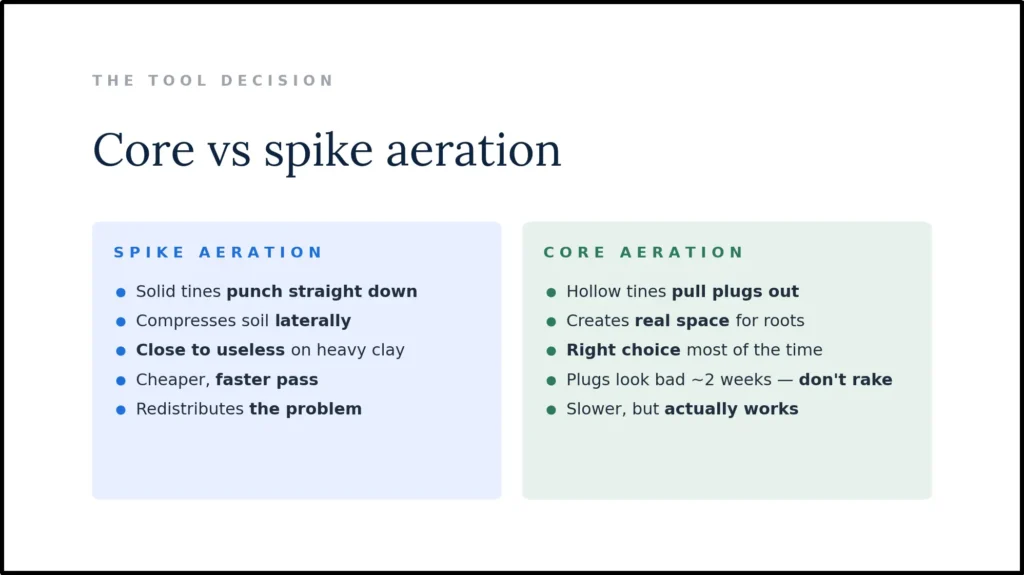
For a lawn that hasn’t been aerated in years, or one with heavy clay soil, spike aeration is close to useless. The spikes create holes, yes, but they also compress the soil laterally. You’re not removing the problem, you’re redistributing it slightly.
Core aeration is the right choice the vast majority of the time. It’s harder, slower, and the machine costs more to rent. It’s also the one that actually works.
The plugs it leaves behind look bad for about two weeks. People ask if they should rake them up. Don’t. They break down on their own, return organic matter to the surface, and within a few mowings, you can’t tell they were there.
Timing Matters
The standard advice is to aerate cool-season grasses in fall, warm-season grasses in late spring. That’s correct, but the reasoning behind it is what actually helps you make the right call for your specific lawn.
The deeper reason timing matters is that aeration is a controlled stress event.
You’re poking holes in the grass’s root zone, pulling out soil, and leaving the surface roughed up. A healthy lawn in active growth mode bounces back quickly. A lawn in dormancy, or one that’s already heat-stressed, takes much longer, sometimes long enough that the damage lingers visibly into the next season.
If the ground is hard and dry, water it a day or two before. The tines need to penetrate 2 to 4 inches. If the soil is baked solid, you’ll get shallow cores, and the whole point is lost.
What’s Actually Happening in the Soil
Grass roots need three things besides nutrients: oxygen, water, and physical space to grow.
Compacted soil cuts off all three. The spaces between soil particles collapse under pressure. There’s less room for air, and water can’t percolate. Roots hit resistance and start growing laterally near the surface instead of pushing deeper, which makes the whole plant more vulnerable to drought and heat.
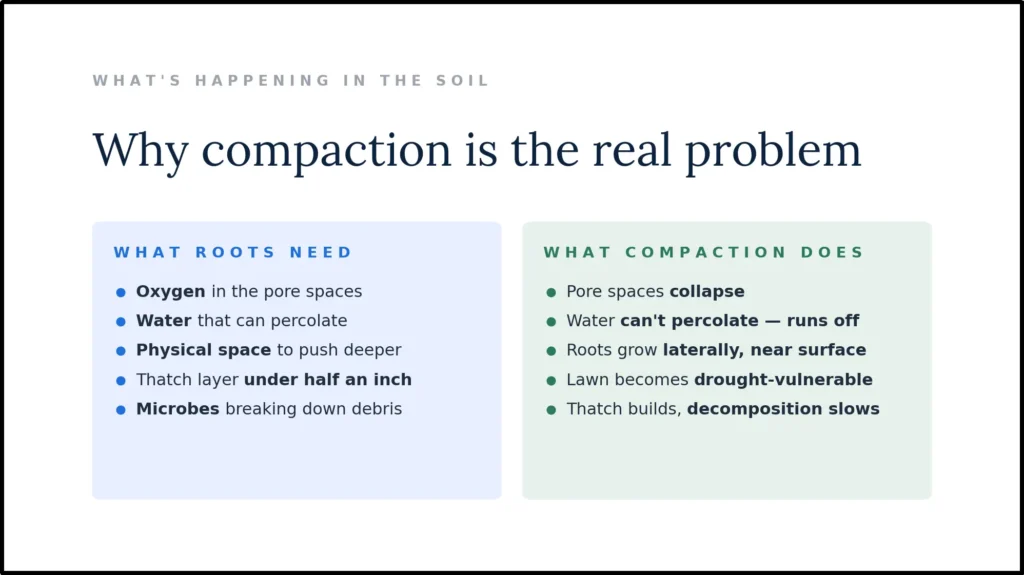
When you pull a core out, you immediately create space.
The soil adjacent to each hole can expand laterally. Pore structure improves in a radius around each plug hole. A good core aeration pass (overlapping passes, tines spaced 2 to 3 inches apart) creates enough of these relief points that the effect is systemic rather than spotty.
Thatch, the layer of dead organic material that builds up between the grass and the soil, also breaks down faster after aeration. Mushrooms are often a sign of the same underlying issue — too much decaying material near the surface feeding fungal growth. If you are dealing with persistent mushrooms, our guide on how to get rid of mushrooms in your lawn covers the fixes that actually last.
The cores you pull bring up soil microorganisms that accelerate decomposition. If you have more than about half an inch of thatch, aeration alone won’t fix it, but it helps. For a thicker mat, start with scarifying a lawn to cut through thick thatch before you aerate, so the cores actually reach the soil.
How Often, and What to Do Afterward
Most residential lawns with moderate foot traffic need core aeration once a year.
- High-traffic areas, the path between the back door and the garage, and the stretch of lawn where kids play every day, may benefit from twice a year.
- Sandy soil that stays loose doesn’t compact as badly as clay and can often go every other year.
The most effective time to overseed your lawn is immediately after aeration.
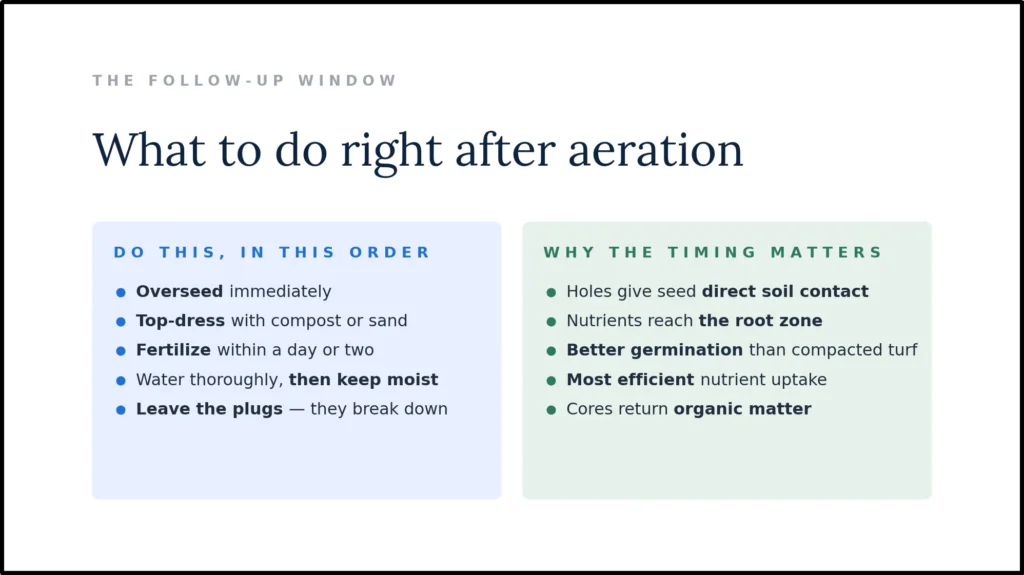
The holes give seed direct soil contact, which is exactly what germination needs. If you were going to overseed anyway, this is the sequence: aerate, overseed, top-dress lightly with compost or sand, water. You’ll get significantly better germination rates than overseeding into an uncompacted surface. For the compost step, our guide on how to spread compost on a lawn covers how much to buy and how thick to spread it.
Fertilizer applied right after aeration also gets better uptake. The nutrients have a direct path to the root zone instead of sitting in the thatch or rolling off the surface.
If you’re going to fertilize anyway, doing it within a day or two of aeration isn’t just convenient, it’s the most efficient use of whatever you’re applying.
Common Lawn Problems & Related Care
Aeration helps improve overall lawn health, but it also works best when combined with addressing other common issues:
- If your lawn has unwanted clover, aeration followed by proper fertilization can help thicken the grass and naturally reduce clover dominance.
- Want a beautiful, low-maintenance alternative? Consider learning how to plant a clover lawn.
- Struggling with insects? Knowing how to get rid of lawn grubs is important, as grubs can worsen compaction issues.
- Once your lawn is healthy and thick, you might want to achieve that perfect look with stripes in your lawn.
- Not sure which weeks to aerate in? Our month-by-month lawn care calendar for cool-season grass lines up every seasonal task.
- Tackling several fall jobs at once? See our fall lawn overhaul in the right order guide for the full sequence.
- Aerating in fall pairs naturally with the rest of your prep. See our guide to winterizing a lawn and its irrigation before the freeze.
Before You Start, Check What’s Below the Surface
One thing to mark before you start: irrigation heads, invisible fence lines, and shallow cable runs. Core aerators don’t know those things are there.
Walk the lawn once, flag anything below the surface, and keep the machine away from those zones. It takes ten minutes and saves a genuinely annoying repair.
Keeping a lawn healthy usually comes down to consistency more than intensity. Small issues are easier to correct before compaction, stress, or poor drainage start stacking together across the season. Tools that reduce day-to-day maintenance friction also make that consistency easier to maintain.
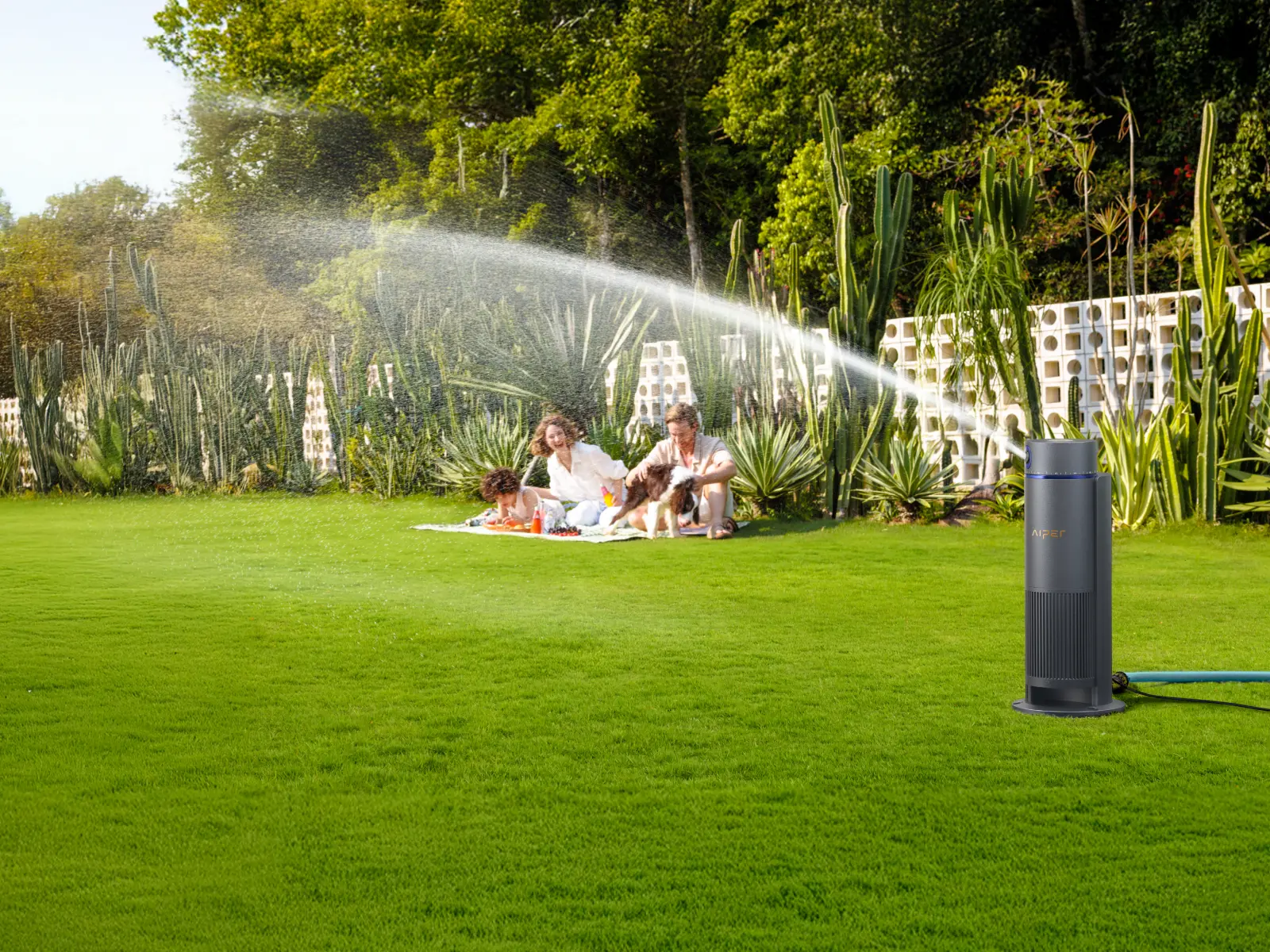
If you’re looking to simplify routine outdoor upkeep alongside lawn care, Aiper offers automated sprinler system designed to reduce manual maintenance and keep water conditions more stable with less hands-on work.
Get more pool and lawn care guides from Aiper on Google