From professional stain diagnostics and chemical removal to surface repair and material comparisons, find expert solutions for maintaining every square inch of your pool's finish."
13 articles
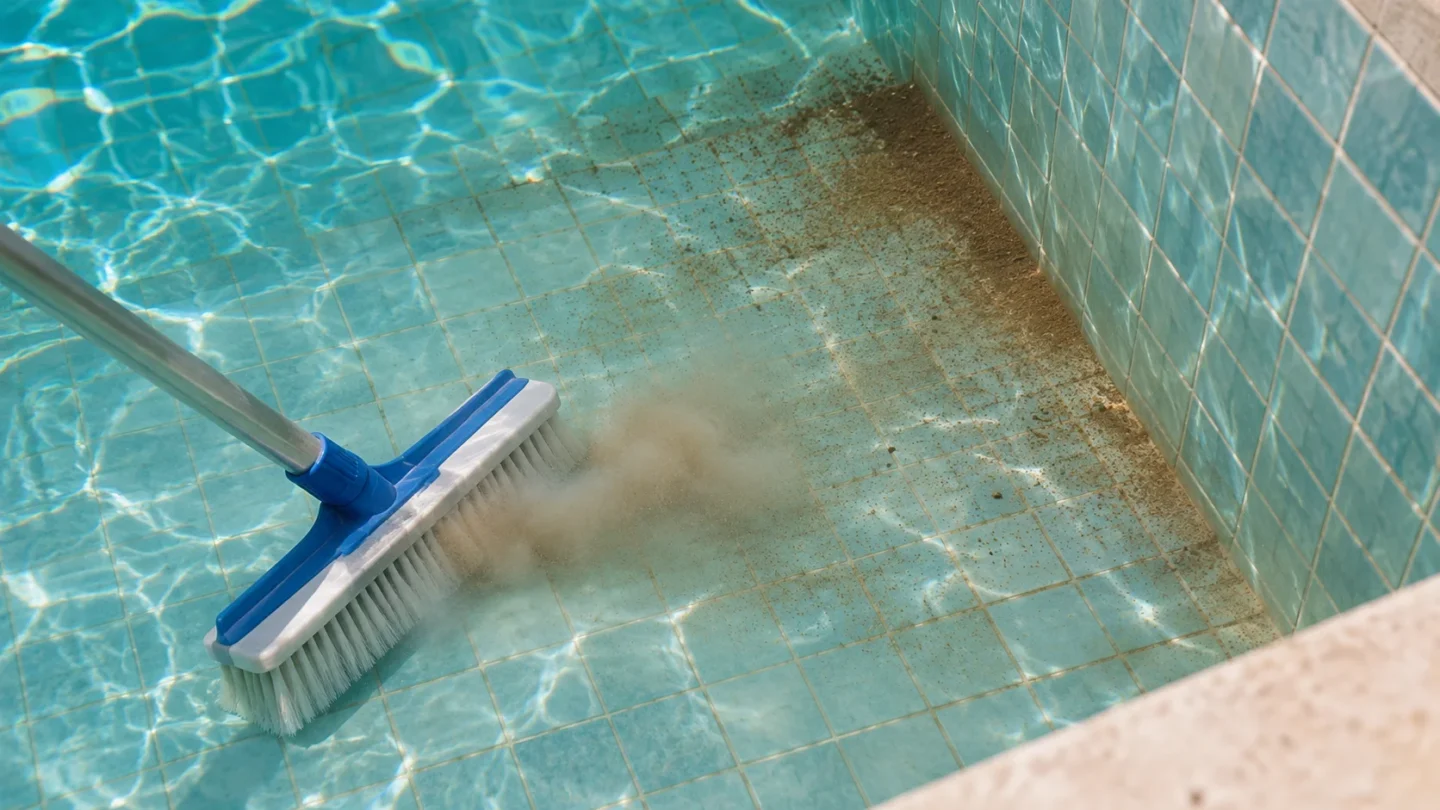
A fine brown layer shows up on the pool floor, worst in the deep end and the corners where the water barely moves. Run…
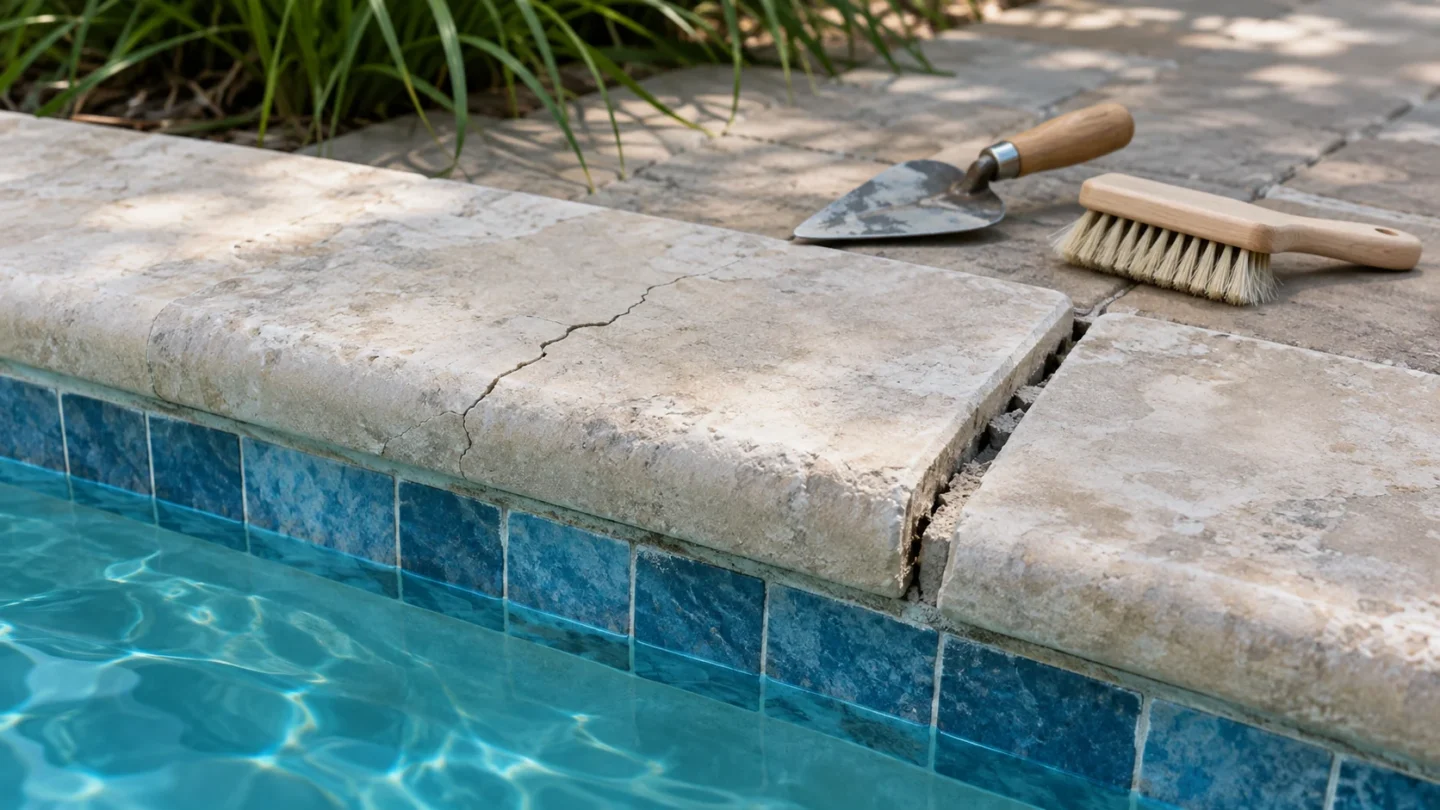
The coping is the cap on the edge of your pool: the stone, paver, brick, or poured concrete lip that sits on top of…
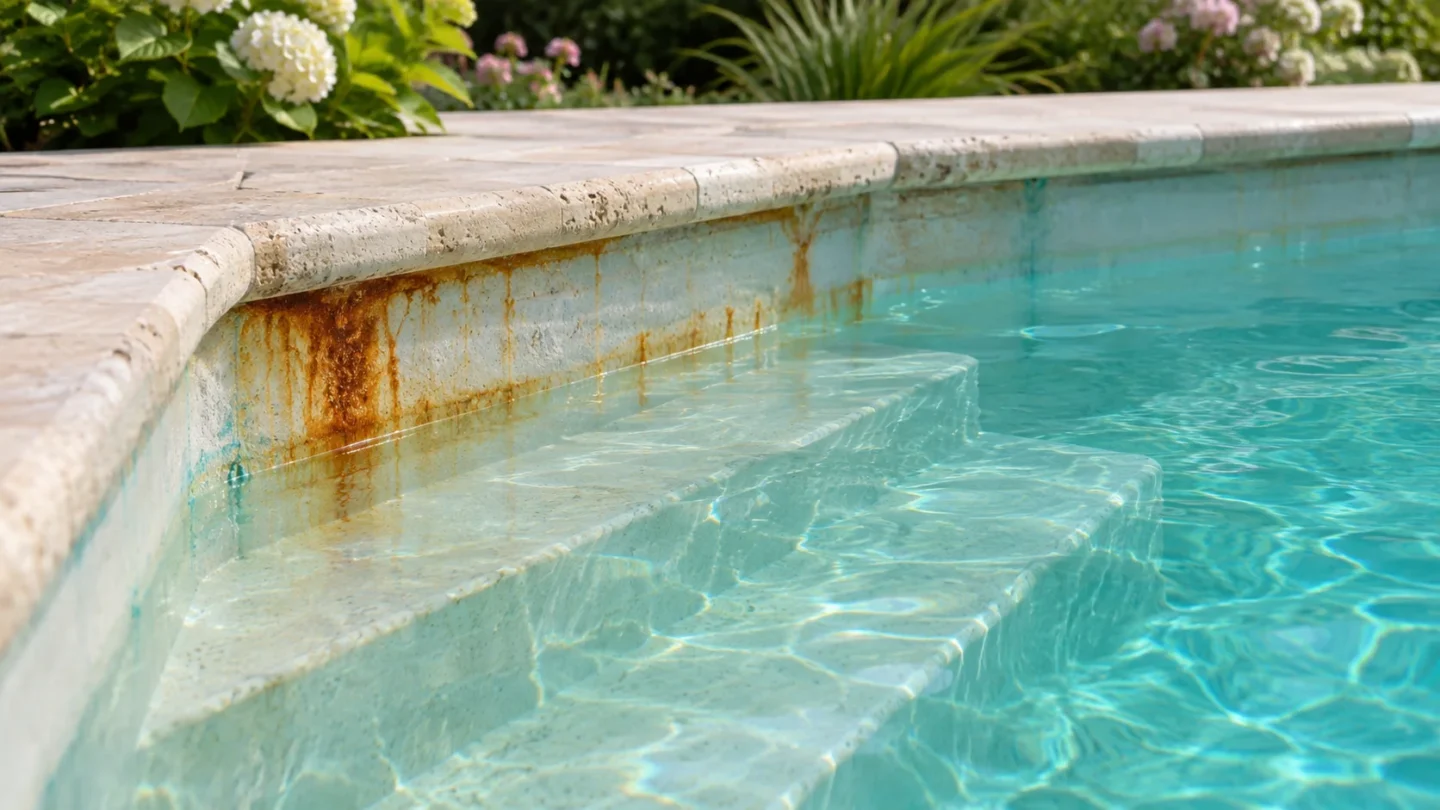
A metal stain is the water showing what’s dissolved in it, and the color is the tell. Copper leaves one mark, iron another, manganese…
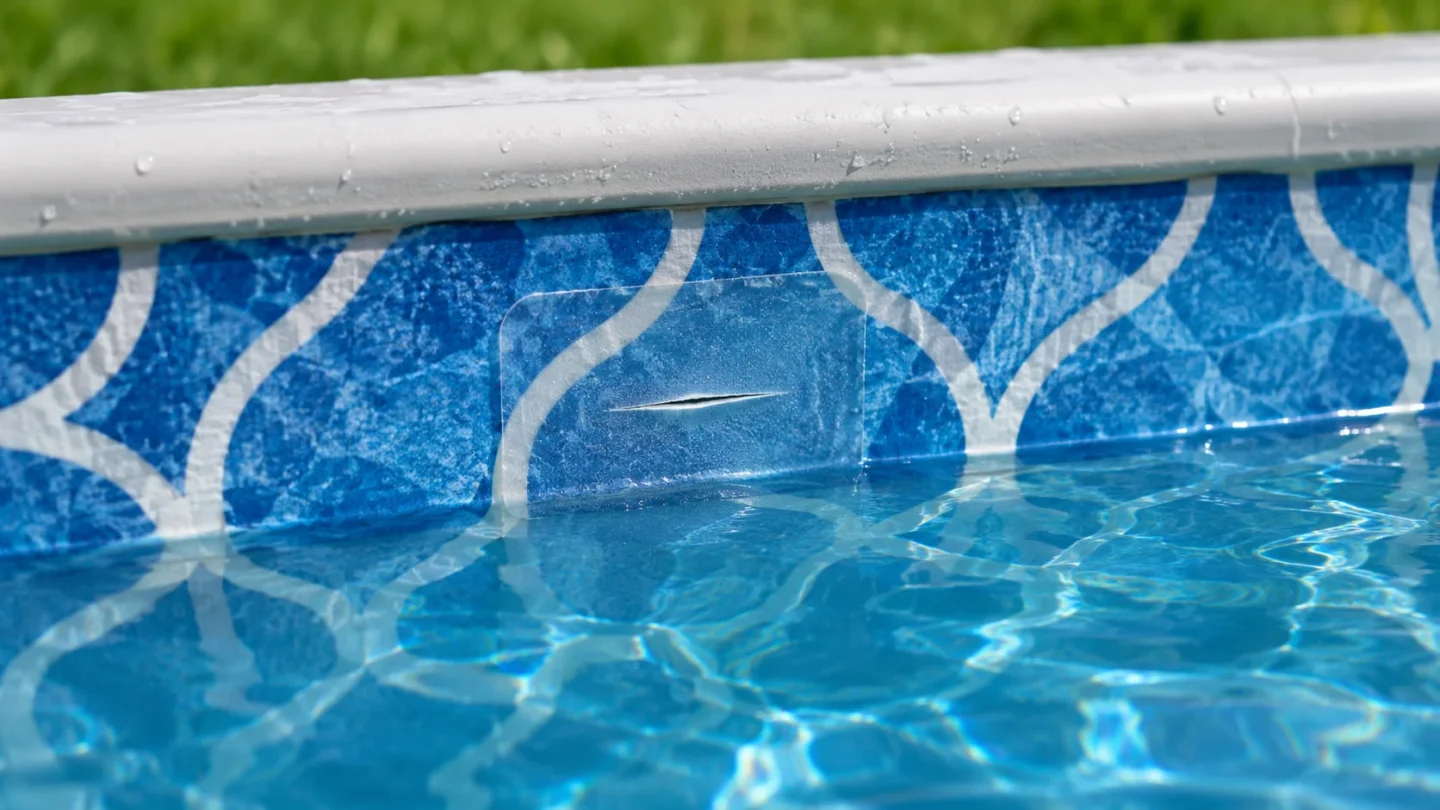
A vinyl liner can lose water through a hole smaller than a pencil tip. The pool drops an inch over a few days, then…
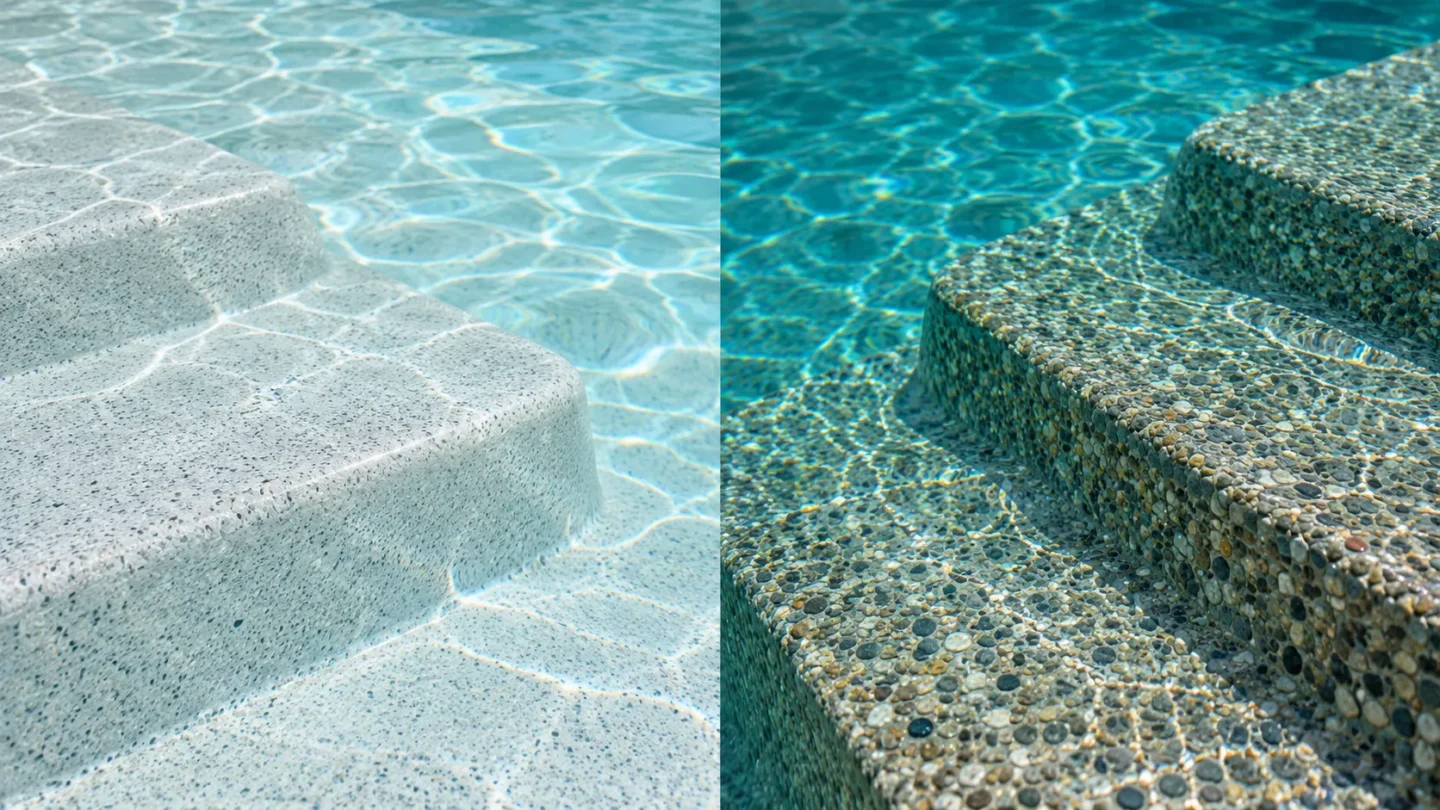
Stand two pools side by side, one finished in quartz and one in pebble, and the water looks different before you’ve touched anything. The…
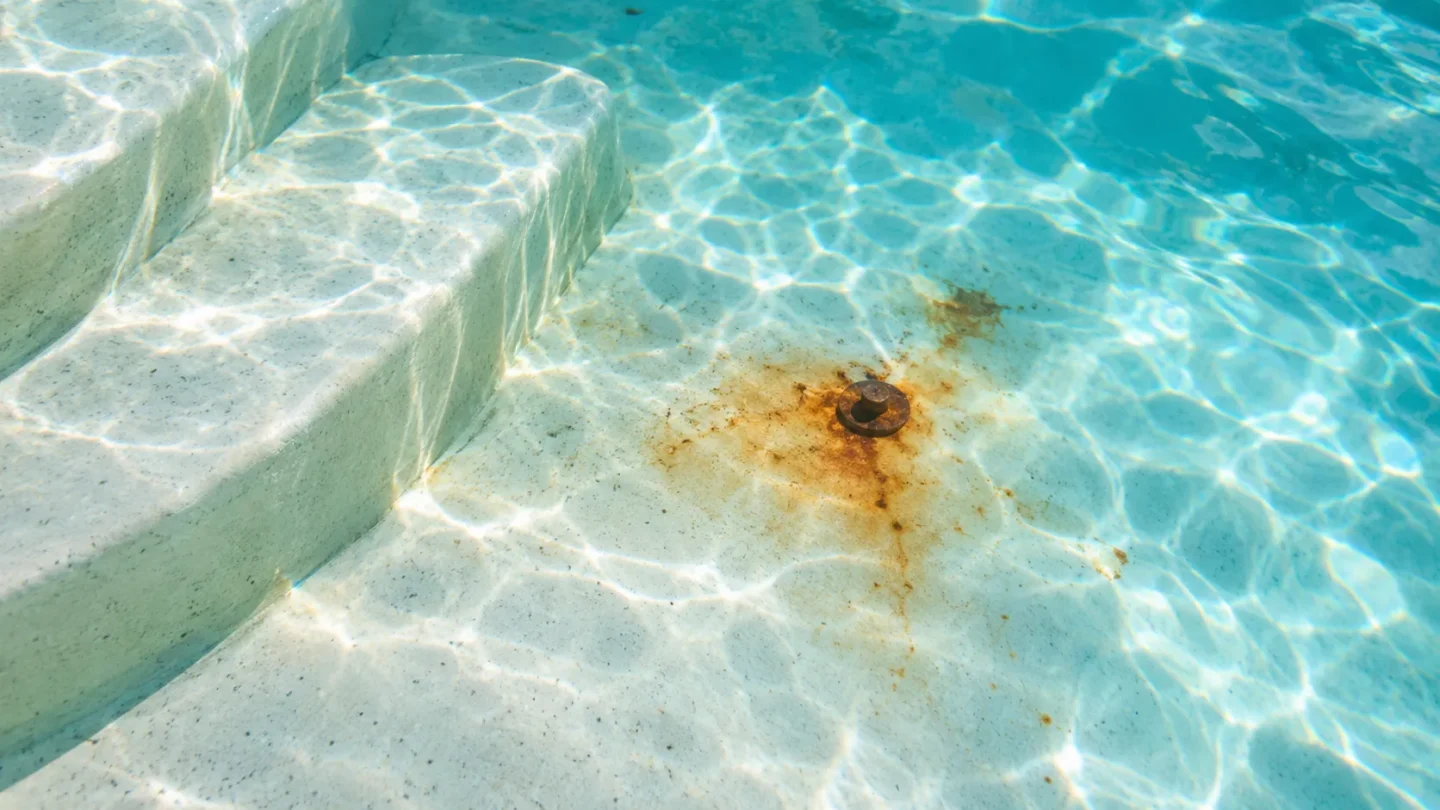
A rust stain on pool plaster is a different animal from the usual pool grime, and the reason it trips people up is that…
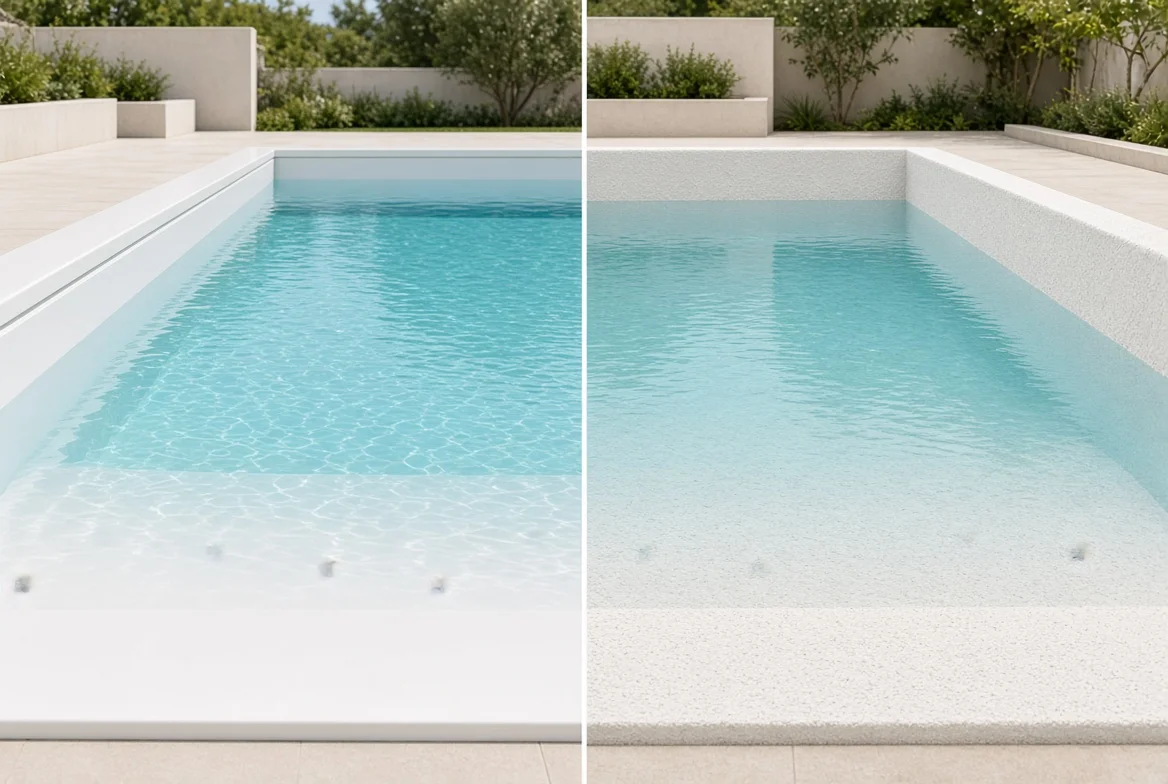
Pool resurfacing is any job that replaces the interior finish of a pool. Replastering is one specific kind of resurfacing: stripping or roughening the…
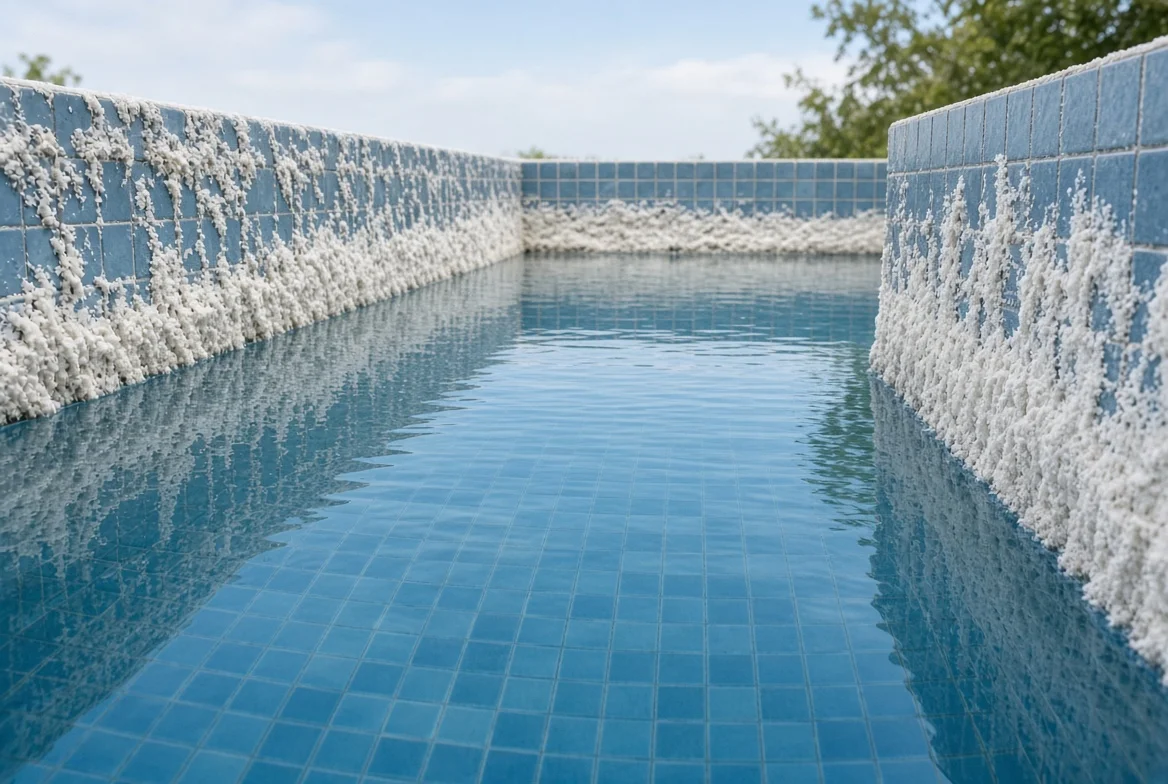
Two different mineral deposits show up as white crust on pool tile and plaster, and they call for opposite treatments. Calcium carbonate is the…
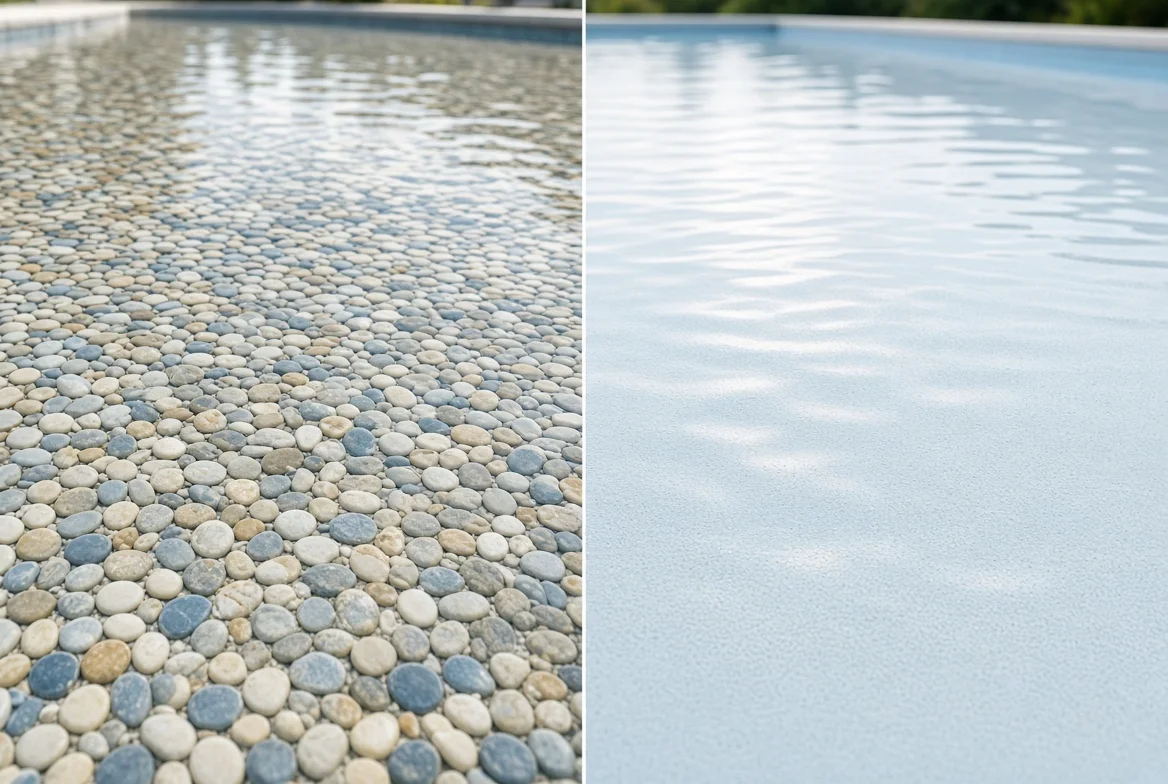
Plaster is the cheaper finish to install, and pebble lasts roughly twice as long. For most concrete pools, the decision comes down to how…
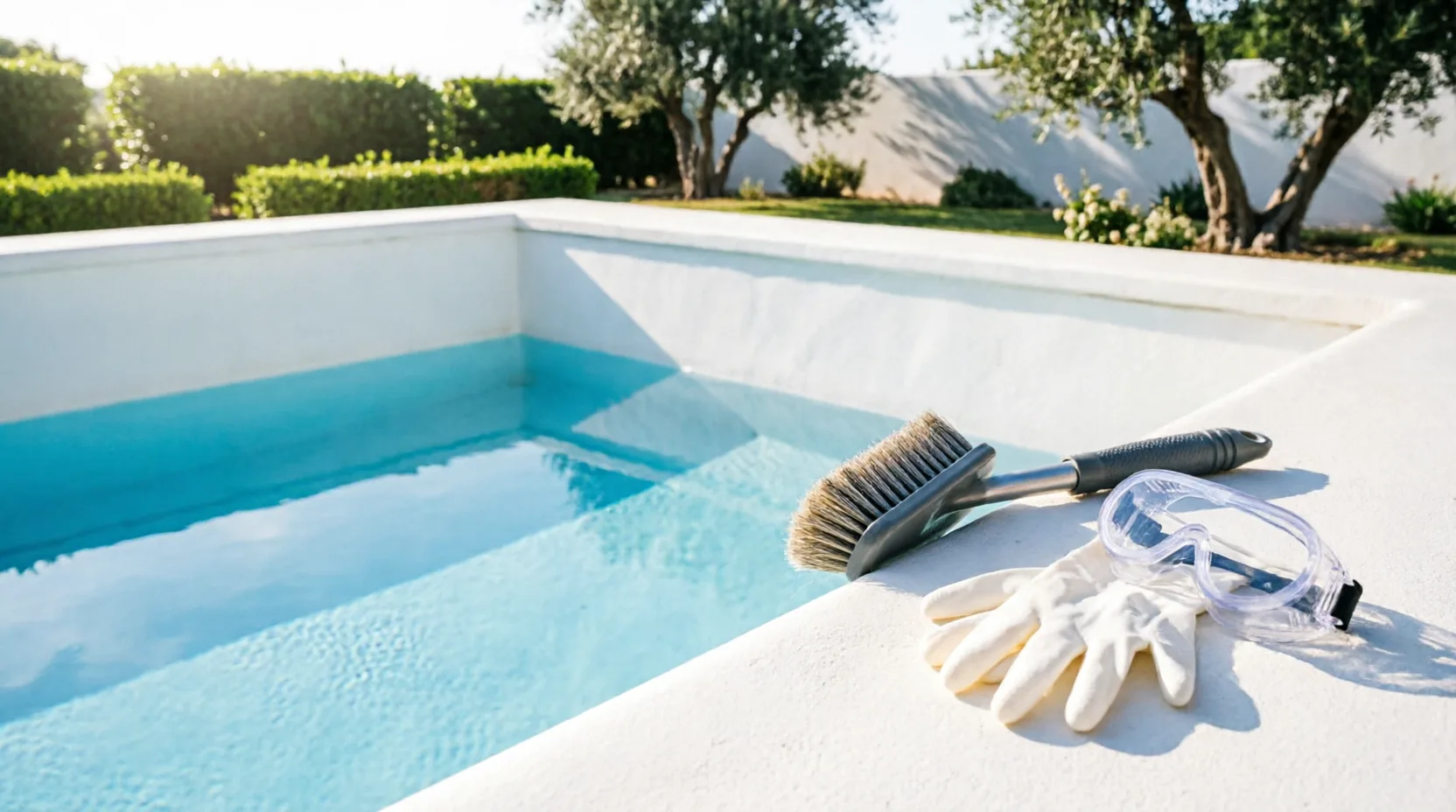
Acid washing a pool removes a thin layer of plaster along with the staining embedded in it, using a diluted muriatic acid solution applied…

Filling a new above-ground pool only to find the walls rippled instead of smooth is a common first-fill disappointment. Wall wrinkles can usually be…
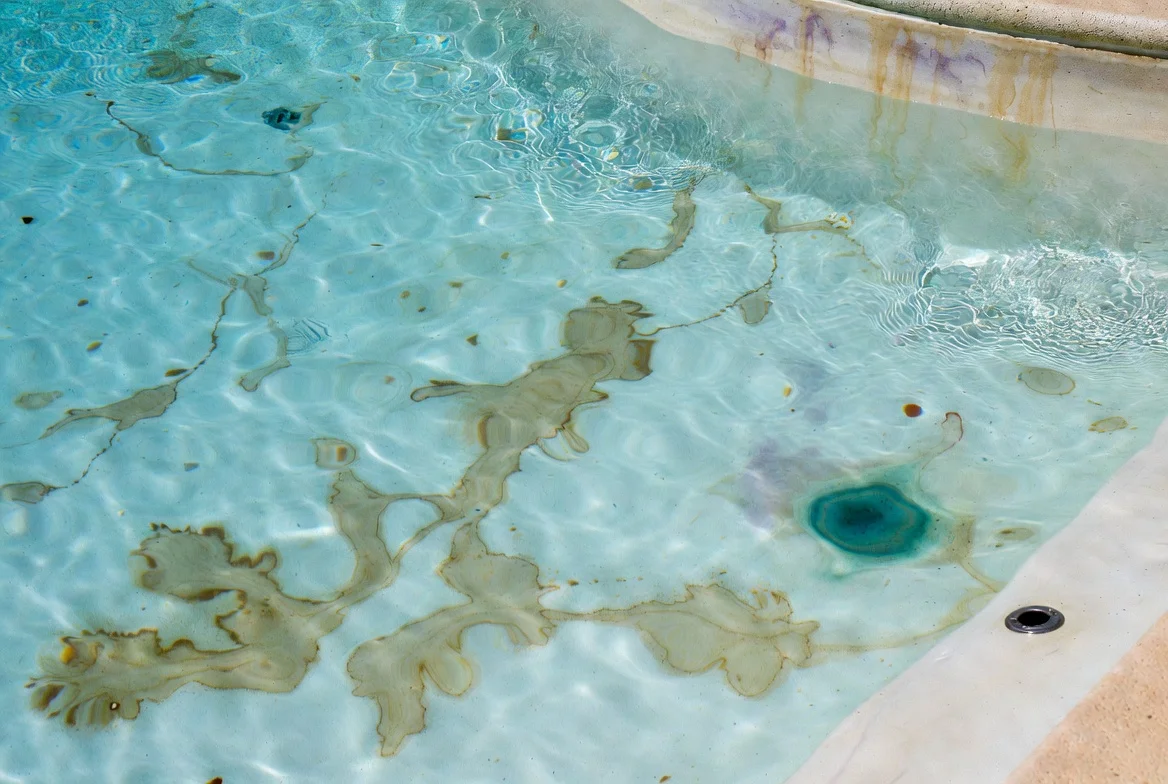
Pool stains get misdiagnosed constantly, and the misdiagnosis is expensive in a very specific way: the treatments contradict each other. For stains involving different…
Choose your region
Choose your region