Total Alkalinity Explained: Why It’s Your Pool Chemistry’s Shock Absorber

Most pool owners focus on pH because it’s the number that keeps moving.
They test it, add acid, test again two days later, and somehow it’s back where it started. Or worse. What is usually missed is the factor underneath that controls how stable the pH actually is: total alkalinity.
That’s the buffer.
When alkalinity is in range, the water absorbs chemical changes gradually.
You add acid, the pH comes down in a controlled way, and it stays there. When alkalinity is too low, the same adjustment can swing the water hard enough to start etching plaster, irritating skin, or putting unnecessary stress on heaters and metal components.
You feel it in maintenance routines almost immediately. Stable pools stay predictable for longer stretches.
That’s the real job of alkalinity. It absorbs volatility before the rest of the chemistry starts reacting to it.
What You’re Actually Measuring
Total alkalinity measures the concentration of bicarbonates, carbonates, and hydroxides dissolved in the water, usually expressed in parts per million.
For most pools, the workable range sits around 80–120 ppm.
But the target is less important than the behavior you see around it.
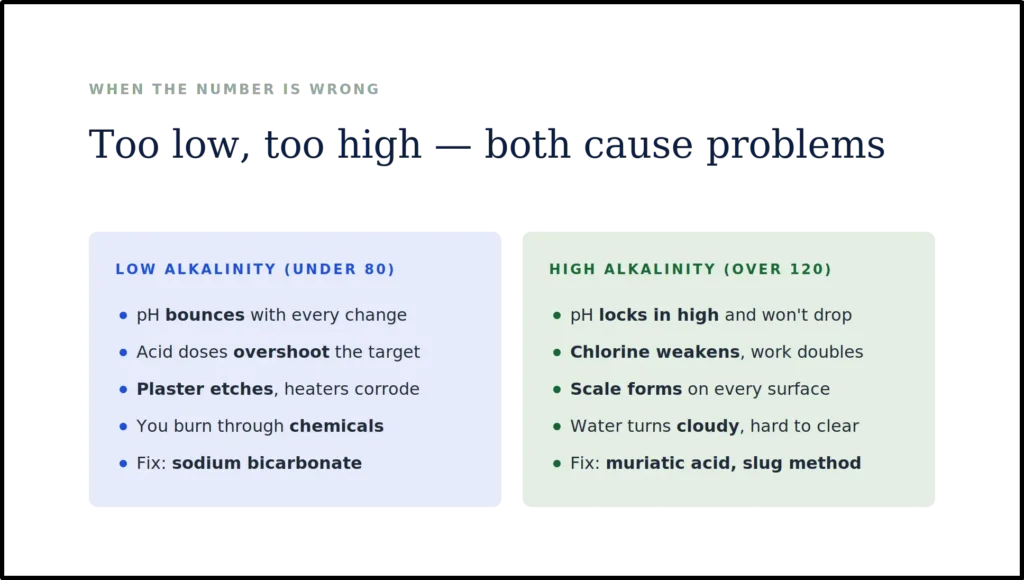
Low alkalinity usually shows up as drifting pH.
You correct it, and within a day or two, the number slides again because the water has almost no resistance to change. Rain, chlorine additions, heavy swimmer load, and even normal circulation patterns can move it around more than they should.
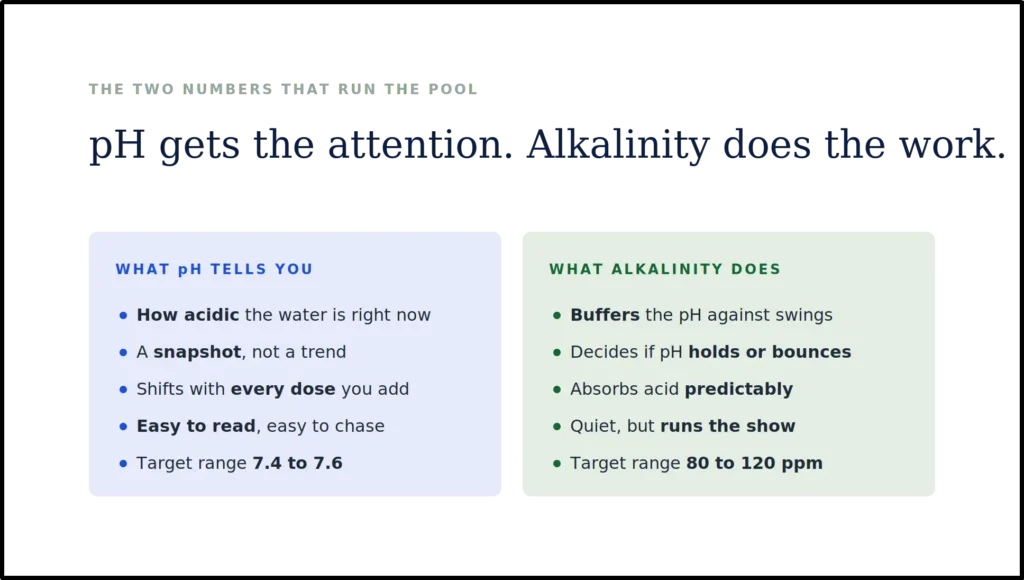
High alkalinity causes a different problem. The pH climbs and then refuses to come back down easily. People often assume that’s safer because high pH feels less urgent than low pH, but it starts creating its own problems fast: weaker chlorine performance, cloudy water, scaling along tile lines, buildup inside heaters and salt cells.
Different kind of headache. Same root issue.
Why pH Keeps Fighting You
This is where a lot of pool care advice becomes misleading.
pH and alkalinity are connected, but they are not interchangeable. Fixing pH while ignoring alkalinity usually turns into a loop of temporary corrections.
If alkalinity is sitting around 50 ppm, you can raise pH today and watch it drift right back down tomorrow. Then you add more chemicals. Then more again after the next storm or chlorine treatment.
The problem was never the pH itself.
The water simply had no buffer underneath it, so every external change kept pushing the chemistry around. A lot of people spend weeks chasing numbers before realizing they were adjusting the wrong thing first.
Once alkalinity is corrected, pH usually settles down surprisingly fast.
Not perfectly. But predictably.
That matters more.
Adjusting It Without Making a Bigger Mess
Raising alkalinity is straightforward.
You use sodium bicarbonate. Regular baking soda. Pool-grade products and grocery store baking soda are the same compound; the main difference is packaging and cost per pound. As a rough guide, around 1.5 pounds per 10,000 gallons raises alkalinity by about 10 ppm.
Lowering alkalinity takes more patience.
This is where people tend to overshoot because they treat it like a normal pH correction and dump in too much acid too quickly. The challenge is that muriatic acid lowers both alkalinity and pH at the same time.
The usual approach is controlled acid addition followed by aeration.
Acid brings the alkalinity down. Then fountains, spa spillovers, angled returns, or any surface agitation help push the pH back upward without raising alkalinity again. Done properly, the water gradually rebalances instead of swinging from one extreme to the other.
Small adjustments work better here.
Big corrections are where pools get unstable.
When To Test It
For most pools,weekly testing is enough.
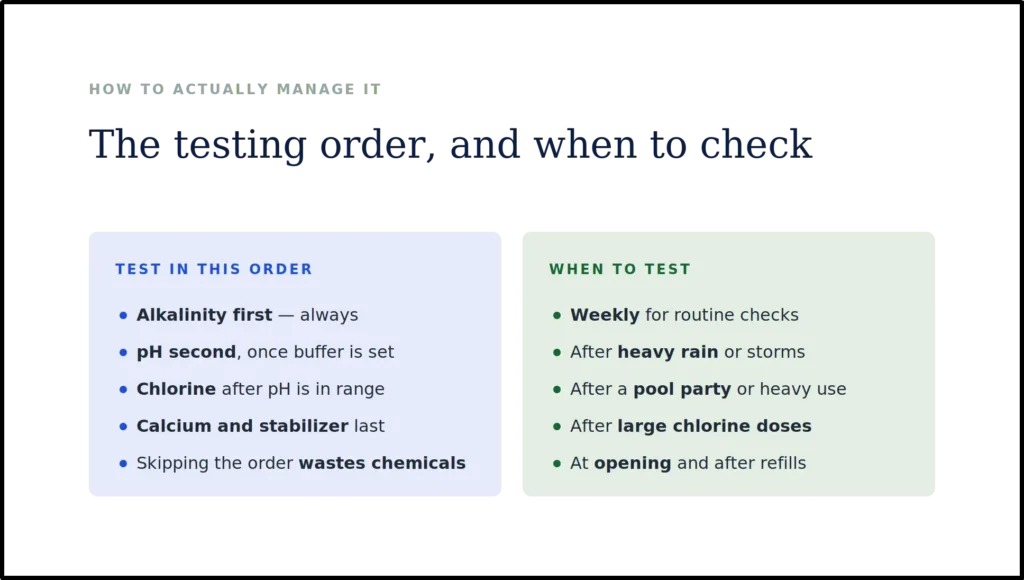
But there are certain moments where alkalinity deserves attention sooner than that: after heavy rain, after a large chlorine treatment, after adding significant acid, after a party weekend where the pool saw constant use, or anytime you’ve partially drained and refilled the water.
Opening the pool for the season is another one. Test alkalinity before you start correcting anything else.
And always check alkalinity before adjusting pH.
If the buffer underneath is wrong, the pH will keep drifting back toward wherever the alkalinity is pushing it anyway. That’s why so many quick fixes never actually hold.
Stop Fighting Your Chemistry
The water tells you what it needs. You just have to test in the right order.
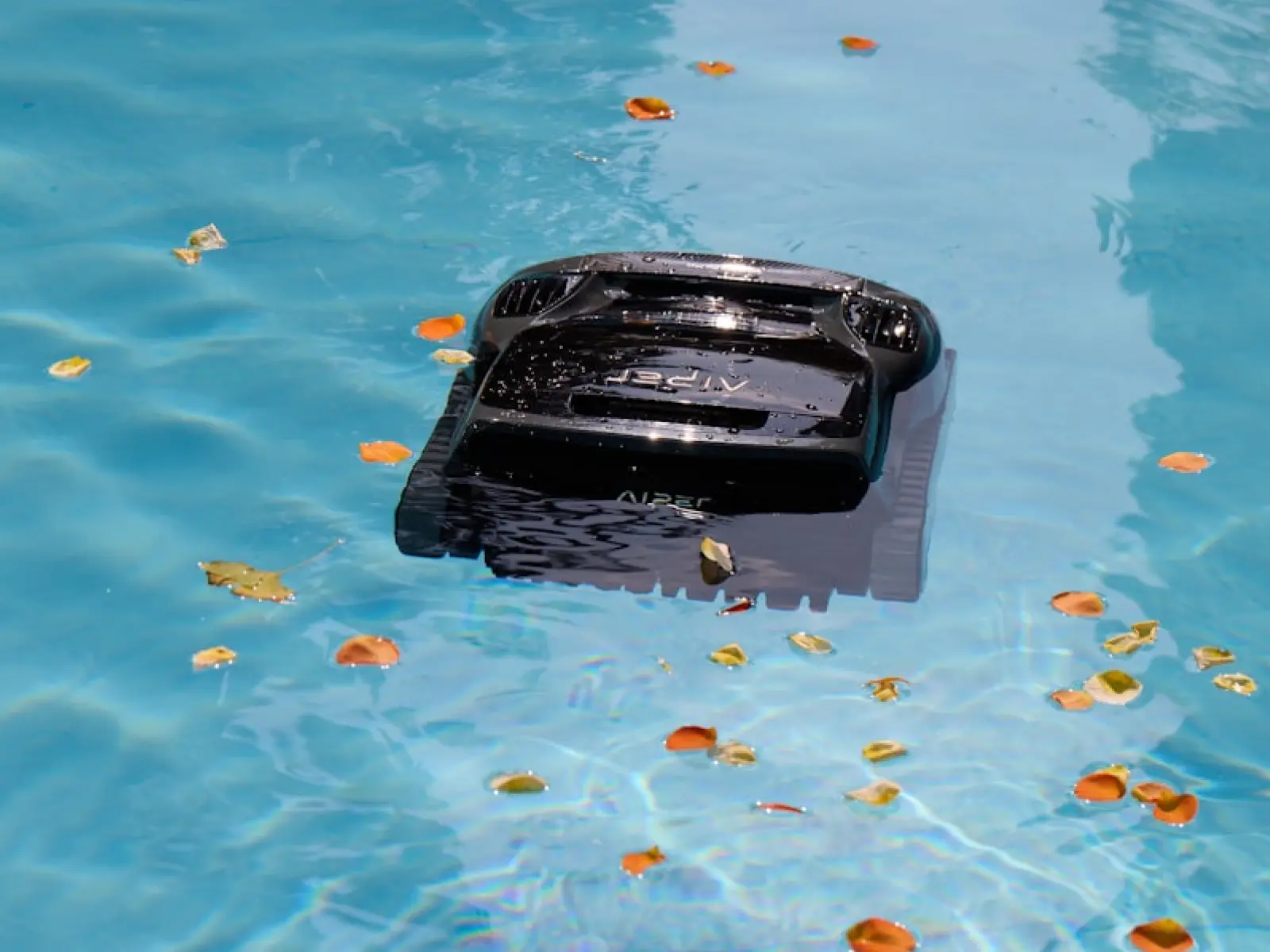
A clean pool also holds its chemistry better, fewer organics in the water means less acid demand and steadier readings week to week. Aiper builds cordless robotic pool cleaners that handle the floor, walls, and waterline on their own, so the water stays cleaner between tests and your chemicals do less work.
Get more pool and lawn care guides from Aiper on Google