The Complete Guide To Pool pH: What It Is, Why It Drifts, And How To Stabilize It

There are two ways pool maintenance plays out.
In one, you make an adjustment, and it holds. You test the water, make a small correction, and the system settles back into place. The next time you check, not much has shifted.
In the other, every adjustment creates another one. You add chlorine, then correct the pH. You correct pH, then deal with alkalinity. You fix that, and something else moves a few days later.
Same pool, same chemicals, but a completely different experience.
When pH is stable, chlorine acts consistently. The same dose gives you roughly the same result. The water responds predictably to adjustments.
Here’s how to build a controlled pH system, instead of a reactive one.
What Makes pH Lose Stability?
pH becomes unstable because of pressure from multiple directions.
- Rain dilutes the water.
- Chemical additions shift the balance.
- Organic load builds up over time.
- Circulation and aeration gradually push the chemistry in the opposite direction.
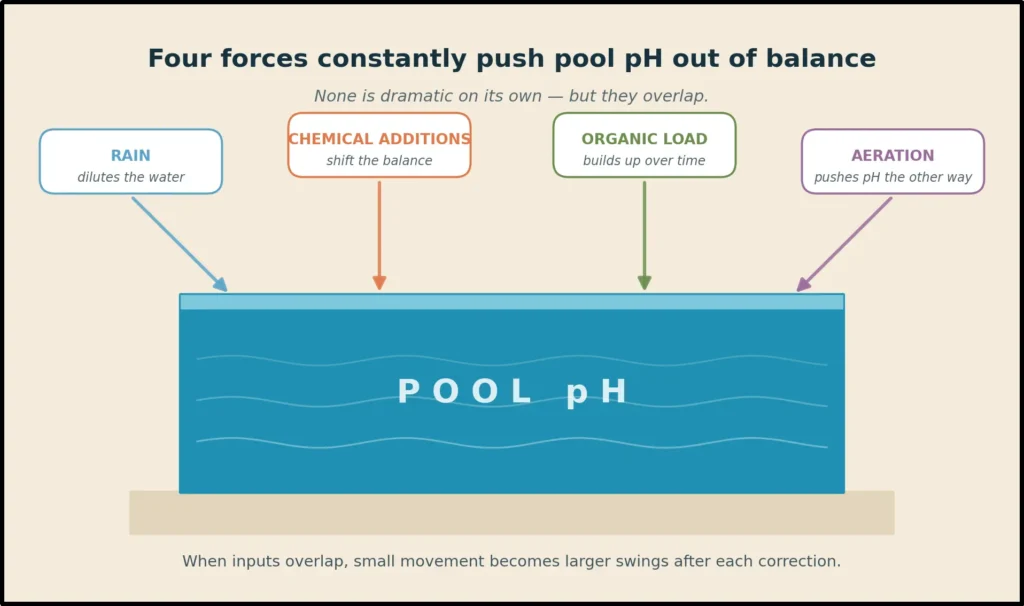
None of these is dramatic on its own. That’s why they’re easy to ignore.
But when they overlap, they change how the water responds. Instead of small, predictable movement, you start seeing larger swings after each adjustment.
Before adding any chemicals to correct these swings, it is essential to calculate pool volume accurately so you don’t over-treat the water.
A single test result doesn’t tell you much.
It tells you where the water is right now, but not how it got there or where it’s heading.
Control comes from seeing patterns.
Testing more consistently, at similar times, under similar conditions, starts to show how your pool reacts after rain, chemical additions, and heavier use.
That’s what allows you to act earlier. Instead of correcting a visible problem, you’re adjusting before it becomes one.
How To Tell If pH Is The Problem
You don’t always fix pH by adding something to it.A lot of the time, pH is reacting to what just happened in the pool, not causing the problem itself.
A heavy chlorine dose, a few days of debris sitting in the water, a rain event that diluted everything slightly, those don’t just move pH once. They keep pushing it.
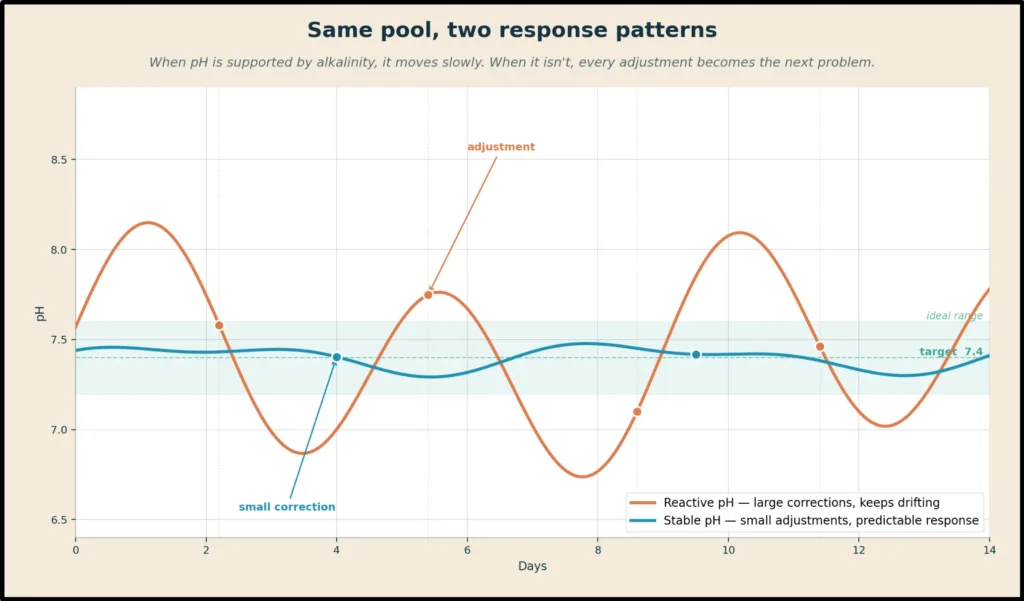
So you adjust it, and it looks fine for a moment. Then it slips again.
You can usually tell when this is happening.
- You bring pH back into range, and within a day or two, it starts drifting the same way again
- The same adjustment gives you different results each time
- You find yourself correcting pH repeatedly, even though nothing “major” has changed
At that point, adding more acid or soda ash isn’t solving anything. You’re just keeping up with the movement.
The actual decision isn’t how to fix pH.
It’s whether pH is the thing that needs fixing, or just the signal that something else hasn’t settled yet.
How To Adjust pH To Preserve Stability
Large corrections feel efficient, but they create new imbalances. You fix one side of the problem, then spend the next few days correcting the effects of that fix.
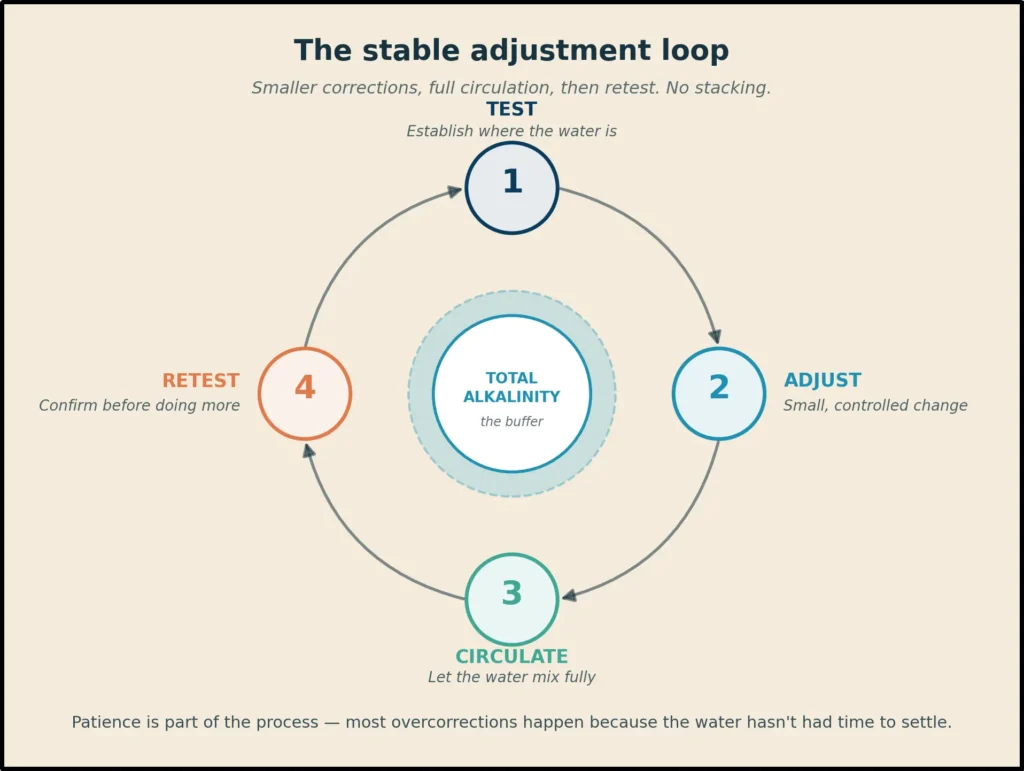
Stability comes from smaller adjustments.
- Make a controlled change, let the water circulate fully, then check how it responds
If your levels are consistently dropping, learning the proper steps to increase raise pool pH gradually will help you avoid overcorrecting.
- If it’s still off, adjust again, but with less
That’s what keeps the system predictable.
pH also doesn’t hold its position on its own. Total alkalinity acts as a buffer.
Understanding the fundamental difference between Alkalinity and pH is crucial here: when it’s in range, pH moves more slowly and more predictably. When it isn’t, pH becomes reactive—shifting more with every input.
This is where a lot of adjustments fail. You correct the pH, but the buffer isn’t supporting it. So the next small change pushes it out of range again.
Consistency matters just as much as the correction itself.
- Test (You can use a digital tool to input your current chemical levels and calculate pool pH precisely)
- Make a measured adjustment
- Let the water circulate
- Retest before doing anything else
Most overcorrections happen because the water hasn’t had time to settle.
Once pH becomes inconsistent, it tends to stay that way, not because the pool is difficult, but because the response pattern doesn’t change. Large corrections. Quick follow-ups. Adjusting based on incomplete readings.
Keep The Water Stable, Not Just Clean
Balancing pH is one part of maintaining control.
The other is everything that keeps pushing the water out of that balance, debris, organic load, the constant buildup that forces more frequent adjustments.
If that side of the work is still manual, it adds friction.
If you’re looking to reduce that, it’s worth understanding how Aiper approaches pool maintenance. Their cordless robotic cleaners handle the ongoing physical cleanup, which makes it easier to keep the chemical balance from slipping in the first place.Because once the water stays stable, everything else gets easier.
Get more pool and lawn care guides from Aiper on Google