Pool Alkalinity vs pH: How They Interact and Which to Fix First

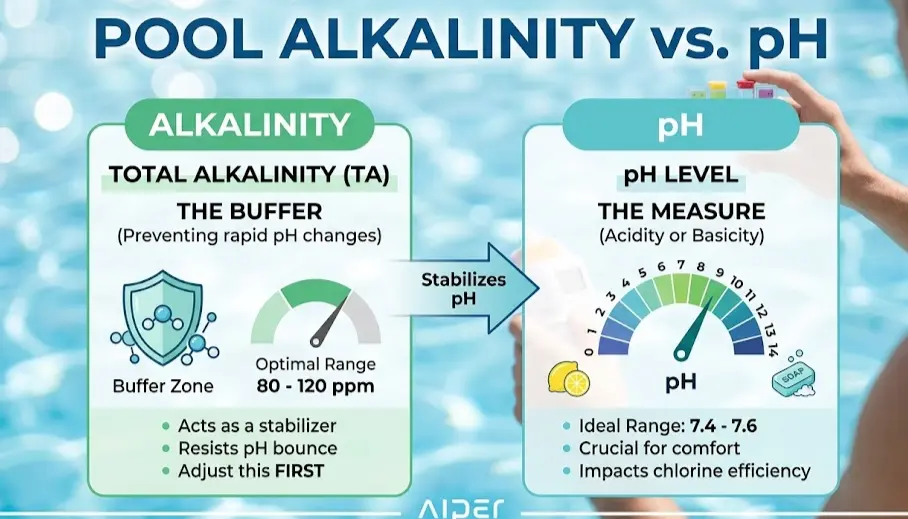
Alkalinity buffers pH, meaning it controls how much pH moves when you add chemicals, so adjusting pH while alkalinity is out of range is like trying to steer a car with loose lug nuts.
You’ll get somewhere, but not where you intended, and you’ll be back at it tomorrow.
This article is about why that’s true and the handful of situations where the order changes. Because alkalinity and pH constantly pull on each other, it helps to check how to lower pH in a pool without overcorrecting alkalinity in the process.
What Each One Actually Measures
pH measures how acidic or basic the water is, on a scale of 0 to 14.
Pool water should sit between 7.2 and 7.6:
- Below that, the water corrodes metal, etches plaster, and irritates skin and eyes. Once the finish is badly etched, replastering or another type of pool resurfacing is the repair.
- Above it, chlorine stops working effectively, scale forms on surfaces, and the water turns cloudy.
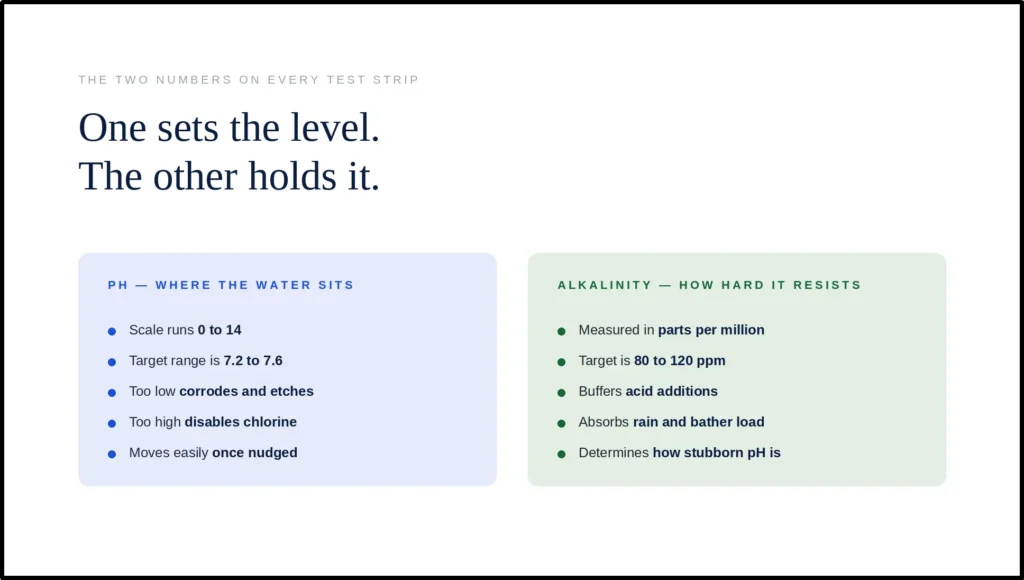
Total alkalinity measures the concentration of dissolved alkaline substances in the water, mostly bicarbonates, carbonates, and hydroxides.
The target range is 80 to 120 ppm for most pools, sometimes 100 to 150 ppm for pools with vinyl liners or salt systems. Alkalinity doesn’t determine whether your water is acidic; it determines how stubbornly the water resists becoming more acidic.
This is the key relationship. Alkalinity is pH’s shock absorber.
Why Low Alkalinity Breaks Everything
A pool with low alkalinity, say, 40 ppm, has almost no buffering capacity.
pH bounces around constantly. Add a cup of acid and pH crashes. Heavy rain shifts it. Bather load swings it through the day.
You test in the morning and adjust, test again at sunset, and the number has wandered somewhere else entirely. This is called pH bounce, and it’s the single most frustrating water chemistry problem to chase.
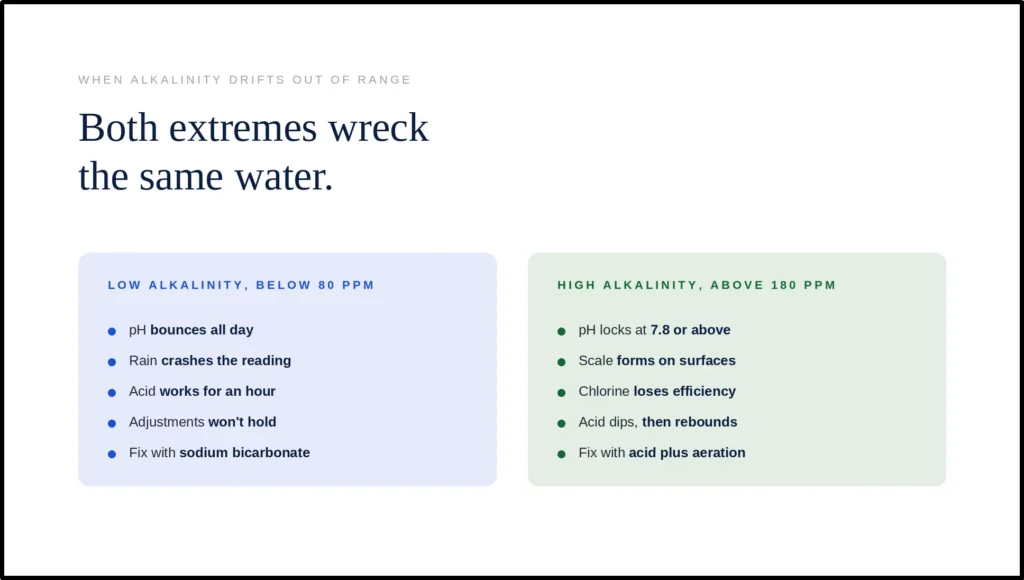
You cannot fix pH bounce by adjusting pH. The pH chemicals work for an hour. Then the water drifts again because nothing is holding it in place.
The fix is sodium bicarbonate (baking soda, essentially, though pool-grade is purer and cheaper by weight).
You raise alkalinity into range first, the water gains buffering capacity, and pH stops wandering. Then you adjust pH if it still needs adjusting, and often it doesn’t, because alkalinity adjustments nudge pH along with them.
This is also where pool volume matters more than people think. Most alkalinity corrections go wrong because the dosing estimate is based on a rough guess of gallonage instead of the pool’s actual water volume.
Why High Alkalinity Also Breaks Things
The opposite problem is just as common, especially in regions with hard tap water.
Alkalinity above 180 ppm locks pH at the high end of the scale, usually 7.8 or above, and resists every attempt to bring it down.
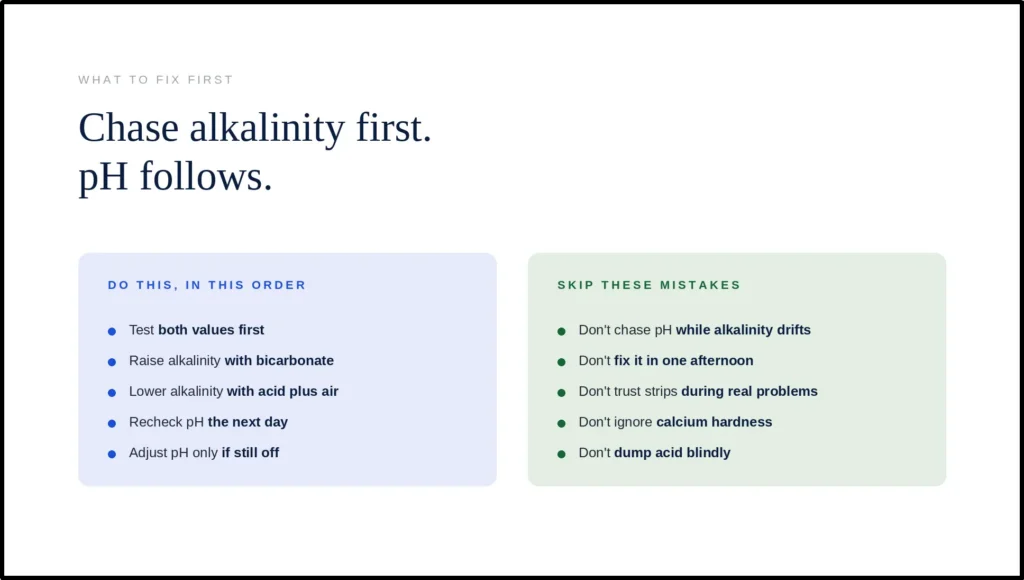
You add muriatic acid, pH dips briefly, and within a day, it’s right back up. Scale starts forming, chlorine efficiency drops, and your test strips look perpetually wrong.
Lowering alkalinity takes muriatic acid or dry acid (sodium bisulfate), poured into the deep end with the pump running.
The acid drops both alkalinity and pH at the same time.
The trick is that you can then aerate the water, running fountains, water features, or just brushing aggressively, to bring pH back up while leaving alkalinity lower. This is the one piece of pool chemistry that feels like a magic trick the first time you do it.
The Order of Operations
Test both values. Then:
- If alkalinity is low, raise it with sodium bicarbonate. Retest the next day. pH will likely have risen along with it; assess pH only after alkalinity is in range.
- If alkalinity is high, lower it with acid, then aerate to restore pH. This is a multi-day process for badly out-of-range water, don’t try to fix it in one afternoon with a gallon of acid.
If alkalinity is in range but pH is off, adjust pH directly. Soda ash raises it; acid lowers it. With alkalinity correct, these adjustments hold.
A pH balance calculator helps here because small dosing errors compound quickly once alkalinity is already stable. Overshooting the correction is one of the fastest ways to create another chemistry problem immediately after fixing the first.
The Exception Worth Knowing
Calcium hardness changes the calculation when it’s far out of range, because the Langelier Saturation Index, which determines whether water is corrosive or scale-forming, depends on all three values together. A pool with very low calcium hardness can be aggressive even with perfect pH and alkalinity, eating plaster and metal regardless. A pool with very high calcium hardness scales up at a lower pH than it otherwise would.
For most pools, most of the time, you can ignore this and just chase alkalinity, then pH.
But if you’re running corrosive water in a plaster pool or scaling problems you can’t explain, calcium hardness is the third variable, and it interacts with the other two.
What Test Strips Don’t Tell You
The cheap strips give you a reading that’s roughly correct, and roughly correct is fine for routine maintenance.
When something is genuinely wrong (green water, scale, persistent chlorine demand, pH that won’t behave), drop the strips and use a liquid reagent kit or take a sample to a pool store.
The strips can be off by 20 ppm on alkalinity, which is enough to send you in the wrong direction.
Once your readings are accurate, tools like total alkalinity calculators make the adjustments far more predictable than relying on generalized dosing charts printed on chemical buckets.
A good Taylor K-2006 test kit costs about as much as a season of strips and lasts for years. If you’ve been fighting your water and losing, that’s where the next investment goes.
Pool chemistry gets much easier when the basics stay consistent. Aiper’s pool maintenance tools help reduce debris, circulation issues, and day-to-day buildup so you can spend less time constantly correcting your water.
Get more pool and lawn care guides from Aiper on Google