The best plants around a pool suit your climate, fit the space when fully grown, and leave you with a manageable cleanup routine. Pink muhly grass can suit a sunny, well-drained border; Oshima sedge offers a smaller option for a partly shaded spot; orange bird of paradise brings a tropical look to warm-climate planting.
Start with the conditions in your yard rather than the look in a photograph. Every plant needs some care, and even a tidy evergreen can drop old leaves or flowers. The seven options below offer different ways to balance greenery, growing space, and pool maintenance.
Compare the best plants around a pool
Use this table to narrow your choices, then check the details below. Sizes are reference ranges, not promises for every cultivar. USDA zones describe winter cold; they do not establish tolerance to summer heat, salty soil, or pool water.
| Plant | Suitable setting | USDA zones* | Reference mature width | Care to expect |
|---|---|---|---|---|
| Pink muhly grass | Sunny, well-drained border | 5–9 | About 2⅓–3 ft (0.7–0.9 m) | Seasonal dry foliage and seed heads |
| Karl Foerster feather reed grass | Upright accent with adequate moisture | 4–8 | About 2 ft (0.6 m) | Annual removal of old stems |
| Oshima sedge | Smaller, partly shaded bed or container | 5–9 | About 12–17 in (30–43 cm) | Consistent moisture; occasional tidying |
| Rosemary | Sunny bed with good drainage | 8–10 | About 3–4 ft (0.9–1.2 m) | Pruning and careful watering |
| Texas sage | Hot, dry, low-irrigation landscape | See regional note below | About 3–5 ft (0.9–1.5 m) | Space for growth; flowers and clippings |
| Orange bird of paradise | Warm-climate bed or movable container | 10–11 | About 2–4 ft (0.6–1.2 m) | Spent flowers, old leaves, frost protection |
| Variegated shell ginger | Roomy, partly shaded background bed | 9b–11b | About 5–8 ft (1.5–2.4 m) | Expanding clumps and old stems |
*Ranges follow the university references linked in each profile. Texas sage references differ by region; specific cultivars can also differ in size and hardiness. For Oshima sedge, the table gives species-level dimensions, not a size guarantee for every named selection.
7 Plants to consider for your pool area
These are choices for different situations, rather than a ranking of measured debris production. Match the plant to the bed first, then decide whether its care needs fit your routine.
1. Pink muhly grass for sunny, well-drained borders
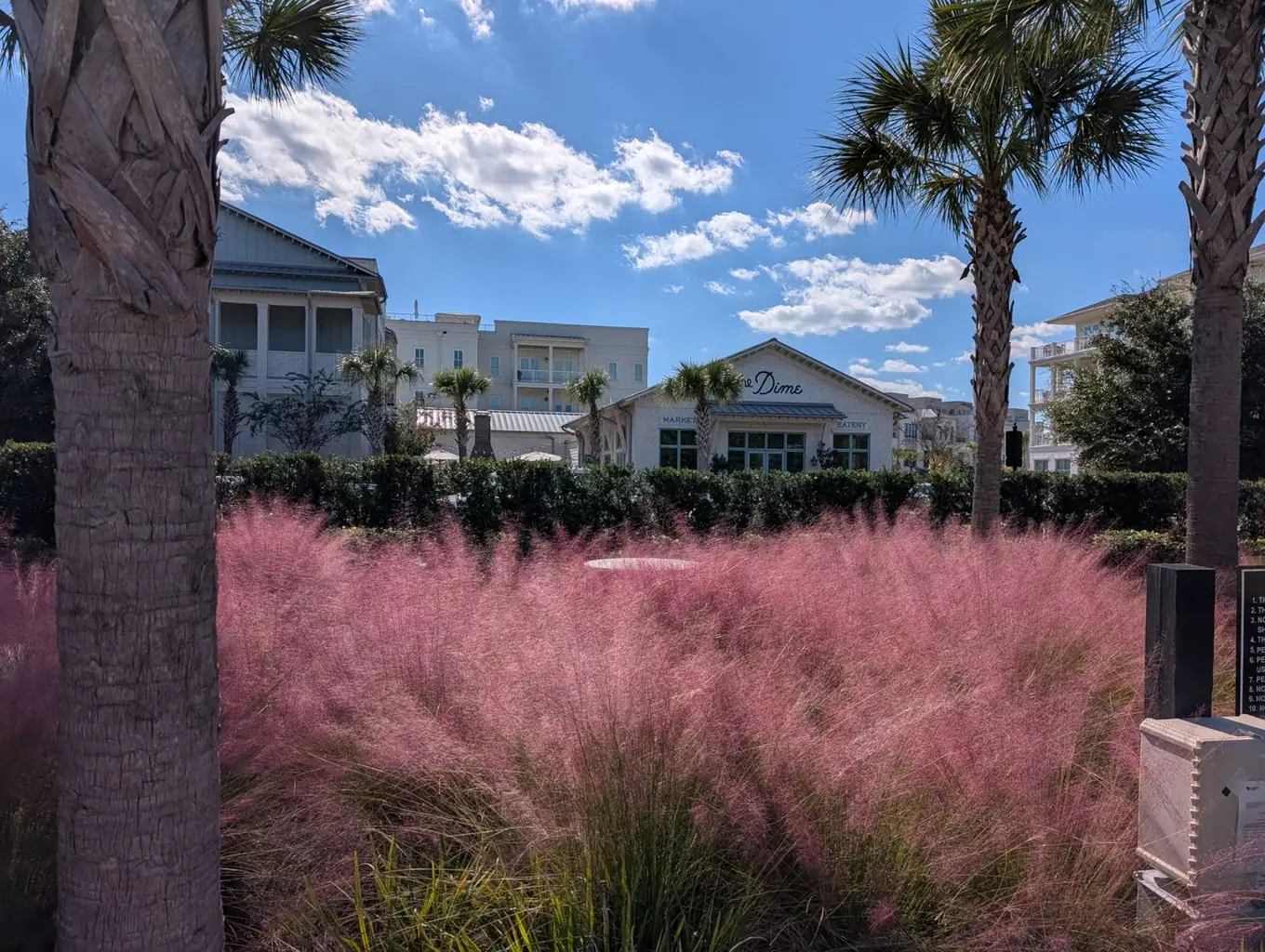
Botanical name: Muhlenbergia capillaris
Choose pink muhly when you want a soft, airy border with seasonal color. NC State Extension describes a clumping grass that tolerates heat, humidity, and drought, with its best floral display in plenty of sunshine. Its foliage is typically 2–3 feet tall, while flowering growth can reach around 4 feet.
Allow roughly 3 feet of width rather than squeezing a young plant into a narrow opening beside the coping. A bed with enough room for the mature clump lets you enjoy the pink plumes without crowding the walking space.
The maintenance tradeoff: This grass produces seeds and seasonal dry foliage. Position it where you can reach the clump for cleanup, and consider whether prevailing winds would carry loose material straight toward the water. Its low-maintenance character does not make it debris-free.
2. Karl Foerster feather reed grass for upright structure
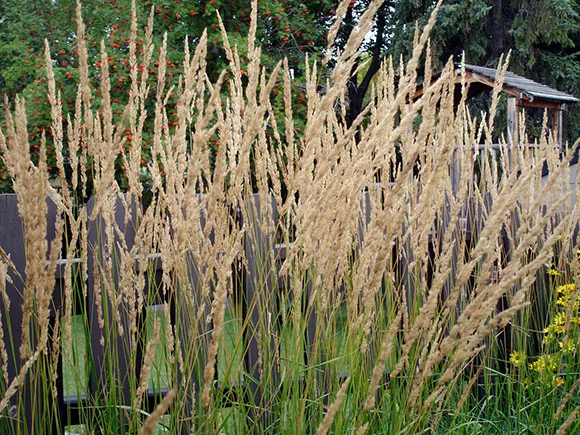
Botanical name: Calamagrostis × acutiflora ‘Karl Foerster’
This grass offers a more upright outline when a wide, arching plant would overwhelm the bed. Flower stems reach around 5–6 feet, above a lower foliage clump. The University of Minnesota reference lists a spread of about 2 feet and zones 4–8; other extension references give a broader hardiness range.
Importantly, ‘Karl Foerster’ has sterile seed and does not reseed, according to Wisconsin Extension. That is a useful distinction, but it applies to this cultivar rather than every grass sold as feather reed grass.
The maintenance tradeoff: Old stems still need annual cutting back. It also needs suitable moisture: UC Master Gardeners note that heat and insufficient moisture can cause premature drying and summer dormancy. Choose another option for a hot bed you rarely water.
3. Oshima sedge for smaller, partly shaded spaces
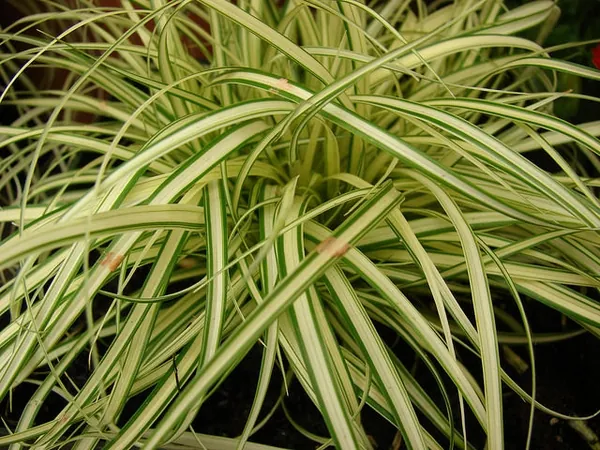
Botanical name: Carex oshimensis
Oshima sedge is worth considering where you want a lower planting rather than a tall screen. NC State Extension lists it for containers and the front of a border, with a clump that slowly increases in size. Species-level dimensions are around 12–18 inches tall and 12–17 inches wide; check the label for the selection you buy.
For a pool-area layout, a partly shaded spot with reliable moisture is a more useful starting point than a baking strip beside reflective paving. It can grow in sun, but its water requirements matter, and the species does not tolerate drought.
The maintenance tradeoff: Keep the soil suitably moist and tidy aging foliage. Do not treat “small grass-like plant” as shorthand for a drought-tolerant choice. It also forms flowers and small fruits, so avoid promising a completely seed-free planting.
4. Rosemary for sunny beds with good drainage
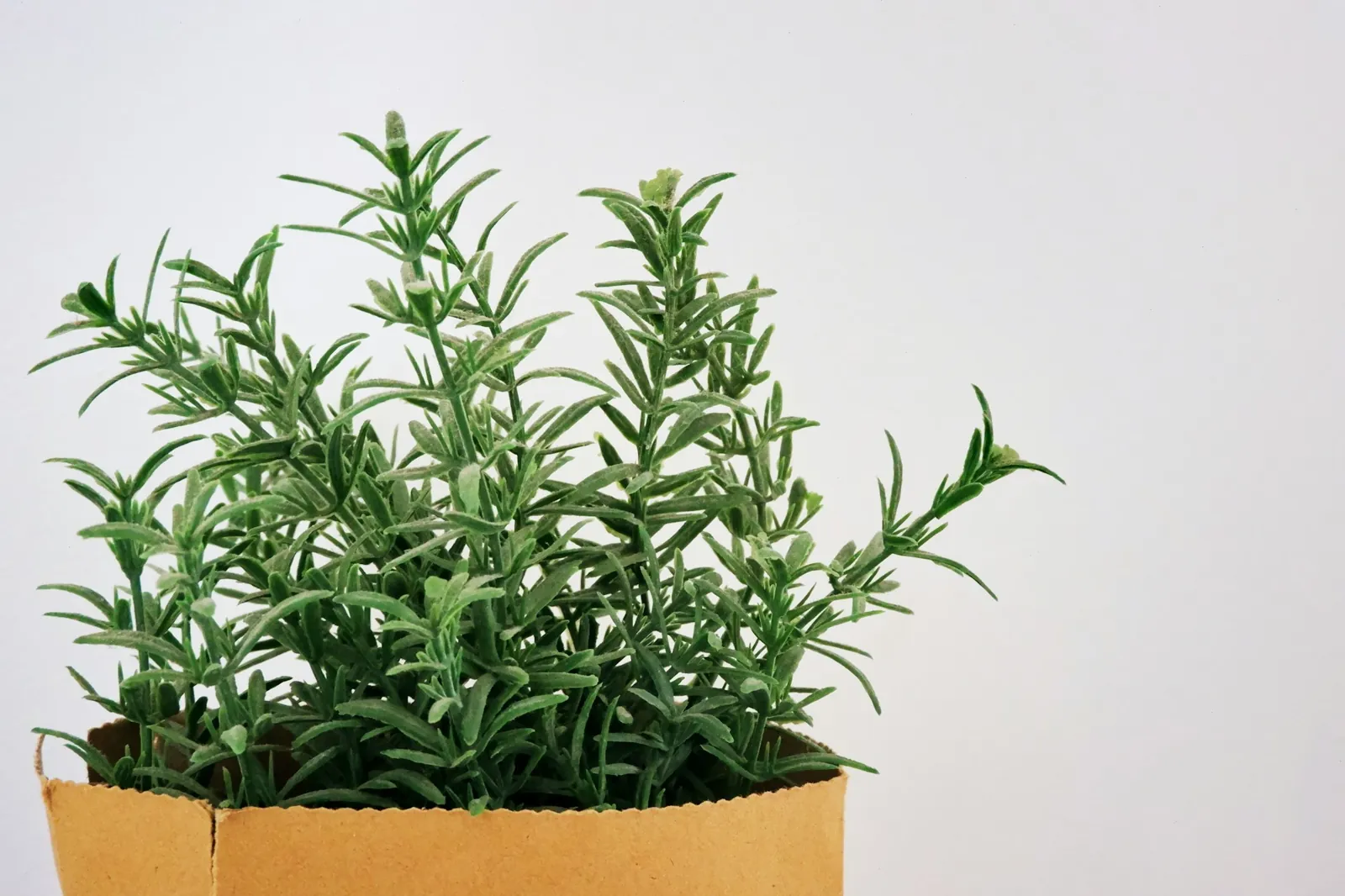
Botanical name: Salvia rosmarinus, formerly Rosmarinus officinalis
Rosemary can work where sunshine and drainage are easier to provide than frequent irrigation. Its evergreen foliage suits beds and containers, but choose the growth habit deliberately. NC State Extension gives species-level dimensions of 4–5 feet tall and 3–4 feet wide; a spreading selection will look different from an upright shrub.
Leave room for the mature branches rather than relying on constant trimming to keep them off the deck. A container can help you choose a suitable position, although it still needs drainage and attention to watering.
The maintenance tradeoff: Wet conditions and overwatering can cause problems, and pruning creates clippings to collect. Its flowers attract bees and other pollinators. Enjoy it as a planting choice, rather than claiming that rosemary beside the pool will repel mosquitoes or keep bees away.
5. Texas sage for hot, dry landscapes
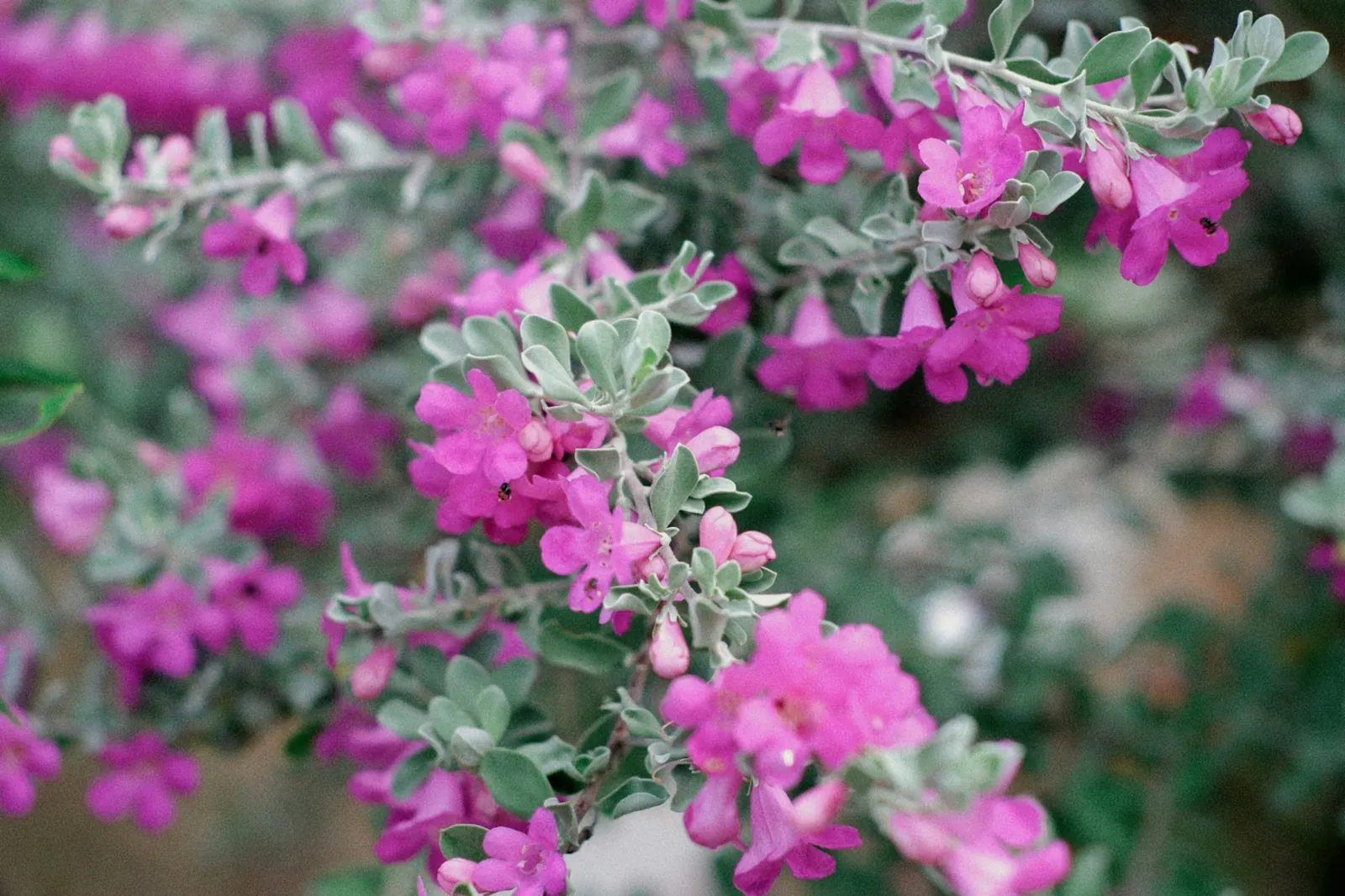
Botanical name: Leucophyllum frutescens, also called cenizo
Texas sage adds a shrub option for a sunny landscape with limited irrigation. Despite its common name, it is not a Salvia. Texas Tech University recommends it for dry landscapes with well-drained soil and notes that it prefers low humidity. Avoid a position where the roots stay wet.
Check regional guidance and cultivar size before choosing your spot. Texas Tech lists zones 7–9 and a 3–5-foot height and spread; LSU lists zones 8–9 and an average size of 6 feet tall by 5 feet wide. Those references are a reason to plan for a substantial shrub, not assume every plant stays compact.
The maintenance tradeoff: Flowers and pruning still create material to clear. Give it its own suitable watering conditions rather than pairing it with thirsty plants on the same frequent irrigation routine.
6. Orange bird of paradise for warm-climate planting
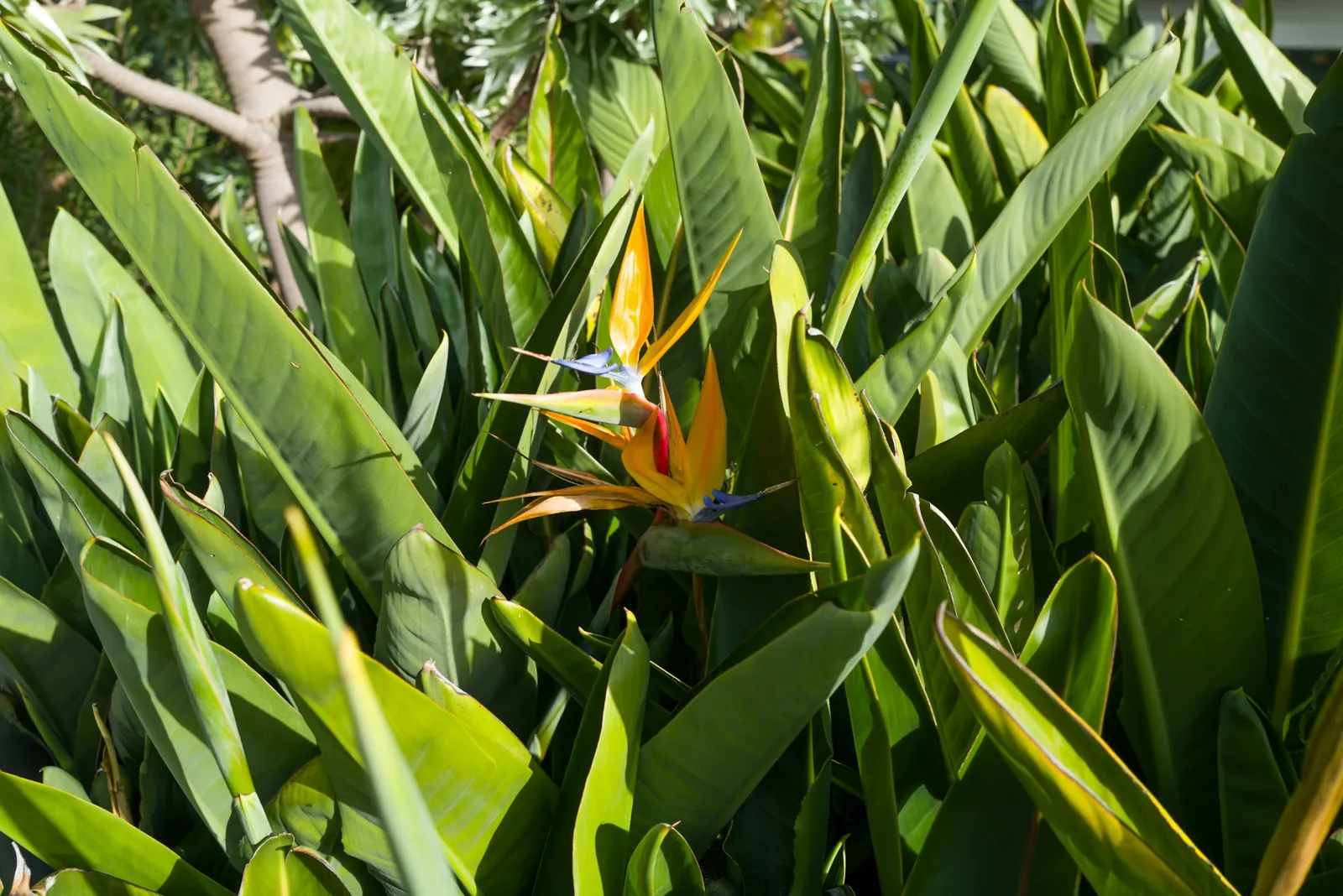
Botanical name: Strelitzia reginae
Orange bird of paradise brings broad foliage and distinctive flowers without the scale of the larger white bird of paradise, Strelitzia nicolai. UF/IFAS lists zones 10–11, a height of 3–5 feet, and a spread of 2–4 feet. It specifically notes that the plant tends not to create much leaf litter around pools and patios.
Provide well-drained soil and room for the clump to develop. In colder areas, a movable container lets you bring the plant under protection before freezes, provided you have a suitable indoor space.
The maintenance tradeoff: Remove old leaves and spent flower stalks, and plan for cold protection. This is also a poor fit where pets chew plants: NC State Extension identifies toxicity to cats and dogs. Lower leaf litter does not make a plant suitable for every household.
7. Variegated shell ginger for roomy, partly shaded beds
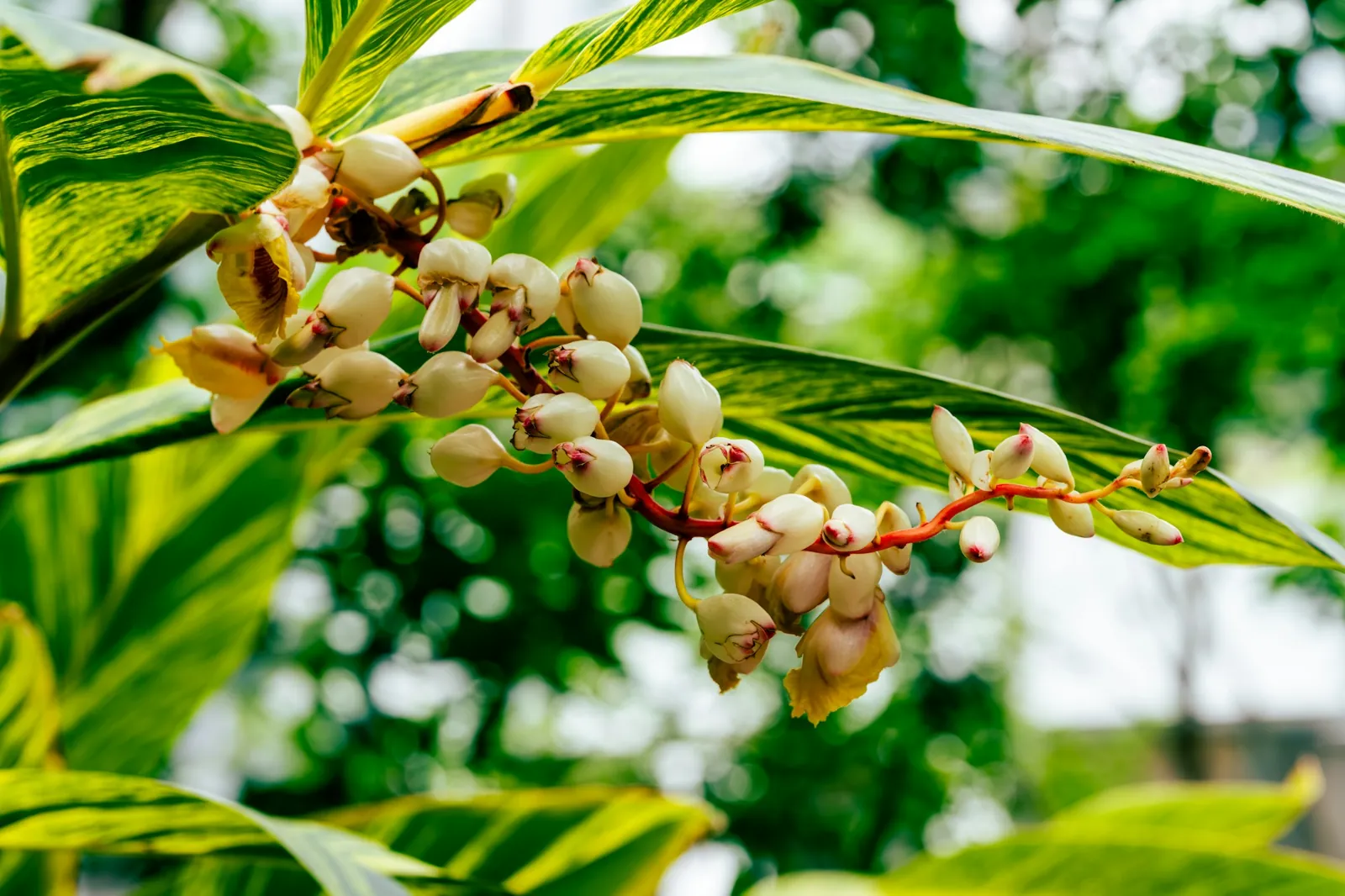
Botanical name: Alpinia zerumbet ‘Variegata’
Choose this plant for a generous background bed where its striped foliage has room to spread. The UF/IFAS plant profile, revised in November 2025, gives a height of 4–7 feet and a width of 5–8 feet, with a zone range of 9b–11b. It favors partial shade and moist, fertile, well-drained soil.
That mature width makes it unsuitable for a narrow pocket directly beside the pool. Use it farther back in the landscape, where you can reach the clump and manage its rhizomes without working over the water.
The maintenance tradeoff: Expect expanding growth and old stems to manage. UF/IFAS rates its soil salt tolerance as poor, so keep it away from repeated pool-water discharge. Cold can also kill stems back; do not promise year-round foliage wherever the roots might survive.
How to choose plants that suit your pool
Check winter and summer conditions. Find your USDA zone, then consider sunlight, reflected heat, wind, and humidity. The USDA explains that hardiness zones reflect average annual extreme winter minimum temperatures. A matching zone alone does not mean a plant will enjoy your particular poolside bed.
Plan for mature width. A small nursery pot can become a broad clump or shrub. Keep enough room to walk, remove dead growth, and access equipment. If you are comparing layouts, the plant spacing visualizer can help you picture the arrangement. Plant-to-plant spacing is different from a safe distance to a pool shell, buried pipe, or retaining wall; those decisions depend on the site.
Group plants with compatible watering needs. A moist sedge planting and a dry rosemary bed call for different routines. Avoid choosing plants solely because they look good together in a photograph.
Consider where loose material will go. Watch how wind moves across the deck before placing plants with dry stems or seasonal flowers. A position that looks slightly farther from the water may also be easier to prune and clear.
Keep pool water out of the planting plan. Tolerance to coastal salt spray, salty soil, and chlorinated splashes are separate questions. UF/IFAS cautions that its poolside recommendations still need maintenance and cannot withstand a deluge of chlorine or salt water.
What to avoid near the water’s edge
Think about the plant’s position as well as its name. Heavy fruit or flower drop is harder to manage when it lands directly on coping or in the pool. Sharp foliage and thorns are poor neighbors for a busy barefoot route. A shrub that needs repeated cutting just to keep the walkway open may simply be too large for that location.
For a narrow bed, start with the available mature width rather than planning to hold a large plant at nursery size. Keep planting, pots, and future growth clear of equipment access and the space needed around pool barriers. Check local requirements before changing those areas.
For broader combinations of beds, paving, and shade, explore these pool landscaping ideas. Use this article to select the plants within that layout.
Keep plant debris out of your pool
Plant selection helps you plan a manageable routine, but it does not replace cleanup. Collect pruning clippings before they blow away, remove old foliage when needed, and clear loose debris from the deck. Check baskets and the water surface after windy weather.
If leaves have already reached the water, follow the steps for getting leaves out of a pool. Choose cleaning tools for where the debris is: floating material and settled material need different attention. Build the garden and the cleaning routine together so you can spend more time enjoying the pool.
Frequently asked questions
What plants make the least mess around a pool?
No plant is completely mess-free. Orange bird of paradise has a relatively low leaf-litter burden in suitable warm climates, while other choices still produce old foliage, flowers, or seeds. Match the plant’s seasonal cleanup to the location. A manageable plant farther from the water can be a better fit than a supposedly tidy plant squeezed against the coping.
Can poolside plants tolerate salt or chlorine?
Some tolerate occasional exposure better than others, but that does not make pool water suitable irrigation. Coastal salt-spray tolerance is not proof of tolerance to salty soil or repeated chlorinated discharge. Protect planting beds from regular splashes and drainage routes, and check the specific plant’s requirements rather than assuming every poolside recommendation is salt-tolerant.
How far should plants be from a pool?
There is no single distance that suits every plant and pool. Allow for mature spread, walking and maintenance space, plus the location of structures and buried services. For a large shrub, tree, or planting beside a pool shell or pipework, get site-specific advice before digging. A plant’s listed spacing is not a structural setback recommendation.