The Complete Guide to Pool Algae: How to Identify, Treat, and Prevent Every Type

You notice it on a Tuesday. The water looked fine on Sunday.
Now there’s a green tint sitting in the deep end, and when you run your hand along the wall, there’s that slick feeling that means you already have a problem.
By the weekend, if you don’t move, you’ll have a swamp.
Most people treat it wrong the first time, add shock, wait, decide it’s probably fine, and two weeks later, they’re standing at the same point or worse.
The problem is seldom the product. It’s the dose, the sequence, or not knowing which type they’re actually dealing with, because not everything green is the same problem, and pale, cloudy growth isn’t always true algae either.
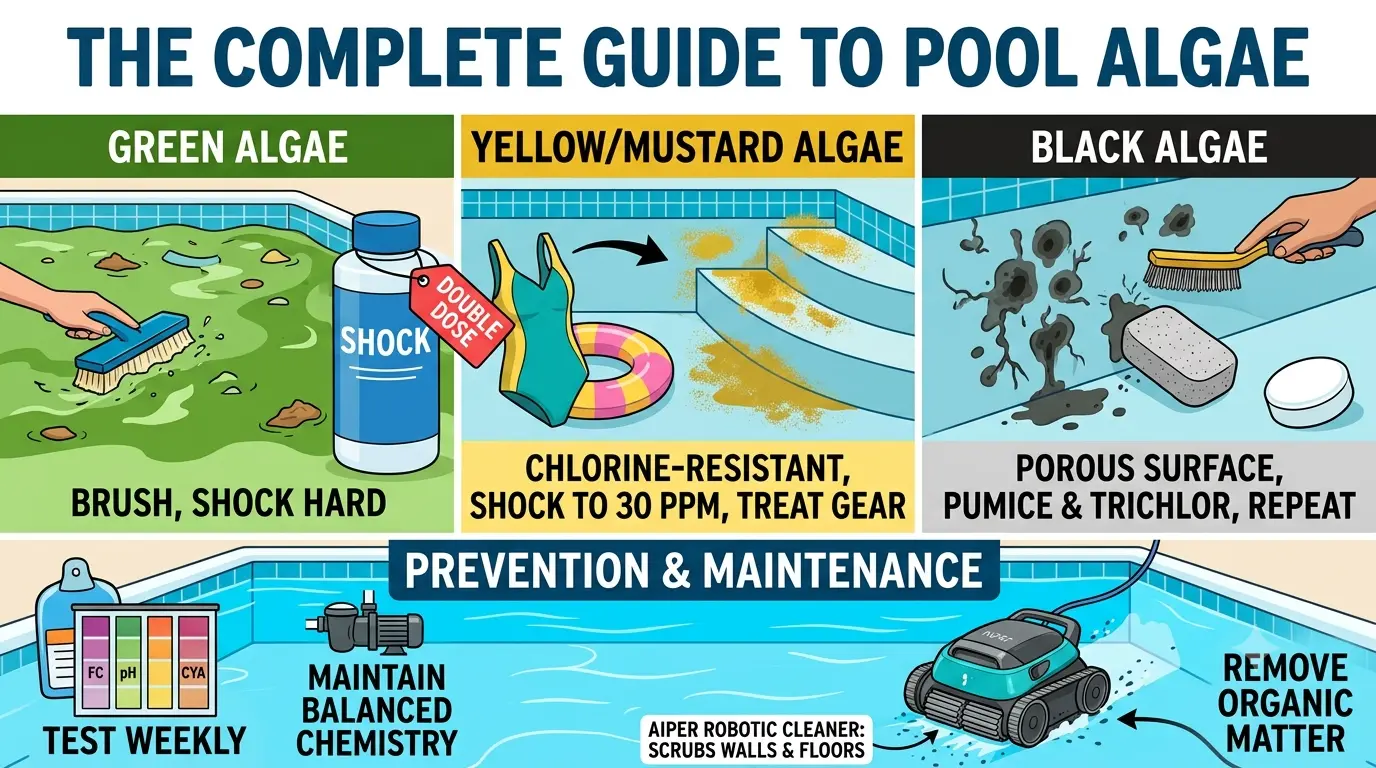
Green Algae
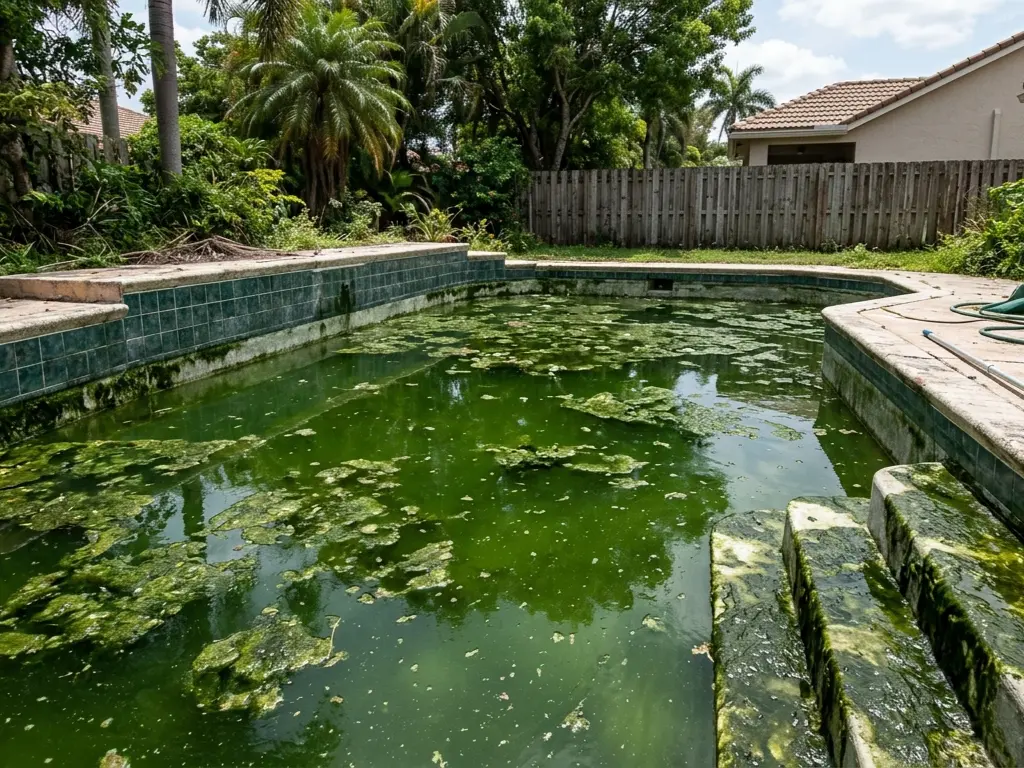
This is what most people have. Water goes hazy, then green, sometimes coating the walls in a film you can wipe off with your hand — when that film feels slimy rather than chalky, follow our guide to how to remove biofilm from pool surfaces. For the full step-by-step removal routine, read our dedicated guide on how to get rid of green algae for good.
Brush everything before you add anything: walls, floor, steps, and the corners behind the ladder. Brushing breaks up colonies and forces them into the water where sanitizer can reach them. A lot of treatments fail because people shock first and brush later, or skip it entirely.
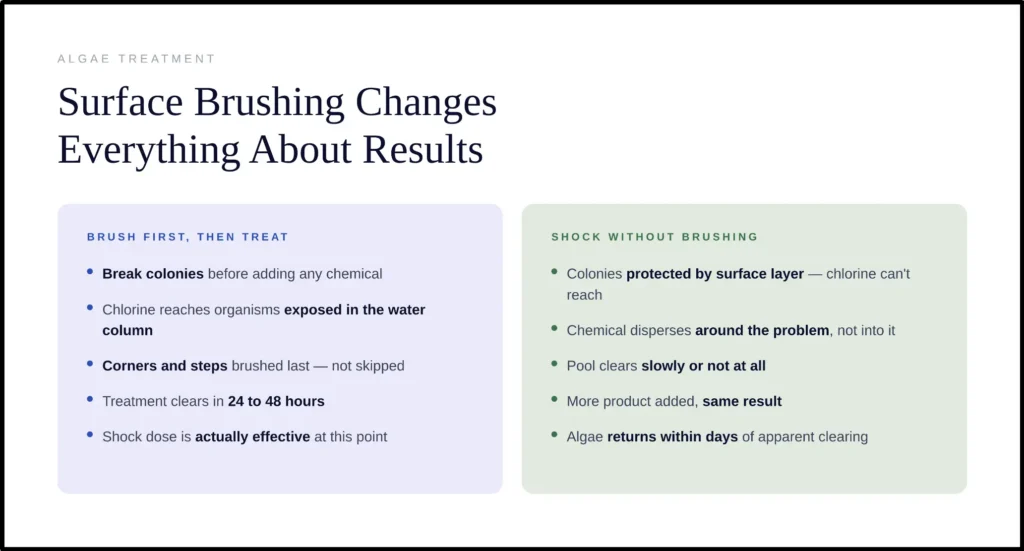
Then, shock hard. A pound of cal-hypo per 10,000 gallons is the floor for a light bloom. Visibly green water? Double it. Run the filter continuously, backwash when pressure climbs, and within 48 hours, the water should start shifting from green to cloudy white.
If it’s not moving in that direction, you didn’t add enough.
Yellow Algae
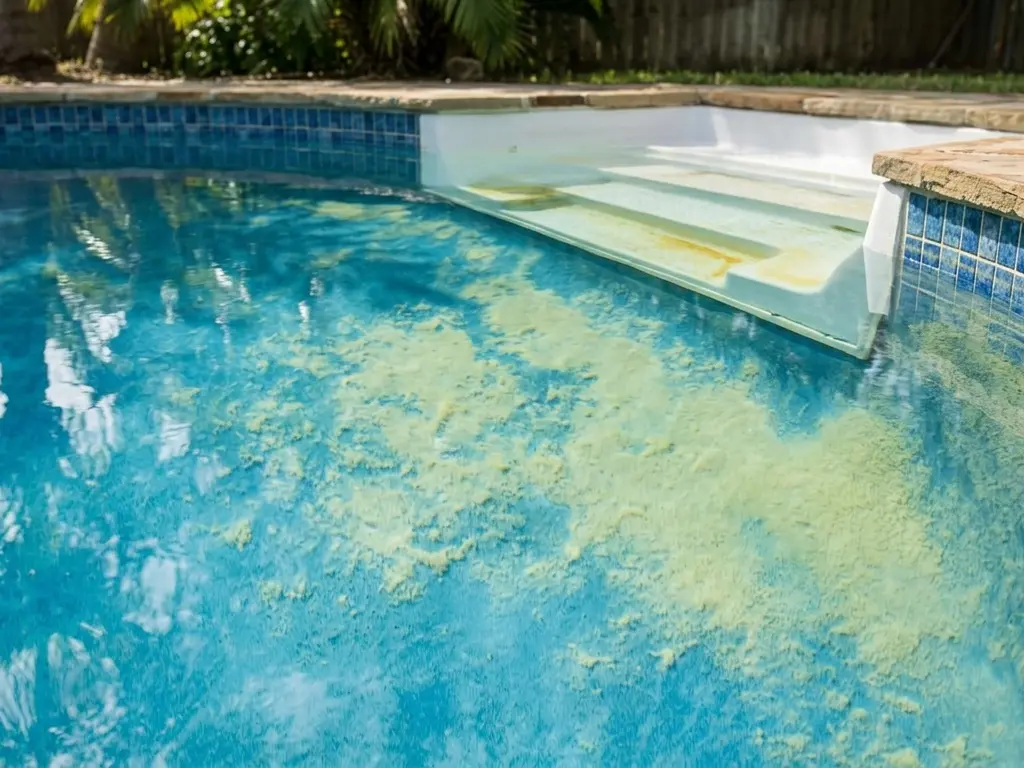
This one causes more unnecessary suffering than any other type.
It looks like dirt or sand has settled on the walls — and sometimes it really is, in which case our guide to getting dirt out of a pool without a vacuum has the cleanup routine. You brush it off. Three days later, it’s back in the same spots. People spend weeks thinking they have a filtration problem before they figure out what it actually is.
Mustard algae are chlorine-resistant. The level that keeps your pool clear will not kill it — getting rid of mustard algae takes a sustained shock. It survives in shaded spots, low-circulation corners, and surfaces that don’t get direct sun. It also travels on swimsuits and equipment, someone brings it in, your normal chemistry won’t stop it from taking hold.
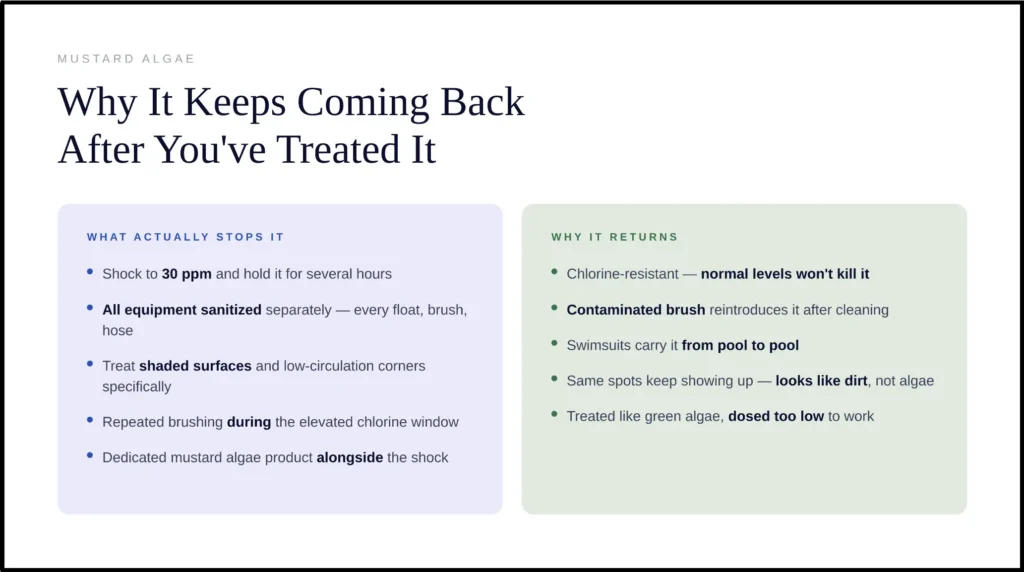
Shock to 30 ppm and hold it there for several hours. Brush repeatedly. And treat everything that’s been in the water, every float, brush, toy, hose. Sanitize equipment separately in a chlorine solution. If you skip this, you reintroduce it the next time you reach for the brush.
Black Algae
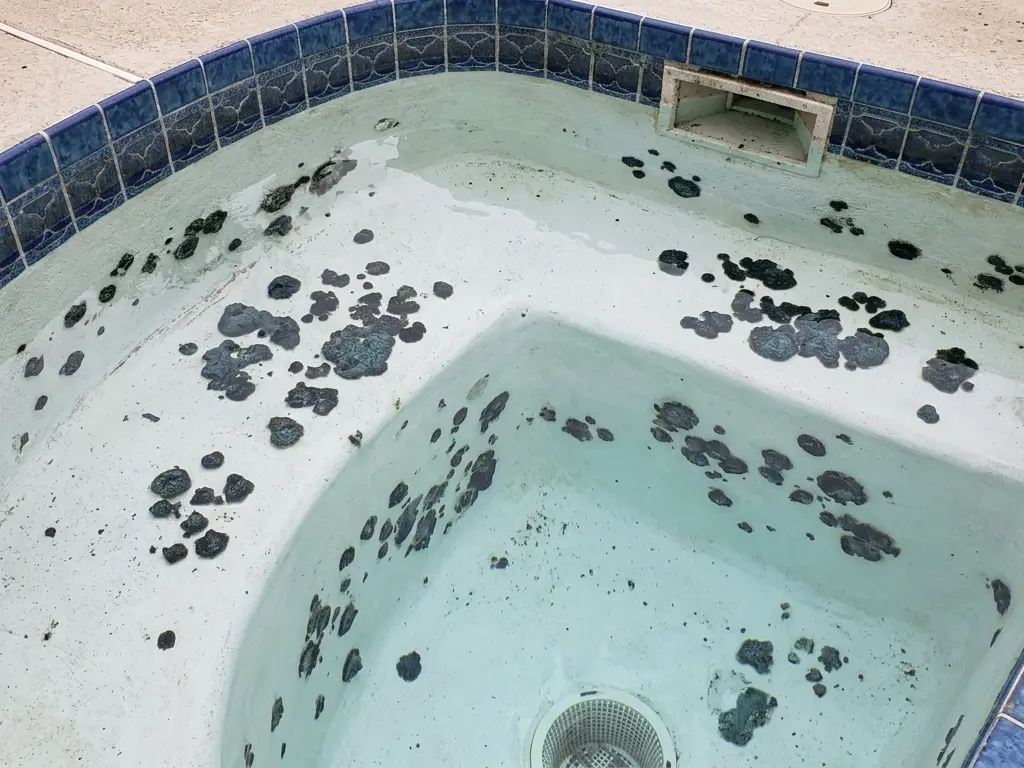
This is not actually algae, but cyanobacteria — one more reason your pool can be green without algae. And it’s a different problem entirely.
Dark spots on plaster or concrete, rarely in vinyl pools, because it needs a porous surface to root into. Each spot has a hard protective outer layer that chlorine alone can’t penetrate. You can shock all week. The spots sit there.
You have to break the surface first. Stainless steel brush, worked directly into each spot. Stubborn ones get a pumice stone. Then rub a trichlor tablet directly onto the spots before shocking the whole pool.
Repeat the cycle. Black algae that looks gone often isn’t, and spots that keep returning in the same location usually mean it’s gone deeper into the plaster.
Pink Algae
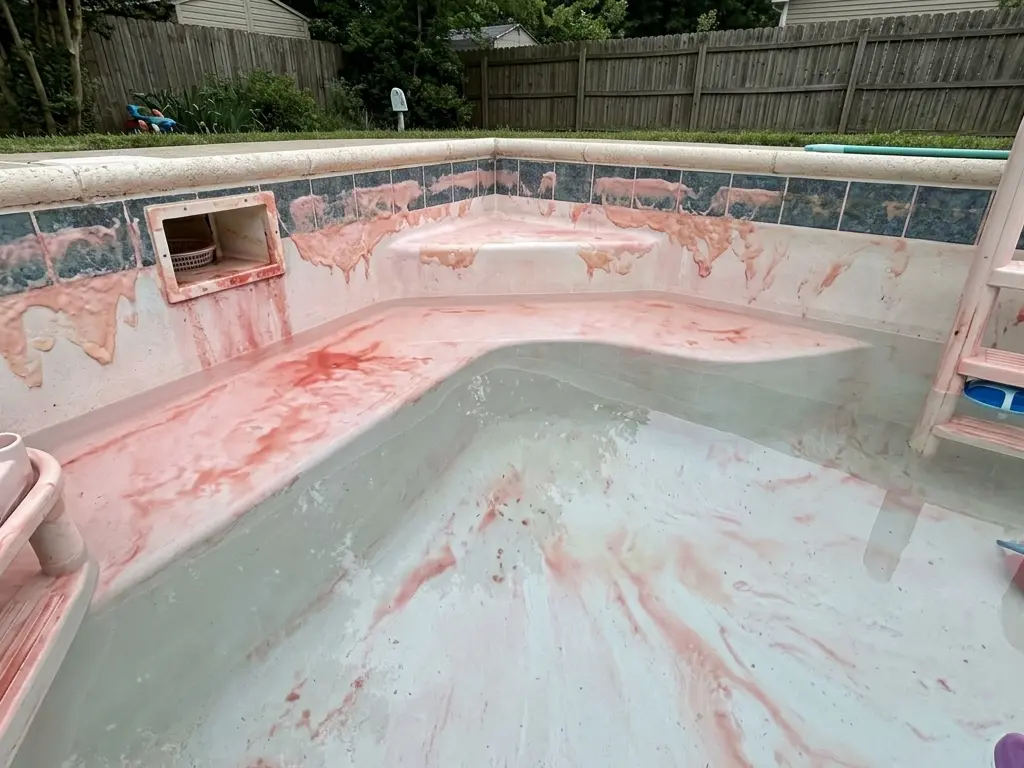
Technically, bacterium: Serratia marcescens. Pinkish-orange slime around fittings, ladder bases, and return jets. Anywhere water slows down.
Less aggressive than black algae but stubborn in a low-grade, recurring way. Brush the affected areas, elevate chlorine, and clean the filter. The key is actually getting to where it lives, which tends to be tucked around hardware and protected from normal water flow.
Prevention
Almost every algae outbreak is a chemical failure that had time to develop.
Free chlorine between 2-4 ppm. pH between 7.4 and 7.6. Let either drift for a few days in warm water, and you’re already behind.
Cyanuric acid is where a lot of outdoor pools quietly go wrong. Above 50 ppm, it starts neutralizing chlorine’s effectiveness.
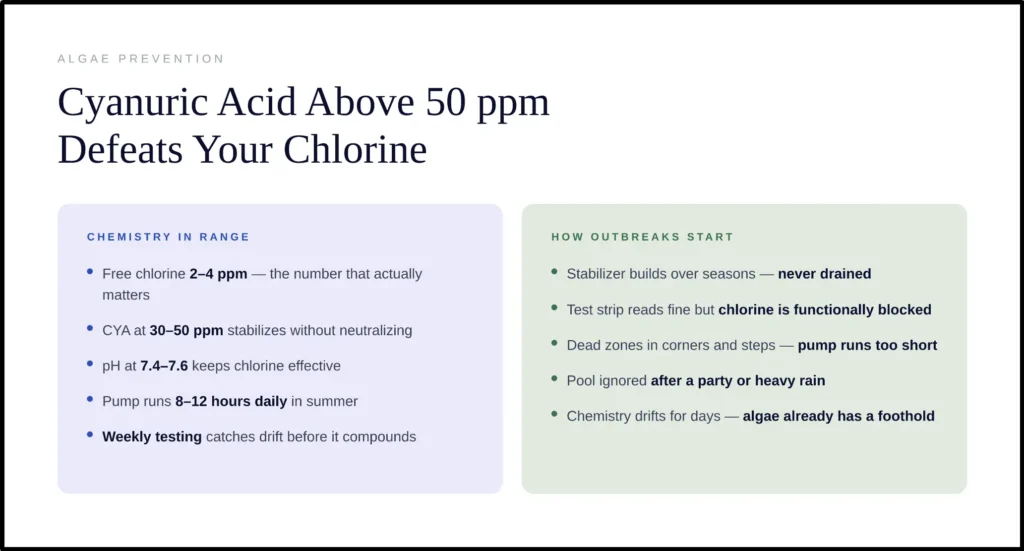
Pools running normal chlorine levels but with stabilizer that’s been building for two or three seasons are functionally under-sanitized. The test result looks fine. The water isn’t protected. This is more common than people realize and rarely gets diagnosed until there’s a recurring algae problem that won’t respond to treatment.
Circulation matters too. Algae takes hold in dead zones, corners, behind the ladder, and the far end of a step that never gets direct flow — the same still-water pockets where mosquitoes lay their eggs and thrive around pools. Eight to twelve hours of pump runtime in summer is the baseline. Less than that and you’re creating conditions.
Test weekly so you can correct small imbalances before they stack. Don’t let the pool sit after a rainstorm or a crowded weekend without checking it.
Most outbreaks are preventable. They just require the kind of attention that’s easy to skip when the water still looks clear.
One Less Thing to Let Slip
Chemistry failures happen in the gaps, during the days you didn’t test, the weekend you let it go, the stretch after a party when the pool sat unattended.
Leaves, oils, sunscreen residue, and organic matter settling on the floor feed algae growth and chew through chlorine faster — and the same oils resurface as the scum on top of your pool water that rings the waterline. When the physical cleaning is handled consistently, the chemistry has less to fight. That same organic buildup is also what draws pests to a pool in the first place — our guide to keeping bugs out of your pool covers breaking that cycle from the other direction. Pollen does the same thing in spring, and why pool pollen keeps coming back every spring explains how to stop it feeding that same bloom.
Aiper’s robotic pool cleaners run on their own schedule, scrub the walls and floor without you thinking about it, and pull debris before it has a chance to sit.
Get more pool and lawn care guides from Aiper on Google