The Smart Irrigation Pillar: How Modern Watering Systems Actually Work

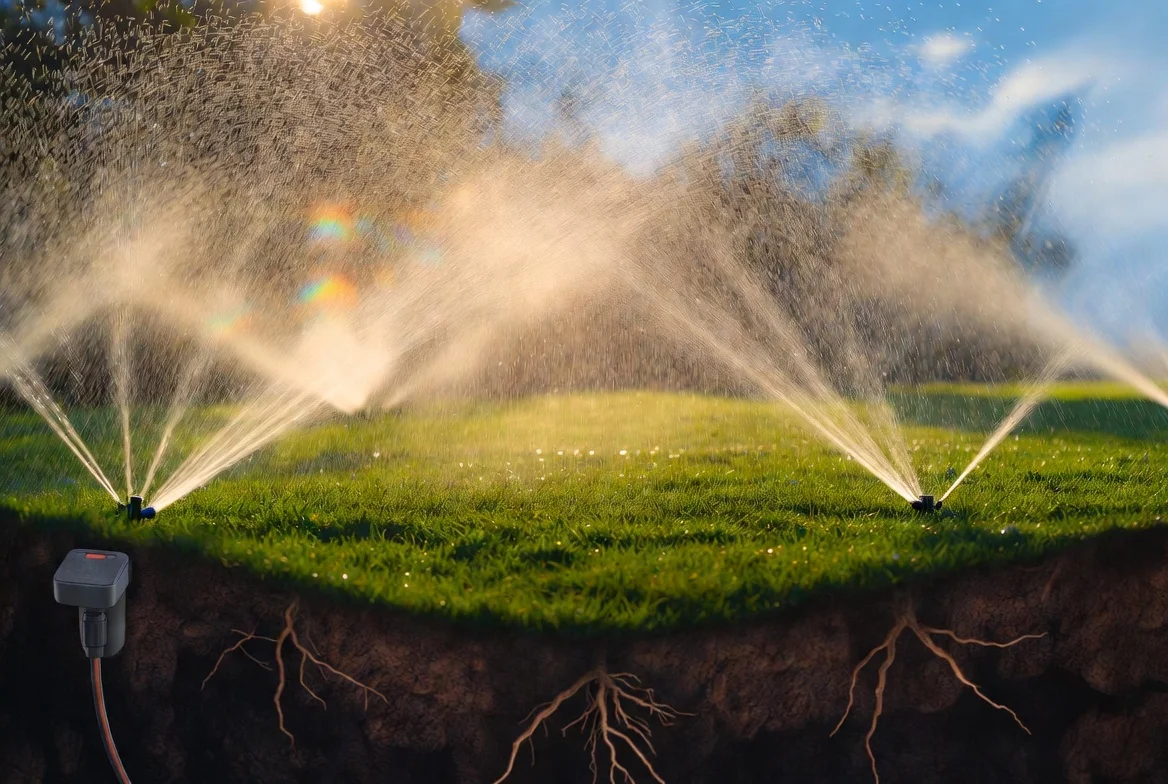
Most lawns aren’t dying of thirst. They’re drowning slowly, on a schedule, because someone set a timer in May and never touched it again.
Genuinely smart irrigation means the system knows something about the yard it’s watering and changes its behavior based on what it knows.
Everything below is really an answer to one question: what does this system actually know?
The Four Tiers of Smart Irrigation
The category runs on a spectrum, and marketing flattens it. Pulling it back apart:
Tier 1: The basic timer
A mechanical or digital clock that opens a valve at 6 a.m. for 20 minutes, every day, forever.
- Knows nothing about the yard or the weather
- Waters during rainstorms, and waters in October like it’s July
- Cheap and reliable and the reason half the driveways in America have a wet stripe down the middle
Tier 2: The Wi-Fi timer
Same clock, now with an app.
- Schedules change from a phone instead of a control box in the garage
- The system still knows nothing about the yard
- This is where most products labeled smart actually live
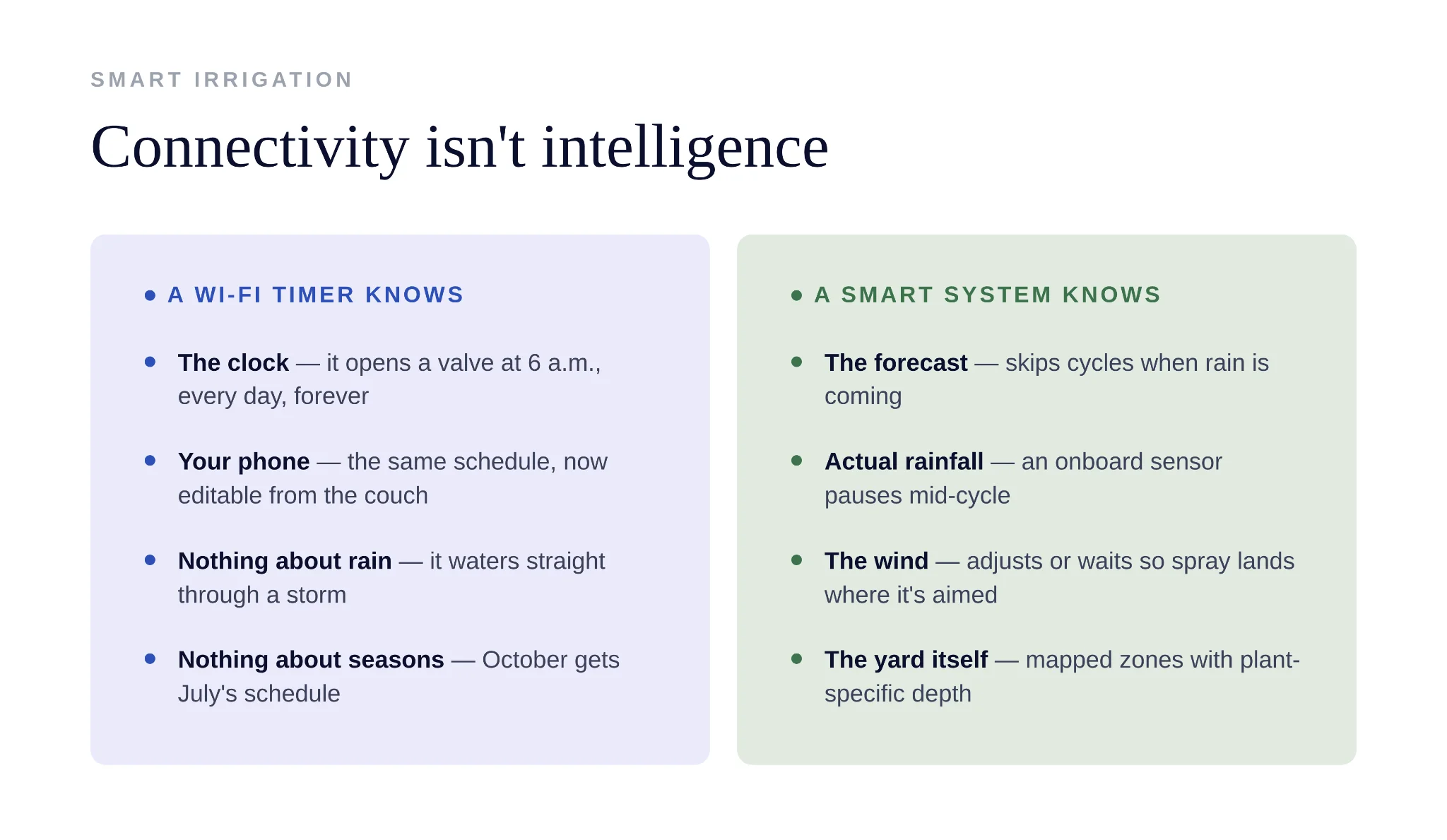
Connectivity isn’t intelligence. It’s reach.
Tier 3: Weather-adaptive controllers
The first tier where something real happens. The controller pulls forecast data or reads an onboard rain sensor, then modifies its own schedule:
- Skips cycles when rain is coming
- Pauses mid-cycle when rain arrives
- Stretches intervals in cool weather
One input, what the sky is doing, eliminates the most wasteful watering there is: irrigating a lawn that’s about to get irrigated for free.
Tier 4: Mapped, zone-aware systems
The top of the spectrum. The system holds a model of the yard itself, which areas are lawn, which are beds, which are vegetable rows, and delivers different water to each, on different schedules, at different depths.
This used to require buried pipe, multiple valves, and a professional install. It doesn’t anymore.
The honest test for any product in this category: name the inputs. If the only input is a clock and a phone, it’s tier 2 wearing tier 4’s marketing.
The Science Behind the Schedule
Hardware is downstream of horticulture. The machinery exists because of one stubborn fact about how grass takes up water: roots follow water.
Why shallow, daily watering backfires
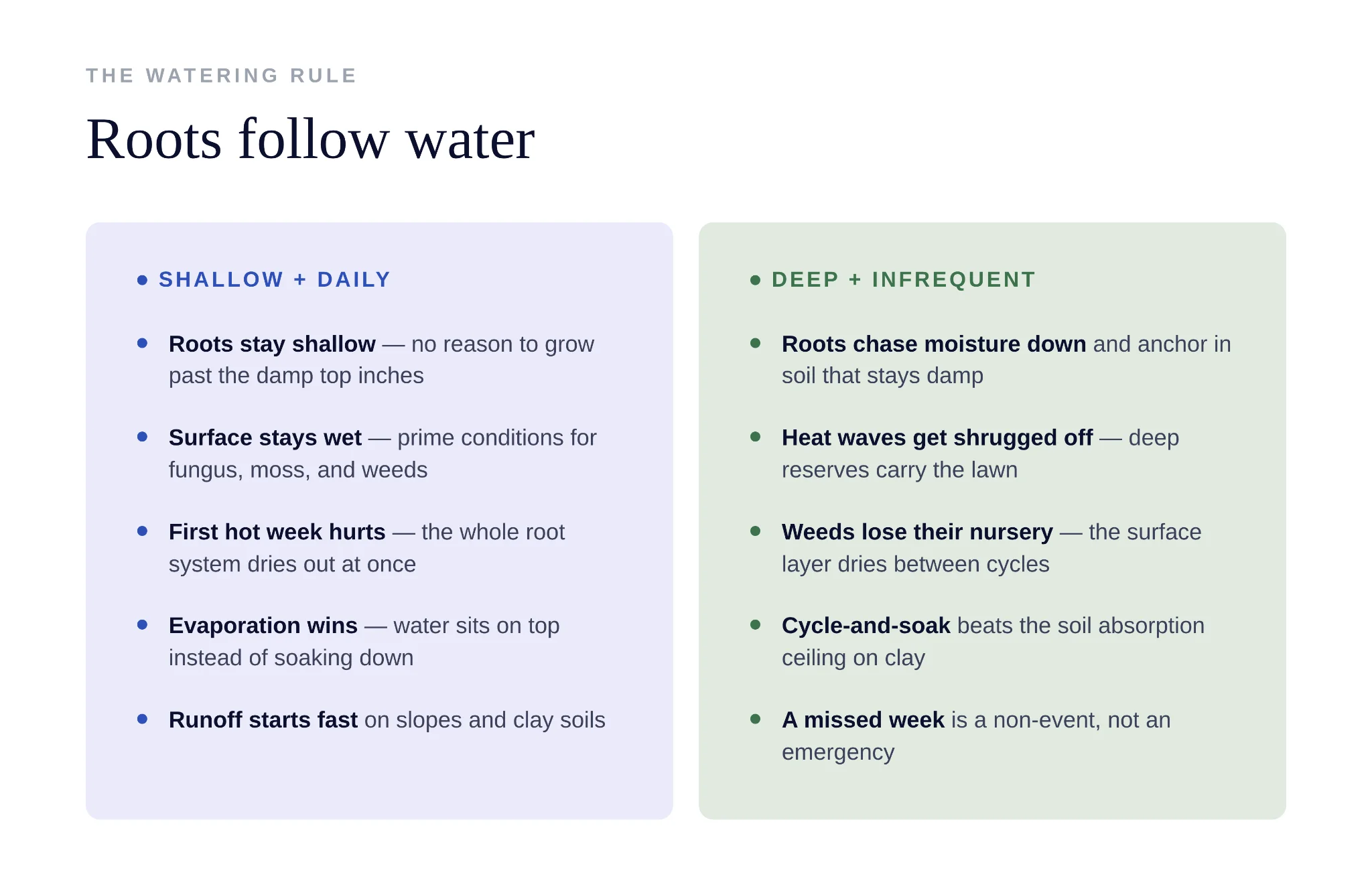
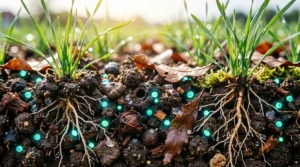
Water shallow and often, and roots stay shallow, there’s no reason for them to go deeper. The consequences stack:
- Fragility. The entire root system lives in the two inches of soil that dry out first, so the first hot week without water stresses the whole lawn.
- Disease pressure. A constantly damp surface is ideal for fungus, moss, and weed germination.
- Waste. Evaporation losses are highest when water repeatedly sits on the surface instead of soaking down once.
Why deep, infrequent watering wins
Water deep and infrequently, and roots chase moisture downward. That lawn:
- Rides out heat waves on deeper soil reserves
- Shrugs off a missed week
- Starves out weeds whose seeds germinate in the surface layer, which now dries between cycles
Cycle-and-soak: beating the absorption ceiling
Soil can only absorb water so fast, sandy soil drinks, clay soil sips. Dump water faster than the soil accepts it and the excess runs off the slope and onto the sidewalk.
The fix is cycle-and-soak: shorter bursts with absorption breaks between them, adding up to a deep watering without the runoff.
It’s the kind of adjustment everyone knows about, and nobody maintains manually past June: three schedule entries per zone instead of one. A system that automates it isn’t offering convenience. It’s offering the difference between the correct schedule existing on paper and existing in practice.
How Weather-Adaptive Scheduling Works
Weather awareness sounds like one feature — but it’s the difference between a timer and a smart irrigation controller that actually saves water. It’s three, and products often ship only the cheapest one.
Rain skip (forecast-based)
The system reads local forecast data over Wi-Fi and cancels or delays cycles when rain is predicted. Proactive, the lawn never gets double-watered — and the savings show up as more than a lower water bill, which our guide to smart irrigation savings on water and money breaks down.
Rain pause (sensor-based)
An onboard sensor detects actual rainfall and halts irrigation. Reactive, but it doesn’t depend on the forecast being right, and forecasts are wrong locally all the time. The good systems run both: forecast to plan, sensor to verify.
Wind compensation
The overlooked one. Spray in wind doesn’t land where it’s aimed, drift can push a meaningful fraction of a cycle onto the fence, the car, the neighbor’s yard. Systems that detect gusts and pause, or adjust spray angle for drift, solve a loss most people never think to measure.
The bigger driver: evapotranspiration
Underneath all three sits evapotranspiration, combined water loss from soil evaporation and plant transpiration. It swings dramatically with temperature, humidity, and season: a lawn in a 95-degree week needs multiples of what it needs in a mild one.
Fixed schedules ignore this entirely, which is why the May setting drowns the lawn in September. Weather-adaptive systems track it and stretch or compress watering to match.
The cumulative effect is where claims like 40% water savings come from, not one feature, but eliminating three waste categories at once: watering before rain, watering in wind, and watering to a summer schedule in fall.
Why Zones Matter More Than Any Other Feature
A single yard contains wildly different water needs, and one schedule cannot serve them. This is the fork in the whole decision.
What actually varies across one yard:
- Plant type. Established turf wants deep, infrequent water. Vegetable beds want consistent moisture. New seed wants light, frequent cycles. Established shrubs mostly want to be left alone.
- Sun exposure. The strip along the south fence bakes; the patch under the maple barely dries out. Same schedule, opposite results.
- Soil. Fill dirt near the foundation, loam in the middle, compacted clay where the trucks parked during construction.
- Slope. Anything on a grade needs cycle-and-soak, or it needs a squeegee.
Run one schedule across all of that, and it’s wrong everywhere except one spot. This is the reason so many well-maintained lawns have a mysterious bad corner. Before blaming the schedule, though, it’s worth diagnosing why a sprinkler zone is underperforming, since a bad corner is often a hardware problem, not a timing one.
Zones as plumbing vs zones as software
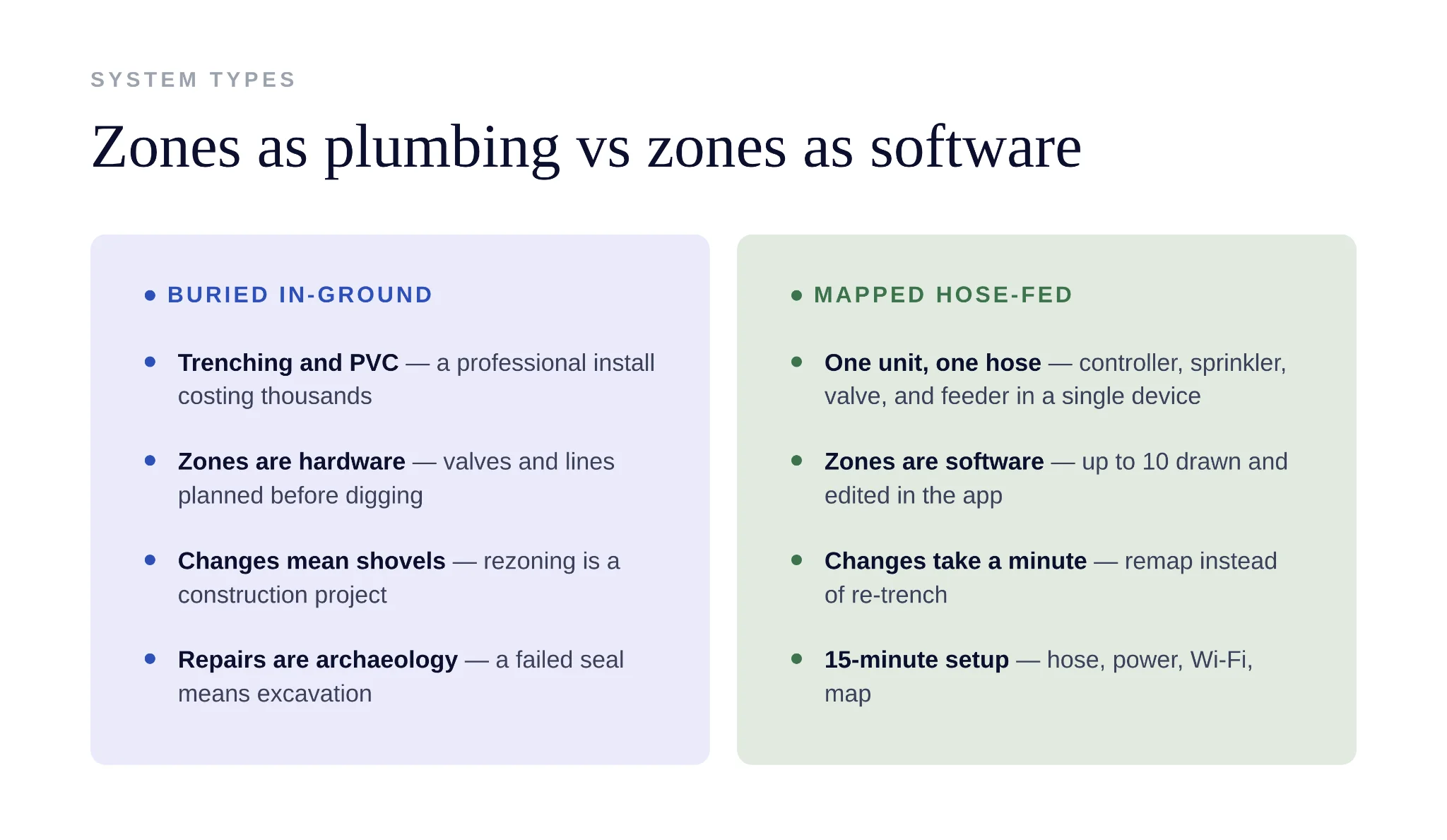
- Traditional zoning is hardware. Separate valves, separate buried lines, separate head types, all planned before trenching, expensive to change after. A zone is a plumbing decision.
- Mapped zoning is software. The yard gets mapped in an app the way a robot vacuum maps a floor. Zones are drawn, edited, and rescheduled without touching a shovel. Changing your mind costs a minute instead of a weekend of digging.
That shift is the single biggest structural change in residential irrigation in decades, and worth more than every connectivity feature combined.
Traditional In-Ground vs Modern Hose-Fed Systems
Here are the two systems that matter.
The buried-pipe path
The traditional route to real irrigation:
- Hire a company, trench the yard, bury PVC
- Install valve manifolds, heads, and a controller
- Reseed the scars
- Hope no seal ever fails, a leak under the lawn means excavation to find it
Thousands of dollars, permanent, and every repair is archaeology. That price of entry is why most yards never get past the hose-end sprinkler: the system that would fix the watering costs more than years of the water it wastes. It’s the same cost-benefit math homeowners run on nearly every other lawn task — our breakdown of when hiring a lawn service actually pays off versus doing it yourself walks through where that line usually falls.
The hose-fed alternative
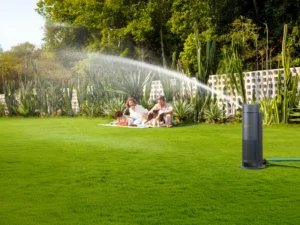
The current generation of smart hose-fed systems collapses the entire buried install into one above-ground unit:
- One device replaces four: the controller, the rotor sprinklers, the electric valve, and in some cases a nutrient feeder
- Fed by a standard garden hose and a nearby outdoor outlet
- Zones live in the app, not underground
- Setup takes minutes, not a construction crew
Tier-4 irrigation stopped requiring a trencher. That’s the story of the modern category in one sentence.
What Smart Systems Still Can’t Do
Worth saying plainly, because the category oversells:
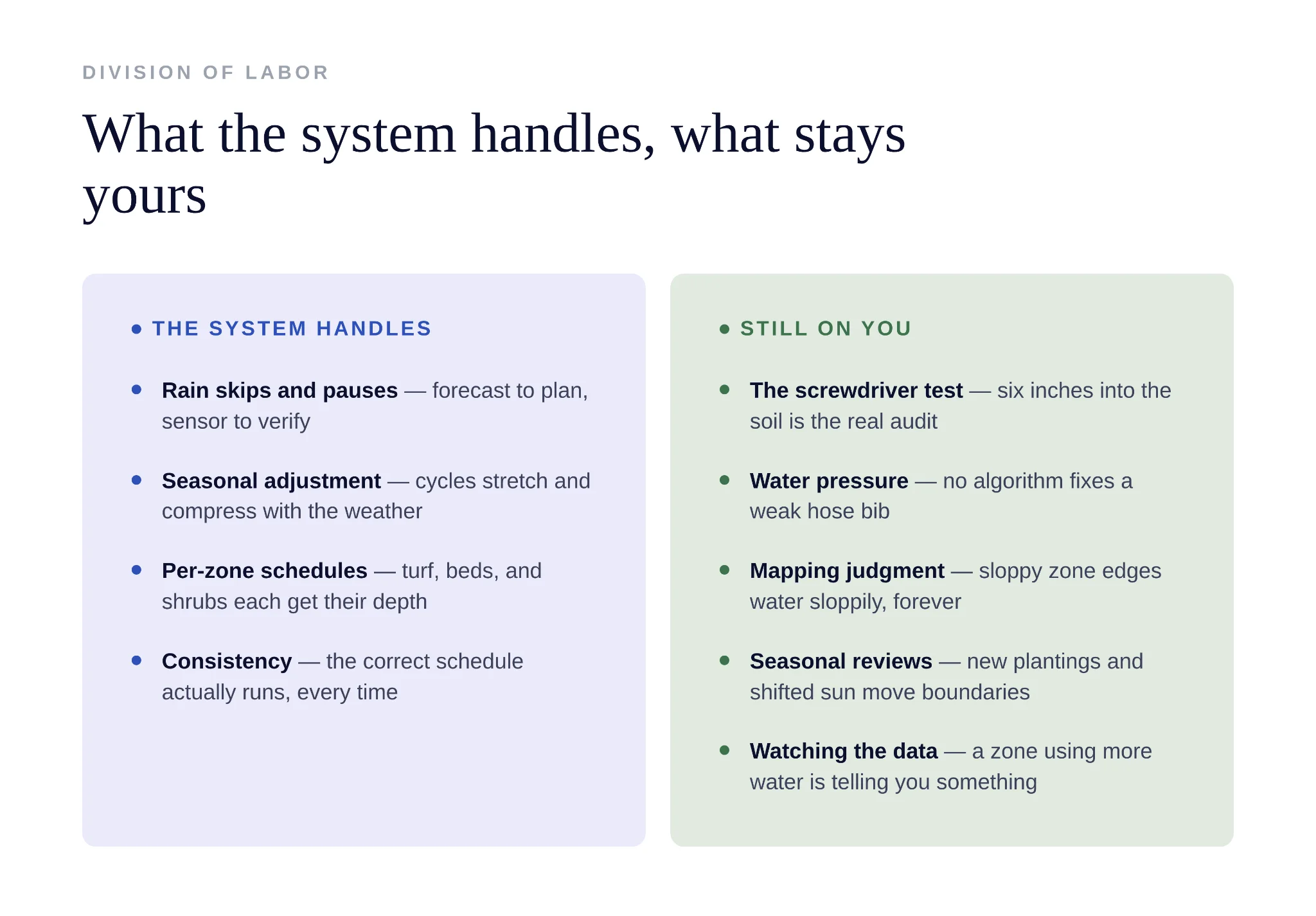
- Check the soil by hand. A screwdriver pushed into the lawn is still the ground truth. If it won’t slide in six inches a day after watering, the schedule is wrong no matter what the app says.
- Fix bad water pressure. Spray systems need adequate pressure to hit their rated range. A weak hose bib means weak coverage, and no algorithm compensates for physics.
- Redesign a badly planted yard. Grouping plants by water need is a landscaping decision. A thirsty bed planted inside a drought-tolerant zone stays a conflict; software can only split the difference.
- Replace judgment. Mapping is where the thinking happens now. Careless zone boundaries near beds, paths, and patios produce careless watering with perfect consistency. Map slowly, watch a few cycles, correct — and the system executes good judgment forever.
The Bottom Line
If the yard develops soggy patches with a musty smell despite a good schedule, it’s worth reviewing how to identify and treat lawn fungus separately from a watering fix.
Smart irrigation isn’t about controlling sprinklers from a phone. It’s about a system that knows the weather, knows the yard, and runs the schedule a careful owner would run if they had the patience to maintain it manually, which nobody does.
If you want that without trenching the yard, the Aiper IrriSense 2 is the clearest expression of where the category has landed. It’s a 4-in-1 system covering up to 4,800 square feet on a 39-foot spray range.
You map up to 10 independent zones in the app, each with its own schedule, depth, and plant profile, and the precision rotor adjusts pressure and angle on the fly.
Weather handling runs every layer covered above: forecast-based rain skips, an onboard rain sensor that pauses irrigation when real rain falls, and wind detection on top.
EvenRain delivery simulates natural rainfall instead of jetting water at the soil, keeping absorption up and erosion down, and Aiper rates the whole approach at up to 40% water savings over conventional watering.
Get more pool and lawn care guides from Aiper on Google