


Suppose the pool store circles 800 ppb on your water report. The water is clear, the steps look clean, and you went in for a routine test. Do you need to buy phosphate remover today? You can hold off on that decision. First, look for two other results on the sheet: today’s free chlorine and pH. Those readings help you decide what needs attention today. The phosphate result is more useful alongside your pool’s recent history.
What does an 800 ppb phosphate reading mean?
Say the full entry reads “Orthophosphate as PO₄, 800 ppb.” It means the sample contained 800 parts per billion of orthophosphate on that reporting basis. That’s 0.8 ppm. Algae can use this nutrient, but the test can’t tell you whether algae are growing on your pool steps. For a short explanation of the term, see the pool phosphate glossary entry.
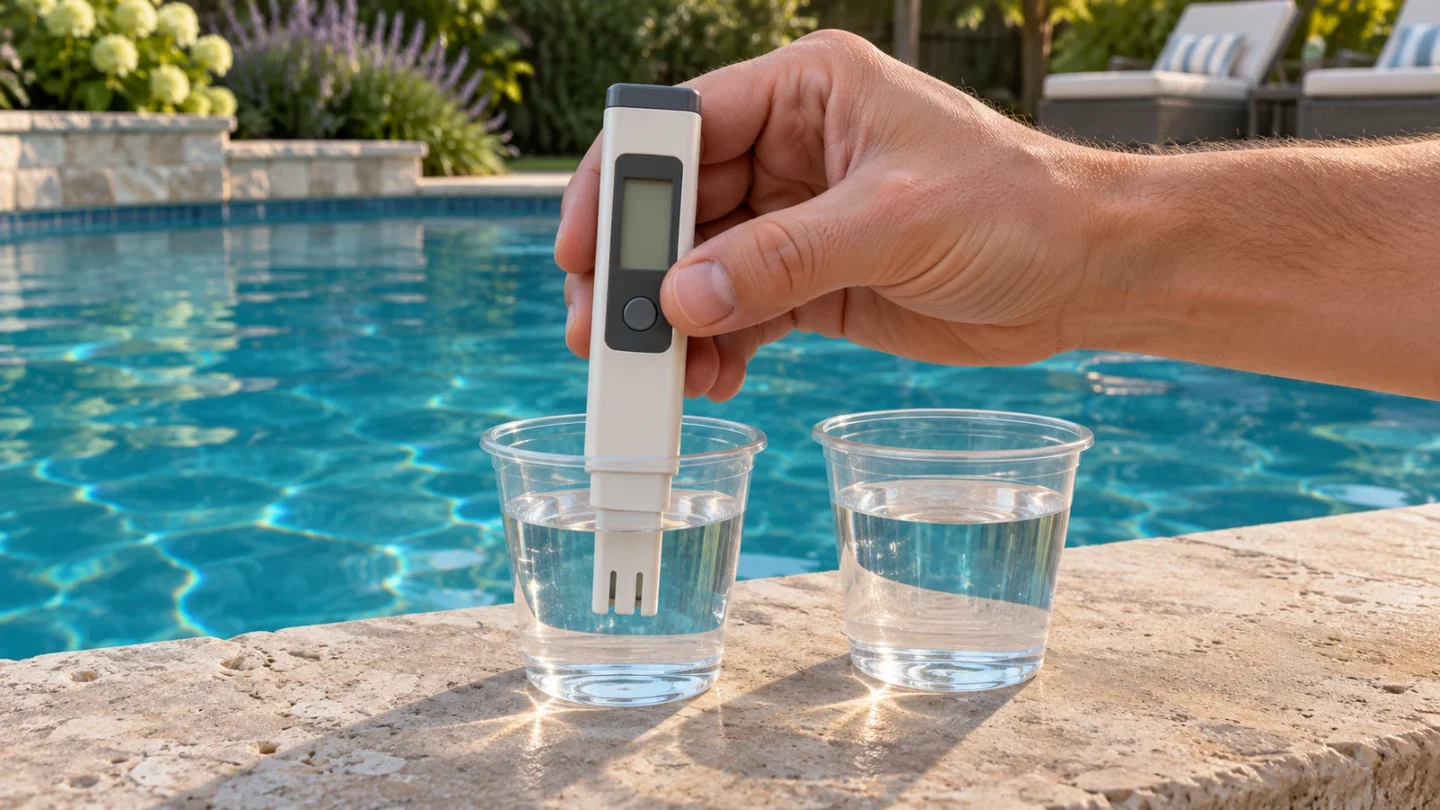
Pull out last month’s sheet. If it says “0.8 ppm as PO₄” for the same test, the two results agree. If it says “total phosphorus,” the lab measured additional forms of phosphorus. If it says “as P,” the lab reported the weight of phosphorus alone. In either case, ask the lab to put the results on a comparable basis before calling it an increase. Section 5.6 of the EPA’s water-testing manual explains the difference between orthophosphate and total phosphorus tests.
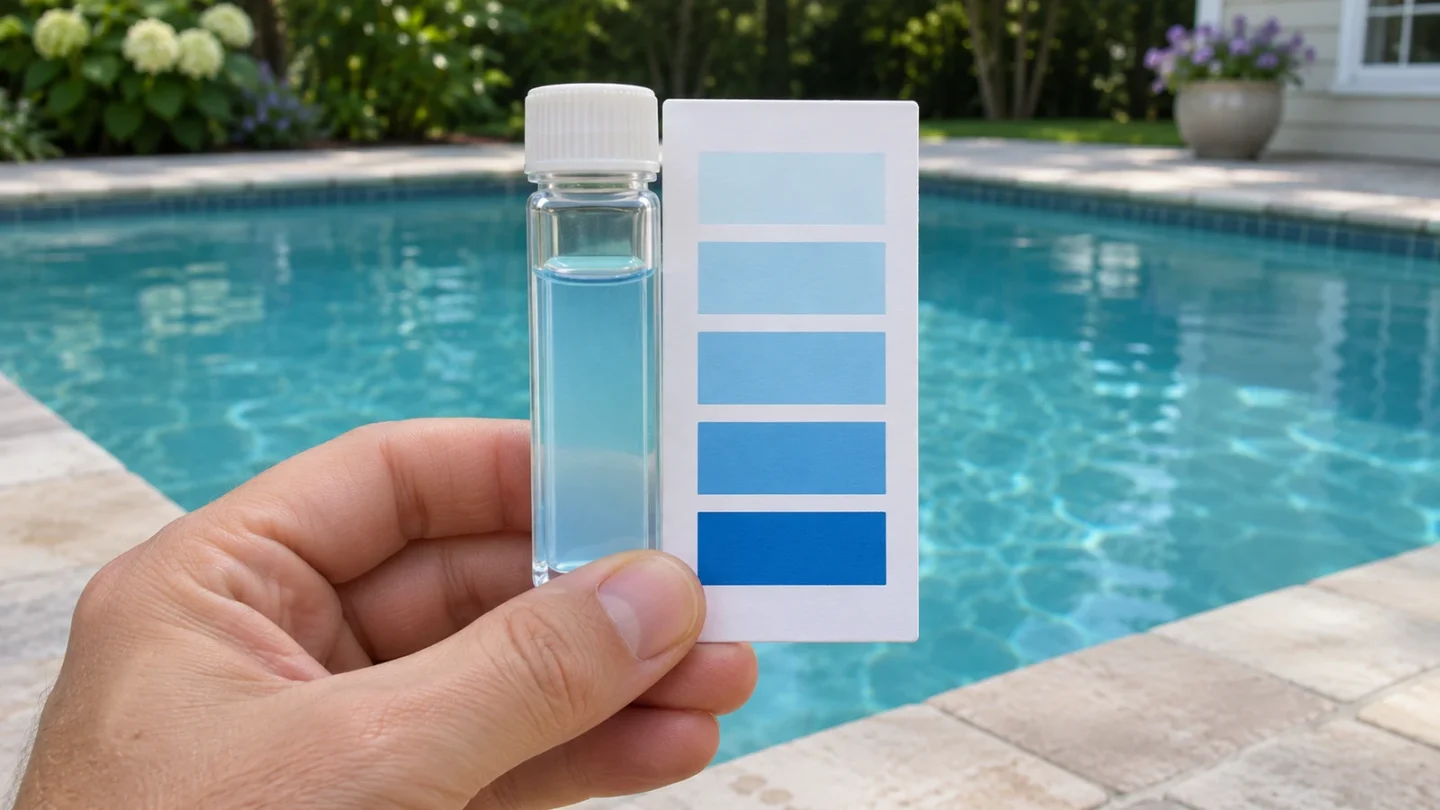
A home color kit also has an upper limit. If your sample is darker than the last color on the card, record “above range” and the highest value printed there. To get a number, follow the kit’s directions for a higher-range test.
My pool is clear. Do I need to do anything today?
If the report has no current free chlorine or pH result, test both. For a home pool, the CDC recommends a pH of 7.0–7.8 and at least 1 ppm free chlorine. Its minimum is 2 ppm when you use cyanuric acid or stabilized chlorine such as dichlor or trichlor. The CDC recommends testing both chlorine and pH at least twice daily and more often during heavy use. See the CDC’s home pool testing guidance.
If those checks are in line with your pool’s operating targets and you haven’t had recurring algae, log the 800 ppb result and carry on with routine care. If the store flags the value, ask what its target is intended to address in your pool. A flagged phosphate value by itself gives you too little information to choose a treatment.
What if chlorine is low or the pool is turning green?
Suppose the phosphate result is still 800 ppb, but this time the free chlorine reading is near zero. Keep swimmers out while you check the sanitizer supply, correct the level according to your pool product’s directions, and retest free chlorine and pH. Phosphate remover won’t restore the missing disinfectant.
If the walls feel slick or a green film brushes off the steps, check circulation and look for growth in corners and around ladders. The green algae guide walks through identification and cleanup. A green tint alone leaves other possibilities open, so look at the surfaces as well as the water.
Why do my phosphate readings keep going up?
Line up the dates of results taken with the same method. Then check what happened between samples. Two leads are worth following:
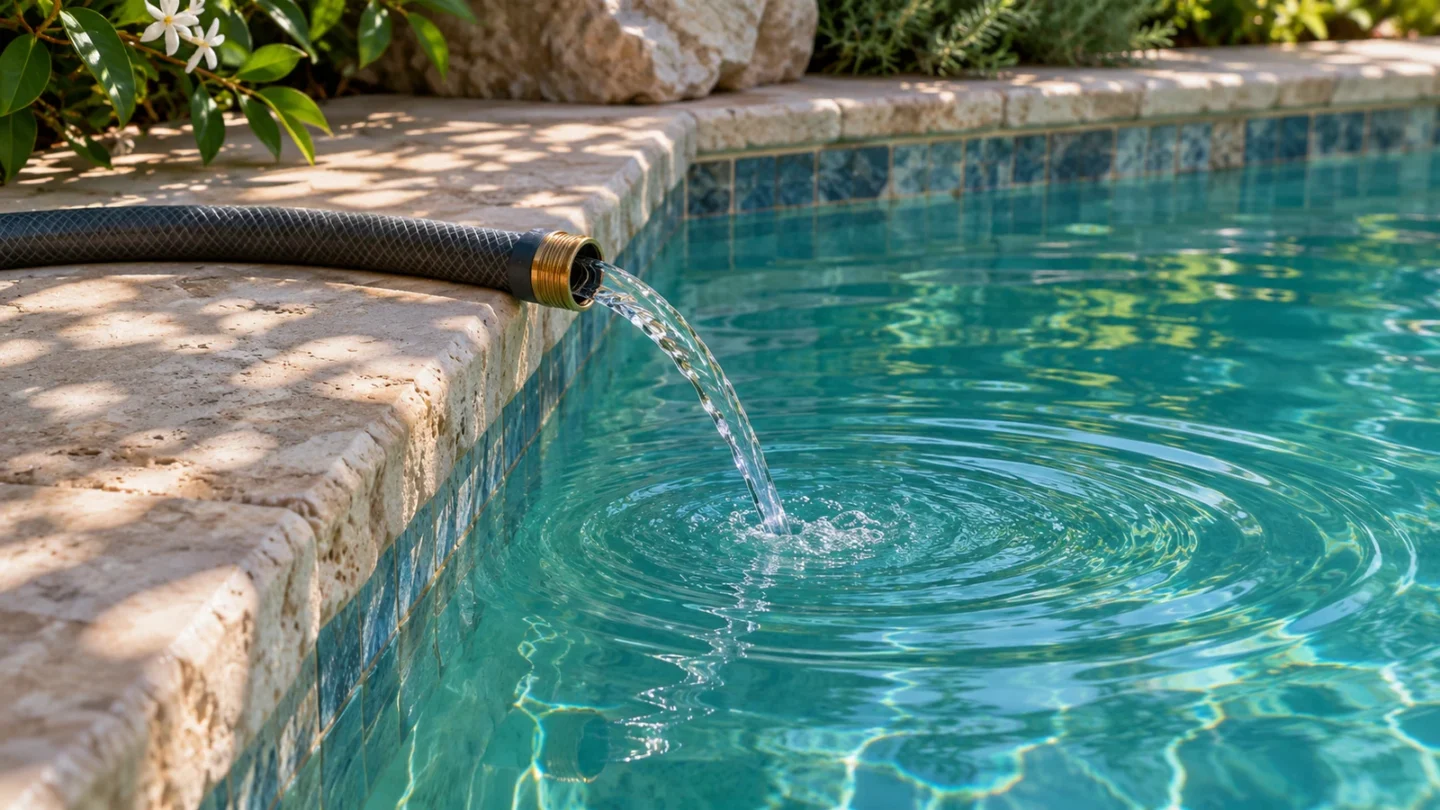
- A large refill. Some water utilities add orthophosphate to control pipe corrosion. If the increase followed a top-up, test the hose water and the pool water separately with the same kit. A higher reading at the hose makes the refill a plausible contributor. The EPA explains this use in its drinking-water treatment guidance on phosphates.
- Water running in from the yard. After a storm, look for a path from a fertilized bed or lawn across the deck. Check where leaves and clippings collected. Runoff can carry phosphorus from fertilizer and yard waste. Whether that water actually reached your pool matters more than the fact that it rained. See the EPA’s explanation of nutrients in stormwater.
When is phosphate removal worth considering?
If comparable tests repeatedly exceed a phosphate target in your maintenance plan, or algae keeps returning despite consistent sanitizer and circulation, discuss nutrient control with your pool professional. Bring the before-and-after readings and your chlorine log. If runoff is entering the pool, redirecting it addresses a source that could otherwise keep bringing phosphorus back. Once you decide to treat, the guide to lowering phosphates in a pool explains how to calculate the dose and when to retest.
For the clear pool in our example, a useful log entry might read: “Orthophosphate as PO₄, 800 ppb. Free chlorine 3 ppm, pH 7.5. Water clear, steps clean. Topped up from the hose yesterday.” If the next comparable reading rises, you’ll know which water source to test first. If chlorine drops, you’ll know which problem needs attention today.
Get more pool and lawn care guides from Aiper on Google