

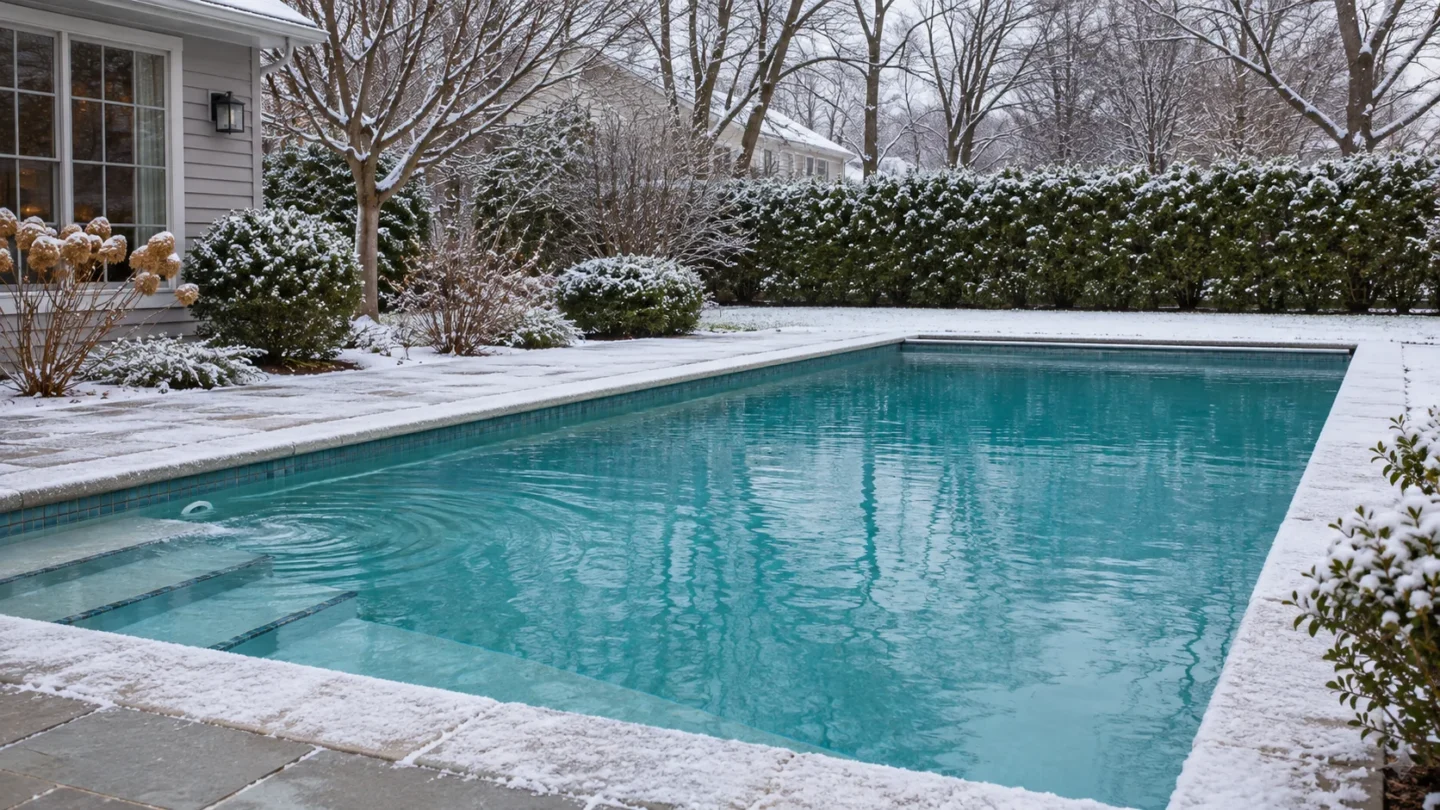
If snow fell into your pool overnight, first check whether the power stayed on. From a spot with secure footing, look for water moving where it usually does, then check the water level and any debris you can see. If circulation and water level look normal after a light snowfall, you can stick with routine care and let your next water test guide any chemical adjustment. If you already closed the pool and the snow is sitting on the cover, follow this guide to snow and ice on a winter pool cover.
Snow fell into my pool. What should I check first?
Start with a familiar part of the pool. If a return jet usually makes a ripple near the steps during the morning filter cycle, look for that ripple. If your schedule keeps the pump off at this hour, a still surface is what you would expect. Check the schedule or controller display from indoors if you can. Stay off icy decking and keep children and pets away from the ice.
Next, look at the waterline against a fixed point, such as the tile or the skimmer opening. A dusting of snow on the lawn tells you little about how much water actually entered the pool. If the water is at its usual level and you see the usual flow, there’s no reason to drain water just because it snowed. Once the deck is safe, skim out twigs and leaves you can reach from the edge.
The pump is running. Why is one return jet quiet?
A return jet is the outlet that sends filtered water back into the pool or spa. A Dallas pool owner noticed something easy to miss after a snowfall: the main pool still had flow and the filter pressure looked familiar, but water had stopped coming out of the spa returns.
On a shared pool-and-spa system, start with the operating mode. Does the spa normally spill over into the pool during this part of the cycle? If the spillway is usually dry in pool mode, a quiet spillway fits that pattern. If it usually flows and today it has stopped, note which outlets still show movement and when you last saw the spa flowing. You can give a technician a much clearer description than “the pump sounds fine.”
If expected flow stays absent during its usual cycle, contact your pool service provider. A patch of surface ice alone can’t tell you where water has stopped moving. Leave valves and equipment covers in place while you get advice specific to your system.
The power went out. Can I restart the pool pump?
If the equipment may still be frozen, leave the pump off. Electricity can return while ice remains in the pump or exposed plumbing. A sunny deck or melting ice at the pool edge tells you little about a shaded equipment pad.
From dry, stable ground, look for ice around the equipment, a split pump housing, or water that reached electrical controls. If equipment froze, allow it to thaw fully. If you see a crack, a leak, or signs that electrical equipment got wet, keep clear and arrange an inspection before restarting. If you can’t tell whether the system thawed or sustained damage, call your pool service provider before trying a start. If freezing and damage can be ruled out, follow your equipment maker’s normal restart instructions.
What should I check again after the snow melts?
Look for leaks as the equipment thaws. A cracked fitting can look dry while the water inside is frozen. As the snow recedes, look again at the pump housing and visible pipe joints. A drip that keeps forming at the same joint after the surrounding snow has melted is worth reporting. If you find a new leak, have it checked before running the equipment again.
Once the system is back in normal operation, compare the returns with what you usually see in that mode. Check the waterline again after the melt. With circulation restored, test free chlorine and pH, then use those readings and your treatment product’s label to decide whether an adjustment is needed. Snow depth alone won’t tell you how much chemical to add. If rain followed the snow and the deep end turned hazy, see what to check when pool water goes cloudy after rain.
If you call a pool technician, tell them where you first noticed trouble. It might be a spa return that stopped flowing or a fitting near the pump that started dripping as the ice melted. If the power went out during the storm, mention roughly how long it was off.
Get more pool and lawn care guides from Aiper on Google