


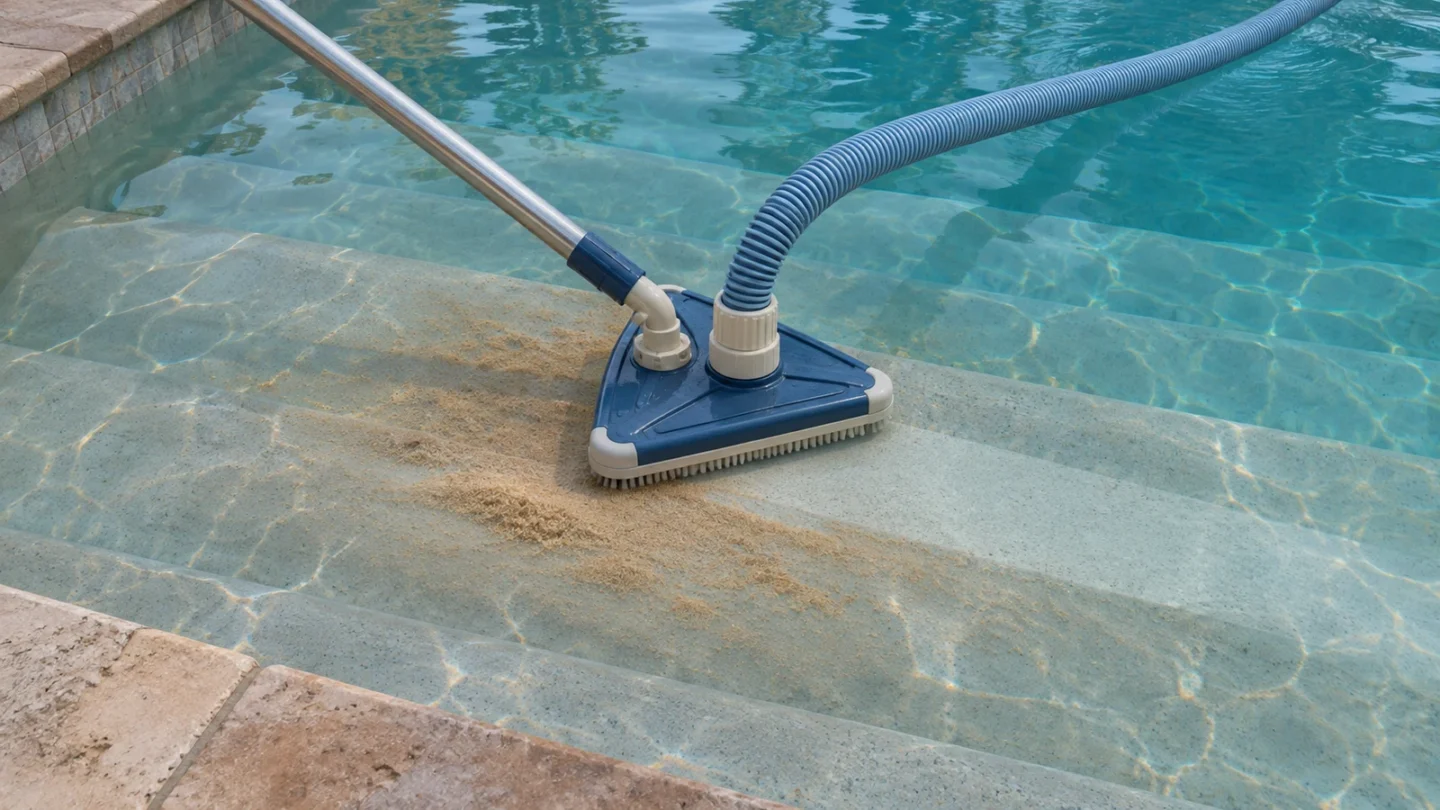
After a dust storm, a pile of sand on the pool steps can sit right beside a film of dust so fine that one stroke of a brush clouds the water. Once the weather clears and you’ve checked for flooding, skim off leaves and twigs. If you can see sand on the bottom, vacuum it slowly while it’s still in one place. If the whole pool is hazy, let the filter work on the suspended dust and save vacuuming for the patches you can see.
What should I check before I start cleaning?
In the Southwest, a wall of dust called a haboob can arrive ahead of a thunderstorm. Even if you can see across the yard again, stay inside for at least 30 minutes after you last hear thunder, as the National Weather Service advises.
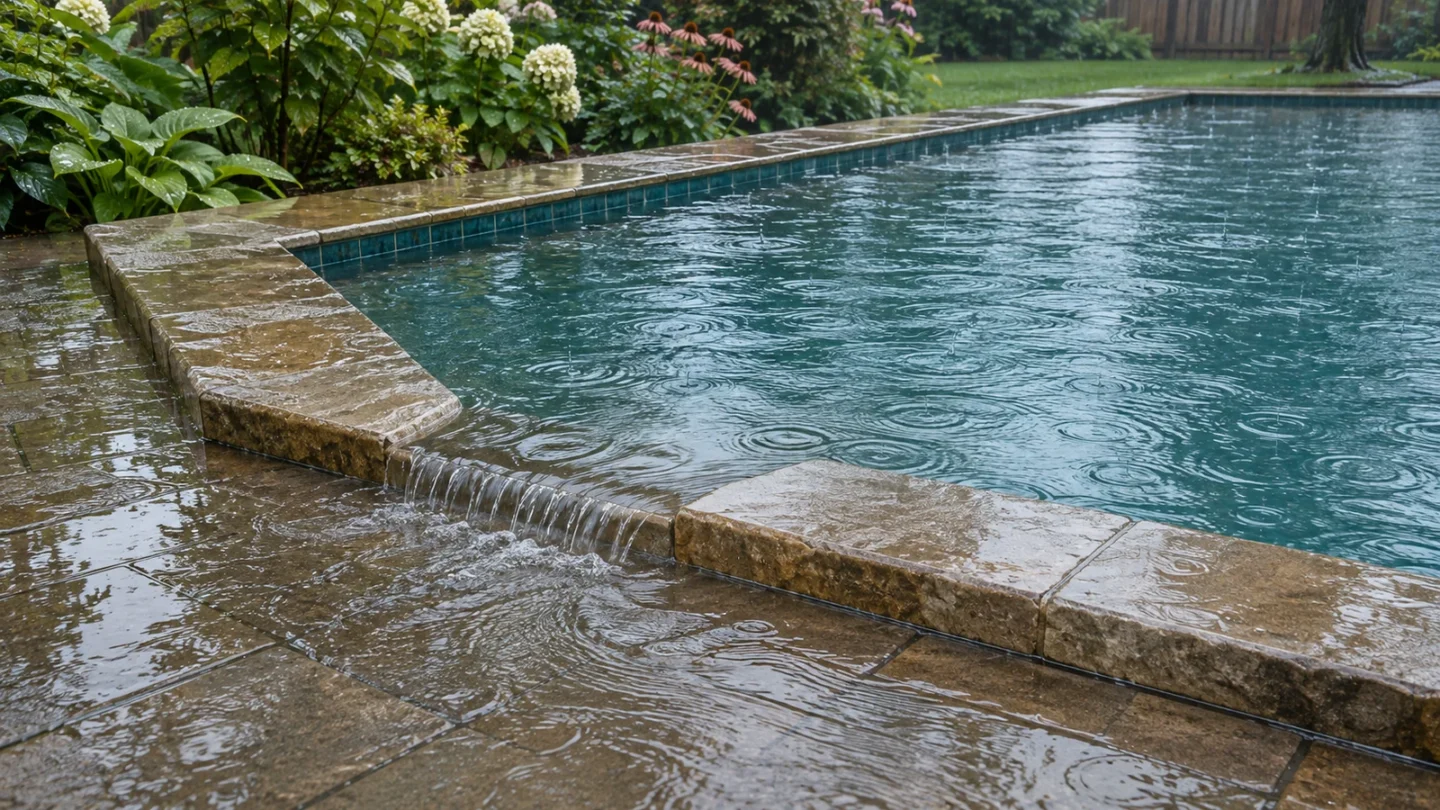
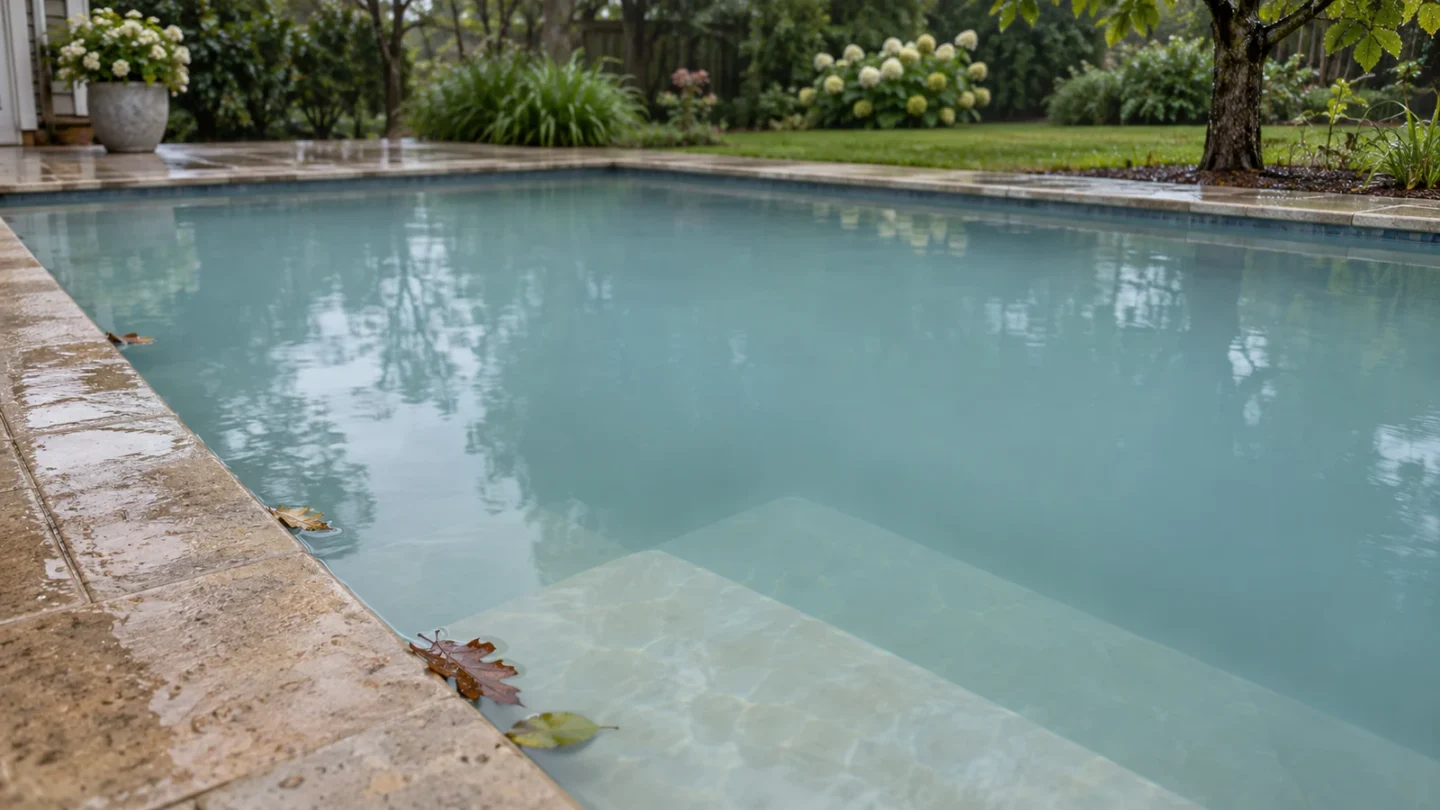
Once it’s safe to go outside, look along the pool edge. Leaves floating on the surface and a dusting of sand on the coping are typical wind debris. A muddy trail from a flooded street over the coping suggests runoff also entered the pool. Floodwater can carry sewage or fuel. Keep the pool closed and have a pool professional assess the contamination. If electrical equipment went underwater, leave it off and have a qualified electrician inspect it. The Pool & Hot Tub Alliance explains the hazards in its guidance for flooded pools.
For ordinary windblown debris, work from the deck with a leaf net. Lift out twigs that could jam the vacuum head, then check the skimmer basket for leaves that could restrict flow. Once the surface is clear, look down at the steps and across to the deep end.
Should I vacuum the sand now or let the dust settle?
| What you see | What to do next |
|---|---|
| Small piles of sand in otherwise clear water | Start with one pile. Keep the vacuum head close to the floor and make a slow pass through it. If the pile shrinks and you can still see the strip you cleaned, continue at that pace. |
| A powdery layer that billows as the head approaches | Slow down and work in short strips. If you lose sight of the strip in a cloud, move to a patch you can still see. Come back when the disturbed dust has settled. |
| An even haze that hides the bottom | Keep swimmers out. If the equipment is safe to use and the return flow feels normal, run the filter according to its instructions. Check the view from the same spot on the deck. Start vacuuming once individual deposits come into view. |
A brush can scatter a whole step’s worth of loose dust before the vacuum reaches it. Leave those deposits in place until you have a tool ready to pick them up. If you need a way to reach the bottom from the deck, see these options for removing dirt from a pool.
Should I vacuum through the filter or to waste?
For a light layer of sand, vacuum a small patch through the filter. If the sand lifts away and the water coming back through the wall jet stays clear, continue. If grit starts coming out of the jet, pause and check the valve setting and filter condition. On a cartridge system without a waste line, compare the pressure with your clean-filter reading at the same pump speed. Follow your model’s instructions for when to clean the cartridge and how to release pressure before opening the housing.
For a thick layer of settled silt, vacuuming to waste can send the silt directly out of the pool. You’ll need a waste line and a place where you’re allowed to discharge silty water. Check both before you move the valve. For example, the valve settings in Pentair’s Hi-Flow manual show that Waste sends vacuum water directly to the waste line, while Backwash reverses flow to clean the filter bed. The manual directs owners to turn off the pump before changing settings.
Where can the hose empty? In Tucson, Arizona, the city’s rules for draining pool water off your property require clear water and prohibit carrying sediment into a drainage channel. A hose pumping cloudy water and grit to the curb would fail those conditions. Check with your own wastewater or stormwater utility for an approved outlet for sediment-laden pool water. Once you’ve confirmed the route, watch the waterline as you vacuum and stop before it falls below the skimmer’s working range.
Why is dust back on the pool floor after vacuuming?
If yesterday’s sandy step has a much thinner film today and you can see farther into the deep end, some dust may simply have settled overnight. Give the step another slow pass. If the same brown patch keeps coming back in calm weather, note whether it sits below a return jet, lifts in a puff or leaves a mark when brushed. Those details can help you identify recurring brown deposits.
When heavy rain came with the dust and the floor is clean but the water still looks milky, check circulation and retest the water. Here’s what to check when a pool stays cloudy after rain.
Do I need to shock the pool, and when can I swim again?
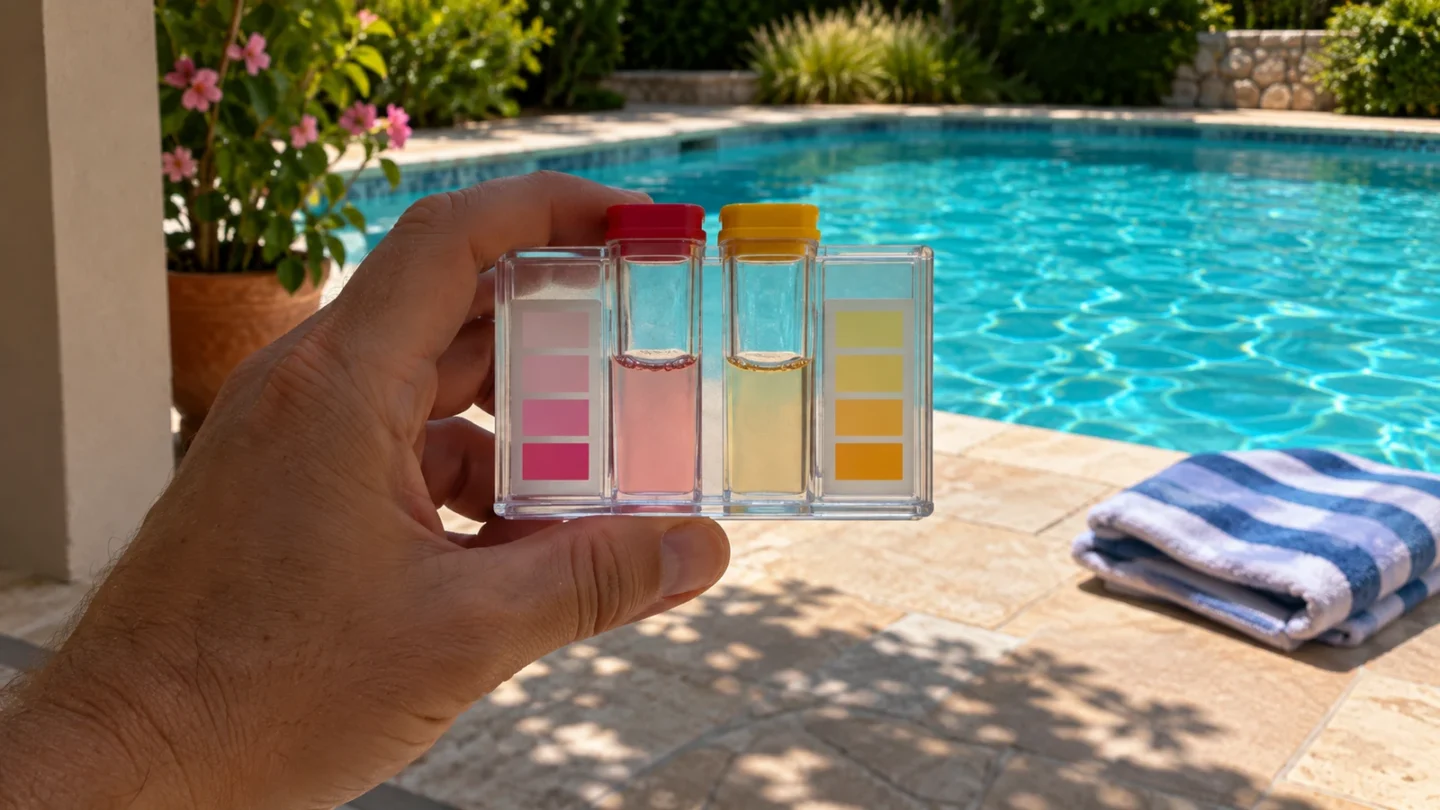
A layer of storm dust alone is no reason to shock a pool. Vacuuming and filtration take care of the grit. Test free chlorine and pH to see whether the water needs treatment. For home pools, the CDC recommends a pH of 7.0–7.8 and at least 1 ppm of free chlorine. That minimum rises to 2 ppm if you use cyanuric acid or a stabilized chlorine product. Make any adjustment according to the product label, then circulate and retest as directed.
Stand where you first checked the steps and look all the way to the deepest part of the floor. Before anyone gets in, the CDC advises checking that you can see the drain at the deep end. If you can see the steps but the drain is still a blur, keep everyone out. Resume swimming once you can see the bottom clearly, circulation is normal, testing confirms free chlorine and pH are in your pool’s operating ranges, and you’ve met any reentry conditions on the treatment label.
Get more pool and lawn care guides from Aiper on Google