

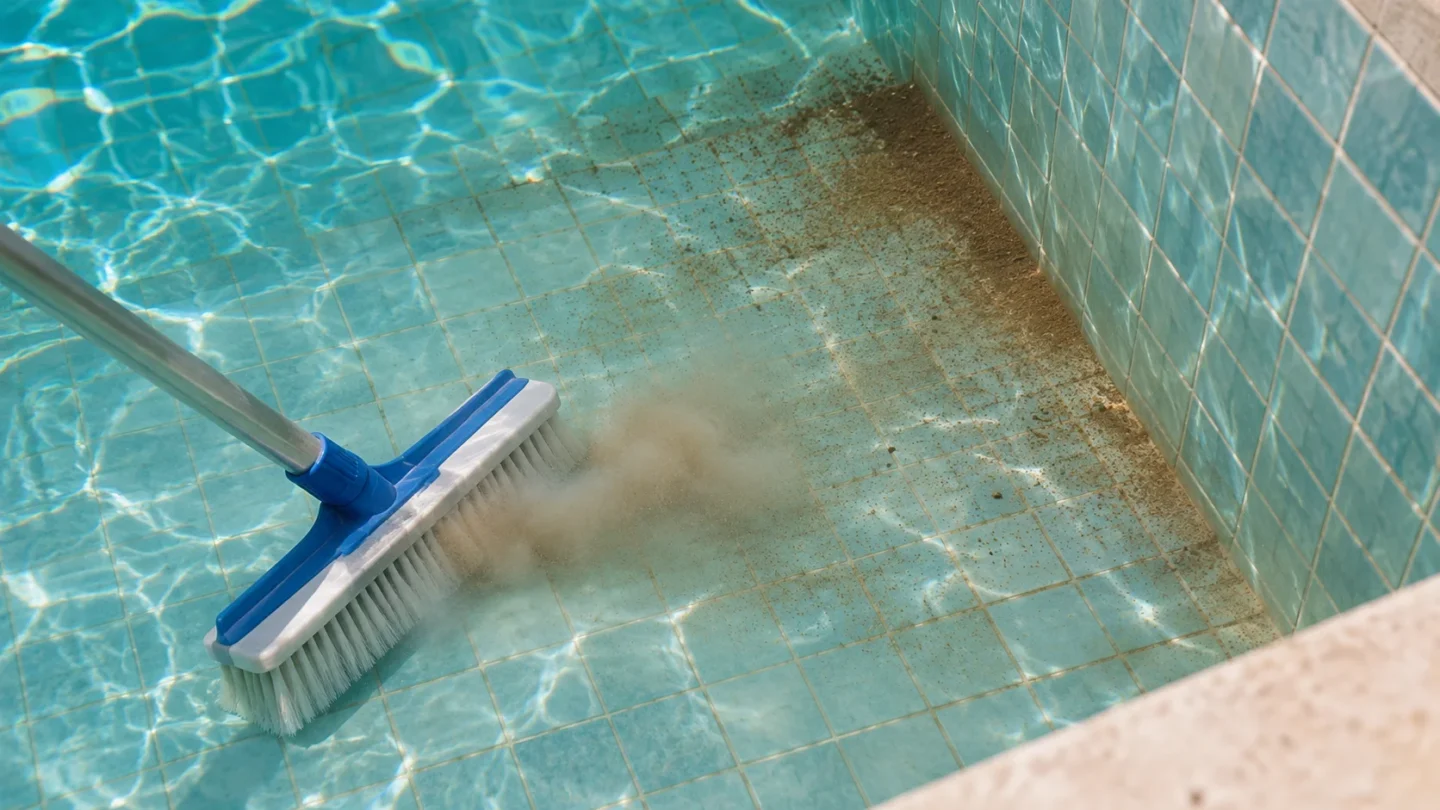
A fine brown layer shows up on the pool floor, worst in the deep end and the corners where the water barely moves. Run the brush over it, and it lifts into a cloud, hangs there, and settles right back where it was an hour later.
That’s the frustrating part: it won’t vacuum out the normal way, and shocking the pool doesn’t always touch it.
Brown dust comes down to four or five things, and once you know which one you’re looking at, the fix is quick.
Read How It Behaves
Skip the guessing and watch what the dust does. How it reacts to a brush and a bit of chlorine tells you what it is faster than squinting at the color, because half these culprits look identical sitting on the floor.
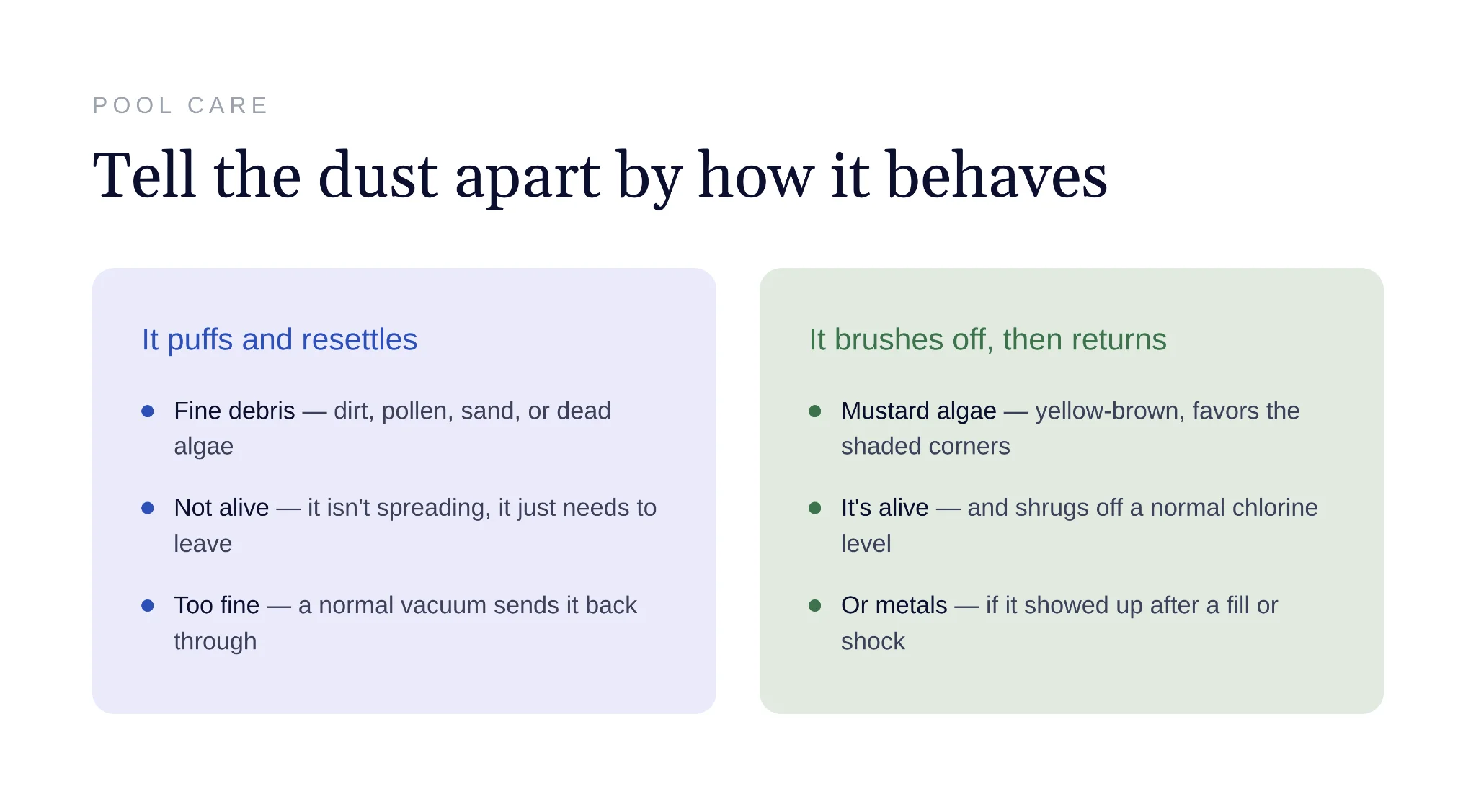
Brush a patch and watch.
Does it puff into a cloud and drift back down? Does it brush away clean and stay gone, or come back in the same spot a day later? Did it show up right after you topped the pool off or shocked it?
Those three answers sort almost every case.
| How it behaves | What it probably is | Living? |
|---|---|---|
| Puffs into a cloud, resettles, brushes away for good | Fine debris — dirt, pollen, sand, dead algae | No |
| Brushes off easily but returns in days, slick to the touch, favors shade | Mustard algae | Yes |
| Appeared after adding well water or shocking, water clouded brown | Metals oxidizing out of the water | No |
The puff is a filter one. The particles are finer than your filter can catch in a single pass, so a normal vacuum just sends them through the filter and back into the pool, where they sink again.
Nothing’s wrong with the dust. Your filter can’t hold it yet.
Removing Fine Debris
Most brown dust is this: dead stuff and fine grit that blew in or settled out.
Tree pollen in spring, dust off a dry, windy week, a film of dead algae after a treatment finally died off, or sand that worked its way up through a failing filter. None of it is alive or spreading. It just needs to physically leave the pool.
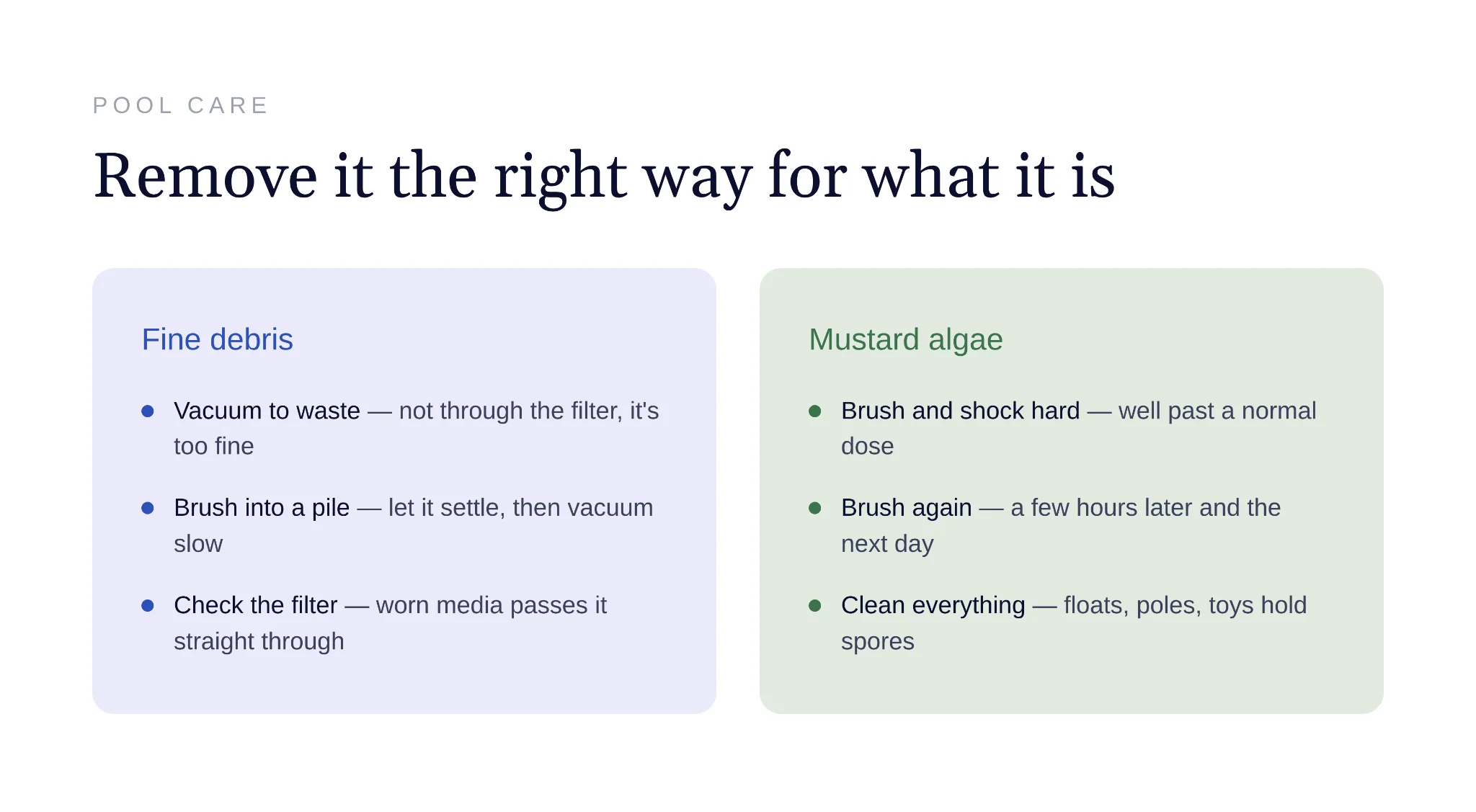
The move is to vacuum to waste, not through the filter.
Set a sand or DE filter’s multiport valve to “waste,” or on a cartridge system, vacuum with the cartridge out and the water running to a drain.
The dirty water goes straight out instead of looping through a filter too coarse to hold it. You’ll drop the water level doing this, so top off afterward. Brush the dust toward the main drain or into a loose pile first, let it settle for an hour, then vacuum slow and low so you don’t kick it back into suspension.
If it keeps coming back after a clean vacuum, check the filter itself. Sand that’s channeled or a cracked DE grid will pass fine particulate straight through, and no amount of vacuuming fixes a filter that can’t filter.
When It’s Mustard Algae
Here’s the one that wastes people’s summers.
Mustard algae is a yellow-brown algae that lays down like dust or sand on the floor and walls, usually in the shaded, low-circulation spots like the deep-end corners, behind the ladder, under the steps.
It brushes away to nothing, which fools you into thinking you’ve beaten it, and then it’s back in the same patch within a day or two. Unlike green algae, it shrugs off a normal chlorine level, so a pool that tests perfectly balanced can still grow it.
Beating it takes more than a brush and a hopeful shock. The spores cling to everything the water touches, so a half-measure just reseeds the pool.
- Balance the water and brush every affected surface hard, right before you shock. You want the algae knocked loose and exposed.
- Shock the pool heavily (well past a normal dose) and run the pump continuously. A standard shock level won’t finish mustard algae.
- Brush again a few hours in, and again the next day, hitting the shaded corners each time.
- Clean anything that went in the water. The float that sat on the surface, the pole, the brush, swimsuits, toys. Spores live on all of it, and one contaminated net puts the whole problem back.
The piece people skip is step four, and it’s why the algae returns in August after they thought July had killed it.
When It’s Metals in the Water
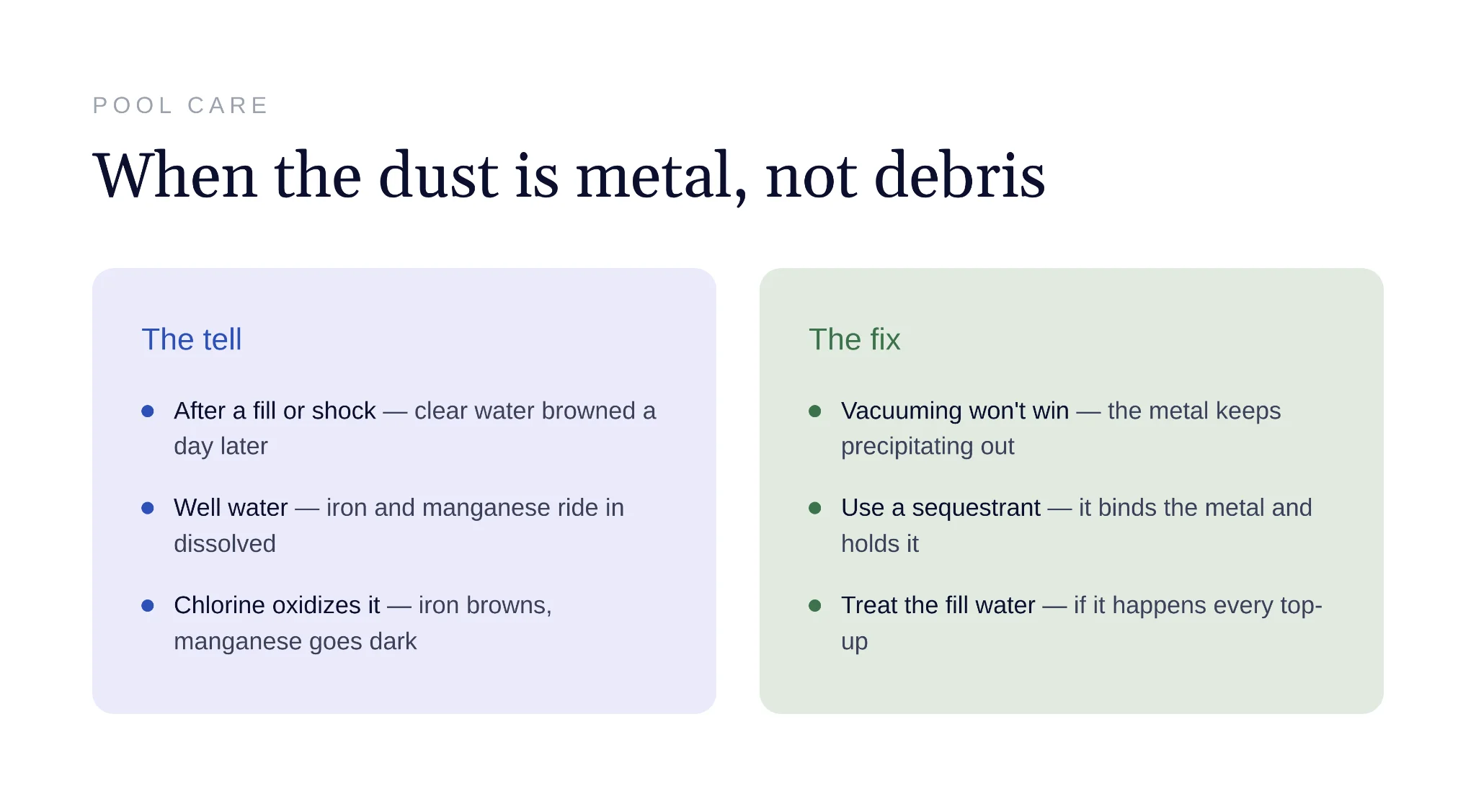
Brown dust that showed up right after you added fresh water or shocked the pool is often not debris at all. It’s metal coming out of solution.
Iron and manganese are common in well water, especially from deeper wells, and they sit dissolved and invisible until something oxidizes them. Think exposure to air, or the chlorine you just added, at which point iron turns orange-brown, and manganese turns brown-black, appearing as stains or particles.
Fill a pool from a well, or top it off during a dry spell, and you can pour in clear water that browns a day later once the chlorine hits the metal.
Vacuuming won’t win this one, because as long as the metal is in the water, it keeps precipitating out.
The fix is a sequestering agent — a product that binds the metal and holds it in solution so it stops dropping onto the floor — followed by getting the existing precipitate out. If you’re on well water and this is a yearly ritual every time you fill, treating the fill water as it goes in saves the whole cycle.
Keeping the Bottom Clear
Every version of this traces back to the same weak spot: water that sits still lets fine particulate settle and gives mustard algae the dead corners it needs.
Circulation and debris removal are what keep the floor clear, and they’re exactly the jobs that slip when a pool gets busy.
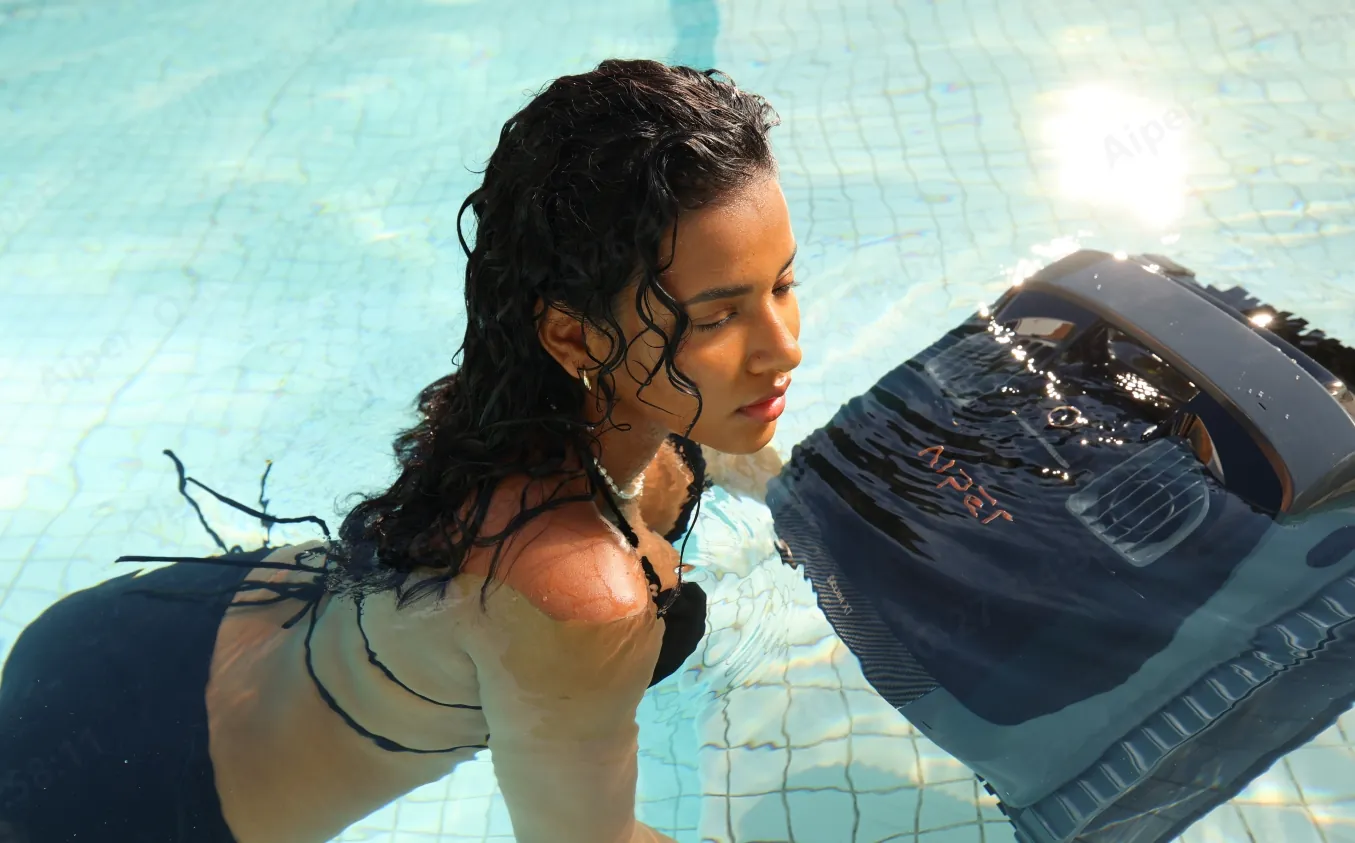
That’s where an Aiper robotic pool cleaner does the daily work that prevents the buildup. It drives the floor and walls on its own, lifting fine dirt, pollen, and settled debris into its own filter basket before any of it packs into the corners, and the movement keeps the low-circulation spots from going stagnant enough for mustard algae to take hold.
It won’t fix metal in your fill water, and it won’t substitute for a hard shock on an active algae bloom. For the ordinary brown dust that just needs to leave the pool, running one on a schedule means you stop finding the layer in the first place.
Get more pool and lawn care guides from Aiper on Google