How to Get Dirt Out of a Pool

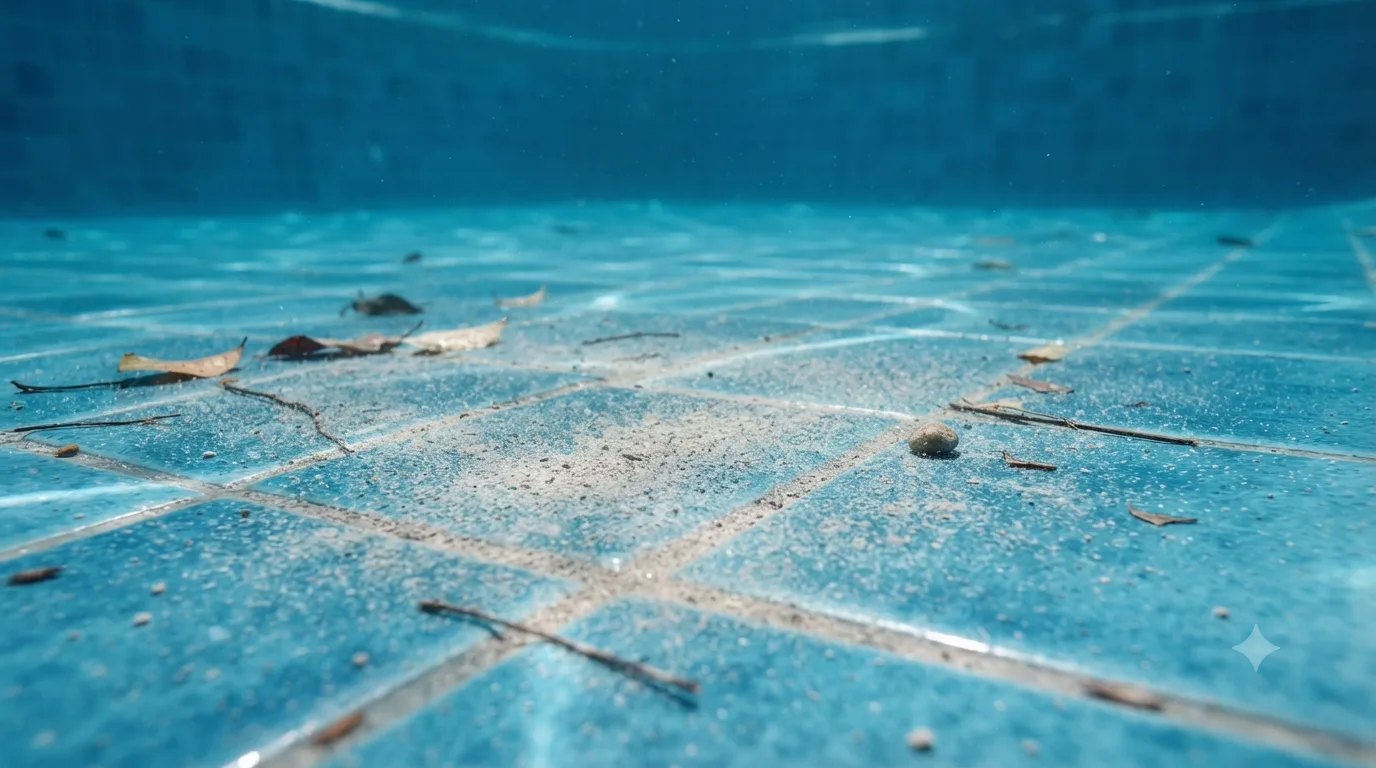
Heavier dirt responds to vacuuming to waste or a robotic cleaner with its own onboard filtration, but very fine silt or dust is often too small for a standard sand filter to catch and needs a flocculant to clump it into a mass you can siphon out instead. Whichever type you’re dealing with, comparing how different cleaner types actually capture debris helps explain why some methods work better on fine particulate than others. The full method by dirt type is below. Pollen is a seasonal variant of this same fine-particulate problem, and why pollen keeps clouding a pool’s surface covers what makes it stick around longer than ordinary dust.
What Kinds of Dirt Actually Show Up in a Pool?
Visible dirt breaks down by where it collects, since each location traps a different mix of debris. Invisible contamination in the water itself is a separate category that never shows up as debris at all — and neither does the oily film floating on top, which our guide to getting rid of scum on the pool surface explains.
| Location | Dirt Types |
|---|---|
| Surface | Leaves, bugs, hair, algae |
| Waterline | Algae, grease, water stains, sunblock residue |
| Floor | Sand, stones, decaying organic matter, hair, dust and dirt |
| Walls | Sunscreen oil, green algae |
| Invisible (water quality) | Microbiotics — bacteria and other microorganisms suspended in the water |
What Is the Best Way to Get Dirt Out of a Pool?
It depends on how fine the dirt is. Heavier debris responds well to vacuuming to the filter or waste setting, or to a robotic cleaner that captures debris directly — though broken glass in a pool needs special handling before anyone vacuums over it. Very fine silt or dust is a different problem — it often passes straight through a standard sand filter’s media instead of getting caught, which is why fine dirt tends to look like it just won’t go away no matter how much you run the pump.
How Do You Get Fine Dirt Out of a Pool Without a Vacuum?
A flocculant clumps fine particles together into a heavier mass that settles to the bottom, where it can be siphoned or vacuumed out as a concentrated pile rather than recirculated through the filter. A clarifier works differently, coagulating particles just enough that the existing filter can catch them over a day or two of normal filtration, which is a slower but lower-effort alternative to flocculant.
How to Siphon Dirt From the Bottom of a Pool
A simple gravity siphon hose, run to a drain or acceptable discharge area, bypasses the filter entirely — useful specifically for removing settled dirt or flocculant clumps without pushing fine particles back through media that wasn’t fine enough to catch them the first time. This is a different flow path than a normal backwash cycle, which pushes water the opposite direction through the filter itself rather than bypassing it.
Will Shocking a Pool Get Rid of Dirt?
No. Shock addresses organic and biological contamination, including algae, and chlorine demand — it doesn’t touch physical dirt particles at all. Shocking a pool with visible silt or dust on the bottom won’t clear it, since that’s a filtration and physical-removal problem, not a sanitizer problem.
Does a Robotic Pool Cleaner Handle Dirt Better Than a Manual Vacuum?
For fine particulate specifically, often yes — robotic cleaners with their own onboard fine-mesh filtration capture debris directly at the point of contact rather than relying on the pool’s main filter to catch it afterward. That matters most for the exact kind of fine dirt a standard sand filter struggles with.
How Do You Prevent Dirt From Building Up in a Pool Again?
Address the actual source — construction or landscaping runoff nearby, wind-blown dust settling on the surface, or foot traffic tracking dirt in from the pool deck — rather than only repeating the cleanup each time. Keeping leaves and other debris out consistently also reduces the organic material that breaks down into fine sediment over time.
Frequently Asked Questions
How long does it take a flocculant to fully settle dirt before you can siphon it out?
Typically overnight, with the pump switched off so the clumped particles aren’t stirred back into suspension. Running the pump during that window defeats the treatment, since the goal is letting the flocculated mass sink undisturbed.
Does vacuuming to waste affect the pool’s water level or chemistry?
Yes. Vacuuming to waste sends water straight to a drain instead of recirculating it, which lowers the water level and requires adding makeup water afterward. That makeup water slightly dilutes chlorine and other levels, so retest and rebalance once it’s done.
Can repeated fine silt buildup damage a sand filter over time?
Fine particulate that passes through rather than getting trapped doesn’t damage the sand itself, but it’s a sign the media may be undersized or worn for the debris load. If fine dirt is a recurring problem, check it against the filter’s replacement schedule rather than just treating each occurrence.
Ongoing debris removal matters more for fine dirt than any single cleanup, since it keeps sediment from accumulating between treatments — and it’s the same routine that keeps worms from turning your pool into a second home. An Aiper robotic pool cleaner runs regular passes that catch debris before it breaks down into the fine silt that’s hardest to filter out later.
Get more pool and lawn care guides from Aiper on Google