
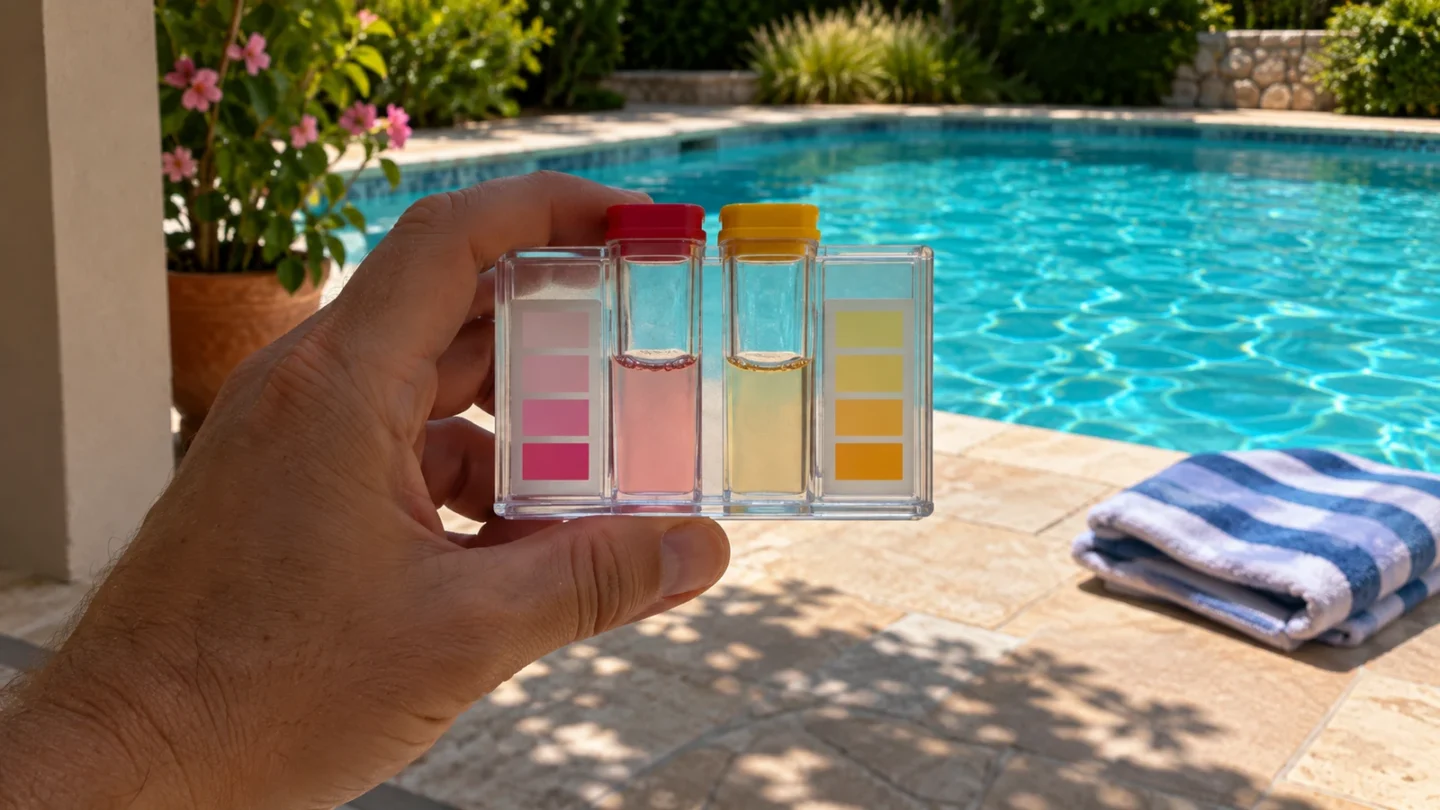
It’s Saturday afternoon. The kids have just climbed out of the pool, another family is pulling into the driveway, and the water looks as clear as it did at breakfast. Test free chlorine and pH again before the next group gets in. Several hours of sun and a pool full of swimmers can use up enough chlorine to change what you need to do next.
Before the heat wave, what should you measure?
At your usual swim time, note the water temperature, free chlorine in parts per million (ppm), and pH. Photograph the waterline against a fixed point on the skimmer opening. If you change the pump timer over the weekend, write down its original setting so you can restore it later.
Check whether your pool uses cyanuric acid (CYA), sometimes listed as conditioner or stabilizer. Chlorine products labeled dichlor or trichlor also supply it. This matters because the CDC’s home pool testing guidance gives different minimum free chlorine levels depending on whether CYA is present. The CDC recommends testing chlorine and pH at least twice a day and more often when several people are using the pool. If you usually test at breakfast and dinner, have the kit handy for an extra afternoon check when guests are over.
During a busy afternoon, what should you check before the next swim?
Suppose your pool uses stabilizer. At breakfast you measure 3 ppm free chlorine and a pH of 7.5. By midafternoon, pH is still 7.5 but free chlorine reads 1 ppm. Keep swimmers out for now. For this pool, 1 ppm falls below the CDC minimum of 2 ppm. Sunlight reduces chlorine levels, and sweat and dirt carried in by swimmers add to the demand.
| Residential chlorine pool | CDC minimum free chlorine | CDC pH range |
|---|---|---|
| Without CYA | 1 ppm | 7.0–7.8 |
| With CYA, including stabilized chlorine | 2 ppm | 7.0–7.8 |
If a reading is outside your pool’s operating range, use the measured result, your pool volume, and the treatment label to determine the correction. Follow the label’s circulation and reentry directions, then retest before anyone gets back in. If both readings are in range and circulation is normal, record them and plan the next check around how busy the pool stays. If the concern is how warm the water feels, compare the measured temperature with typical temperatures for laps and family swimming.
The waterline is dropping. Should you top up or change the pump schedule?
Compare the waterline with your photo at about the same time the next day. Note anything that moved water in or out: an afternoon of splashing, a filter backwash, or a top-up from the hose. The EPA’s guide to water loss in home pools explains how temperature, humidity, and wind affect evaporation. A hot, dry, breezy day can leave a different mark on the skimmer than an equally hot, humid one.
If the level is low, refill to the operating level specified for your skimmer. If the pump is drawing air, shut it off and follow the equipment manual’s restart procedure once the water level is back in range. With an automatic filler, track how often it runs or check the water meter. The waterline can look steady even as the pool uses more water.
If the level is normal but the return jets feel weak, check that the pump is running at its usual speed and that the timer followed its schedule. Check the skimmer basket and the filter’s pressure reading against your equipment’s service instructions. Extra hours on the timer won’t clear a blocked basket. When the pool is empty of swimmers, a properly used cover can reduce evaporation. A solar cover also helps warm the water, which matters if the pool is already warmer than you like.
After the heat breaks, when can you return to your usual routine?
On the first cooler day, test again at the hour you normally swim. Use the thermometer as well as the test kit because pool water can cool more slowly than the air. Compare the results with your pre-heat readings and check how much water you’ve added.
If readings and water level have settled, return any temporary equipment settings to their usual values and check that the readings hold. Once the crowds have gone, you can drop the extra party-time checks, keep the twice-daily water tests, and pick up your weekly pool maintenance checklist.
If free chlorine is still low, keep swimming on hold and check the sanitizer supply and circulation. Correct according to the label and confirm the result with a fresh test.
If the waterline keeps falling, look back at the refill log. A quiet, cooler day with no backwashing gives you a useful comparison. If the loss is still unusual for your pool, check the fill valve, look for wet spots around the equipment, and investigate a possible leak.
Get more pool and lawn care guides from Aiper on Google