

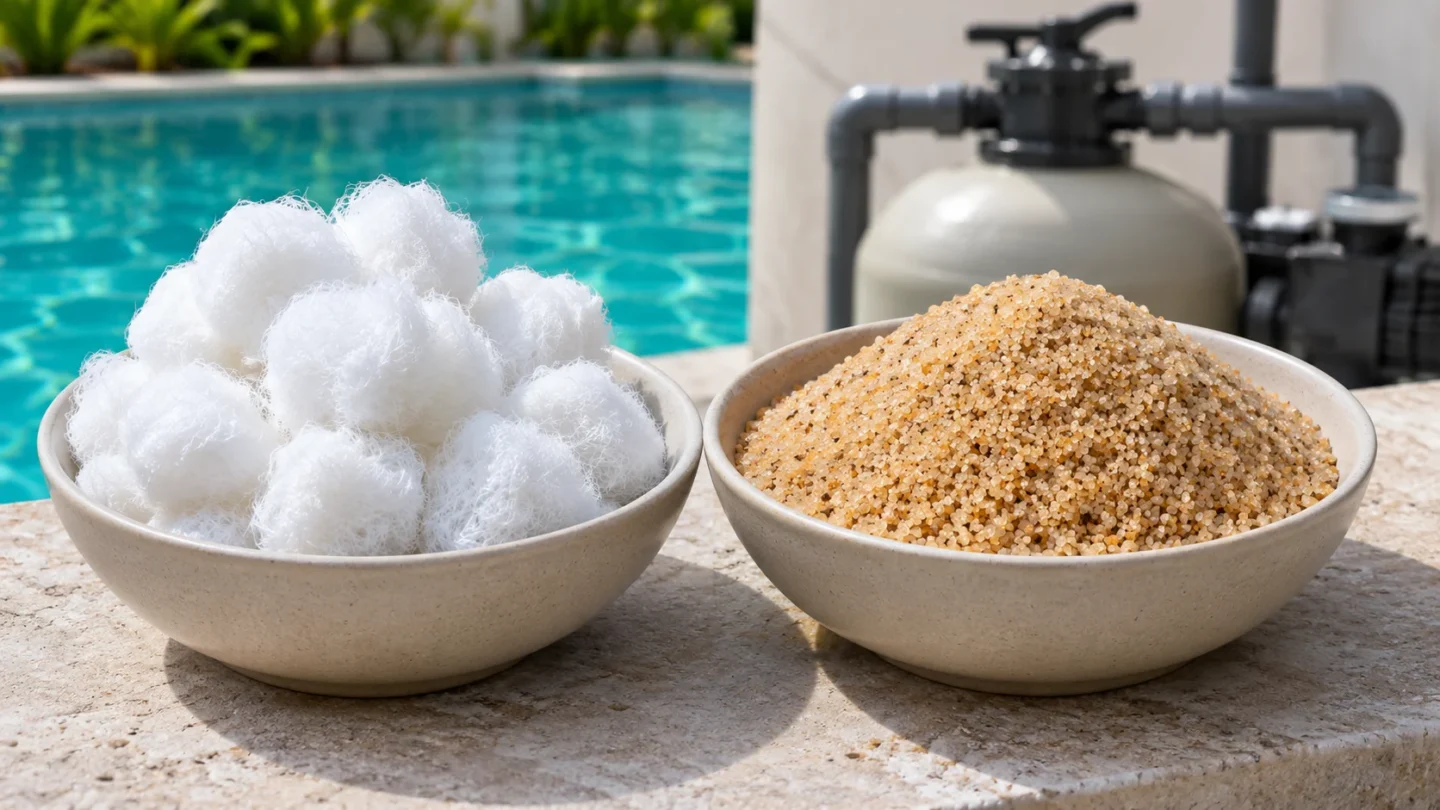
The pitch is hard to argue with. A one-pound bag of fluffy polymer balls that drops into your sand filter and does the same job as fifty pounds of sand, filters finer, backwashes with less water, and never needs replacing.
For anyone who’s hauled a 50-pound bag of filter sand around the equipment pad, that sounds like an easy yes.
The honest answer is that filter balls work, with a catch that the packaging doesn’t mention and that decides whether they’re right for your pool.
What Filter Balls Actually Are
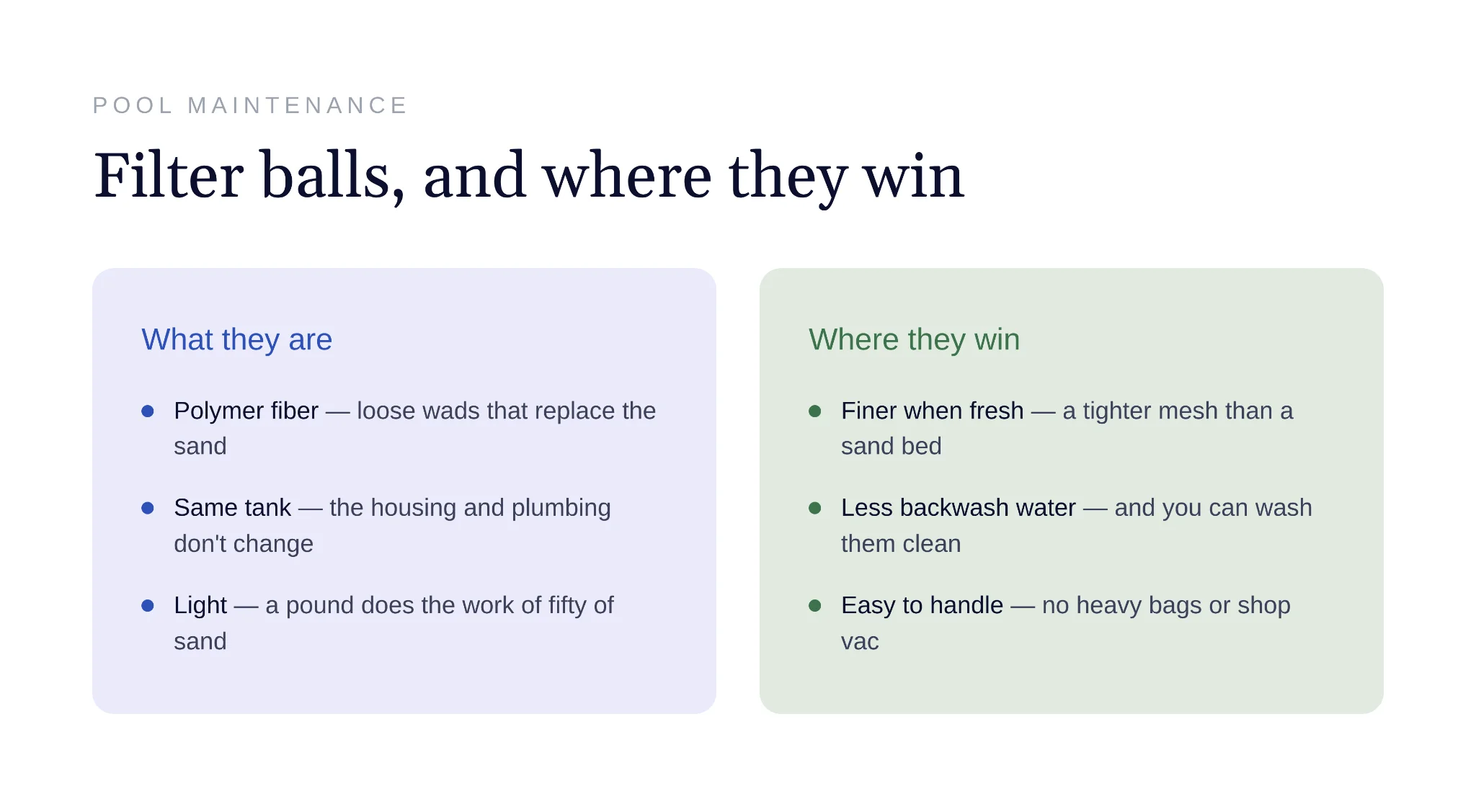
Filter balls are loose wads of polyester or polymer fiber, something between a cotton ball and a pot scrubber, sold to replace the sand in a standard sand filter.
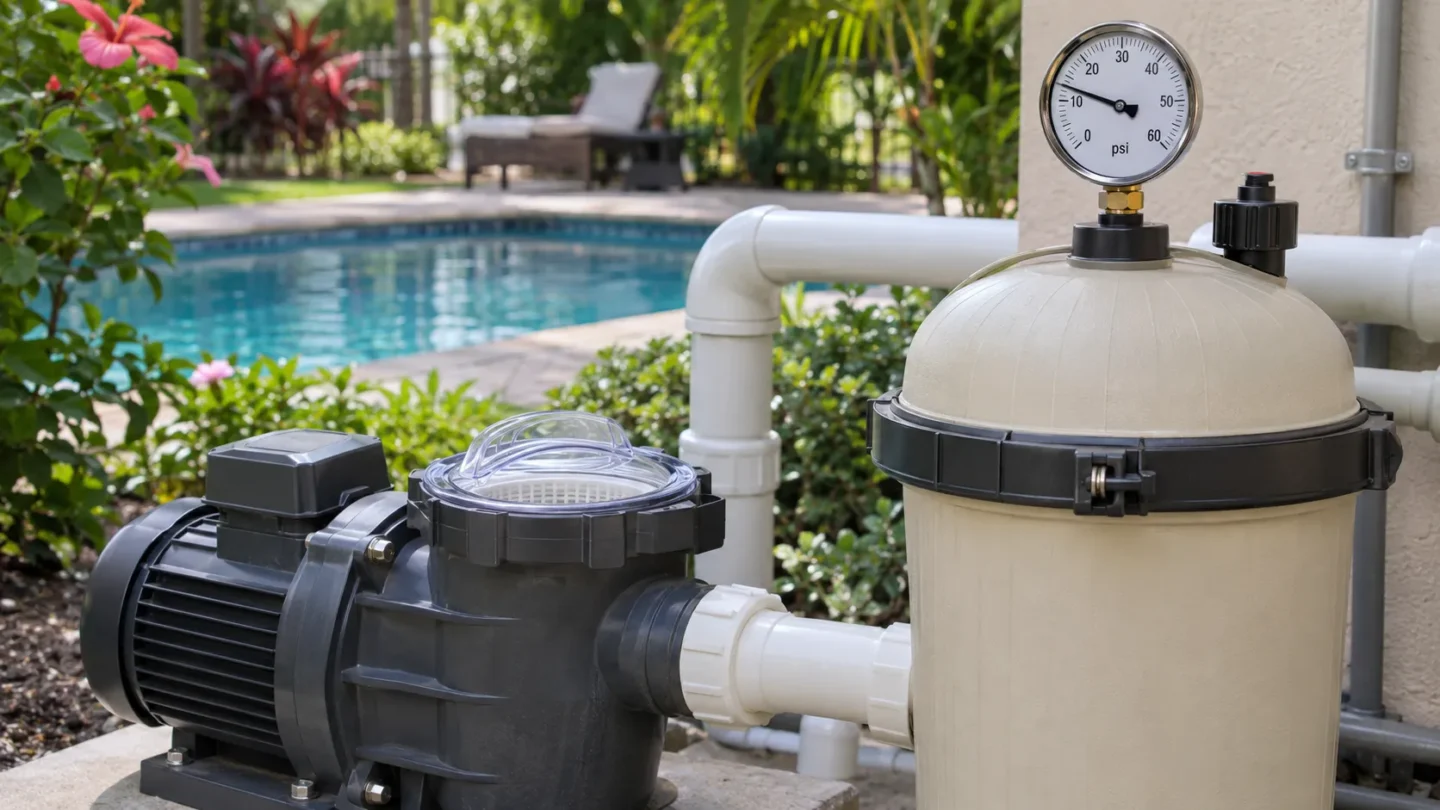
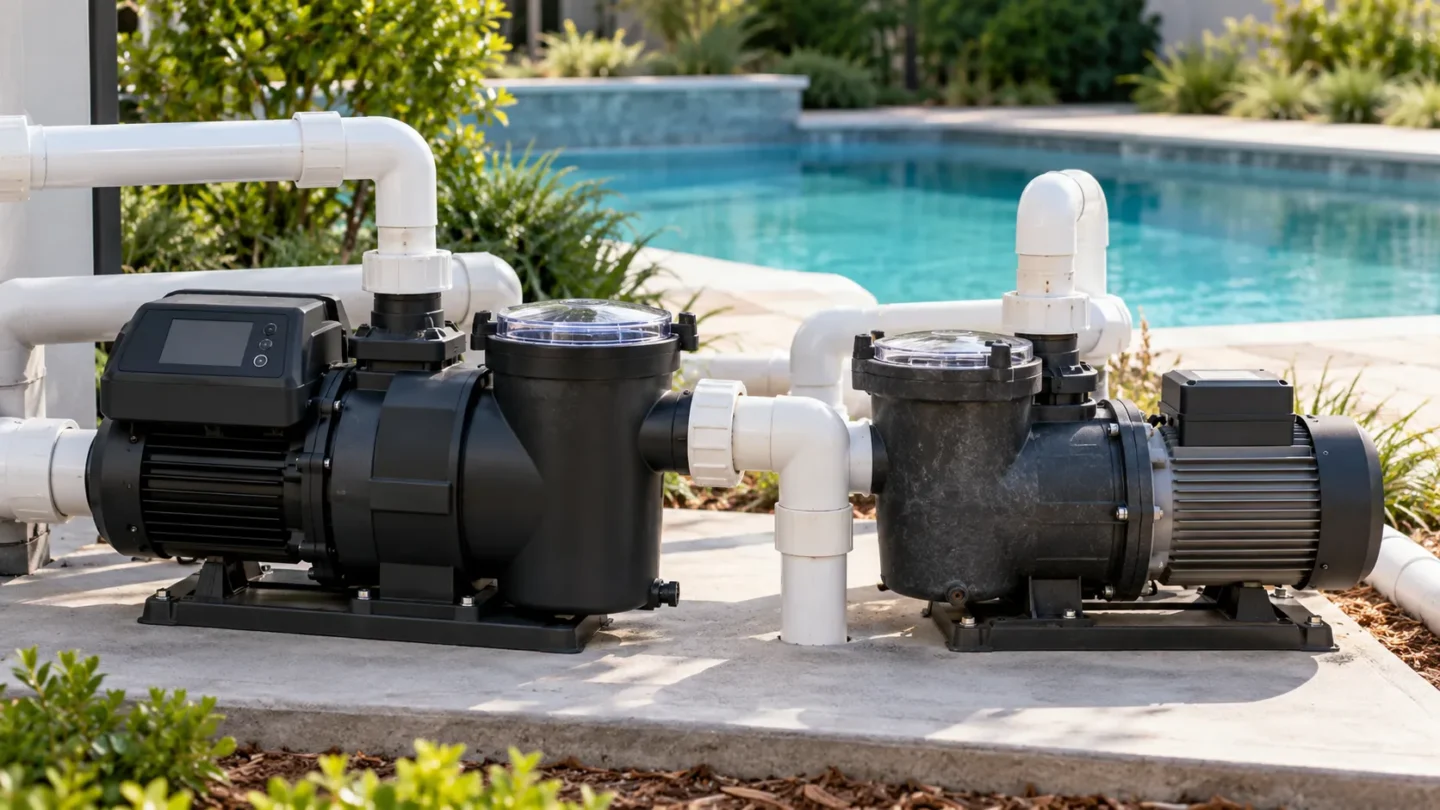
You pour them into the same tank the sand went in. Water flows through the tangle of fibers, debris catches in the mesh, and the filtered water passes on to the pool. The housing, the valve, the plumbing all stay the same. Only the media inside changes.
The appeal is mostly about weight and handling.
A pound or so of balls fills a tank that needed around fifty pounds of sand, which means no heavy bags, cheaper shipping, and a media change you can do by hand without a shop vac and a sore back.
Where They Genuinely Win
Give the balls their due, because the advantages are real and they’re the reason people switch. On paper, they filter finer than sand.
A sand bed catches particles in the 10- to 40-micron range, and filter balls, with their much tighter fiber mesh, can trap smaller particles than that when they’re fresh and evenly packed. A pool that always looked faintly hazy on sand can come up noticeably clearer.
They also cut your backwash water. Sand filters are the thirstiest option on the pad, and WaterSense steers pool owners toward media that backwash with less water than sand for exactly that reason.
Filter balls need less water to rinse clean, and you can pull them out and wash them in a machine when they get grimy, which sand can’t do. On a small, lightly used pool, that combination is a legitimate upgrade.
The Catch Nobody Mentions
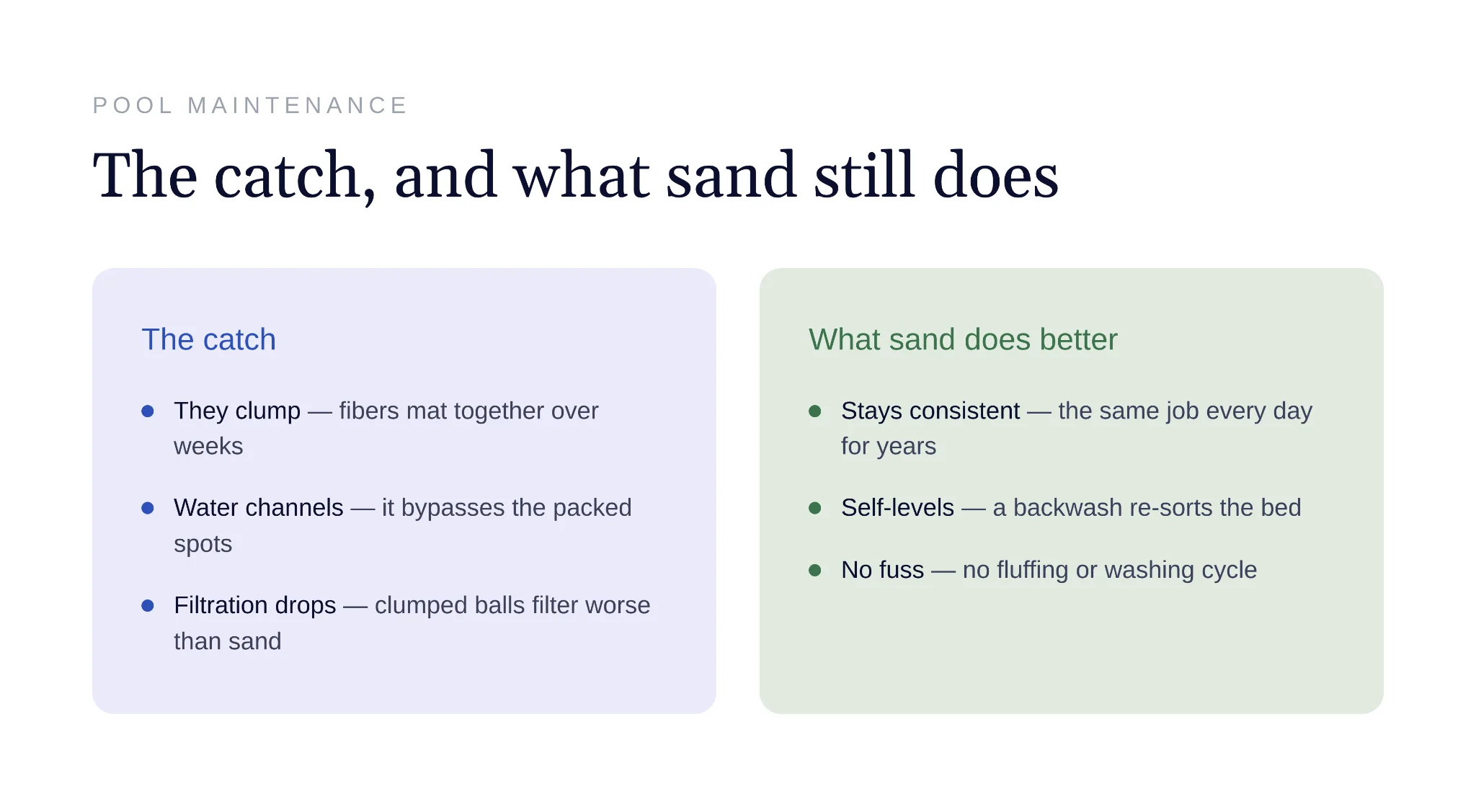
Here’s what the bag doesn’t tell you: filter balls clump.
Over weeks of use, the loose fibers compact and tangle into denser mats, and the sunscreen, body oils, and fine grime in pool water accelerate it.
Once the media packs unevenly, water does what water always does and finds the path of least resistance, carving channels through the loose spots and rushing past the packed ones. Water that channels through isn’t being filtered. It’s taking a shortcut.
That’s the whole problem in one word. A filter is only filtering the water that’s actually forced through the media, and channeled balls let a chunk of the flow bypass the fibers entirely. The filter runs, the pressure gauge might even look normal, and the pool slowly goes cloudy while you wonder why.
The fix is pulling the balls, washing them, and fluffing them back out, which you end up doing more often than the “reusable, never replace” pitch implied. Neglect it and the fine filtration advantage disappears, because clumped balls filter worse than the sand they replaced.
Sand doesn’t do this. A sand bed is heavy, uniform, and self-leveling, and a backwash reliably re-sorts it. The grains don’t mat together or grow channels the way fiber does.
What Sand Still Does Better
Predictability is the strength here.
Sand is cheap, it’s been in pool filters for decades, and it behaves the same way every day for five to seven years before it needs changing. You know what you’re getting. There’s no fluffing, no washing cycle, no slow decline in performance that you have to stay ahead of.
| Filter balls | Sand | |
|---|---|---|
| Weight per fill | ~1 lb | ~50 lb |
| Filtration (fresh) | Finer than sand | 10–40 microns |
| Filtration over time | Drops as they clump | Stays consistent |
| Maintenance | Wash and fluff periodically | Backwash only |
| Lifespan | Replace as they break down | 5–7 years |
| Handling | Easy, light | Heavy bags |
The tradeoff comes down to effort against convenience. Balls are easier to live with at installation and harder to live with over a season. Sand is a pain to change and then forgettable until the next change.
Which One to Run
There’s no single right answer, which is the part the marketing skips.
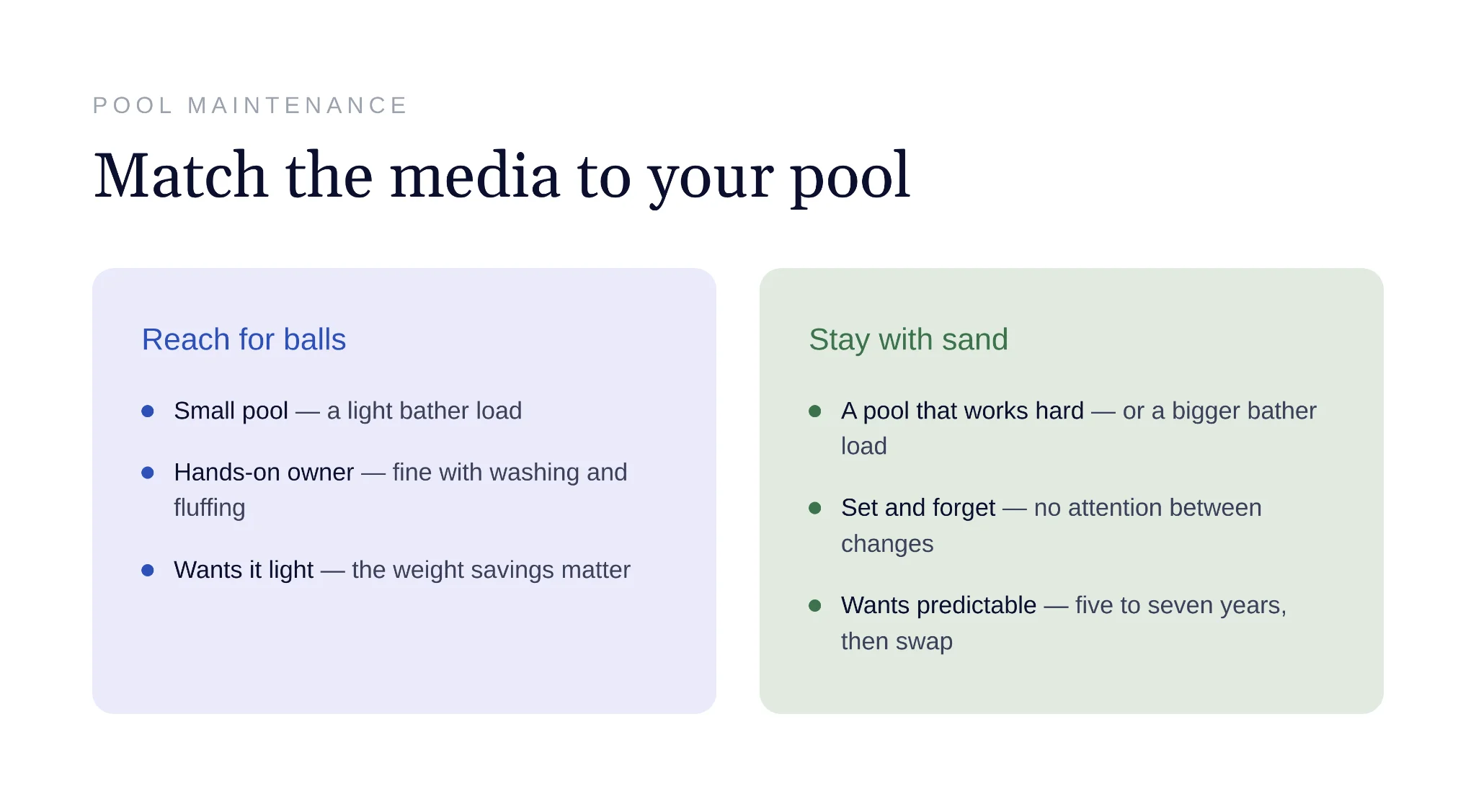
A small pool, light bather load, an owner who doesn’t mind pulling and rinsing the media now and then — filter balls are a reasonable pick, and the weight savings alone make some people happy.
A pool that works hard, a bigger bather load, or an owner who wants the filter to run untouched between media changes — sand’s consistency is worth more than the convenience of a lighter bag.
Match the media to how much attention you’re actually going to give it.
Keep the Load Off the Filter
Whichever media ends up in the tank, it only filters what reaches it, and the more debris in the water, the harder it works and the faster it clogs or clumps.
A filter fighting a floor full of leaves and grit gets overloaded, and filter balls in particular pack up faster under a heavy debris load.
This is where an Aiper robotic pool cleaner earns its spot regardless of what’s in your filter. It collects leaves, dirt, and fine debris into its own basket, independent of the pool’s filter and pump, so far less of it ever reaches the sand or the balls.
Less load means longer runs between backwashes, slower clumping if you’re running balls, and cleaner water going into whatever media you chose.
Get more pool and lawn care guides from Aiper on Google