Sand vs Cartridge Pool Filter: Which Suits Which Pool

Sand and cartridge filters both pull suspended particles out of pool water, and they filter in a similar size range. The differences that matter day to day are how you clean them, how much water that costs, and how often you have to do it.
Pool size, the kind of debris the pool collects, and the price of water where you live decide which one fits. Neither is the better filter in every yard.
How Each One Works
Both filters sit after the pump and push water through a medium that traps particles. What that medium is changes everything downstream of it.
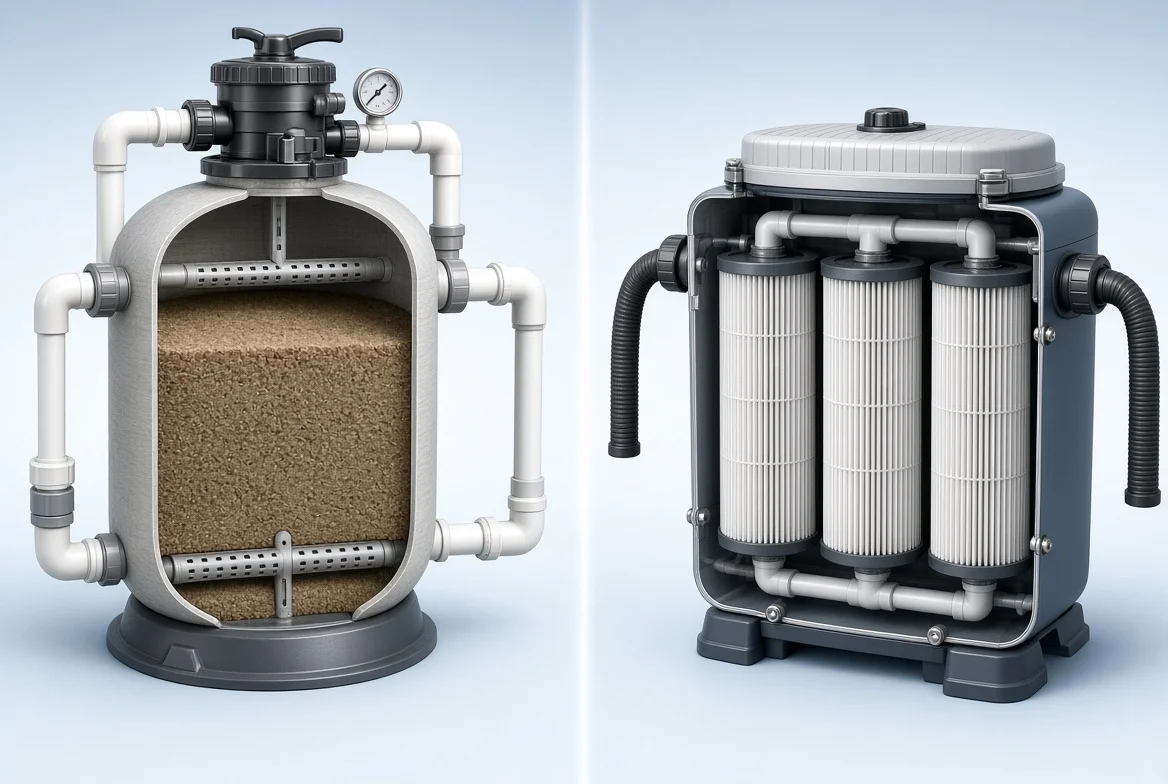
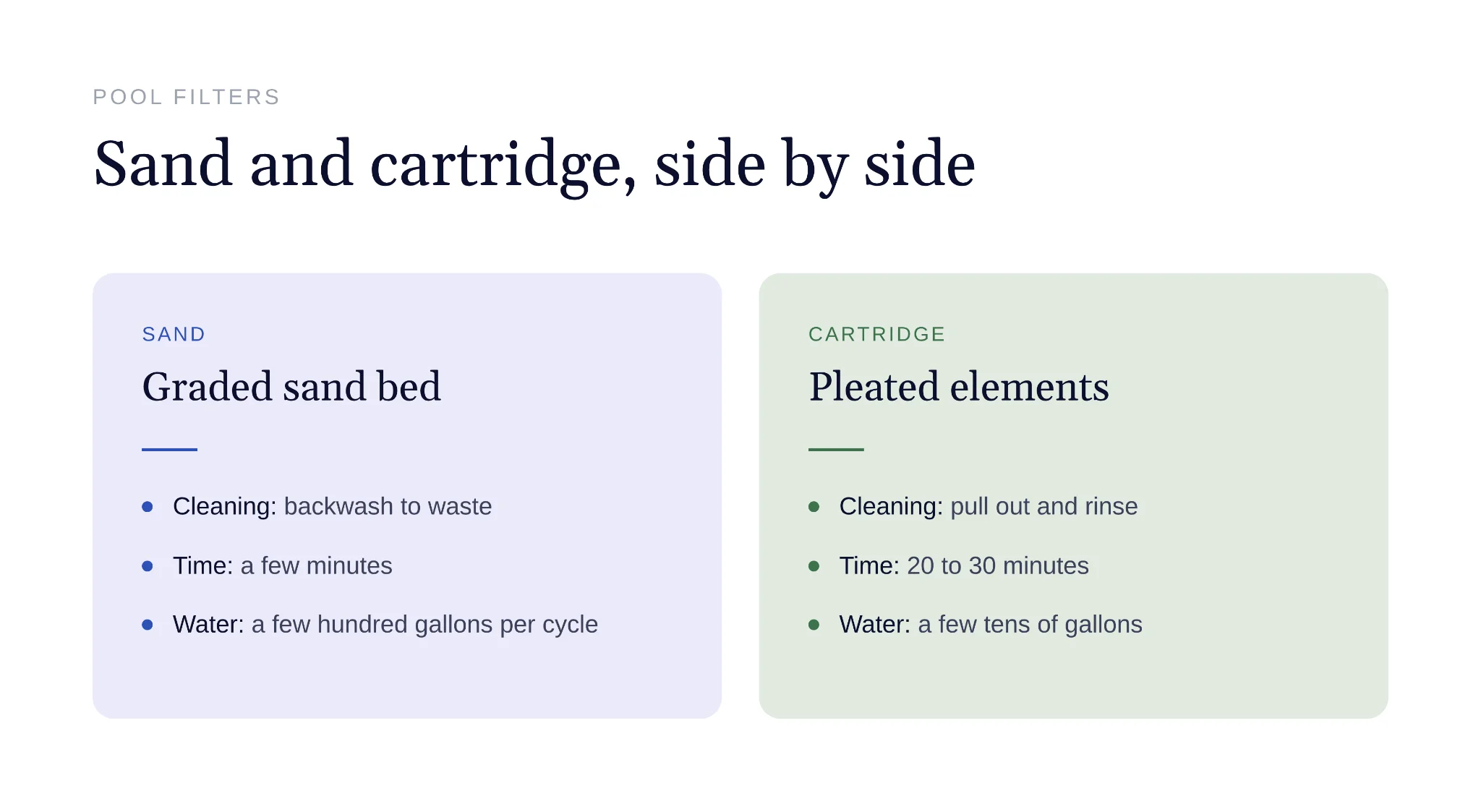
Sand filters hold several hundred pounds of graded sand in a tank. Water enters at the top, works down through the bed, and leaves clean while particles lodge between the grains. Cleaning means reversing the flow and flushing the trapped debris out to waste, which is backwashing.
Cartridge filters use pleated fabric elements in a smaller tank, similar in principle to a car’s air filter. Cleaning means shutting the system down, pulling the elements out, and rinsing them with a hose.
That single difference, backwash versus rinse, drives the water use, the maintenance routine, and much of the long-term cost.
Filtration: Closer Than the Marketing Suggests
Cartridge filters do filter finer than sand, and the gap is smaller than most comparison charts imply. The Department of Energy’s Building America program puts sand and cartridge filters both in the 10 to 40 micron removal range, with sorptive media filters such as DE reaching down to 5 microns.
Within that range, cartridges generally sit at the fine end and sand at the coarse end. Both keep a properly balanced, well-circulated pool clear.
Water clarity problems usually trace back to circulation, sanitizer levels, or water balance rather than the filter medium. Changing filter type won’t fix cloudy water caused by chemistry.
Water Use Is the Real Difference
Backwashing sends pool water down the drain, and that water was heated and chemically balanced first. EPA WaterSense reports that filter backwash can account for up to a quarter of a pool’s water consumption and names cartridge filters the most water-efficient option, since they don’t backwash at all.
Industry figures put a single backwash cycle in the range of a few hundred gallons, depending on filter size and how long the cycle runs. A sand filter backwashed every two weeks through a swim season adds up to thousands of gallons a year.
Rinsing a cartridge uses hose water instead, typically a few tens of gallons per cleaning. In areas with water restrictions, drought surcharges, or metered pool refills, that difference alone often decides the choice.
How They Compare
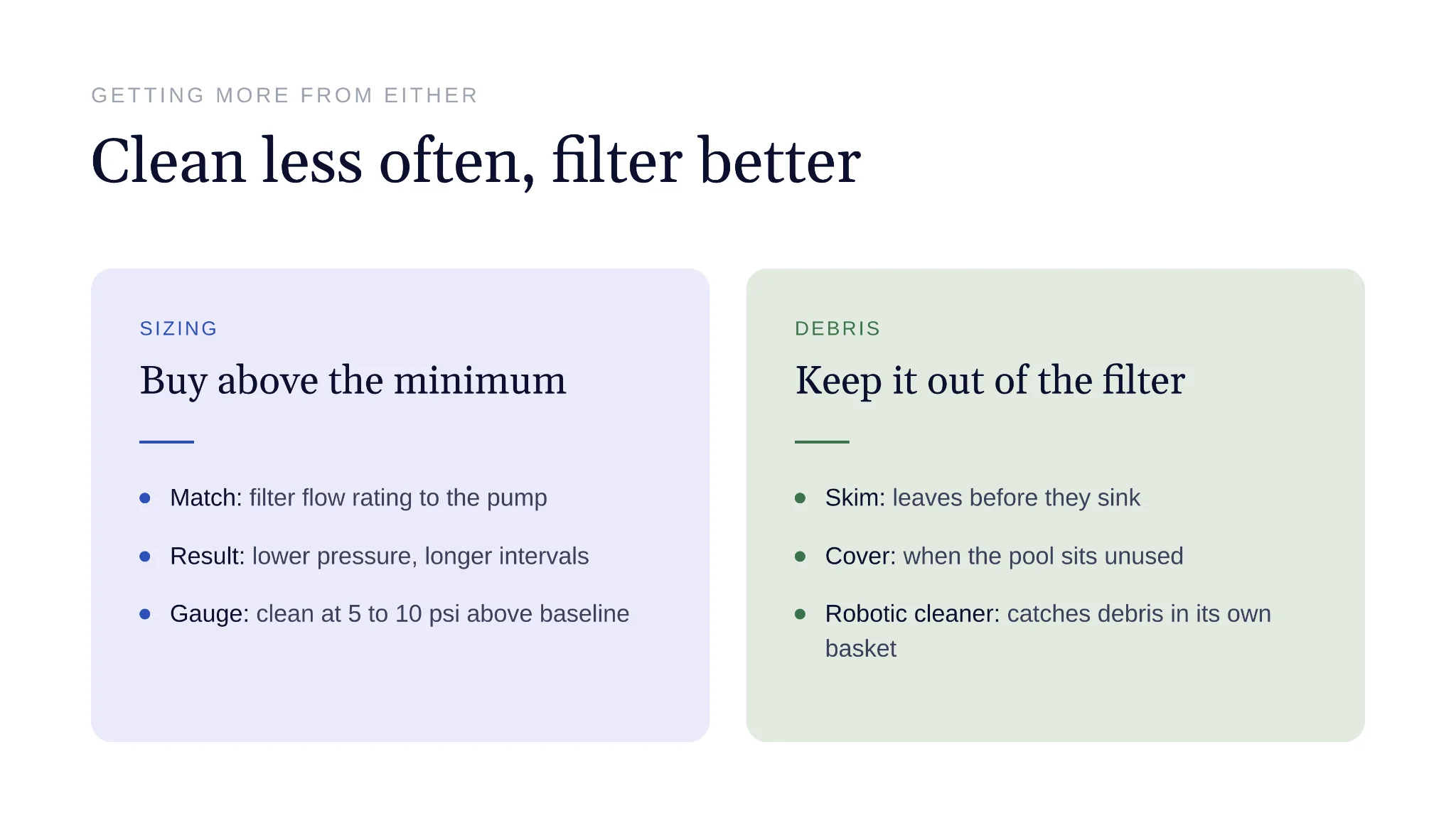
Both filters signal that they need cleaning the same way: rising pressure. EPA guidance is to clean after the filter pressure increases by 5 to 10 psi above the clean baseline, which is why a pressure gauge is worth having on either type.
| Sand | Cartridge | |
|---|---|---|
| Cleaning method | Backwash to waste | Remove elements and rinse |
| Time per cleaning | A few minutes | 20 to 30 minutes |
| Water per cleaning | A few hundred gallons | A few tens of gallons |
| Media replacement | Sand every 3 to 7 years | Elements every 2 to 4 years |
| Upfront cost | Lower | Higher |
| Best suited to | Larger pools, heavy debris | Small to mid-size pools, water-conscious owners |
Those replacement intervals come from cost guides rather than a standard: sand changes at three to seven years and cartridge elements at two to four, with lighter use pushing both toward the long end.
Which Filter Suits Which Pool
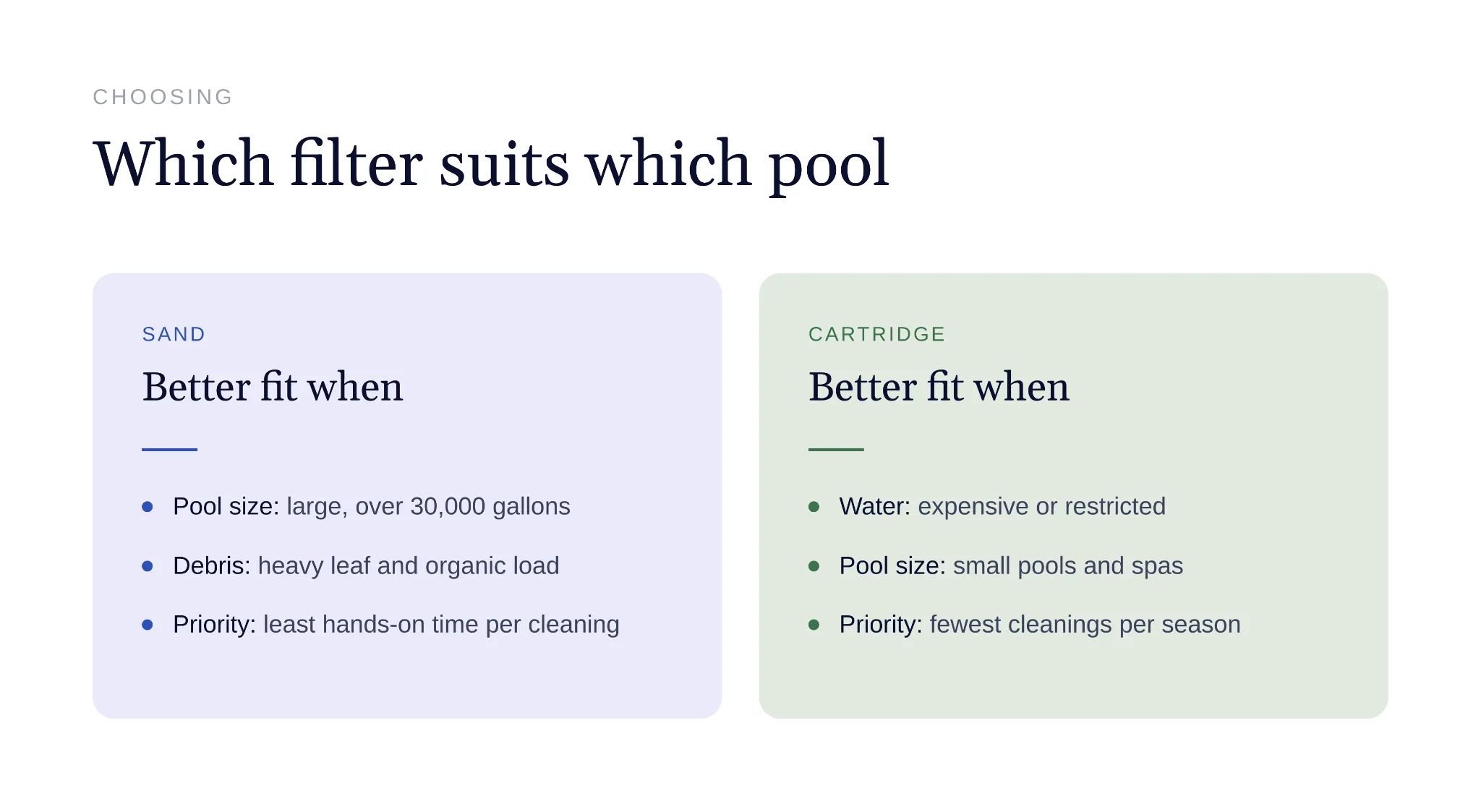
EPA’s commercial guidance scales by pool volume, and the same logic applies at home: cartridge filters for small pools and spas, sorptive media for medium pools, and industrial filters for very large ones, because cartridge replacement costs climb with size.
For a residential pool, work through these:
- Water is expensive or restricted. Cartridge, without much debate.
- The pool sits under trees and collects fine organic debris. Sand handles heavy loads with a quick backwash instead of a 30-minute cleaning.
- Large pool, over roughly 30,000 gallons. Sand, or a larger cartridge system sized well above the minimum.
- You want the lowest hands-on time per cleaning. Sand. A backwash takes a few minutes.
- You want the fewest cleanings per season. Cartridge, particularly an oversized one.
- Spa or small above-ground pool. Cartridge.
Size the Filter Above the Minimum
The most common filter mistake has nothing to do with type. An undersized filter of either kind clogs faster, runs at higher pressure, and needs cleaning constantly.
Match the filter’s flow rating to the pump’s output, not just to the pool’s gallon count. A filter rated well above what the pump delivers runs at lower pressure, stretches the interval between cleanings, and puts less strain on the pump.
Going one size up costs little at purchase and pays back in cleaning frequency for as long as the pool exists.
Reduce the Load on Either Filter
Everything that never reaches the filter is debris it doesn’t have to trap. Skimming leaves before they sink, running a cover when the pool sits unused, and keeping the floor clean all stretch the interval between cleanings.
A robotic cleaner helps here because it filters into its own basket rather than sending debris through the pool’s plumbing. The Aiper robotic pool cleaners collect leaves, sand, and fine debris in an onboard filter, which means less material reaching the sand bed or the cartridge elements and longer intervals between backwashes and rinses.
If You’re Replacing an Existing Filter
Switching types is straightforward on most equipment pads, and the plumbing changes are minor. Moving from sand to cartridge removes the multiport valve and the backwash line, and moving the other way adds both plus a place to send the wastewater.
Check local rules before adding a backwash line. Some municipalities restrict where pool water can be discharged, which is a point in favor of cartridge in areas with tight stormwater regulations.
Get more pool and lawn care guides from Aiper on Google