
If your pool thermometer reads 80°F (about 27°C) on Saturday morning, you’re in a typical range for swimming laps. Come back that afternoon with a child who spends much of the lesson holding the wall, and the same water can feel chilly. For steady lap swimming, 78–82°F is a useful starting range. For family swims with plenty of time to stand, talk, and play, consider the 83–86°F range common in multipurpose pools.
What water temperature works for lap swimming and family swim time?
The CDC groups pool water temperatures by activity in its guidance for aquatic facilities. Two of those settings make useful comparisons for a backyard pool.
| How you use the pool | Water temperature | What the range describes |
|---|---|---|
| Continuous laps | 78–82°F (about 26–28°C) | The CDC’s reference range for swim teams and lap swimmers. Think of a workout where you swim length after length with short rests. |
| Family recreation | 83–86°F (about 28–30°C) | A typical operating range for multipurpose pools. An afternoon of tossing a ball, walking in the shallows, and visiting with family fits this pattern. |
For a real-world example, the city of Sioux Falls keeps its recreation pool at 84°F (about 29°C). On any given day, that pool can host open swim, water walking, and lessons. If that sounds like a weekend at your house, 84°F gives you a specific setting to try.
Is 80°F warm enough for a child learning to swim?
It can feel cool for a stop-and-start lesson. Picture a child practicing a back float for a few seconds, then holding the edge through a demonstration and a sibling’s turn. An adult swimming laps beside them can feel comfortable the whole time. Pay attention to how the child feels during those pauses.
The American Red Cross guidance for swim instructors gives a specific example. For ages 6–15 spending 30–45 minutes in the water during a learn-to-swim class, it lists at least 84.2°F (29°C). That guidance assumes an indoor pool with controlled air temperature and humidity. Outdoors, wind can make the pauses feel colder. If a child starts shivering, end the session, help them out of the water, and move somewhere warm.
How do you choose one setting when the family shares a pool?
Think back over the last few swims. If four mornings out of five were lap workouts and everyone was comfortable at 80°F, you have a good reason to keep that setting. If most visits involve playing on the steps or waiting for a turn, try a setting in the recreational range and see how it feels during the next family swim. On hot days when several groups swim, check chlorine and pH between swims as well as the water temperature.
A one-line note is enough to start: Saturday morning · 80°F measured · 20 minutes of laps · comfortable throughout. Take another reading that afternoon and note how the swimmers felt between turns. If both readings are 80°F, you’ve learned something a thermostat can’t tell you: which activity you want the setting to serve.
What if the water feels colder than you expected?
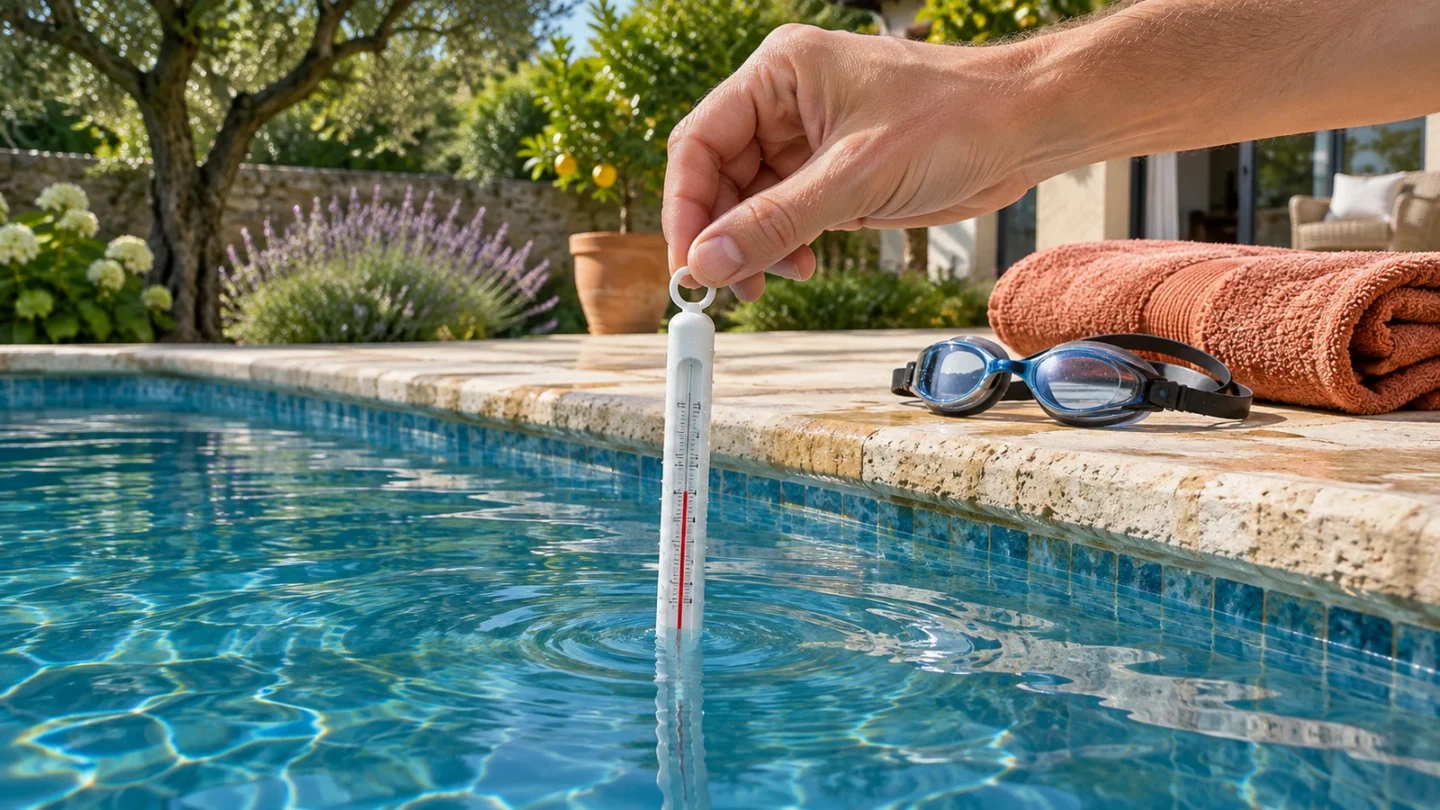
Take a pool thermometer reading just before you get in. A heater set to 84°F tells you the target. A thermometer reading of 80°F tells you what you’ll swim in today. After a run of cool nights, even a sunny afternoon can be misleading because pool water can warm up more slowly than the air.
If the water is consistently cooler than you want at your usual swim time, compare ways to warm your pool. After making a change, check again at roughly the same time of day. The most useful comparison is how the next lap session or family swim feels at the new measured temperature.
Get more pool and lawn care guides from Aiper on Google