

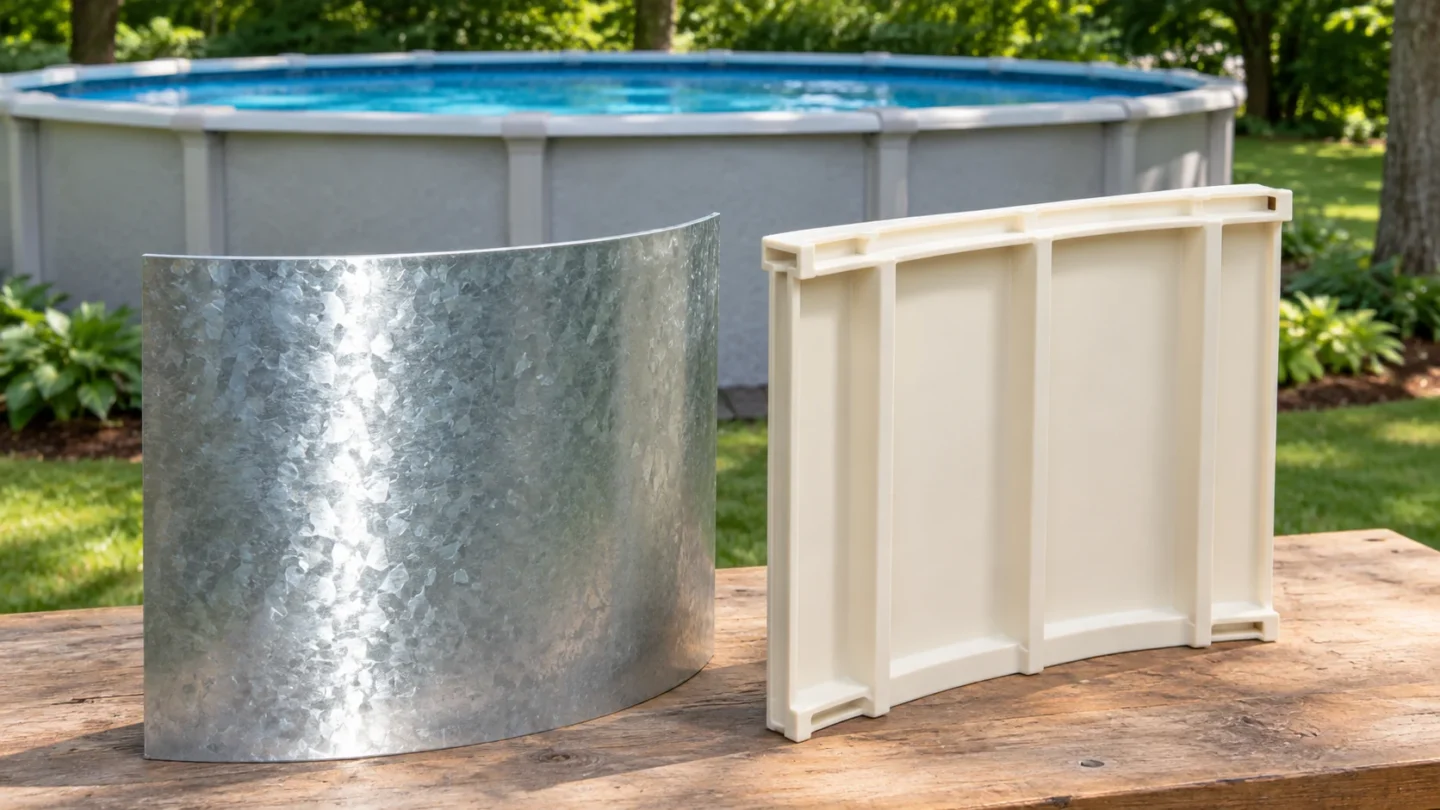
The wall is the only part you can’t replace later. That’s why getting it right matters more than any other choice here.
If the liner wears out, you can replace it. Same goes for the pump and filter, you can swap them if they fail.
The wall stays for the life of the pool, so the material matters more than any other spec on the box.
The difference is simple. Steel walls cost less. Polymer walls don’t rust. Most of the decision comes down to how much rust risk your pool will face.
How the Two Wall Types Are Built
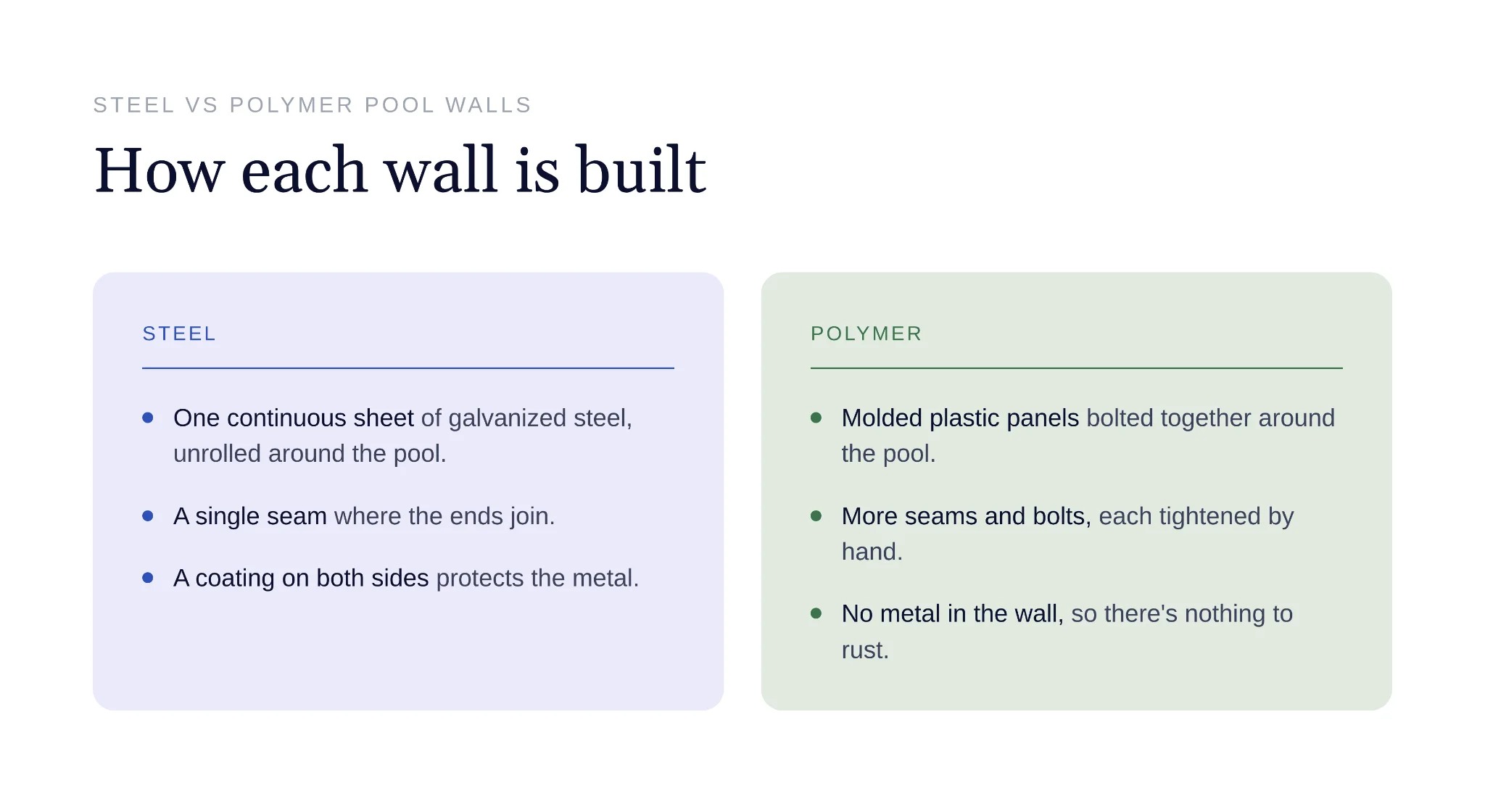
The two materials go together differently, and that difference shows up in installation, repairs, and where problems start.
A steel wall is one long, continuous sheet of galvanized steel, unrolled around the pool and joined at a single seam. It’s coated on both sides to protect the metal from water and soil.
A polymer wall, also sold as resin, is a set of molded plastic panels bolted together around the pool. It doesn’t use any metal sheet.
Many pools sold as resin are actually hybrids.
They have a steel wall with resin top rails, uprights, and bottom track. The resin parts resist corrosion where water and wet soil collect, but the wall itself is still steel.
Check the product description for the wall material specifically, not just the frame.
Rust Is the Real Difference
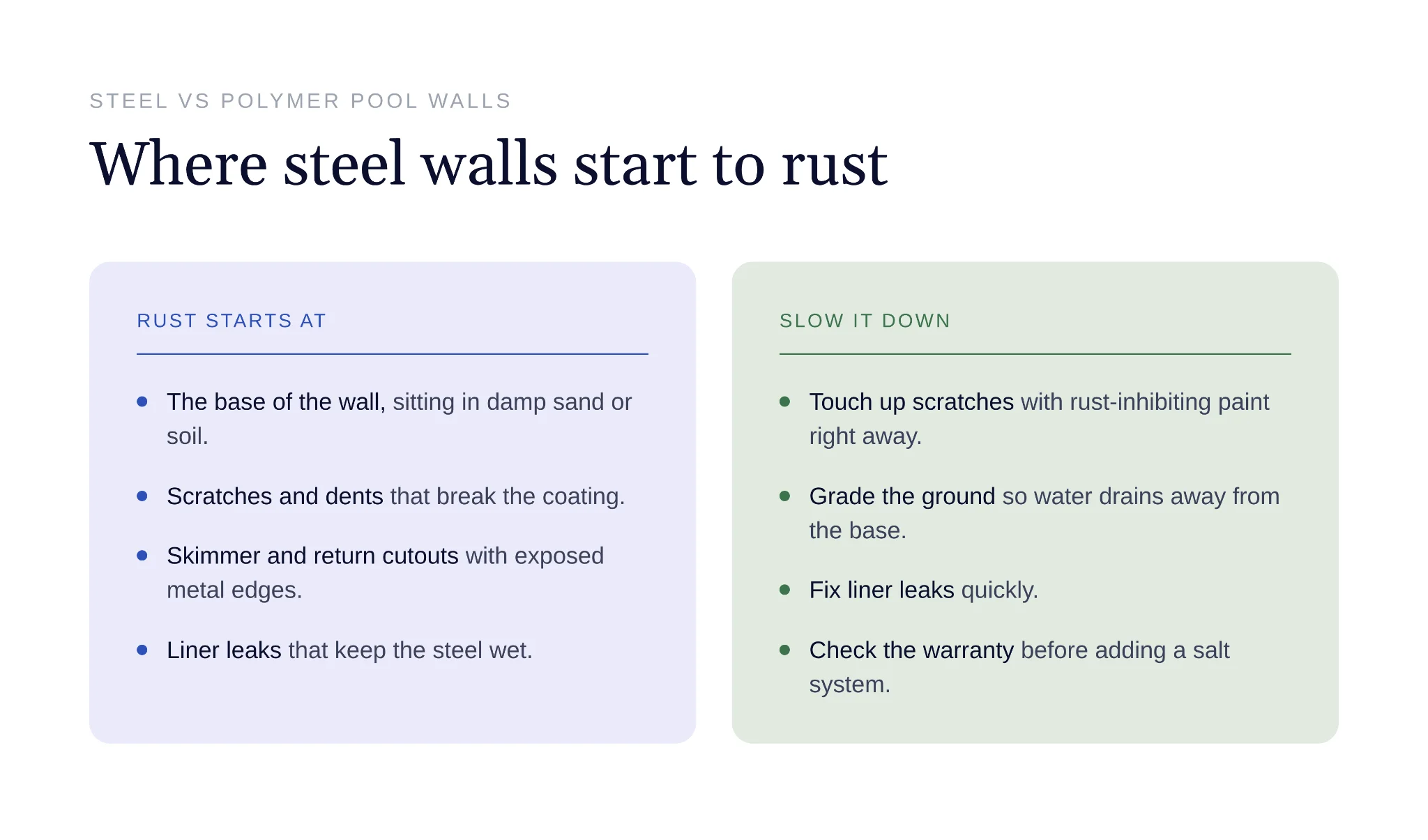
Galvanized steel resists rust only while its coating stays intact. Once the coating is broken, the bare metal starts corroding, and on a pool wall, that happens in predictable places:
- The base of the wall, where it sits in damp sand or soil for years.
- Scratches and dents from installation, lawn equipment, or kids kicking the wall.
- The skimmer and return cutouts, where the metal edge is exposed, and water can seep behind the gaskets.
- Anywhere the liner leaks, because water trapped against the wall keeps the steel wet.
Rust starts as surface spots, but left alone, it eats through the wall. Once the wall is rusted through, it can’t hold the water pressure, and the pool usually needs replacing.
Saltwater speeds all of this up. If you plan to run a saltwater chlorinator, check the pool’s warranty before you buy, because some steel-wall warranties exclude or limit coverage for salt systems.
Polymer walls avoid the problem entirely, since plastic doesn’t corrode.
With a steel wall, you can slow corrosion down. Touch up scratches with rust-inhibiting paint as soon as you see them, keep the ground at the base graded so water drains away, and fix liner leaks quickly.
Strength and Installation
Steel is the stiffer material. A single steel sheet holds its shape well once the pool is full, and it has a long track record on above-ground pools.
It’s also harder to handle during installation. The sheet is long and heavy, and it can kink if it’s unrolled carelessly or caught by wind before it’s secured. A kink weakens the wall at that spot.
Polymer panels are lighter and easier to carry and position, especially for a small crew. The trade-off is more seams and more bolts, and each one has to be tightened properly.
Both wall types need the same base: flat, level, compacted ground. Neither material makes up for a poorly prepared site.
Cost and Lifespan
Steel walls are the cheaper option upfront, which is why they’re on most entry-level and mid-range pools. Polymer walls and full-resin pools cost more.
How long either wall lasts depends on your water and climate as much as the material. A well-maintained steel wall in a dry climate with chlorine water can last many years.
In a humid or coastal climate, or with a salt system, steel faces much more rust risk, and polymer’s higher price is easier to justify.
Side-by-Side Comparison
| Steel wall | Polymer wall | |
|---|---|---|
| Construction | One continuous galvanized sheet | Molded panels bolted together |
| Rust | Starts where the coating breaks | Doesn’t rust |
| Saltwater systems | Check the warranty first | Generally suited |
| Installation | Heavy, and can kink if mishandled | Lighter panels, but more seams |
| Upfront cost | Lower | Higher |
Which Wall to Choose
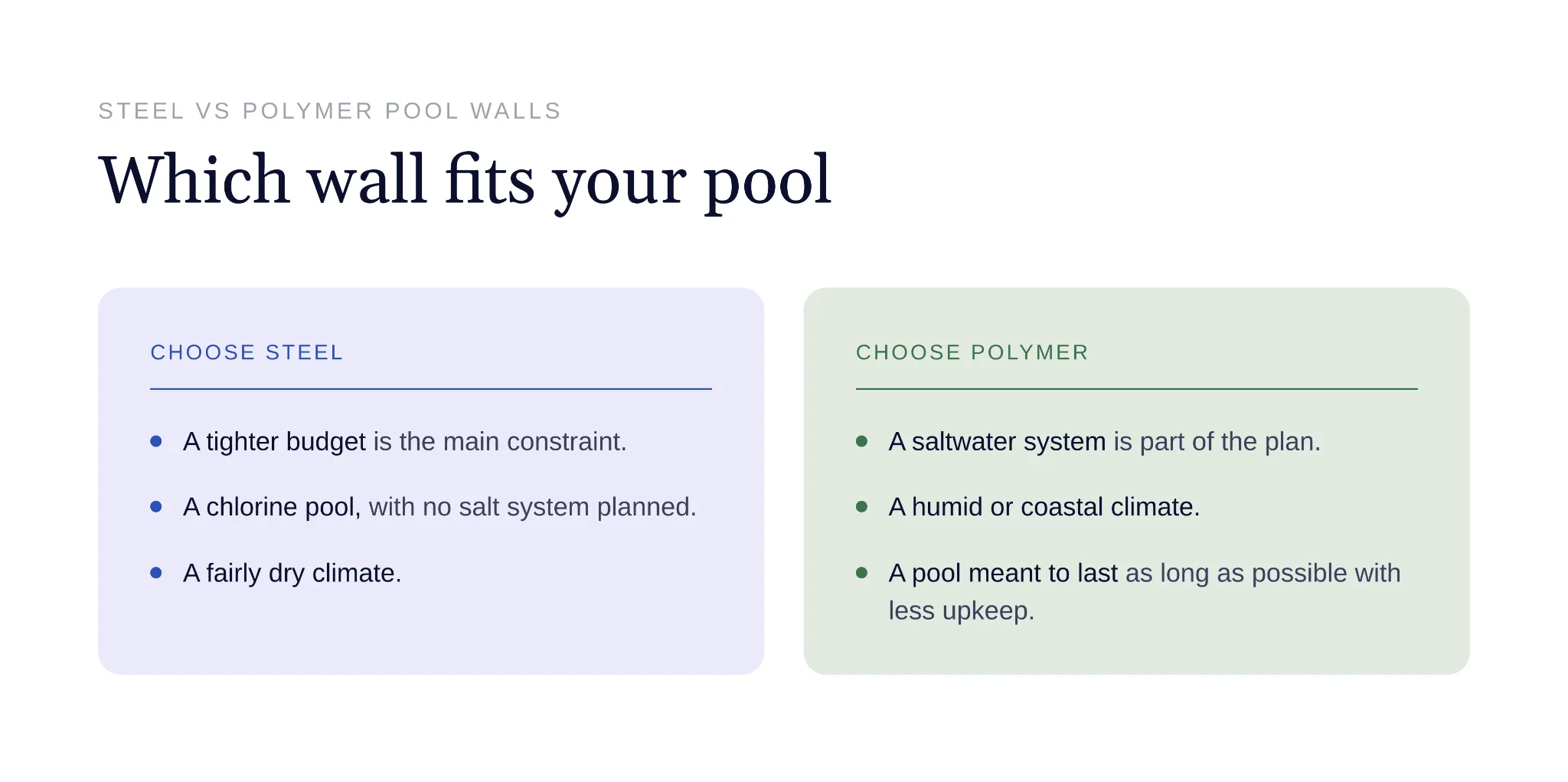
Choose steel if budget is the main constraint, you’ll run a chlorine pool, and you live somewhere fairly dry. Keep up with scratches and drainage at the base, and it will hold up.
Choose polymer if you plan to use a saltwater system, live in a humid or coastal area, or want the pool to last as long as possible with less maintenance.
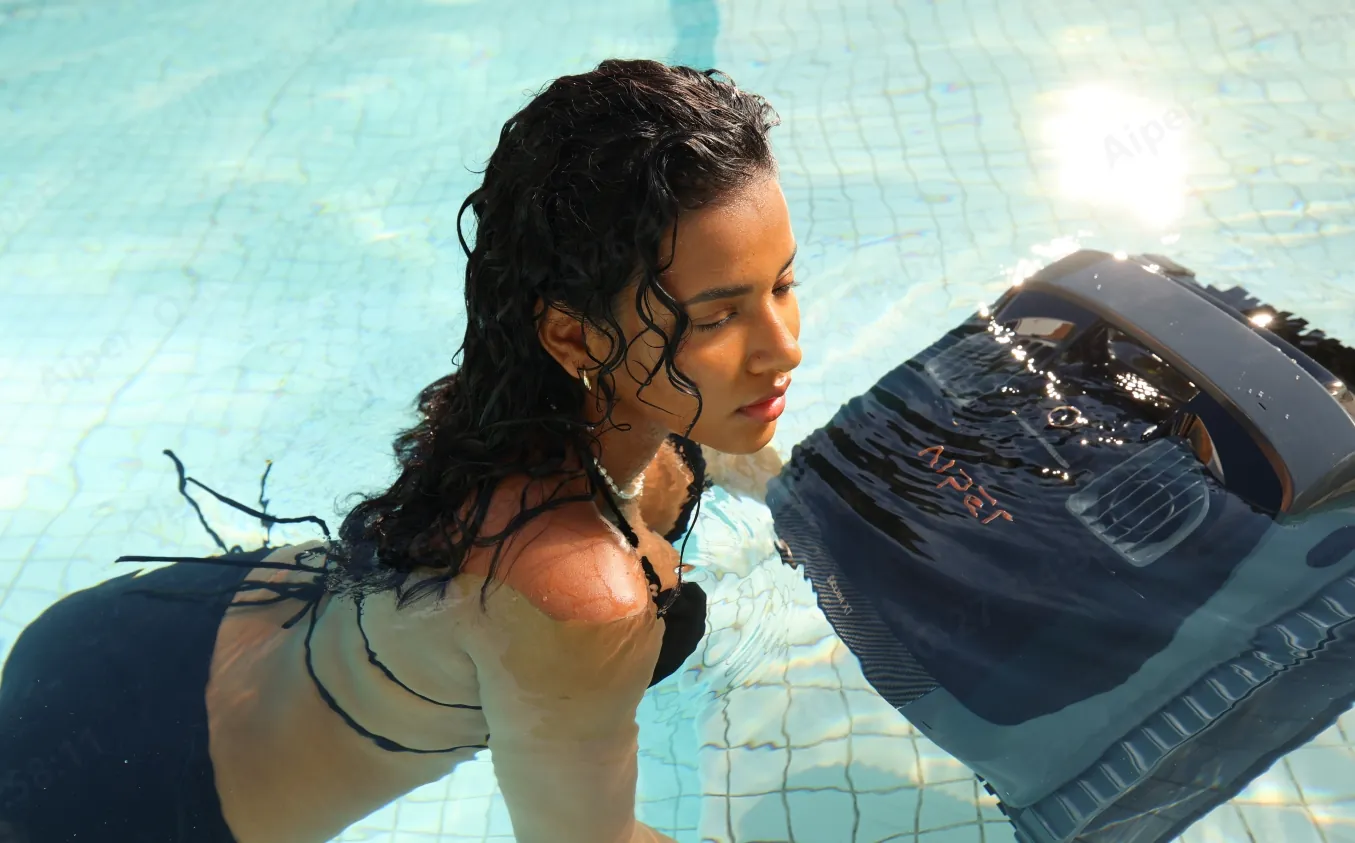
Whichever wall you pick, the liner floor needs the same regular cleaning. A cordless robotic pool cleaner from Aiper takes care of the floor and walls on a schedule. Choose a model rated for above-ground pools and vinyl liners.
Get more pool and lawn care guides from Aiper on Google