


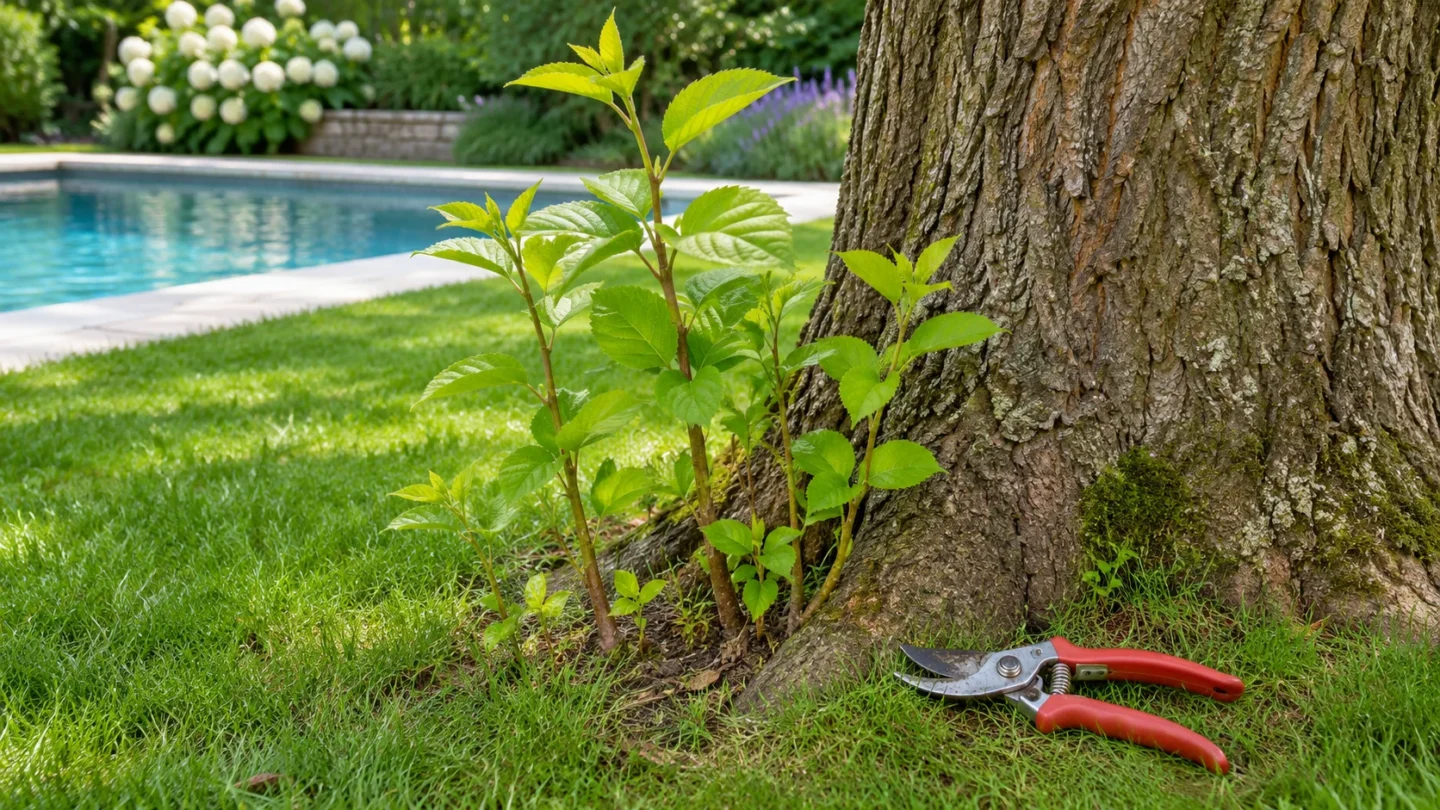
Those little shoots coming up in a ring around the tree, or in a line running out across the grass, aren’t seedlings.
They’re the tree itself: root suckers, shoots the tree sends up from its own root system. That one fact decides everything about how to deal with them, because it rules out the first thing most people reach for.
Don’t Spray Them
Hit a patch of suckers with a weedkiller, and there’s a real chance of killing the tree they belong to.
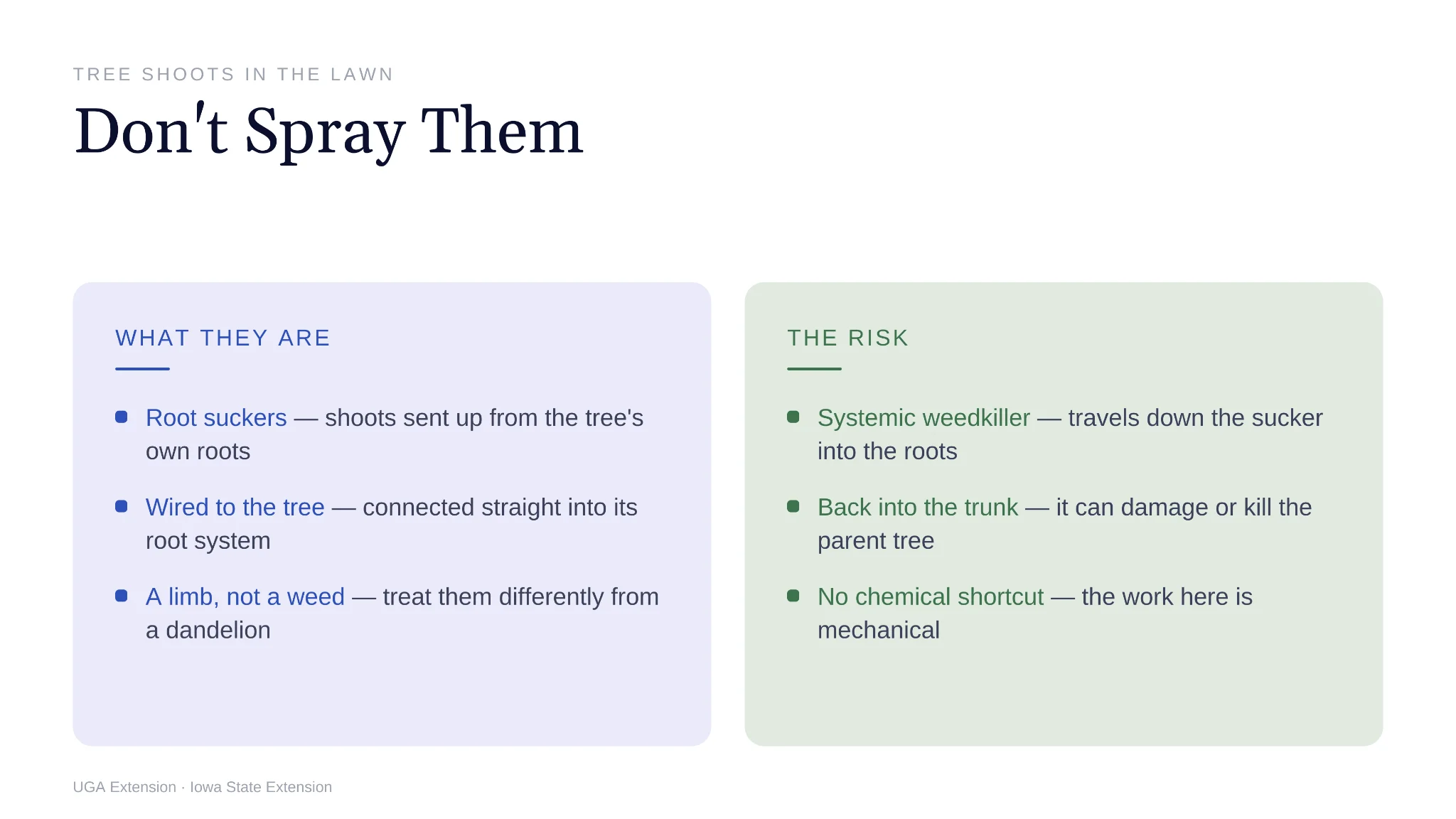
A systemic herbicide is built to travel from the leaf down into the root, and since these shoots are wired straight into the tree’s roots, that’s the path it takes: down the sucker, into the shared root system, back up into the trunk. Iowa State puts it plainly: spraying the suckers may damage or kill the tree.
This is the whole reason tree shoots get handled differently from a weed. A dandelion has its own roots and nothing to lose. A sucker is a limb.
So the chemical shortcut that clears thistle or clover is off the table here. The work is mechanical, and it’s repetitive.
Why They’re Coming Up at All
Suckering is a stress response.
A tree throws them up when something has gone wrong, and understanding the trigger is what stops the next wave, because cutting alone treats the symptom while the cause keeps producing more.
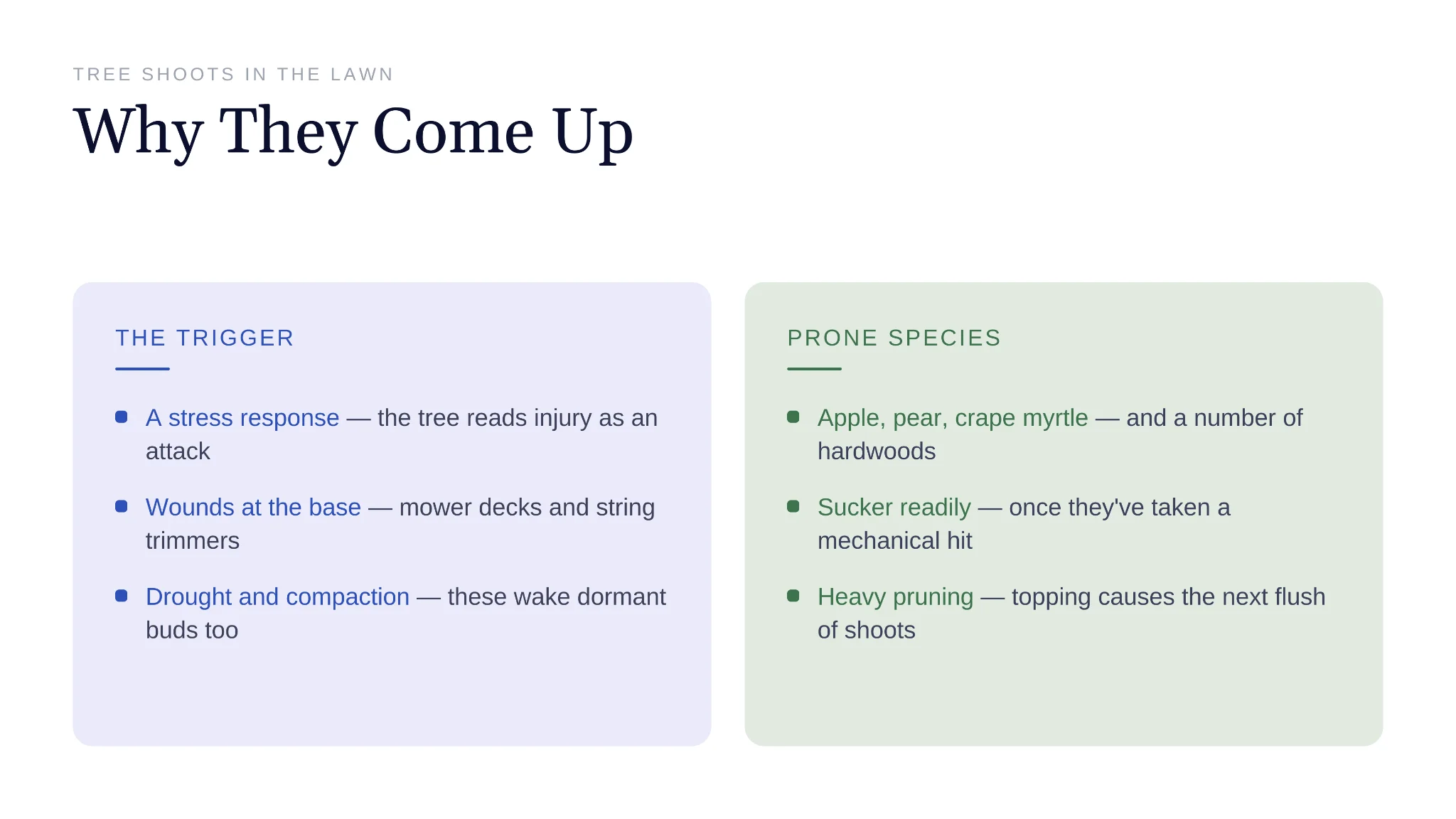
The usual culprit is damage down at the base. Think a mower deck clipping the trunk, a string trimmer chewing the bark, a wound to the surface roots from digging or heavy equipment.
The tree reads that injury as an attack and fires off hormones that wake dormant buds into new stems. Drought does it too, and so do compacted soil, insects, and disease. Some trees barely need an excuse. Apple, pear, crape myrtle, and several hardwoods sucker readily once they’ve taken a mechanical hit.
One thing worth knowing before anyone reaches for the saw. Cutting a tree back hard, or topping it, is itself a trigger for a flush of sprouts, and on a big tree, forcing out all that new growth it can’t afford to feed can push it into sudden decline.
Heavy pruning is not the answer to a suckering problem. It’s often the cause of the next one.
Cutting Is the Job
With spraying out, removal comes down to cutting, done close and done often. The suckers will keep returning (that part doesn’t stop), so this is maintenance that gets scheduled, not a task that gets finished.
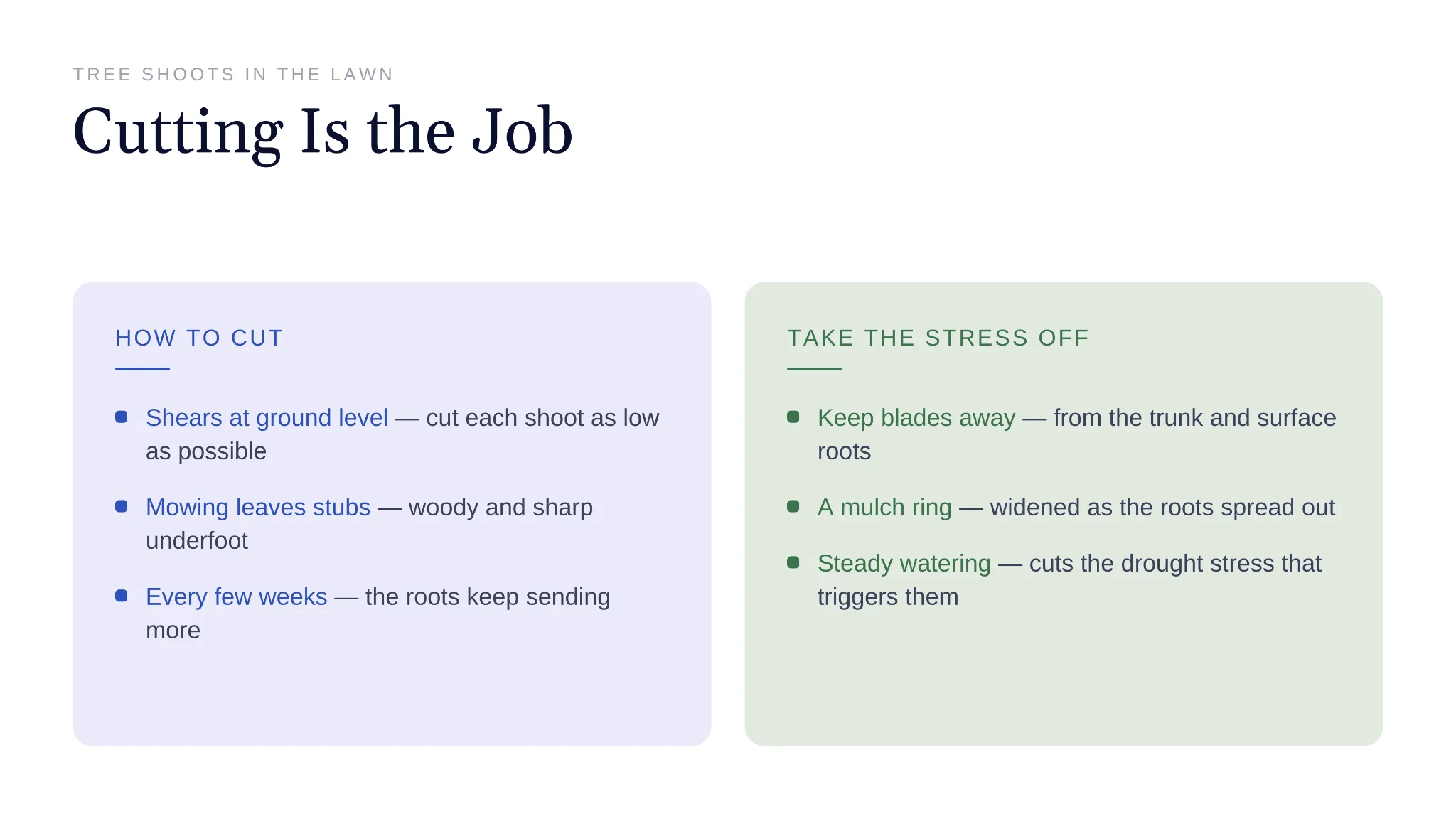
Cut each shoot as low as possible, right down at ground level, with pruning shears rather than a mower where you can manage it. Mowing does take them off, and it’s fine across open lawn, but it leaves a woody stub standing, sharp enough to be a hazard underfoot, especially where kids play.
Shears leave it flush.
Either way, the roots stay alive and will send more, so the honest expectation is a pass every few weeks through the growing season, for as long as the tree’s there.
On a grafted tree there’s an extra reason to stay on top of it: the suckers come off the rootstock below the graft, so they grow as a different, often scrappier tree, and left alone they can overrun the variety that was planted.
Take the Stress Off the Tree
Cutting manages what’s already up. Fewer suckers in the first place come from removing the triggers, and most of those triggers are things happening at the base of the tree.
Keep the mower and the trimmer away from the trunk and the surface roots, that single change cuts out the most common wound there is.
The standard fix is a mulch ring around the base, wide enough that nothing with a blade ever needs to go near the bark, and widened over the years as the roots spread.
Beyond the physical damage, there’s the drought stress that wakes dormant buds on its own. A tree going dry at the roots is a tree looking for a reason to sucker, and uneven watering across a lawn is how root zones end up dry without anyone noticing.
A controller like the Aiper IrriSense 2 waters each zone to what it actually needs rather than running the whole yard on one timer, which keeps the tree’s root area steadily moist instead of swinging between soaked and parched. It won’t stop a sucker that’s already pushing up. What it removes is one of the reasons the tree starts throwing them in the first place.
Get more pool and lawn care guides from Aiper on Google