Compost vs. Topsoil for a Lawn: What Each Actually Does

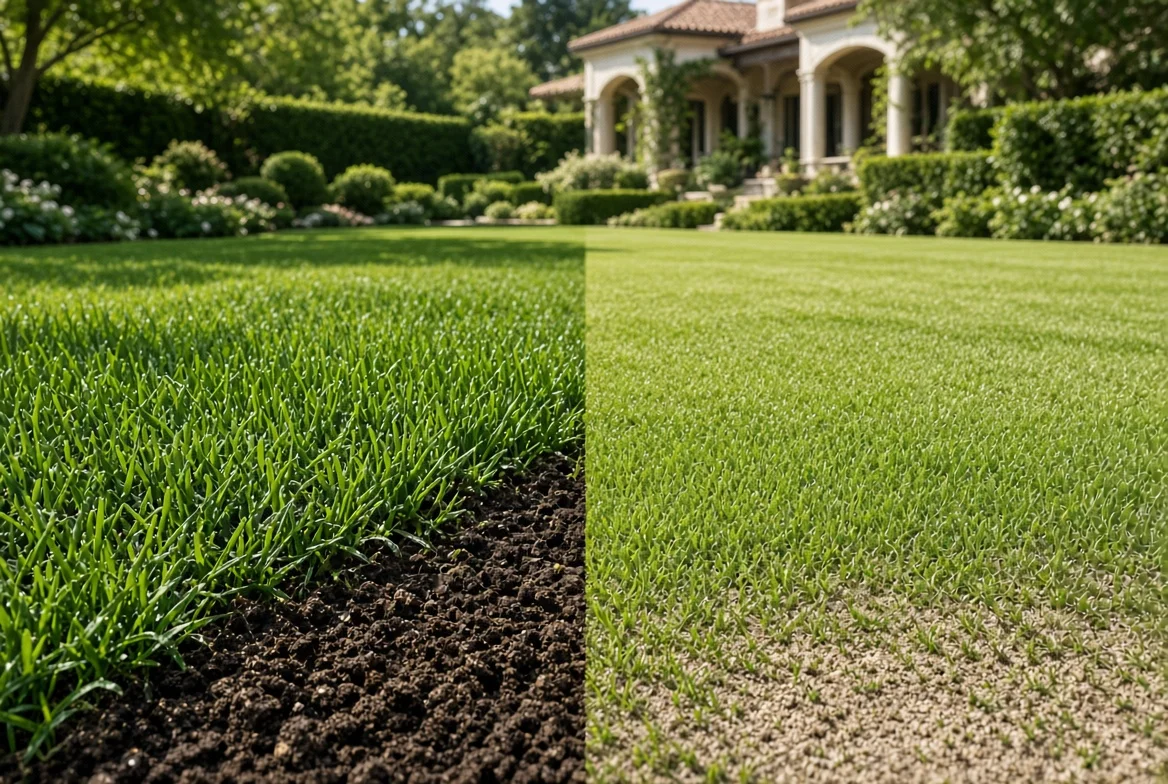
Compost and topsoil sit side by side at the garden center and often get used for the same jobs, but they do different work. Compost is decomposed organic material, made from leaves, yard waste, or manure. Topsoil is soil itself, dug from the upper layer of the ground.
Most lawn jobs call for one or the other, and a few call for both.
What Compost Does
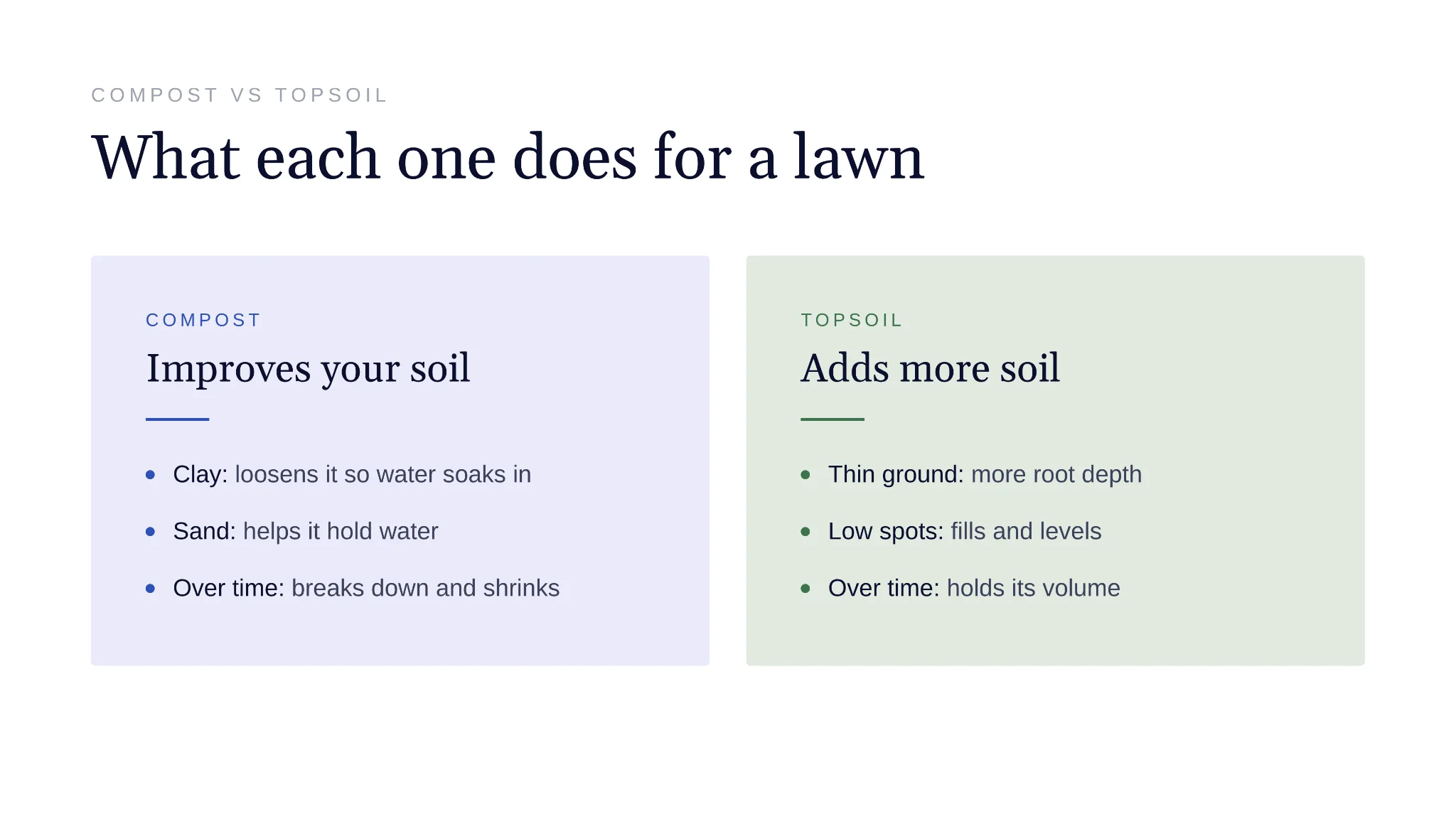
Compost changes how soil behaves. In clay, it loosens the soil so water soaks in and roots can spread; in sandy soil, it helps the ground hold water and nutrients longer.
It also feeds the lawn, slowly. Penn State turfgrass researchers note that compost releases most of its nitrogen gradually and generally carries far fewer nutrients than fertilizer.
Compost breaks down over time, which is how it improves the soil. That same breakdown also means it shrinks, so it’s a poor material for building up grade or filling holes on its own.
What Topsoil Does
Topsoil adds volume. It gives grass more root depth where the ground is thin, raises low areas, and replaces soil removed during construction.
What you get depends heavily on where it came from. UConn’s guide to purchasing topsoil points out that there are no legal marketing standards for topsoil, so one supplier’s product can be rich, loamy soil and another’s can be subsoil, fill, or wetland dredgings.
Good topsoil holds its shape and doesn’t break down much over time, which makes it the right choice for filling and grading. It does far less to improve the soil underneath it unless it is mixed in.
Side by Side
Both materials come by the bag or by the cubic yard, but they differ in almost every way that matters on a lawn.
| Compost | Topsoil | |
|---|---|---|
| What it is | Decomposed leaves, yard waste, manure, or food scraps | Mineral soil from the upper layer of the ground |
| Main job | Improves the soil you already have | Adds soil where there isn’t enough |
| Nutrients | Small amounts, released slowly | Varies widely by source |
| Over time | Breaks down and shrinks | Holds its volume |
| Typical lawn depth | 1/4 inch as a topdressing | Up to 1/2 inch as a topdressing; several inches when building up a lawn |
| Main risk | Unfinished compost can burn grass | Poor or mismatched soil can create drainage problems |
Which One for Each Lawn Job
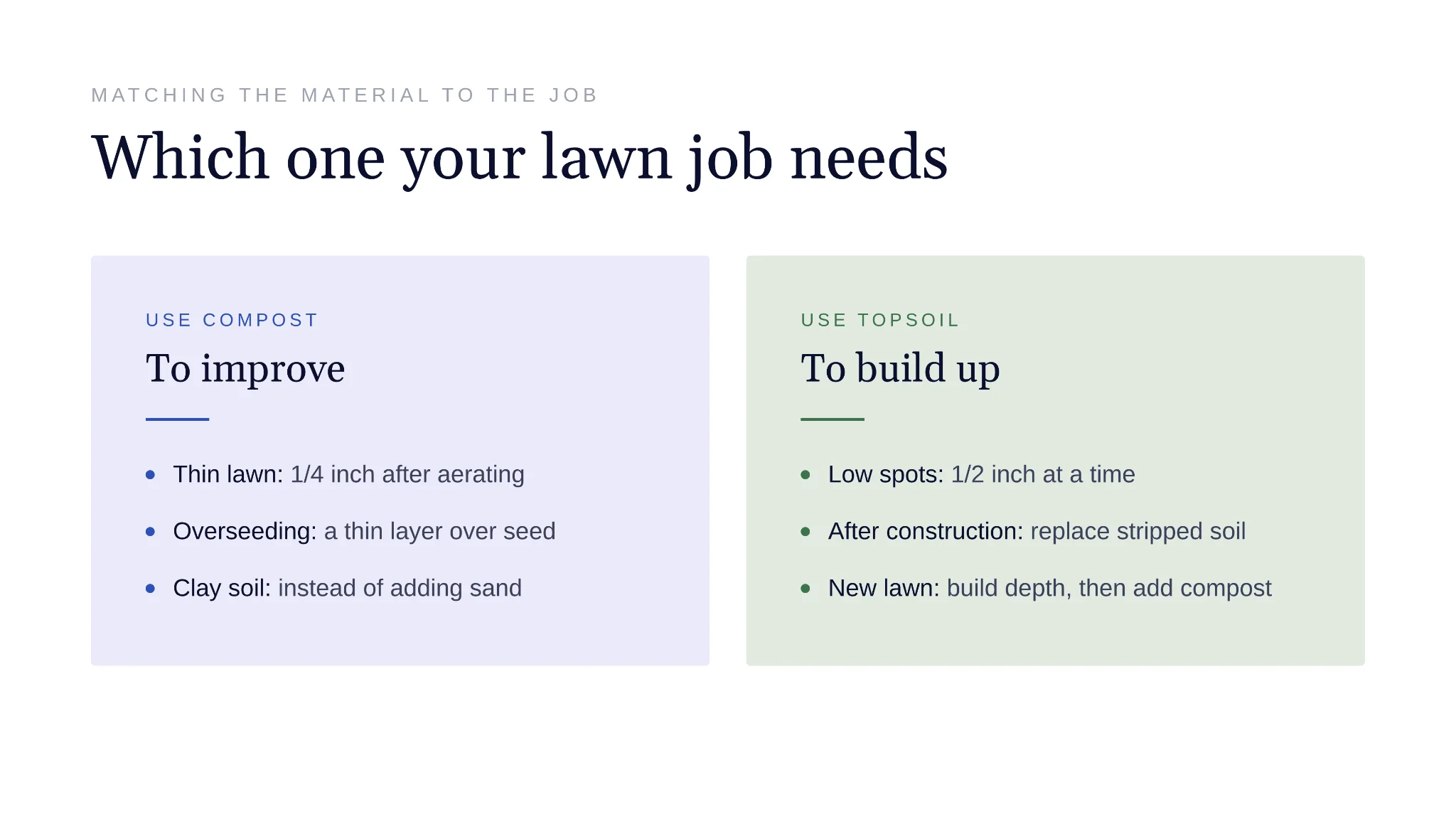
Most jobs have a clear answer once you know what the lawn needs. These are the ones that come up most often.
Improving a thin or tired lawn. Use compost. Spread 1/4 inch over the lawn after core aeration so it works into the holes, and repeat once or twice a year.
Filling low spots. Use topsoil that matches your existing soil. Clemson Cooperative Extension advises adding no more than 1/2 inch at a time over existing grass, and using material close in texture to the soil already there. Compost alone settles as it breaks down, which can bring the dip back.
Overseeding. Use compost. A thin layer over new seed holds moisture against it and gives it a loose bed to root into.
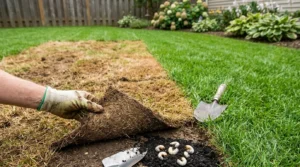
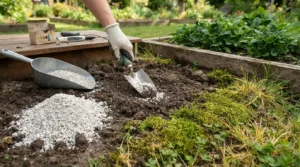
Starting a new lawn on poor soil. Use both. Spread topsoil to build up depth where the ground is thin or rocky, then work compost into the top several inches before seeding or laying sod. Till 1 to 3 inches of organic matter into topsoil that is low in it.
Repairing ground after construction. Use topsoil first. Construction often strips the original soil and leaves compacted subsoil behind, so the lawn needs new soil before compost can do much.
Buying Topsoil
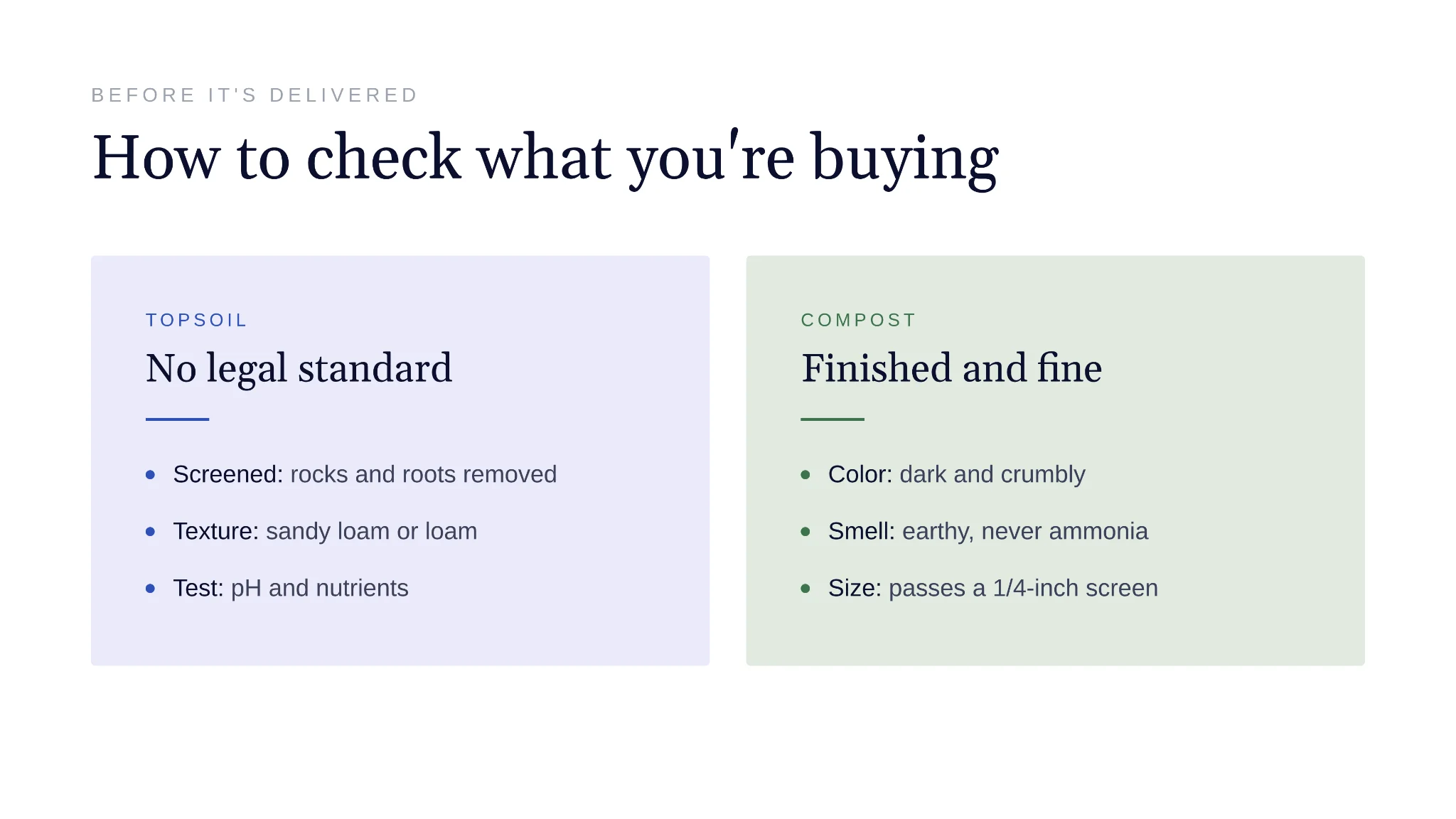
Because topsoil isn’t regulated, look at what you’re buying before it arrives. Inspect the supplier’s pile in person when you can.
- Screened: Rocks, roots, and trash removed. Unscreened soil is cheaper but leaves you sorting debris by hand.
- Texture: Sandy loams and loams work best for lawns. Avoid heavy clay and pure sand.
- Color: Dark is good, but very dark gray soil that smells sour may be dredged from a wetland and drain poorly.
- Testing: Few suppliers test their topsoil. A soil test from your county extension office shows its pH and nutrient levels before you spread it.
Don’t add sand to heavy clay soil to loosen it. Adding organic matter such as compost works better.
Buying Compost
Compost quality varies less than topsoil but still matters. Finished compost is dark and crumbly and smells earthy, like a forest floor.
For topdressing a lawn, Penn State’s guidelines call for compost fine enough to pass through a 1/4-inch screen, so it settles between grass blades. Skip any compost that smells strongly of ammonia or sulfur, since that means it hasn’t finished breaking down.
Blended products sold as “garden soil” or “topsoil and compost mix” combine the two. They work well for filling and new lawn areas, but check what’s in them, since the label has no standard meaning either.
Watering After Either One
New topdressing, filled spots, and freshly seeded areas all need more frequent watering than the rest of the lawn while the grass grows through. Heavy watering, though, washes fresh material into low spots and uncovers seed.
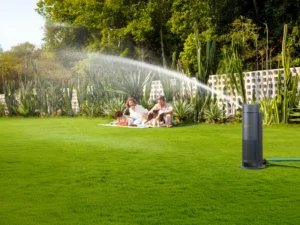
Short, frequent cycles work best for the first few weeks. The Aiper IrriSense 2 lets you map those areas as their own zones and give them light daily watering while the rest of the lawn stays on its normal schedule.
Get more pool and lawn care guides from Aiper on Google