How to Mow a Lawn Properly: Height, Pattern, Frequency, and Why It Matters

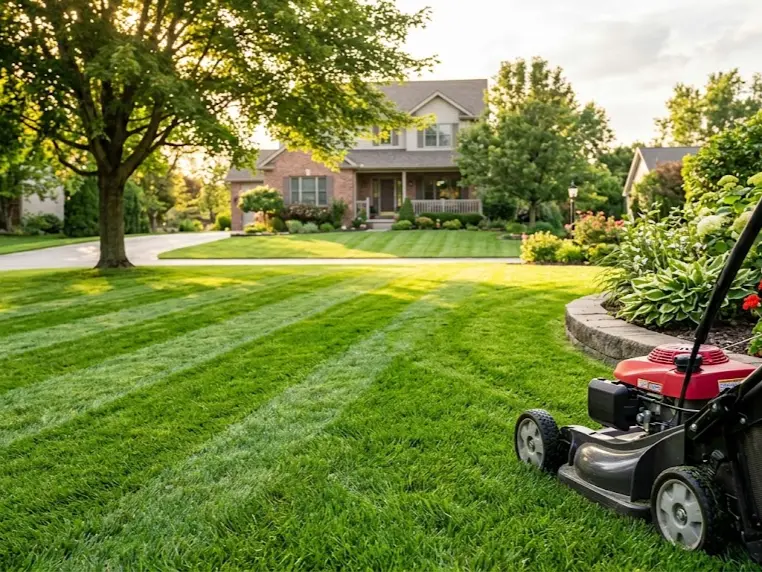
Most lawn problems start with the cut.
People usually blame fertilizer, soil, seed, or weather first. Sometimes those matter.
But a lot of patchy, stressed, weed-prone grass comes back to one basic thing: the mower deck is set too low, and it has probably stayed there since the day the mower came out of the box.
Cut Height Is the One That Actually Matters
Short feels right. Neat, controlled, less frequent.
But strip too much blade and the plant stops investing in roots, all that energy redirects upward, trying to recover what got taken.
A few seasons of that and you’ve got a lawn with roots so shallow that a dry August or a kid running the same path every day starts showing through as dead patches. It holds together until something stresses it. Then it falls apart fast.
One-third. That’s the ceiling for how much blade comes off in a single pass:
- Cool-season grasses like fescue and bluegrass want to sit around 3 to 4 inches.
- Bermuda, zoysia, warm-season varieties generally: 1.5 to 2, because the architecture of the plant is different.
Neither number matters if the deck stays wherever the factory set it.
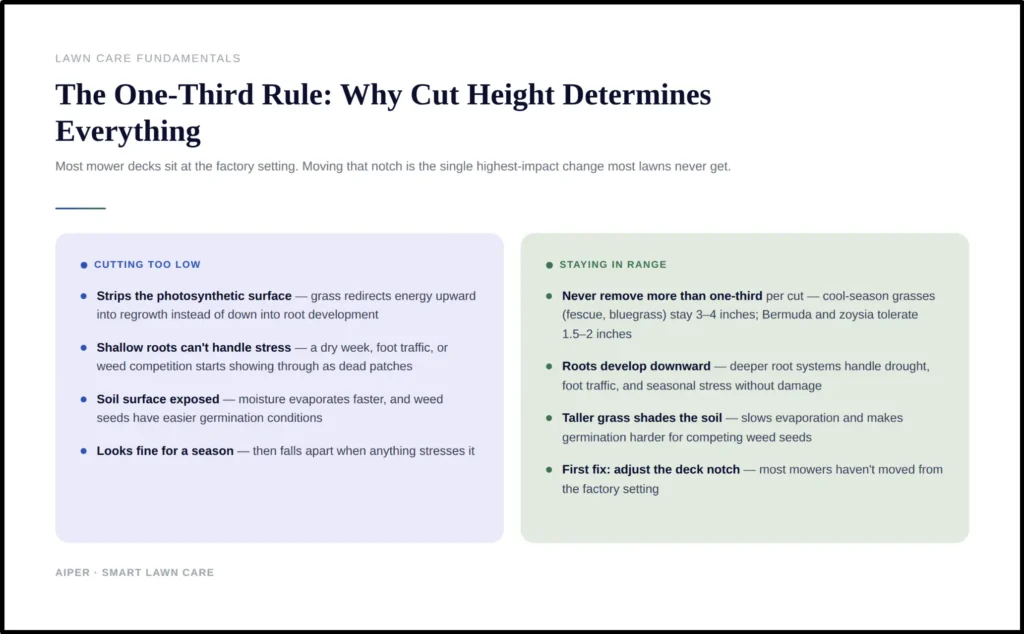
Taller grass throws shade on the soil beneath it. That keeps moisture in the ground longer and makes germination difficult for weed seeds sitting on the surface.
Frequency Should Follow the Grass, Not the Calendar
Every Sunday is a ritual, not a schedule.
Spring growth on cool-season grass can outrun a weekly cut easily. The same lawn in August heat barely moves.
Treating both the same, same day, same interval, means you’re either cutting too often or letting it go long enough that getting back to target height requires taking way more than a third off in one pass.
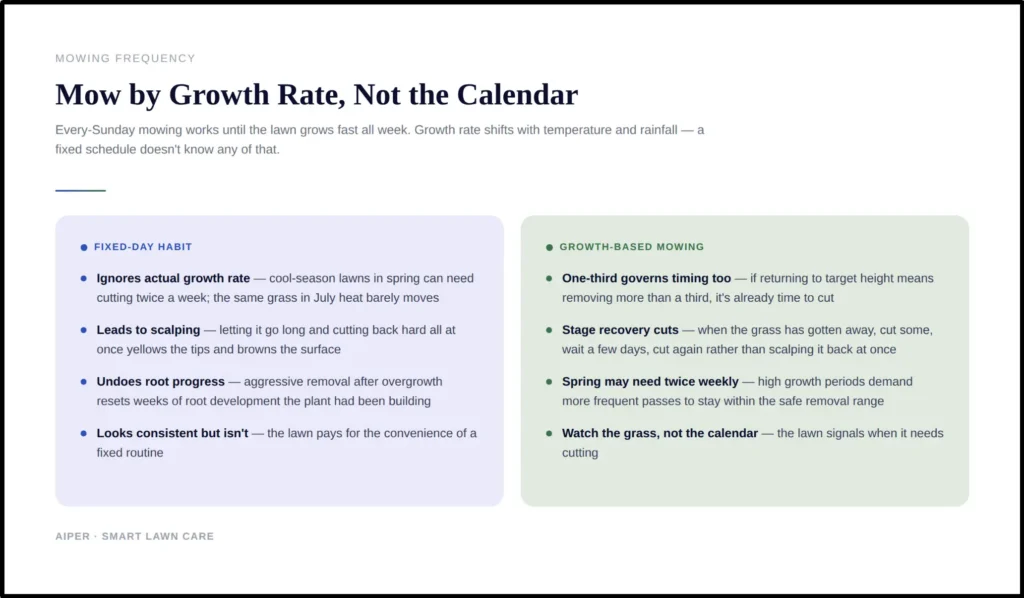
When that happens, the options are cut now before it gets worse, or stage it. Take some off, let the plant recover for a few days, and finish the job.
Scalping it back in one aggressive session browns the tips, stresses the plant visibly, and undoes weeks of root development. It shows immediately and takes time to come back from.\
Pattern
Same direction every time, and you’re compacting the same strip of soil on every pass, training the blades to lie down in one direction, creating ruts you eventually feel underfoot. If those ruts have turned into real dips and humps, mowing pattern alone won’t fix that — see our guide on leveling a bumpy lawn for the actual regrading fix.
Rotating ( not on any particular schedule, just not the same line every week) spreads that wear around. The grass grows more upright. The surface stays more even.
Professional groundskeepers alternate directions partly for the stripe effect. Mostly, it’s just the right way to do it.
Blade Condition
A dull blade doesn’t cut. It batters.
The tips shred, turn brown within a day, and the wounds stay open long enough to invite fungal problems. Fresh-mowed grass on a sharp blade looks noticeably different with a cleaner edge and better color retention. Sharpening once a season is the floor. If the lawn is large or you’re cutting weekly through a long growing season, twice.
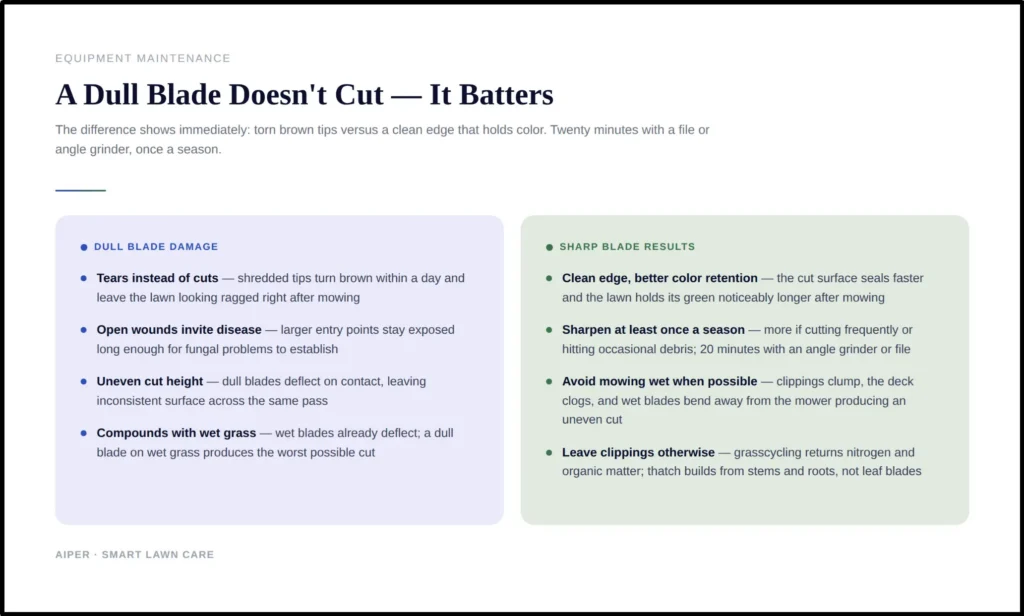
Wet grass is its own problem.
Cippings ball up under the deck, and the cut comes out ragged because wet blades deflect instead of standing up, and the matted piles sitting on the surface block light and hold moisture in ways that cause disease. It’s usually worth waiting a day.
Clippings left on the lawn break down and feed it.
The idea that they build thatch is persistent and wrong. Thatch is decomposed stems and root material, not leaf blades.
The only time bagging makes sense is when the grass gets away from you, and the clippings are thick enough to smother what’s underneath.
Most Lawn Care Comes Back to the Mower
Keeping a lawn in decent shape doesn’t require much, mostly just cutting at the right height, often enough that you’re never removing too much at once. The equipment matters less than the habits.
What does matter, once the mowing is dialed in, is water. Grass cut at the right height with shallow roots from a season of bad mowing is going to fail in a dry stretch, no matter what.
The Aiper IrriSense 2 covers up to 4,800 square feet, maps up to 10 zones, and adjusts watering automatically based on weather conditions, so the grass isn’t getting soaked the morning after rain or left dry through a heat stretch because the timer doesn’t know any better.

It’s the same logic as mowing by growth rate instead of the calendar. The lawn tells you what it needs, and the system responds to that.
Get more pool and lawn care guides from Aiper on Google