
Pool party games and decorations are what transform a simple swim gathering into a designed event that guests remember. The right decor sets the visual tone the moment guests arrive — it signals “this is not just a pool, this is a party” — and the right games create structured fun that brings different friend groups together, gives the party a rhythm (arrival → warm-up games → main event → chill games → wind-down), and ensures that guests of all ages, swimming abilities, and energy levels have something to do. Whether you are planning a kids’ birthday with an inflatable obstacle course, a teen hangout with pool volleyball and a photo backdrop, an adult cocktail party with floating board games and cornhole, or a family reunion with relay races and a prize wheel, we have gathered 33 of the best pool party games and decor ideas — with step-by-step DIY instructions, tournament formats, judging criteria, and detailed budget breakdowns. Each idea is designed to be buildable with basic tools and materials, scalable for different party sizes, and adaptable to different party themes and pool configurations.
Decor Setup & Styling: Design a Cohesive Party Look
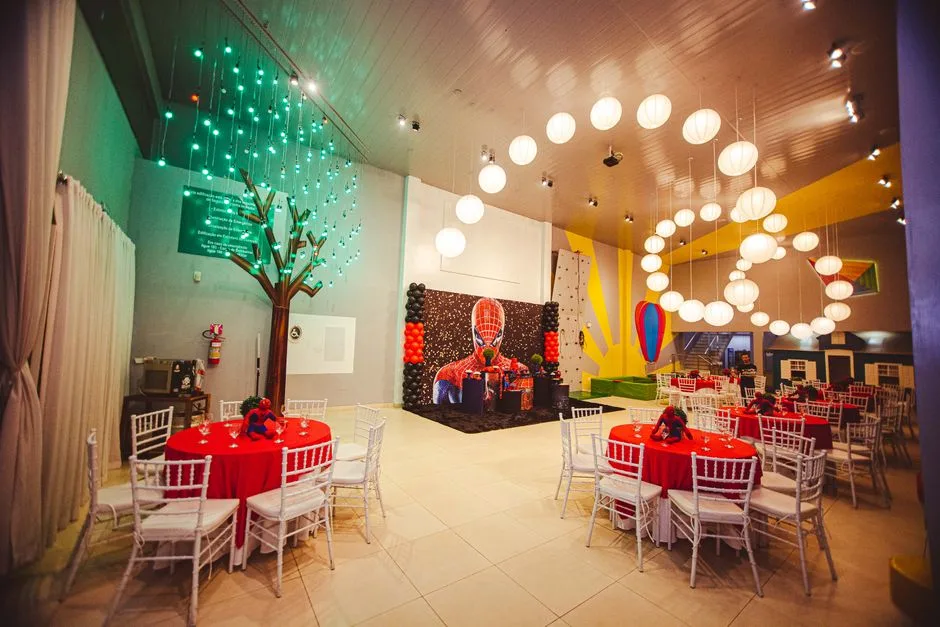
Choosing a Color Palette & Theme Anchor
Every memorable pool party decor scheme starts with a deliberate color palette — typically 2–3 main colors plus 1–2 accent colors — that ties together balloons, tableware, textiles, florals, and even the inflatable floats in the pool. Without a defined palette, decor elements clash and the party reads as a collection of random items rather than a designed event. The most effective pool party palettes: (1) Tropical vibes (turquoise + coral + lime green + gold accents) — works for luau, flamingo, and general summer themes, the gold elevates it from casual to celebration; (2) Sunset glow (coral + peach + dusty rose + cream + brass) — warm, romantic, ideal for evening cocktail parties and boho gatherings; (3) Ocean depths (navy + aqua + white + silver) — crisp, clean, sophisticated, great for Mediterranean and modern-minimal themes; (4) Neon splash (hot pink + electric blue + lime green + purple) — maximum energy, works for 80s retro, glow parties, and kids’ birthdays; (5) Natural texture (terracotta + olive + sand + cream + black) — earthy, elevated, works for boho and Mediterranean parties. Once the palette is chosen, apply it consistently: tablecloth, napkins, plates, cups, straws, balloon colors, flower choices, and even the towels on loungers should all stay within the palette. A mood board (Pinterest or a simple collage of color swatches and inspiration images) created before shopping prevents impulse buys in clashing colors. The palette also makes shopping dramatically faster — you can instantly eliminate 80% of party supply options because they are the wrong color. Budget $0 (using what you have) to $50–$100 for coordinated tableware, textiles, and decor in the chosen palette.
Photo by Vidal Balielo Jr. on Pexels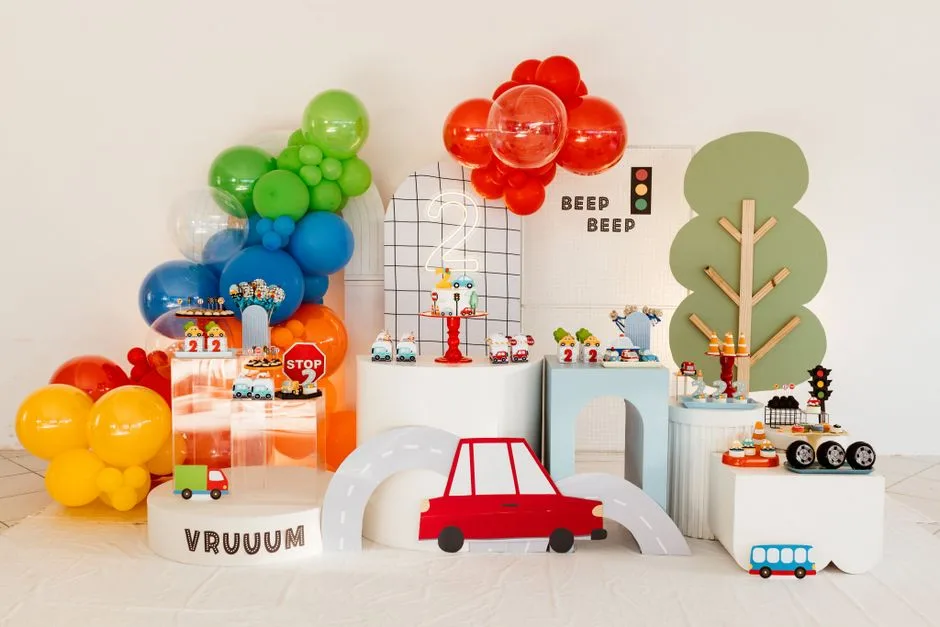
Balloon Installations: Arches, Garlands & Columns
Balloon installations — organic-style garlands, freestanding arches, balloon columns flanking the pool entry, and balloon ‘walls’ as photo backdrops — are the decor element that delivers the most visual impact per dollar spent. A well-constructed balloon installation transforms an ordinary backyard into an event space within 2–3 hours of assembly time. The modern organic balloon style (balloons of 3–5 different sizes clustered densely with greenery or small florals tucked in, creating an irregular, natural-looking mass rather than a uniform line of same-size balloons) is the current standard for styled events. Key techniques: (1) Use a balloon decorating strip (a plastic strip with holes, $5–$10 for a 16ft roll) — thread the balloon knots through the holes to create a dense, evenly clustered garland without needing to tie balloons together, which is much faster and produces better results than hand-tying clusters. (2) Use at least 3 balloon sizes: 5-inch balloons (fill gaps between larger balloons), 11-inch (the workhorse, roughly 60% of total balloons), and 17–24-inch jumbo balloons (statement pieces placed every 30–45cm / 12–18 inches along the garland). (3) Double-stuff balloons for opaque, rich color: insert a deflated balloon inside another deflated balloon of the same color before inflating — the double layer eliminates the translucent, washed-out look of single-layer balloons and makes colors more saturated. (4) Attach the completed garland to its mounting surface using removable Command hooks (for walls/fences), zip ties (for pergola beams and railings), or a freestanding PVC pipe frame ($15–$25 in materials) for arches. A 10–15ft balloon garland with 80–120 balloons costs $30–$60 in materials (balloon kit + pump rental or purchase) and takes 2–3 hours to assemble. The garland should be built the morning of or evening before the party — balloons start to oxidize and lose their sheen after 24–48 hours outdoors.
Photo by Jonathan Borba on Pexels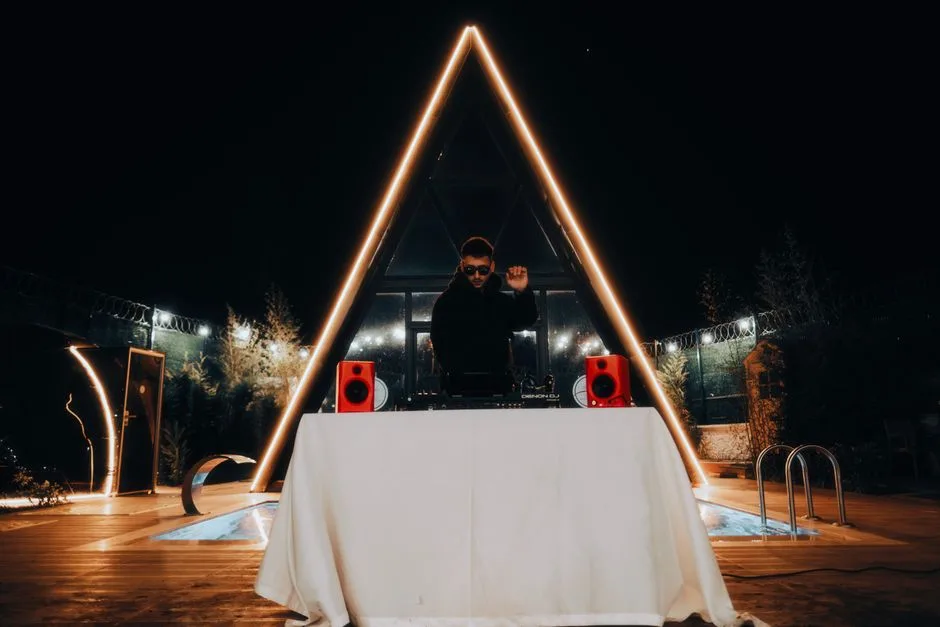
Pool Lighting Design: Underwater + Overhead Combos
Pool party lighting is a system, not a single element — the most atmospheric evening parties layer three lighting types: (1) underwater pool lights (the built-in LED system set to a color that complements the theme — warm white or soft amber for elegant parties, slow-color-cycle for energetic parties, deep blue or purple for glow parties), (2) overhead ambient lighting (string lights, festoon lights, or market lights creating a warm ‘ceiling’ above the pool and deck), and (3) accent/decorative lighting (floating LED orbs on the water, flameless candles in hurricanes on tables, tiki torches along the perimeter, uplighting on trees and landscaping). The layering creates depth: the underwater lights illuminate the pool from within (the pool itself becomes a giant glowing feature), the overhead lights define the party space and provide general illumination, and the accent lights add sparkle, warmth, and visual interest at human eye level. Color coordination: when using color-changing LED pool lights, match or complement the party’s palette — the pool water’s glow will tint every photo taken at the party, so a clashing pool color (e.g., green pool glow with a pink-and-gold party palette) creates discordant photos. For the most photogenic setup: warm white underwater lights + warm-white Edison-bulb string lights overhead + warm flickering candlelight (real or LED) on tables = a universally flattering golden glow that makes guests and food look their best. Budget for lighting upgrades: string lights $40–$120 for a quality 48–100ft commercial strand, floating LED orbs $20–$40 for a set of 6–12, flameless LED candles $15–$30 for a set of 12–24, tiki torches $3–$8 each plus fuel. Most lighting elements are permanent or reusable investments that serve years of parties.
Photo by Wolrider YURTSEVEN on Pexels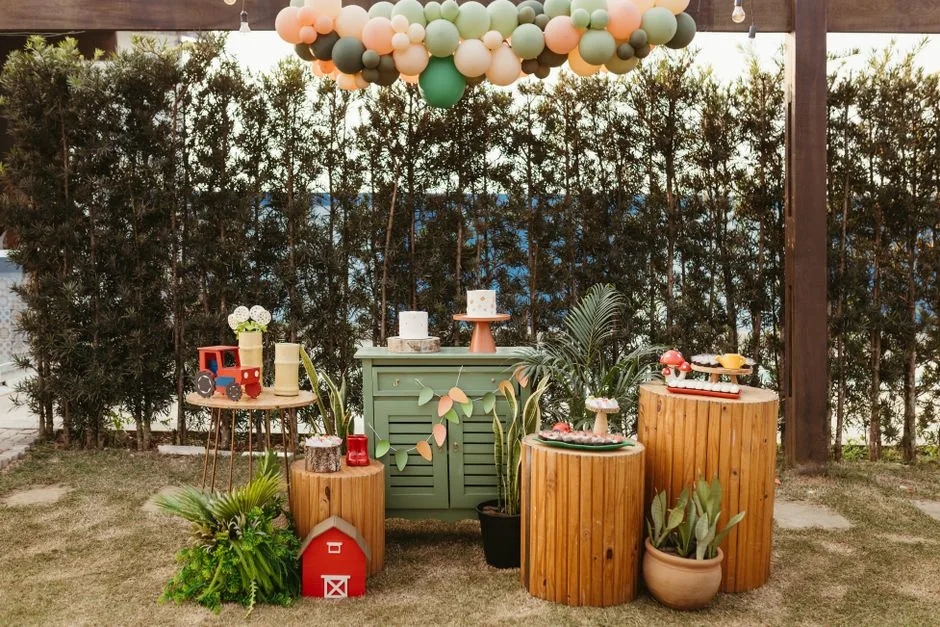
Wind-Proof Tablescape Design for Poolside
Pool decks are inherently windy environments — open space, reflected heat creating convection currents, and typically fewer wind-blocking structures than other outdoor rooms. A poolside tablescape must be designed to stay in place in wind, resist splashes, and look styled while being functionally resilient. Wind-proofing strategies: (1) Weight everything: use heavy ceramic, stoneware, or melamine plates rather than paper plates (which become frisbees in a light breeze). If using disposables, choose heavy-duty plastic or bamboo plates and place a decorative stone, shell, or metal napkin ring on top of each stack. (2) Cloth napkins over paper: cloth napkins stay put; paper napkins blow away. Roll cloth napkins and tie with a ribbon or twine in the party palette — this looks styled AND keeps them from blowing into the pool. (3) Anchor the tablecloth: use tablecloth clips ($5–$10 for a set of 6–8) that grip the table edge and hold the cloth taut, or use fitted tablecloths with elastic edges. Add weight to the tablecloth hem by sewing small washers or using clip-on weights. (4) Centerpieces that resist wind: low, heavy arrangements (a row of potted succulents, a line of pillar candles in heavy glass hurricanes filled with sand, a wooden dough bowl filled with fruit and greenery) are stable in wind. Tall, top-heavy floral arrangements in lightweight vases will tip. (5) Serveware strategy: use bowls rather than platters for lightweight items (chips, popcorn, loose snacks), and place serving utensils inside the bowl (not resting on the table where they blow off). (6) A designated ‘decor rescue’ person (a friend or family member assigned to check the tables every 30 minutes) makes small adjustments — re-clipping a lifted tablecloth corner, retrieving a stray napkin from the pool surface — that keep the tablescape looking fresh throughout the party.
Photo by Jonathan Borba on Pexels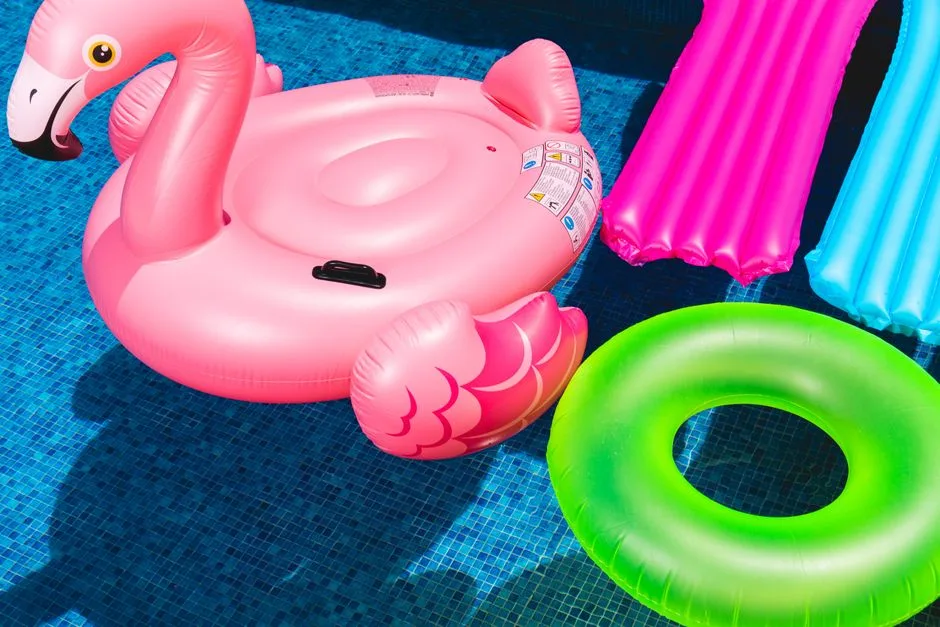
Pool Float Art: Arranging Floats as Visual Focal Points
Pool floats are not just toys — they are the decoration that occupies the largest visual surface area of any pool party: the pool itself. A curated, intentionally arranged ‘float installation’ transforms the pool surface into a colorful, photogenic feature that dominates party photos. The technique goes beyond scattering random floats: (1) Choose a float ‘collection’ that follows the party color palette — e.g., for a tropical palette, select floats in turquoise, coral, gold, and white (flamingo in coral, pineapple in gold tones, palm leaf in green, swan in white). Avoid mixing unrelated float themes (a unicorn next to a beer pong table next to a pizza slice creates visual chaos). (2) Use scale intentionally: place the largest float (6ft+ / 1.8m+) as the centerpiece anchor, surround it with 4–6 medium floats (3–5ft / 0.9–1.5m), and fill gaps with 2–3 small accent floats or inflatable drink holders. The cluster creates a focal point that draws the eye to the center of the pool. (3) Anchor floats in position: loosely tether floats to pool steps, ladder rails, or small weighted bags on the pool floor using clear fishing line ($3–$5). Without anchoring, all floats drift to the downwind end of the pool within 20 minutes, ruining the arrangement and clogging the skimmer. (4) Leave swimming lanes: the float arrangement should occupy roughly 30–40% of the pool surface — the rest remains open for swimming and games. Push the float cluster toward one side or the deep end so the shallow end and middle remain open. (5) For evening parties, place battery-operated waterproof LED tealights or mini submersible lights inside clear inflatable floats (or tuck them between floats) — the floats glow from within, creating a magical effect that photographs beautifully. Budget: $50–$150 for a themed float collection that can be reused across multiple parties.
Photo by Toni Cuenca on Pexels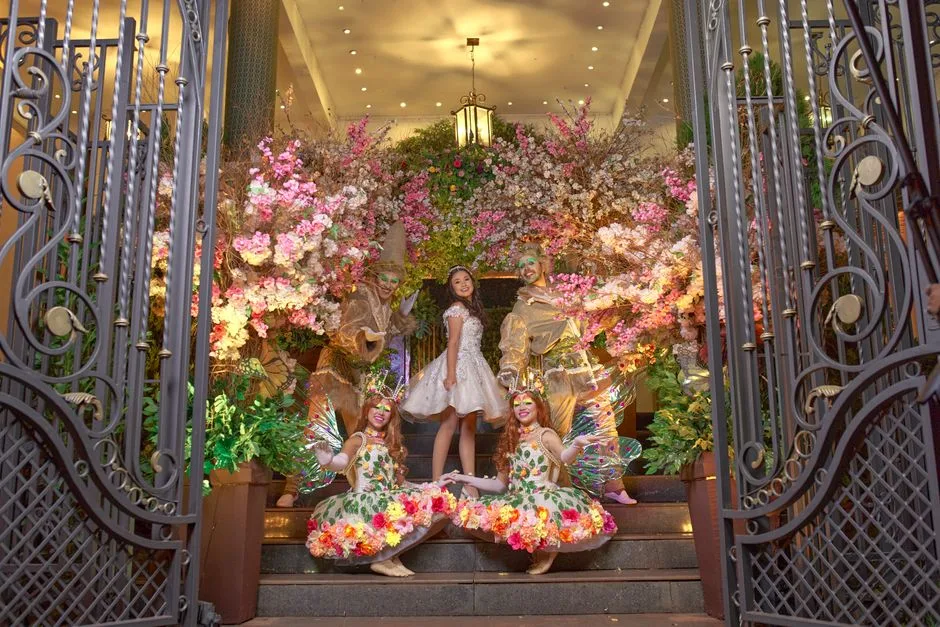
Pool Gate & Entryway Decorations
The pool gate or entry point is the first physical threshold guests cross into the party zone — decorating it signals ‘you have arrived at the event’ and creates a transition moment that separates the party space from the rest of the property. Entryway decor options, from simple to elaborate: (1) A balloon arch or balloon columns flanking the gate ($30–$60 in materials for a DIY balloon arch kit) — the classic, highest-impact entry treatment. (2) A tropical greenery arch (zip-tie palm fronds, monstera leaves, and ferns to an existing arbor or a temporary PVC arch frame — $25–$50 for fresh greenery from a wholesale florist, or $20–$40 for faux greenery that can be reused). (3) A fabric-draped entry (sheer fabric panels in the party palette, draped and tied back with ribbon or rope to frame the gate — $15–$30 for fabric from a craft store), simple, elegant, and particularly effective for boho, Mediterranean, and evening party themes. (4) A ‘welcome sign’ or themed entry marker (a large framed chalkboard sign, a wooden pallet sign painted with the party name and date, or a letter board with a fun message — $10–$25 in materials) combined with a simple balloon cluster or potted plant on each side. (5) A themed pathway leading to the gate: line the path with luminaries (paper bags with LED tealights inside, weighted with a scoop of sand — $10–$15 for 20 luminaries), tiki torches, or potted plants, creating an approach sequence that builds anticipation. The entryway photo: guests naturally pause at a decorated entry, making it the most-photographed single decor element at the party. Position the decor so the pool is visible in the background when someone is photographed at the entry (the classic party photo composition: guest at the decorated gate, pool and party visible behind them).
Photo by Juliano Astc on Pexels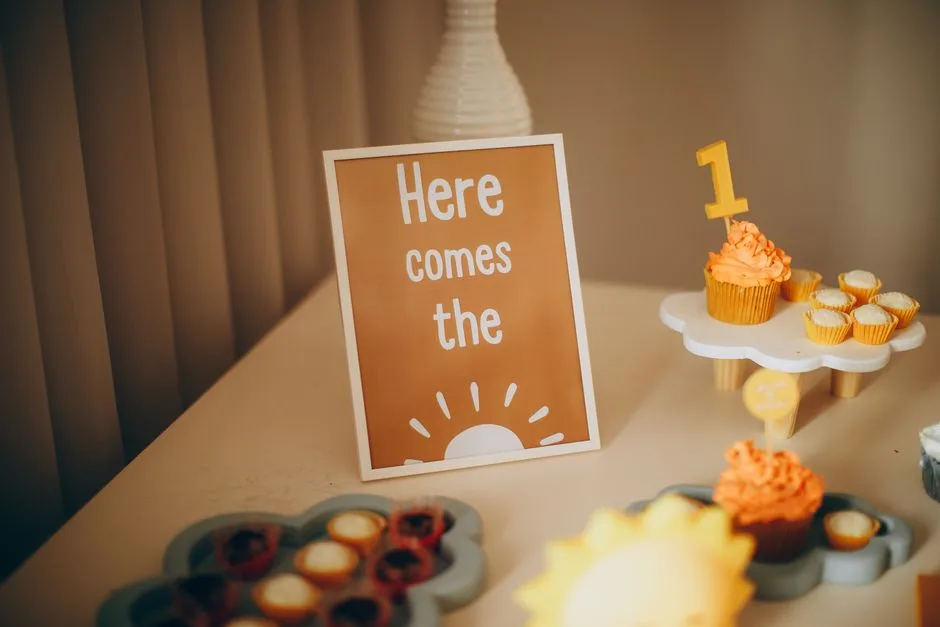
Printable & DIY Signage Throughout the Party
Well-designed signage — menu cards, drink lists, game instructions, directional signs, pool rules, and thematic welcome messages — is the decor element that makes a party feel professionally produced for essentially zero cost beyond paper and ink. Free design tools (Canva, Adobe Express) offer thousands of party-sign templates that can be customized with the party palette and printed at home on cardstock ($10–$15 for a pack of 50–100 sheets). Essential party signs: (1) A welcome sign at the entry (‘Welcome to [Name]’s Pool Party!’ or ‘Please Dive In!’), (2) menu/serving labels at the food table (tent cards identifying each dish — guests eat more adventurously when they know what everything is), (3) a drink menu at the bar (cocktail and mocktail options with ingredients listed — guests order faster when they can read options), (4) game instructions posted near each game station (a simple 3–4 step card eliminates the need for verbal explanations for every new player), (5) pool rules posted visibly (no diving in shallow end, no glass, children must be supervised — this also serves as liability protection), (6) directional signs pointing to restrooms, changing areas, towel station, and sunscreen station (eliminates the repetitive ‘where is the bathroom?’ question). Print signs on cardstock and place in inexpensive acrylic sign holders ($10–$20 for a set of 10–15), or attach to wooden sticks/dowels and stake into potted plants or lawn. Lamination ($15–$25 for a home laminator + pouches) makes signs reusable across multiple parties — change the date and specific details, keep the templates. Budget $15–$30 for a full party signage suite including cardstock, holders, and lamination.
Photo by Helena Lopes on PexelsDIY Decor Projects: Handmade Touches That Impress
DIY Tiki Torch & Lantern Makeover
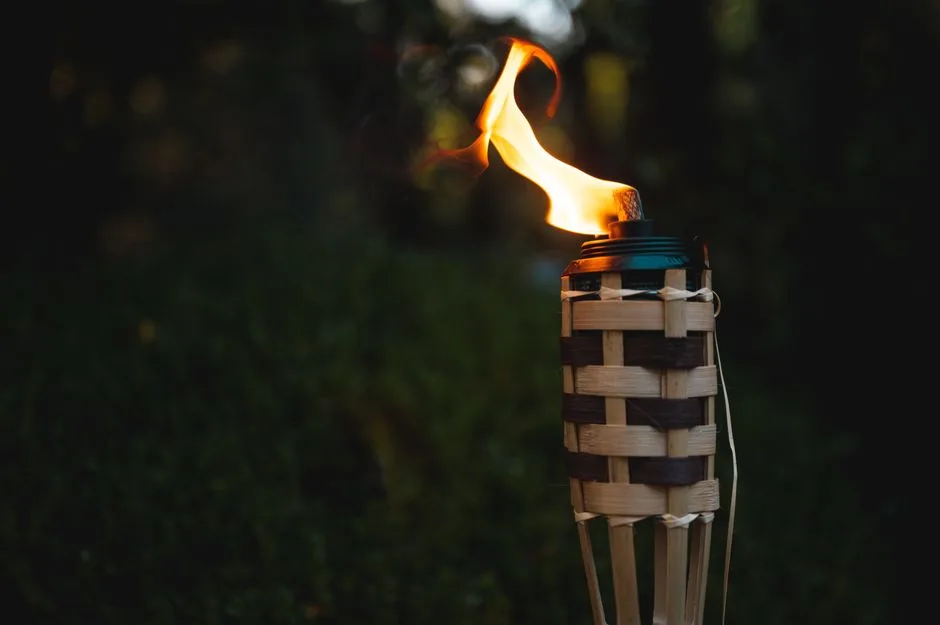
Standard bamboo tiki torches ($3–$5 each from hardware stores) can be transformed into custom, party-themed lighting features with 15–30 minutes of DIY work per torch. Upgrade options: (1) Painted torch bases: spray-paint the bamboo pole in the party’s accent color (metallic gold, copper, or matte black are the most effective — they read as intentional design choices rather than ‘painted bamboo’). Mask off the top 15–20cm / 6–8 inches (the fuel canister area) and the bottom 15cm / 6 inches (the ground-contact zone). Use spray paint rated for outdoor use ($6–$12 per can, covers 6–10 torches). (2) Wrapped torch poles: wrap the pole tightly with jute twine, colored sisal rope, or ribbon in the party palette ($3–$8 for a spool covering 4–6 torches), securing with hot glue every few wraps. The wrapped texture reads as boho/nautical and covers the raw bamboo completely. (3) Embellished fuel canisters: the metal canister at the top is the most visible part — wrap it with a strip of decorative metal mesh, a band of faux greenery, or a ring of small faux flowers attached with floral wire, creating a ‘crown’ effect around the flame. Keep all additions at least 5cm / 2 inches from the wick opening (fire safety — nothing flammable near the flame). (4) Custom citronella candles in painted terracotta pots: fill small terracotta pots with citronella wax and a wick ($15–$25 for a DIY candle-making kit making 8–12 pots), paint the pots in party colors, and place around the deck — they function as both decor and insect repellent. Budget for torch upgrades: $15–$30 for 8–12 custom tiki torches. After the party, the upgraded torches are a permanent backyard feature, not single-use decor.
Photo by Alfo Medeiros on Pexels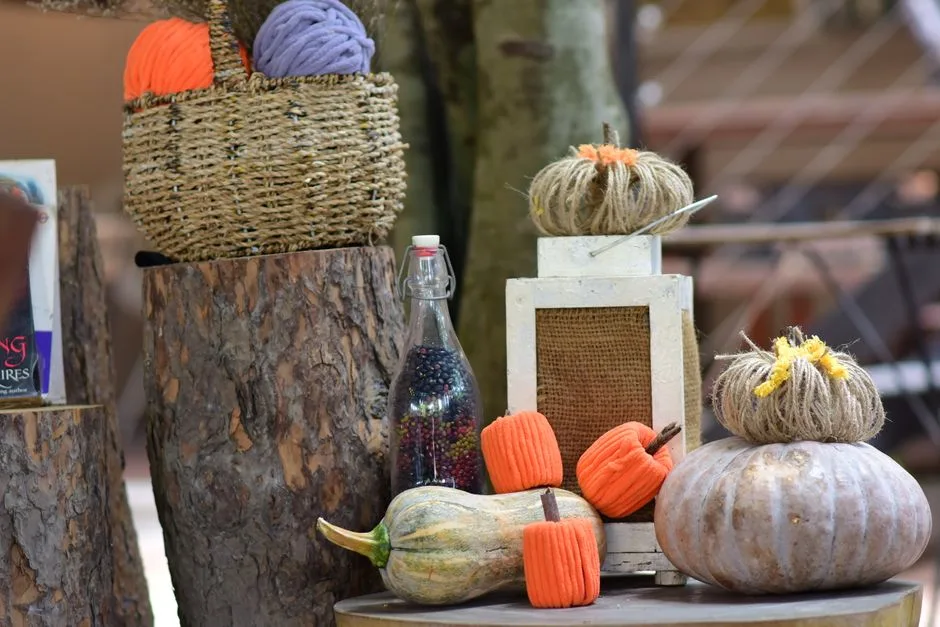
Pool Noodle Decor Hacks: Wreaths, Garlands & Sculptures
Pool noodles — the $1–$3 foam tubes available at every dollar store and big-box retailer in summer — are the most underrated DIY party decor material. They are lightweight, waterproof, come in a rainbow of colors, can be cut with scissors, and hold shape when bent and secured. Pool noodle decor projects: (1) Pool noodle wreath: bend a noodle into a circle, secure the ends together with a short piece of dowel rod inserted into both ends and hot-glued, wrap the entire ring with ribbon, tulle, or yarn in party colors, and embellish with faux flowers, seashells, or a themed centerpiece. Hang on the pool gate, fence, or a pergola post. Cost: $3–$5 per wreath, 20–30 minutes each. (2) Pool noodle garland: slice noodles into 2.5cm / 1-inch thick ‘coins’ using a serrated knife (a bread knife works perfectly), thread the coins onto a long piece of string, twine, or fishing line using a large needle, alternating colors in the party palette. Hang as a garland across the fence, pergola, or along the buffet table front. Cost: $5–$10 for a 15–20ft garland, 30–45 minutes. (3) Pool noodle ‘candles’: cut a white or ivory noodle into 10–15cm / 4–6 inch segments, carve or hot-glue a small depression in the top, and insert a battery-operated LED tealight. Place several ‘candles’ in a line on the serving table or around the pool edge (away from splashing). They read as large pillar candles from a distance and are completely waterproof and wind-proof. (4) Noodle towers/columns: stand several full-length noodles upright in a weighted bucket or planter, bunch them together at the top with a zip tie, and wrap with tulle or fabric for an instant, colorful column decoration that can flank the entry, the food table, or the DJ area. Budget: $10–$20 for multiple noodle decor projects serving an entire party — the cheapest DIY decor material per square foot of visual coverage.
Photo by Sóc Năng Động on Pexels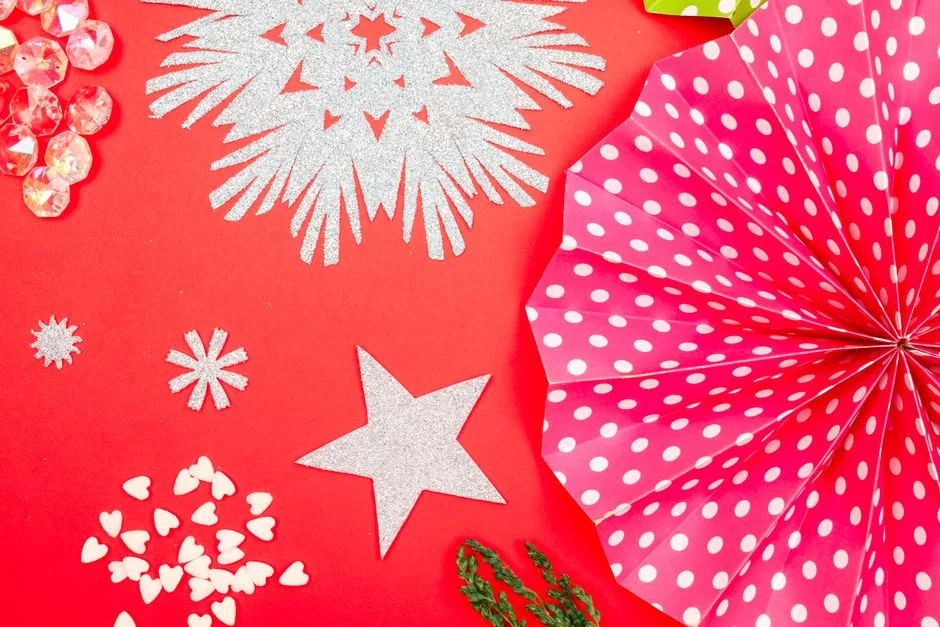
DIY Photo Backdrop & Selfie Station
A dedicated photo backdrop — a decorated wall or freestanding frame positioned in good natural light, with thematic props and a clear ‘stand here’ spot — is the party element that generates the most social-media content and gives guests a reason to take and share photos (organic party marketing). The backdrop structure: (1) A PVC pipe frame (3/4-inch / 19mm PVC pipe + corner connectors, $20–$30 at a hardware store, assembled in 15 minutes into a freestanding 2.1m × 2.4m / 7ft × 8ft rectangular frame with a stable base). (2) A tension rod between two existing posts/pillars with a backdrop hung from it (simplest option if you have suitable anchor points). (3) A blank wall or fence section (attach decor directly — no frame needed). The backdrop surface: (1) A plastic tablecloth wall (4–6 plastic tablecloths in party colors, $1–$3 each, stapled or taped to the frame in overlapping layers — fast, cheap, surprisingly effective in photos). (2) A fringe curtain backdrop (metallic or tissue-paper fringe curtains, $10–$20 for a set of 4–6 panels, hung from the frame). (3) A balloon wall (cover a section of the backdrop with a dense balloon cluster — 50–80 balloons in party colors, $15–$25). (4) A greenery wall (attach faux boxwood or ivy panels to the frame, $20–$40 for panels covering a 2.1m × 2.4m / 7ft × 8ft area — reusable for future parties). Add a themed prop basket: oversized sunglasses, inflatable props (flamingo, pineapple, donut), silly hats, feather boas in party colors, and a small sign with the party hashtag if you want guests to tag their photos. Budget $25–$60 for a complete photo backdrop and prop setup. Position the backdrop where it catches soft, indirect light (open shade — not direct sun which creates harsh shadows and squinting) and has the pool or party area visible in the background when shooting from an angle.
Photo by Tamanna Rumee on Pexels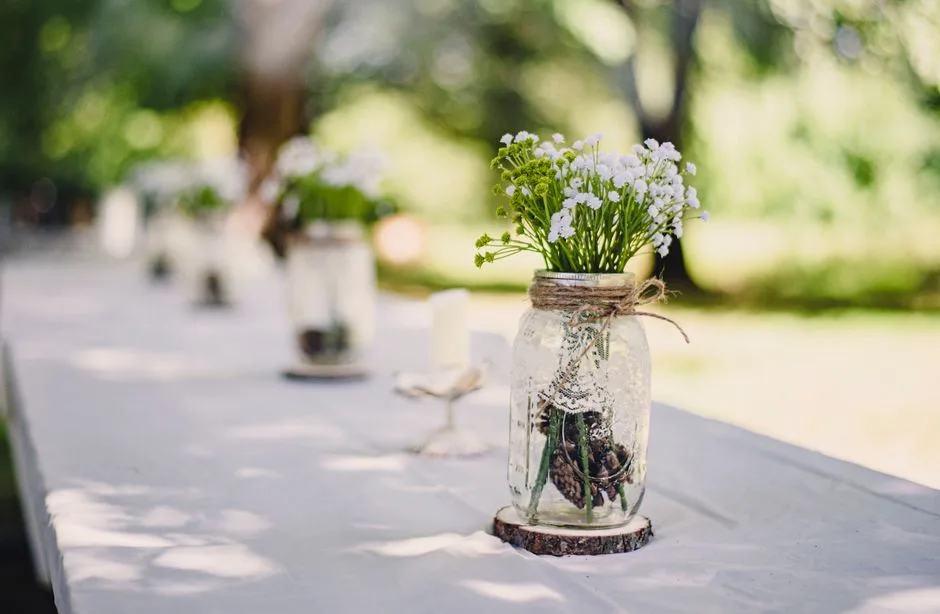
Budget Centerpieces from Grocery Store Finds
Professional-looking table centerpieces can be created from grocery store and home-improvement store items for $5–$15 each — a fraction of the cost of florist-arranged centerpieces that serve the same visual function. Centerpiece formulas using grocery-store ingredients: (1) Citrus Bowl: a wide, shallow bowl (a wooden dough bowl, a ceramic serving bowl, or even a clear glass trifle bowl) filled completely with whole lemons, limes, oranges, and grapefruits — the citrus fruits create a dense, colorful mass that reads as intentional and fresh. Cost: $5–$10 in fruit per centerpiece, zero arrangement skill required. Add a few sprigs of fresh rosemary or eucalyptus tucked between the fruit for greenery. (2) Potted Herb Cluster: group 3 small potted herbs (basil, rosemary, mint — $3–$5 each) in a row down the center of the table, still in their nursery pots concealed inside decorative cachepots or wrapped in burlap and tied with twine. After the party, plant the herbs in the garden. (3) Tropical Leaf Runner: lay large palm fronds, monstera leaves, or fern fronds ($2–$5 per stem from a florist or garden center) flat down the center of the table, overlapping like a runner. Place pillar candles in glass hurricanes or small bud vases with single stems on top of the leaf runner. (4) Fruit + Flower Combo: a low bowl or trough filled with water, with a mix of floating flowers (gerbera daisies, chrysanthemums, or carnations — the cheapest per-stem flowers at any grocery store, $5–$10 for a bouquet of 15–20 stems) and floating fruit (halved lemons and limes, whole kumquats) — the combination reads as far more expensive than it is. Change the water between the morning setup and the party start if it looks cloudy. (5) The Potted Plant Centerpiece: a single dramatic plant (a tall snake plant, a bushy fern, a flowering orchid — $15–$25) in a decorative pot in the center of each table. After the party, the plants become permanent house or garden plants. Budget $25–$50 for 3–5 centerpieces covering the main serving table, bar, and seating area tables.
Photo by dumitru B on Pexels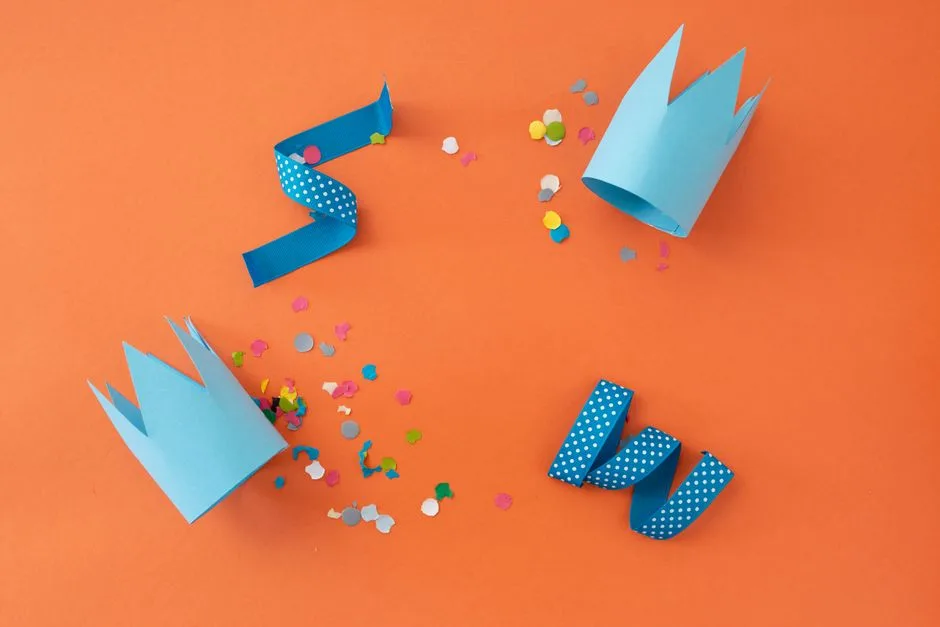
Upcycled & Repurposed Party Decor Ideas
Upcycling — transforming everyday household items, recycling-bin finds, and dollar-store basics into party decor — delivers genuinely charming, conversation-starting decorations at near-zero cost while keeping waste out of the landfill. Effective upcycled pool party decor projects: (1) Tin Can Lanterns: clean empty food cans (28oz / 796ml tomato cans are ideal), fill with water, freeze overnight (the ice supports the can walls during hammering), use a hammer and nail to punch a decorative pattern of holes (stars, swirls, a simple message like ‘SWIM’), let the ice melt, dry, spray-paint in a metallic finish ($5 for a can of gold or copper spray paint), and place a battery-operated LED tealight inside. The light shines through the punched holes, casting patterned shadows on surrounding surfaces. Cost: $0 (using recycling) to $5 (for spray paint), 15 minutes per lantern. (2) Wine Bottle Tiki Torches: clean empty wine bottles, fill with citronella torch fuel, insert a replacement tiki wick ($3–$5 for a pack of 4 wicks with brass fittings that fit standard bottle necks), and secure with the fitting. The bottle shape (especially colored glass — green, blue, amber) is elegant and the torch function is identical to commercial tiki torches. Cost: $5–$10 for 4 bottle torches. Safety: ensure bottles are on stable, non-tip surfaces, well away from foot traffic. (3) Mason Jar Lanterns: clean glass jars (pasta sauce, jam, pickle jars — labels removed by soaking in hot soapy water), wrap the rim with twine or ribbon, fill the bottom with 2.5cm / 1 inch of sand or small pebbles, and nestle a votive candle or LED tealight inside. Hang from tree branches, pergola beams, or shepherd’s hooks with wire or twine, or line them along pathways and the pool deck edge. Cost: $0–$5 for a dozen lanterns. (4) Pallet Wood Signs: disassemble a discarded shipping pallet (free from hardware stores, garden centers, and construction-site skip bins — always ask permission), sand the slats lightly, paint with the party message (‘Welcome to the Deep End,’ ‘Suns Out, Buns Out,’ etc.) using a stencil or freehand, and prop against the fence or entry gate. Cost: $0–$5 for paint, 30–60 minutes. The rustic, handmade look is part of the charm — perfection is not the goal.
Photo by Daniel Enamorado on Pexels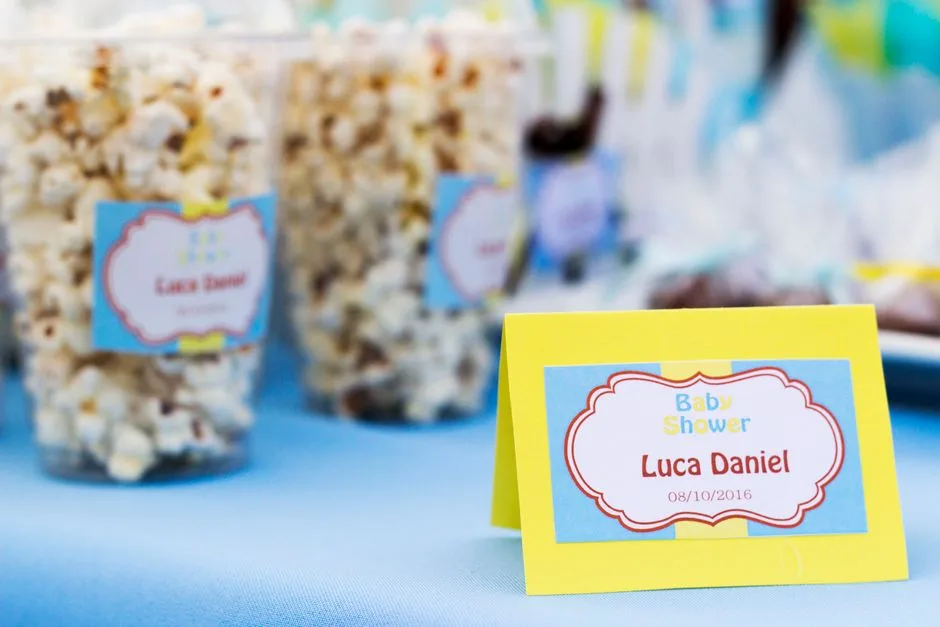
DIY Drink Stirrers, Labels & Party Favor Tags
Custom drink stirrers, bottle labels, and favor tags are the small, detailed DIY touches that guests notice and photograph — they cost pennies each to make and communicate thoughtfulness and effort far beyond their material cost. Projects: (1) Custom drink stirrers: print the party name, date, or a fun phrase (‘SIP SIP HOORAY,’ ‘POOLSIDE,’ ‘MAKE A SPLASH’) on cardstock, cut into small flags or shapes (triangles, hexagons, circles — roughly 5cm × 2.5cm / 2 inches × 1 inch), and attach to bamboo skewers, paper straws, or cocktail picks with double-sided tape or a dab of glue. Stick them into cocktails, mocktails, and even appetizer bites as edible-food markers. Cost: $0 (using paper scraps and printer) to $5 for cardstock, 30–60 minutes for 50+ stirrers. (2) Personalized water bottle labels: design a custom label (Canva, free) with the party name and a graphic, print on full-sheet label paper ($10–$15 for a pack of 25 sheets), cut, and wrap around standard water bottles, replacing the original labels. Guests instinctively grab a ‘custom’ water bottle over a generic one, which increases hydration. (3) Party favor tags: small hang-tags tied to party favors (mini sunscreen bottles, sunglasses, waterproof phone pouches, personalized cups) with twine or ribbon. Print ‘Thanks for making a splash at [Name]’s Pool Party! [Date]’ on cardstock, punch a hole, and tie — guests are far more likely to keep and use a favor with a personalized tag than a generic item. (4) Food tent cards with personality: instead of basic ‘Burger Bar’ labels, write playful descriptions (‘The Deep End Double Cheeseburger,’ ‘Shallow-End Sliders,’ ‘Cannonball Chicken Skewers’) — the themed names make the food more memorable and the labels become a conversation piece. Budget $10–$20 for a full suite of custom paper goods — the highest-detail-impact-per-dollar of any party decor category.
Photo by Elsa Salinas Gómez on PexelsActive Pool Games & Competitions: Bring the Energy
Pool Volleyball: Tournament Brackets & Rule Variations
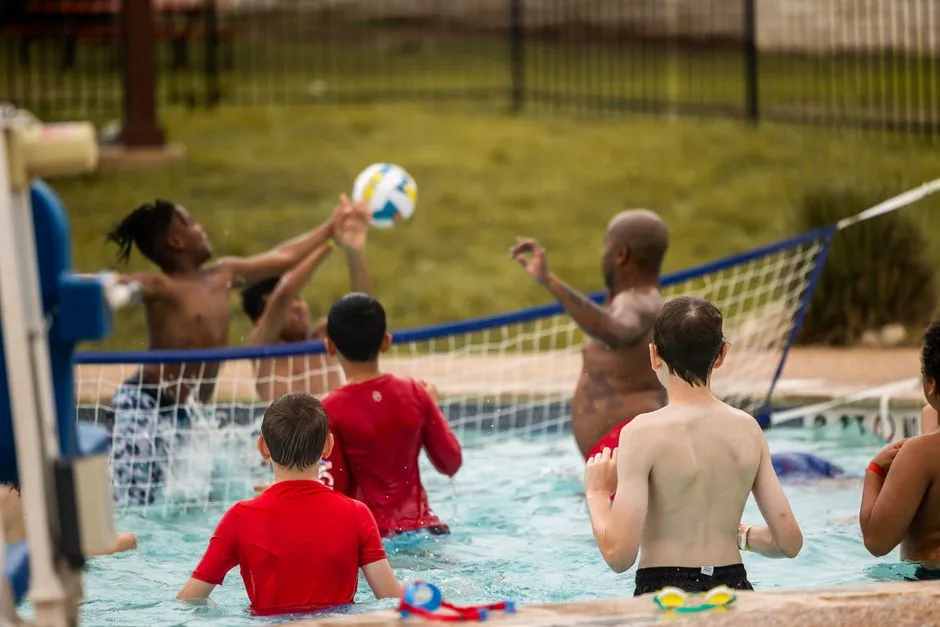
Pool volleyball is the most consistently popular pool party game — but a structured tournament format elevates it from casual volleying to a party event that builds excitement over an hour. Tournament setup for 12–24 players: (1) Create a bracket on a large whiteboard or poster board displayed near the pool (a simple single-elimination or round-robin format depending on time — single-elimination takes 30–45 minutes for 8 teams; round-robin takes 60–90 minutes). (2) Form teams of 2–3 players (3 works better for pools because the court is smaller than a beach court and 2-player teams involve a lot of swimming). (3) Matches to 11 points (win by 2), rally scoring (every serve scores a point, which keeps matches moving faster than side-out scoring). Each match typically takes 8–12 minutes. Rule variations that make pool volleyball more fun for mixed-skill groups: (1) ‘One-bounce rule’ — the ball can bounce once on the water before being hit (makes the game more forgiving for less-skilled players and creates dramatic saves). (2) ‘Anywhere serve’ — serve from anywhere along the pool edge on your side, not just behind a line (accommodates different pool shapes). (3) ‘Shallow/deep handicap’ — the team on the shallow-end side (easier to stand and jump) plays with one fewer player, or the deep-end team gets an extra point at the start of each match. (4) ‘Celebrity rule’ — each team must do a synchronized celebration (a cheer, a splash, a pose) after scoring; failure to celebrate forfeits the point (this rule alone transforms the vibe from competitive to fun). Equipment: a quality floating or deck-mounted net system ($40–$120), a soft water-resistant volleyball ($15–$25), and the bracket board. Mark the court boundaries with floating pool lane dividers or anchored pool noodles. Prize: a novelty trophy or medal for the winning team, presented in a mock ceremony.
Photo by Caleb Oquendo on Pexels
Inflatable Obstacle Course: Setup & Competitive Race Formats
An inflatable pool obstacle course — a connected series of climbing, sliding, balancing, and jumping challenges that sit on the water surface — is the high-energy centerpiece game that works for kids’ parties, teen gatherings, and even competitive adult groups (add a timer and suddenly everyone wants to beat the course record). Commercial inflatable obstacle courses designed for residential pools ($200–$600) include an electric blower and set up in 5–10 minutes. Race formats: (1) Individual timed runs — each contestant completes the course while the MC times them with a stopwatch or phone timer, times posted on a leaderboard. Fastest time at the end of the session wins. (2) Head-to-head racing — two contestants start simultaneously on parallel courses (some inflatables are designed as dual-lane for this format) or take turns on a single course and compare times. (3) Relay format — teams of 3–4, each team member completes the course and tags the next teammate waiting at the start. First team to have all members finish wins. (4) ‘Elimination’ format — after each round, the slowest time is eliminated until a final head-to-head determines the champion. (5) ‘Handicap’ format — add a fun burden to faster contestants (must carry a cup of water and not spill more than half, must wear an oversized hat that cannot fall off, must sing a song while navigating) to level the playing field. Safety and setup: position the course entirely in water deep enough that falling off means landing in water (minimum 1.2m / 4ft), never over the pool deck; have an adult in the water at the most challenging obstacle section to assist tired or struggling participants; inflate the course fully (partial inflation creates soft spots where contestants can get tangled). The obstacle course is typically the most-requested repeat activity at any party where it appears — budget $200–$600 for a purchase, or $50–$100 to rent from a local party rental company for a weekend.
Photo by Fernando Lucas on Pexels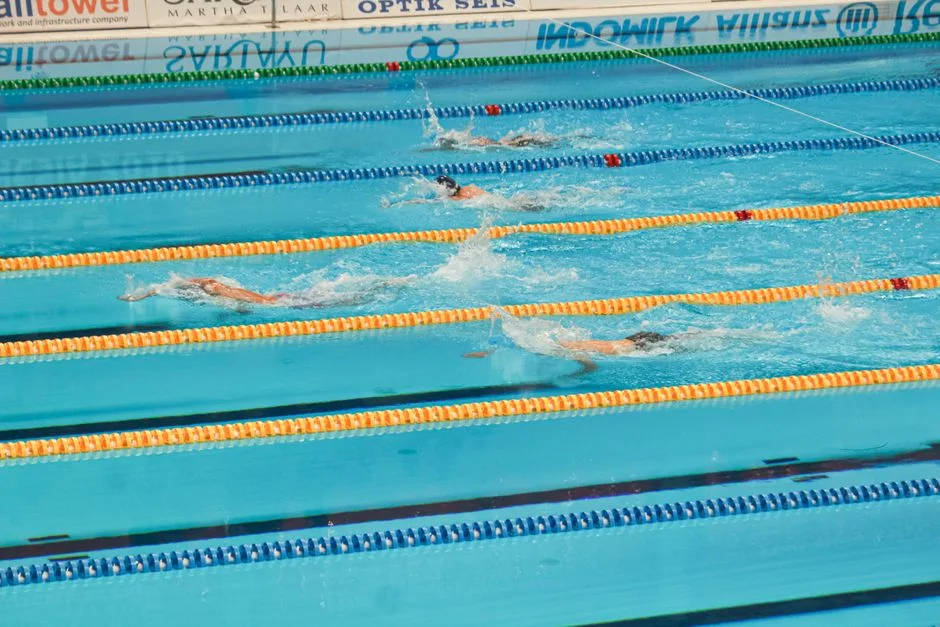
Cannonball & Splash Contests: Creative Judging Categories
A cannonball contest with structured judging transforms the classic ‘who can make the biggest splash’ into a crowd-engaging entertainment segment that spectators enjoy as much as participants. Set up a judging panel of 3 people seated poolside with scorecards (1–10, large enough for the audience to see). Contest categories beyond ‘biggest splash’: (1) Biggest Splash (classic — judged on splash height and radius; the standard cannonball tuck is the baseline technique). (2) Most Creative Jump (any approach allowed — costume jumps, dramatic pre-jump performances, themed entrances; the storytelling and commitment matter more than splash size). (3) Best Synchronized Splash (pairs or trios jumping simultaneously; judged on timing precision and splash symmetry). (4) Smallest Splash / ‘Pencil’ (the comedy category — contestants attempt to enter the water making the smallest possible splash; the fail-to-try-hard ratio is the humor). (5) Best Costume Jump (contestants wear a costume or accessory during the jump — a wig, cape, hat, or inflatable accessory that must stay on through the splash; the costume’s survival is part of the score). (6) ‘Freestyle’ — any jump style allowed (can-opener, jackknife, back-flop, knee-tuck, spinning cannonball), judged on style, form, and crowd reaction. Run 2–3 rounds per category depending on contestants; announce scores after each jump (the judges’ varying scores create crowd engagement — cheers for 9s, boos for 5s). Safety protocol: (1) deep-end only — minimum 1.5m / 5ft depth for kids, 2.1m / 7ft+ for adults jumping from the deck, deeper for jumps from a diving board; (2) one jumper at a time, landing zone visually verified clear by the MC before each jump; (3) feet-first entries only — no head-first dives or flips (these are not cannonball techniques and pose neck/spine risk); (4) no running starts on the wet pool deck. Equipment needed: 3 sets of scorecards (whiteboards or large cardboard numbers), a whistle or microphone for the MC, and a prize for each category winner.
Photo by Gita Nu on Pexels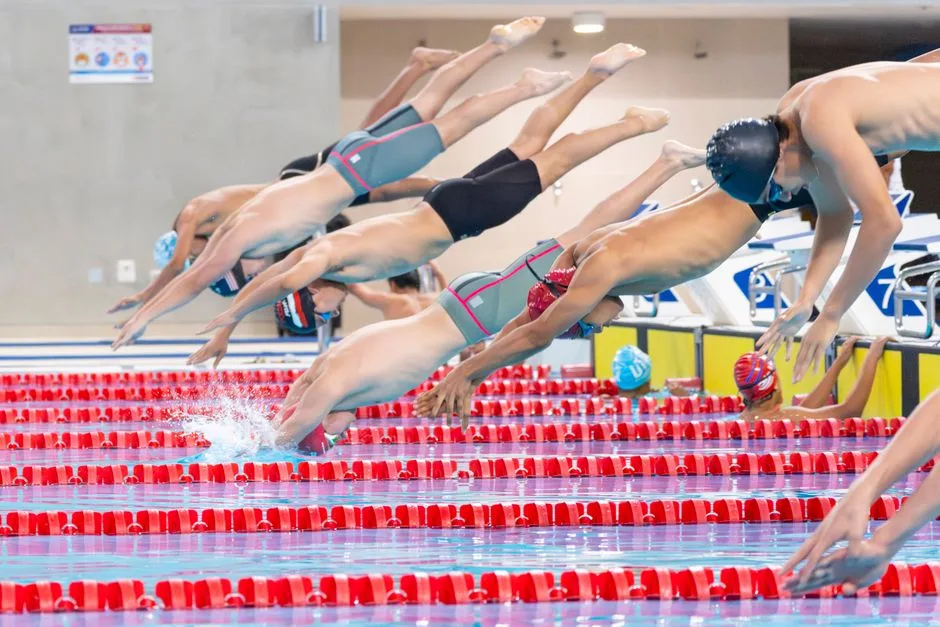
Pool Relay Races: Creative Formats Beyond Freestyle
Pool relay races are the most inclusive competitive format — they work for any number of participants (just adjust team sizes), accommodate mixed swimming abilities (assign lane positions by skill), and the team dynamic means individual performance pressure is low. Creative relay formats beyond standard freestyle swimming: (1) Floatie Relay: each team member must cross the pool while riding an inflatable float — paddling with hands only, no kicking. The float choice (narrow flamingo vs wide pizza slice) dramatically affects speed, creating natural handicaps. (2) Noodle Horse Relay: straddle a pool noodle like a hobby horse and ‘ride’ across the pool using flutter kick propulsion. The inherent instability (noodles roll) creates frequent capsizing — which is the entertainment. (3) Clothing Relay: each team member must put on a oversized t-shirt, swim cap, and goggles BEFORE entering the water, swim across, remove the items, and pass them to the next teammate who must put them on. The wet-clothing struggle is genuinely hilarious to watch. (4) Ball Push Relay: each swimmer must push a beach ball across the pool using only their nose or forehead — no hands. The ball’s tendency to veer wildly makes this much harder than it sounds. (5) Cup Relay: each swimmer carries a plastic cup filled with water while swimming one-handed across the pool, pours the remaining water into a team measuring container at the far end. The team with the most water collected after all members swim wins. This rewards a smooth, controlled stroke over raw speed — a great equalizer. (6) Puzzle Relay: place puzzle pieces at the far end of the pool; each swimmer retrieves one piece and brings it back; the team must assemble the puzzle (a simple 12–24 piece kids’ puzzle) on the deck. First team to complete the puzzle wins. This combines swimming speed with dry-land cognitive work — the juxtaposition is chaotic and fun. For all relays: use pool lane dividers (pool noodles threaded on rope) to keep teams in separate lanes, have a clear start/finish line (a floating rope or anchored markers), and use a whistle or horn for starts.
Photo by Sergio Benavides on Pexels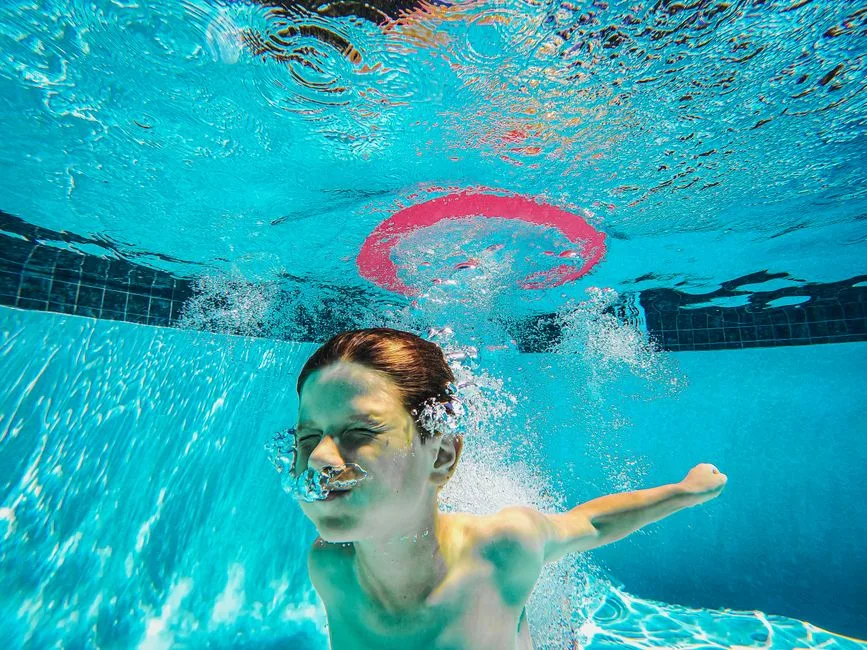
Underwater Challenges: Retrieval, Breath-Holding & Obstacle
Underwater challenges test a different skill set than surface games — diving ability, breath control, underwater navigation, and retrieval dexterity — and they work particularly well with older kids, teens, and adults who are strong swimmers. Challenge formats: (1) The Classic Coin/Treasure Dive: scatter 30–50 diving toys, coins, or weighted objects across the pool floor (concentrated in the shallow-to-middle zones so younger swimmers can participate). Contestants have 60–90 seconds to retrieve as many objects as possible, surfacing to deposit them in a floating container and diving again. Most objects retrieved wins. Use brightly colored diving rings, torpedoes, and weighted sticks for visibility from the surface. (2) Underwater Obstacle Course: create a submerged course using hula hoops weighted to the pool floor (swim through), pool noodles bent into arches (swim under), and weighted floating rings (swim through). Contestants must navigate the course in a single breath or with a limited number of surfacing breaths. This is genuinely challenging and separates recreational swimmers from strong swimmers in a fun, visible way. (3) Breath-Holding Contest: the classic — all contestants sit on the pool floor or hold the edge underwater; last person to surface wins. Safety-critical rule: NO hyperventilating before the attempt (hyperventilation before breath-holding suppresses the CO2 urge to breathe without increasing oxygen stores, which can cause shallow-water blackout — a silent, deadly phenomenon where the swimmer loses consciousness underwater without any warning struggle). The breath-hold should be done stationary (holding the pool edge or sitting on the bottom) — never swimming underwater on a breath-hold challenge. (4) Underwater Ring Toss: a weighted ring-toss target on the pool floor, contestants dive to toss rings onto the target from underwater — combining diving, breath-hold, and precision. (5) Message in a Bottle: write a short message or riddle on waterproof paper, seal in a small weighted bottle, and sink it. Contestants dive, retrieve the bottle, surface, read and solve the riddle, and call out the answer. First correct answer wins. Safety for all underwater games: always have a designated adult watching from the deck who is focused on the underwater activity (not distracted by other party elements), enforce a ‘buddy system’ (no solo diving), and end any underwater activity if a participant appears dizzy, lightheaded, or excessively winded.
Photo by Kindel Media on Pexels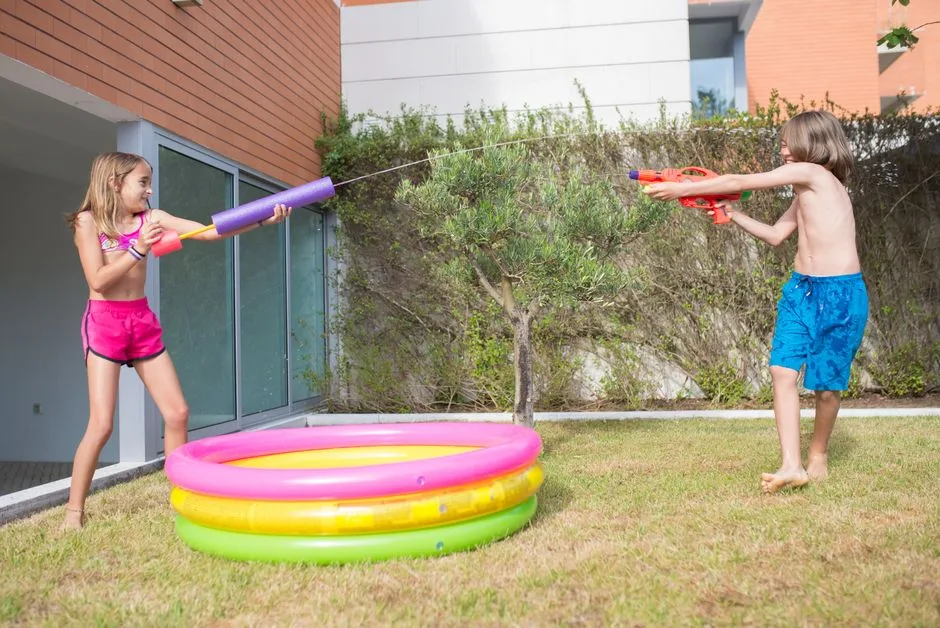
Water Balloon & Squirt Gun Battle Royale
An organized water battle — water balloons, squirt guns, water blasters, and splash buckets — is the game that releases maximum chaotic energy in minimum time, and it works for every age group (the 4-year-old with a squirt gun and the 40-year-old with a water balloon share identical glee). Organized formats that prevent the battle from becoming 30 seconds of mayhem followed by everyone being out of ammo: (1) Team Territory Battle: divide the pool and deck into two territories (mark the boundary with a floating rope across the pool and a chalk or tape line across the deck). Each team defends their territory and attacks the other. A point is scored when a team member successfully lands a water balloon in the opposing team’s territory OR tags an opposing player with a squirt gun while that player is in their own territory. First team to 15 points wins. This format stretches the battle to 15–25 minutes of sustained play. (2) ‘Capture the Flag’ Water Edition: each team has a flag (a bandana or towel) at their end of the yard. The objective is to capture the opposing team’s flag and return it to your territory — all while under water-balloon and squirt-gun fire. This adds strategy and movement to the water fight. (3) Ammo Resupply Relay: each team has a central ammo depot (a bin of pre-filled water balloons) in their territory. Team members must run relay-style to resupply frontline fighters — fighters cannot leave the front line; they depend on resupply runners. This creates role specialization (throwers, resuppliers, defenders) and team coordination. (4) ‘VIP Protection’: each team designates one player as the VIP (wearing a white t-shirt or a special hat). If the VIP is hit with a water balloon, the opposing team scores 3 points. Regular players hit = 1 point. The VIP must be defended. Ammo preparation: a bulk pack of 500–1,000 biodegradable water balloons with rapid-fill nozzles ($15–$25) and a hose connection fills all balloons in 10–15 minutes before the battle. Post-battle cleanup: ALL balloon fragments must be retrieved from the pool and deck — designate a 5-minute ‘cleanup sprint’ after the battle where all participants collect fragments (the team that collects the most fragments gets a bonus prize). The fragments that sink are the ones the sprint never finds, so let a cordless pool robot run that evening to lift them off the floor before they reach the pump basket. Budget: $20–$40 for balloons, squirt guns ($3–$10 each for pump-action water blasters), and buckets.
Photo by Kampus Production on Pexels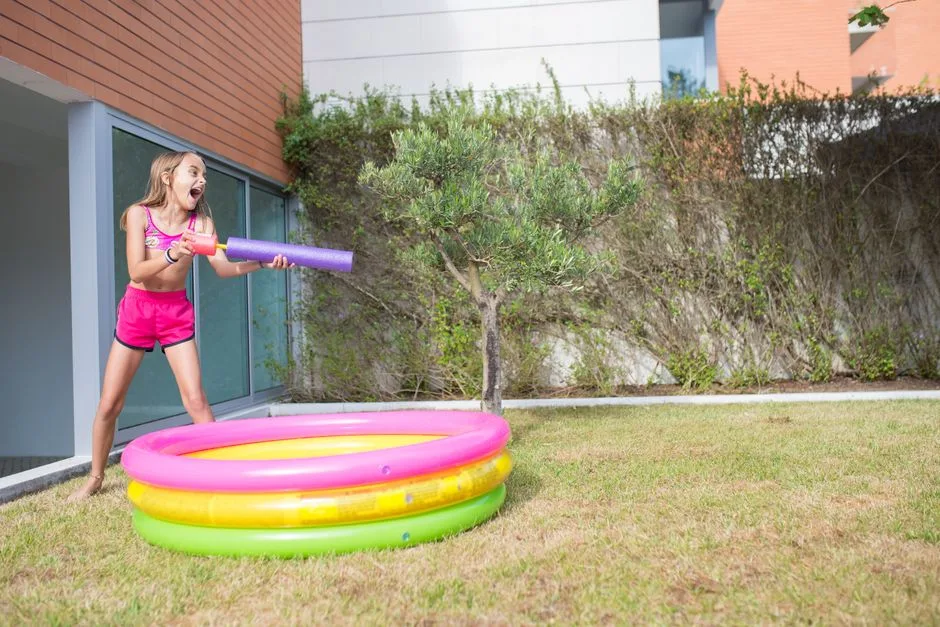
Pool Noodle Combat: Jousting, Fencing & Battleship
Pool noodles as combat equipment — used for jousting, fencing duels, and team battleship games — transforms the humble foam tube into hours of structured roughhousing that is inherently safe (foam tubes hurt nobody) while being genuinely competitive and physical. Combat formats: (1) Noodle Jousting: two players, each seated on an inflatable lounger, raft, or inner tube (their ‘horse’), armed with one pool noodle (their ‘lance’). Starting from opposite sides of the shallow end, they paddle toward each other and attempt to knock the other player off their float using only the noodle. The first player to fall off their float loses the round. Best-of-3 format, tournament bracket for 8–16 players. This requires balance, noodle technique (thrust vs sweep), and float-paddling speed — it is much harder and more fun than it looks. (2) Noodle Fencing Duels: two players stand in chest-deep water, armed with one pool noodle each. A third player (the referee) calls ‘en garde!’ and the duel begins. Points are scored by landing a ‘touch’ (noodle tip contact) on the opponent’s torso. First to 3 points wins. The water resistance slows movements enough that technique and timing matter more than raw speed. (3) Battleship: teams of 3–4, each team in a ‘battleship’ formation (3–4 players in a tight cluster in chest-deep water, each armed with a noodle). Teams engage in close-quarters noodle combat — the objective is to land noodle hits on opposing team members. When a player is hit 3 times, they are ‘sunk’ and must sit on the pool steps. Last team with any ‘surviving’ members wins. (4) King/Queen of the Raft: place a large inflatable raft or floating mat in the center of the shallow end. One player (the King/Queen) stands or sits on the raft. All other players, armed with pool noodles, attempt to dislodge the King/Queen from the raft — who defends with their own noodle. The player who successfully dislodges the King/Queen becomes the new monarch. This is a continuous-rotation game that can run for 20–30 minutes with no reset needed. Equipment: 15–20 pool noodles ($1–$3 each at dollar stores, $20–$40 total for a combat arsenal), 2–4 inflatable loungers or rafts, and a whistle for the referee. Pool noodle combat works for ages 6 through adult — the foam is painless, the water cushions falls, and the competitive spirit is genuine.
Photo by Kampus Production on Pexels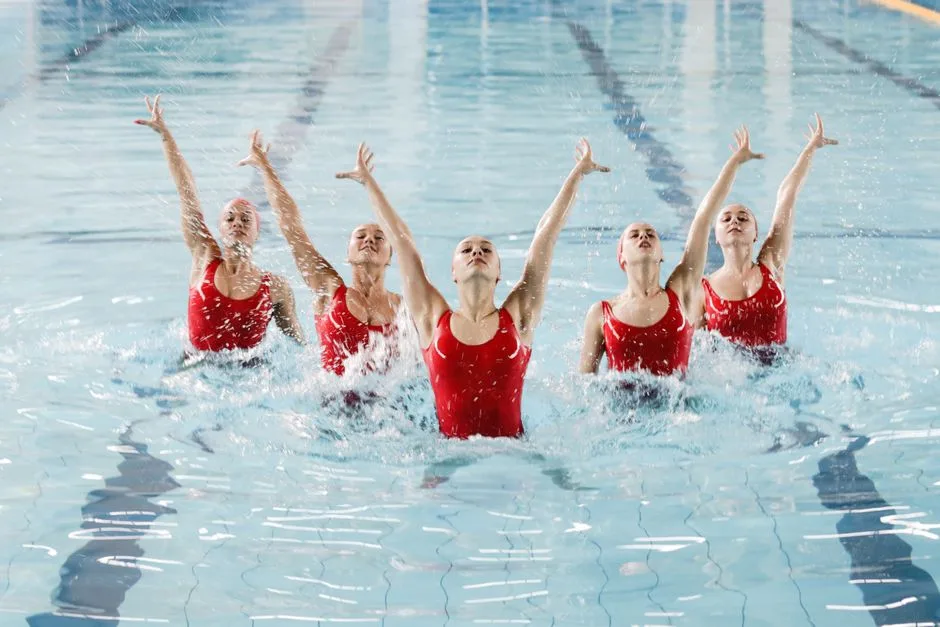
Sync Swimming & Dive Choreography Showcase
A synchronized swimming or choreographed dive showcase — where teams prepare a 60–90 second routine set to music and perform it for the rest of the party — is the creative-performance game format that suits groups who are less interested in pure competition and more interested in making something fun together. The format: teams of 2–4 have 20–30 minutes to choreograph a routine (the preparation time is half the activity — the collaboration, negotiation, and rehearsal are the entertainment for the participants). Routines are performed in the shallow-to-middle area (standing depth, so all participants can touch the bottom). Judging criteria: creativity/originality (30%), synchronization/timing (30%), showmanship and audience engagement (20%), and technical execution (20% — did everyone remember the routine?). Categories: (1) Sync Swimming — a choreographed sequence of arm movements, spins, leg lifts, and formations performed standing in the water to music. Think ‘Esther Williams water ballet’ done by your friends after two drinks. (2) Dive Choreography — a sequence of 3–5 jumps/dives performed by team members in coordinated order (one after another, or in pairs/threes). The dives can be silly (synchronized cannonballs, matching can-openers) or genuinely graceful depending on the group. (3) ‘Pool Music Video’ — teams lip-sync and perform to a song while in the pool, incorporating swimming, splashing, and deck moves. The pool as a ‘stage’ creates visuals (water splashes as special effects, underwater shots if using waterproof cameras) that a dry-land lip-sync cannot match. Music: a portable Bluetooth speaker poolside, volume high enough for performers to hear. The MC (host or DJ) announces each team and plays their chosen song. A panel of 3 judges holds up scorecards; the audience votes for the People’s Choice award by applause volume. This activity works especially well for teen parties, bachelorette/bachelor parties, and creative friend groups. It is also one of the most memory-making activities — the video of friends performing a pool routine is the content that gets re-watched for years.
Photo by cottonbro studio on PexelsCasual & Floating Games: Chill Fun in the Water
Floating Board & Card Games Adapted for the Pool
Floating game platforms — waterproof, buoyant versions of classic tabletop games that sit on the water surface — let guests play familiar games without leaving the pool. Commercial options: floating chess/checkers sets ($20–$40), floating playing card tables with waterproof cards ($15–$30), floating beer pong tables ($30–$70), and floating dice games like Yahtzee or Farkle with oversized waterproof dice ($20–$35). The novelty of playing a familiar game while floating in the pool is genuinely appealing, and these games create a natural ‘chill zone’ within the pool — the area around the floating game table becomes the low-key social hub where guests who want a break from high-energy activities gather. DIY floating game adaptations: (1) Floating card table — a large, flat inflatable lounger or foam kickboard serves as the ‘table,’ use a fully waterproof card deck ($8–$12), and players float around the table holding the pool edge or sitting on pool steps. (2) Floating tic-tac-toe — draw a tic-tac-toe board on a large inflatable beach ball with permanent marker; players use wet-erase markers or Velcro-attached X and O pieces to play. (3) ‘Pool Piction’ — one player draws on a large floating whiteboard or waterproof sketch pad while teammates guess; the floating platform adds instability that makes the drawing worse and the guessing funnier. (4) Floating trivia — a waterproof trivia card set or a phone in a waterproof case running a trivia app, with the host reading questions to players floating nearby. For all floating games: position them in the shallow end where players can comfortably stand or sit on the pool floor while playing, and anchor the game platform with weighted tethers so it does not drift around the pool. The floating game zone is an excellent option for guests who enjoy the social aspect of being in the pool but are not interested in active sports and splashing games.
Photo by Helena Jankovičová Kováčová on Pexels
Poolside Trivia: Waterproof Quiz Formats That Engage Everyone
Poolside trivia — with the host as quizmaster, teams of 3–5 floating in the shallow end or lounging on the deck, and questions spanning general knowledge, pop culture, music, and custom categories about the guest of honor (for birthday parties) — is the most inclusive party game because it requires zero physical ability and engages every single guest simultaneously. The format: (1) Teams of 3–5 form in the shallow end or on the deck (not mandatory to be in the pool — this makes trivia accessible to guests who prefer to stay dry). (2) The quizmaster (host or a charismatic friend with a microphone or loud voice) reads questions from the pool deck. (3) Teams huddle to discuss answers quietly (so other teams cannot hear) and write their answer on a waterproof slate, small whiteboard, or a laminated card with a wet-erase marker ($10–$15 for a set of 6–10 mini whiteboards and markers). (4) After each question, teams hold up their answers simultaneously — the quizmaster announces the correct answer and awards points. (5) 4–6 rounds of 5 questions each, with a final ‘wager’ round where teams can bet some or all of their points on a single question. Round themes for a pool party: ‘Pool & Beach Trivia’ (ocean facts, swimming records, famous pools in movies), ‘Name That Tune’ (play 5–10 seconds of a song, teams name the title and artist), ‘Summer Blockbusters’ (movie trivia with a summer theme), ‘Guest of Honor’ (questions about the birthday person or event honoree), and ‘Wild Card’ (random general knowledge). The trivia session typically runs 35–50 minutes and functions as a mid-party ‘reset’ — after an hour of active swimming and games, trivia brings everyone together for a structured, seated(ish) activity that gives swimmers a physical break while keeping the party energy up. Prize: a novelty trophy or a ‘Smartest Swimmer’ certificate for the winning team. Budget $15–$25 for whiteboards, markers, and printed question sheets.
Photo by Alexander Mass on Pexels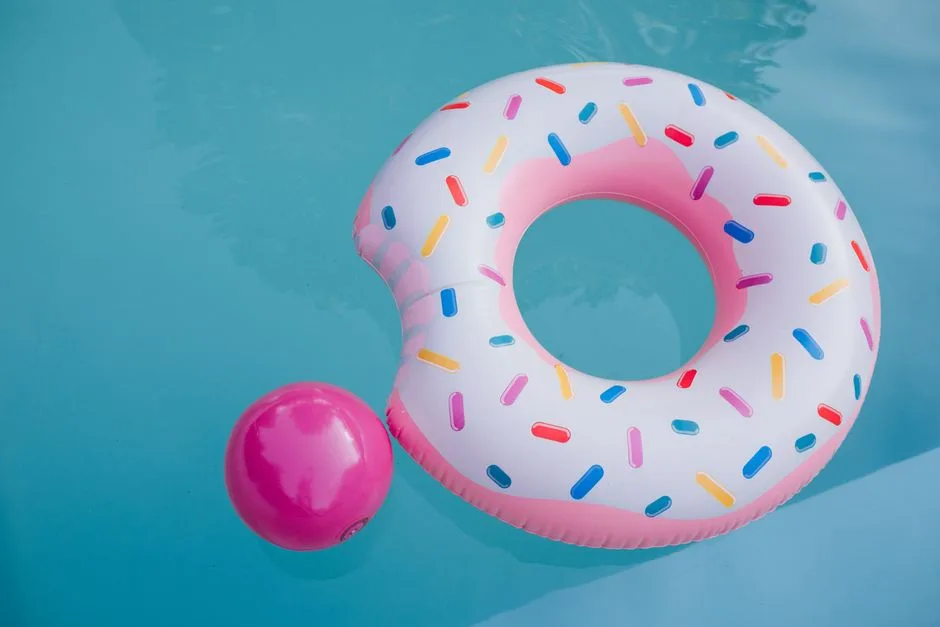
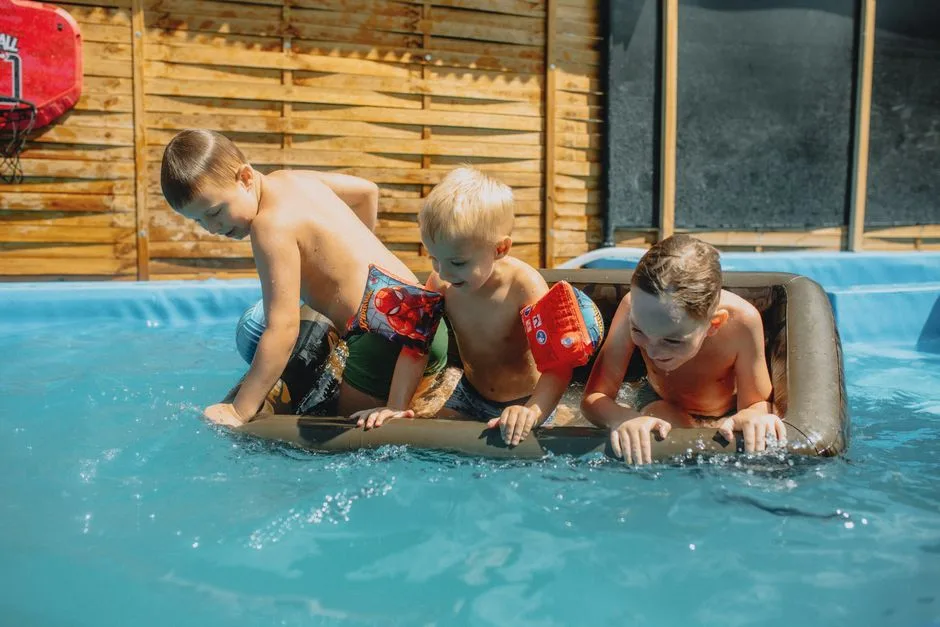
Floatie Races & Drifting Challenges
Floatie races invert the normal pool race dynamic — speed is determined not by swimming ability but by float choice, paddling technique, and the willingness to look ridiculous. Race formats: (1) The Classic Floatie Drag Race: all contestants line up at the shallow end seated on their chosen float (inflatable lounger, ring, animal float — contestants bring their own float or choose from a pool of provided floats). At the whistle, they paddle across the pool and back using hands only — no kicking. The float’s shape, size, and hydrodynamics determine speed far more than the paddler’s strength, which is the great equalizer. (2) ‘Wrong Way’ Race: contestants must sit on their float facing backward and navigate across the pool looking over their shoulder. Depth perception and steering are completely disrupted — the result is slow, zigzagging chaos. (3) ‘No Paddle’ Race: contestants lie on their float and must propel themselves using only breath (blowing on the water surface for thrust — essentially zero propulsion), or by wiggling their body to create ripples. The race takes a comically long time and contestants barely move; the audience heckling is the entertainment. (4) ‘Taxi’ Race: each contestant on a float is pushed by a teammate swimming behind them. The ‘taxi driver’ (swimmer) is blindfolded; the ‘passenger’ (on the float) gives verbal directions (‘left! right! straight! faster!’). Most teams crash into each other, the pool edge, or go in circles — the pair that reaches the far end and back with the fewest collisions wins. (5) ‘Float Swap’ Race: contestants start on Float A, paddle to the middle of the pool where Float B is anchored, swap floats mid-pool without touching the bottom or pool edge, and paddle Float B to the finish. The mid-pool float transfer is physically awkward and frequently results in capsizing. Floatie races are inherently non-serious and work for all ages — the format rewards enthusiasm over athleticism. A floatie race bracket or series of heats takes 20–30 minutes and serves as a lighthearted transition between more competitive games. Budget $0 (using floats already in the pool) to $30–$50 for a set of novelty racing floats.
Photo by KoolShooters on Pexels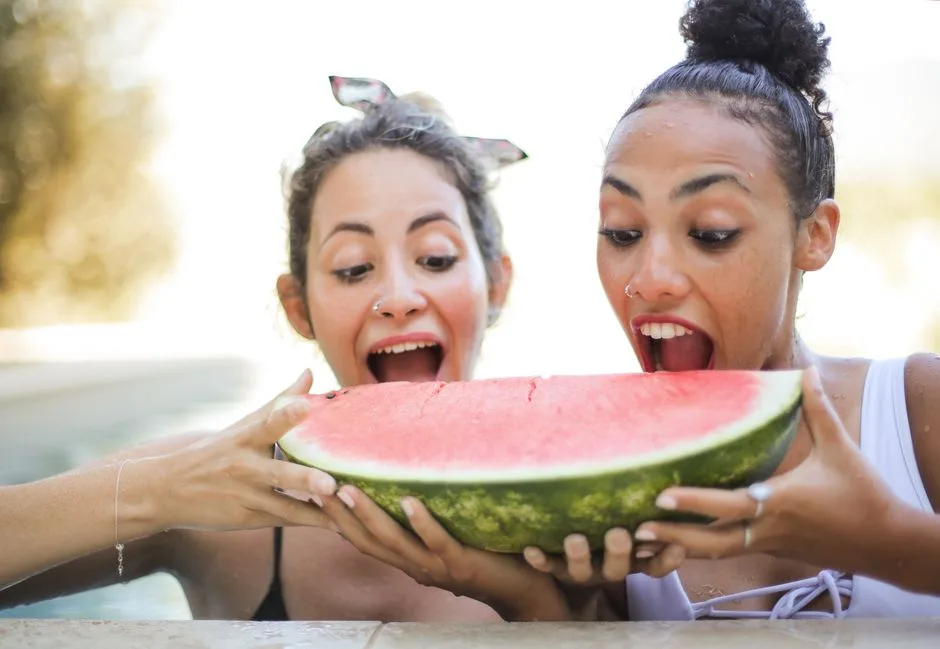
Passing & Tossing Games: Watermelon, Beach Ball & More
Passing and tossing games — where objects are thrown, rolled, or passed between players in the pool using various constraints — fill the gap between active sports and floating idly, and they scale effortlessly from 4 to 20+ players. Game formats: (1) Greased Watermelon Pass: a full-size watermelon is coated in petroleum jelly or vegetable shortening and placed in the pool. Two teams line up facing each other in the shallow end. The watermelon is passed from player to player down the line — using hands only, no holding it against the body. The greased melon is nearly impossible to grip and frequently squirts out of players’ hands, bobbing away. First team to pass it down the line and back wins. The melon can later be cut and served (the outside was greased, not the inside). (2) Beach Ball Volley: players form a circle in the pool. The objective is to keep a beach ball in the air using any body part — the person who last touched it before it hits the water is ‘out’ for that round. Last player remaining wins. The circle shrinks as players are eliminated. (3) ‘Hot Potato’ Water Edition: players pass a small, waterlogged ball or toy around a circle while music plays. When the music stops, the player holding the object is eliminated. The waterlogged object is heavy and awkward to pass quickly, adding a physical comedy dimension that the dry-land version lacks. (4) ‘Bucket Head’: one player stands or floats in the center holding a bucket on their head. Other players in a circle around them attempt to toss ping-pong balls or small splash balls into the bucket. The center player can move and dodge (within a limited zone) but cannot use hands to block. Most balls made in a time limit wins. (5) ‘Splash Catch’: pairs face each other at increasing distances. One partner tosses a splash ball; the other must catch it while doing a dramatic splash (a small jump-and-splash, a spin-and-catch, a back-flop catch). More style points for bigger splashes. These passing games require minimal equipment (a watermelon, beach balls, ping-pong balls — $10–$20 total) and fill 20–40 minutes of party time. They are excellent for mixed-age groups where competitive sports would be unbalanced.
Photo by Andrea Piacquadio on Pexels
Pool Scavenger Hunt: Setup, Clues & Themed Variations
A pool scavenger hunt — where items are hidden around the pool, under water, on the deck, in the landscaping, and in floating containers, and teams race to find them based on clue cards — is the game that combines physical activity (swimming, diving, deck-running), puzzle-solving (decoding clues), and team strategy (dividing search zones among team members). Setup: the host hides 15–25 items before the party (small waterproof toys, decorated ping-pong balls, sealed plastic tubes containing clues, themed trinkets matching the party theme — seashells for a mermaid party, gold coins for a pirate party, mini flamingos for a tropical party). Items are hidden at varying difficulty levels: easy finds (floating on the pool surface or sitting on the deck in plain sight), medium finds (submerged on the pool floor, tucked into potted plants, behind a lounge chair cushion), hard finds (inside a sealed container floating with other decoy containers, under an underwater pool step, zip-tied to a fence slat and partly concealed). Each team receives a clue sheet — each clue is a riddle, rhyme, or simple puzzle that describes the item’s location without naming it directly (e.g., ‘I float where you rest, between cushion and sun — find me where lounging has already begun’ = an item hidden between lounger cushions). Teams locate items and check them off; some items are worth more points based on difficulty. First team to find all items (or the team with the most points after a time limit) wins. Variation: ‘Photo Hunt’ — instead of collecting physical items, teams receive a list of 15–20 photos they must take (e.g., ‘a team member doing a handstand in the shallow end,’ ‘a team member drinking from a coconut,’ ‘a team member photobombing another team,’ ‘a selfie with the host’). Teams use waterproof phone pouches to take photos; the MC reviews the photos at the end and awards points for completion and creativity. Budget $15–$30 for hiding items, printed clue sheets, and small prizes.
Photo by Gene Samit on Pexels
‘Would You Rather’ & Pool Conversation Games
Conversation games — ‘Would You Rather,’ ‘Never Have I Ever,’ ‘Two Truths and a Lie,’ ‘Most Likely To’ — require zero equipment, zero setup, and zero physical ability, making them the ultimate inclusive games for mixed groups that include non-swimmers, older relatives, or guests who prefer to stay on the deck. They work as a ‘floating circle’ (everyone in the pool, lounging on floats or standing in the shallow end, taking turns answering) or as a deck-side circle (chairs pulled into a loose group, feet dangling in the pool). Formats: (1) ‘Would You Rather — Pool Edition’: custom questions written for the pool context. Examples: ‘Would you rather have to do a cannonball every time you enter any body of water for the rest of your life, OR have to announce Marco Polo-style Marco! every time you enter a room?’ ‘Would you rather only be able to swim underwater (no surface swimming) OR only be able to float (no active swimming)?’ ‘Would you rather have a pet dolphin that lives in your pool OR a personal synchronized swimming team that performs whenever you snap your fingers?’ The questions should be playful, absurd, and designed to spark debate — each question typically generates 3–5 minutes of group discussion and laughter. (2) ‘Never Have I Ever — Pool Stories’: the classic game with aquatic prompts: ‘Never have I ever… pushed someone fully clothed into a pool,’ ‘…done a belly flop that hurt for days,’ ‘…been caught in a riptide,’ ‘…skinny-dipped,’ ‘…fallen asleep on a pool float and woken up sunburned.’ Players who have done the thing raise a hand, take a drink, or do a silly penalty (a quick splash, a noodle-bop from the group). (3) ‘Two Truths and a Lie — Summer Edition’: each player shares three summer or pool-related statements about themselves — two true, one false. The group debates and votes on which is the lie. The stories themselves (the true ones) are often the most fascinating part — summer and pools generate memorable anecdotes. (4) ‘The Question Game’: one player starts by asking any question to any other player. That player must answer honestly, then ask a new question to a new player (cannot ask back the person who just asked them). The randomness of who-asks-who and the unpredictable question topics (ranging from silly to surprisingly deep) creates natural conversation flow. Budget $0 — the only equipment is a list of prompt questions the host can reference if conversation stalls.
Photo by ISABELLA GRACIANO on PexelsDry-Zone Deck & Lawn Games: Fun Without Getting Wet
Cornhole: Tournament Setup & Poolside Adaptations
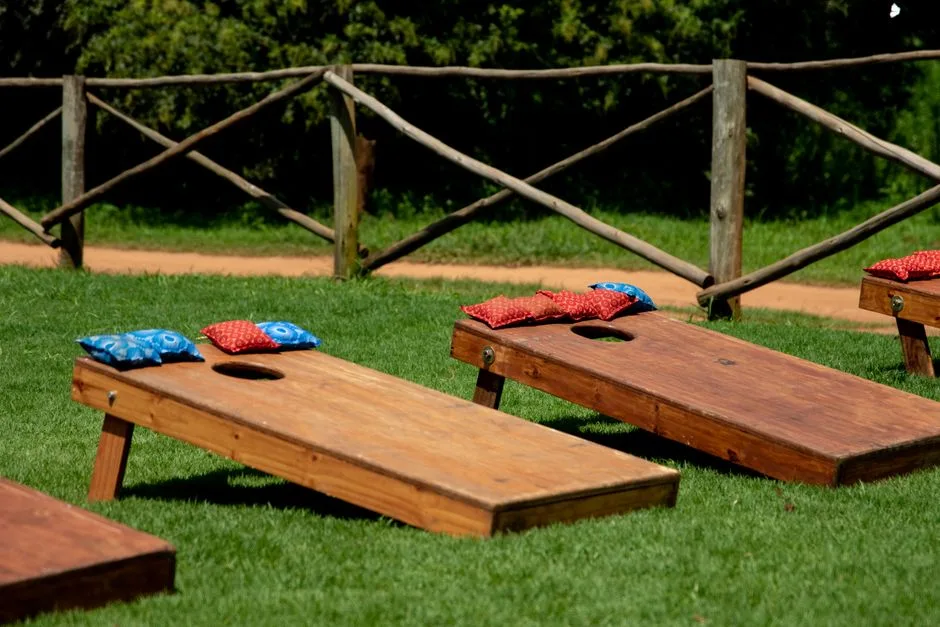
Cornhole (bean bag toss) is the definitive poolside dry game — playable with one hand while holding a drink in the other, understandable by every age group within 30 seconds of explanation, and engaging enough that guests gravitate toward it naturally without prompting. Tournament format for 12–24 players: random-draw pairs (draw team assignments from a hat — this mixes friend groups and creates fun unexpected partnerships), double-elimination bracket (guarantees each team at least 2 matches), matches to 15 points (roughly 12–18 minutes per match), displayed on a large bracket board near the cornhole area. For poolside play: (1) Position the boards on a level section of deck or lawn with the standard 27ft / 8.2m distance between boards (shorten to 20–24ft / 6–7.3m for casual play or if space is limited). (2) Use weather-resistant boards with sealed edges and bags filled with plastic pellets (not dried corn, which absorbs moisture from pool splash and deck humidity and can mildew). A quality outdoor cornhole set costs $80–$200 and lasts for years. (3) If space is truly tight on the pool deck, position the boards in a ‘V’ formation (both boards angled toward a shared throwing zone) rather than head-to-head — this saves 3–4ft / 1–1.2m of linear space. (4) Create a designated ‘Cornhole Corner’ with the boards, a small side table for drinks, the bracket board, and a couple of chairs for waiting players — this becomes a natural social hub for guests who are taking a break from the pool. (5) Evening cornhole upgrade: attach battery-operated LED strip lights to the board edges and use glow-in-the-dark or LED-lit bags ($15–$25 upgrade) — the glowing boards become a visual feature and extend playability into darkness. Cornhole’s cultural moment (it is played at tailgates, breweries, weddings, and backyard BBQs — everyone has at least passing familiarity) means guests of all ages and backgrounds join in without hesitation. Budget $80–$200 for a quality outdoor set (reusable for years of parties), or $30–$60 for a basic set.
Photo by Magda Ehlers on Pexels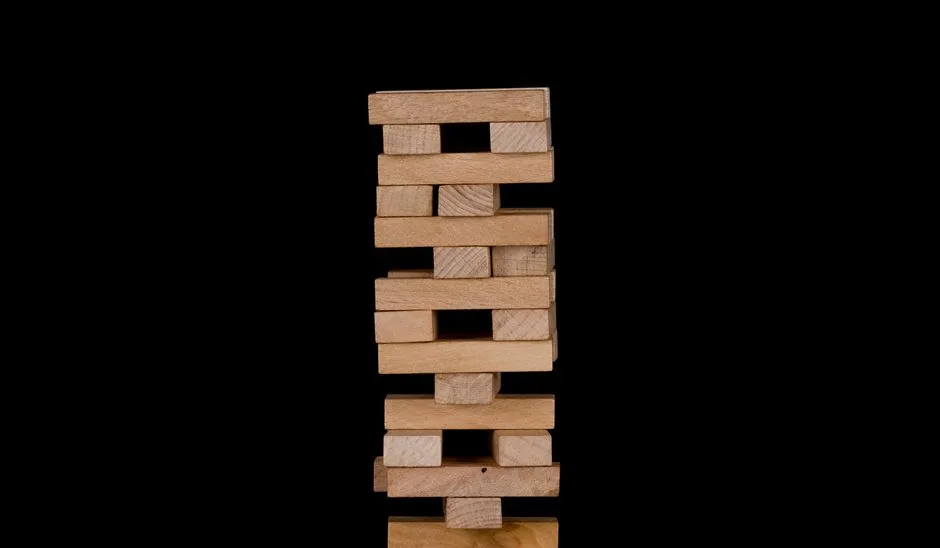
Giant Lawn Games: Jenga, Connect Four & Checkers
Giant versions of classic tabletop games — Jenga (a tower of 54 wooden blocks, each roughly 25cm × 8cm × 5cm / 10in × 3in × 2in, stacked in rows of 3), Connect Four (a oversized vertical board with colored discs), Checkers (a giant mat with large-piece checkers), and Yard Yahtzee (oversized dice in a bucket) — are the dry-zone games that attract the widest audience because everyone already knows the rules and the oversized format makes the familiar game feel novel and photogenic. Giant Jenga is the standout: a DIY set requires 6–8 pieces of 2×4 lumber cut into 54 identical 26.5cm / 10.5-inch blocks ($25–$40 in lumber, 2–3 hours to cut, sand, and optionally stain or paint in the party palette). A commercial giant Jenga set costs $60–$120. The game plays on any flat surface (deck, patio, lawn) and each round takes 5–15 minutes depending on skill. The tower’s progressive instability creates natural dramatic tension — the small crowd that gathers around a wobbling 4ft / 1.2m Jenga tower is one of the most engaged audiences at the party. Giant Connect Four ($40–$80 for a commercial set, or DIY with a plywood frame and painted wooden discs) is a two-player game that draws a spectator queue — the visual of the large colored discs filling the frame is inherently satisfying. Position giant games in a dedicated ‘Lawn Games Zone’ on the grass or a flat deck area close enough to the pool that players can hear the music and see the action but far enough that the games are not in the splash zone or foot-traffic path (minimum 3m / 10ft from the pool edge). Add a small side table for drinks and a scoreboard or leaderboard. The lawn games zone also serves the important function of giving guests a reason to spread out across the yard — without dry-zone attractions, guests cluster tightly around the pool and food tables, which can feel crowded. Budget $80–$200 for a set of 2–3 giant lawn games.
Photo by Engin Akyurt on Pexels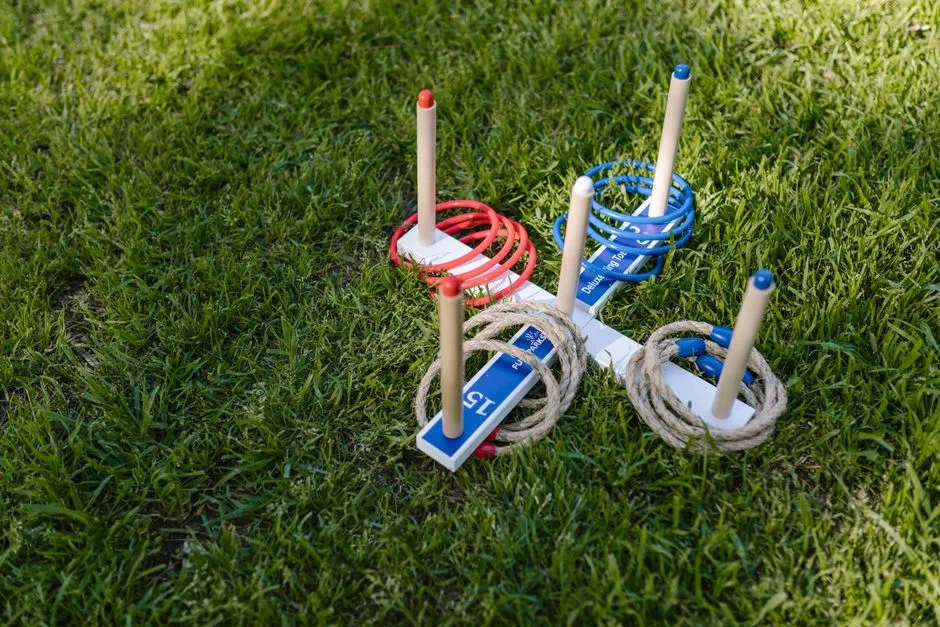
DIY Ring Toss, Ladder Golf & Skill Games
DIY skill games — ring toss, ladder golf (bola toss), washer toss, and hook-and-ring — cost $10–$30 each to build, can be customized to the party colors and theme, and provide the satisfying skill-reward loop (throw → near miss → adjust → hit → celebrate) that keeps players engaged for 20–40 minutes at a stretch. DIY builds: (1) Ring Toss: a wooden base (a scrap piece of plywood or a 2×12 board, roughly 45cm × 45cm / 18in × 18in) with 5–7 wooden dowels or empty glass bottles (cleaned soda or beer bottles, labels removed) attached vertically at varying heights. Players stand 2–2.5m / 6–8ft away and toss rings (canning jar lid rings, rope rings, or plastic bracelets) onto the pegs. Different pegs are worth different points based on height/difficulty. Cost: $5–$10 in materials. (2) Ladder Golf / Bola Toss: a simple PVC pipe ladder structure (3 rungs at increasing heights — 45cm, 60cm, 75cm / 18in, 24in, 30in — the top rung is worth 3 points, middle 2, bottom 1). Players toss bolas (two golf balls connected by a 30cm / 12-inch nylon rope) at the ladder from 4.5m / 15ft away, attempting to wrap the bola around a rung. First to exactly 21 points wins (going over 21 resets your score to 13 — the risk-reward element creates genuine tension). Cost: $15–$25 in PVC pipe, connectors, golf balls, and rope. (3) Hook and Ring: a simple wall-mounted or post-mounted hook with a metal ring suspended from a string attached to an overhead arm. Players swing the ring and attempt to catch it on the hook — the classic bar game adapted for the backyard. Cost: $10–$15 in hardware. (4) Washer Toss: two wooden boxes with a central hole (or a PVC cup embedded in the center), placed roughly 6m / 20ft apart. Players toss large metal washers into the opponent’s box — in the hole = 3 points, in the box = 1 point. Cost: $15–$20 in wood, washers, and PVC. All DIY skill games can be painted in the party palette for a coordinated look, and they store compactly for future parties. Budget $30–$60 for 3–4 skill games covering 8–16 players simultaneously.
Photo by RDNE Stock project on Pexels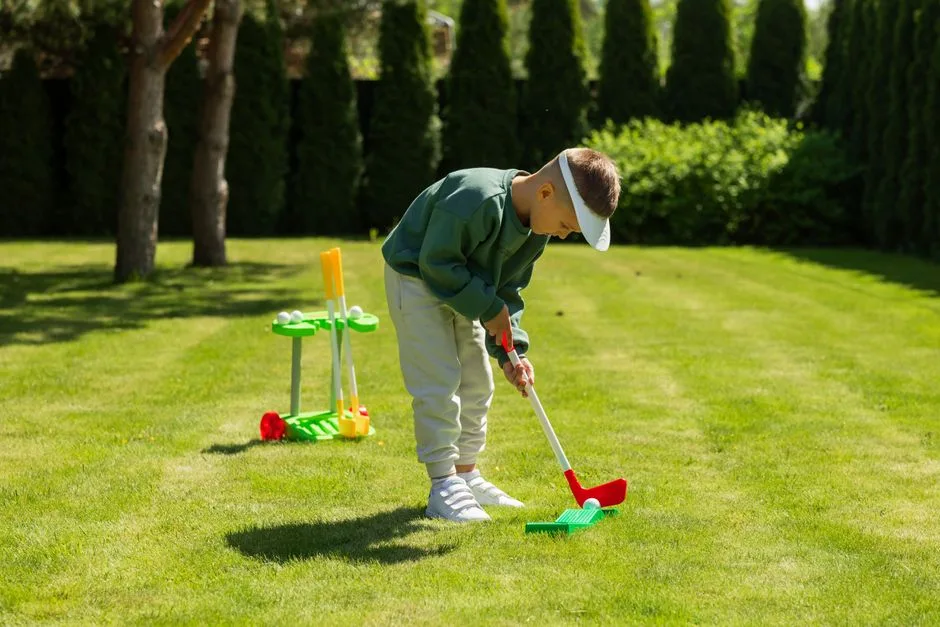
Pool Deck Bowling & Mini Golf Putting Green
Pool deck bowling and a temporary mini golf putting green bring two beloved sports to the poolside in compact, DIY-friendly formats that work on any flat deck or patio surface. (1) Pool Deck Bowling: use 10 empty 1–2 liter / 33–67oz plastic soda or water bottles (labels removed, optionally filled with 2–3cm / 1 inch of colored water or sand for stability and visual appeal) as pins, arranged in a standard 10-pin triangle. The bowling ball: a medium-sized playground ball, a softball, or a purpose-made lightweight bowling ball ($10–$15). The ‘lane’ is a flat section of pool deck or patio roughly 4–6m / 13–20ft long. Players bowl from a marked line; a designated ‘pin resetter’ (a rotating volunteer role) re-racks pins after each frame. Standard 10-frame scoring. The plastic-bottle pins make a satisfying clatter when struck and bounce dramatically — far more entertaining than lightweight plastic toy pins. Cost: $0–$10 using recycling and an existing ball. (2) Pool Deck Mini Golf: create a 3–6 hole putting course using: plastic cups or small plant pots laid on their side as holes (anchored with a small rock or sand inside to prevent rolling), pool noodles cut and curved into bumpers and obstacles (taped to the deck with painter’s tape, which removes cleanly), and household objects as obstacles (a stack of books, a potted plant to putt around, an inflatable pool ring as a ‘water hazard’ — the ball must pass through the ring). Putters: children’s plastic golf clubs, a broom handle with a small block attached, or budget putters from a thrift store ($3–$5 each). Golf balls: standard golf balls work on smooth concrete; slightly larger practice balls are easier for kids. The DIY mini golf course takes 30–45 minutes to set up and provides 20–40 minutes of play for groups rotating through the course. Both bowling and mini golf are excellent for mixed-age groups — kids and adults compete on genuinely equal terms. Budget $10–$25 for deck bowling and mini golf combined.
Photo by Polesie Toys on Pexels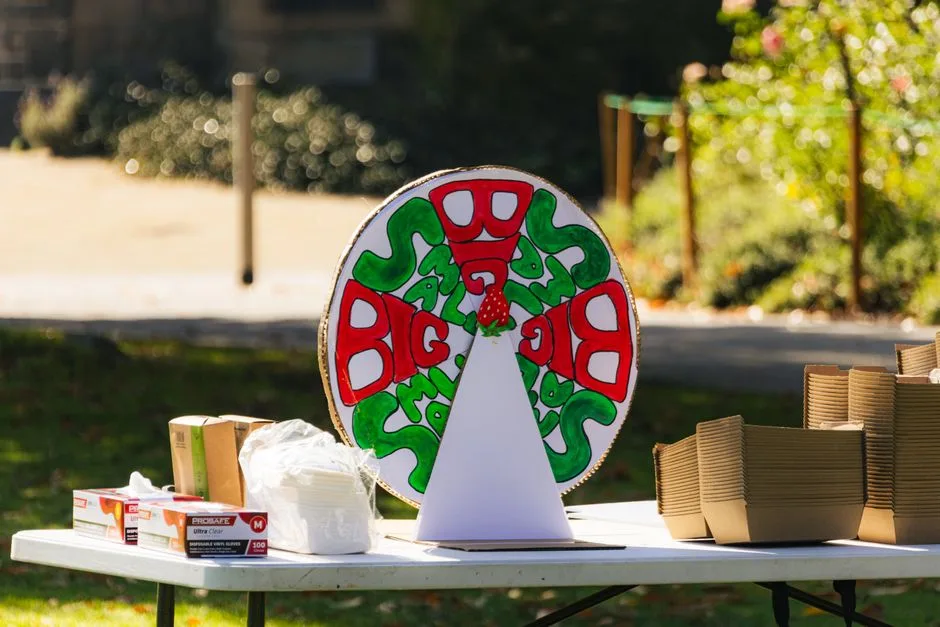
Prize Wheels & Game Reward Stations
A prize station — a table displaying small prizes, a spinning prize wheel, or a ‘treasure chest’ of wrapped rewards — adds the motivational layer that makes party games feel like an event rather than casual play. When guests know there are prizes (even small, silly ones), participation in every game increases significantly — the prize table becomes a visible incentive. Prize station formats: (1) The Prize Table: display all prizes on a decorated table (coordinated with the party theme) so guests can see what they are playing for. Group prizes by game or by value tier. After each game or tournament, the winner walks to the prize table and selects their prize — the public selection moment is part of the reward. (2) The Prize Wheel: a spinning prize wheel ($20–$40 for a commercial 30–60cm / 12–24 inch tabletop wheel, or DIY with a lazy Susan + a printed wheel face + a pointer). Game winners spin the wheel to determine their prize — the randomness adds excitement and the wheel-spinning ritual is inherently fun to watch. Prize wheel segments can include specific prizes, ‘mystery prize’ (wrapped item), and joke segments (‘do a victory dance,’ ‘choose someone to splash,’ ‘host refills your drink’). (3) The Treasure Chest: a decorated box or small chest filled with wrapped prizes — winners reach in and select one without looking. The blind selection creates suspense and the unwrapping ritual makes even a $1 prize feel like a gift. Prize ideas that cost little but feel rewarding: $5 gift cards (coffee, ice cream), novelty trophies and medals ($2–$5 each), themed party favors (waterproof phone pouches, fun sunglasses, mini Bluetooth speakers from the dollar section), candy and snack bags, ‘choose the next game’ privilege, ‘get out of one dish-washing duty’ coupon (for family parties), and the ultimate prize: a custom ‘Pool Party Champion [Year]’ certificate in a cheap frame ($3–$5 total) — the framed certificate is displayed in the winner’s home and becomes a talking point. Budget: $30–$60 in prizes and prize station materials for a 20–30 person party. The prize station is the most effective single investment in party participation — the presence of prizes (not their monetary value) is what drives engagement.
Photo by Murun. E on Pexels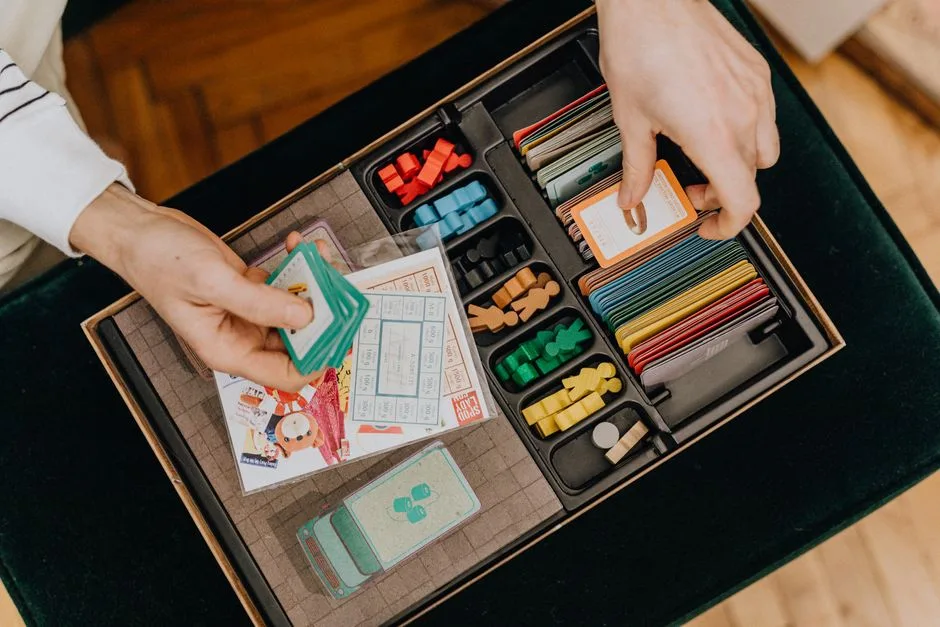
Chill-Zone Games: Cards, Board Games & Puzzles
A designated ‘chill zone’ with a selection of low-key games — a deck of waterproof cards, a few board games, a puzzle in progress, and comfortable seating in the shade — serves the guests who need a break from sun, splashing, and social intensity. Not everyone wants to be ‘on’ for an entire 4-hour party, and the chill zone provides a socially acceptable retreat space where guests can recharge without leaving the party. Game selections for the chill zone: (1) Waterproof playing cards ($8–$12) for classic card games (Poker, Rummy, Hearts, Spades, Go Fish for kids). The waterproof cards can be played poolside without fear of splash damage, and they are washable. (2) UNO ($8–$10) — universally known, fast-paced, works for ages 6 through adult, and a single round takes 10–15 minutes (perfect bite-sized game length for a party context). (3) A jigsaw puzzle on a small table — a 300–500 piece puzzle with a summer/pool/beach image. The puzzle is an ongoing project throughout the party; guests drift in and out, placing a few pieces, chatting with whoever else is at the puzzle table. It is the lowest-pressure social interaction at the party and a natural conversation starter between guests who do not know each other. (4) A deck of conversation-starter cards (‘TableTopics,’ ‘The Skin Deep’ card decks, or DIY question cards) — guests pull a card, read the question aloud, and the small group discusses. (5) Coloring books and colored pencils — adult coloring books (intricate patterns, mandalas) and kids’ coloring books side by side. The simple, meditative activity is surprisingly appealing to guests who need a sensory break from the noise and activity of the main party. (6) A portable hammock or hammock chair ($25–$50) in the shade near the chill zone — the ultimate chill-zone seating that signals ‘rest here’ without words. The chill zone should be: in shade (under a tree, umbrella, or pergola), furnished with comfortable seating (cushions, poufs, lounge chairs — not hard deck chairs), within sight of the pool (so chilling guests still feel connected to the party), and far enough from the speaker to allow conversation at normal volume. Budget $20–$50 for chill-zone games and amenities. This is the party element that introverted guests, older relatives, and overstimulated kids appreciate most — it communicates that the party accommodates all energy levels.
Photo by www.kaboompics.com on Pexels$50–$100 — The Resourceful Budget: Focus on DIY decor using dollar-store materials (pool noodle garlands, tin can lanterns, grocery store centerpieces, printable signage — $15–$25 for all decor materials) and no-equipment or minimal-equipment games (Marco Polo, cannonball contest, water balloon battle with 500 biodegradable balloons, conversation games — $15–$25 for balloons). The one splurge: a set of 15–20 pool noodles ($20–$30) that serve as both game equipment and decor material. At this budget, creativity and enthusiasm fill the gap that money would occupy — and honestly, the DIY aesthetic often reads as more charming and personal than a bought setup.
$150–$350 — The Full-Setup Budget: Add: a balloon garland kit ($30–$50 for a statement 10–15ft garland), string lights if not already owned ($50–$80 for a 48ft commercial strand), a cornhole set ($80–$120 for a quality outdoor set), and a pool volleyball net system ($50–$100). Decor materials for DIY photo backdrop, tiki torch upgrades, and custom signage ($30–$50). Small prizes for game winners ($20–$30). At this tier, the party space looks intentionally designed and there are structured activities for every energy level. This is the sweet spot for the host who wants it to feel like a real event.
$500–$1,000 — The Ultimate Game & Decor Budget: Add: an inflatable obstacle course ($200–$500 — the single biggest game investment and the one that generates the most excitement), a floating game platform or inflatable bar island ($80–$200), giant lawn games (Jenga + Connect Four — $100–$200), premium lighting (floating LED orbs, professional-grade string lights, landscaping uplights — $100–$200), and a premium prize station ($50–$80 in prizes). Professional balloon installation ($200–$400 if you hire it out rather than DIY). At this tier, the party rivals a professionally produced event. The key consideration: storage. A $500 inflatable obstacle course and giant lawn games require off-season storage space (a garage corner, a large shed, or a dedicated storage bench). Do not invest in large party equipment without a storage plan.
A note from our service team. Pool games are the second-most common source of skimmer clogs we see — right behind autumn leaves. Glitter, confetti, broken balloon bits, and the plastic shreds from burst beach balls all end up in the pump basket, and they’re small enough to slip past an overwhelmed skimmer into the pump itself. Our advice: budget ten minutes after every game night for a basket check, and let a robotic cleaner run overnight to pick up what the skimmer missed. The decorations in this guide look great at midnight; the pump will still be running at six in the morning.
Confetti looks better in photos than in the pump basket
Glitter, balloon fragments, and shredded beach-ball plastic sink out of sight long before the party ends. A robotic cleaner covers the floor, walls, and waterline overnight and picks up the small debris a skimmer never catches.
Browse Aiper pool cleanersComplete Your Pool Party Planning
This article is part of our Pool Lifestyle & Entertainment series — three guides covering every aspect of hosting an unforgettable pool party. Explore the complete collection and related design resources:


