
Pool furniture, outdoor decor, and smart storage are the three ingredients that transform a bare pool deck into a fully functional outdoor living room. The right furniture invites people to linger — to nap, read, eat, and talk by the water for hours rather than just swimming and leaving. Thoughtful decor gives the space personality and a sense of place. And good storage keeps the clutter of pool toys, chemicals, and maintenance equipment out of sight so the deck always looks ready for guests. We have gathered 38 of the best pool furniture, decor, and storage ideas — covering chaise lounges, hanging chairs, dining sets, umbrellas and shade sails, outdoor rugs and planters, wall art and decorative lanterns, deck boxes and in-deck storage compartments. Each idea includes a real photo and practical guidance on materials, durability in poolside conditions, cost, and which pool deck size and style each option suits best.
Lounge Chairs & Daybeds: The Art of Poolside Relaxation
Classic Poolside Chaise Lounge
The chaise lounge is the quintessential poolside furniture piece — a reclining chair designed for sunbathing, reading, and napping between swims. Modern chaises come in five main materials: powder-coated aluminum (lightweight, rust-proof, $150-$500 each), natural teak (beautiful silver-grey patina, 25+ year lifespan, $400-$1,200 each), synthetic PE rattan over aluminum (classic woven look, all-weather, $200-$600 each), injection-molded polypropylene (contemporary, stackable, UV-stabilized, $80-$250 each), and tubular stainless steel with Textilene mesh (quick-dry, sleek, $200-$500 each). The key feature to look for is multi-position reclining — at least 4-5 backrest angles including a fully flat position. Wheels on the rear legs make repositioning effortless, and a pull-out side tray for drinks and sunscreen is a small luxury that makes a meaningful difference in daily use.
Photo by Ahmet ÇÖTÜR on Pexels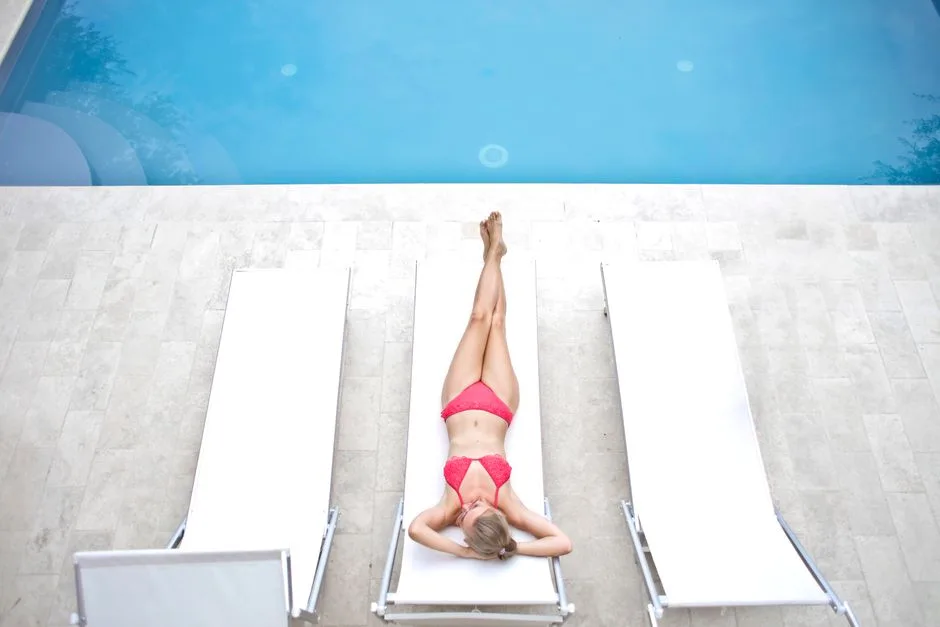
In-Pool Tanning Ledge Loungers
In-pool loungers — low-profile, fully submersible chairs designed to sit on a tanning ledge (baja shelf) in 15-30cm / 6-12 inches of water — let you sunbathe while staying partially submerged and cool. These are typically made from rotomolded polyethylene or marine-grade resin with UV inhibitors and built-in drain holes so water does not pool in the seat after you get up. The best designs have a contoured ergonomic shape, a molded-in beverage holder, and enough weight to stay stable on the ledge without drifting into deeper water. Budget $100-$350 per lounger. You will need roughly 1.5m × 0.9m / 5ft × 3ft of tanning ledge space per lounger plus standing circulation room; most ledges comfortably fit 2-3 loungers. These are among the most photographed pool accessories on social media, and they dramatically increase the amount of time people actually spend in the water rather than beside it.
Photo by Adrienn on Pexels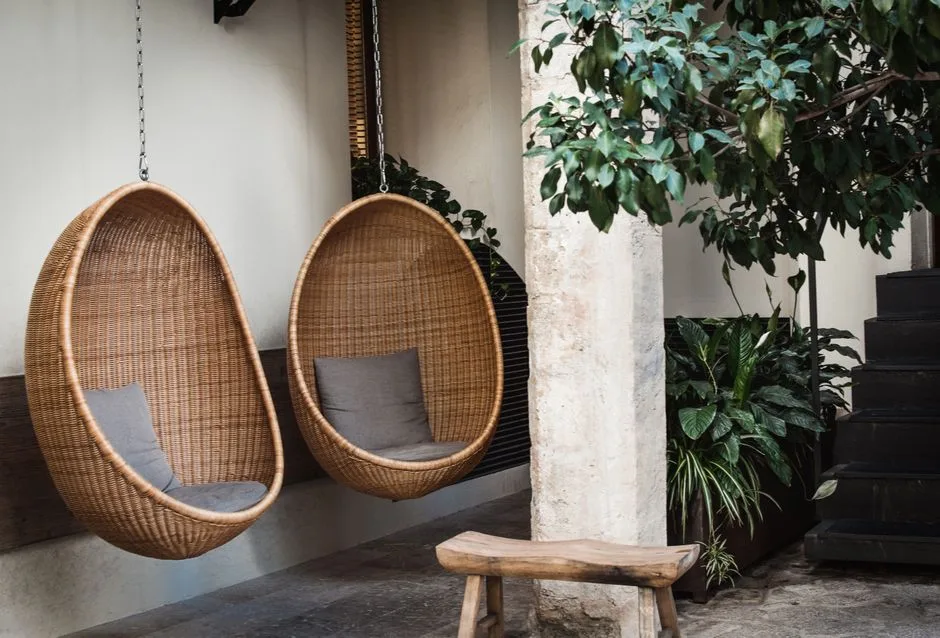
Hanging Egg / Basket Chair
A hanging egg chair or basket chair — a large woven cocoon suspended from a curved stand or overhead pergola beam — is as much a sculptural design statement as a seat. The enclosed, gently swaying form creates a sense of privacy and personal retreat that a standard lounge chair cannot match. Outdoor-rated synthetic rattan, PE wicker, or powder-coated steel frame versions with weatherproof cushions cost $300-$1,200. Stand-alone versions with an integrated curved base frame can be positioned anywhere on the deck; suspended versions that hang from a pergola beam, sturdy tree branch, or dedicated steel post require engineering the anchor point for a 150-200kg / 330-440lb dynamic load (the additional force generated by someone settling into a swinging chair). Position an egg chair where it overlooks the pool but has partial shade — the enclosed, cocoon shape can get surprisingly warm in full midday sun. Add a small side table within arm’s reach for the complete relaxation station.
Photo by Claudia Schmalz on Pexels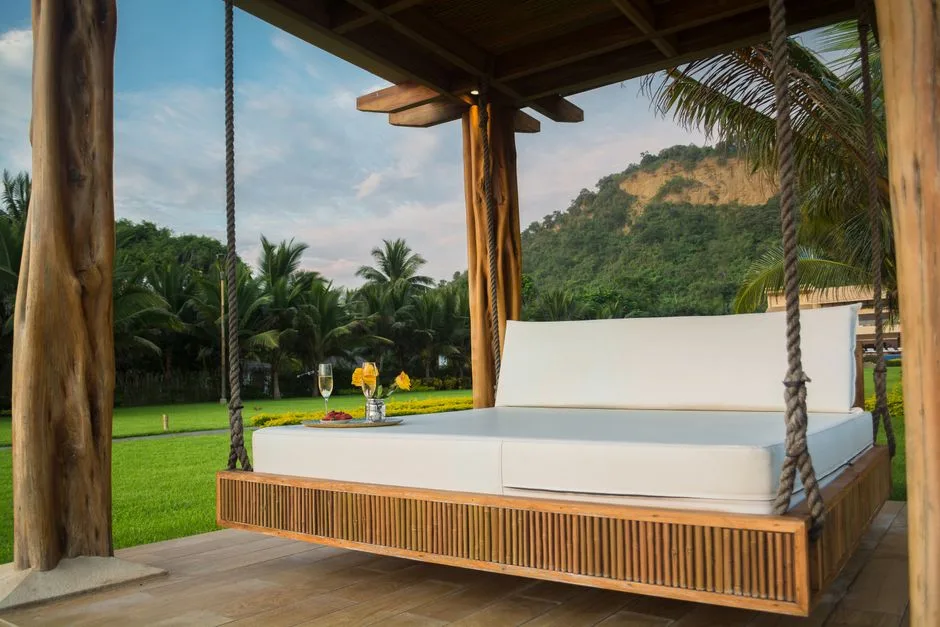
Double Daybed / Cabana Bed
An oversized outdoor daybed — essentially a full-size mattress platform with a canopy, privacy curtains, and plush cushions — turns a corner of the pool deck into a resort-worthy lounging destination that can comfortably seat 2-3 people. These are large furniture pieces (typically 2.0m × 2.0m / 6.5ft × 6.5ft or larger) that dominate the visual space they occupy, so they work best on generous pool decks where they will not crowd primary circulation paths. Quality all-weather daybeds with Sunbrella fabric cushions, a fully welded powder-coated aluminum frame, and a retractable canopy cost $1,500-$5,000. The canopy serves dual purpose: shade for the occupants and critical UV protection for the cushions — UV exposure is the #1 killer of outdoor fabric, and a canopy left deployed during peak sun hours can double cushion lifespan. Look for models with slipcover-style cushion covers that zip off completely and are machine-washable — sunscreen, sweat, and occasional drink spills are facts of poolside life.
Photo by Maria Salazar on Pexels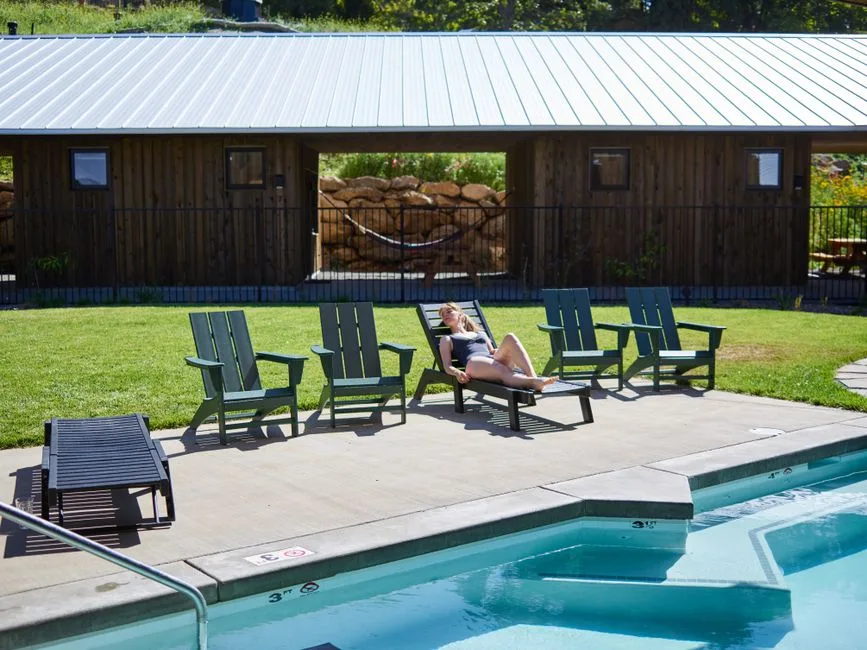
Zero-Gravity Recliner
Zero-gravity recliners — lightweight, foldable chairs that distribute body weight evenly and elevate the legs slightly above the heart — originated in therapeutic and medical contexts but have become a popular pool-deck staple because they are genuinely more comfortable than a fixed-angle chaise for extended lounging. The ergonomic position reduces spinal compression and improves circulation, which you appreciate after several hours by the pool. Poolside models feature quick-dry Textilene mesh fabric, UV-resistant aluminum or reinforced resin frames, and a smooth locking mechanism that holds any recline angle securely. At $80-$250 each, they are among the most affordable quality pool loungers available. They fold flat for compact storage and weigh only 8-15kg / 18-33lbs — a practical advantage when you need to clear the deck for a party or store them indoors for winter. The mesh fabric also means they dry almost instantly after rain or splash.
Photo by ArtHouse Studio on Pexels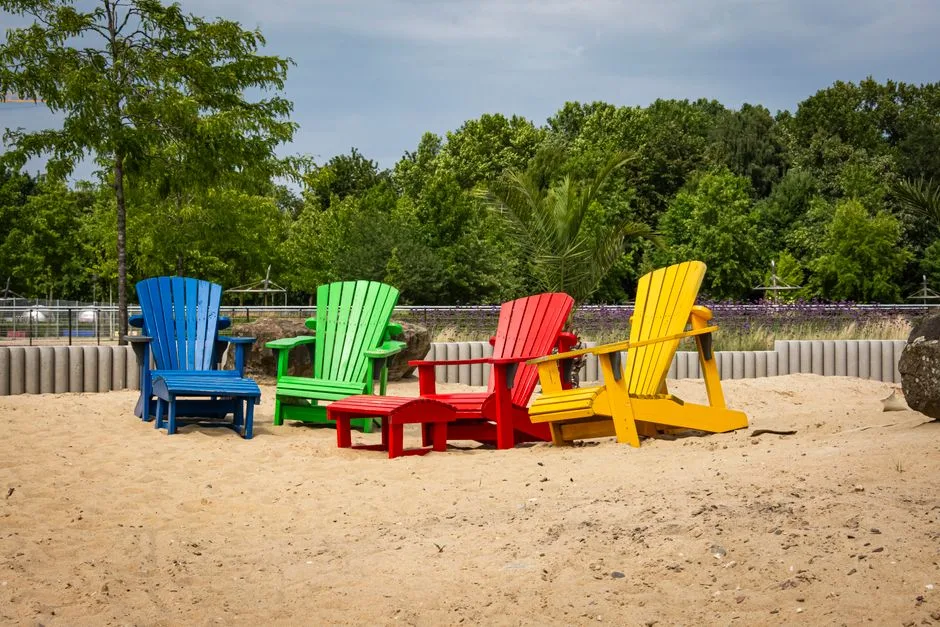
Adirondack / Muskoka Chair
The Adirondack chair — with its unmistakable wide flat armrests, tall slatted back, and low, reclined seat angle — brings a relaxed, cottage-and-lakeside character to the pool deck that sleeker modern furniture cannot replicate. The wide armrests are practically designed to hold a drink and a paperback, and the reclined angle is naturally comfortable for hours without adjustment or repositioning. Traditional wood versions (cedar, pine, or teak) cost $150-$500 and need annual oiling or sealing to maintain their color and weather resistance. Recycled poly-lumber / HDPE versions ($200-$600) look like painted wood but are completely weatherproof, never need painting or sealing, and are made from recycled milk jugs and plastic containers — the more sustainable choice. Poly-lumber is genuinely the better material for poolside use: chlorine splashes and sunscreen stains wipe off without a trace, and there is zero risk of splinters on bare, wet skin.
Photo by Bas Linders on Pexels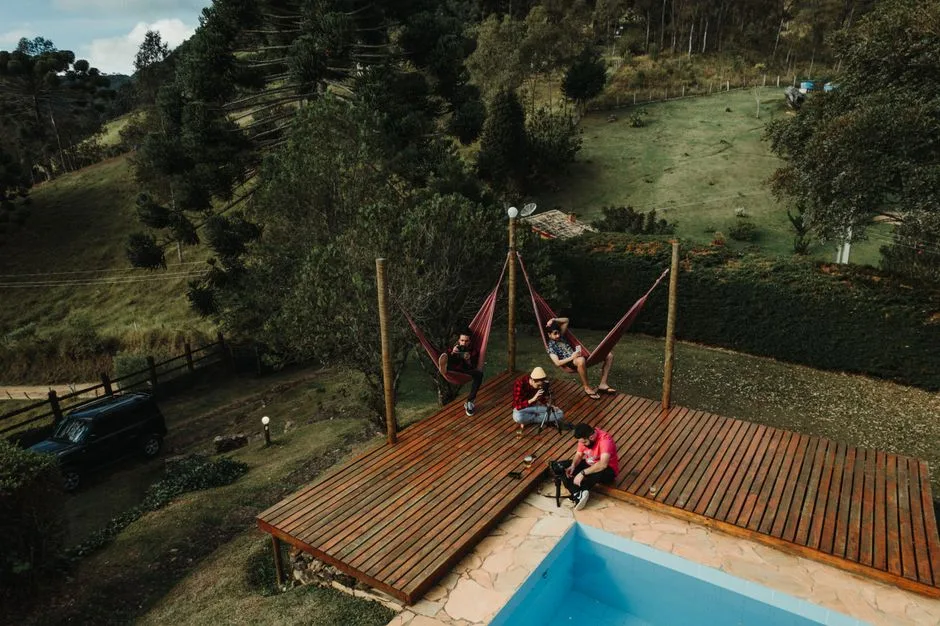
Hanging Hammock Chair
A hanging hammock chair — a soft fabric or macramé sling suspended from a single overhead point — offers casual, swing-gently-in-the-breeze comfort that rigid chairs cannot match. Brazilian-style cotton hammock chairs ($60-$150) feel luxuriously soft and breathable against bare skin but must be brought indoors when rain threatens; polyester rope or solution-dyed Sunbrella fabric versions ($100-$300) are fully weatherproof and can stay outside all season. The hammock chair needs a sturdy overhead anchor rated for at least 135kg / 300lbs static load — a dedicated 10cm / 4-inch diameter hardwood beam across two pergola posts, a properly installed stainless steel ceiling eye-bolt into a structural joist, or the included curved steel stand that many models come with. Hang it in a shaded corner with a view of the pool, add a small side table for a drink and book, and it becomes the most fought-over seat in the yard.
Photo by Matheus Bertelli on Pexels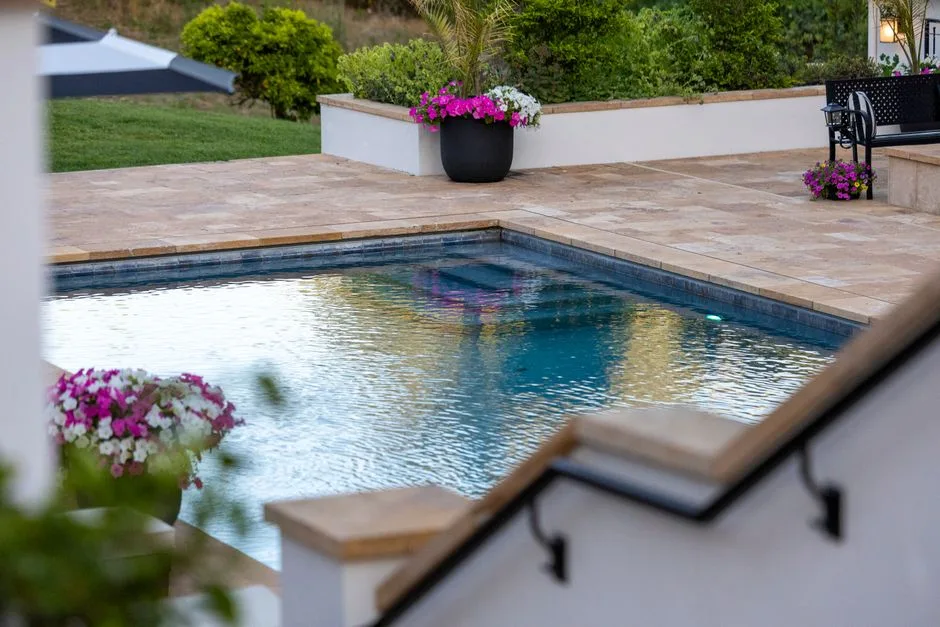
Built-In Bench / Ledge Seating
Built-in bench seating — a continuous masonry or concrete bench integrated into a raised bond beam, retaining wall, or the pool coping itself — provides permanent, zero-maintenance seating that never needs to be moved, stored, or covered for weather. The bench can be designed with a cantilevered concrete seat, a stone or porcelain tile cap, or an ipe/teak hardwood top that provides warmth against bare skin. Built-in seating is planned and formed during pool construction: the bench structure is poured and reinforced with the pool shell and finished with the coping and tile. Budget $300-$800 per linear meter as part of a new build. The bench often doubles as a step transition between deck levels or a visual boundary between the pool deck and garden. It can incorporate LED step lights in the riser face for both safety and evening ambience. Add custom outdoor seat cushions — 3-5cm / 1-2 inch thick, quick-dry reticulated foam, Sunbrella fabric — for comfort; they are thin enough to store easily in a deck box when not in use.
Photo by Stephen Leonardi on Pexels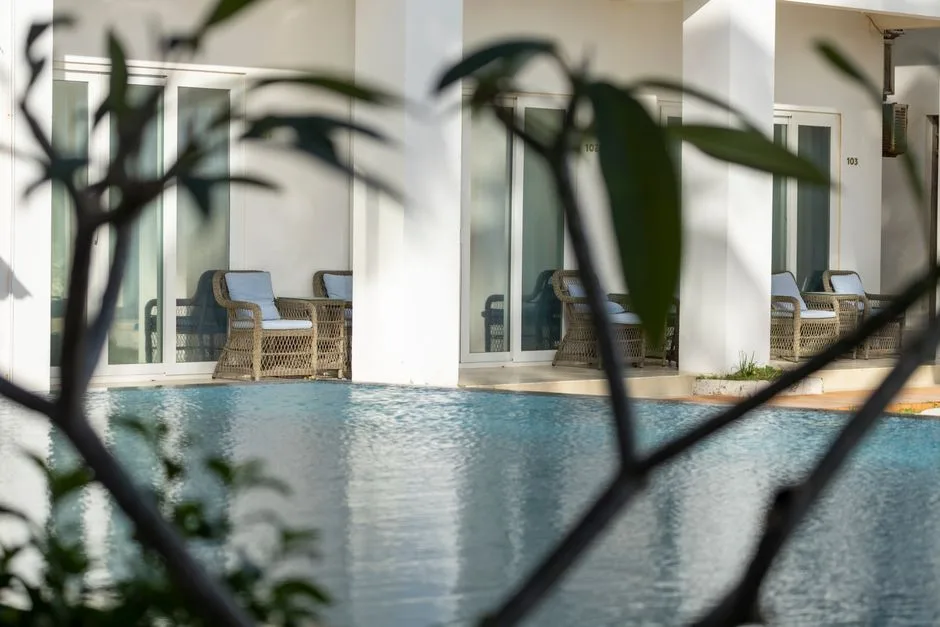
Rattan & Wicker Lounge Set
A coordinated rattan or wicker lounge set — typically a 2-seater sofa, two armchairs, and a coffee table — creates a defined outdoor living room zone on the pool deck with coherent, designed visual language. Important material distinction: natural rattan is absolutely not suitable for poolside use (it molds, degrades, and unravels within one season of humidity and splash exposure). All-weather synthetic PE (polyethylene) rattan — woven over a fully welded powder-coated aluminum frame — replicates the look and texture of natural rattan with complete weatherproof performance. A quality 4-5 piece synthetic rattan lounge set with solution-dyed acrylic cushions costs $800-$2,500. Look for sets where every cushion cover is removable and machine-washable, the frame is fully welded aluminum (not bolted tubular steel, which rusts from the inside at every joint), and the feet have adjustable levelers to compensate for the slight slope most pool decks have for drainage. Position the lounge set facing the pool but far enough back that enthusiastic cannonballs will not soak the cushions.
Photo by Serg Alesenko on PexelsDining & Conversation Sets: Gather, Eat & Socialize by the Water
Full Outdoor Dining Set (6-8 Seater)
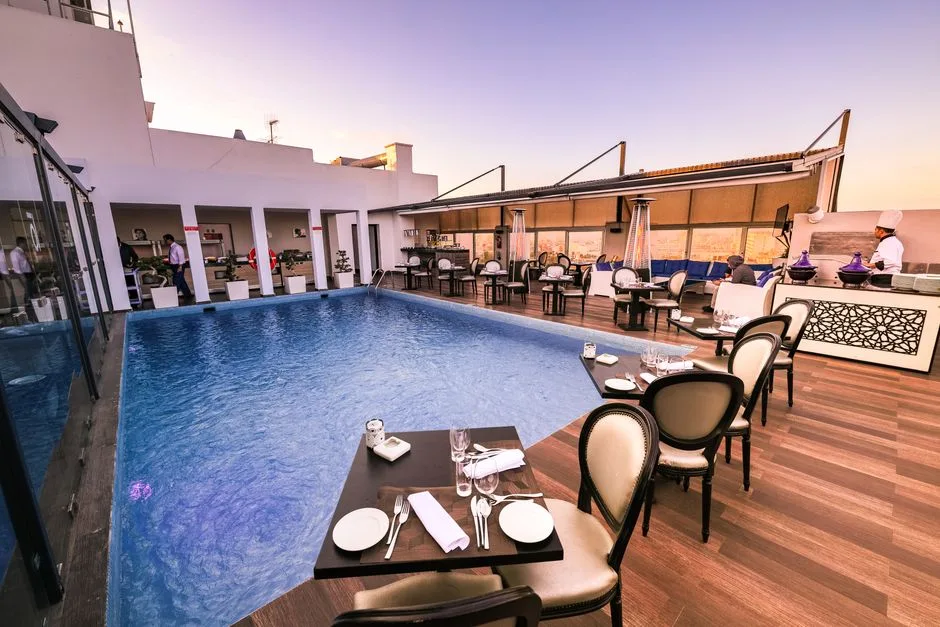
A full outdoor dining set — a large table with 6-8 chairs — positioned near the pool creates a natural gathering point for poolside meals, barbecue dinners, and evening entertaining. The table should be at least 1.8m × 1.0m / 6ft × 3.3ft to comfortably seat 6 adults with plates and serving dishes; extendable tables that expand to 2.4-3.0m / 8-10ft offer welcome flexibility for larger gatherings. Materials: powder-coated aluminum frame with a tempered glass, porcelain slab, or aluminum slat tabletop is the gold standard for poolside durability ($800-$3,000 for a complete set). Teak dining sets ($2,000-$6,000) are heirloom-quality furniture that lasts decades but requires annual cleaning and oiling to maintain the golden-brown color (un-oiled teak weathers to a silvery grey that many people prefer). Position the dining set at least 2.5m / 8ft from the pool edge — close enough to feel connected to the water, far enough that splashes and drips do not land on dinner plates.
Photo by Zak Chapman on Pexels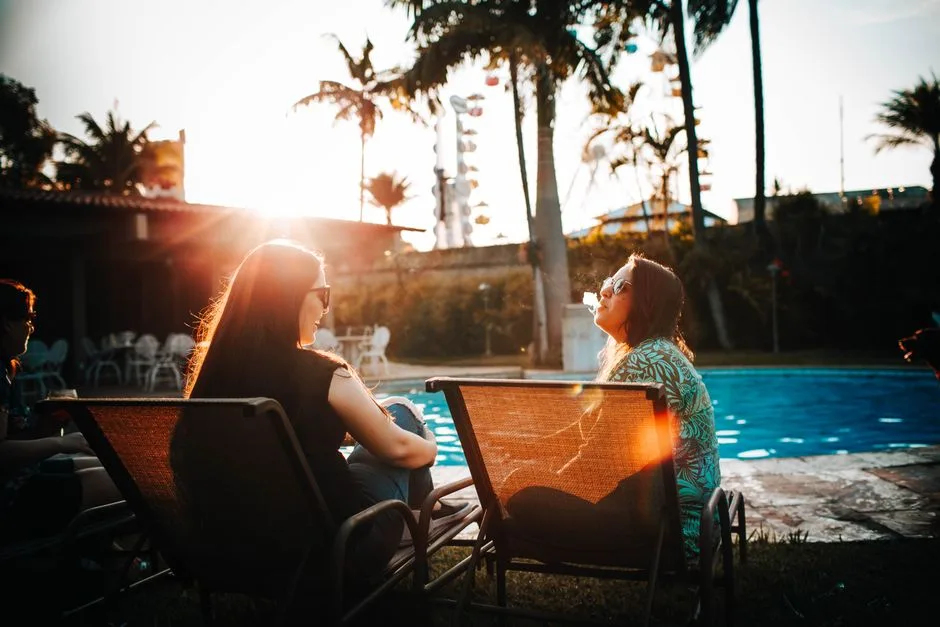
Deep Seating Conversation Set
A deep seating conversation set — oversized chairs and a sofa with thick, sink-in cushions arranged around a low central table — is designed for lounging and socializing rather than dining, and it is the furniture grouping that gets the most hours of use on most pool decks. The seat depth is the critical dimension: look for at least 60cm / 24 inches of seat depth (measured front edge to back cushion) so adults can sit back comfortably with full leg support. Quality sets use quick-dry reticulated foam cushions (open-cell foam that water flows through rather than soaking into) wrapped in solution-dyed acrylic fabric like Sunbrella or Outdura ($1,200-$4,000 for a 4-6 piece configuration). Arrange the pieces in a U-shape or L-shape facing the pool to define a conversation zone that feels intentionally designed. A central fire table — instead of a standard coffee table — extends the set’s usability into cool evenings and adds the hypnotic draw of live flame, making it one of the best multi-function upgrades for pool deck furniture at an incremental cost of $1,000-$3,000 over a standard table.
Photo by Helena Lopes on Pexels
Bar-Height Table & Stools
A bar-height table (also called a pub table or counter-height table) with 3-4 stools — the tabletop sitting at 100-110cm / 40-43 inches — creates a casual, standing-or-perching social zone that works especially well near a poolside bar, outdoor kitchen, or barbecue station. The elevated height means people can lean on the table with a drink and snacks without committing to a full sit-down meal, making it the most natural gathering spot during pool parties and casual afternoons. Bar-height sets with a sturdy, wind-resistant base (weight and stability are especially important at this height), a fully weatherproof tabletop (porcelain, powder-coated aluminum, or sealed teak), and 360-degree swivel stools with integrated footrests cost $600-$1,800. Swivel capability matters more than you would think — the ability to turn and face the pool, the conversation, or the sunset without dragging the stool across the deck is a surprisingly meaningful daily quality-of-life feature that standard fixed stools lack.
Photo by Ketut Subiyanto on Pexels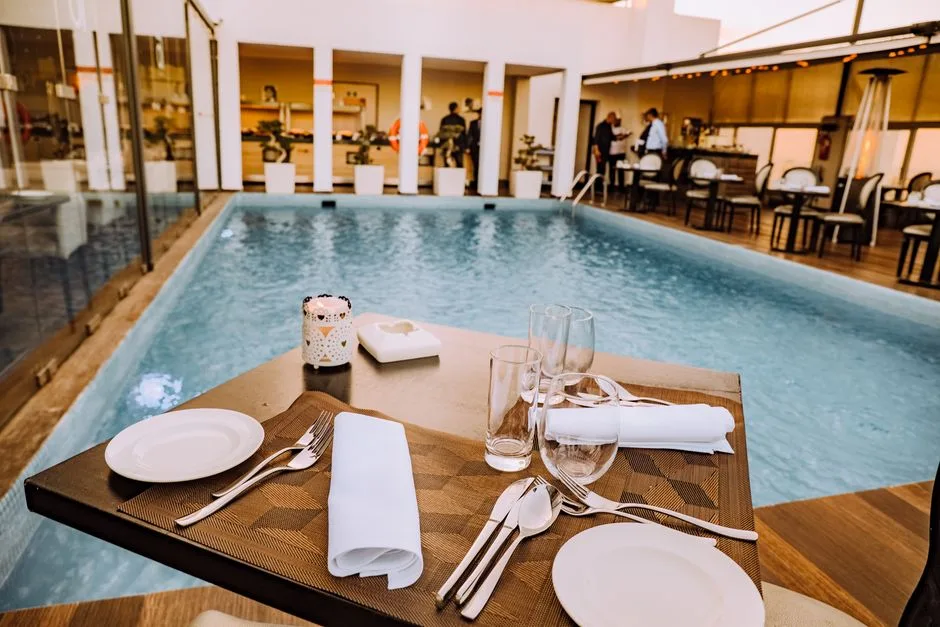
Bistro Set (2-Seater)
A small bistro set — a compact round or square table (60-75cm / 24-30 inch diameter) with two chairs — is the ideal scaled-down solution for small pool decks, apartment balconies, townhouse courtyards, and intimate corner seating where a full dining set would overwhelm the space. The compact footprint (roughly 1.5m × 1.5m / 5ft × 5ft total including chairs) fits on surprisingly small paved areas. Classic French-style cast aluminum or wrought-iron bistro sets with ornate detailing cost $200-$600; modern minimalist versions in powder-coated aluminum or molded polypropylene cost $150-$400. For poolside use, avoid raw iron (rusts immediately from splash and humidity) and unsealed softwood (stains from wet swimsuits and absorbs pool chemicals). A bistro set is also the perfect extra-seating backup — keep one tucked near the pool equipment area or a side patio, and pull it out when you need overflow seating for a gathering without committing permanent deck space to chairs that sit empty 90% of the time.
Photo by Zak Chapman on Pexels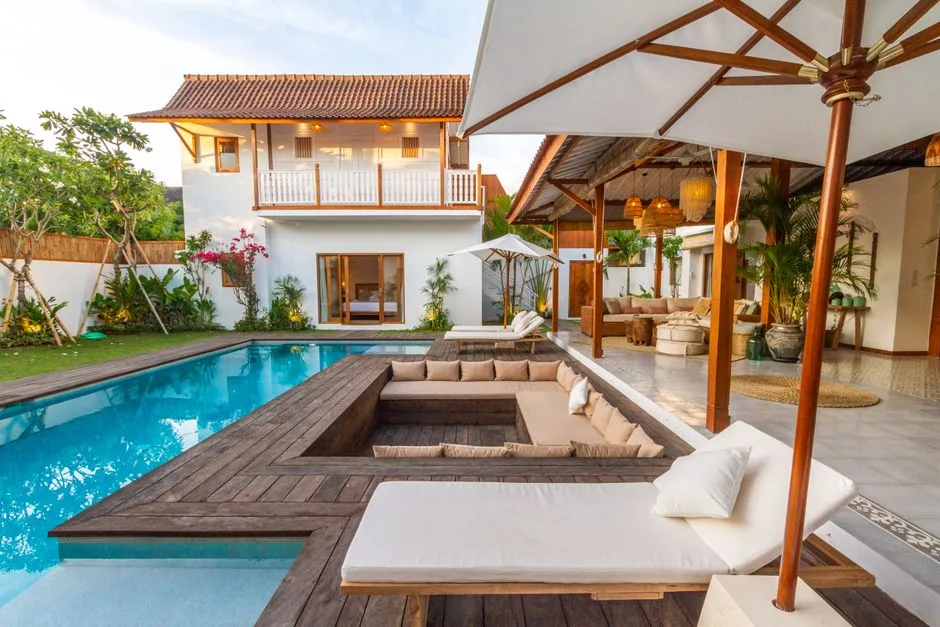
Modular Sectional Sofa
A modular outdoor sectional — individual seat, corner, and ottoman pieces that can be rearranged into different configurations on demand — is the most flexible large-scale seating solution for pool decks. Unlike a fixed sofa, a modular sectional can be reconfigured for different occasions: L-shape for everyday lounging, U-shape for parties and group conversation, separated into individual chairs for large gatherings, or pushed against the house wall for winter storage. Each module typically measures 80-100cm / 31-39 inches square. Quality modular systems use fully welded aluminum sub-frames, quick-dry reticulated foam cushions, and UV-stabilized synthetic rattan or powder-coated aluminum cladding ($2,000-$6,000 for a 5-7 piece configuration). The key buying consideration: inspect the connection clips or brackets between modules — they must be solid stainless steel or heavy-gauge anodized aluminum. Cheap plastic module connectors fail within 2-3 seasons, and unconnected modules drift apart on any surface that is not perfectly level, creating an annoying daily maintenance chore of pushing the sofa back together.
Photo by Thibault Om on Pexels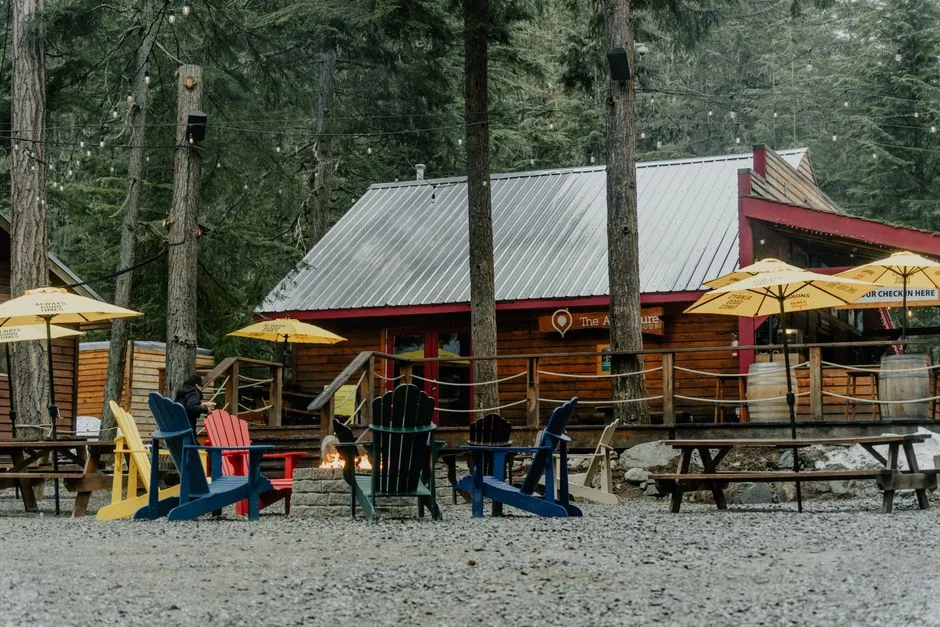
Fire Pit Dining Table Combo
A dining table with a built-in gas fire pit running down the center — essentially a long, narrow fire trough flanked by dining surfaces on both sides — combines dining and fire feature into one multi-functional centerpiece that anchors the pool deck. The central flame provides warmth during evening meals, creates ambient flickering light, and serves as a natural conversation magnet. These tables are typically 2.0-3.0m / 6.5-10ft long with a 20-30cm / 8-12 inch wide central burner channel filled with reflective fire glass. The dining surfaces on each side of the flame channel are 30-40cm / 12-16 inches wide — enough for a dinner plate and drink, but the table is primarily designed for shared platters and family-style serving rather than individual formal place settings. Installed cost (these are typically built-in or semi-custom masonry and metal constructions, not off-the-shelf furniture): $3,000-$10,000 including the gas plumbing, stainless steel burner, fire media, and stone, porcelain, or aluminum table surround. Seating is on one or both long sides only — the table ends house the gas connections and electronic ignition system.
Photo by Red Nguyen on Pexels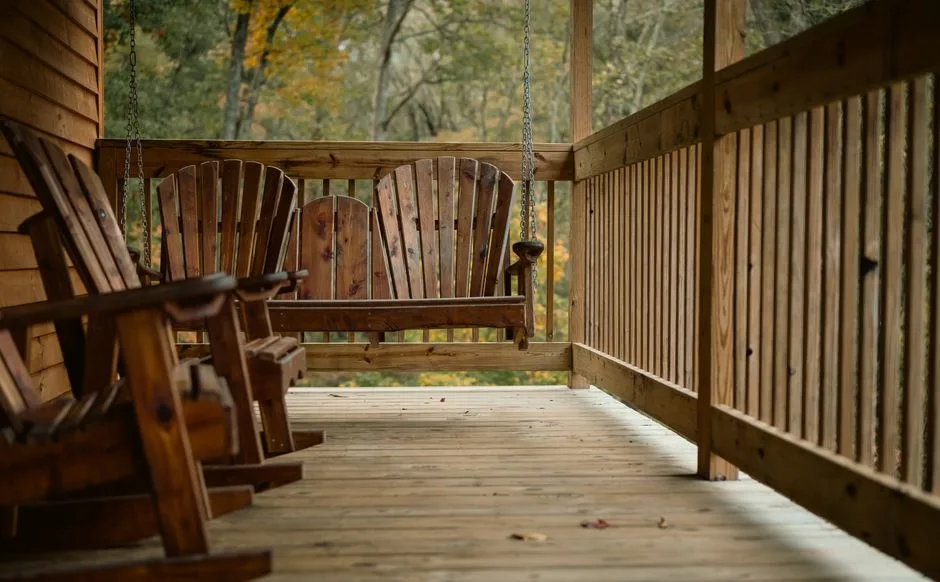
Swinging / Hanging Chair Conversation Group
A matching pair or trio of hanging/swinging chairs — each on their own curved stand — arranged around a central low table creates a playful, resort-inspired conversation zone that feels distinctly different from standard static seating. Two or three individual hanging chairs grouped around a central low table or fire feature encourage people to gently sway while talking — the subtle motion is surprisingly conducive to relaxed, unhurried conversation. Budget $800-$2,500 for a setup with 2-3 quality all-weather hanging chairs and a coordinating low table between them. The individual stands mean each chair can be repositioned independently, and the grouping can be expanded or contracted over time as needs change. Position this grouping in a semi-shaded area — the canopy or cocoon shape of most hanging chairs already provides some overhead enclosure, and full midday sun can make the seat interior uncomfortably warm without shade. A small side table or plant stand at elbow height adjacent to each chair gives every person a dedicated surface for their drink and phone without needing to reach across to the central table.
Photo by Chris F on Pexels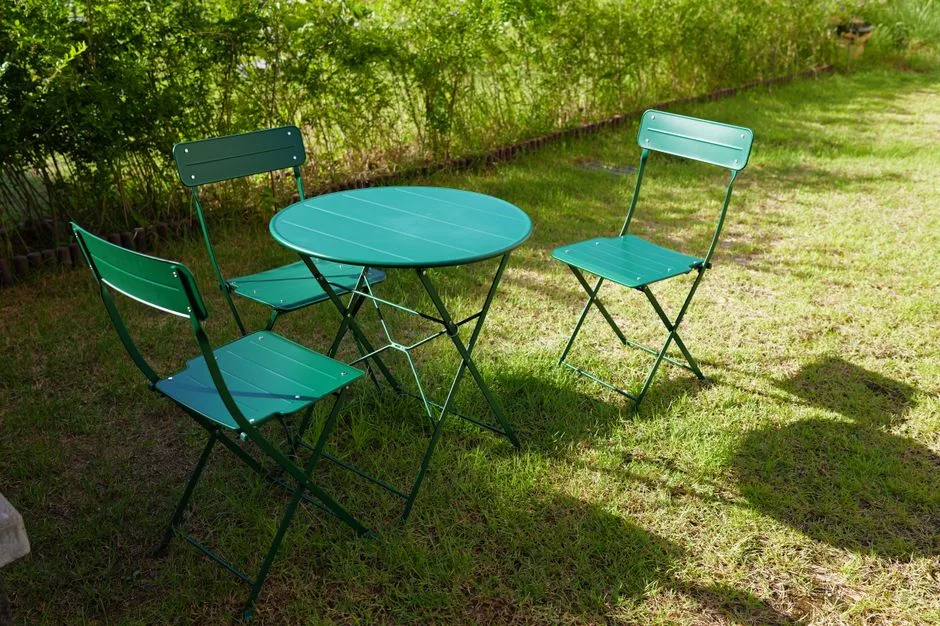
Folding / Stackable Furniture for Small Decks
Folding or stackable furniture — lightweight chairs and tables that collapse, fold flat, or stack neatly when not in use — is the practical answer for genuinely small pool decks, narrow side yards, and compact courtyard pools where permanent furniture would block essential circulation paths. Folding teak or eucalyptus bistro sets ($150-$400) fold flat against a wall or slide into a slim deck box; injection-molded polypropylene stackable chairs with a matching small table ($100-$300) stack 4-6 high in a corner, consuming minimal floor space. The trade-off is aesthetic: folding and stackable furniture rarely looks as refined or substantial as fixed-frame pieces because the folding mechanisms, hinges, and stacking lugs add unavoidable visual complexity. But for a 15m² / 160ft² pool deck where every square meter must earn its place, the ability to clear the entire deck surface in under 2 minutes is worth the aesthetic compromise. Look for sets specifically labeled marine grade or coastal — these use 316 stainless steel hardware throughout that will not rust from continuous pool splash and humidity exposure.
Photo by Je Hwan Lee on PexelsUmbrellas, Shade & Cushions: Comfort That Lasts All Day
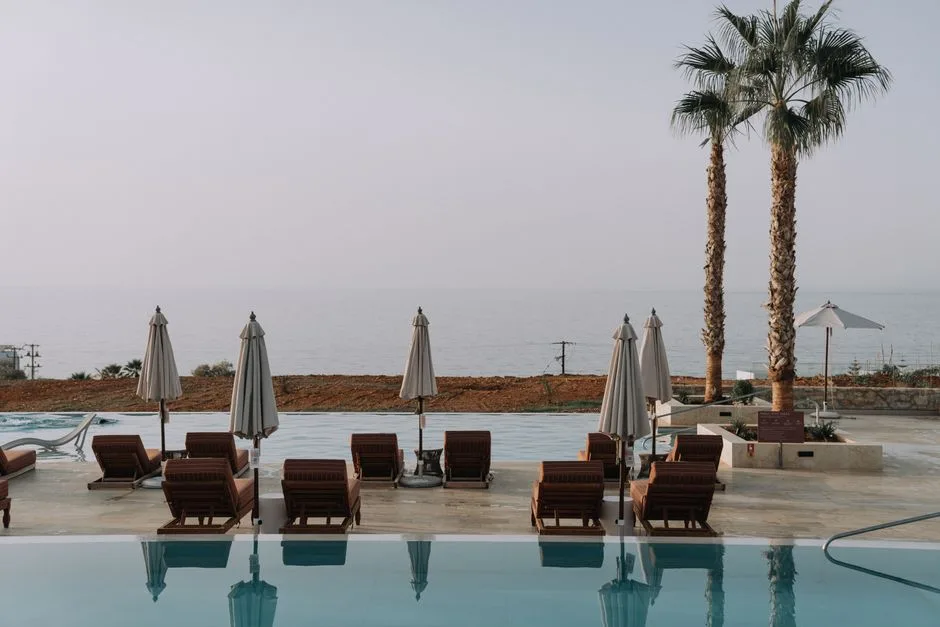
Cantilever / Offset Umbrella
A cantilever umbrella (also called an offset umbrella) — where the support pole is positioned to one side and the canopy is suspended from an articulated arm overhead — provides generous shade without a center pole obstructing the space underneath. This is the ideal umbrella choice for poolside lounge chairs and conversation sets because the entire shaded area beneath the canopy is open, unobstructed, and flexible for arranging furniture. Cantilever umbrellas are larger and substantially heavier than center-pole models: canopy span is typically 2.7-4.0m / 9-13ft across, and the base must hold 50-100kg / 110-220lbs of counterweight — usually achieved with a cross-base filled with concrete pavers or a heavy-duty water-filled resin base. Quality cantilever umbrellas with solution-dyed Sunbrella canopy, 360-degree rotation, and infinite tilt adjustment cost $400-$1,500. Wind is the arch-enemy of cantilever umbrellas: always close the canopy when wind exceeds 25km/h / 15mph. A gust catching an open 3.5m canopy exerts enormous leverage on the pole — enough to lever the entire umbrella over, and a 50kg steel-framed umbrella falling toward a glass pool fence or into the pool itself is a very expensive lesson in wind awareness.
Photo by alleksana on Pexels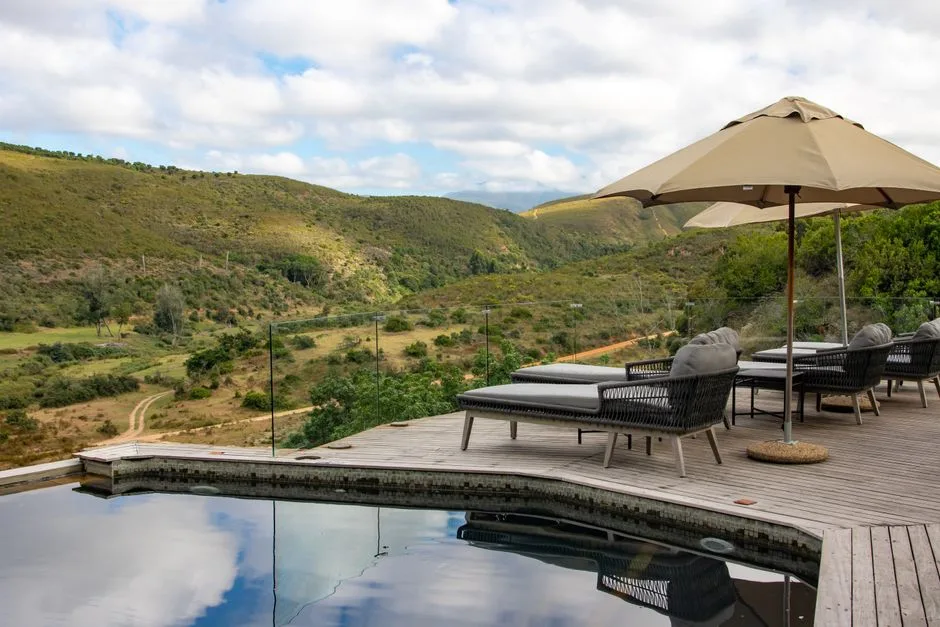
Market Umbrella (Center-Pole)
The classic market umbrella — a straight center pole with a circular or octagonal canopy, operated by a pulley, crank, or push-up mechanism — remains the most affordable, portable, and widely used pool deck shade solution. Canopy diameters of 2.1-2.7m / 7-9ft comfortably cover a standard 4-person dining table or 2 lounge chairs. Powder-coated aluminum poles ($80-$300 for a quality umbrella) resist rust far better than wood poles, which eventually rot at the base where they meet the wet deck. The canopy fabric quality matters enormously: entry-level polyester canopies ($50-$120 umbrella) fade visibly within 1-2 seasons and tend to tear at the rib tips where fabric is under constant tension; solution-dyed acrylic (Sunbrella, Outdura, or Tempotest) canopies ($200-$600 umbrella) maintain vibrant color for 5-8 years and are inherently mildew-resistant due to the solution-dyeing process that impregnates color through the entire fiber. An umbrella sleeve cast into the pool deck or a dining table center hole is the cleanest, most secure installation; a freestanding base filled with sand or water ($30-$100) provides portability but occupies legroom under the table. Use the tilt feature aggressively — tilt the canopy toward the afternoon sun (typically west-facing in most backyards) for maximum shade effectiveness throughout the day.
Photo by Magda Ehlers on Pexels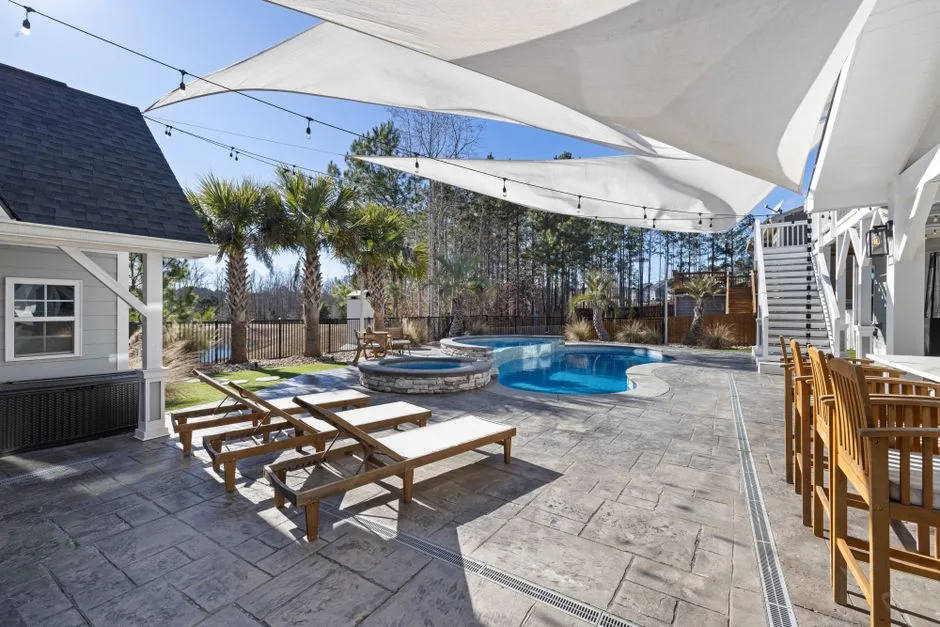
Sail Shade / Tensioned Shade Canopy
A sail shade — a tensioned fabric panel (usually triangular, square, or rectangular) attached at its corners to posts, walls, or sturdy trees with stainless steel turnbuckles — provides a modern, architectural shade solution that appears to float overhead with no visible frame. The stretched, angular forms read as intentional design elements rather than functional afterthoughts, and the absence of a center pole or visible frame preserves clean sightlines across the pool. HDPE (high-density polyethylene) shade cloth blocks 90-95% of UV rays while allowing some diffused light, air, and rain to pass through — unlike a solid umbrella canopy, a shade sail does not trap hot air underneath. A single triangular sail of 3.6m × 3.6m × 3.6m / 12ft × 12ft × 12ft costs $50-$150 and shades roughly 10m² / 108ft²; multiple overlapping sails at slightly different heights create a dynamic, sculptural shade composition that is far more interesting than a single large canopy. The attachment points must be structurally robust — each corner exerts 50-150kg / 110-330lbs of continuous tension on its anchor. Use stainless steel eye bolts into masonry, sturdy 10×10cm / 4×4 inch hardwood or galvanized steel posts set in concrete footings, or dedicated 8-10cm / 3-4 inch diameter galvanized steel poles. Take sails down in winter or during storm warnings — snow load and gale-force wind will destroy a sail left up year-round in temperate climates.
Photo by Curtis Adams on Pexels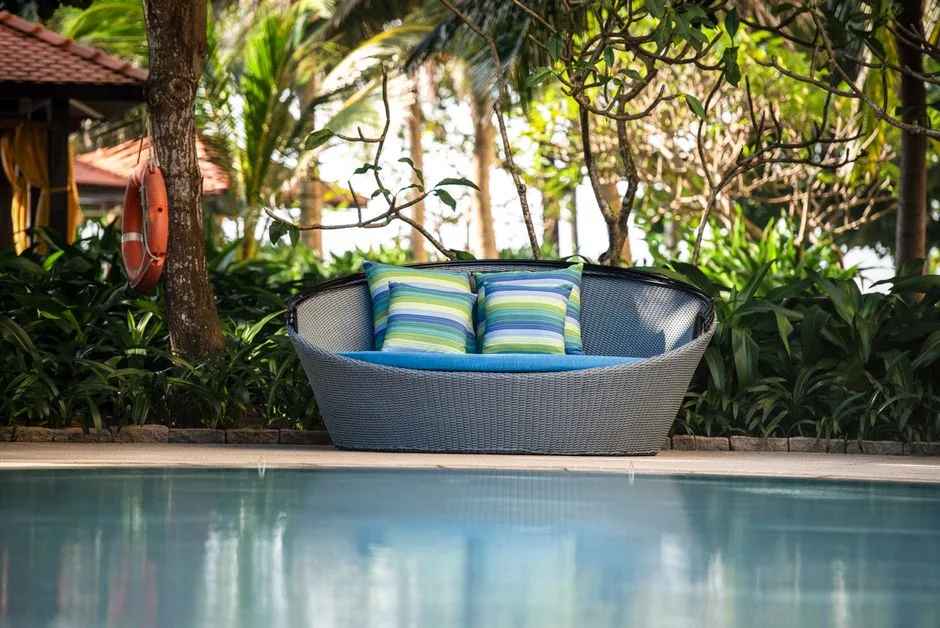
Outdoor Throw Cushions & Pillows
Outdoor throw cushions and pillows — small accent pillows in weather-resistant fabric — are the cheapest and highest-impact way to inject color, pattern, and personality into pool deck furniture. A neutral-colored sofa or chaise lounge gains instant character and visual warmth from 3-5 well-chosen pillows in complementary colors and patterns. The non-negotiable specification: the pillow insert must be 100% recycled poly-fill fiber or quick-dry reticulated foam (never standard upholstery foam, which holds water like a sponge and grows black mold within weeks of poolside use), and the cover must be solution-dyed acrylic or UV-stabilized polyester with a full-length zipper closure for removal and machine washing. Quality outdoor pillows cost $25-$75 each. Design tip: choose 2-3 colors from a single cohesive palette (e.g., deep navy + sky blue + crisp white for a coastal look, or terracotta + sand + olive green for Mediterranean warmth) and mix solid, striped, and geometric patterns within those colors. Store pillows in a deck box or bring them indoors when the pool is not in active use — even the best weatherproof pillows last 2-3× longer when not left exposed to direct sun, rain, and pool chemicals 365 days a year.
Photo by Tran Nam Trung on Pexels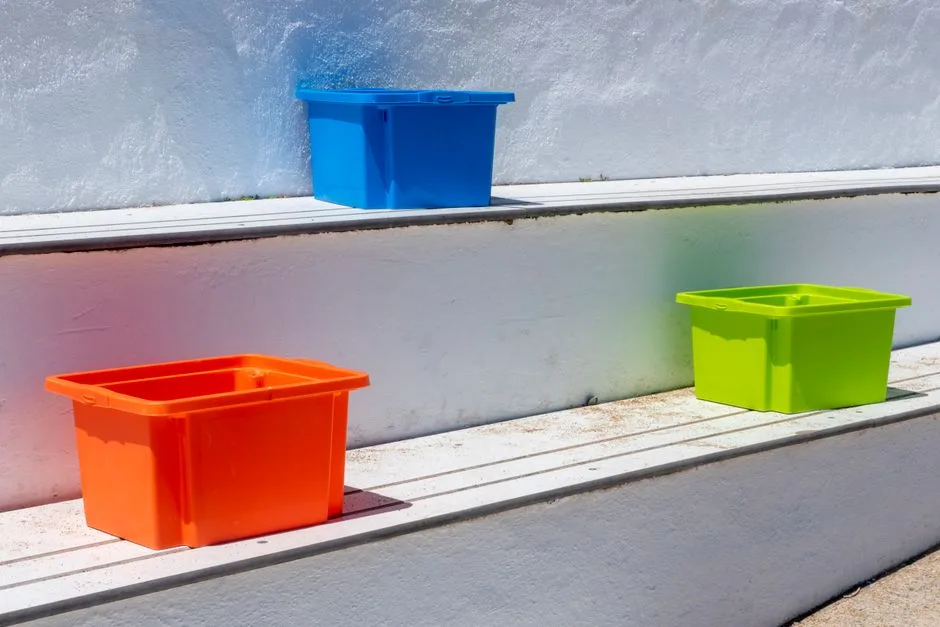
Waterproof Cushion Storage Box
Dedicated waterproof cushion storage — a large deck box or storage bench with a genuinely weather-sealed lid — solves the single biggest maintenance headache of outdoor cushions: UV and moisture degradation when the furniture is not in active use. Even the most expensive outdoor fabrics degrade significantly faster when exposed to direct sun and rain 24/7 versus being stored when not needed. A deck box sized to hold all your lounge and seating cushions (look for 400-600L / 14-21ft³ internal capacity for a full lounge set’s worth of cushions) costs $150-$500 in molded resin/polypropylene or $400-$1,200 in powder-coated aluminum or teak. The critical quality feature is a genuine weather seal — a one-piece molded lid lip with an overlapping drip edge, or a full-perimeter rubber gasket, that keeps driving rain out even in storms. Drill 2-3 small ventilation holes (8-10mm / 3/8 inch) near the top of each side to prevent condensation buildup inside the sealed box — the weather seal works both ways, keeping water out but also trapping moisture evaporating from cushions that were put away slightly damp. Choose a box design that doubles as bench seating or a side table surface to get dual use from the deck footprint it occupies.
Photo by Jan van der Wolf on Pexels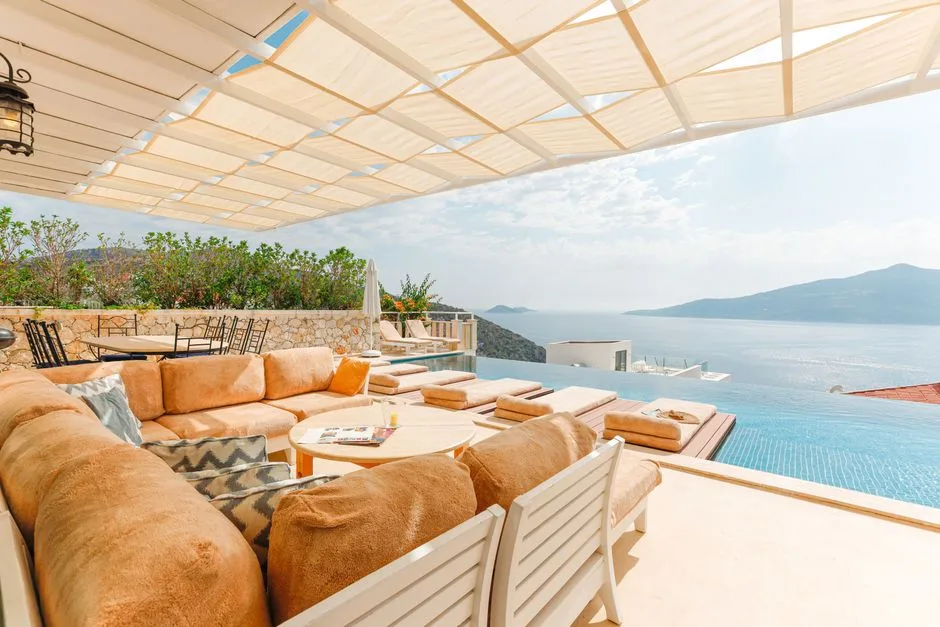
Retractable Pergola Canopy System
A retractable canopy system installed on an existing pergola structure — motorized or manual fabric panels that glide along tracks mounted to the pergola beams — provides adjustable shade that can be opened or closed in seconds as the sun moves across the sky or clouds roll through. Unlike a fixed solid roof, a retractable canopy preserves the airy, open-sky feeling of a pergola while adding shade-on-demand functionality that makes the space usable across a much wider range of conditions. Motorized systems with remote control, an automatic wind sensor (auto-retracts when wind speed exceeds a set threshold), and Sunbrella canopy fabric cost $2,500-$6,000 for a typical 3m × 4m / 10ft × 13ft pergola; manual draw-wire systems cost $800-$2,000 for the same size. The canopy fabric spans between the pergola beams, so the system works best on pergolas with beams spaced no more than 1.2-1.5m / 4-5ft apart. This is a retrofit-friendly upgrade — the track system mounts to the underside or inside face of existing pergola beams without structural modification. Combine a retractable fabric canopy with a louvered aluminum roof pergola for the ultimate in granular shade and ventilation control.
Photo by Ahmet ÇÖTÜR on Pexels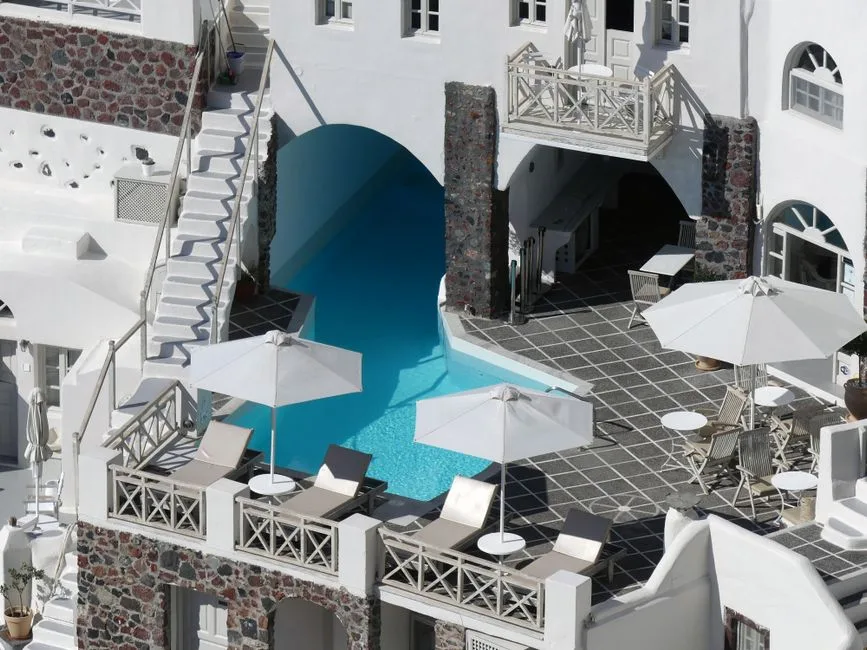
Half-Umbrella for Against-Wall Placement
A half-umbrella (or wall-mounted offset umbrella) — where the canopy is a semi-circle or rectangle designed to mount flush against a wall, fence, or the side of the house — provides targeted shade in tight spaces where a full circular umbrella would be impractical or would block a walkway. The pole mounts to a heavy-duty wall bracket (included with most models) at roughly 2.1-2.4m / 7-8ft height, and the half-canopy extends outward 1.5-2.1m / 5-7ft from the wall. These are particularly useful for narrow side yards with a strip of pool deck along the house wall, for shading a compact bistro set pushed against a boundary fence, or for mounting on the pool house or cabana wall to shade an adjacent lounging area without consuming deck space with a freestanding base. Quality half-umbrellas with crank operation, tilt function, and solution-dyed canopy cost $150-$400. The wall bracket must be anchored into wall studs or solid masonry with appropriate heavy-duty fasteners — never use drywall anchors or lightweight screws, as the cantilevered load from even a modest half-canopy in a breeze is substantial and a failed anchor means the entire umbrella comes down.
Photo by Atypeek Dgn on PexelsPool Decor & Accessories: Personality, Color & Finishing Touches
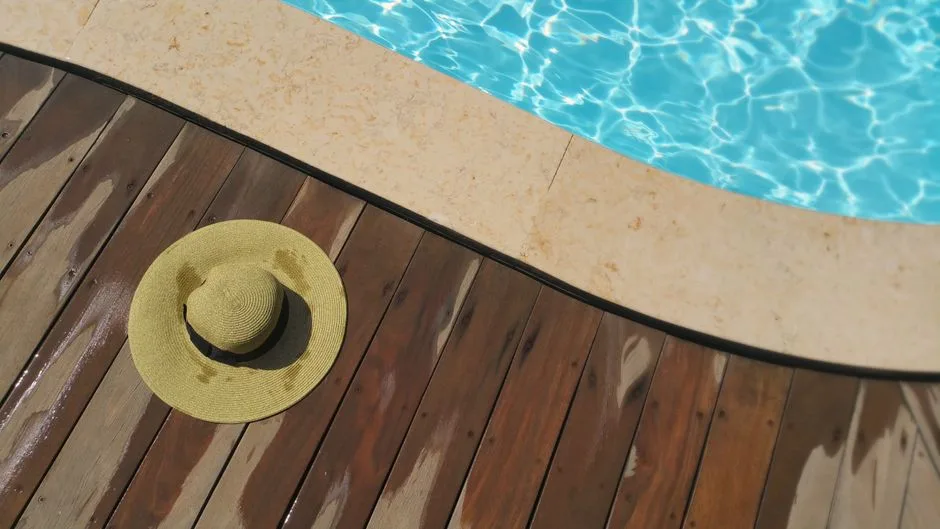
Outdoor Rug for Pool Deck
An outdoor rug laid on the pool deck under a seating or dining furniture group defines the space visually, adds color and pattern, and makes barefoot traffic more comfortable — pool deck surfaces get surprisingly hot in direct sun, and a rug’s surface stays noticeably cooler than stone, concrete, or tile. Polypropylene (plastic) flatweave rugs are the standard for poolside use: they are fully waterproof, inherently mold-and-mildew resistant, UV-stabilized against fading, and can be simply hosed off on the deck to clean. A 1.5m × 2.4m / 5ft × 8ft outdoor rug costs $60-$300 depending on pattern complexity and brand. Choose a flatweave or very low-pile construction — plush or shag-texture rugs trap leaves, grass clippings, and debris and are essentially impossible to keep clean in a pool environment. The rug should be large enough that at least the front legs of all furniture pieces in the grouping sit on it; a rug that is too small looks disconnected from the furniture it is meant to anchor. Replace every 3-5 years depending on sun exposure — even UV-stabilized polypropylene eventually becomes brittle and develops cracks with continuous direct sun.
Photo by Pixabay on Pexels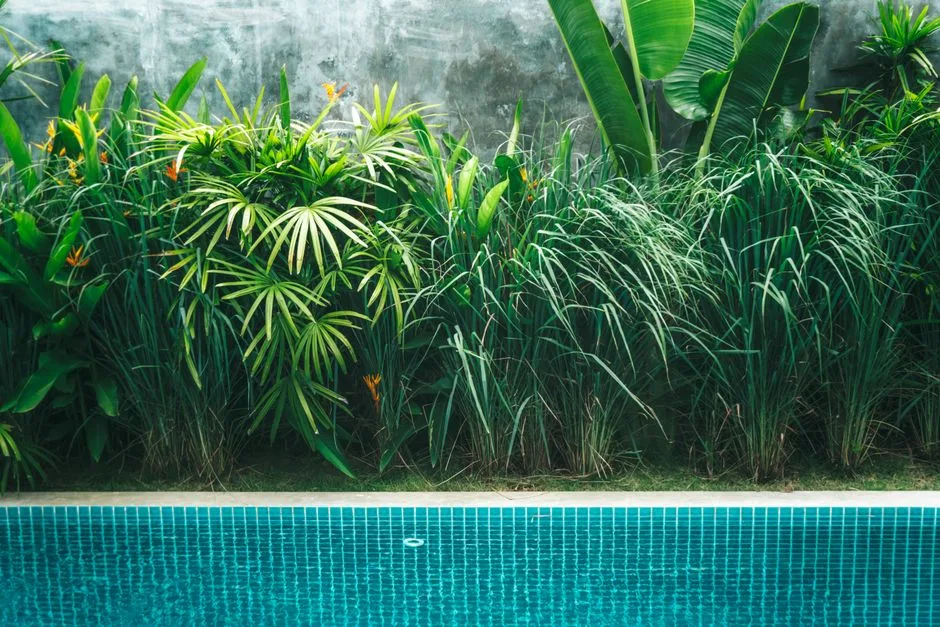
Planters & Potted Tropical Plants
Large planters filled with lush tropical plants — bird of paradise (Strelitzia), canna lilies, elephant ears (Alocasia and Colocasia), palms (Kentia, Areca, or Pygmy Date), cordylines, and ornamental grasses — bring life, movement, and a resort-like atmosphere to the pool deck that no amount of furniture alone can achieve. The planters themselves are an important design choice: lightweight fiberglass or GRC (glass-reinforced concrete) planters in matte white, charcoal, or terracotta ($100-$500 each) read as contemporary and are easy to reposition; genuine cast stone or high-fired terracotta ($200-$800 each) suits Mediterranean, Spanish Colonial, and traditional settings but is extremely heavy once filled. Use generously sized planters — at least 45cm / 18 inches diameter and 50cm / 20 inches tall — because small pots look cluttered and insignificant on a pool deck and dry out too quickly in full sun. Fill the bottom third of each planter with empty plastic bottles or packing peanuts (reduces weight, reduces soil cost, and improves drainage) topped with quality outdoor potting mix. Group planters in odd numbers — 3 or 5 — at staggered heights for a curated, professionally designed look. Avoid deciduous trees and shrubs directly over the pool — the constant leaf drop creates endless skimming work.
Photo by ROMAN ODINTSOV on Pexels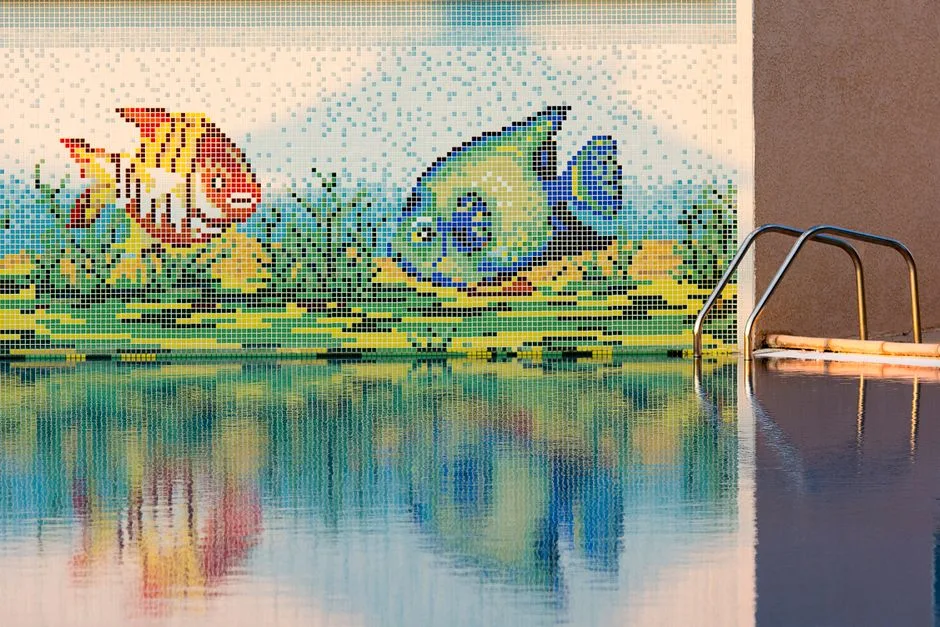
Outdoor Wall Art & Metal Sculptures
Weatherproof wall art — powder-coated metal panels, ceramic tile murals, corten weathering steel sculptures, or sealed canvas prints in UV-protective frames — mounted on the pool house, perimeter wall, or boundary fence transforms a blank vertical surface into a focal point that gives the pool area a finished, curated personality. Aluminum prints (dye-sublimated directly onto coated aluminum sheet) are the most weatherproof two-dimensional art option — they are completely waterproof, UV-resistant, lightweight, and mount easily with stainless steel standoff hardware. A 60cm × 90cm / 24 × 36 inch aluminum print costs $100-$300. For three-dimensional art, corten steel or powder-coated aluminum wall sculptures ($200-$1,000+) add depth and shadow play that changes throughout the day as the sun moves, creating a living, evolving visual element. The art subject matter should relate to water, nature, or the landscape — abstract wave forms, oversized botanical silhouettes, or geometric sunburst patterns are timeless choices that will not feel dated. Mount all art with 316 marine-grade stainless steel hardware only — standard zinc-plated or galvanized fasteners will rust within months and leave ugly orange streaks running down the wall.
Photo by Jan van der Wolf on Pexels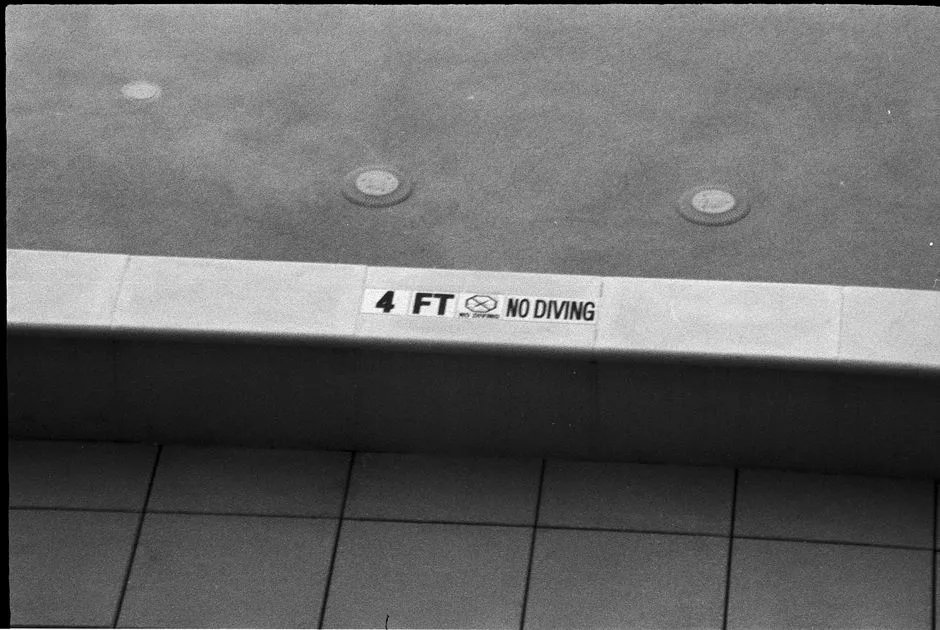
Poolside Signs & Vintage-Inspired Signage
Decorative pool signs — from vintage-inspired enamel-look Pool Rules plaques and retro motel-style directional signs to custom laser-cut metal signs with the family name or a favorite quote — add personality, humor, and a distinct sense of place that mass-produced furniture alone cannot convey. Enamel-look metal signs (actually powder-coated aluminum sheet with UV-printed graphics that replicate the look of vintage porcelain enamel) cost $30-$80 and resist fading and rust indefinitely. Custom laser-cut metal signs with optional backlit LED illumination ($100-$400) are visible both day and night and double as accent lighting along a fence or wall. The key to signage is restraint: 2-3 well-chosen signs read as curated, intentional charm; 10+ signs read as visual clutter and kitsch. A single welcome sign or custom family-name sign at the pool entry gate, plus maybe one vintage-style depth marker or a playful No Diving plaque, is sufficient for the vast majority of pool areas. Mount with hidden keyhole brackets or stainless steel standoffs — visible Phillips-head screw heads in the corners of a sign immediately undercut the vintage aesthetic you are paying for.
Photo by Elly Sartain on Pexels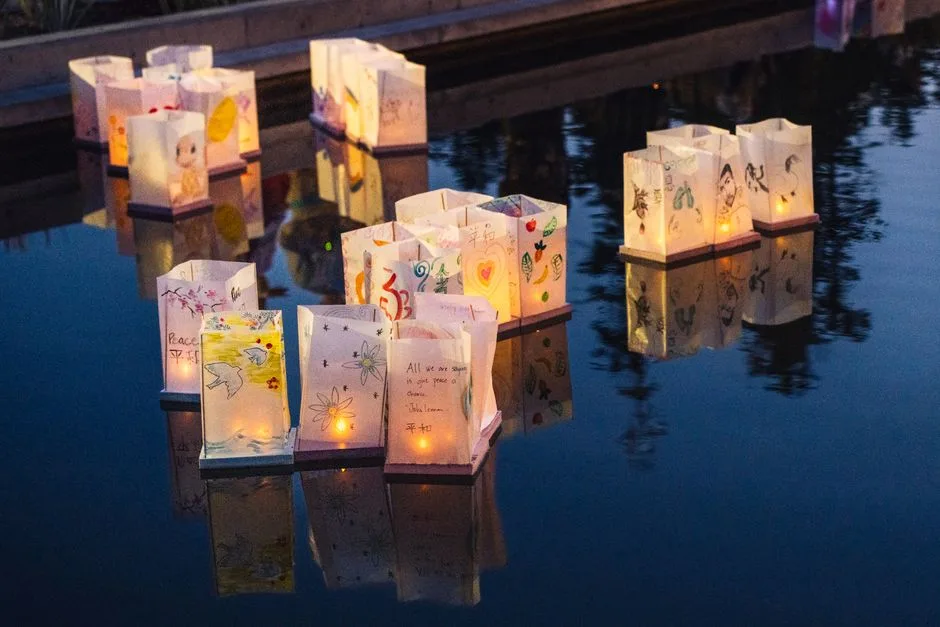
Decorative Lanterns & LED Candle Holders
Decorative lanterns — large-scale metal, wood, or resin lanterns housing LED pillar candles with realistic flicker effects — add warm, layered ambience to the pool deck at night without the fire risk, smoke, wax drips, or constant maintenance of real candles. Oversized lanterns (45-75cm / 18-30 inches tall) placed on the deck at the base of columns, flanking pool steps, or centered on side tables create vertical visual interest and a soft, eye-level glow that is far more atmospheric than overhead lighting alone. Battery-operated LED pillar candles with a convincing 3D flicker effect and an automatic timer function (auto-on for 5 hours each evening, auto-off, repeats daily) cost $10-$30 each and run for 2-3 months on 2-3 standard AA batteries. The lantern bodies themselves cost $40-$150 each in powder-coated metal or $60-$200 in solid teak or eucalyptus wood. Place lanterns in groups of 2-3 at slightly different heights for the most natural, professionally styled look. In breezy locations, choose lanterns with glass panel enclosures rather than open-sided designs — the glass keeps the flicker flame effect visible and the batteries dry even in gusty conditions.
Photo by Vlad Vasnetsov on Pexels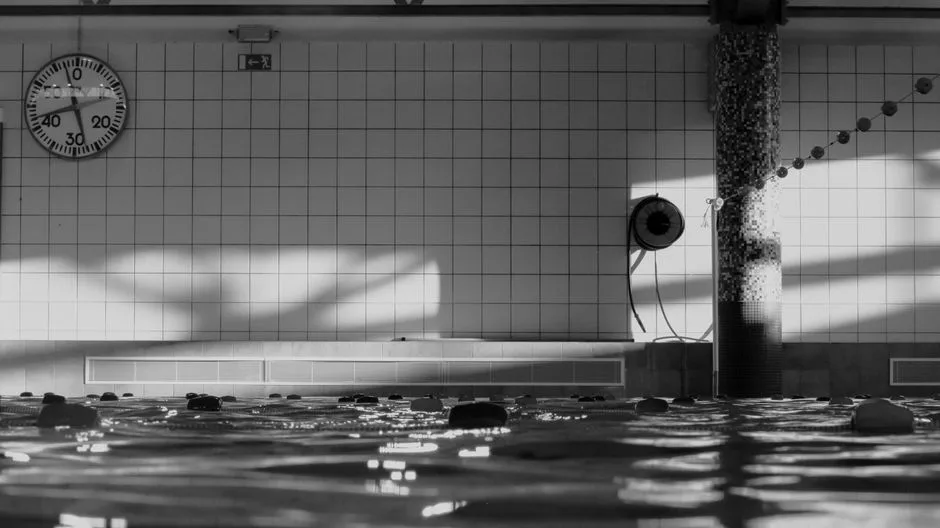
Outdoor Clock & Thermometer
An outdoor wall clock and thermometer — genuinely practical instruments that also serve as understated decorative elements — mounted on the pool house, cabana, or a prominent wall facing the pool is one of those small, thoughtful details that guests notice and use constantly. A large analog clock with bold, readable numerals on a minimum 30cm / 12 inch diameter face eliminates the need for anyone to check their phone to know the time while lounging poolside — a small but meaningful convenience that keeps phones safely indoors and away from water. Combined clock-and-thermometer units ($60-$200) display the current air temperature, which is genuinely useful context for deciding whether the pool water will feel refreshing or cold when you get in. Choose models specifically rated and sealed for outdoor use with an IP44 minimum ingress protection rating, a UV-stabilized face that will not yellow or fade, and a quartz movement rated for continuous operation from -20°C to 50°C / 0°F to 120°F. Mount on a wall that is easily visible from the main seating and lounging area but shaded from direct afternoon sun, which can distort temperature sensor readings and accelerate face fading. A surprising number of pool owners say this simple addition changes their relationship with pool time — no more guessing how long you have been out or whether it is time to reapply sunscreen.
Photo by maarten van asten on Pexels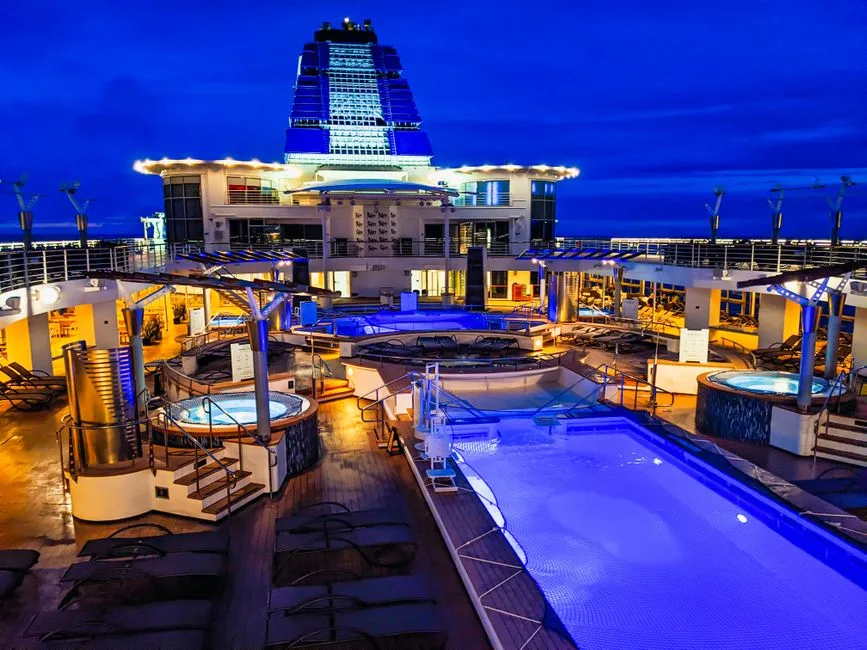
Beverage Tub / Cooler Station
A dedicated beverage station — a large galvanized metal tub, insulated cooler on a stand, or built-in ice well filled with ice and drinks — positioned within arm’s reach of the main pool seating area is the single most appreciated entertaining amenity on a hot afternoon. Freestanding galvanized steel beverage tubs (45-70L / 12-18 gallon capacity, $50-$150) are portable, affordable, and have a rustic-chic aesthetic that suits most pool settings; insulated stainless steel coolers on wheeled stands ($150-$400) keep ice frozen 2-3× longer on the hottest days; a built-in ice well integrated into an outdoor kitchen countertop with a drain connected to a gravel sump or stormwater line ($500-$1,500 plus plumbing) is the permanent, high-end, no-compromise solution. The best location is within easy reach of the main seating group but positioned at least 1.5m / 5ft from the pool edge — condensation drips and the inevitable splash when someone grabs a drink create a slipping hazard if the tub is right at the water’s edge. For parties, set up a second smaller tub with just ice and bottled water in a different location — the non-alcoholic hydration option that guests gravitate toward more often and more gratefully than you would expect. A small absorbent mat or folded towel underneath the tub catches condensation and prevents a permanent water ring stain on the deck surface.
Photo by Mattingly Marinaccio on Pexels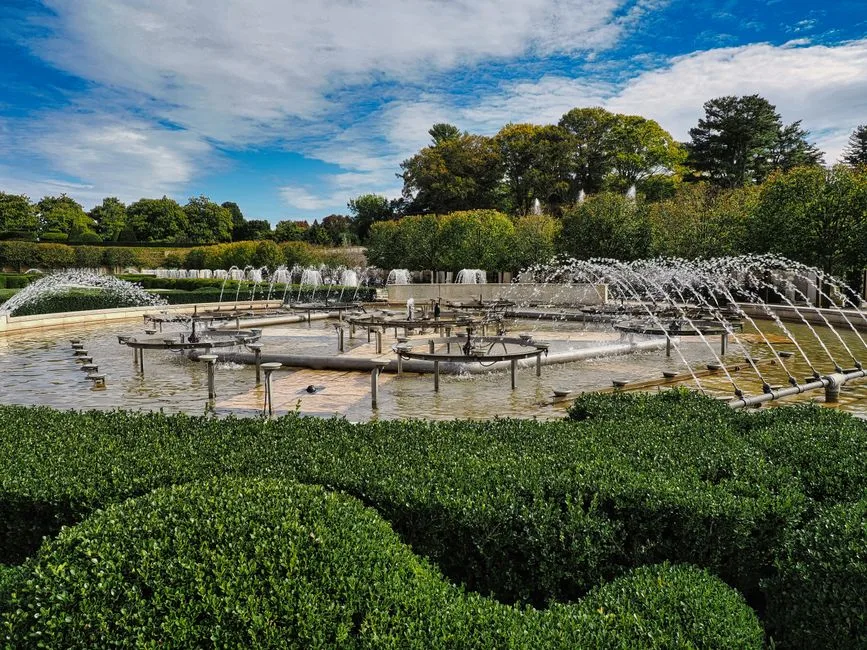
Floating Pool Fountain Decor
Small floating fountain units — self-contained, battery-powered or solar-powered submersible pumps that float on the pool surface and spray water upward in a decorative pattern — add the sight and gentle sound of moving water to any pool without requiring installation, plumbing, structural modification, or permanent commitment. Most consumer units are 20-40cm / 8-16 inches in diameter, spray water 1-3m / 3-10ft into the air in patterns ranging from a single central column jet to a multi-tiered blossom or umbrella spray, and run for 4-8 hours on a full battery charge or continuously on solar power during daylight. Quality floating fountains with integrated RGB LED lights — the spray catches the colored light for a luminous, jewel-like nighttime effect — cost $60-$200. They are not a substitute for a built-in water feature (the spray pattern is modest and the pump motor produces an audible hum), but as a zero-installation, renter-friendly way to add moving water sound and visual interest, they deliver genuine value. Float the fountain in the center of the pool for ambient sound that carries across the whole yard; tether it near the tanning ledge for a gentle splashing sound close to where people lounge. Remove, rinse with fresh water, dry, and store indoors between extended uses — the shaft seals and O-rings in budget floating fountains degrade surprisingly quickly if left in chlorinated or salt water continuously for weeks.
Photo by John Anzivino on PexelsPool Storage Solutions: Everything in Its Place, Out of Sight
Large Deck Box / Storage Bench
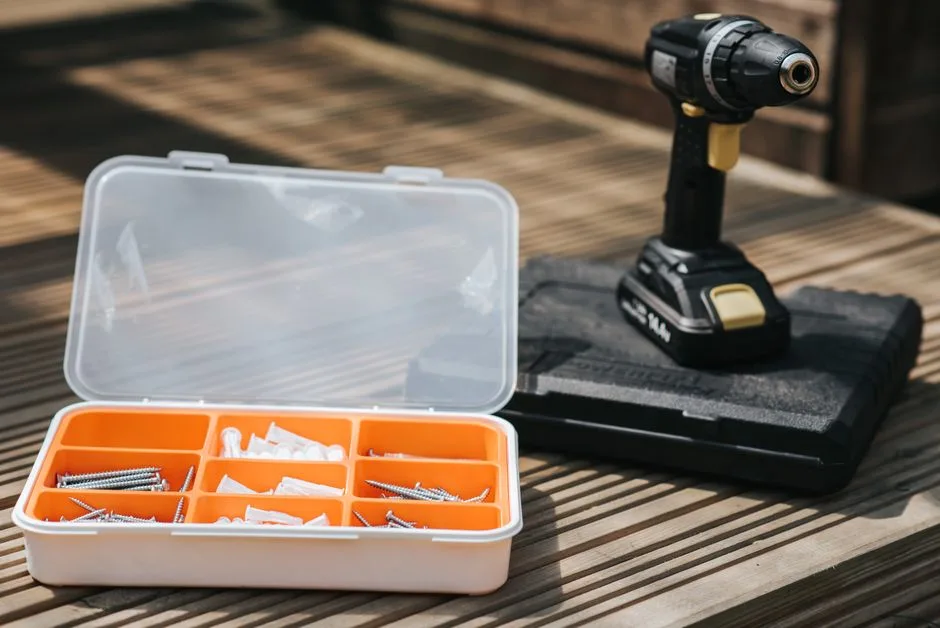
A large deck box — a weatherproof resin, aluminum, or teak storage container with a hinged lid that doubles as bench seating — is the workhorse of pool deck organization. It keeps lounge chair cushions, pool toys, inflatables, kickboards, pool chemicals (stored in a separate sealed container inside the box), and maintenance tools neatly contained and instantly accessible, keeping the deck surface clear and visually calm. A 450-600L / 120-160 gallon capacity box (roughly 1.5m × 0.7m × 0.7m / 5ft × 2.3ft × 2.3ft external dimensions) holds cushions for a full lounge set plus an assortment of pool toys. Molded resin/polypropylene boxes ($150-$400) are the practical, sensible choice: fully waterproof, UV-stabilized against sun damage, zero maintenance required, and available in colors that complement most deck surfaces. Teak or eucalyptus hardwood boxes ($500-$1,500) read as genuine furniture pieces and age beautifully, but they need annual oiling or sealing and should be lined with a removable waterproof inner tub to protect the wood from the constant humidity of stored damp cushions. The lid — which functions as bench seating — must support at least 200kg / 440lbs (the weight of two seated adults). Hydraulic gas-strut lid stays that hold the heavy lid securely open while you rummage inside with both hands are a small mechanical feature that makes an outsized difference in daily usability.
Photo by Anete Lusina on Pexels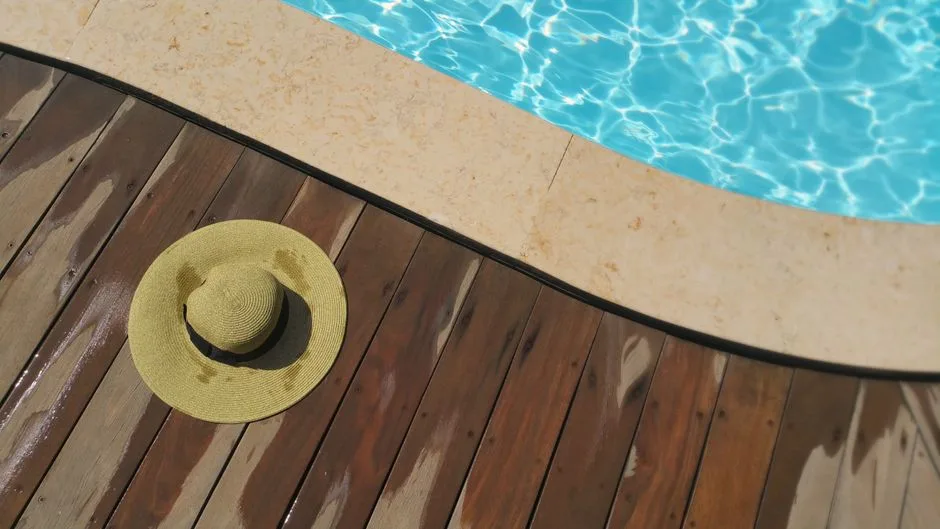
In-Deck Hidden Storage Compartment
An in-deck storage compartment — a flush, hinged hatch set into the pool deck surface that opens to reveal a below-grade, waterproof storage cavity — keeps pool essentials (vacuum hose, cleaning nets, brushes, water test kit, leaf skimmer) accessible right at the pool edge without any visible storage container cluttering the deck. For most pools, a robot that replaces most of that list shrinks the compartment down to a test kit and a leaf skimmer — the vacuum hose, nets, and brushes stop being everyday equipment once the floor and walls clean themselves. The hatch is typically a reinforced aluminum or composite decking panel set in a stainless steel perimeter frame, with a recessed flush pull-ring handle that sits completely flat when closed — no trip hazard, no visual interruption to the deck surface. The underground compartment is constructed from a pre-cast concrete utility vault or a heavy-duty rotationally-molded HDPE basin, with a small drain at the bottom connected to a gravel sump or stormwater drainage line to handle any water that enters. Installed cost: $2,000-$5,000 for a new-build installation (excavation, vault, stainless steel hatch frame, drainage connection). Retrofitting is technically possible but involves cutting a precise opening through the existing pool deck — generally only practical and cost-effective if the deck is already being replaced or significantly renovated. A gas-spring-assisted lid opening mechanism is essential — a heavy hatch lid without an assist strut is a genuine finger-crushing hazard, especially for children. This is a premium, high-end feature, but for minimalist and architectural pool designs where the aesthetic mandate is that nothing visible breaks the clean lines of the deck, an in-deck compartment is the only storage solution that truly achieves full visual disappearance.
Photo by Pixabay on Pexels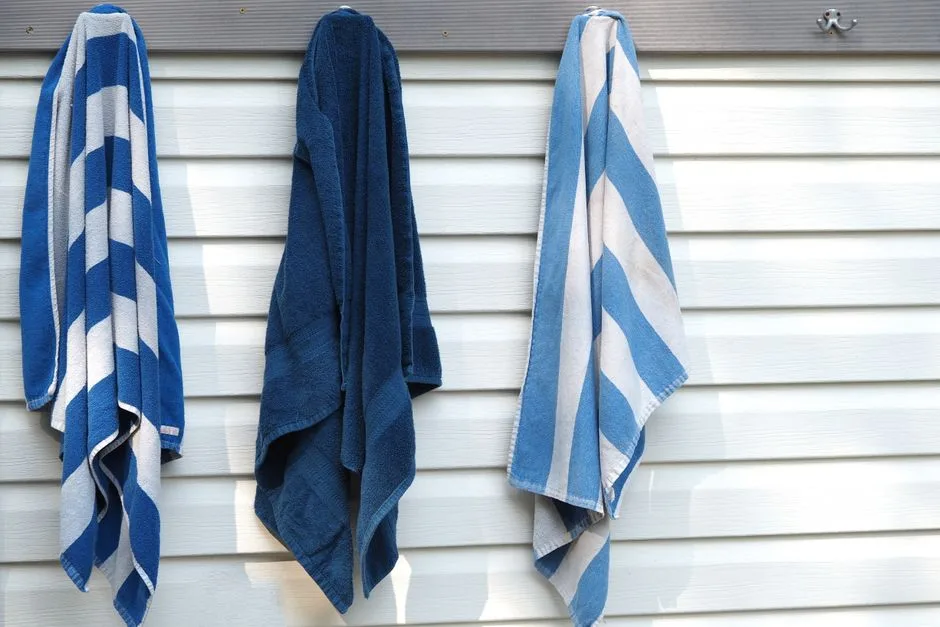
Wall-Mounted Towel Rack & Hooks
A wall-mounted towel rack or a row of sturdy, generously sized hooks on the pool house, fence, privacy wall, or cabana wall keeps wet towels off furniture, off deck surfaces, and off the ground — solving a daily, universal annoyance that affects every pool owner with swimmers in the household. A dedicated outdoor towel rack should hold 6-12 full-size bath towels, be constructed entirely of 304 or preferably 316 marine-grade stainless steel (powder-coated aluminum is also acceptable for non-coastal pools; chrome-plated mild steel will show rust spots within the first month), and be mounted with stainless steel screws into wall studs or heavy-duty masonry anchors rated for wet service. Freestanding towel valet stands ($80-$200) serve the same function without any wall mounting and can be repositioned to follow the sun or the location of the party. Budget $50-$150 for a quality wall-mounted rack. Position the towel rack in a sunny, breezy spot with good air circulation — towels dry faster and are far less likely to develop that sour, mildewed smell that comes from being left bunched up in a damp, shaded pile. For vacation rental properties and households that entertain frequently, an electric heated towel rack (IP44-rated for outdoor wet service, $200-$500) is a genuine luxury touch that guests remember and comment on — wrapping yourself in a warm, dry towel after an evening swim on a cool night is a small but memorable pleasure.
Photo by Gene Samit on Pexels
Pool Chemical Storage Cabinet
A dedicated, lockable chemical storage cabinet — positioned well away from the pool edge in a shaded, naturally ventilated area — is a safety essential, not an optional accessory. Pool chemicals (chlorine granules or tablets, muriatic acid, pool shock, algaecide, pH adjusters) must be stored in a cool, dry, securely locked location, with incompatible chemicals physically separated from each other. The critical safety rule: chlorine and acid containers must never be stored in direct contact or in the same unventilated compartment — if both containers leak simultaneously, the mixing produces chlorine gas, which is toxic and potentially fatal in an enclosed space. A purpose-built outdoor chemical storage cabinet ($150-$400) is constructed from chemical-resistant heavy-duty polyethylene or epoxy-coated steel, with an internal divider shelf, a keyed lock, and integrated ventilation louvers. Position the cabinet at least 3m / 10ft from the pool water edge and preferably on the equipment pad side of the yard, where it is near the pump and filter for convenience but away from lounging and play areas. Never store pool chemicals in a deck box mixed with cushions and toys; never store them in direct sunlight (heat accelerates chemical degradation and can pressurize sealed containers to the point of rupture); and never store muriatic acid and chlorine products in the same cabinet compartment, even if they are in separate sealed containers. Use a separate, clearly labeled plastic storage tub with a lid inside the cabinet for each chemical type — this is the safest, most organized, and most code-compliant approach.
Photo by Jiri Ikonomidis on Pexels
Floating Pool Caddy & Drink Holder
A floating pool caddy — a buoyant tray, inflatable platform, or foam ring with molded-in cup holders and a central snack or personal-item compartment — solves the awkward, universal problem of where to put drinks and small items when you are standing or floating in the pool. Inflatable models shaped like giant flamingos, swans, unicorns, or palm trees have become social-media icons, but more practically designed versions shaped like stable floating trays with 4-6 cup holders and a recessed central well for snacks, phones in waterproof pouches, and sunscreen ($25-$60) are genuinely useful for everyday pool use. The caddy floats alongside you and your guests, keeping cold beverages within arm’s reach without anyone needing to get out of the pool and drip across the hot deck. Look for models with a small built-in weight or a tether point on the underside — an unweighted, untethered caddy will drift to the skimmer within minutes as soon as the pump is running. Some higher-end versions incorporate a waterproof Bluetooth speaker and RGB LED lighting into the float body ($80-$150), turning the humble drink holder into a floating entertainment hub that anchors the social zone of the pool. Deflate or disassemble and store in a dry location when not in use; continuous UV exposure degrades the PVC or vinyl material, and chlorinated water accelerates plasticizer leaching that makes the material stiff and prone to cracking.
Photo by Kindel Media on Pexels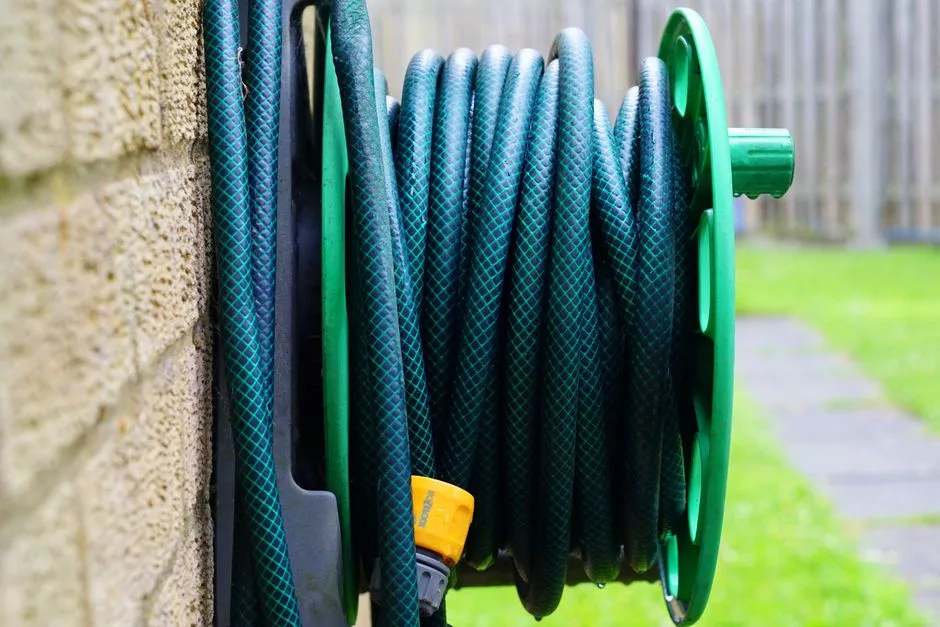
Hose Reel & Equipment Storage System
A wall-mounted or freestanding hose reel — keeping the pool vacuum hose, backwash discharge hose, and garden topping-up hose neatly coiled and off the deck — prevents the tangled, kinked hose eyesore that plagues so many equipment pads and pool deck corners. A dedicated hose reel for the pool equipment area costs $50-$200 and should be constructed of UV-stabilized resin or powder-coated aluminum with all stainless steel fittings and a crank handle that does not rust. Wall-mounted reels save floor space on the equipment pad; freestanding cart-style reels on wheels can be moved to wherever the hose is currently needed and then returned to the pad for storage. For the large-diameter corrugated vacuum hoses (typically 38mm / 1.5-inch diameter, 10-15m / 33-50ft long) used with manual pool vacuums, a purpose-built hose caddy or a simple large wall hook mounted at the equipment pad stores the hose in a loose coil without kinks that would restrict water flow. Beyond pure aesthetics, properly stored flexible hoses last 2-3× longer than hoses left on the deck — a vacuum hose lying in direct summer sun develops stress cracks and pinhole leaks within 2 seasons as the PVC plasticizer cooks out, while the same hose stored on a reel in the shade of the equipment pad enclosure lasts 5+ years. Add a simple hook rack or wall-mounted tool hanger on the equipment pad wall for the telescopic skimmer net pole, wall brush pole, and vacuum pole — keeping long-handled tools stored vertically and off the ground prevents the poles from warping and keeps the brush bristles, net rims, and vacuum heads from being accidentally stepped on, cracked, and damaged.
Photo by Auto Photographer on PexelsA note from our service team. Pool furniture takes the same beating as the water it sits next to, and the fastest way to ruin a season’s worth of cushions and floats is leaving them out through weather and sun. We’ve hauled more mildewed lounge pads out of storage boxes than we can count — almost every one could have been saved by a dry, ventilated spot off the deck. Inflatables especially trap water inside, and one folded, damp raft will mildew an entire deck box. When the season winds down, follow our guide to storing pool floats; your furniture will open up next summer looking the way these ideas show it. The deck stays just as clear for the opposite reason: a cordless cleaner that needs no hose to store lives in the water and sweeps the floor on its own, so it never joins the pile of gear waiting for a place to hide.
More Pool Design Inspiration
This is part of our Pool Design Ideas series. Explore the full collection to plan every detail of your dream pool:


