
A great pool party is more than just swimming — it is the combination of a cohesive theme, the right decorations, engaging games and activities, great food and drinks set up for poolside convenience, and the logistical details (shade, sound, sun protection, bug control) that keep guests comfortable for hours. Whether you are planning a kids’ birthday splash, a tropical luau for friends, an elegant evening cocktail party by the pool, or a casual weekend barbecue-and-swim gathering, we have gathered 39 of the best pool party ideas with real photos and practical planning guidance covering themes, decor, games, food & drink setups, and comfort logistics. Each idea works on its own or can be combined with others to build a complete party plan matched to your budget, space, and guest list.
Pool Party Themes & Concepts: Set the Vibe
Tropical Luau Pool Party
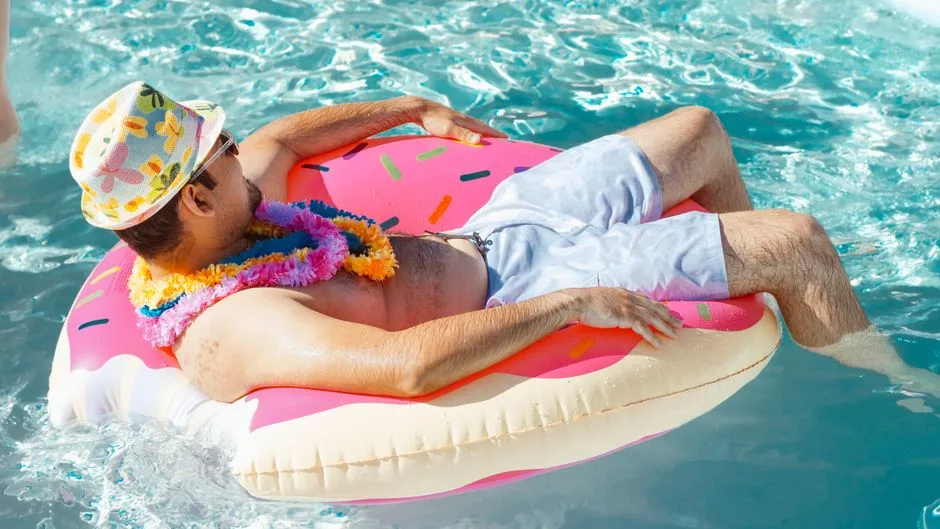
A tropical luau is the quintessential pool party theme — and for good reason. The visual language is instantly recognizable (tiki torches, palm fronds, leis, bamboo accents, bright tropical florals in hot pink and orange), the dress code is forgiving (swimsuits and Hawaiian shirts), and the pool itself IS the centerpiece of the theme rather than competing with it. Start with a color palette of turquoise, coral, lime green, and warm wood tones. Decorate with inexpensive tropical elements: paper or silk monstera and palm leaves ($30–$60 for bulk packs), tiki torches lining the pool perimeter ($3–$8 each for bamboo torches plus citronella fuel), inflatable palm tree and flamingo drink holders ($15–$30), and a DIY bamboo tiki bar made from bamboo poles and a plywood counter ($80–$200 in materials). Serve tropical cocktails in hollowed-out pineapples or coconuts, play Hawaiian slack-key guitar or island-reggae on the speakers, and greet guests with a fresh flower lei as they arrive. Budget a luau party at $200–$500 for decor, food, and drinks for 15–25 guests — one of the most cost-effective theme options because so many of the tropical elements are reusable (inflatable decor, tiki torches, bar structure). The luau theme works equally well for daytime family parties and evening adult gatherings, and transitions naturally into a night swim as the tiki torches create flickering reflections across the pool water.
Photo by Kindel Media on Pexels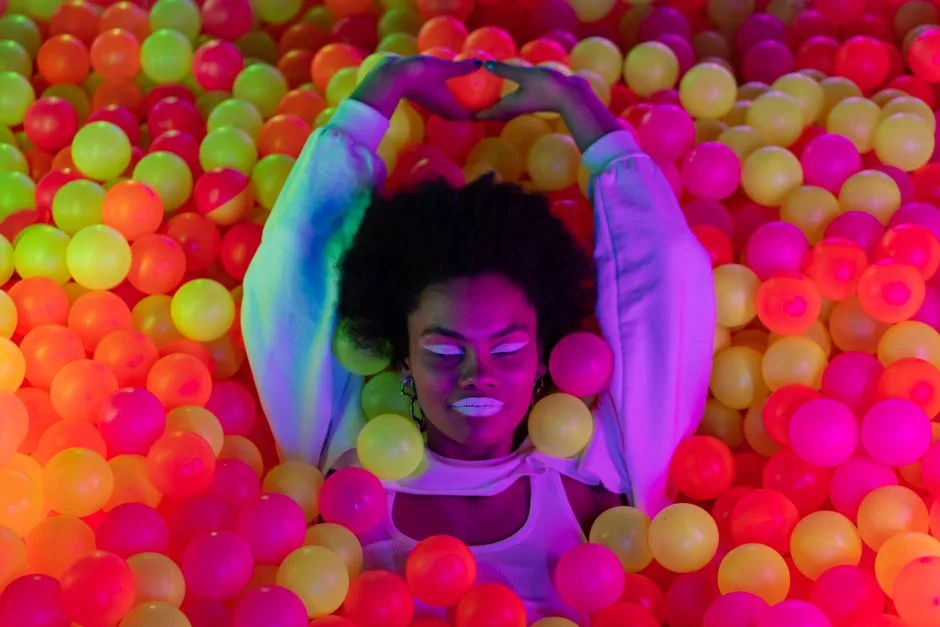
Neon Glow / Blacklight Pool Party
A neon glow party transforms your pool and deck into an otherworldly nighttime scene — and it is genuinely one of the most photogenic party setups possible. The formula: blacklight (UV-A) floodlights positioned around the pool deck ($30–$60 each, you need 4–8 for full coverage depending on deck size), fluorescent/neon decor that glows under UV (pool noodles, beach balls, balloons, tablecloths, cups, and body paint — all available in bulk on Amazon or party supply stores for $40–$100 total), and a white/light-colored dress code so guests glow too (white t-shirts, swimsuits, and accessories read as brilliant blue-white under UV). Add submersible LED pool lights set to a slow color cycle or purple/magenta to complement the UV glow from the deck. Glow sticks ($15–$30 for 100-count bulk packs) double as decor and party favors — toss them into the pool, string them into necklaces, or float them in clear balloons tied along the pool fence. The major safety consideration: standard pool lights and deck fixtures provide essentially zero illumination under UV-only conditions — keep some soft ambient lighting (dim string lights, flameless candles) so guests can see steps, pool edges, and furniture. The glow party works best starting at dusk so guests arrive to the full UV effect already set up, and the photos (especially underwater shots with a waterproof phone case) will be the most-shared content from any pool party you host.
Photo by Mikhail Nilov on Pexels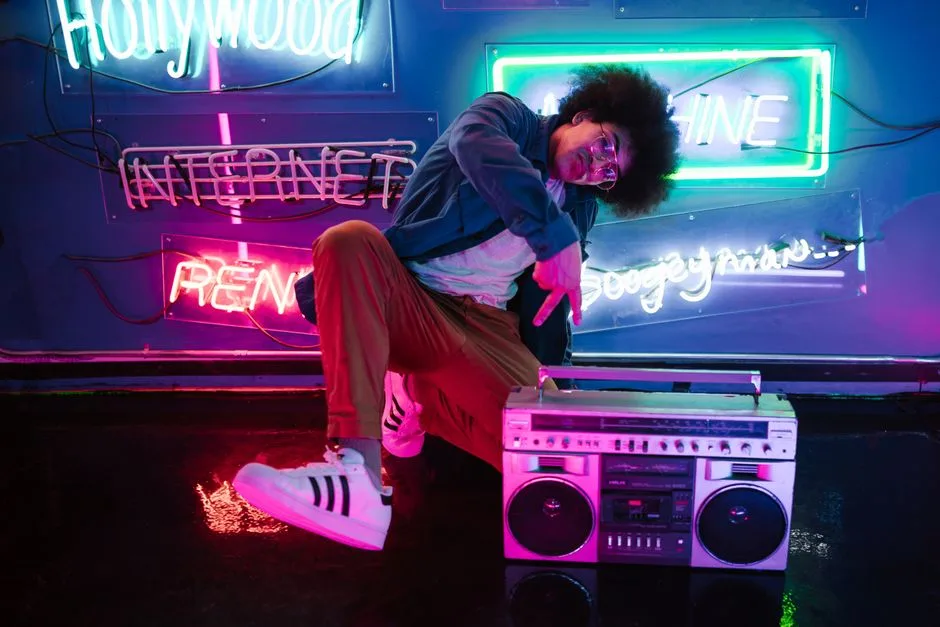
Retro 80s / 90s Pool Party
A retro pool party — channeling the neon-bright, pattern-clashing, carefree aesthetic of 1980s and early 1990s pool culture — taps into powerful nostalgia while being genuinely fun to decorate and dress for. The palette is unapologetically bold: hot pink, electric blue, neon yellow, acid green, and geometric Memphis Design-inspired patterns (squiggles, triangles, grids). Inflatable decor is the MVP here: oversized 80s-style boombox inflatables ($25–$40), retro geometric-print pool floats, and a ‘Saved by the Bell’-era aesthetic on the deck. A DIY photo backdrop — a bright solid-color plastic tablecloth wall with neon geometric shapes cut from poster board and attached with tape ($30–$50 total) — gives guests a dedicated photo spot. The music is non-negotiable: a playlist of 80s pop, early 90s hip-hop, and dance hits (Prince, Madonna, Whitney, Salt-N-Pepa, Michael Jackson). Serve drinks in plastic cups with geometric patterns (Solo cup colors in bright pink, purple, and turquoise) and snacks in retro packaging or served on geometric-pattern paper plates. Costumes are strongly encouraged — retro swimwear, oversized sunglasses, scrunchies, and fanny packs add to the atmosphere and make every photo memorable. Budget $150–$350 for a retro theme, with most of the decor coming from party stores and Amazon bulk packs.
Photo by RDNE Stock project on Pexels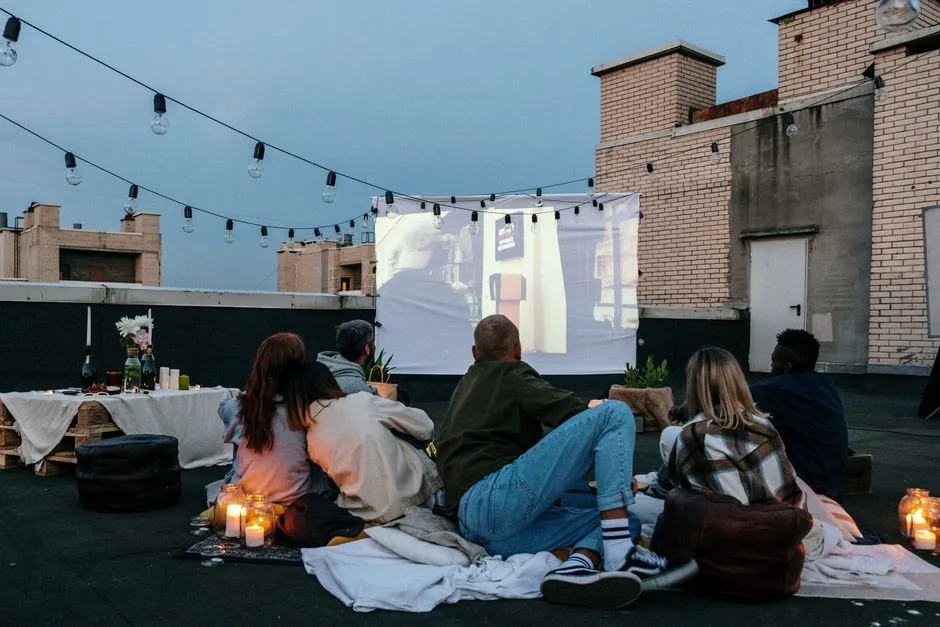
Dive-In Movie Night / Poolside Cinema
A dive-in movie — where guests float in the pool or lounge on the deck while watching a film projected onto a large screen at the edge of the pool — is the swimming-meets-cinema hybrid that works for every age group. Kids float on inflatables watching family films; adults lounge on deck chairs with drinks for a classic movie under the stars. The equipment needed: a portable outdoor projector ($100–$300 for a quality 1080p LED projector with sufficient brightness for dusk/evening use — 3,000+ lumens recommended for outdoor settings), a projection surface (a freestanding inflatable outdoor movie screen runs $80–$200 for a 12–16ft model; a white sheet or blackout cloth stretched tight on a PVC frame works for $30–$50), and a Bluetooth speaker system that can reach the pool area ($50–$150 for a quality portable outdoor speaker). Position the screen at the deep end or along one long edge of the pool, with the projector on the opposite side on a stable, elevated table. Float viewers in the shallow end or on the deck — inflatable loungers and pool floats with cup holders make ideal floating seats. Start the movie at dusk (too early and the projector image is washed out; too late and younger guests get tired). Provide plenty of floating and deck-side snacks: popcorn in individual bags, candy in waterproof containers, and drinks in covered cups (spills in the pool from regular cups are inevitable and unpleasant). A dive-in movie night costs $250–$600 for equipment (much of which you will reuse for years), plus $50–$100 for snacks and drinks. Pro tip: test the full setup the night before — projector focus, screen placement, speaker volume, and ambient light from pool and landscape fixtures all need real-world adjustment before guests arrive.
Photo by cottonbro studio on Pexels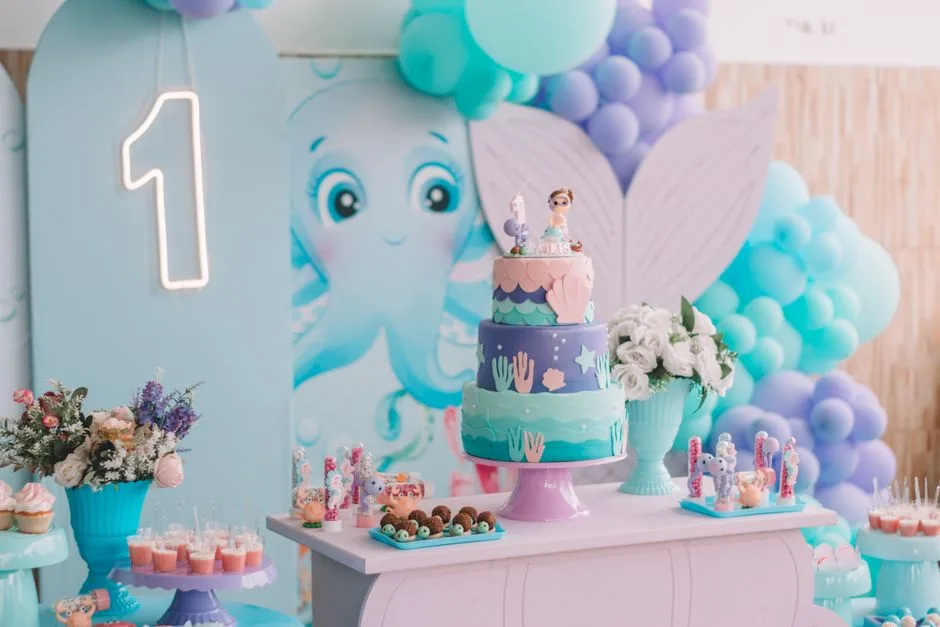
Mermaid / Under-the-Sea Pool Party
An under-the-sea or mermaid-themed pool party is the fantasy pool event that children (and many adults) dream about — and the pool itself provides the immersive aquatic setting that no other venue can replicate. The palette shifts to oceanic jewel tones: teal, aquamarine, seafoam green, lavender, pearl white, and iridescent accents. Decor centers on creating an ‘underwater kingdom’ around the pool: iridescent streamers and shimmer curtains hung from the pergola or fence ($20–$40 for bulk holographic foil curtains), netting draped across corners (actual fishing net or decorative netting, $15–$30), scattered seashells and faux pearls on tables ($10–$25), and mermaid-tail blankets or towels draped over loungers. The inflatable game comes into play with mermaid-tail pool floats ($25–$50 each), giant inflatable seashells, and pastel-colored inflatable rings. For kids’ parties, hire a mermaid performer to swim in the pool ($150–$300 depending on location) — this is the single element that makes a kids’ mermaid party genuinely magical and memorable. For adult parties, lean into the aesthetic with pearl-and-shell jewelry, ocean-inspired cocktails (blue curaçao-based drinks look perfectly on-theme), and mermaid-scale body glitter. A DIY under-the-sea photo corner with an iridescent backdrop and shell props gives guests Instagram-ready photo opportunities. Budget $150–$350 for a mermaid party (plus performer fee for kids’ parties). The theme is most popular for kids’ birthdays (ages 4–10) and bachelorette/bridal pool parties.
Photo by Karina Benfica on Pexels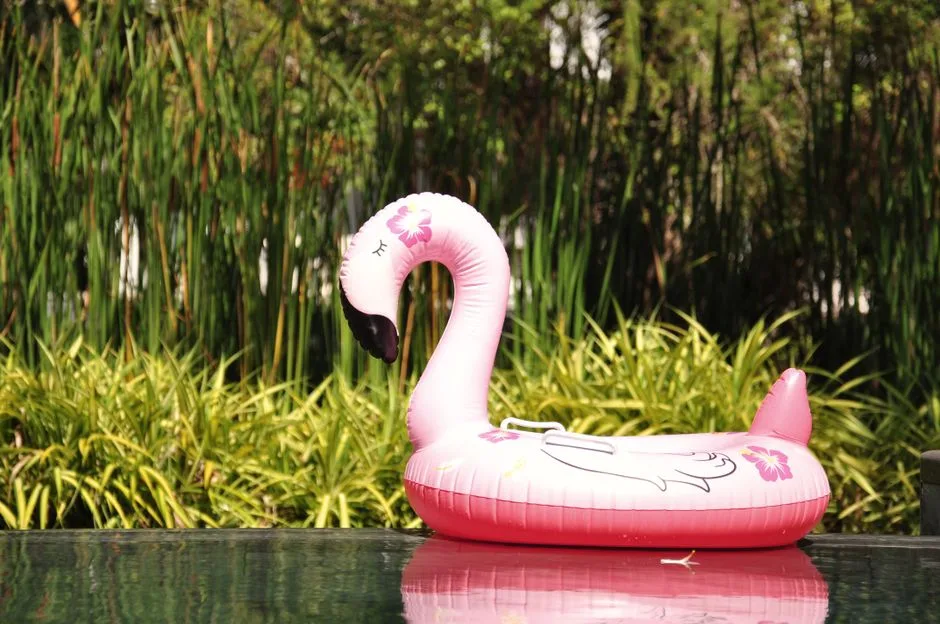
Flamingo & Pineapple Tropical Bash
The flamingo-and-pineapple theme has become the reigning Instagram aesthetic of pool parties — and unlike many social-media-driven trends, it is genuinely easy to execute, photogenic, and fun. The palette is tight and recognizable: millennial pink (flamingo), golden yellow (pineapple), bright green (palm and tropical leaf), with white and gold accents. The flamingo inflatable is the anchor piece — the classic 5–6ft flamingo pool float ($15–$30) multiplied across the pool (a ‘flock’ of 4–6 flamingo floats makes the pool itself the photo centerpiece). Pineapple decor elements: pineapple-shaped drink dispensers, pineapple string lights ($15–$25), gold-painted pineapple centerpieces (real or faux), and pineapple-print tablecloths and napkins. The tropical leaf element: Monstera and palm leaf plates and napkins ($15–$25 for party sets), a tropical leaf balloon garland ($30–$60 for a DIY kit with green, white, and gold balloons plus leaf cutouts), and a ‘Tropi-Cool’ or ‘Poolside Paradise’ letter board or banner. Food plays into the theme naturally: fresh pineapple chunks, pineapple-glazed meats from the grill, tropical fruit platters, and pineapple-coconut cocktails. The flamingo-pineapple theme is especially popular for summer birthdays, baby showers, and bachelorette parties, and the decor is widely available at party supply stores and Amazon in coordinated sets, reducing the planning effort. Budget $100–$250 for a well-executed flamingo-pineapple party for 15–25 guests.
Photo by Toan Nguyen on Pexels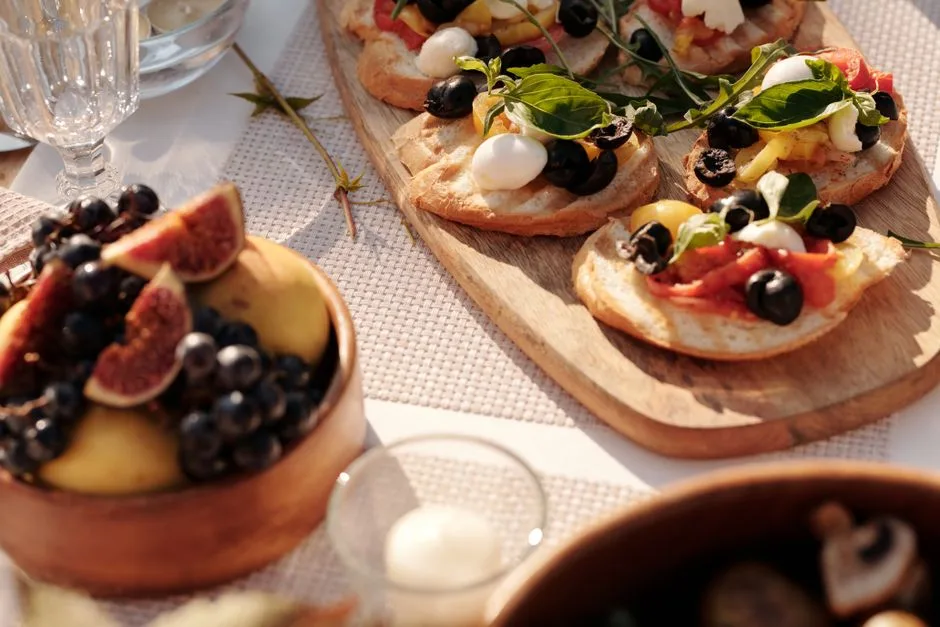
Mediterranean Summer Pool Party
A Mediterranean-inspired pool party — channeling the effortless elegance of a Greek island villa, an Italian coastal terrace, or a Spanish finca courtyard — is the sophisticated alternative to the high-energy tropical or neon themes. The palette is earthy and sun-bleached: white, terracotta, olive green, Aegean blue, and natural stone. Decor emphasizes natural materials: terra cotta pots with olive branches or lavender, white linen tablecloths, woven rattan or wicker furniture, and ceramic serving bowls and platters in Mediterranean blues and whites. String market lights overhead for a warm, golden glow at dusk. The pool area should feel uncluttered and serene — fewer, larger decor elements (a dramatic ceramic urn with a tall arrangement of olive and eucalyptus branches, large pillar candles in glass hurricanes, a single row of potted lavender along the pool edge) rather than the busy, colorful aesthetic of a tropical party. The food and drink are central to this theme: a mezze-style spread (hummus, tzatziki, olives, grilled pita, marinated vegetables, grilled halloumi), Mediterranean grilled seafood and meats, jugs of sangria and Aperol spritz pitchers, and a dessert table with baklava and fresh figs. Music: Mediterranean acoustic guitar, bossa nova, or chill house. The dress code (flowing linen, white and blue, wide-brimmed hats) adds to the aesthetic. A Mediterranean pool party works particularly well for adult gatherings, engagement parties, and milestone birthdays where the vibe is relaxed conversation and grazing rather than high-energy games. Budget $200–$500 depending on the food and drink spread, with decor costs kept modest by using natural materials and simple, elegant arrangements.
Photo by Askar Abayev on Pexels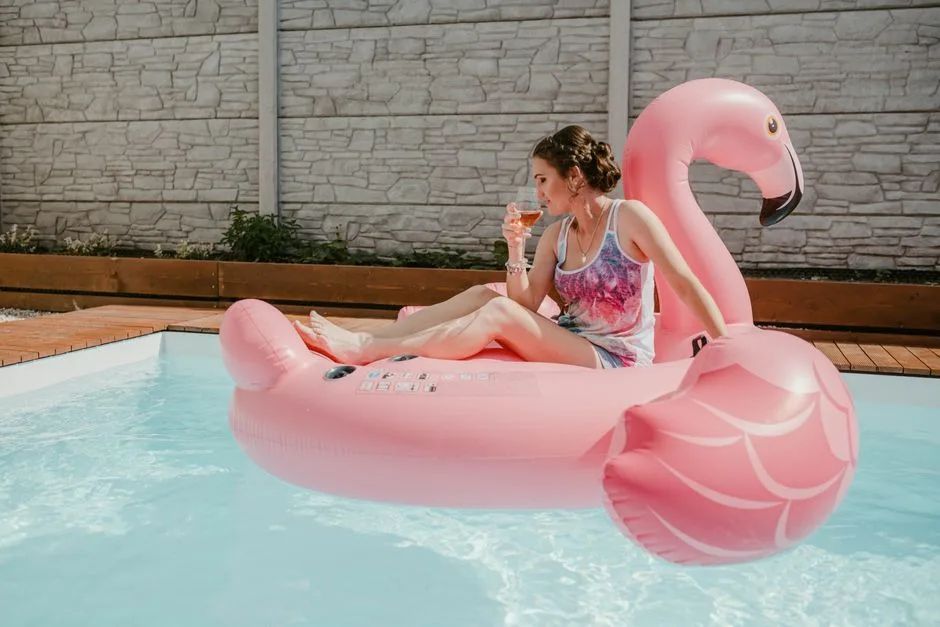
Boho / Festival-Style Pool Party
A boho (bohemian) pool party — with the low-slung seating, layered textiles, macramé, pampas grass, and dreamcatcher aesthetic of an outdoor music festival — brings a relaxed, creative, artisan-crafted feel to the pool area that contrasts beautifully with the clean, hard surfaces of water and decking. The boho look is achieved through layering: a large outdoor rug or overlapping smaller rugs defining the lounge zone ($30–$80 for an inexpensive outdoor rug), floor cushions and poufs for low seating ($15–$30 each), macramé wall hangings or plant holders attached to the fence or pergola ($20–$40), pampas grass and dried flower arrangements in ceramic or woven vases ($25–$50), and plenty of throw pillows in warm, earthy colors (terracotta, mustard, dusty rose, cream). A teepee or canopy structure draped with sheer fabric as a lounge or photo corner ($50–$100 in materials for a DIY PVC-and-fabric canopy) is the classic boho party centerpiece. String lights and lanterns (Moroccan-style metal lanterns with LED candles) add warm, dappled light. The dress code — flowy maxi dresses, wide-brimmed hats, layered jewelry, and neutral/earthy tones — means guests arrive already matching the aesthetic. Music: indie folk, acoustic covers, or deep house (depending on party energy). Food fits the festival vibe: build-your-own taco bar, grazing platters, fresh fruit stations, and signature cocktails served in mason jars with herb garnishes. The boho theme is popular for bridal showers, baby showers, milestone birthdays, and any gathering where the emphasis is on lounging, conversation, and photos rather than high-energy pool games. Budget $200–$400 for boho decor, with many elements (rugs, cushions, lanterns) being reusable for future parties or repurposed as permanent outdoor decor.
Photo by Helena Jankovičová Kováčová on PexelsPool Party Decor & Atmosphere: Transform the Space
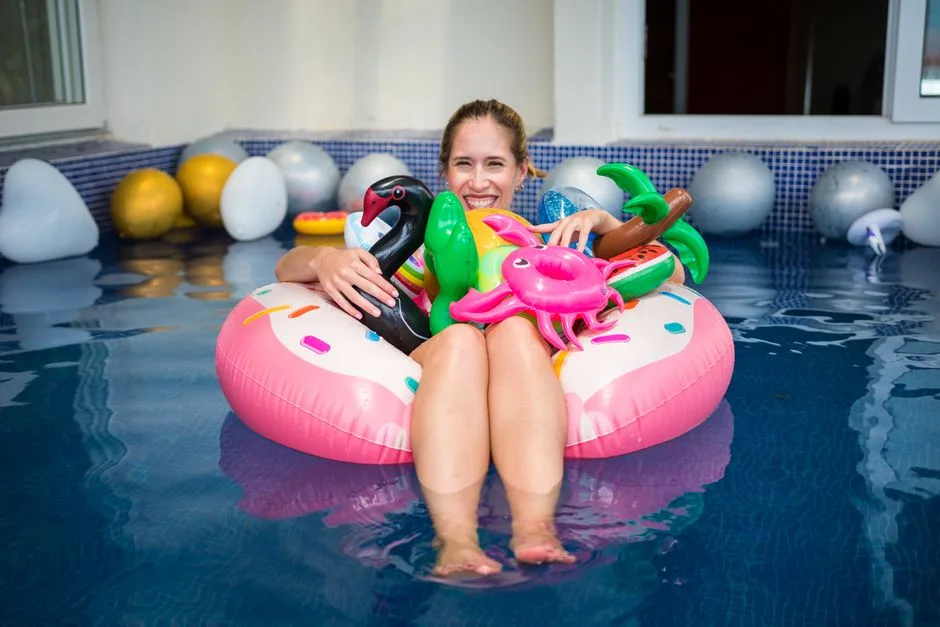
Inflatable Pool Floats as Statement Decor
Oversized, themed inflatable pool floats — the giant swan, flamingo, unicorn, peacock, pizza slice, donut, and more — are not just toys to float on; they are the most impactful pool party decoration you can deploy for the money. A cluster of 5–8 large themed floats ($15–$40 each depending on size and design) turns the pool surface itself into a colorful, photogenic display that dominates every photo taken at the party. The key to floats-as-decor is curation, not random accumulation: choose floats that fit your theme (all tropical, all pastel, all neon, all food-shaped) rather than a hodgepodge of unrelated designs, and arrange them intentionally — cluster complementary colors together, leave open swimming lanes between clusters, and have at least 2–3 floats that are notably oversized (6ft+) as anchors. Inflate them fully (partially-inflated floats look sad and neglected in photos) and tie them loosely together or to pool steps with fishing line or clear cord so they stay in position rather than drifting to one end of the pool. At the end of the party, thoroughly dry and deflate the floats for storage — wet floats folded up will mildew within days. Budget $100–$200 for a well-curated float collection for a single party (many of which are reusable for years). The float-as-decor strategy works for every theme: tropical (flamingos, pineapples, palm trees), food (pizza, donut, watermelon), luxury (gold swans, marble-print rings), and kids (unicorns, dinosaurs, mermaids).
Photo by Los Muertos Crew on Pexels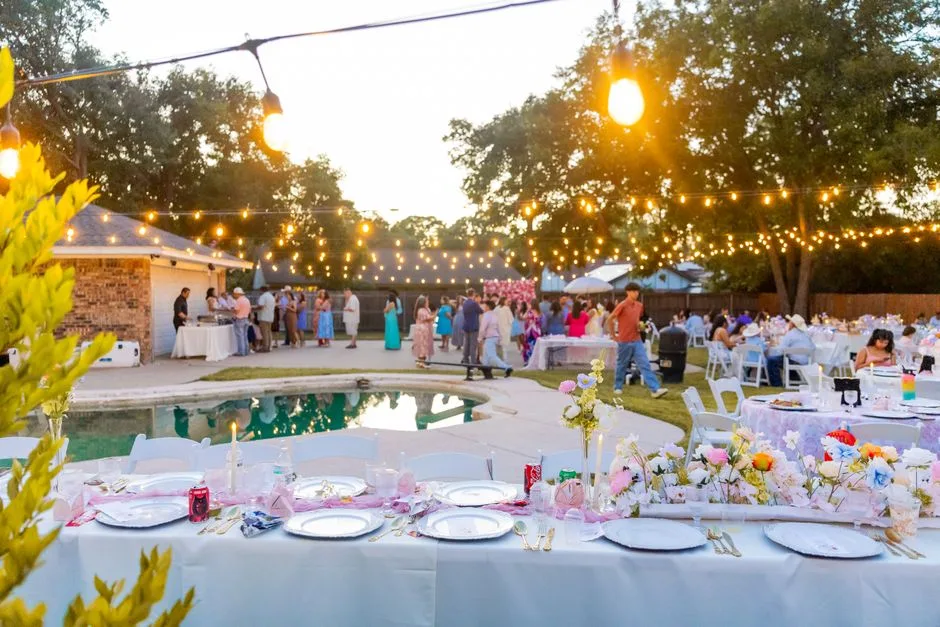
String Lighting Over the Pool Area
Overhead string lighting — festoon lights, bistro lights, or market lights strung across the pool area — is the single highest-impact lighting upgrade for evening pool parties, and the difference between a pool that looks dark and uninviting after sunset versus one that glows warmly and draws guests outside. The standard approach: commercial-grade festoon lights (heavy-gauge wire with Edison-style LED bulbs, $40–$80 for a 48ft strand with 12–15 sockets) strung in parallel lines or a zigzag pattern between anchor points (house eaves, pergola beams, dedicated poles, or fence posts) so they form a ‘ceiling’ of warm light over the entire pool and deck area. Key installation details: the lights must be high enough (minimum 2.4m / 8ft above the pool deck, preferably higher) to clear pool cleaning poles and tall guests, the wire must be rated for outdoor use and tensioned sufficiently that it does not sag into the pool, and all electrical connections must be protected by GFCI (ground-fault circuit interrupter) outlets — this is a non-negotiable safety requirement for any electrical device within 3m / 10ft of water. Permanent installation (stainless steel wire rope with turnbuckles for tension, permanently mounted anchor points) costs $200–$500 for materials and a day of work but provides years of use; temporary installation (zip-tied to existing structures for a single party) costs $60–$120 and takes 1–2 hours. Combined with submersible LED pool lights set to a warm white or soft amber, the overhead string lights create a magical, resort-like evening atmosphere. Solar-powered string lights are available but produce significantly less light output — they work as accent lighting but cannot replace mains-powered lights as the primary evening illumination.
Photo by Caleb Oquendo on Pexels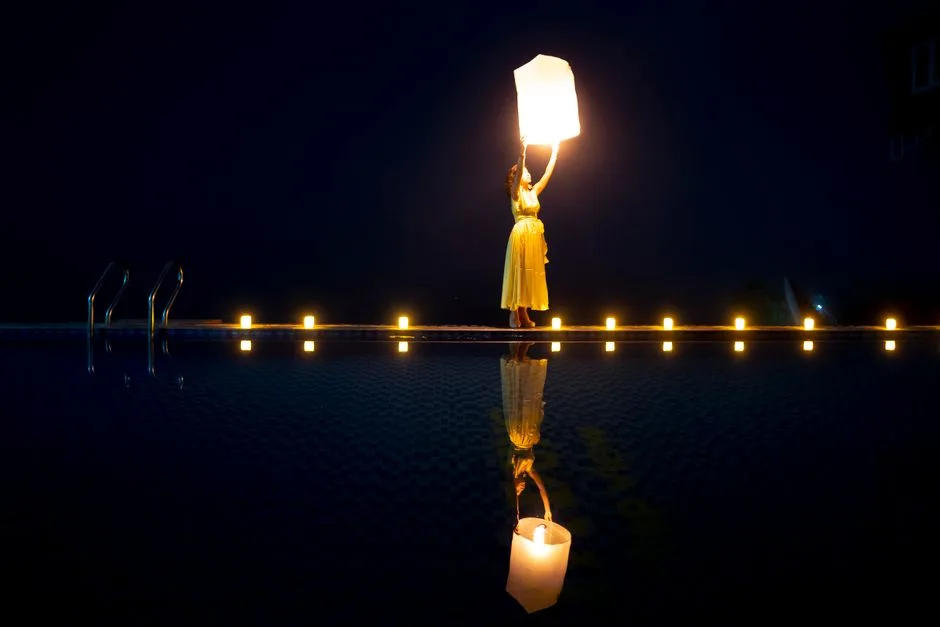
Floating Candles & LED Water Centerpieces
Floating lights on the pool surface — whether real floating candles in glass holders, waterproof LED orbs, or DIY floral-and-LED floating centerpieces — add an elegant, almost magical layer of decoration that sits ON the water rather than around it, and is particularly stunning for evening parties when the pool surface reflects the flickering lights. Commercial floating LED orbs or globes ($20–$40 for a set of 6–12 color-changing rechargeable orbs) are the most practical option: they are waterproof, reusable, remote-controlled (change colors to match your theme), and safe (no fire risk, no wax in the pool). Floating candles in glass hurricanes or floating candle bowls ($15–$30 for a set) create genuine flickering candlelight but require more management (lighting each one, retrieving them before they sink or tip, ensuring wax does not contaminate the pool if one fails). The DIY floral centerpiece version — a floating foam ring wrapped in greenery and flowers with a battery-operated LED tea light in the center ($5–$10 per centerpiece in materials, 15–30 minutes to make each) — is a beautiful and personal touch for wedding-related events, bridal showers, and milestone celebrations. Whatever floating light option you choose: (1) anchor them loosely with clear fishing line tied to pool steps, ladder rails, or small weights on the pool floor, so they stay in a deliberate arrangement rather than drifting to the skimmer; (2) position them away from the main swimming lanes so they are decorative rather than obstacles; (3) for candle-lit options, have a designated person responsible for lighting before guests arrive and retrieving after the party. Budget $30–$80 for a beautiful floating light display; the rechargeable LED orbs are the best value given their reusability.
Photo by Quang Nguyen Vinh on Pexels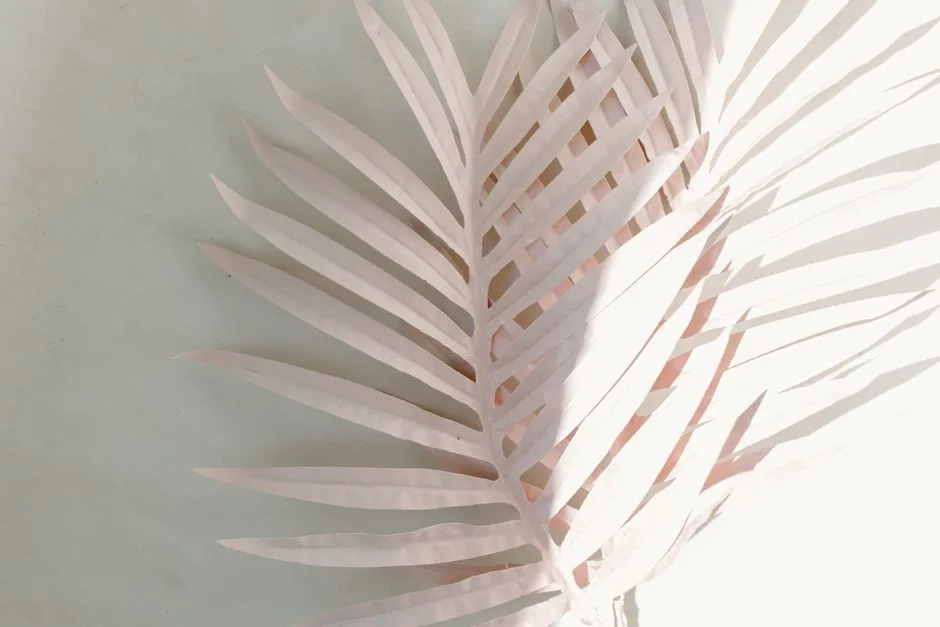
Tropical Greenery & Palm Frond Arrangements
Fresh or faux tropical greenery — large palm fronds, monstera leaves, banana leaves, ferns, and eucalyptus — arranged around the pool deck, tables, and entry points creates an immersive tropical atmosphere that photographs beautifully and costs surprisingly little. Fresh palm fronds and tropical leaves from a wholesale florist or garden center run $2–$5 per large stem; a party-scale arrangement (20–40 stems placed in clusters around the pool area) costs $40–$150. Arrange them in tall floor vases or weighted buckets at the pool corners, drape them across the buffet table as a runner (lay flat leaves overlapping down the center of the table, with candles and serving dishes placed on top), and create a dramatic entry arch or pool gate decoration by zip-tying fronds to an existing arbor or temporary PVC arch frame. Faux greenery ($15–$40 for bulk packs of realistic faux palm and monstera leaves on Amazon) is reusable across multiple parties and indistinguishable from real in photos, though up close the lack of fresh scent and slight plastic sheen gives it away. The greenery strategy works for tropical, luau, Mediterranean, boho, and even modern/architectural party themes — the specific leaf shapes and arrangement style adapt to the theme (formal, symmetrical arrangements for modern; loose, wild clusters for tropical; olive and eucalyptus for Mediterranean). The greenery also serves a practical purpose: large arrangements at the pool corners visually define the party space and draw the eye away from less-attractive areas (pool equipment, hose reels, utility boxes). After the party, fresh greenery can be composted; faux greenery can be wiped down, dried, and stored flat for the next event.
Photo by Tara Winstead on Pexels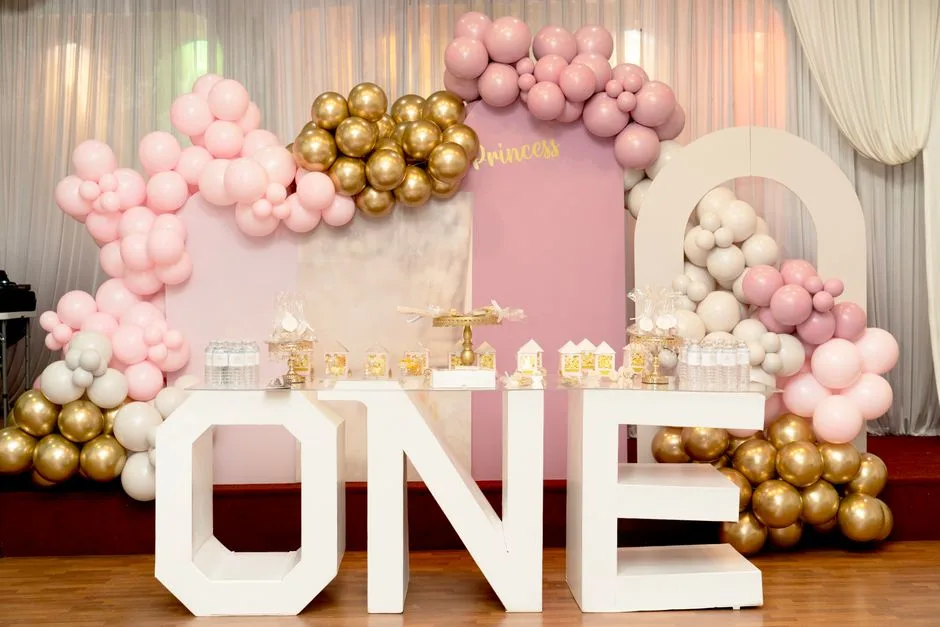
Balloon Garland & Arch Installations
A balloon garland or arch — a dense, organic-looking cluster of balloons in varying sizes (5-inch, 10-inch, 18-inch) and colors, arranged along a fence, pergola beam, pool gate, or as a freestanding photo backdrop — is the party decoration that photographs most dramatically for the investment. The modern balloon garland aesthetic (organic, clustered, varied-size balloons with greenery or florals tucked in) is a significant step up from the uniform single-color balloon arch of 1990s parties. A DIY balloon garland kit ($25–$60 on Amazon, including balloons in 3–4 sizes, balloon tape strip, glue dots, and instructions) plus an electric balloon pump ($15–$25 — do not attempt to inflate 80–150 balloons by mouth) produces a 10–15ft garland that takes 2–3 hours to assemble. Key technique tips: (1) Use at least 3 different balloon sizes (small 5-inch balloons fill gaps between the larger 10-inch and 18-inch balloons and create the organic, clustered look), (2) over-inflate some balloons and under-inflate others to create variety in shape (fully round balloons and slightly oval balloons mixed together look more natural), (3) tuck in faux greenery sprigs, eucalyptus, or small flowers between balloons for texture and color contrast, and (4) double-stuff balloons (put one balloon inside another before inflating) for opaque, rich color rather than the translucent look of single-layer balloons. A professional balloon garland installation runs $250–$600; a DIY version is $50–$100. The garland typically lasts 2–5 days outdoors (balloons degrade faster in direct sun and heat), so build it the morning of or evening before the party. Balloon arches over the pool entry gate or framing the DJ/food area are the most photogenic placement options.
Photo by Justin Agyarko on Pexels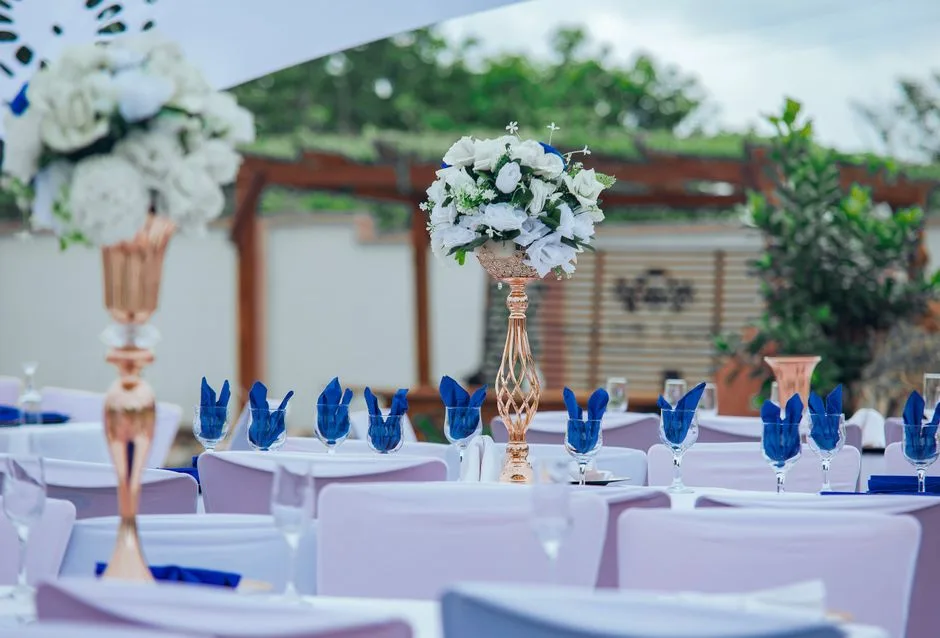
Poolside Tablescape & Place Settings
A thoughtfully designed poolside tablescape — the buffet table, bar counter, or dining table setup with coordinated linens, serveware, centerpieces, and place settings — elevates the party from ‘casual pool hang’ to ‘designed event’ without requiring a large budget. The key principle: pick one color story (2–3 colors that match the party theme) and apply it consistently across tablecloth, napkins, plates, cups, straws, and serving dishes. Poolside-specific tablescape considerations: (1) everything must be weighted or secured against wind — pool decks are often breezy, and a gust will send lightweight paper plates and napkins into the pool; use plate weights, napkin holders, or heavy ceramic/glass serveware (weighted at the base) rather than ultra-light disposables; (2) use clear acrylic or melamine serveware rather than glass (no broken glass near bare feet and a pool), (3) elevate food on risers, cake stands, or upturned crates — a flat table of dishes photographs poorly; varying heights create visual interest, and (4) include a decorative element that is specifically about the table itself — a runner of tropical leaves down the center, a row of small potted succulents or air plants, or a line of pillar candles in glass hurricanes (for evening parties). Budget $40–$100 for a coordinated tablescape using a mix of purchased linens and serveware (reusable for future parties) and disposable themed plates, cups, and napkins. The tablescape photographs are often the most-shared images from the party — side-angle shots of a beautifully set table with the pool in the background are social-media gold.
Photo by Wo Nfoni Media on Pexels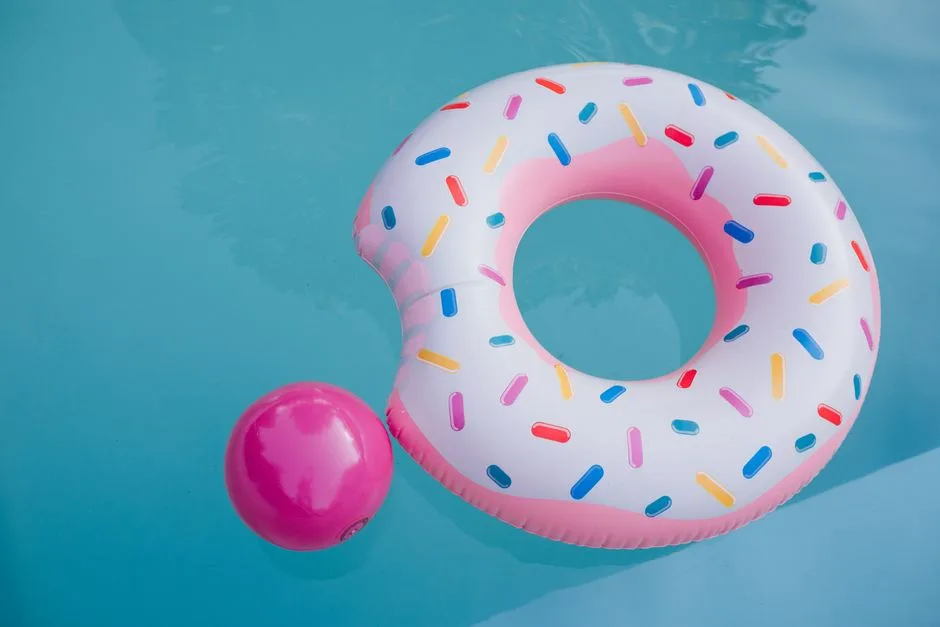
Inflatable Bar & Lounge Islands
An inflatable pool bar or lounge island — a large, floating platform with built-in cup holders, seating spots, and sometimes a central cooler compartment for drinks — creates a social hub IN the water where guests can gather, chat, and enjoy drinks without getting out of the pool. The inflatable floating bar/lounge category has expanded significantly, with options ranging from compact 2–4 person floating islands ($50–$100) to massive 6–8 person inflatable party islands with multiple seating positions, backrests, cup holders, and a central cooler compartment ($150–$400). For party-scale use, the larger islands ($200+ range) are worth the investment — they become the natural gathering point in the pool, keep drinks cold and accessible without anyone needing to get out, and create a focal point for photos. Anchor the floating island loosely to the pool floor or edges with weights and clear cord so it stays in a consistent position (typically in the shallow end or center, away from diving and jumping zones). Pair the floating bar with a deck-side drink station for refills, and station a dedicated ‘bar tender’ (a friend rotating through the role) on the island to pass drinks and manage the cooler. Safety note: the floating bar should be positioned in water shallow enough that guests can stand (chest-deep or shallower); guests drinking on a floating platform in deep water where they cannot touch the bottom creates a safety risk. For budget-friendly alternatives, lash several large inflatable loungers together with bungee cords or rope and add floating cup holders and a floating cooler to create a DIY party island for $60–$120.
Photo by KoolShooters on Pexels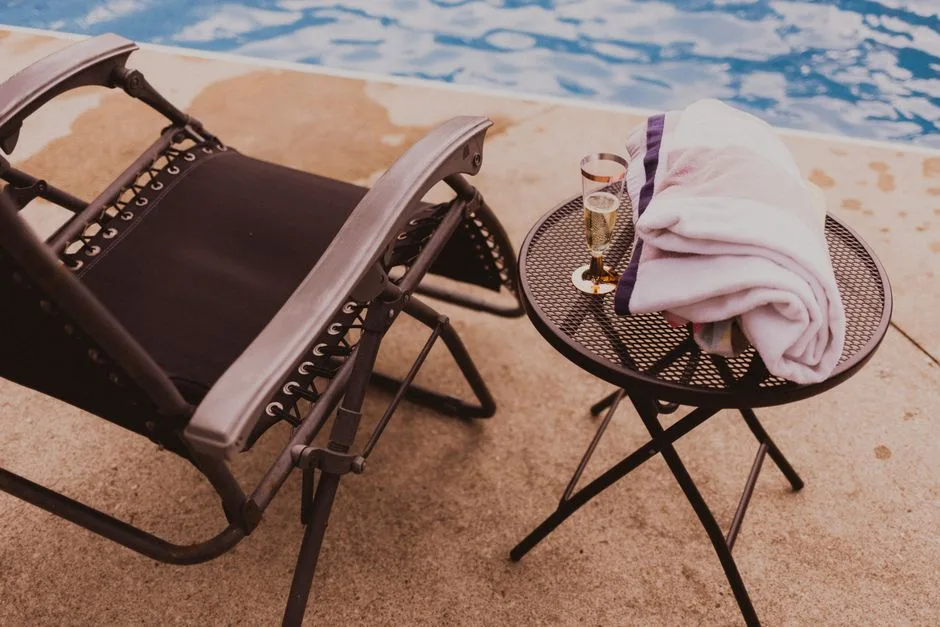
Themed Towel, Cushion & Textile Coordination
Coordinating the textiles around the pool — the towels draped over loungers, the cushions on outdoor furniture, and even the throw pillows on bench seating — into the party’s color palette is a subtle but transformative detail that makes the entire pool area feel intentionally designed for the event rather than just a pool with some decorations added. The simplest execution: purchase a set of inexpensive pool/beach towels in the party’s accent colors ($8–$15 per towel from discount retailers or Amazon — you need roughly one towel per lounger plus a few extras) and drape them neatly over every lounger and chair. Rolled towels tied with ribbon in the theme color and placed on each chair create a resort-spa feel for essentially zero extra cost. Outdoor cushion covers in solid colors ($10–$20 each) can be slipped over existing cushions to instantly change the color scheme. For boho and Mediterranean themes, layer in throw blankets and floor cushions in coordinating textures (cotton throws, woven cotton cushions). The textile coordination also serves a practical purpose: guests immediately know which loungers and seating are set up for the party and can help themselves, and the uniform towel color makes it easy to spot stray items during cleanup. After the party, the towels and cushion covers can be washed and stored for the next event (label them by party theme for easy retrieval) or repurposed as regular pool towels. Budget $60–$150 for a full textile coordination for 15–30 guests — one of the most cost-effective ways to make the party look professionally styled.
Photo by Wendy Wei on PexelsPool Party Games & Activities: Keep Everyone Entertained
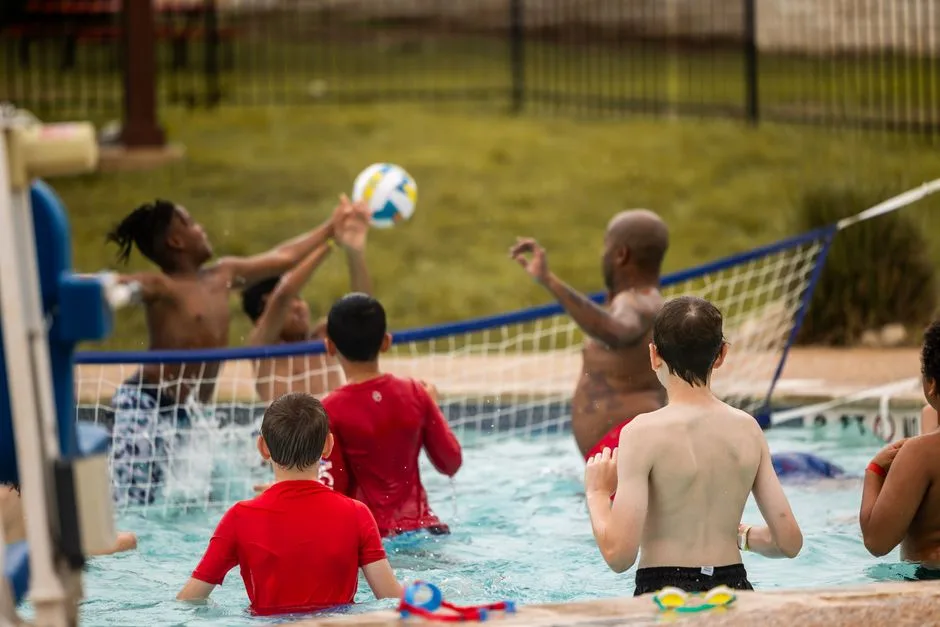
Pool Volleyball: Net, Ball & Court Setup
Pool volleyball is the most consistently popular pool party game across all age groups — it provides a natural focal point, involves 4–10 players at a time, has simple rules everyone already knows, and works in almost any pool with a reasonably flat bottom and consistent depth. A quality floating or deck-mounted pool volleyball net system costs $40–$120. The two main types: (1) Deck-mounted systems with telescoping poles that sit in weighted bases on the pool deck on opposite sides — these are more stable, do not drift, and work well for rectangular pools where the net can stretch across the narrow dimension; (2) Floating/inflatable net systems that sit on the water surface and are anchored with tethers and weights — these work in any pool shape but can drift and sag if not properly tensioned and anchored. For party use, the deck-mounted system is preferable if your pool geometry allows it. The court setup: the net should cross the pool at its narrowest point for the most natural volleyball proportions (a standard pool volleyball net is 20–25ft wide). Mark the shallow-end and deep-end boundaries with floating pool lane lines or anchored inflatable markers (come within 3–4ft of the net on each side). Use a soft, water-resistant volleyball designed specifically for pool play ($15–$25) — standard volleyballs absorb water and become heavy. For mixed-age groups, establish a rule that the shallow-end team gets younger/less experienced players. A pool volleyball setup is one of the few party elements worth investing in permanently — the net, poles, and ball store compactly and can be set up in under 10 minutes for any future gathering.
Photo by Caleb Oquendo on Pexels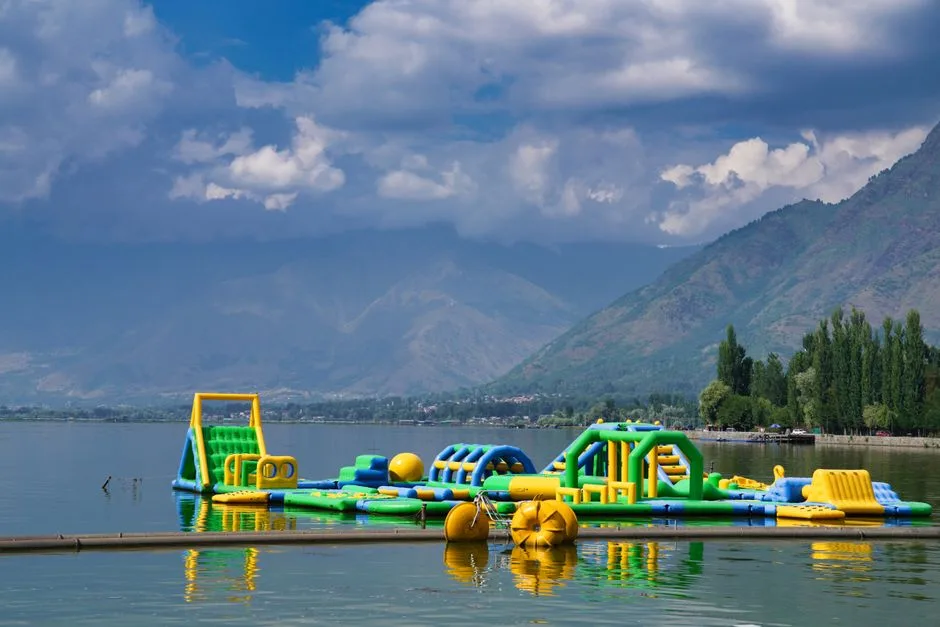
Inflatable Obstacle Course & Race Lanes
An inflatable pool obstacle course — a connected series of climbing, sliding, and balancing elements that sit on the water surface and challenge contestants to cross from start to finish without falling in (or with falling in being the fun part) — turns the pool into a genuine water park experience. Commercial-grade inflatable obstacle courses designed for residential pools run $200–$600 and typically include a climbing wall, a balance beam or log roll, a slide element, and a final challenge (often a vault or jump). These inflate with the included electric blower in 5–10 minutes and can accommodate 2–4 contestants at a time racing side by side. For a DIY budget version: create race lanes using pool noodles strung together with rope (thread the rope through the center hole of 8–10 noodles, tie the ends, and you have a flexible lane divider), set up a start line with a floating pool rope, and use pool floats as obstacles to swim around, over, and under. Add challenges along the way (retrieve a diving ring from the bottom, swim through a hula hoop held at water level, climb over a large inflatable float) and time each racer. The obstacle course is particularly effective for kids’ and teen parties — it channels competitive energy into a structured activity rather than chaotic splashing, and takes 15–30 minutes to run a full group through, providing a solid block of party programming. Safety: have an adult in the water at the most challenging obstacle to assist, and ensure the course is positioned entirely within the shallow end or middle-depth zone (no obstacles over the deep end where tired kids might struggle).
Photo by Imad Clicks on Pexels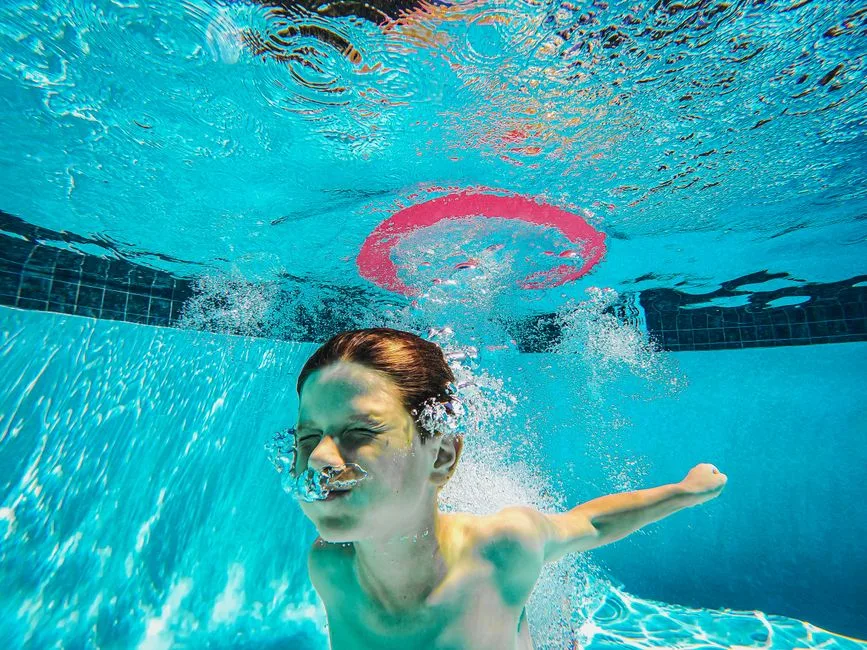
Underwater Treasure Hunt / Diving for Toys
An underwater treasure hunt — tossing a collection of diving rings, weighted toys, coins, or gemstones into the pool and having kids (or adults!) dive to retrieve them — is the simplest pool party game to set up and one of the most reliably entertaining. The classic setup: a set of diving rings, torpedoes, or weighted sticks ($10–$25 for a set of 6–12) tossed across the shallow end and middle zone of the pool. Players compete to retrieve the most items in a set time, or all players dive simultaneously and the first to collect a specified number wins. For themed parties, match the treasure to the theme: plastic gold coins and faux gems in a small treasure chest for pirate themes, plastic pearls and shells for mermaid themes, glow sticks (activated) for glow parties. Variation for older kids and adults: use small, heavy objects that sink fast and are harder to spot (smooth river rocks spray-painted in bright colors, or purpose-made diving toys), scatter them across the entire pool including the deep end, and let the competition run longer (5–10 minutes of diving). The game doubles as an excellent way to wear out energetic kids — 20 minutes of repeated diving burns significant energy. Safety rules: (1) no running on the deck to reach diving spots (walk, then dive), (2) establish a maximum depth for younger children (no diving in water deeper than they can comfortably reach the bottom), and (3) count the items going into the pool and ensure every one is retrieved (small toys left on the pool floor can be sucked into the main drain or cleaner). For non-swimmers, scatter floating items (ping pong balls, floating toys) on the surface for a ‘surface treasure hunt’ with a small net.
Photo by Kindel Media on Pexels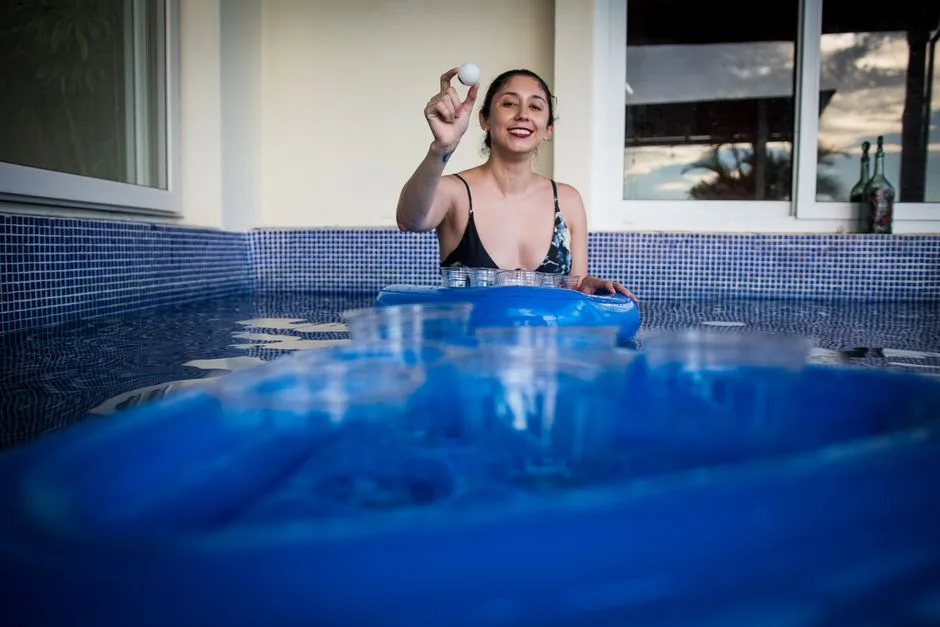
Floating Beer Pong & Pool Drink Games
Floating beer pong — the classic party game adapted for the pool with a floating table and waterproof cups — is the ultimate adult pool party activity. A purpose-built floating beer pong table ($30–$70, an inflatable or foam platform with 10 cup holes on each side and built-in cup holders) plus waterproof plastic cups and a ping pong ball is all the equipment needed. The table floats in the shallow end (chest-deep or shallower) with players standing in the water on opposite sides. The splash factor — missed shots land in the pool and the ‘ball retrieval swim’ becomes part of the game — adds a dimension that land-based beer pong lacks. For a more structured tournament: set up a bracket on a whiteboard or poster on the deck, run 2v2 or 1v1 matches, and award a novelty trophy or prize to the tournament champion. For non-alcoholic versions (family parties, kids’ parties), replace the beer with soda, juice, or water — the game mechanics are the same and kids love the novelty of playing a ‘grown-up game’ in the pool. Other pool-adapted drink/drinking games: floating flip cup (teams on opposite sides of the floating table), pool quarters (a floating waterproof game board with cup targets), and the simplest of all — a floating cooler tethered in the center of the shallow end that requires swimming to retrieve drinks, ensuring everyone stays in the water. Safety note: alcohol and water are a risk combination — designate a sober ‘pool monitor’ for any party where drinking is combined with swimming, enforce a no-glass-near-the-pool rule absolutely, and ensure guests know the pool depth and layout before drinking. The floating beer pong table should be in water shallow enough to stand in comfortably.
Photo by Los Muertos Crew on Pexels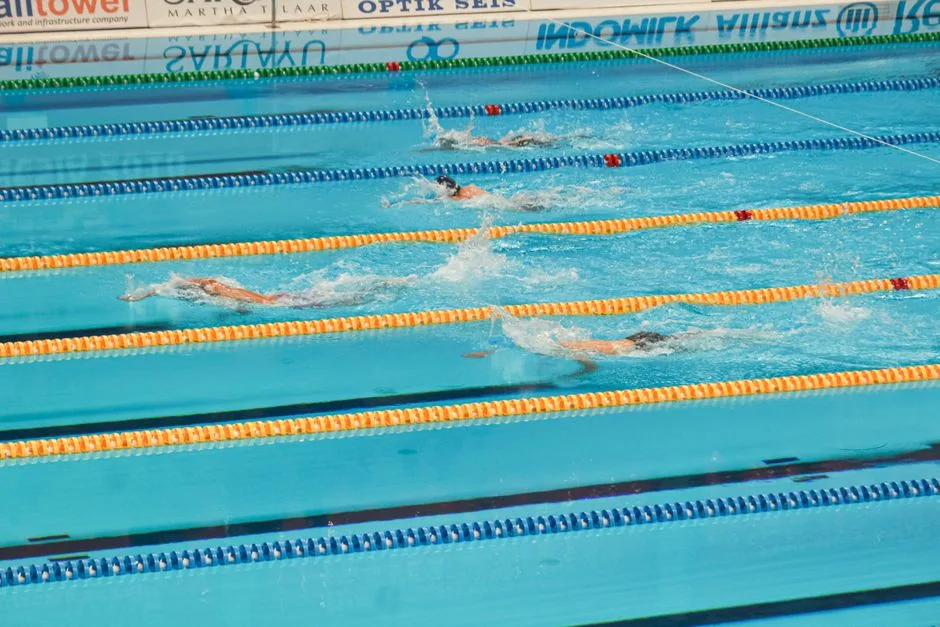
Cannonball Contest & Best Splash Competition
A cannonball contest — where contestants compete to produce the biggest, most dramatic, or most creative splash — requires zero equipment, works in any pool with a deep end, and is genuinely entertaining for participants AND spectators (the audience reaction is half the fun). The basic format: each contestant jumps from the pool edge or diving board (if available) and is scored by a panel of judges on splash size (primary criterion), creativity (themed jumps, costumes, or dramatic pre-jump performances earn bonus points), and style/form (the classic cannonball tuck, the can-opener, the jackknife, the ‘pencil’ with minimal splash as a comedy entry). Use poolside scorecards (repurposed whiteboards or large cardboard numbers, 1–10) and have judges hold them up after each jump — this builds dramatic tension and audience participation. Categories can include: Biggest Splash (standard cannonball), Most Creative Jump (any approach, judged on originality), Best Costume Splash (contestants wear a silly costume, hat, or accessory that they must wear during the jump), and Best Synchronized Splash (pairs or teams jump simultaneously). The cannonball contest works as a standalone 20–30 minute party segment and is an excellent energy reset — after the contest, guests naturally transition back to casual swimming and floating. Safety rules: (1) the pool must have a genuine deep end (minimum 5ft / 1.5m depth at the jumping point; 8ft+ preferred for adult jumpers), with no swimmers in the landing zone; (2) no flips, back dives, or head-first entries — feet-first jumps only in a cannonball contest; (3) one jumper at a time with a clear landing zone verified by the MC; (4) no running starts on a wet pool deck.
Photo by Gita Nu on Pexels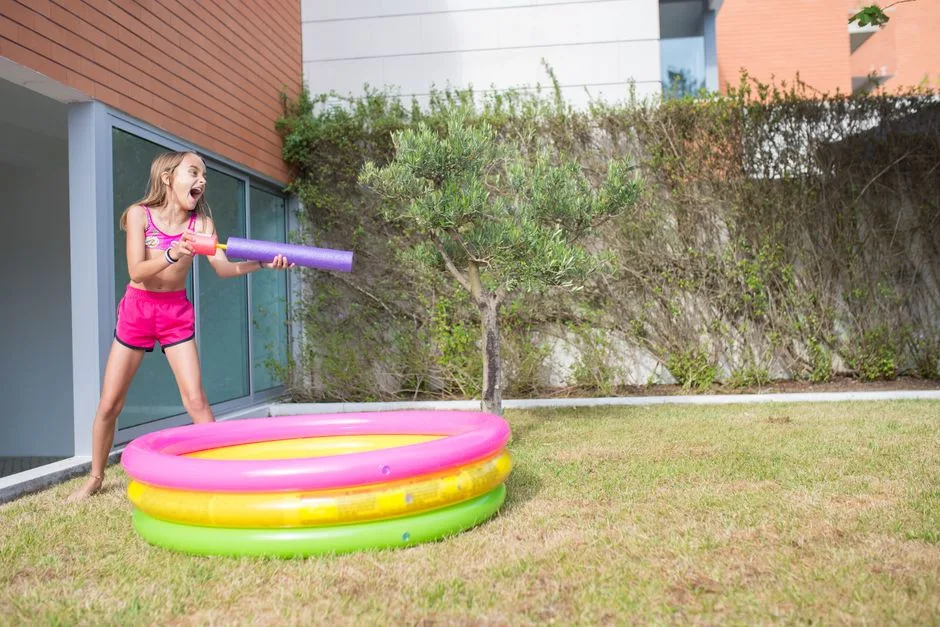
Pool Noodle Races & Relay Games
Pool noodles — the humble $2–$5 foam tube — are the most versatile and underrated pool party game equipment. With 15–20 noodles ($30–$60 for a bulk pack) and some creativity, you can run an hour of relay races and games that involve every guest. Classic noodle race formats: (1) Noodle Horse Race — straddle a pool noodle like a hobby horse and ‘ride’ it across the pool (flutter kick propulsion, noodle between legs), first to touch the far wall and return wins; (2) Noodle Log Roll — sit on a noodle crosswise (like sitting on a log) and paddle across the pool using only hands — this is much harder than it looks and the frequent capsizing is the entertainment; (3) Noodle Relay — teams of 3–4, each team member must cross the pool using a different noodle-propulsion method (ride the noodle, push the noodle ahead while swimming, balance on two noodles like water skis), tag the next teammate; (4) Noodle Joust — two players on opposite sides of a floating platform or raft, each armed with a pool noodle, attempt to knock the other off the platform (last player standing wins); (5) Noodle Rescue — scatter a dozen noodles across the pool, teams must collect as many as possible and deliver them to their team’s collection zone within a time limit. The noodle games are universally inclusive — they work for all ages (kids love the silliness, adults get surprisingly competitive), all swimming abilities (noodles provide buoyancy for weaker swimmers), and all pool sizes (scale the race distance to your pool). Budget $30–$60 for a noodle game arsenal; the noodles can be reused for future parties or as regular pool toys.
Photo by Kampus Production on Pexels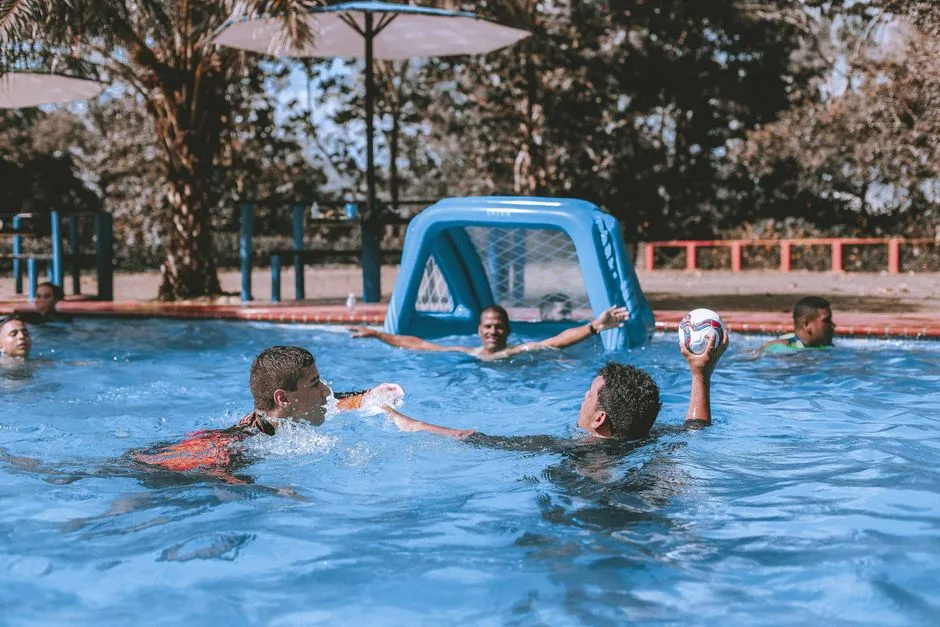
Marco Polo & Classic Pool Games
The classic pool games — Marco Polo, Sharks and Minnows, Categories, Colors (also called ‘Red Light Green Light’), and Chicken Fight — have endured for generations because they require no equipment, no setup, and no explanation to most guests, and they scale effortlessly from 4 to 20+ players. Marco Polo: one player closes their eyes and calls ‘Marco,’ all other players must respond ‘Polo’ and try to avoid being tagged; the first player tagged becomes the next Marco. The game works best in a medium-to-large pool where players have room to spread out and the acoustics make sound localization challenging. Sharks and Minnows: one ‘shark’ in the middle of the pool, ‘minnows’ line up at one end and must swim to the opposite end without being tagged; tagged minnows become sharks. With each crossing, sharks multiply and minnows decrease — the last minnow remaining wins. Categories: the ‘counter’ stands on the deck with back turned, names a category (cars, movies, animals, etc.), and counts to 3; each player in the water silently chooses an item in that category; the counter calls out items; if your item is called, you must swim to the far end without being tagged (the counter jumps in on the first called item). Colors: similar mechanic — counter calls a color, anyone wearing that color must swim across without being tagged. These classic games are ideal for mixed-age parties where not everyone knows each other — the simple rules get everyone participating within seconds, and the games naturally create interaction between guests who might otherwise stay in separate groups. They also require essentially zero budget (free) and zero setup time. Keep a list of 5–6 classic pool games in mind as a backup plan for any party moment where energy flags or guests need a structured activity.
Photo by Luis Quintero on Pexels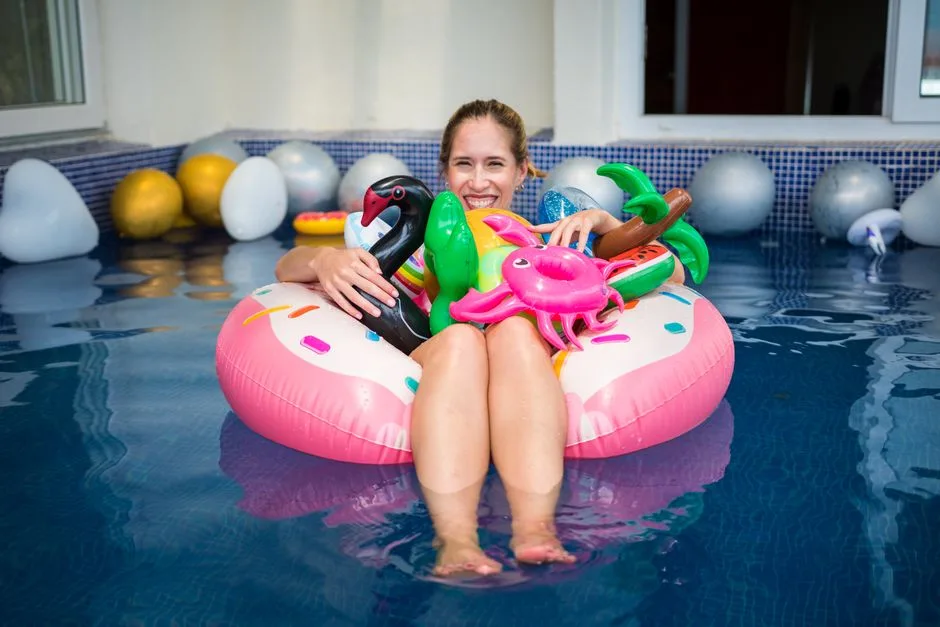
Water Balloon Toss & Splash Games
Water balloon games bring the mess-free fun of water fights to the pool deck without filling the pool with balloon fragments. The classic water balloon toss: partners stand facing each other on the pool deck (or one in the pool, one on the deck) and toss a water balloon back and forth, taking a step apart after each successful catch. The pair that keeps their balloon intact the longest wins. The splash zone (the pool) means dropped balloons explode dramatically in the water rather than on hot concrete, and contestants can cool off between rounds. A bulk pack of 250–500 biodegradable water balloons with a rapid-fill nozzle ($10–$20) fills all balloons in under 10 minutes — the rapid-fill attachment (screws onto a hose and fills multiple balloons simultaneously) transforms water balloon prep from a tedious hour-long chore into a quick pre-party task. Other water balloon games: (1) Balloon Volley — teams on opposite sides of the pool volley water balloons using beach towels as slings (two players hold a towel stretched between them, launch the balloon toward the opposing team); (2) Balloon Dodgeball — pool-deck version, throwers on the deck aim at swimmers in the pool (the pool provides easy escape by diving); (3) Balloon Spoon Race — carry a water balloon on a large serving spoon while walking a marked path on the deck, fastest time without dropping wins. Important: ALL balloon fragments must be retrieved from the pool and deck after the game — small pieces of burst balloon are a choking hazard for young children and can clog pool skimmers and pump strainers. Budget $15–$30 for a full water balloon game setup that provides 30–60 minutes of entertainment.
Photo by Los Muertos Crew on Pexels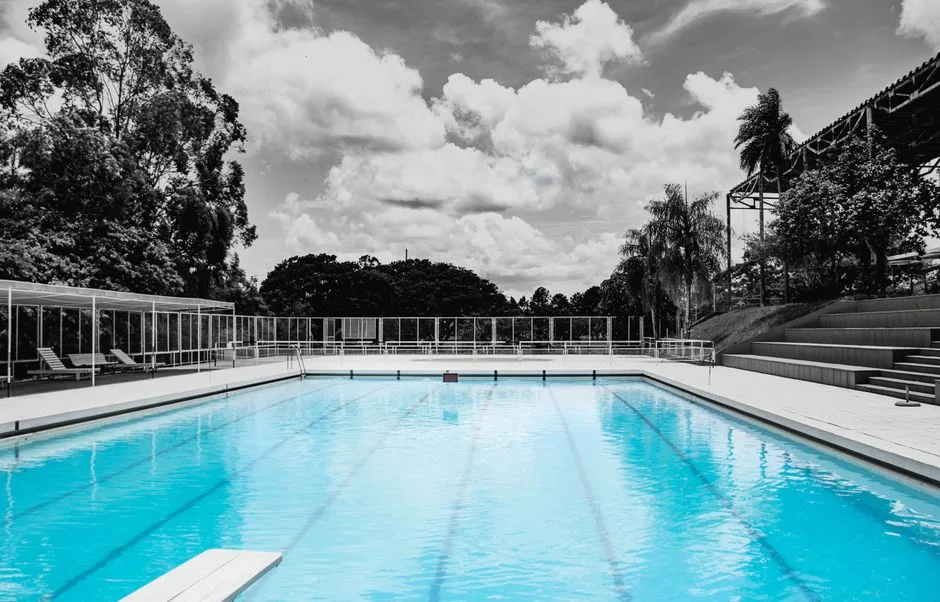
Poolside Cornhole & Dry-Zone Games
Not every guest wants to be in the water the entire party — and having 1–2 dry-zone games on the deck or lawn adjacent to the pool ensures that guests who are taking a break from swimming, eating, or simply preferring to stay dry have an activity that keeps them engaged in the party rather than retreating to a chair with their phone. Cornhole (bean bag toss) is the gold standard of poolside dry games: it takes minimal space (the boards face each other across 27ft, but can be shortened for smaller decks), is playable by all ages and skill levels, works with one hand while holding a drink in the other, and the relaxed pace matches the pool party vibe. A quality outdoor cornhole set with weather-resistant boards and bags runs $80–$200; for poolside use, look for boards with sealed edges and bags made from quick-drying fabric (duck cloth with plastic pellet fill) that will not mildew if splashed. Other excellent poolside dry games: Giant Jenga (a 54-block set of 2×4 lumber pieces, $40–$80, plays on any flat surface), ladder toss/golf (bolas thrown at a three-rung ladder target, $30–$60), and a simple deck of cards or Uno for the shaded lounge table. For kids’ parties, sidewalk chalk on the pool deck (washes off with a hose) and a bubble station (a bubble machine, $20–$35, running continuously near the shallow end) are low-effort, high-reward dry activities. Budget $50–$150 for a poolside dry-game setup. The dry games also serve an important safety function: they give parents of young children a reason to stay on the deck (near the pool, supervising) while having something to do rather than just standing watch.
Photo by Ezequiel Da Silva on PexelsPool Party Food & Drink Setup: Fuel the Fun
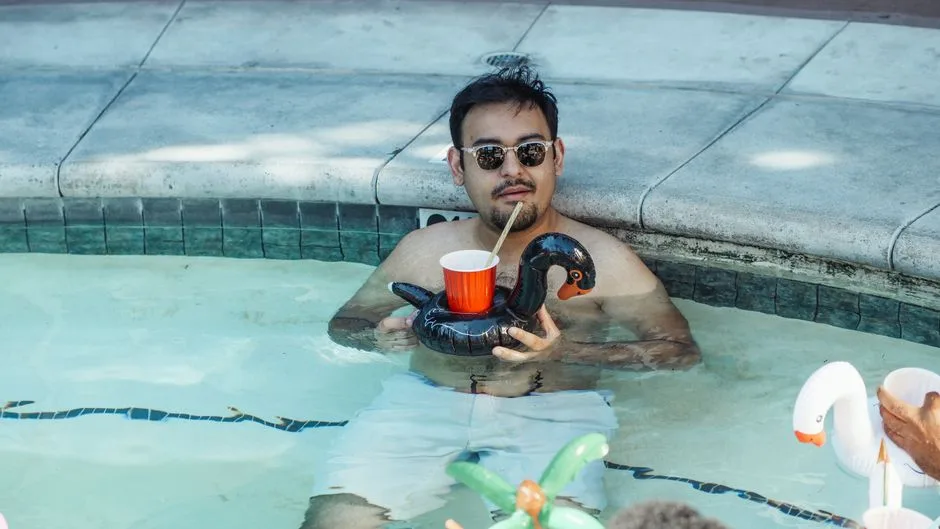
Floating Drink Station & Swim-Up Bar
A floating drink station — a large inflatable or foam platform with cup holders, a central cooler compartment, and space for bottles and garnishes — brings the bar directly to swimmers, eliminating the constant in-and-out of the pool for drink refills. The commercial floating bar platforms ($80–$250 for large 6–8 person islands) are the centerpiece; stock them with canned drinks, sealed bottles, and plastic cups (no glass anywhere near the pool — this rule is absolute). Pair the floating bar with a deck-side ‘refill station’ — a table or bar cart near the pool edge stocked with backup drinks, ice, garnishes, and cups — so the floating bartender can call for refills without leaving the pool. For a more permanent setup: a built-in swim-up bar at the pool edge (a counter overhanging the pool with submerged barstools on a shallow ledge or bench inside the pool) is the ultimate pool party feature, but requires construction ($3,000–$8,000 for a retrofitted swim-up bar with plumbing, electricity, and seating). For the budget DIY floating bar: a large inflatable lounger or island ($40–$80) with a soft cooler bag strapped to it and cup holders attached works nearly as well. Key serving rules: (1) all drinks in plastic, acrylic, or aluminum containers — no glass, ever; (2) straws either secured (paper straws that disintegrate if lost) or skipped entirely (plastic straws in a pool are an environmental and cleanup problem); (3) a dedicated ‘bar back’ person who retrieves empties from around the pool hourly — abandoned cups multiply and some will inevitably end up in the water. Budget $100–$300 for a floating drink station setup that is reusable for future parties.
Photo by Kindel Media on Pexels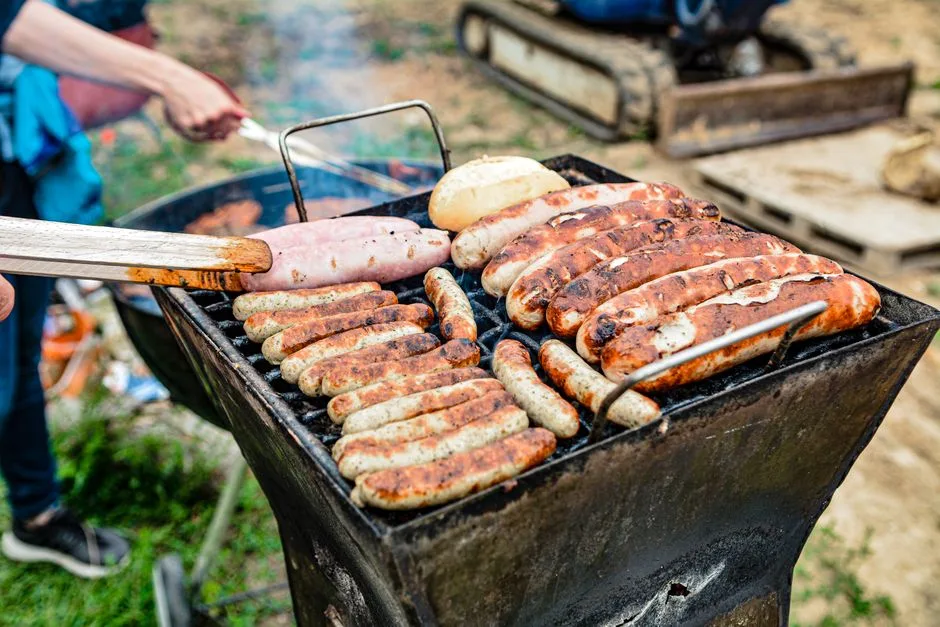
BBQ & Grill Station Setup for Pool Parties
The grill station is the heart of pool party food — the smell of barbecuing draws guests out of the pool and creates a natural gathering point that anchors the party flow. Set up the grill station as a deliberate zone, not just a grill on the deck: position the grill at least 3m / 10ft from the pool edge (grease splatter, smoke, and pool water do not mix — and it keeps the griller safely away from splashing), set up a prep table next to the grill with raw meats, marinades, tongs, and a spray bottle of water for flare-ups, and a separate serving table for cooked food with warming trays or chafing dishes ($25–$50 for disposable chafing dish sets) to keep food hot through the duration of the party. Menu planning for pool parties: prioritize foods that can be eaten with one hand (the other hand is holding a drink or toweling off), do not require a knife (plate + fork or fingers only), and taste good at room temperature (hot food cools fast poolside). The ideal pool party grill menu: burgers and hot dogs (the universal crowd-pleaser), marinated chicken skewers (one hand, no knife), grilled corn on the cob, vegetable kebabs, and a large grilled protein that becomes a sandwich bar (grilled flank steak sliced thin for DIY steak sandwiches, or grilled chicken breasts for chicken sandwiches). Have all condiments, buns, and sides on the serving table so guests build their own plates. The griller should be a designated person (or rotating volunteers) who stays at the grill rather than trying to grill AND swim — the pace of poolside eating is relaxed and spread over 2–3 hours rather than a single sit-down meal. Budget $100–$200 for a grilled menu to feed 20–30 guests; the grill itself is assumed existing equipment.
Photo by Saeed Khokhar on Pexels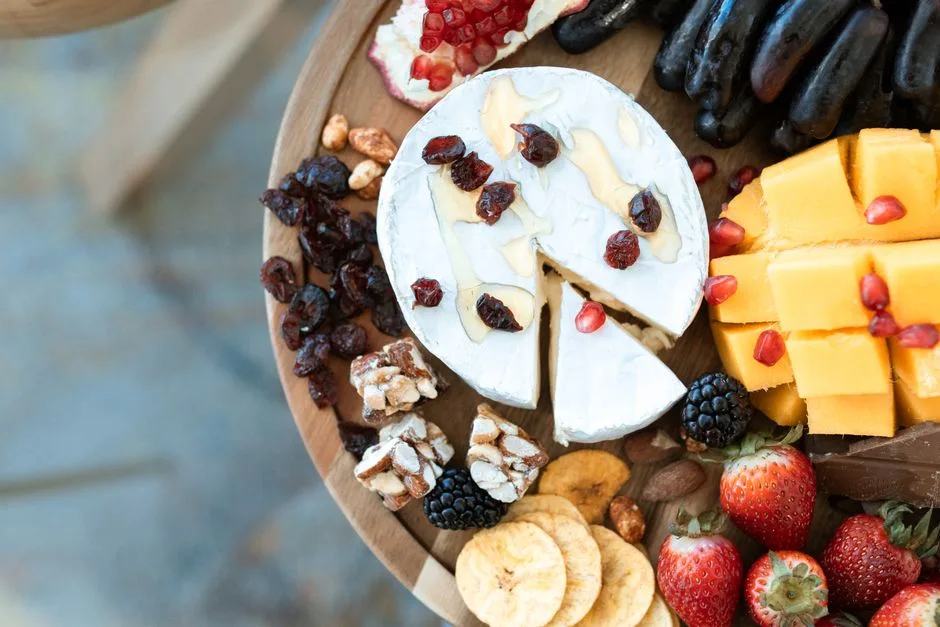
Poolside Grazing Table & Snack Board
A large grazing table or snack board — a continuous spread of finger foods arranged directly on a table runner or large board — is the pool party food format that works best for the casual, all-afternoon eating pattern of a pool gathering. Unlike a formal meal, a grazing table lets guests eat when hungry (between swims) rather than at a set time, accommodates different appetites and dietary preferences, and looks spectacular in photos. The grazing table format: cover a long table (or several tables pushed together) with butcher paper or a linen runner, then arrange foods in clusters and lines across the surface — no serving dishes needed for dry items (breads, crackers, cured meats, whole fruit), with small bowls tucked in for dips, olives, and wet items. Poolside grazing table essentials: a charcuterie section (cured meats, cheeses, crackers, grapes, nuts), a fresh fruit section (watermelon wedges, pineapple chunks, berries, grapes — all pre-cut for one-hand eating), a crudités section (carrot sticks, cucumber rounds, bell pepper strips, cherry tomatoes, with hummus and ranch dip), a chips-and-dips section (tortilla chips, pita chips, guacamole, salsa, spinach dip), and a sweet section (brownies, cookies, mini cupcakes). The key to a successful outdoor grazing table: keep perishable items (cheeses, dips, meats) in smaller quantities and replenish from a cooler or fridge rather than putting everything out at once — food sitting in 30°C / 85°F+ heat for 3+ hours is unsafe. Budget $80–$200 for a grazing table to feed 20–30 guests — significantly cheaper than a catered meal and more flexible than a formal sit-down service.
Photo by RDNE Stock project on Pexels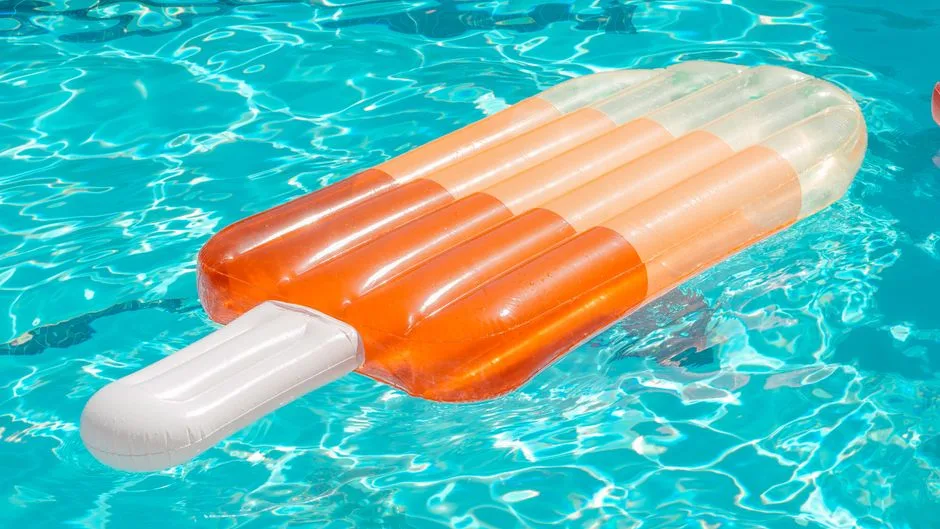
Ice Cream, Popsicle & Frozen Treat Station
A frozen treat station — a cooler or cart stocked with ice cream bars, popsicles, freeze pops, and frozen fruit — is the pool party element that generates the most genuine delight for the lowest cost and effort. On a hot pool day, the demand for cold treats is constant and universal across all age groups. The simplest setup: a large cooler or ice bucket filled with ice and stocked with a variety of packaged frozen treats ($30–$50 for a bulk assortment of 40–60 ice cream bars, popsicles, and freeze pops from a wholesale club or supermarket). For a more elaborate station: a dedicated cooler cart or drinks tub with sections for different treat types, clearly labeled, with a small waste bin immediately adjacent for wrappers and sticks (otherwise wrappers will end up everywhere). DIY options that elevate the experience: (1) freeze fresh fruit (grapes, watermelon cubes, mango chunks, berries) on skewers for healthy frozen fruit kebabs ($10–$15 for enough fruit for 50 skewers); (2) make your own popsicles in advance using popsicle molds ($10–$20 for a set) and fruit juice, yogurt, or blended fruit — these are dramatically better than store-bought and cost $0.20–$0.40 each in ingredients; (3) a soft-serve ice cream machine ($50–$120 for a home model) set up on the deck as an interactive party feature — guests make their own cones with toppings (sprinkles, crushed cookies, chocolate sauce, chopped nuts). The frozen treat station should be in a shaded location (direct sun melts everything within minutes) and positioned away from the pool edge (melted drips on the deck are fine; melted ice cream in the pool is not). Budget $30–$80 for a frozen treat station serving 20–30 guests.
Photo by Kindel Media on Pexels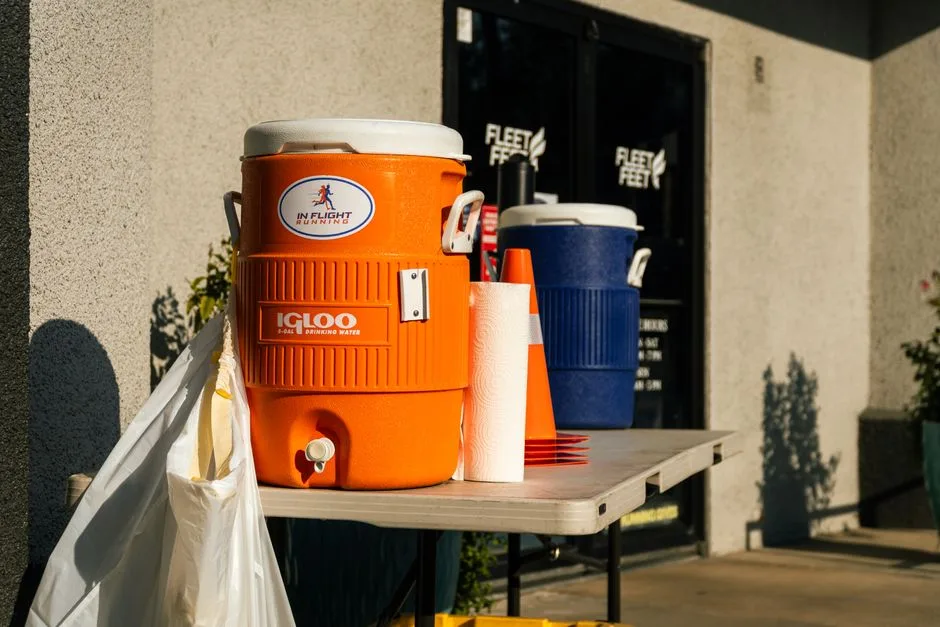
Drink Tub & Cooler Station Setup
A well-organized drink station — large galvanized tubs, coolers, or dedicated beverage carts filled with ice and stocked with a visible, appealing selection of drinks — is the party element that keeps guests hydrated and happy without constant individual trips to the kitchen fridge. The standard setup: 2–3 large drinks tubs or coolers (each holding 40–80 cans/bottles with ice), one for alcoholic drinks (beer, hard seltzers, canned cocktails), one for non-alcoholic drinks (sparkling water, sodas, juices, iced tea), and one dedicated water station (a large insulated water dispenser with ice water infused with lemon, cucumber, or mint — $25–$40 for a 3–5 gallon dispenser). Position the drink station in shade (under an umbrella, pergola, or tree — ice melts 2–3× faster in direct sun) and within easy reach of both the pool and the seating areas. Clearly label each tub (a simple chalkboard sign, a printed card in a stand, or even a marker on masking tape) so guests can find what they want without asking. Stock the station at roughly 2–3 drinks per guest for the first 2 hours, with backup inventory in a secondary cooler or fridge that can be wheeled out to replenish as tubs empty. Key details: (1) pre-chill all drinks before they go into the ice tubs (room-temperature cans will melt the ice much faster and take too long to cool down), (2) have a bottle opener tethered to each tub (a wall-mounted opener on a post or a magnetic opener attached to the metal tub), (3) include a few non-alcoholic options that look and feel festive (sparkling water with fruit garnish, fancy lemonades, mocktail cans) so non-drinkers and designated drivers are not stuck with plain water. Budget $50–$100 for ice (roughly 20–40 lbs / 9–18 kg per tub, refilled during the party) plus drinks, plus $30–$60 for reusable tubs and dispensers.
Photo by Eddie O. on Pexels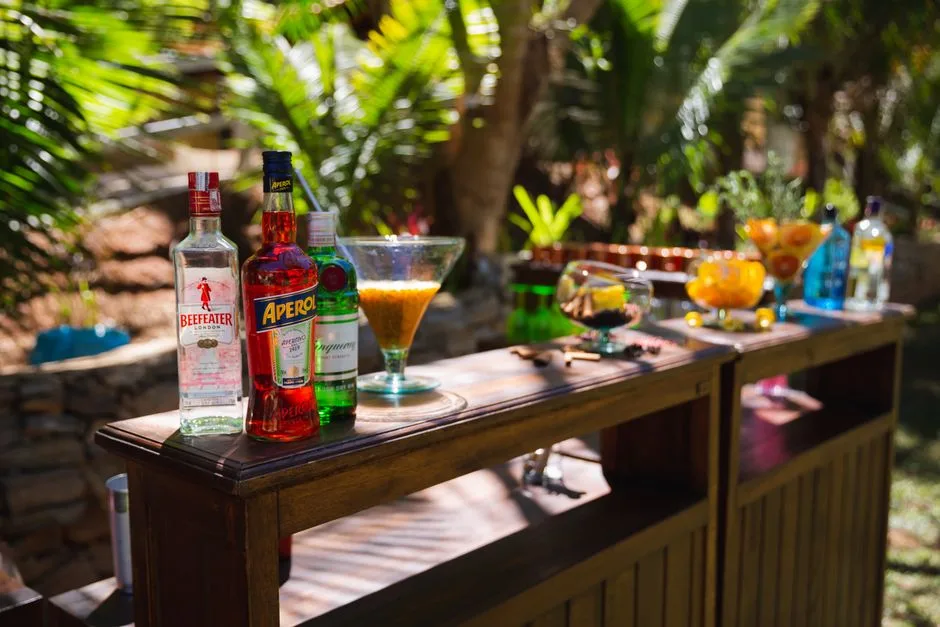
DIY Cocktail & Mocktail Bar
A self-serve or bartender-staffed cocktail/mocktail bar — a dedicated table or bar counter with spirits, mixers, garnishes, glassware, and recipe cards — turns drink service into an interactive party feature. Guests enjoy the ritual of building their own drink (or having one made for them), and the bar becomes a natural gathering point. The setup: a sturdy table (bar-height preferred, standard table height works) with a waterproof tablecloth or outdoor bar mat, organized into zones: base spirits (vodka, rum, tequila, gin — 3–4 bottles covering the main drink categories, $60–$120), mixers (soda water, tonic, juices, coconut water, ginger beer — $20–$40), fresh garnishes (citrus wheels, mint sprigs, cucumber ribbons, berries — $15–$25), and bar tools (shaker, jigger, muddler, bar spoon, ice bucket — $30–$60 for a basic set). Create 2–3 signature cocktail recipes for the party (give them themed names: ‘Poolside Punch,’ ‘Bahama Breeze,’ ‘Deep End Daiquiri’) and display them on recipe cards or a small chalkboard at the bar — this guides guests who are not confident making their own drinks and reduces the bottleneck of everyone asking ‘what can I make?’ For the mocktail version (non-alcoholic or family parties), the same bar setup works with zero-proof spirits (increasingly available and excellent), flavored syrups, fresh juices, and sodas. The mocktail bar is also a cost-effective upgrade for kids’ parties — kids LOVE making their own ‘fancy drinks’ with fruit garnishes and fancy cups. The self-serve model works for casual parties with 15–30 guests; for larger parties (30+), a dedicated bartender (a hired pro or a friend who enjoys bartending) keeps the bar flowing smoothly. Budget $100–$250 for the bar stock (spirits, mixers, garnishes) plus $30–$60 for bar tools and glassware (use acrylic for poolside).
Photo by Bruno Mattos on Pexels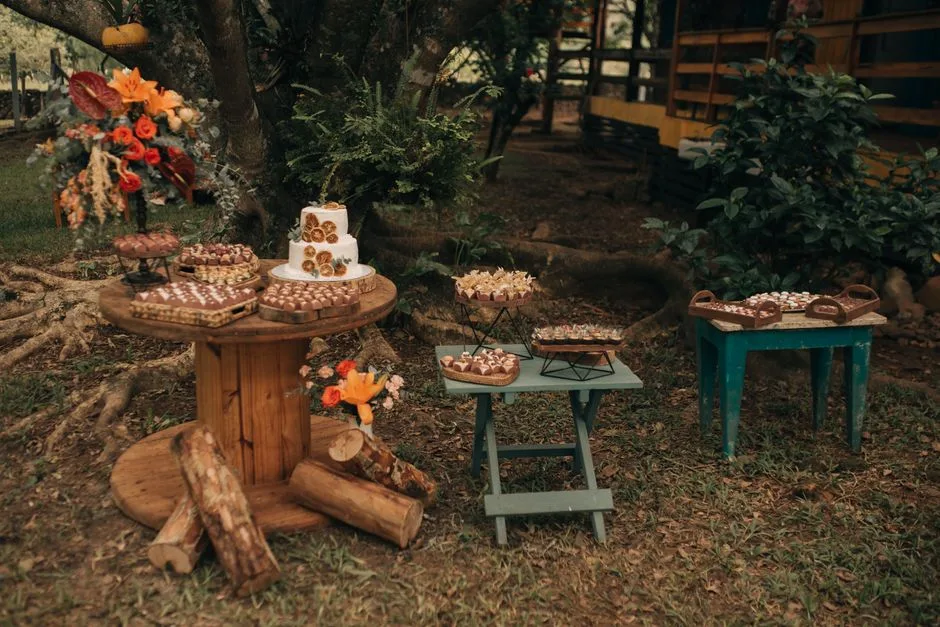
Themed Dessert Table & Cake Display
A dessert table with a centerpiece cake or themed dessert display is the sweet finale that bookends the party — it gives guests one last reason to gather (the cake cutting or dessert reveal), provides the most-photographed food moment of the event, and sends guests home with a sweet memory. For pool parties, the dessert table should be set up in a shaded area (frosting melts) and ideally revealed mid-party (after the main food has been consumed and guests have swum off the first round of eating) rather than sitting out from the start. The centerpiece: a themed cake (custom bakery cake $40–$100; DIY cake $10–$25 in ingredients) or a cupcake tower ($30–$60 for 24–36 decorated cupcakes). Supporting desserts: cookies, brownies, rice krispie treats, fruit skewers with chocolate drizzle — all finger-food items that can be eaten poolside without plates or utensils. The display: use cake stands, risers, and upturned crates to create height variety (a flat table of desserts looks underwhelming), sprinkle themed confetti or edible glitter on the table for sparkle, and include a small sign or card with the dessert names. For kids’ parties, consider a ‘decorate your own cupcake’ station (plain cupcakes, bowls of frosting, sprinkles, and toppings) — it is an activity AND dessert in one. For adult parties, a dessert-and-coffee bar (a carafe of iced coffee, a French press, or an espresso machine paired with biscotti, chocolate truffles, and mini pastries) provides a refined closing note. Budget $50–$120 for a dessert table serving 20–30. After the cake/dessert moment, wrap any remaining desserts for guests to take home (have takeaway boxes or bags ready) — leftover desserts left on a pool deck in the afternoon heat will be inedible within an hour.
Photo by Jonathan Borba on PexelsPool Party Comfort & Logistics: The Details That Matter
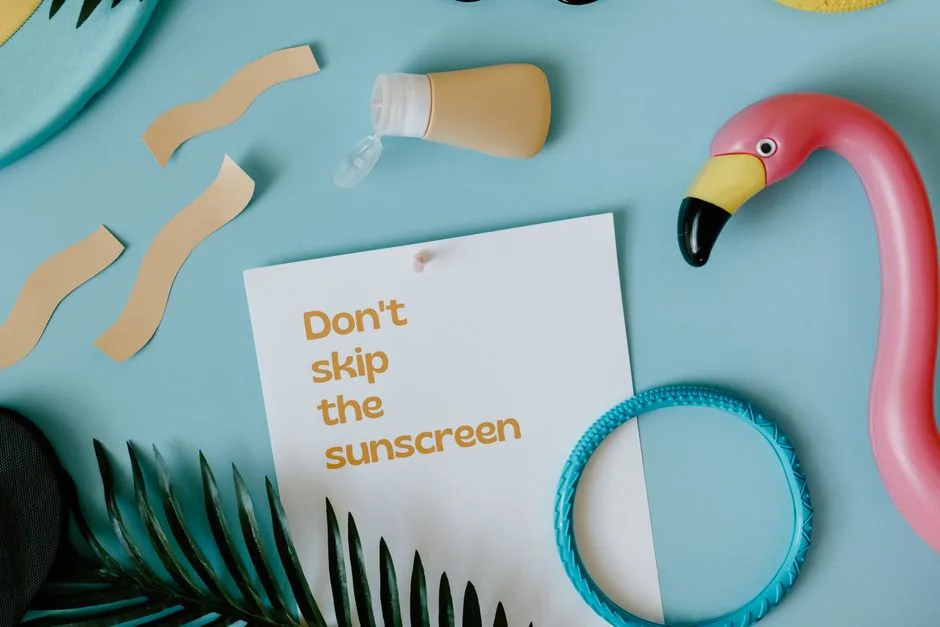
Sunscreen & Sunglasses Station
A sunscreen station — a small table or cart near the pool entry stocked with SPF 30+ and SPF 50+ sunscreen lotions, spray sunscreen, face-specific sunscreen, aloe vera gel (for anyone who missed a spot), and a mirror — is the most practical and appreciated party amenity you can provide. Many guests will arrive having forgotten sunscreen or underestimated the sun intensity around a pool (water reflection roughly doubles UV exposure on the pool deck), and having it readily available means they protect themselves rather than burning and leaving early (or suffering the next day). The station should include: at least two sunscreen formulations (lotion for face/controlled application, spray for quick body coverage — $8–$15 per bottle), a bottle of reef-safe/mineral sunscreen for guests with sensitive skin or environmental preferences, a pump bottle of aloe vera gel ($6–$10), and clean tissues or cotton rounds for blotting. A small mirror (a shatterproof acrylic mirror, $10–$20) lets guests check their coverage. Position the station near the pool entry point, in shade (sunscreen degrades in direct heat), with a small sign: ‘Sun Protection Station — Help Yourself!’ A basket of inexpensive sunglasses ($1–$3 each from party supply or dollar stores, 10–15 pairs) is a delightful bonus — someone always forgets theirs, and cheap party sunglasses in theme colors double as party favors. For kids’ parties, add a basket of broad-brimmed sun hats ($3–$5 each) — kids are notoriously resistant to sun protection and having fun hats on hand makes it a game rather than a chore. Budget $40–$70 for a fully stocked sunscreen station that serves 20–40 guests. This is the least glamorous party element and also the one guests will thank you for most genuinely.
Photo by Tara Winstead on Pexels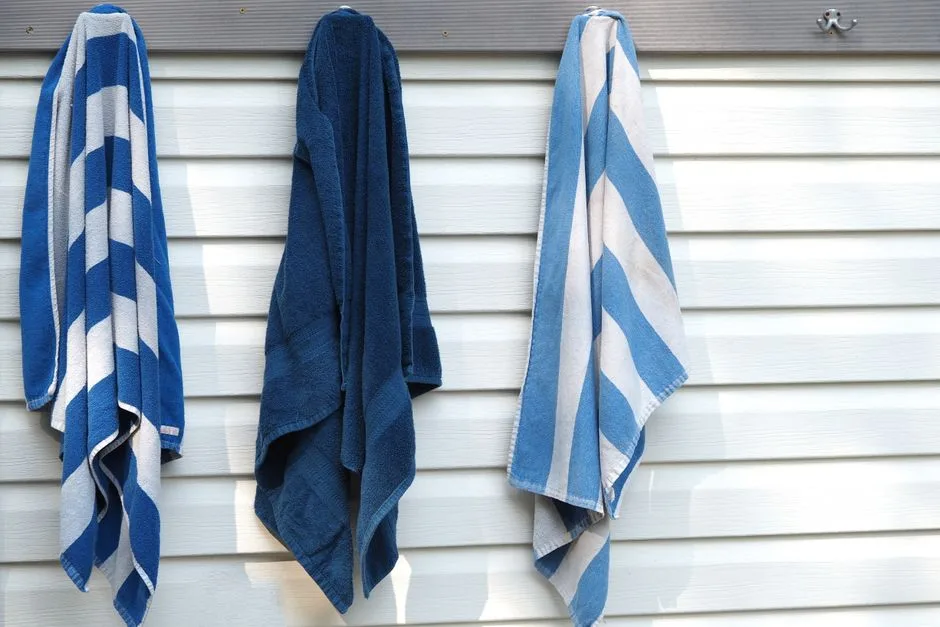
Poolside Towel Display & Warming Rack
A dedicated towel station — a neatly arranged display of fresh, rolled towels within easy reach of the pool — solves the problem of guests dripping water across the deck looking for their towel (or using someone else’s) and elevates the guest experience with a resort-like touch. The setup: a sturdy shelving unit, a large basket, a wooden crate, or a towel rack positioned near the pool exit point (where guests naturally get out), stocked with 15–30 rolled or folded towels. For warm-weather parties, a simple basket or shelf works; for evening parties or cooler days, a towel warming cabinet or heated towel rack ($80–$200 for an outdoor-rated electric towel warmer) takes the experience to luxury resort level — stepping out of the pool into a warm towel on a cool evening is genuinely delightful. Budget version: 10 minutes before guests arrive, run towels through the dryer on high heat and immediately stack them in an insulated cooler or lined basket — they will stay warm for 1–2 hours. The towel count: roughly 1.5–2 towels per expected guest (people will use multiple towels through a multi-hour party — one for initial drying, one for later). Use inexpensive but decent-quality pool/beach towels ($8–$15 each) in a color that coordinates with the party theme — the uniform color reads as intentional and resort-like. After the party, collect all used towels into a designated laundry bin (position it near the towel station) and run them through the wash. Have a separate small basket of inexpensive flip-flops ($2–$5 per pair, 5–8 pairs in assorted sizes) near the towel station — someone always forgets footwear. Budget $80–$200 for a towel station setup (towels plus shelving/baskets), with the towels being reusable for years of future parties.
Photo by Gene Samit on Pexels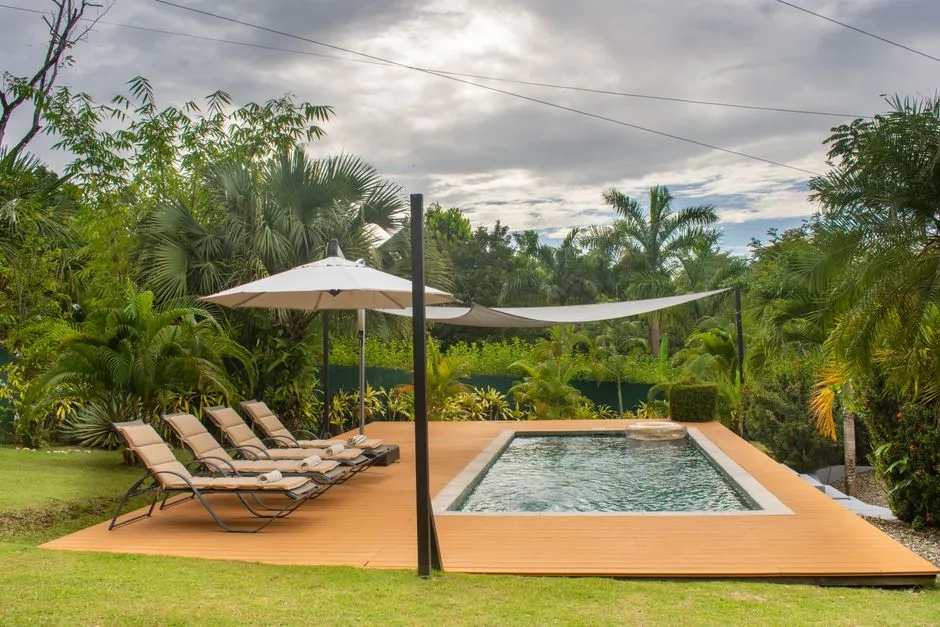
Shaded Lounge & Rest Zones
Designated shaded rest zones — comfortable seating areas under umbrellas, pergolas, canopies, or shade sails, deliberately positioned away from the high-energy activity zones — give guests a place to cool down, eat, have a conversation, or simply escape the sun without leaving the party. Pool parties can be physically intense (sun, swimming, heat, standing on hard decking), and without intentional rest zones, guests who need a break will drift away to indoor rooms or leave early. A well-designed rest zone includes: shade coverage (a large cantilever umbrella $60–$150, a pop-up canopy $50–$120, or existing permanent shade structures), comfortable seating (lounge chairs with cushions, Adirondack chairs, a deep-seating outdoor sofa, or large floor cushions/poufs for casual lounging), a side table for drinks and snacks, and ideally a fan (a pedestal fan or misting fan, $40–$100) for air circulation on still days. Position the rest zone to capture the prevailing breeze and provide a view of the pool (so resting guests still feel connected to the party action). For larger parties (25+ guests), create at least two rest zones — one near the food/drink area (the natural gathering spot for eating and conversation) and one in a quieter corner (for guests who need a genuine break from the noise and activity). The rest zone also serves as the ‘dry clothes’ zone — the area where guests who have changed out of swimsuits can sit without getting wet again. Budget $100–$300 for shade and seating additions if you do not already have permanent shade structures.
Photo by Alejandro Orozco on Pexels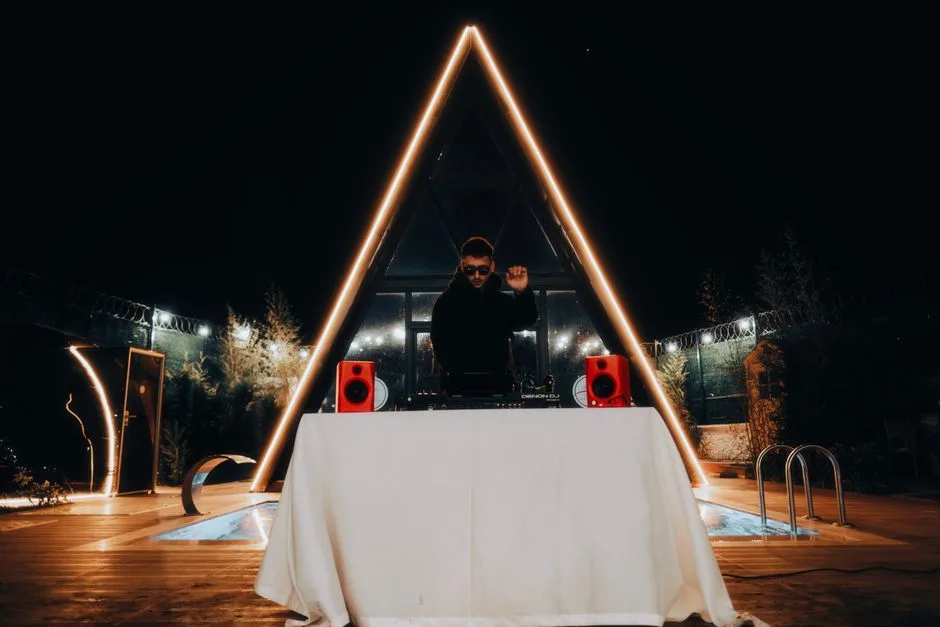
Outdoor Sound System & Playlist Setup
Music is the invisible backbone of a pool party — it sets the energy, fills awkward silences, and signals the party’s emotional arc (arrival → energy build → peak → wind-down). The minimum viable setup: a single high-quality portable Bluetooth speaker with genuine outdoor volume capability (JBL Charge, Ultimate Ears Boom, Sonos Roam, or similar — $80–$200 for a speaker that can fill a pool area at conversation+ volume). Position the speaker elevated (on a shelf, wall mount, or tall table — sound carries further when the speaker is at ear level rather than on the ground), in shade (electronics overheat in direct sun), and angled toward the pool and main gathering areas. For larger parties or better sound coverage: a pair of speakers in stereo mode (two compatible speakers linked wirelessly, positioned at opposite corners of the pool area) creates an immersive sound field that a single speaker cannot match. Playlist strategy: build a long playlist (4–6 hours minimum — much longer than the party to avoid repetition) with a deliberate energy arc: mellow, welcoming tracks for the first 30–45 minutes as guests arrive and settle in; upbeat, recognizable tracks for the main party block (2–3 hours); slightly lower-energy tracks for the final hour as guests wind down and depart. Avoid: tracks with long silent intros (they make guests think the music stopped), tracks with profanity at kids’ parties, and anything too slow/ambient during peak party hours (the energy will sag). Have a designated ‘music person’ (the host or a trusted friend) with the phone/playlist device — do not open the aux cord to a queue system where anyone can add songs (it inevitably results in jarring genre jumps and volume battles). Budget $100–$250 for a quality outdoor speaker (a one-time purchase that serves every future party and daily pool use).
Photo by Wolrider YURTSEVEN on Pexels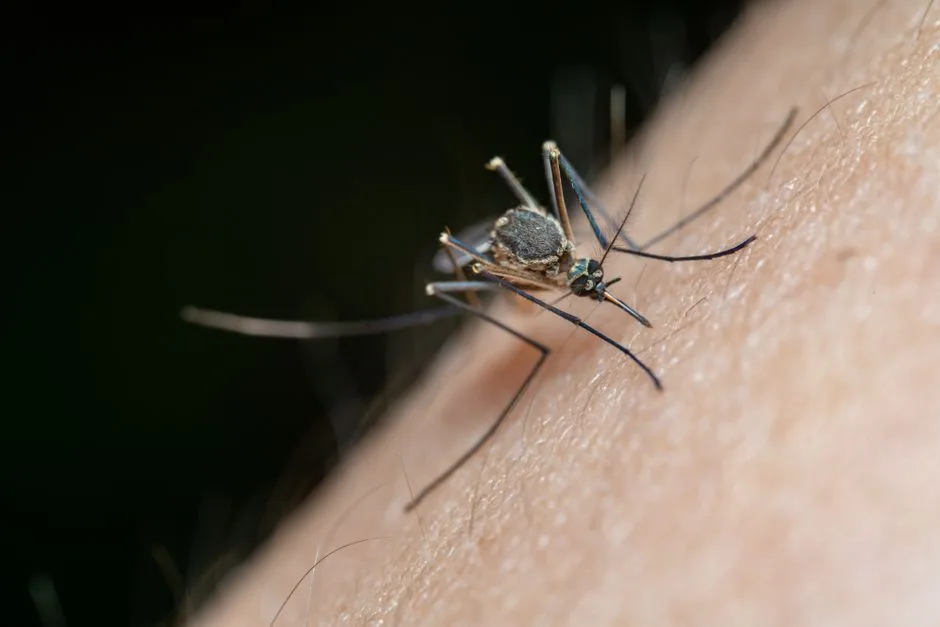
Bug Control & Evening Comfort Setup
Insects — mosquitoes in particular — can ruin an evening pool party within 30 minutes of sunset if no preparation has been made. Pool parties are especially attractive to mosquitoes: standing water (even chlorinated), warm bodies, exhaled CO2, and sweet drinks and food all draw them in. A layered bug-control strategy works much better than any single method: (1) Eliminate standing water around the party zone before the event — empty plant saucers, toys, buckets, and any container that holds water (mosquitoes breed in as little as a bottle cap of water). The pool itself is not a breeding site (chlorinated, moving water does not support mosquito larvae), but the area AROUND the pool often has hidden standing water. (2) Treat the deck and lawn area with a spatial mosquito repellent 30–60 minutes before guests arrive — apermethrin-based area spray for the lawn and shrubs around the party zone ($15–$25 for a hose-end spray bottle), or a battery-powered area repellent diffuser ($30–$60 for the device plus $10–$15 for repellent pads/mats that last 4–6 hours). (3) Position several citronella candles or torches around the seating and food areas ($3–$10 per candle/torch) — these provide modest repellent effect and also serve as ambient lighting. (4) Have a basket of personal insect repellent wipes or spray ($15–$25 for a bulk pack) at the rest zone — guests can apply as needed. (5) For the most effective single measure: a large oscillating pedestal fan positioned to blow across the main seating area — mosquitoes are weak fliers and a steady breeze (even a gentle 5–8 mph / 8–13 km/h) prevents them from landing. This fan also provides cooling airflow on still summer evenings. With a layered approach (area treatment + citronella + fan + personal repellent available), mosquito complaints at an evening pool party drop to near zero. Budget $50–$100 for full bug-control deployment.
Photo by Jimmy Chan on Pexels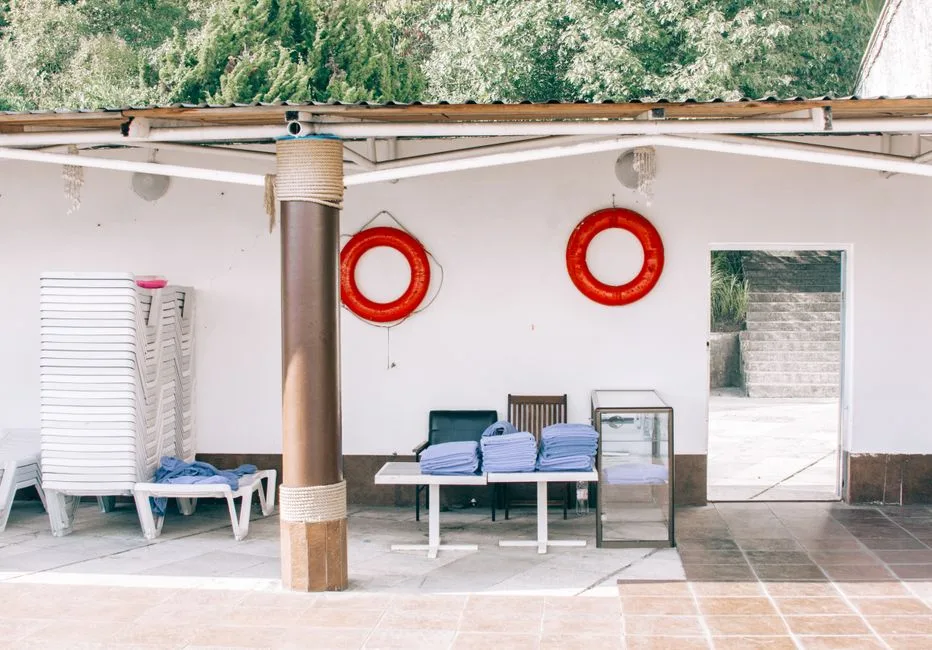
Changing Area & Swim-Up Essentials Station
A designated changing area — even a temporary one — plus a well-stocked ‘swim-up essentials’ station means guests can arrive in street clothes, change into swimwear comfortably, shower or rinse off, and access any forgotten necessities without asking the host. For homes without a dedicated pool bathroom or changing cabana, create a temporary changing room using: a pop-up privacy tent or shower tent ($30–$60, sets up in 2 minutes and provides a 4×4ft / 1.2×1.2m enclosed changing space with a floor), positioned on a level surface near the pool but not directly on the main deck. Inside the tent: a small stool or chair for sitting/changing, a hanging hook for clothes, and a small mirror. Adjacent to the changing tent: an outdoor shower or hose spray-down point for pre-pool rinsing (reduces sunscreen and body oils in the pool water), and the essentials station — a small table or cart with: a basket of hair ties/elastics ($3–$5), a bottle of leave-in conditioner or detangling spray ($6–$10, for post-pool hair), zip-top bags for wet swimsuits (a box of gallon-size bags, $5–$8), a basket of inexpensive flip-flops in assorted sizes (guests always forget), a few pairs of spare sunglasses, a bottle of body lotion (pool water and sun are drying), and a small first-aid kit (band-aids, antiseptic wipes, tweezers for splinters from the deck). The essentials station communicates thoughtfulness and preparation — guests feel cared for and the host avoids being asked ‘do you have a…’ twenty times. For homes that frequently host pool parties, a dedicated outdoor storage cabinet or deck box ($80–$200) stocked with these essentials and permanently positioned near the pool is a worthwhile investment. Budget $60–$150 for a temporary changing area and essentials station setup.
Photo by Igor Starkov on Pexels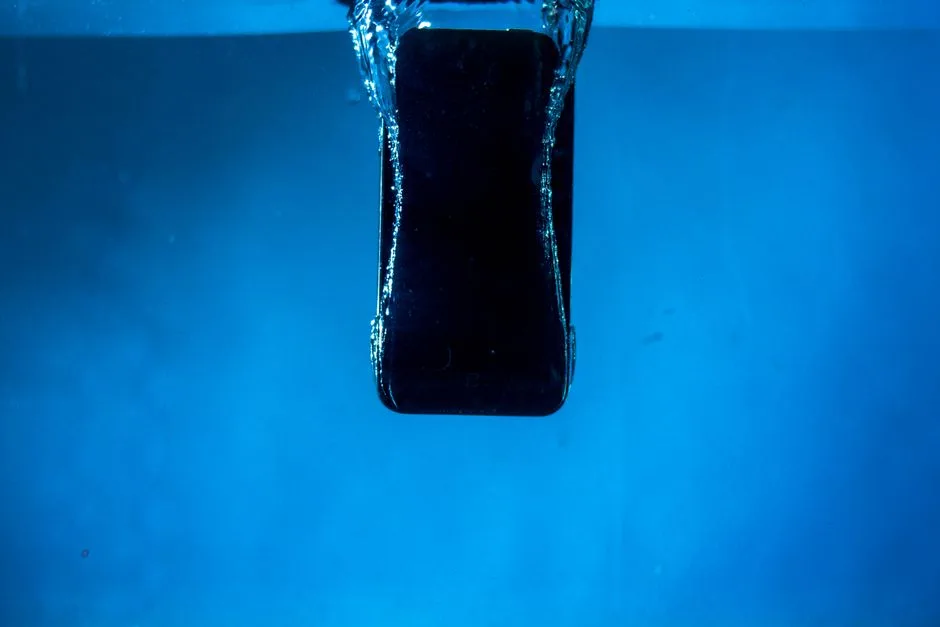
Wet Bag & Phone Protection Station
A phone protection and wet-items station — a small table or cart with waterproof phone pouches, a charging bank, and labeled containers for wet items — solves the two biggest guest anxieties at a pool party: ‘what do I do with my phone?’ and ‘where do I put my wet things?’ Guests are reluctant to fully enjoy the pool if they are worried about their phone getting splashed, dropped in the water, or stolen. Providing waterproof phone pouches (the clear plastic pouch-on-a-lanyard style with a waterproof seal, $8–$15 for a 10-pack on Amazon) lets guests protect their phone while still having it accessible for photos — and the pouches double as party favors guests can take home. Also provide a small ‘phone safe zone’: a covered, shaded spot (a lidded basket or a small waterproof storage bin) where guests can optionally leave their phones to charge — a multi-port USB charging station ($20–$40, Anker or similar) with a mix of Lightning, USB-C, and micro-USB cables means guests can top up their battery without monopolizing indoor outlets. For wet items: a designated ‘wet zone’ rack or basket system — a garment rack with hangers for wet cover-ups, shirts, and dresses ($20–$30 for a portable clothing rack), and a large bin or basket clearly labeled ‘WET TOWELS’ and ‘WET SWIMSUITS’ (separate bins). Also provide a stack of gallon-size zip-top bags for guests to take wet swimsuits home without soaking everything else in their bag — this small detail ($5 in bags) consistently earns disproportionate gratitude. The phone-and-wet-items station should be within sight of the pool (so guests feel their items are secure) but far enough from the splash zone to stay dry (minimum 3m / 10ft from pool edge). Budget $50–$100 for a complete station setup, with waterproof pouches being the highest-value item.
Photo by Sergey Meshkov on Pexels1 week before: Finalize theme, guest list, and menu. Order any online decor, party supplies, and specialty items (balloon garland kits, themed tableware, inflatables). Test any equipment that will be used (speakers, projector for movie night, grill, lighting). Check the pool chemical balance and clean the pool — it needs to be crystal clear on party day, not cloudy from a chemical imbalance that takes 48 hours to resolve.
2–3 days before: Shop for non-perishable food, drinks, ice, and supplies. Confirm the weather forecast and have a rain plan (indoor backup space or a pop-up canopy that can cover key areas). Mow the lawn, tidy the garden, sweep the pool deck, and clean outdoor furniture.
1 day before: Deep-clean the pool (skim, vacuum, brush walls, empty skimmer baskets, backwash filter if needed). Set up any decor that can go up early (string lights, large structures, tables). Prepare any make-ahead food (marinades, dips, desserts, frozen treats). Charge all electronics (speakers, phones, battery-powered lights, camera). Fill water balloon and freeze pop/popsicle batches.
Morning of the party: Final pool check (skim surface, test chemicals, quick vacuum if needed). Set up tables, chairs, shade structures, and stations (drink tubs, sunscreen, towels, games). Build balloon garlands and other last-minute decor. Set up the sound system and test volume at party level. Fill drink tubs with ice and pre-chilled drinks 1–2 hours before guest arrival (not the night before — the ice will melt).
1 hour before: Light tiki torches and candles (if using). Turn on background music. Do a final walk-through — pool looks clean, stations are stocked, shade is in position, safety equipment is visible. Take a breath. The party starts when the first guest arrives, but the host’s experience of the party is determined by what happened in the days before.
After the party: Collect and wash all towels. Retrieve all items from the pool (inflatable floats, toys, any items that fell in). Skim the pool surface. Empty and clean drink tubs. Store reusable decor for future parties. Run the pool pump on high for 24 hours after a heavy-use party to clear the increased organic load (sunscreen, body oils, grass, debris) from the water.
$100–$200 — The Smart Budget Party (15–25 guests): Pick a theme that leans on DIY decor (tropical luau with fresh palm fronds, retro party with printed geometric patterns on poster board). Focus budget on: bulk drinks and ice ($40–$60), one statement decor element (a balloon garland kit $25–$40, or a set of themed inflatable floats $30–$50), classic games requiring no equipment (Marco Polo, cannonball contest, noodle races), and a grazing table of budget-friendly finger foods (chips, dips, fruit, cookies — $40–$60). Use what you already own for furniture, towels, and shade. A well-executed budget party with a clear theme and great playlist beats an expensive party with no personality every time.
$300–$600 — The Full-Experience Party (20–35 guests): This is the sweet spot where the party feels designed and complete. Add: a quality inflatable obstacle course or floating bar island ($150–$300), professional-looking decor (a large balloon garland, coordinated linens and serveware, string lights if you do not already have them — $100–$200), a grilled menu with a proper BBQ station ($100–$150), and a stocked cocktail/mocktail bar ($80–$120). At this tier, you should also invest in the comfort infrastructure: sunscreen station, towel display, bug control, and phone protection — these are the details guests notice and appreciate ($50–$80).
$800–$1,500+ — The Signature Event (30–50+ guests): At this level, you are adding big-ticket elements that transform the party into a talked-about event: a professional-grade dive-in movie setup ($300–$600 for projector + screen + sound, which you keep for future use), a catered food service or a hired grill chef ($300–$600), a bartender for the cocktail bar ($150–$300), and possibly a performer (mermaid for kids’ parties, live acoustic musician for adult parties — $200–$500). At this tier, strongly consider hiring a lifeguard or dedicated pool safety monitor ($100–$200) — with 30+ guests in and around the water, professional supervision is worth every dollar. The key insight: spending more does not replace good planning. A $1,500 party with poor flow and no shade is worse than a $400 party with thoughtful design and a relaxed host.
A note from our service team. The party doesn’t end when the guests leave — the water pays the bill the next morning. Fifty swimmers, spilled drinks, sunscreen, and four hours of splashing can burn through a day’s worth of free chlorine before sunrise, which is why we tell every host the same thing: shock the pool the night of the party, not the morning after. It’s the single highest-return habit we know for party pools. And if anyone’s tempted to grab the household bleach instead of pool shock, our chlorine vs bleach guide explains why that ends badly.
Party-ready water, without the last-minute scramble
Guests see the pool before they see anything else you planned. A robotic cleaner works the floor, walls, and waterline on its own the night before — then clears the leaves, sunscreen film, and debris the party leaves behind.
See Aiper robotic pool cleanersMore Pool Lifestyle & Design Inspiration
This article is part of our Pool Lifestyle & Entertainment series — practical guides for making the most of your pool as a gathering space. Explore related design and entertaining resources:


