

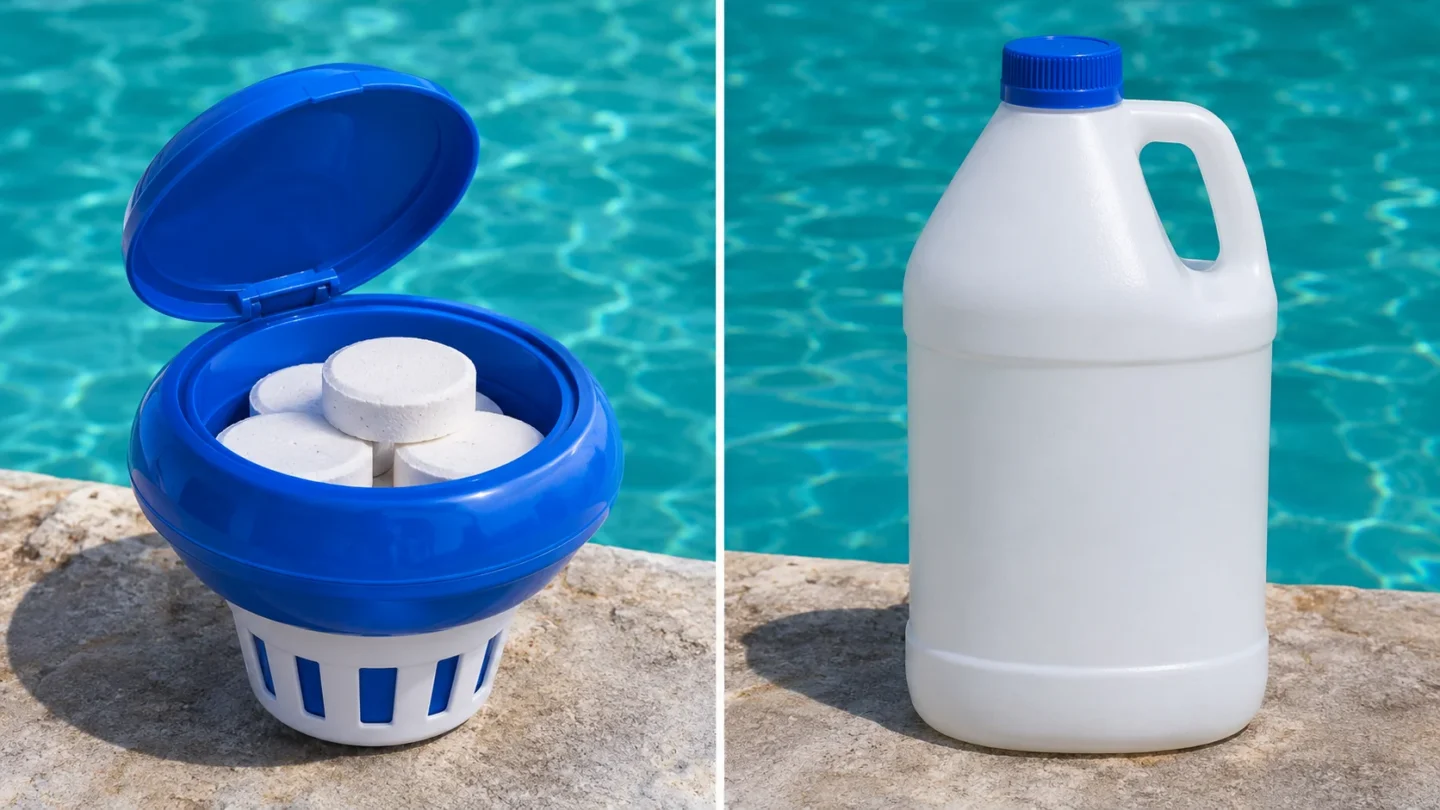
Both put chlorine in the water, and on that count there’s nothing to choose between them. The difference is everything that comes along with the chlorine. A tablet brings a stabilizer into the pool with every dose; liquid brings none, but shoves the pH up on its way in.
Pick the wrong one for the pool and the trouble doesn’t show up for weeks. It shows up as water that won’t hold a chlorine reading no matter how much goes in.
Convenience
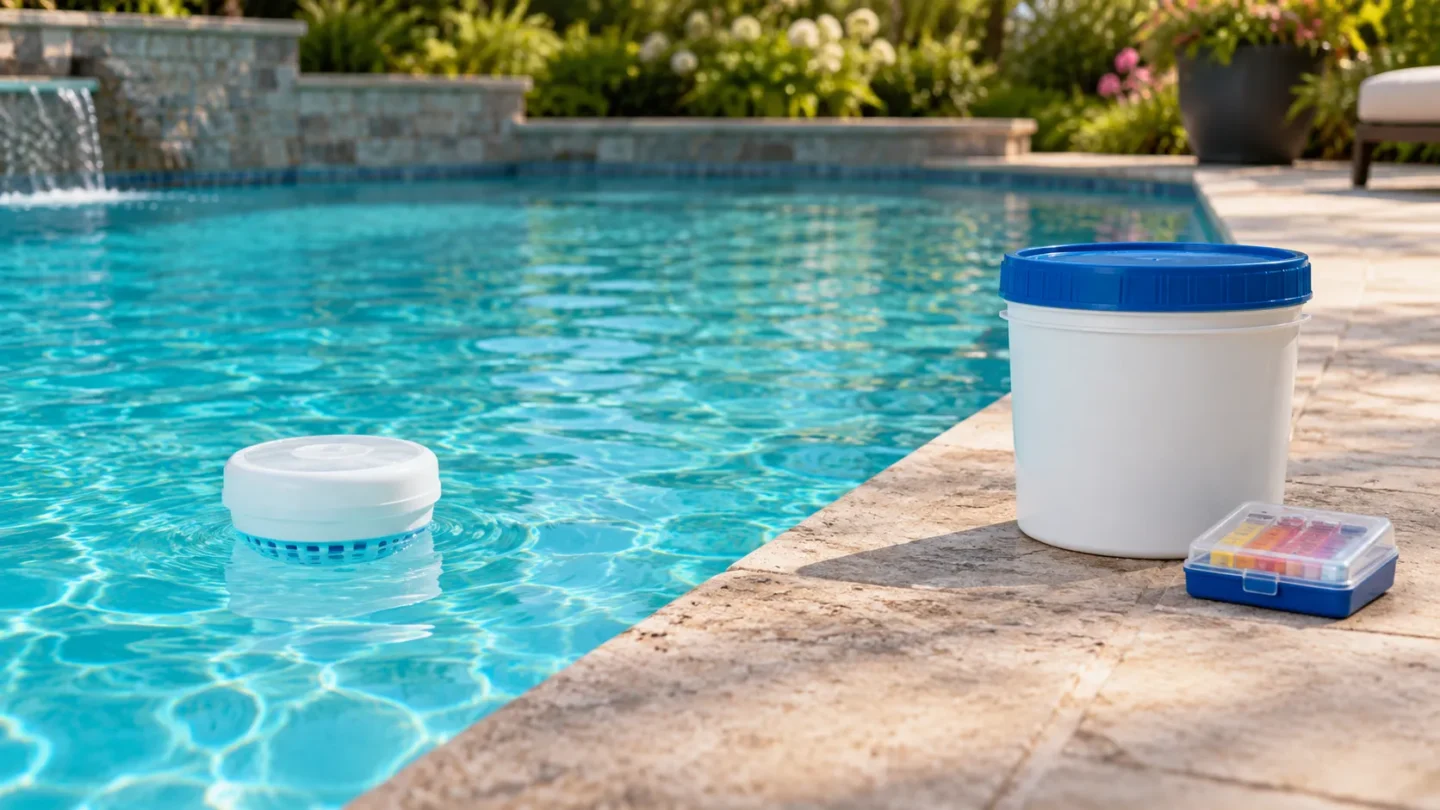
Tablets win this outright, and it’s the main reason most backyard pools run on them. A trichlor tablet is a slow-dissolving puck of 90% available chlorine that goes into a floater or an inline feeder and meters itself out over days.
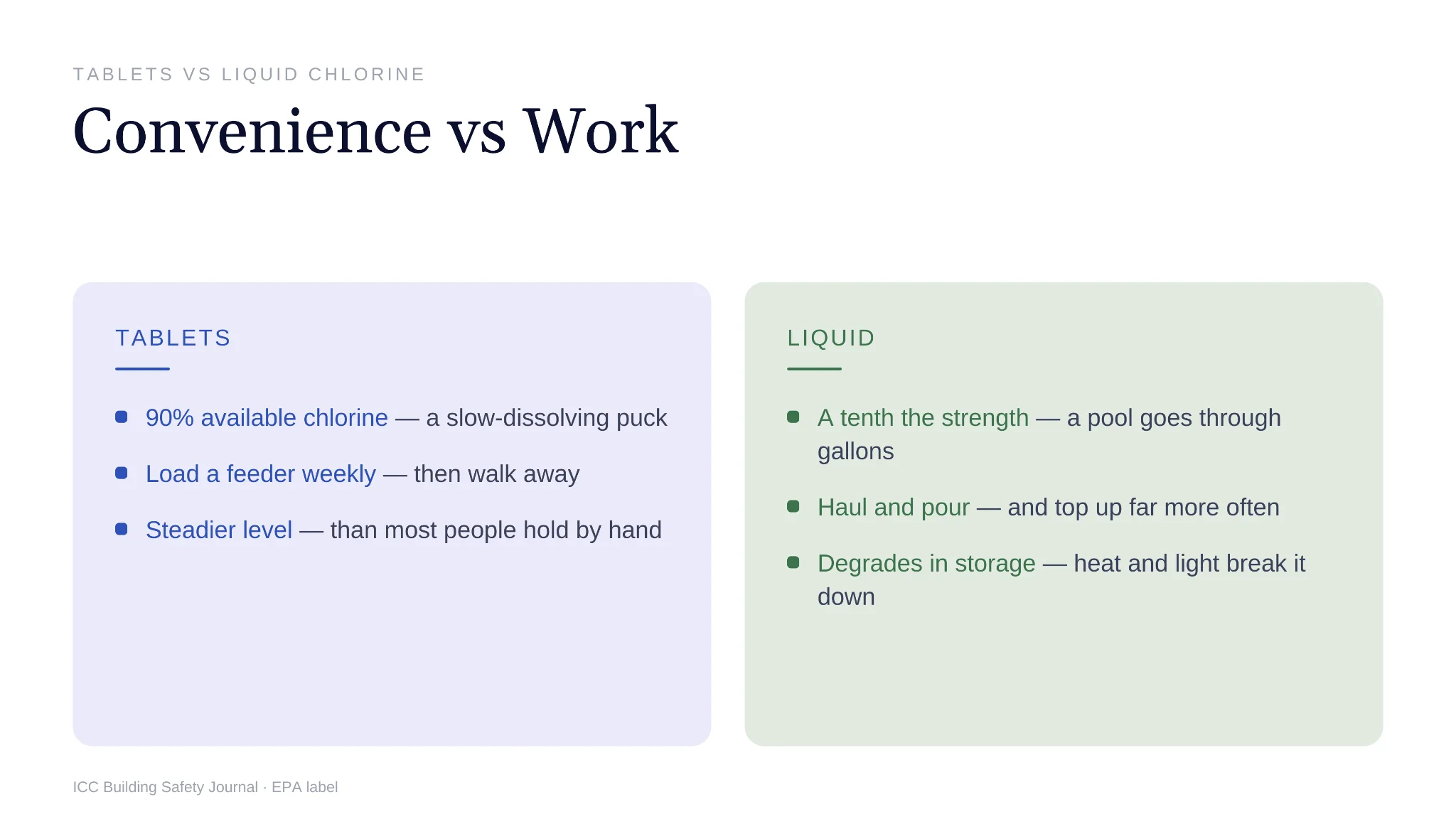
Load it once or twice a week and walk away. Through a stretch of ordinary weather, the feeder holds a steadier chlorine level than most people manage by hand.
Liquid is work. It’s sodium hypochlorite in a jug — somewhere around a tenth the strength of a tablet by weight — so a decent-sized pool goes through gallons, hauled home, poured along the water line, and topped up far more often because there’s no slow-release to it.
It also loses punch sitting in the shed; heat and light break it down, so a jug bought in bulk and left through a hot month isn’t as strong as the label when it finally gets used.
The Cyanuric Acid Problem
Here’s the part that decides the whole question, and it never appears on the pail. Trichlor is a stabilized chlorine, meaning every tablet carries cyanuric acid, and it hands that CYA off into the water as it dissolves, roughly 0.6 ppm of it for every ppm of chlorine added.
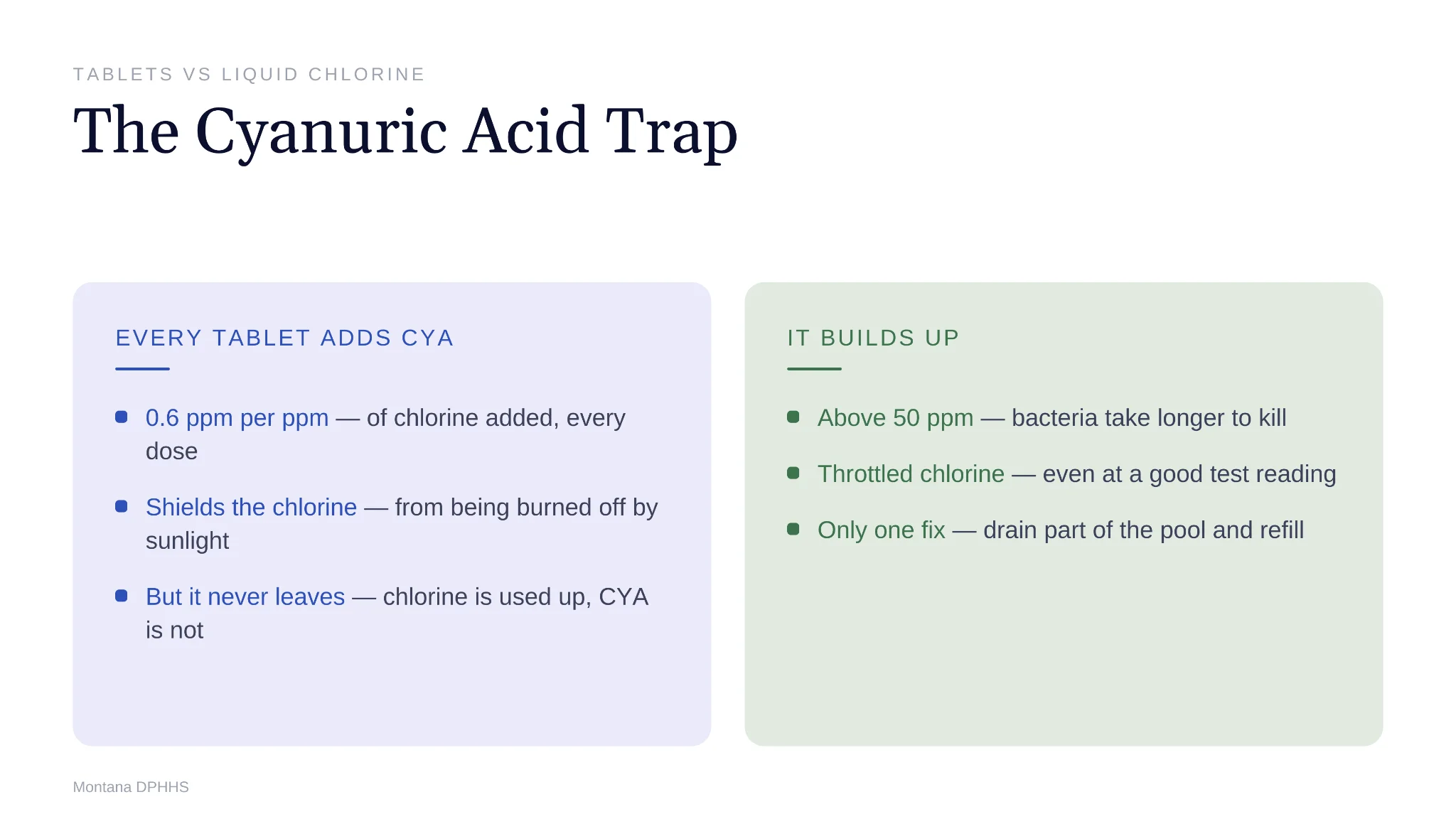
A little stabilizer is a good thing outdoors; CYA shields chlorine from sunlight and cuts how much gets burned off on a bright day. The problem is what happens over a season.
Chlorine gets consumed. Cyanuric acid never does, it accumulates. Tablet after tablet, week after week, the CYA climbs and stays climbed, and past a point it stops protecting the chlorine and starts smothering it. Once CYA runs above about 50 ppm, bacteria take noticeably longer to kill than they would in the same water with less stabilizer, and a CDC study found high CYA badly blunts chlorine’s already-weak grip on Cryptosporidium. This is the trap behind the convenience.
The pool that’s been run on tablets all summer eventually won’t sanitize properly even with the chlorine reading sitting where it should, because the stabilizer has throttled it.
For routine free-chlorine adjustment, use the Pool Chlorine Calculator with your pool volume, test reading and product concentration to estimate how much to add.
And no additive pulls CYA back down. The only way to lower it is to drain part of the pool and refill with fresh water, dumping water to dilute what the tablets built up, and some clings to the plaster and the filter and reads back even after a refill. A convenience that ends in dragging a third of the pool out onto the lawn is not as cheap as the feeder made it look.
What Liquid Asks for Instead
Liquid sidesteps the CYA trap completely. No stabilizer goes in, so nothing accumulates and the drain-and-dilute day never comes. That’s its real case, and on a pool where CYA has already run high, it’s the only sensible way to keep adding chlorine.
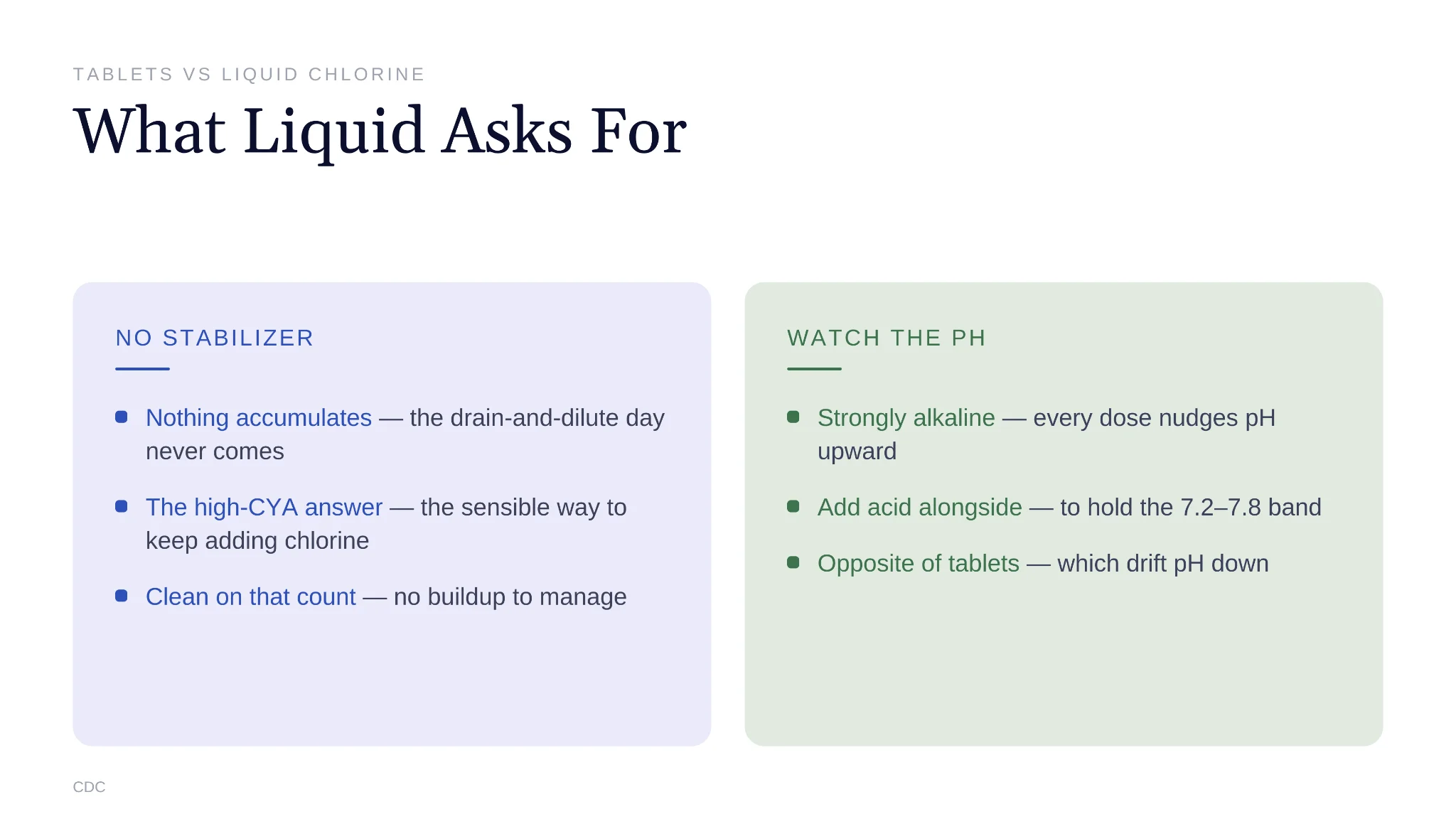
What it wants in return is attention to pH. Sodium hypochlorite is strongly alkaline, so every dose nudges the pH upward, and a pool run on liquid usually needs acid added alongside to hold the 7.2 to 7.8 band where chlorine actually works. Trichlor does the opposite on its way in, drifting pH and alkalinity down.
Neither is hands-off on the chemistry; they just pull in opposite directions and need opposite corrections.
| Chlorine tablets (trichlor) | Liquid chlorine (sodium hypochlorite) | |
|---|---|---|
| Strength | 90% available chlorine | 10–12%, much weaker by volume |
| Stabilizer | Adds cyanuric acid every dose | Adds none |
| Long-term risk | CYA builds up, eventually slows disinfection | None from CYA; pH creeps up |
| pH effect | Drifts pH and alkalinity down | Pushes pH up, needs acid to balance |
| Handling | Load a feeder weekly, walk away | Haul and pour gallons, more often |
| Storage | Stable, long shelf life | Degrades in heat and light |
Keep the Chlorine Working
Whichever one feeds the pool, dirty water makes it do more work than it should.
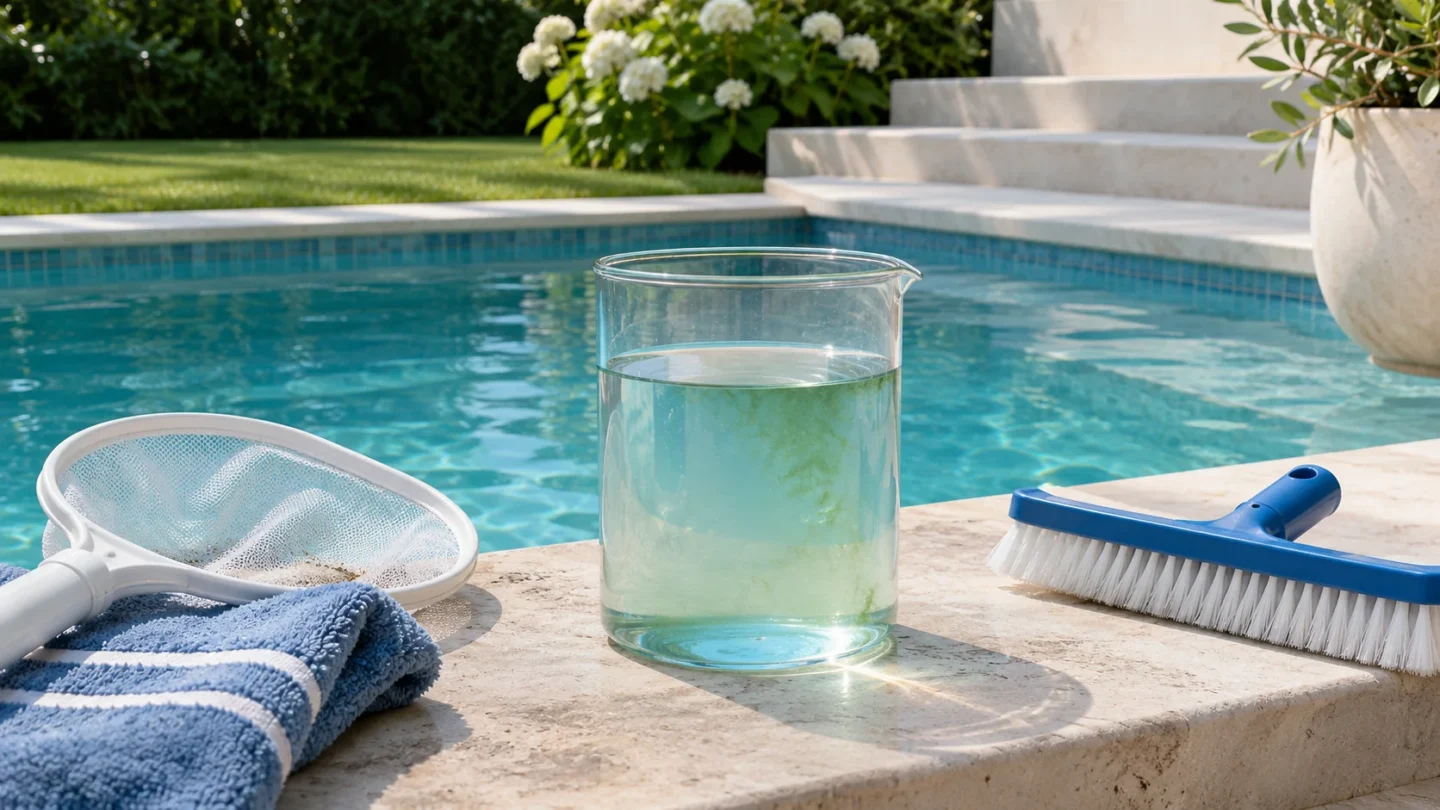
Debris rotting on the floor and biofilm spreading over the walls both eat chlorine, a pool left to collect leaves and grime burns through its residual faster, which means more tablets or more jugs just to hold the same number on the strip.
A clean pool runs leaner on chlorine, and keeping the surfaces clear is the cheapest way to get more out of whatever’s going in.
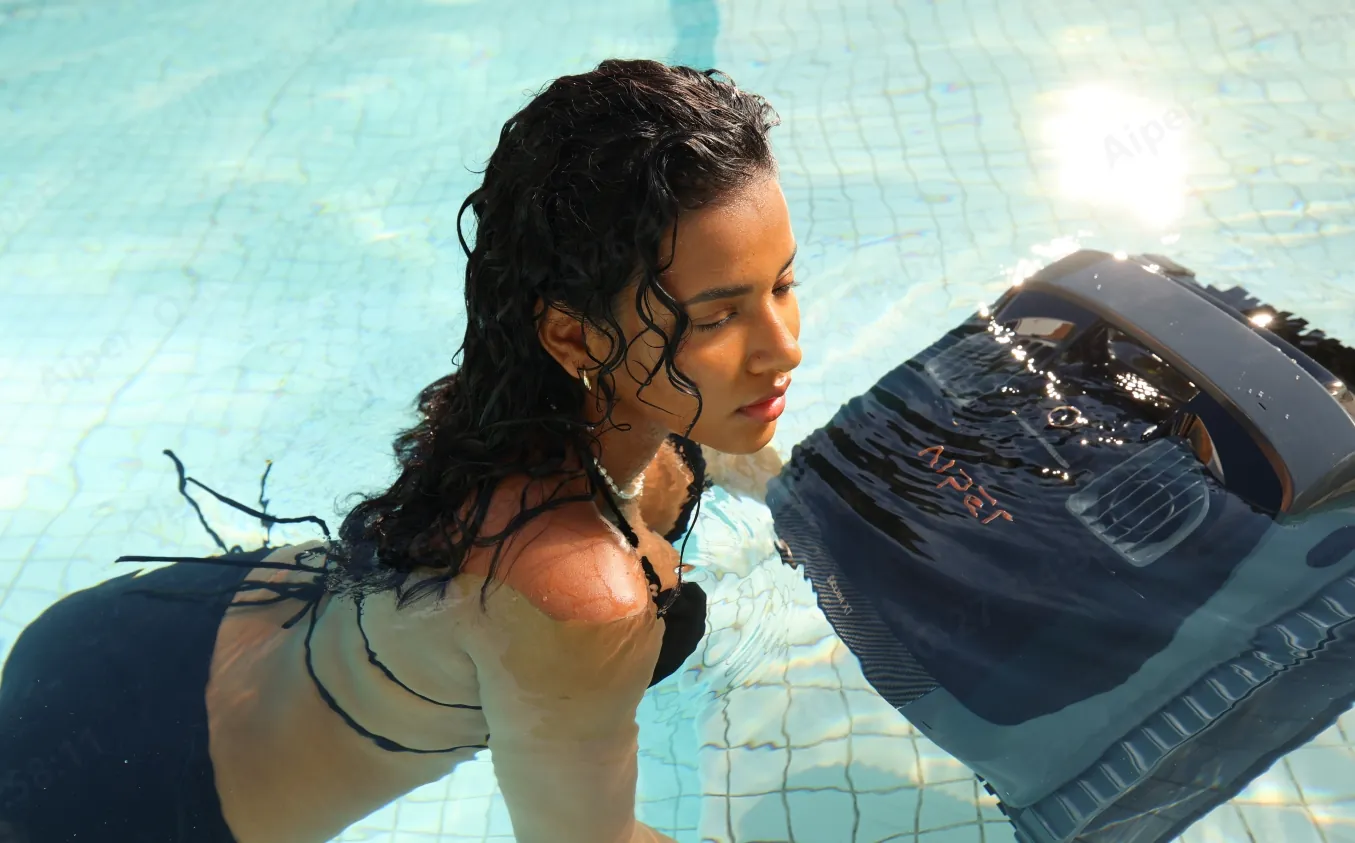
That’s steady, repetitive work, and an Aiper robotic pool cleaner takes it over, scrubbing the walls and lifting the settled debris that would otherwise sit there consuming chlorine, running on its own power without drawing on the circulation pump. It won’t dose the water or balance it. What it does is stop the chlorine’s job from getting harder than the chemistry already makes it.
Get more pool and lawn care guides from Aiper on Google