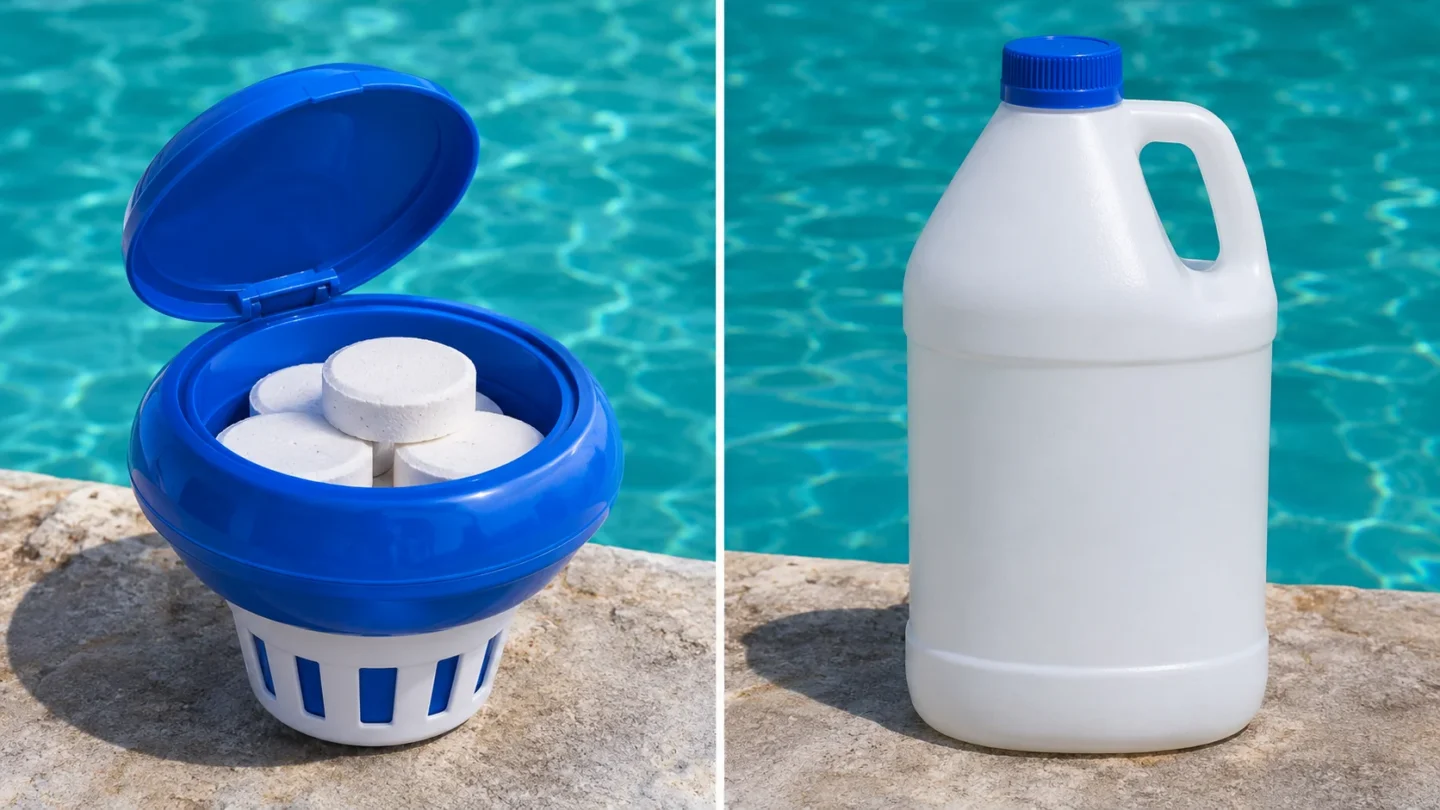


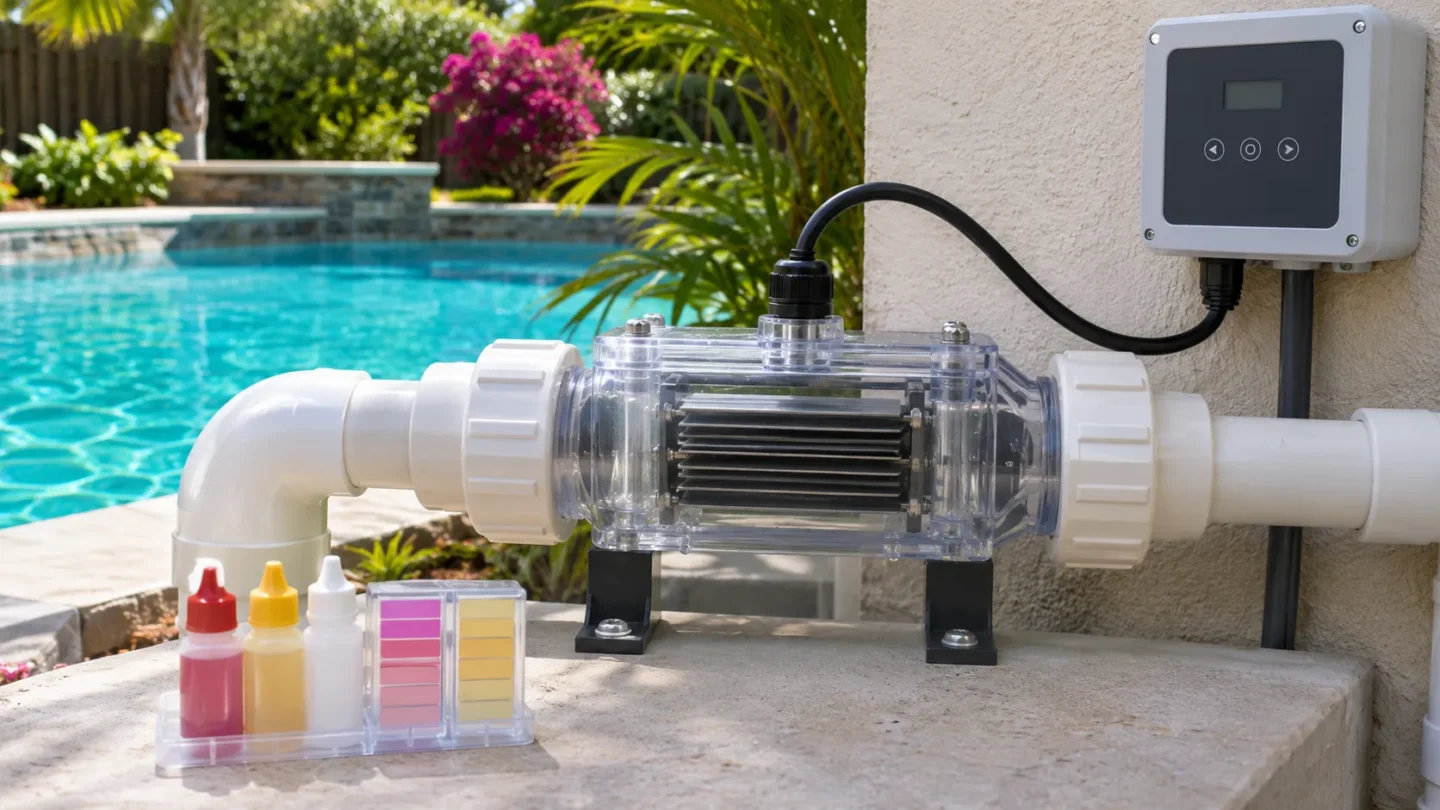
Here’s the thing most people get wrong before they’ve even priced a system: a salt water pool is a chlorine pool.
Same sanitizer, same readings, same chlorine doing the work of killing what’s in the water. The salt doesn’t replace chlorine. It makes it.
Walk into this choice thinking you’re picking between chlorine and no chlorine, and you’re going to be confused by your own test kit within a week, because a healthy salt pool shows chlorine on every test, exactly like the pool down the street with the bucket of tablets.
So the real question isn’t chlorine or no chlorine. It’s where the chlorine comes from, and whether that difference is worth the money.
Where the ‘Chlorine-Free’ Idea Comes From
The confusion is mostly in the name.
“Salt water pool” calls up the ocean, or at least something gentler than the eye-stinging, bleach-smelling pool you remember from childhood, and the marketing has leaned on that for years.
People hear salt and assume “instead of chlorine.”
What’s actually going on is a swap in how the chlorine gets into the water, not whether it’s there.
Everything downstream of that, like what sanitizes the pool, what you test for, what keeps it safe to swim in, runs on chlorine either way.
A Salt Pool Makes Its Own Chlorine
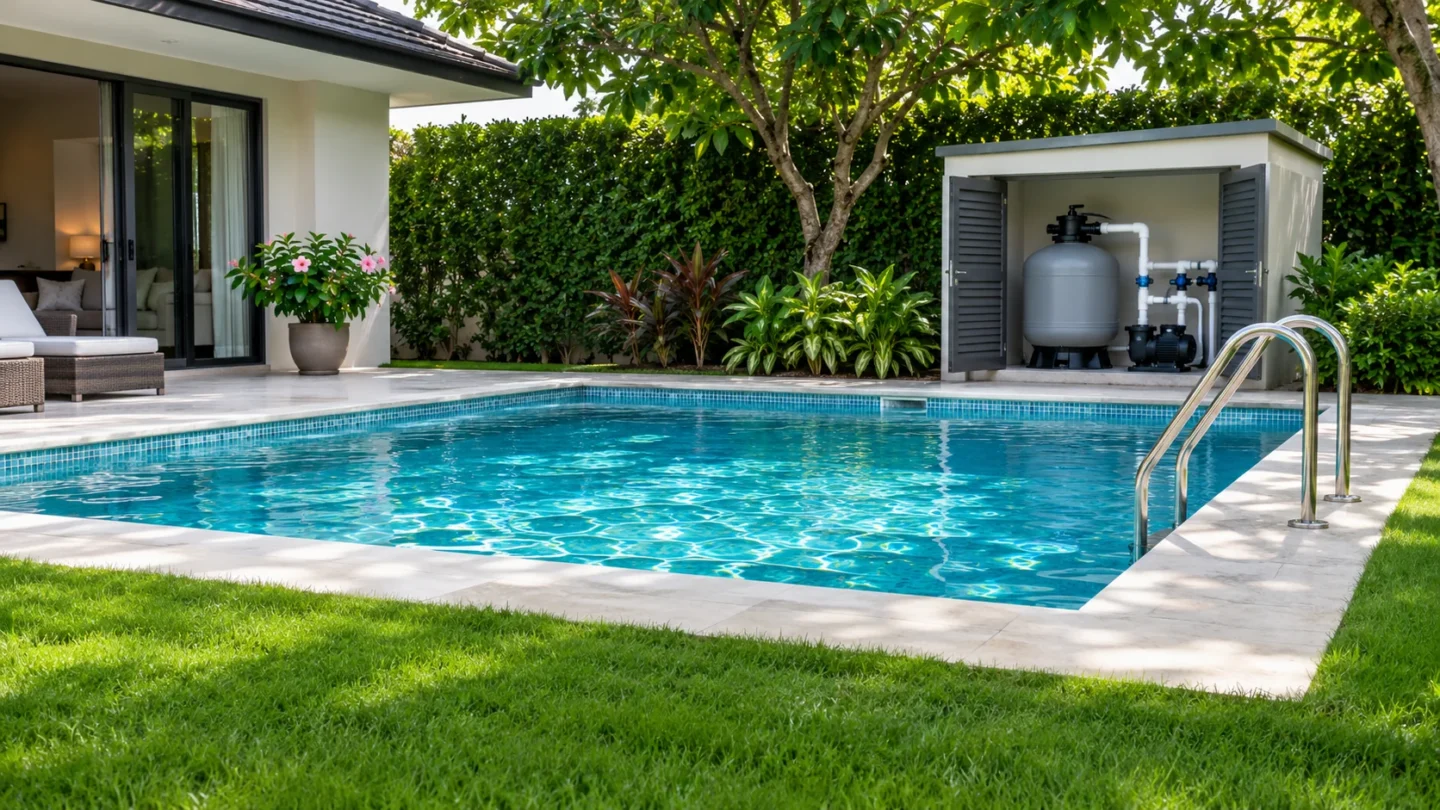
A salt pool has a device in the plumbing called a salt chlorine generator, or a salt cell.
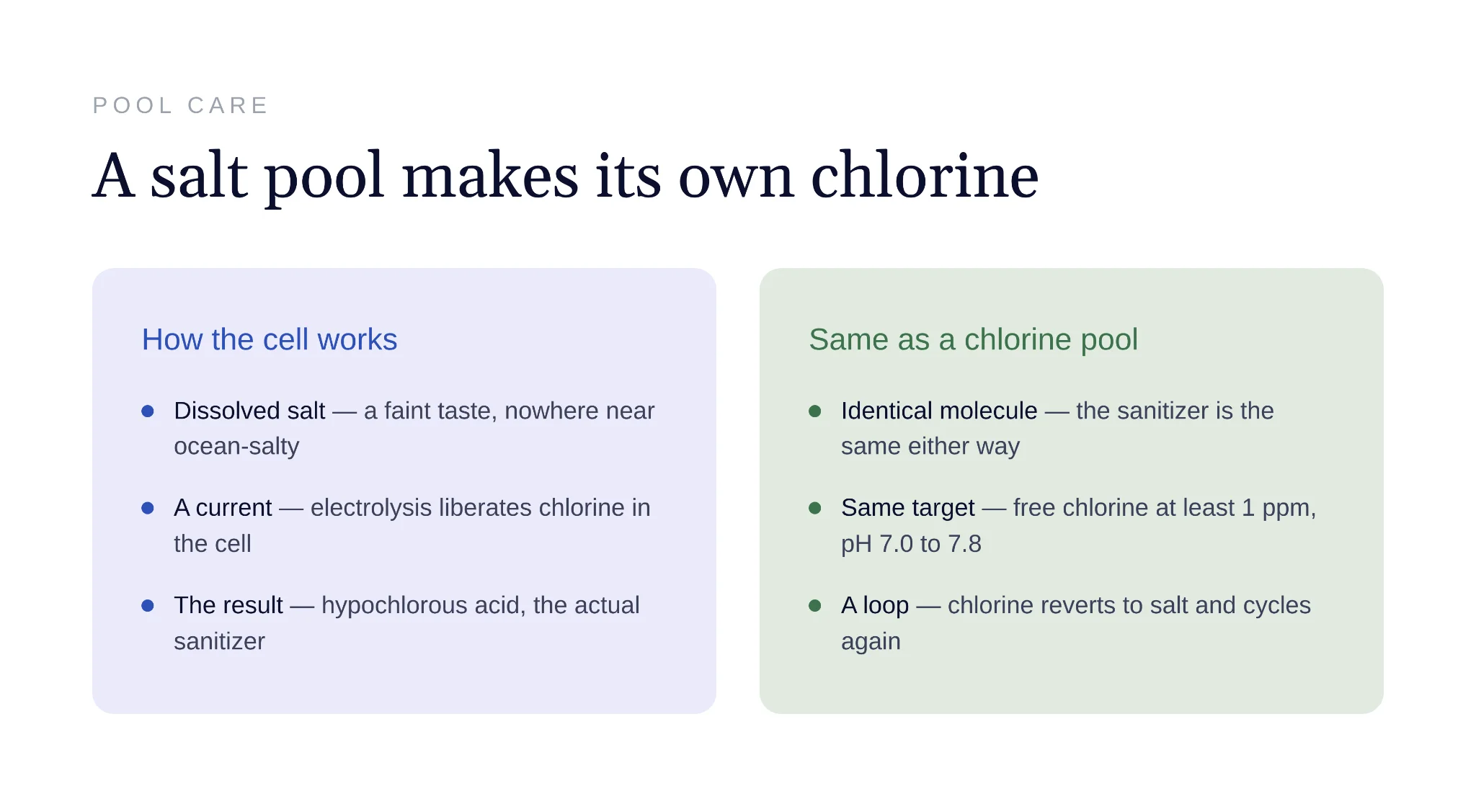
You dissolve salt in the water to a low concentration, nowhere near ocean-salty, more like a faint taste, and the water flows through that cell on its way back to the pool.
Inside the cell, the magic is just electricity.
A current runs through the salty water, and passing that current liberates chlorine at the cell’s plates; the chlorine then reacts with the water exactly the way conventional chlorine does, producing hypochlorous acid, which is the actual killing agent.
That’s electrolysis. Salt in, current through it, chlorine out. The sanitizer floating in a salt pool and the sanitizer in a tablet-fed pool are the same molecule doing the same job.
There’s a loop to it, too.
The chlorine sanitizes the water, does its work, and reverts toward salt, which cycles through the cell and gets turned into chlorine again.
You top up the salt occasionally because some is lost to splash-out and backwashing, but the generator is producing chlorine continuously as long as the pump’s running and the cell’s powered.
Which is why the sanitizing rules don’t change one bit.
Chlorine is what kills the germs in any pool, and the target is a free chlorine level of at least 1 ppm with pH held between 7.0 and 7.8, and that’s true whether a cell made the chlorine or you poured it from a jug.
A salt pool that stops generating is a pool with no sanitizer, same as a chlorine pool nobody’s added tablets to. The chemistry doesn’t care how the chlorine arrived.
What’s Actually Different?
If the sanitizer’s identical, a fair question is why anyone bothers with salt at all.
The differences land on convenience and cost more than on the water itself.
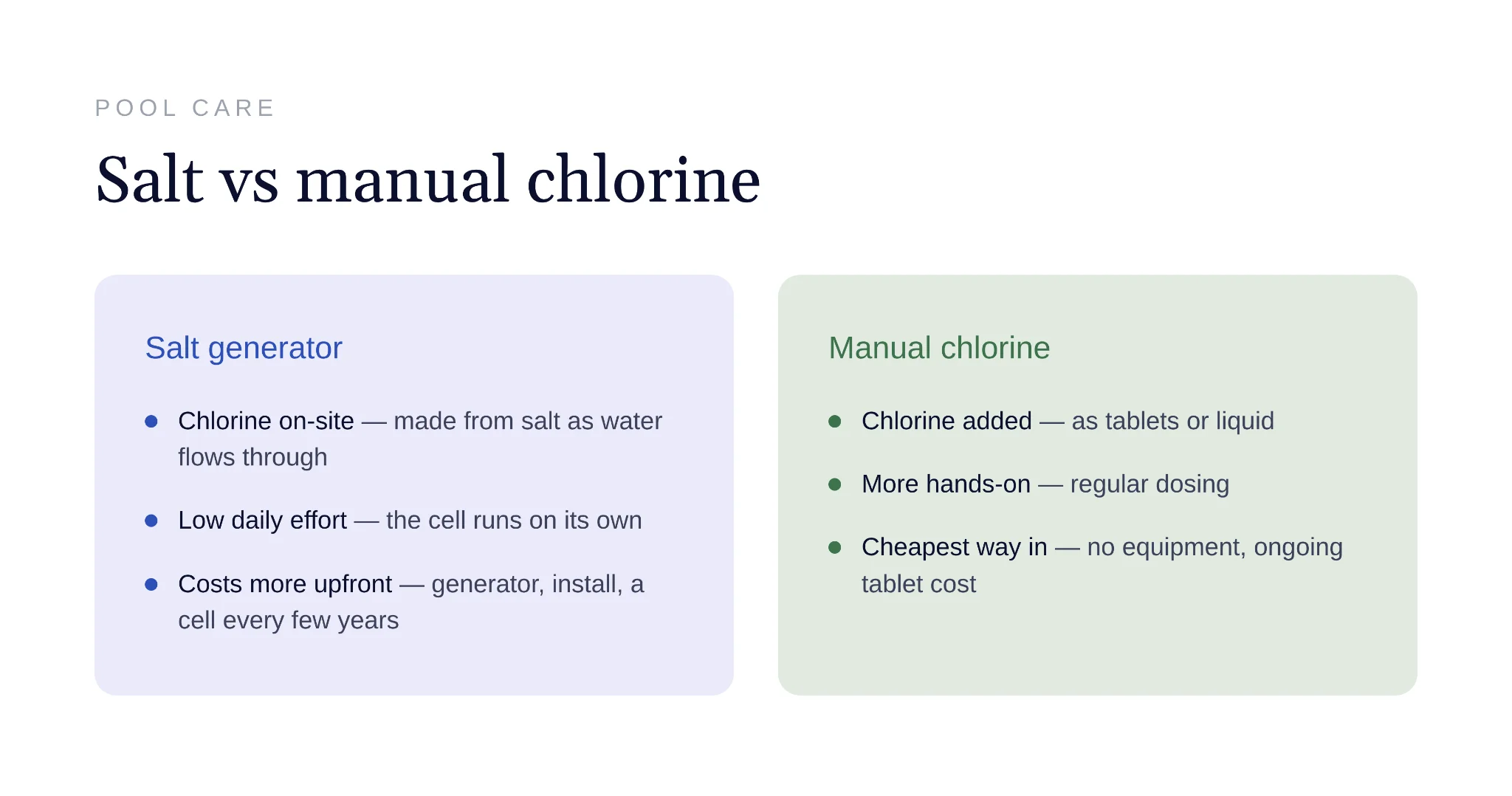
| Salt (generator) | Chlorine (manual) | |
|---|---|---|
| Source of chlorine | Made on-site from salt | Added as tablets or liquid |
| Day-to-day effort | Low — cell runs on its own | Higher — regular dosing |
| Upfront cost | Higher — generator + install | Lower — no equipment |
| Ongoing cost | Salt, plus a cell every few years | Tablets or liquid, ongoing |
| Water feel | Softer, less harsh | Sharper if chlorine runs high |
The feel is the one swimmers actually notice.
A well-run salt pool tends to produce a steady, low level of chlorine rather than the spikes you get from dumping tablets in, so the water comes off softer, and the harsh smell eases up.
That smell, by the way, was never really too much chlorine, just a sign of chlorine reacting with contaminants, and a steadier chlorine level helps keep it down.
The cost picture flips depending on timeframe.
Salt costs more to install because you’re buying the generator and paying for the wiring. It usually costs less to run day to day, right up until the salt cell wears out and needs replacing, which is the expense people forget to budget for.
The plates inside a cell degrade over years of making chlorine, and a replacement cell is not cheap.
What’s the Same
Plenty, and this is where the “set it and forget it” idea oversells salt. A salt pool is less hands-on, not no-hands.
You still test the water.
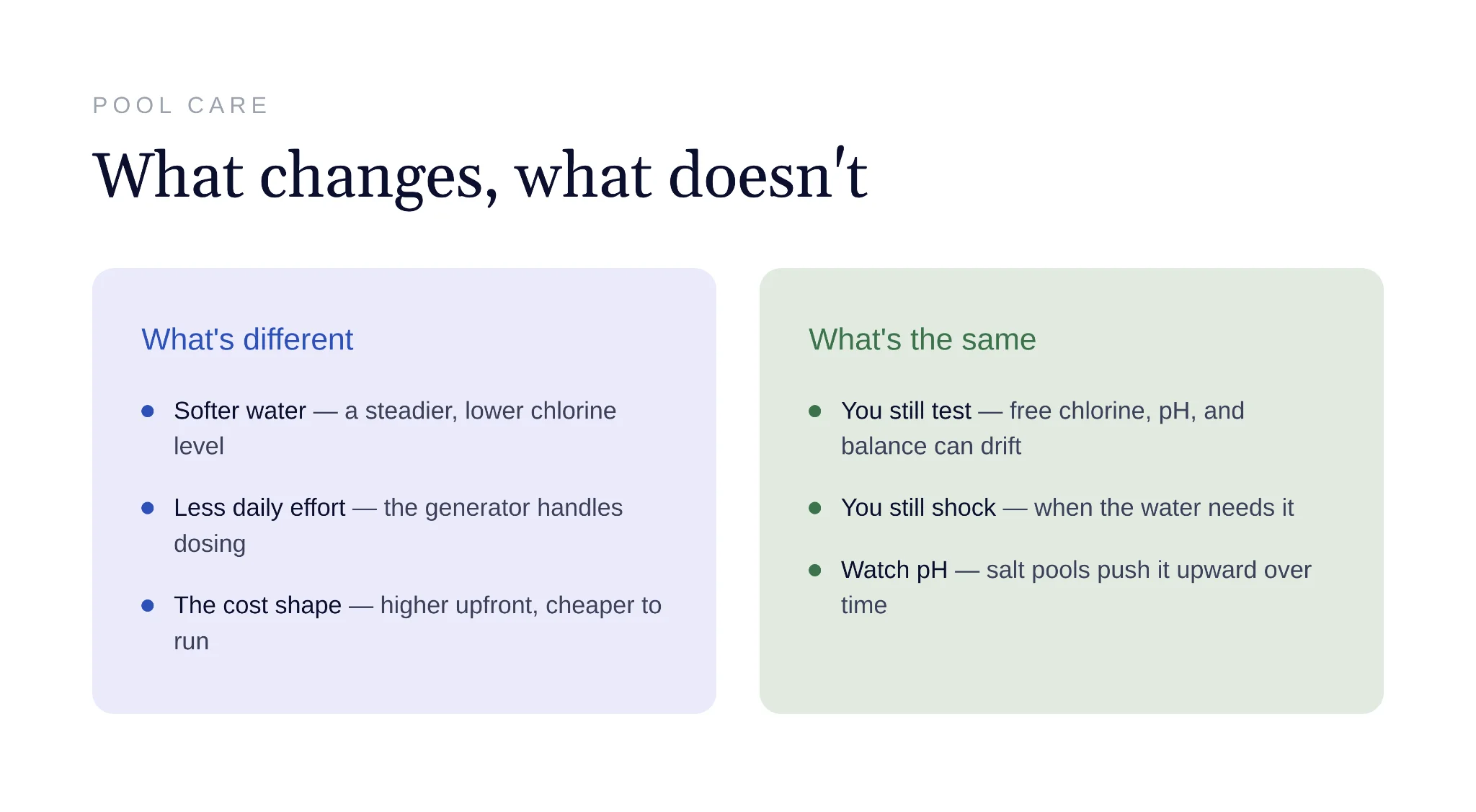
Free chlorine, pH, and the rest need checking, because a generator can drift, a cell can scale up and underproduce, and the pool can slide out of balance without you adding a thing. You still shock it when it needs shocking.
You still balance pH, and salt pools actually push pH upward over time, so that’s one reading you watch closely. And you still deal with everything that isn’t chemistry. The debris, the filtering, and circulation are identical to any other pool.
Which One Should You Run
There’s no universal winner, which is the honest answer the marketing skips. Salt makes sense if you want lower daily effort and softer-feeling water and you can stomach the upfront cost and the eventual cell replacement.
Manual chlorine makes sense if you want the cheapest way in and don’t mind the regular dosing. Both end up sanitizing with the same chlorine, so you’re really choosing a convenience-and-cost arrangement, not a safer or cleaner pool.
What neither system does is handle the part of pool care that has nothing to do with chlorine.
The Half of Pool Care Chlorine Doesn’t Touch
Whichever way you make your chlorine, it only sanitizes the water. It does nothing about the leaves on the bottom, the grit along the floor, or the film building on the waterline, and a pool fighting a load of debris burns through chlorine faster, salt cell or not, because the sanitizer gets spent breaking down all that organic matter instead of keeping the water clear.
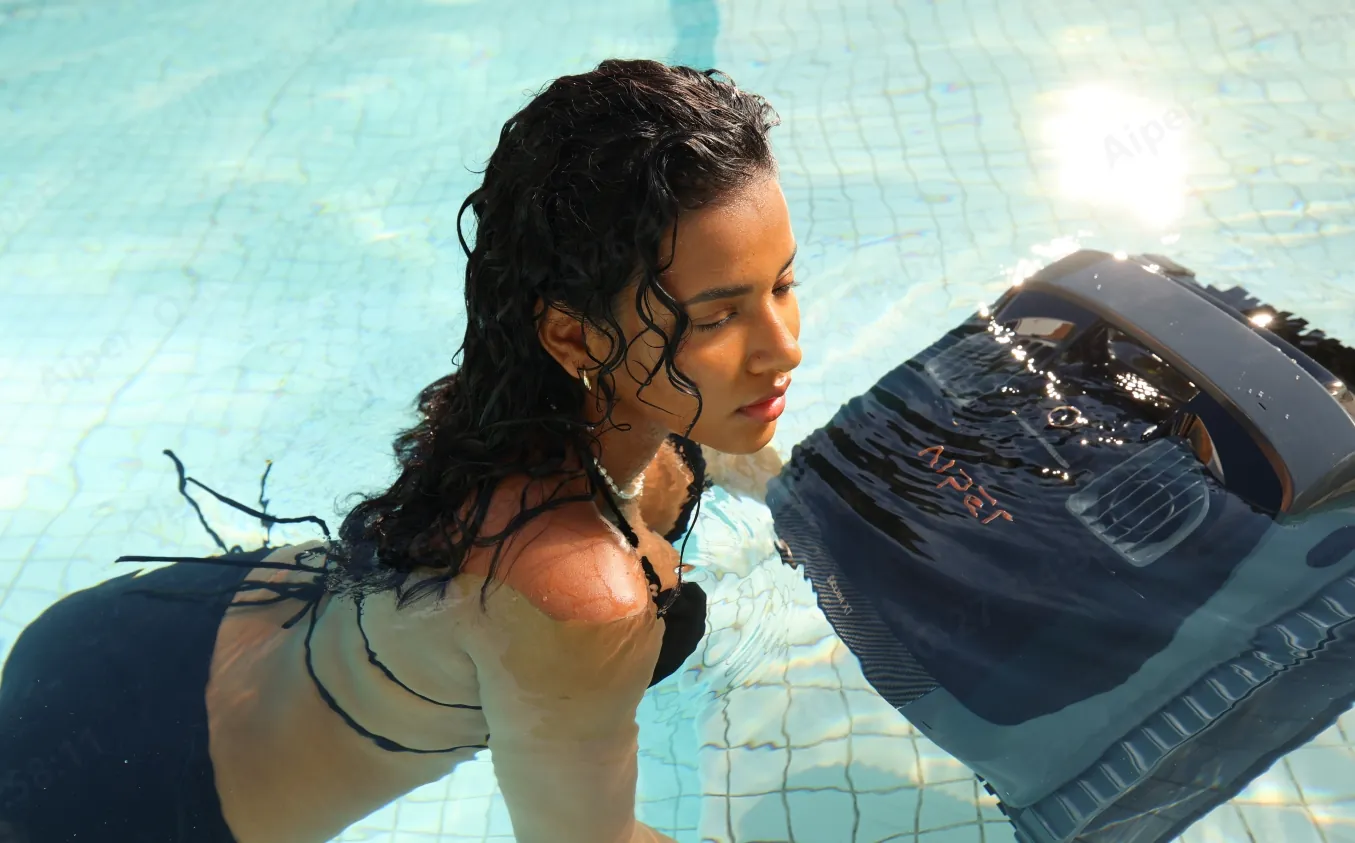
That’s the job an Aiper robotic pool cleaner takes off your hands, and it runs the same whether your pool is salt or chlorine.
It pulls the leaves, dirt, and debris out mechanically, so your chlorine (however it’s generated) is spent on sanitizing clean water rather than chewing through a mess on the floor.
Sort out how you make your chlorine, then let something else handle what the chlorine was never going to.
Get more pool and lawn care guides from Aiper on Google