How Often to Change Sand in a Pool Filter

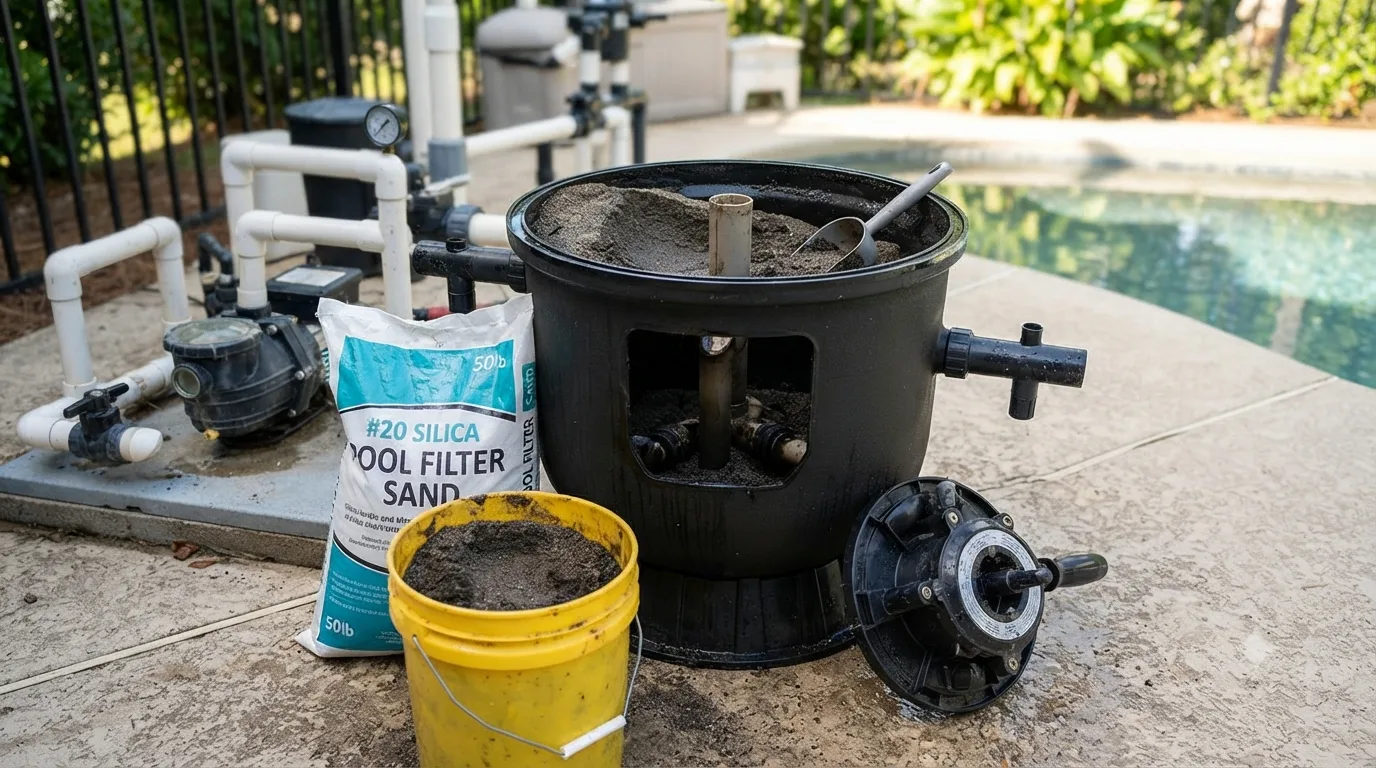
Standard silica sand filter media needs replacing roughly every 3 to 5 years, sooner if you notice cloudy water despite balanced chemistry, backwash cycles needed more often than before, or pressure that climbs faster than it used to — signs the sand has worn smooth rather than just gotten dirty. Confirming it’s the sand and not a different equipment issue first saves an unnecessary teardown. The full signs, cost, and replacement process are below.
How Do I Know If My Sand Filter Needs New Sand?
Cloudy water that persists despite properly balanced chemistry, backwash cycles that need to happen more frequently than they used to, and filter pressure that climbs faster after each backwash than it did previously are the clearest signs. Any one of these on its own could point elsewhere, but two or more together usually mean the sand itself has degraded.
How Long Will a Pool Sand Filter Last?
The sand media itself typically needs replacing every 3 to 5 years under normal use. The filter tank and internal components, including the laterals and multiport valve, can last much longer than that if maintained properly — it’s specifically the sand that wears out on this timeline, not the whole unit.
How Do I Know If My Pool Sand Filter Is Dirty vs Worn Out?
Dirty sand responds to a proper backwash — pressure drops back to normal and water clarity improves. Worn-out sand keeps showing pressure and clarity problems even right after a thorough backwash, since the grains themselves have smoothed down and lost the surface texture that traps particles. If backwashing consistently fails to fix it, that’s confirmation the media itself needs replacing, not just cleaning — the same distinction that applies to a pump that’s lost prime versus one that’s simply clogged.
How Much Does It Cost to Replace Sand in a Pool Filter?
The sand itself is relatively inexpensive — a modest materials cost for most residential filter sizes. Cost rises meaningfully if you pay a pool service for labor, since it’s a straightforward but somewhat messy job that many owners handle themselves rather than paying for.
How Do You Change Sand in a Pool Filter?
Shut off and fully depressurize the system before opening anything. Remove the multiport valve or filter lid, then scoop or vacuum out the old sand carefully to avoid damaging the internal laterals underneath. Rinse the empty tank, add new sand to the manufacturer’s specified fill line, reassemble, and run a backwash cycle before returning to normal filtration.
Can You Extend Sand Filter Life Instead of Replacing on a Fixed Schedule?
Backwashing on a consistent schedule rather than letting pressure build excessively before doing it preserves the sand’s effective surface longer. A filter cleaner or degreaser used periodically removes oils that coat sand grains and would otherwise reduce filtering effectiveness faster than plain wear alone — a similar principle to keeping a restricted main drain clear before it causes a bigger flow problem elsewhere in the system.
Frequently Asked Questions
Can old pool filter sand be cleaned and reused instead of replaced?
No. Sand wears smooth well before it looks visibly dirty, and a chemical cleaner can strip oils clogging the surface temporarily, but it can’t restore lost grain texture. Once replacement is due, the old media should be disposed of rather than rinsed and refilled.
How should old pool filter sand be disposed of?
Most residential filter sand is inert once removed from the pool and safe to bag with regular household trash, though a few municipalities have specific disposal rules for larger volumes. Check local guidelines before dumping a full tank’s worth directly in a yard or storm drain area.
Do you need to replace the filter’s laterals when you replace the sand?
Not usually — laterals typically outlast several sand replacement cycles. But inspect them for cracks while the tank is empty, since a broken lateral can let sand leak back into the pool even with brand-new media installed.
Reducing how much fine debris reaches the filter in the first place extends the sand’s effective life between changes. An Aiper robotic pool cleaner clears the floor and walls directly, cutting down on what the filter has to catch on its own.
Get more pool and lawn care guides from Aiper on Google