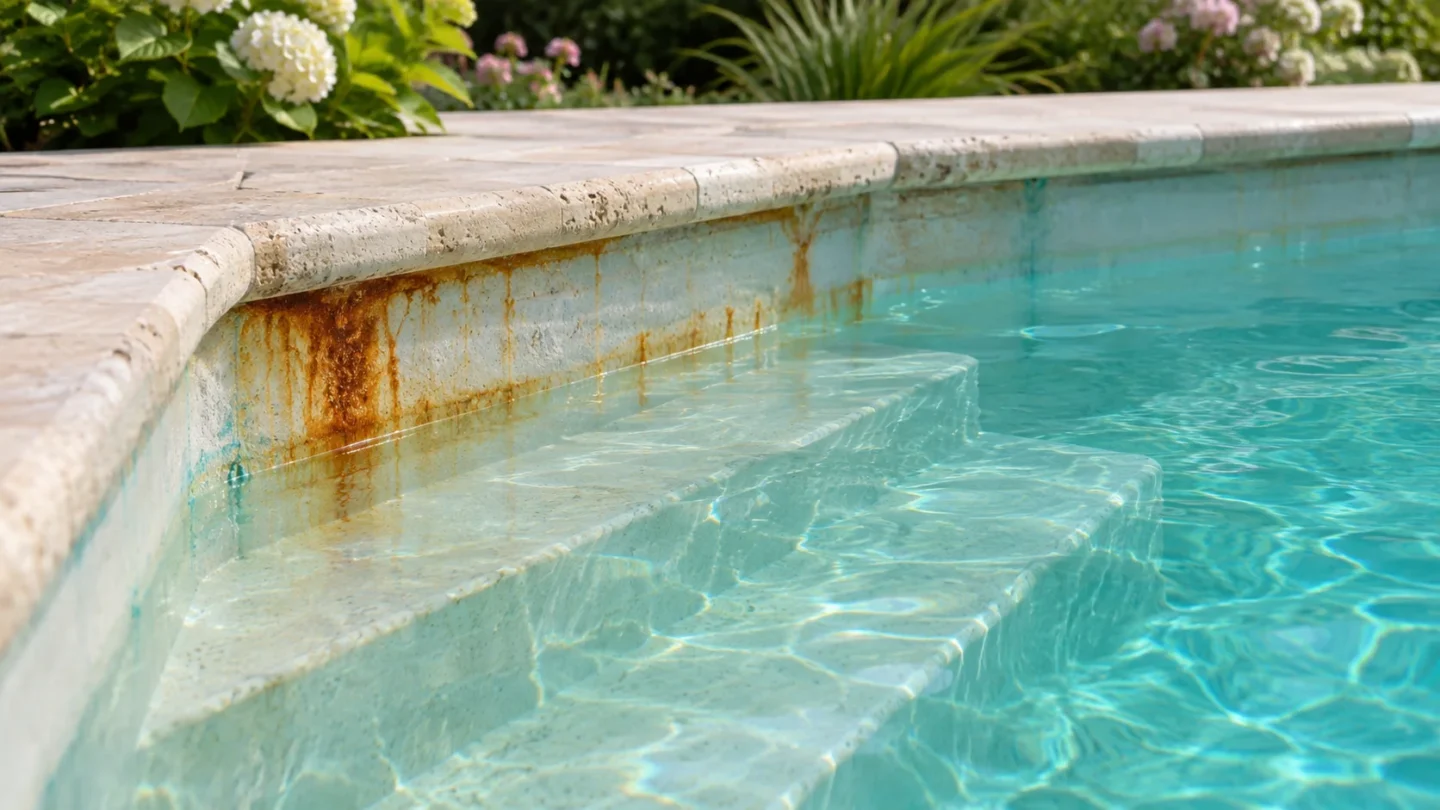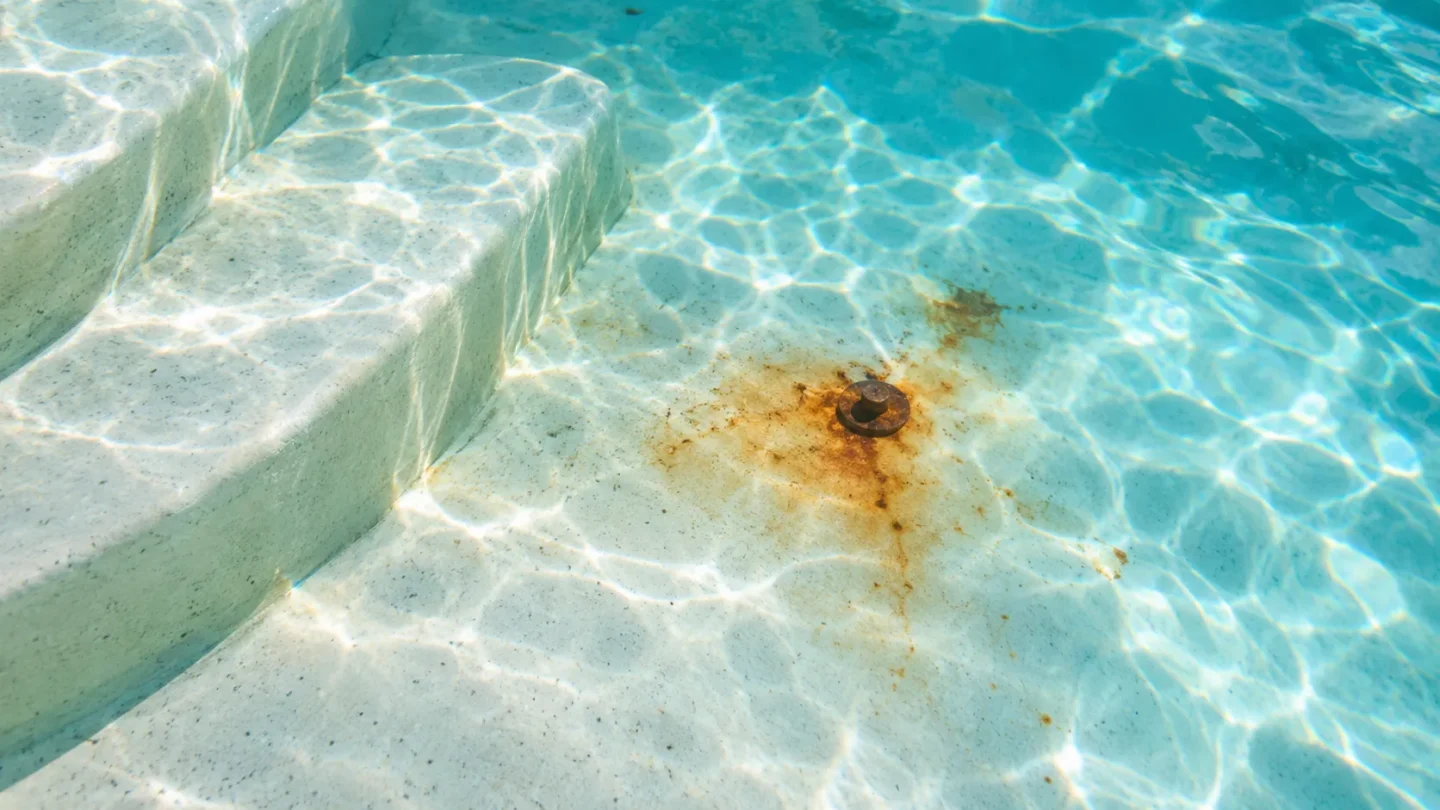


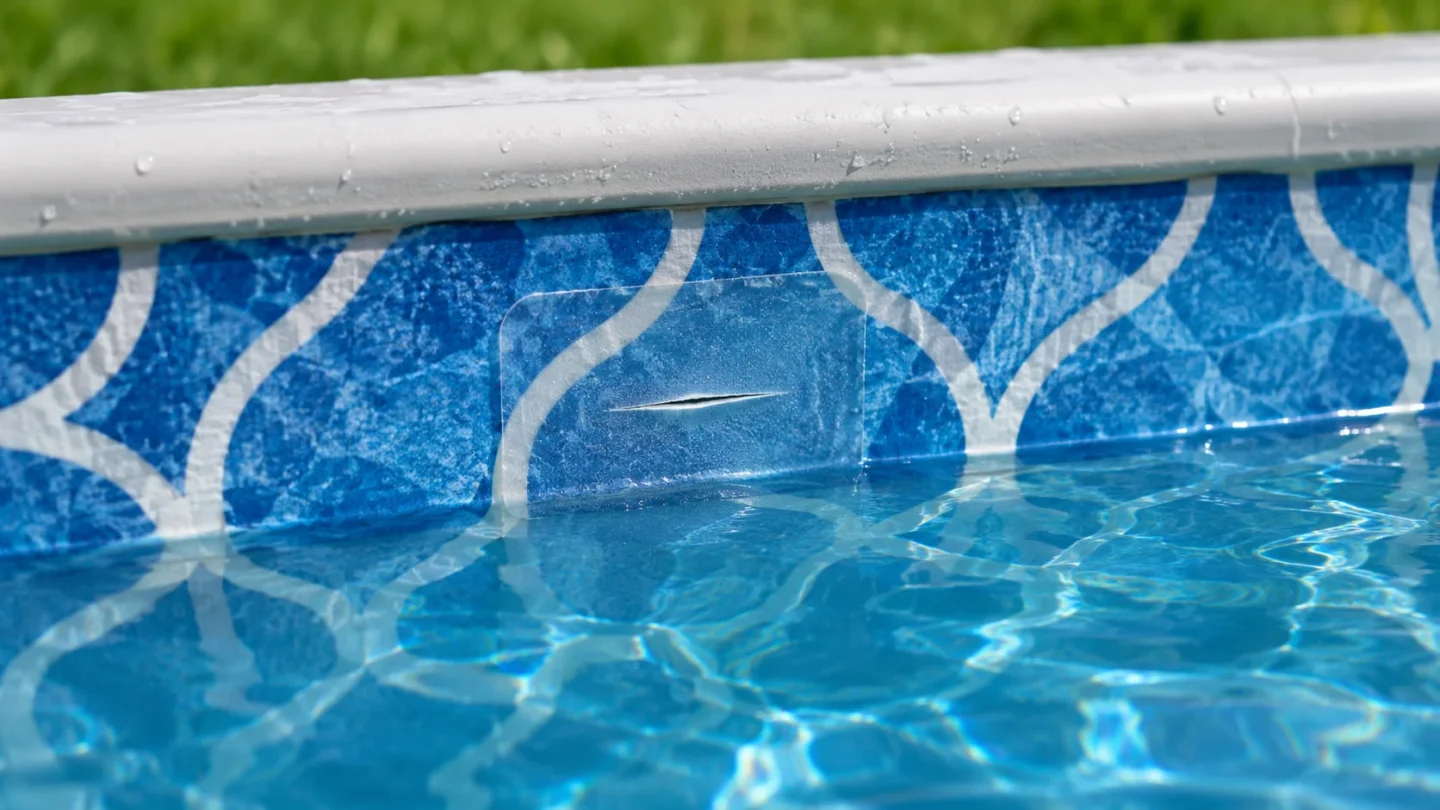
A vinyl liner can lose water through a hole smaller than a pencil tip.
The pool drops an inch over a few days, then settles and stops, which is the first real clue, because the water almost always stabilizes right at the height of the tear.
Most of the job is finding the hole, and then working out whether the liner is even the thing that’s leaking.
Is It the Liner or Something Else
Before cutting a single patch, two things have to be confirmed: that the pool is actually leaking, and that the liner is where it’s leaking. Skipping that is how people spend an afternoon gluing patches onto vinyl that was never the problem.
A pool gives up water in more than one way: evaporation, routine cleaning, splashing, and leaks.
Evaporation alone can pull a quarter inch off the surface on a hot, windy day, which looks alarming and means nothing.
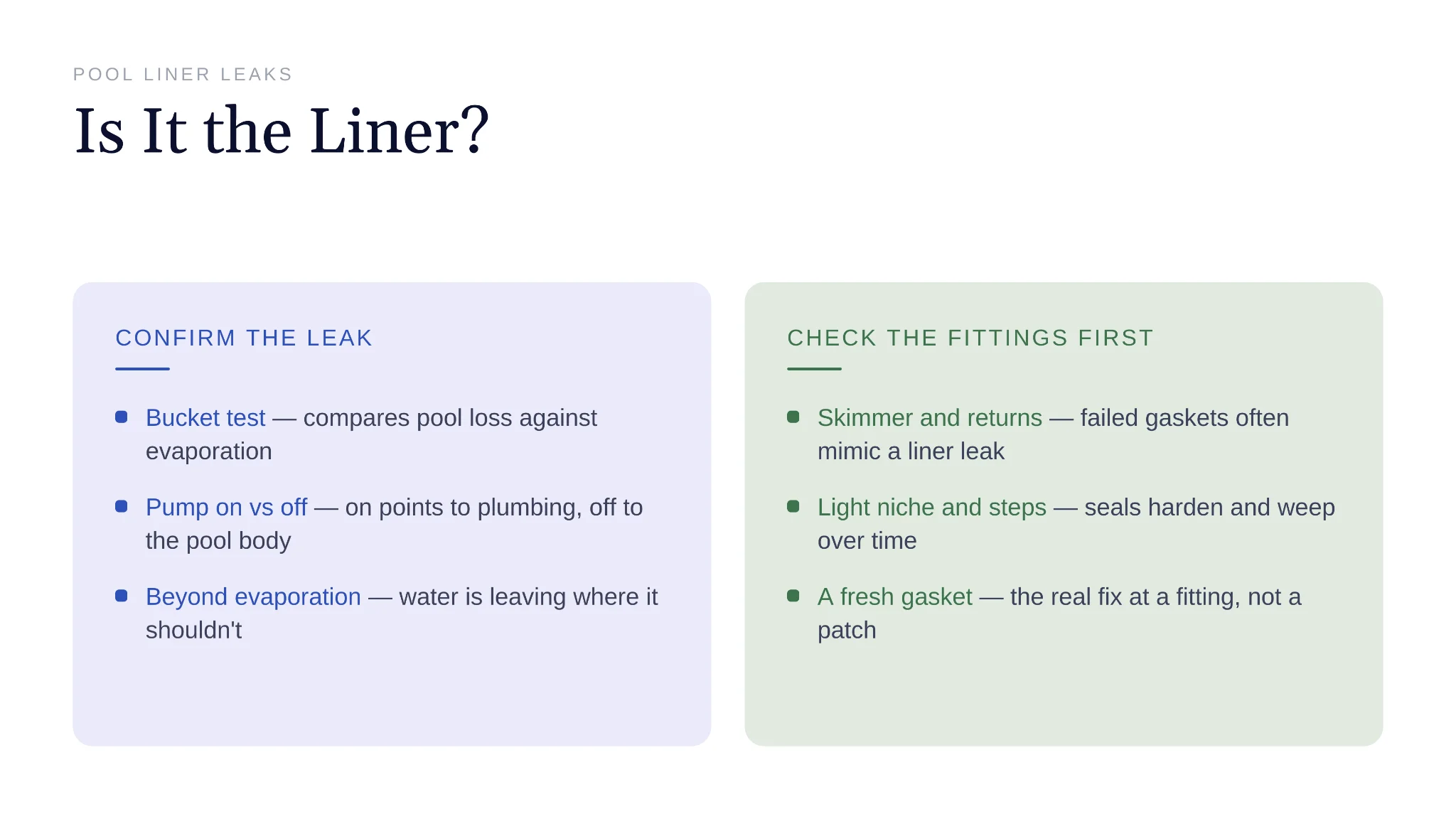
The bucket test sorts it out. A bucket of pool water set on a step and filled to match the pool level loses water to evaporation at the same rate the pool does, so after a day, if the pool has dropped more than the bucket, water is escaping somewhere it shouldn’t.
Run it twice, once with the pump on, once with it off. More loss with the pump running points to pressure-side plumbing, a return line, or a fitting under pressure. More loss with the pump off, or the same either way, points to the pool body: the liner itself, or the seals around everything set into it.
That distinction matters more than it sounds, because a large share of so-called liner leaks are actually gaskets. The skimmer faceplate, the return fittings, the light niche, the seams around the steps (anywhere the liner is cut and clamped against a plastic fixture) the gasket behind it can harden and weep.
Those get fixed with a fresh gasket and tightened faceplate screws, not a patch.
Find the Tear
Once the liner is the confirmed culprit, the tear still has to be located, and a pinhole in a 600-square-foot sheet of patterned vinyl doesn’t advertise itself.
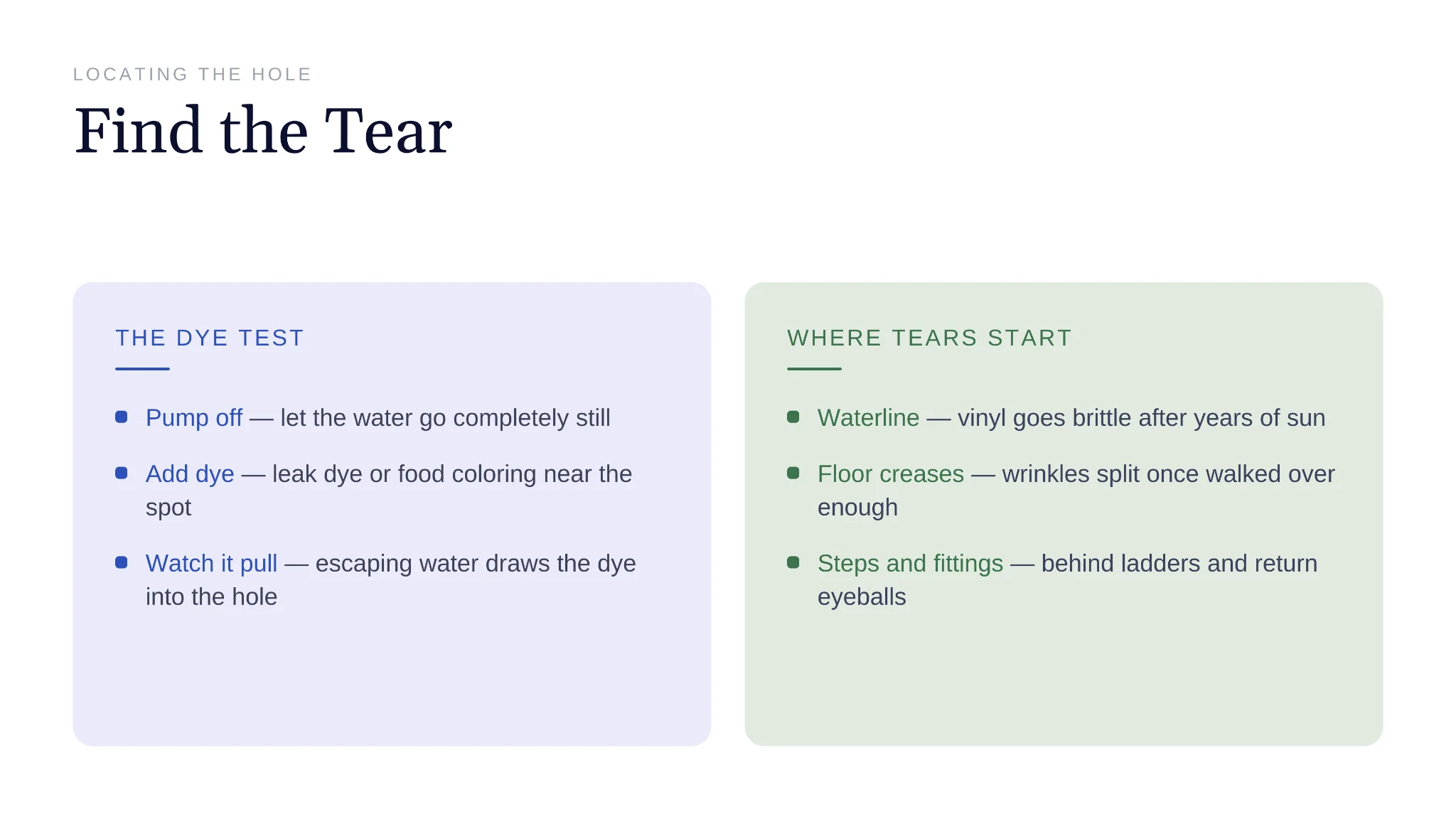
Dye works better than eyes. With the pump off and the water dead still, squirt a little leak-detection dye or plain food coloring near a suspected spot and watch it move, at a hole, the escaping water pulls the dye straight in like a thread. Start looking where tears actually happen.
The waterline goes brittle after years of sun and splits there first. Floor creases and wrinkles tear once they’ve been walked over enough times. The slope where the shallow end drops to deep takes constant stress, and so do the steps and the ladder feet.
And then there are the fittings the bucket test was meant to rule out.
A tear tucked behind a return eyeball or under a light ring turns up often enough to check those closely before assuming the hole is out in open vinyl.
Patch It
Applied properly, a vinyl patch can outlast the rest of the liner. The method depends on one thing: whether the tear sits below the waterline or above it.
Patch it underwater
Most tears sit underwater, and a vinyl pool doesn’t get drained to fix one. An empty liner can shrink or float loose from the wall, which turns a small repair into a new liner. The patch goes on wet instead.
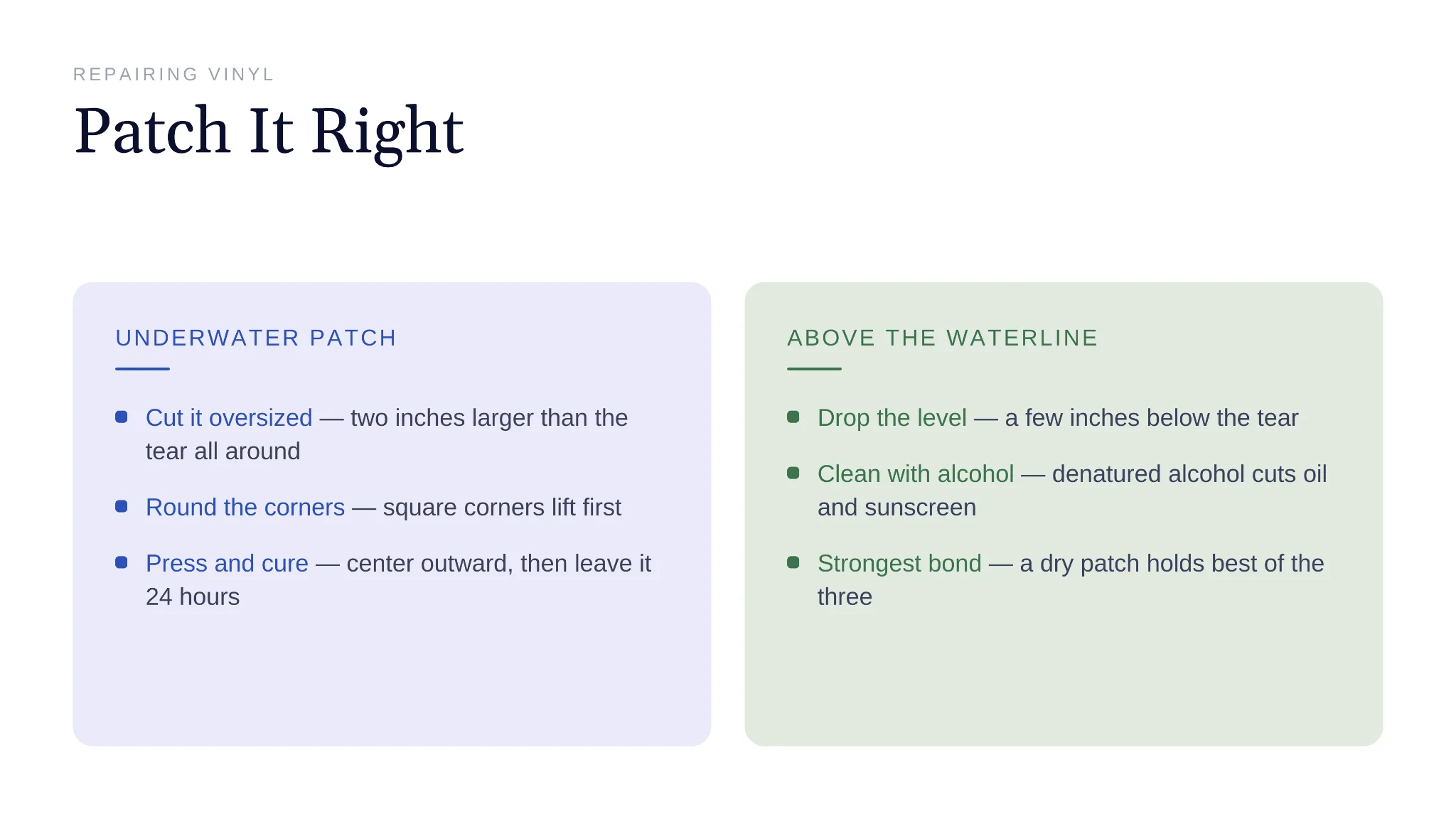
- Cut a patch from a vinyl repair kit at least two inches larger than the tear on every side.
- Round off all four corners. Square corners catch water flow and lift first.
- Spread underwater adhesive across the patch, or peel the backing if it’s a self-adhesive type.
- Fold the patch loosely, glue-side in, so water stays off the adhesive on the way down.
- Open it over the tear and press from the center outward, working the trapped water and air out to the edges.
- Hold for a couple of minutes, then leave it undisturbed for 24 hours before vacuuming anywhere near it.
When the tear is above the waterline
A tear above the water, or right at it, can be patched dry, and a dry patch bonds better because the adhesive isn’t fighting water. Drop the pool level a few inches below the tear, let the vinyl dry completely, then wipe the area with denatured alcohol to cut the film of body oil and sunscreen that stops glue from gripping.
Same patch, same rounded corners, pressed on dry and left to cure before the water comes back up.
For a brittle, sun-baked tear at the waterline, this is the only version worth attempting, as a wet patch won’t take on dried-out vinyl up there.
| Patch type | Best for | Holds up |
|---|---|---|
| Vinyl sheet + underwater adhesive | Most tears, wet or dry | Long-term, often the life of the liner |
| Peel-and-stick vinyl patch | Small holes and pinholes, fast fixes | Good for the short to medium term |
| Dry patch above the waterline | Tears at or above water level | Strongest bond of the three |
When a Patch Won’t Hold
Patching has limits, and spotting them early saves the cost of trying twice.
A liner past eight or ten years has usually gone brittle across the whole sheet, not only at the tear. Glue a patch onto vinyl that stiff, and it cracks again an inch away the next time someone leans on it.
Seam separations are the other lost cause. This is where two sheets were welded at the factory. But a patch bridging the gap flexes every time the water moves and eventually works itself loose.
A tear that runs behind a fitting, or a gash longer than a hand span, is also past what a patch is built for. At that point the fix is a new liner, and every dollar sunk into patches is a dollar off the replacement.
Keep the Liner Out of Trouble
A new liner is the expensive outcome, and most of what shortens a liner’s life can be headed off. Sun at the waterline does some of the damage. The rest is grit dragging across the floor.
Sand and silt settle on the bottom and act like sandpaper underfoot, and small stones do worse, thinning the vinyl in the high-traffic spots where tears tend to start.
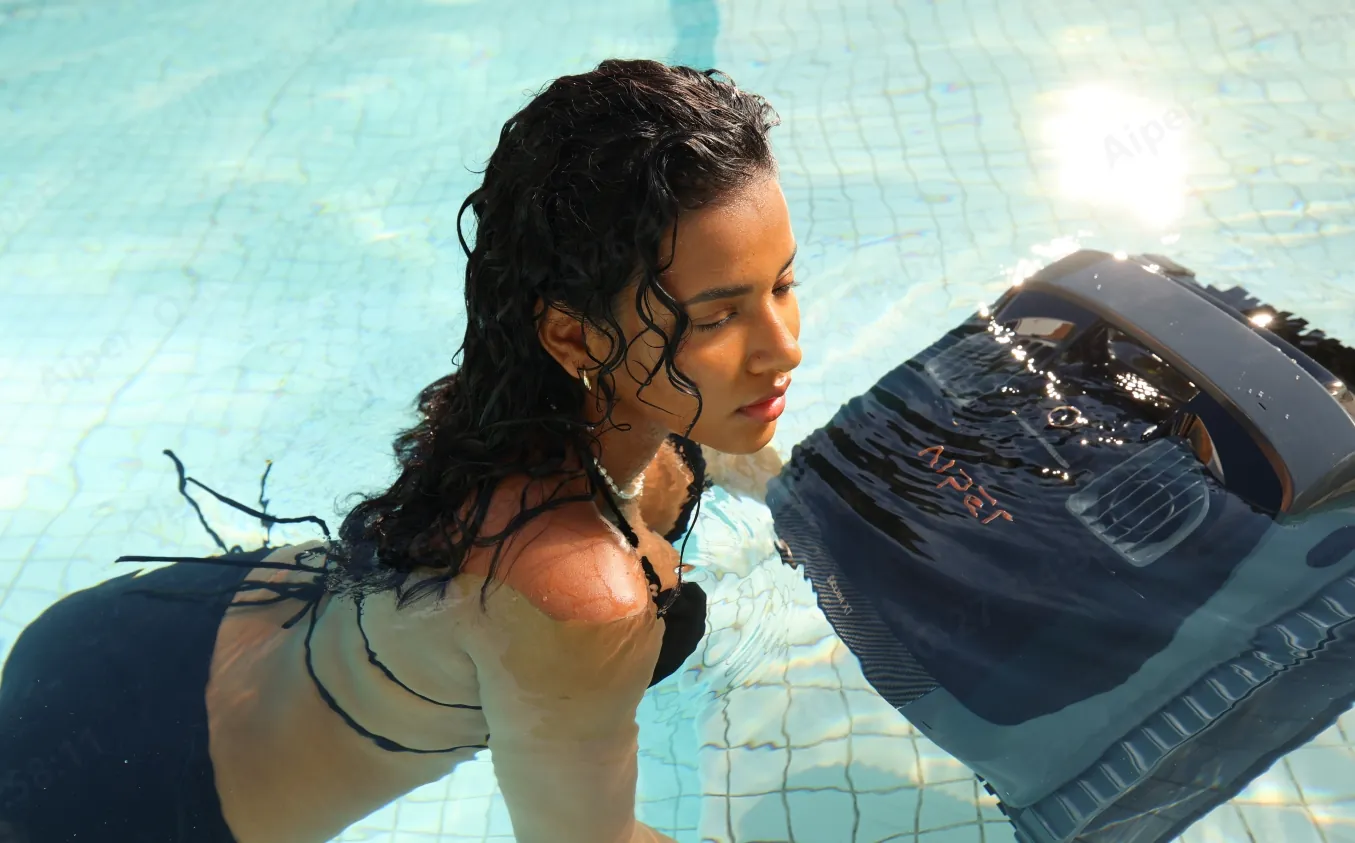
Clearing that debris is ordinary upkeep, and it’s where a robotic cleaner does real work: an Aiper robotic pool cleaner run across the liner regularly lifts the grit before it grinds in, and a clean floor also means a new tear or a worn crease shows up while it’s still small enough to patch.
Let a fresh patch cure for a day or two before sending the cleaner over that spot. Beyond that, a floor kept clear of grit wears more slowly, and a tear on clean vinyl gets caught while it’s still a patch-sized job.
Get more pool and lawn care guides from Aiper on Google