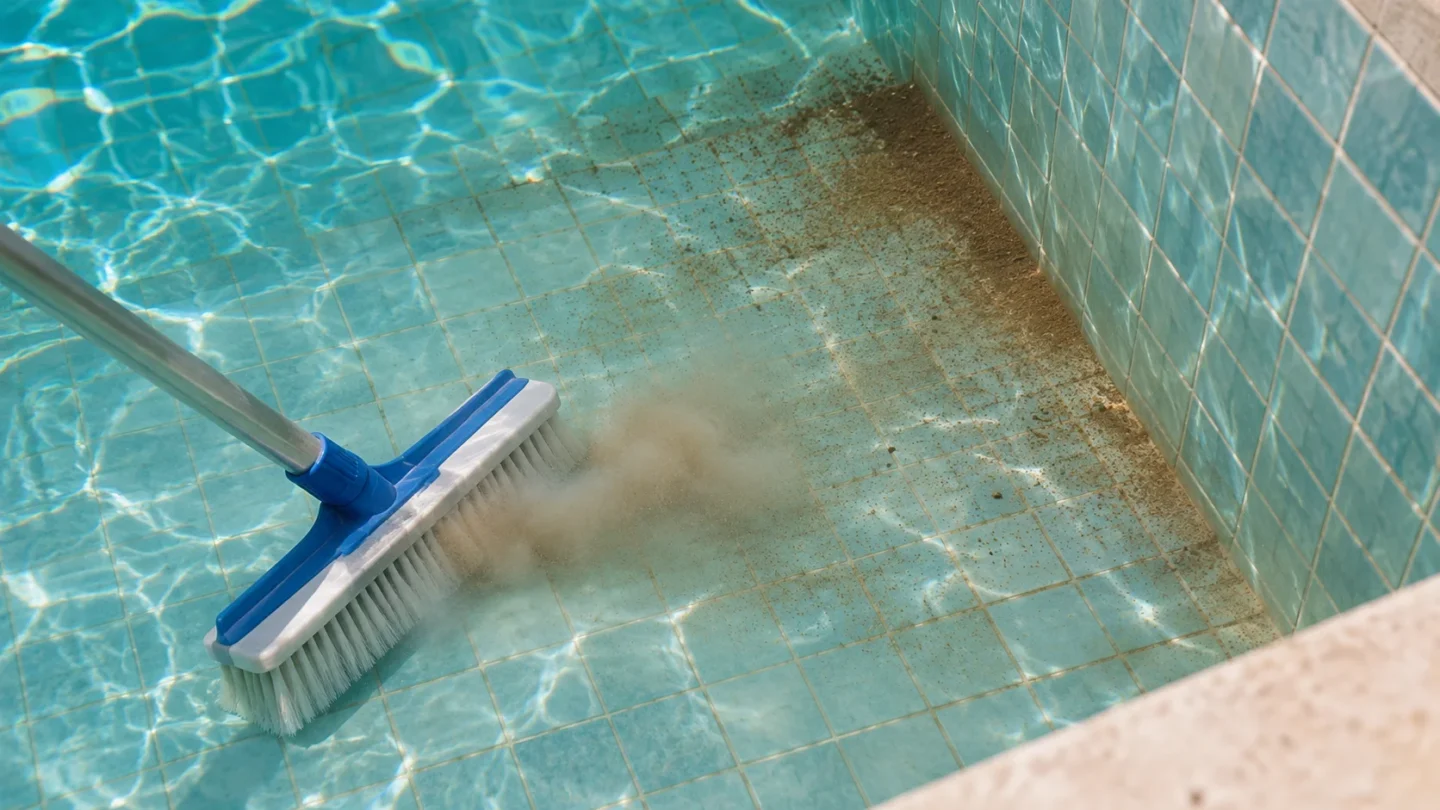

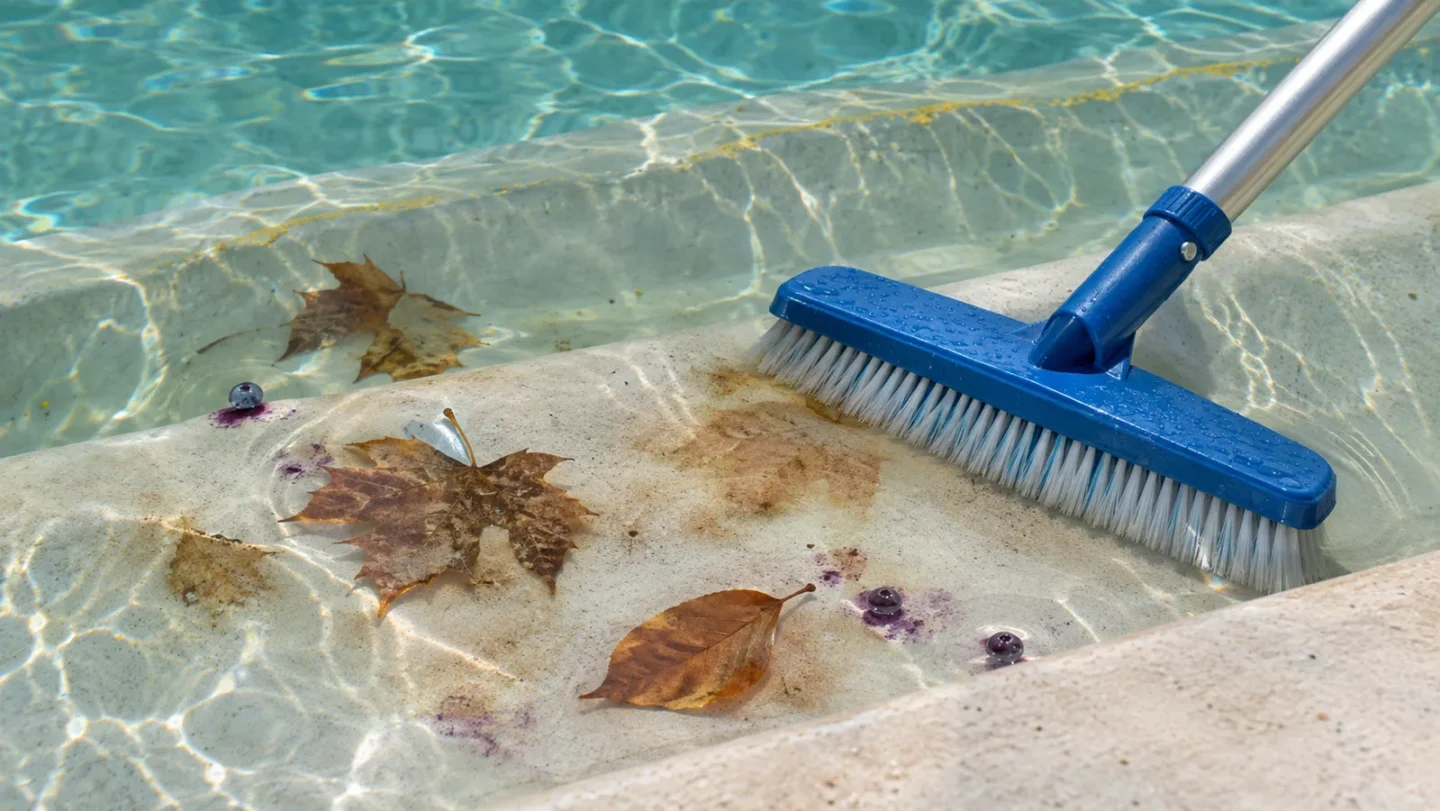
Leaves that sit on a pool floor overnight leave a brown shadow behind. Berries dropped from an overhanging tree leave purple or blue spots, and spring pollen turns the waterline yellow. These are organic stains.
They come from tannins and pigments that leach out of plant matter, and they lift with chlorine and brushing far more easily than metal stains do. The hard part is confirming that’s what they are before treating them.
Confirm It’s an Organic Stain
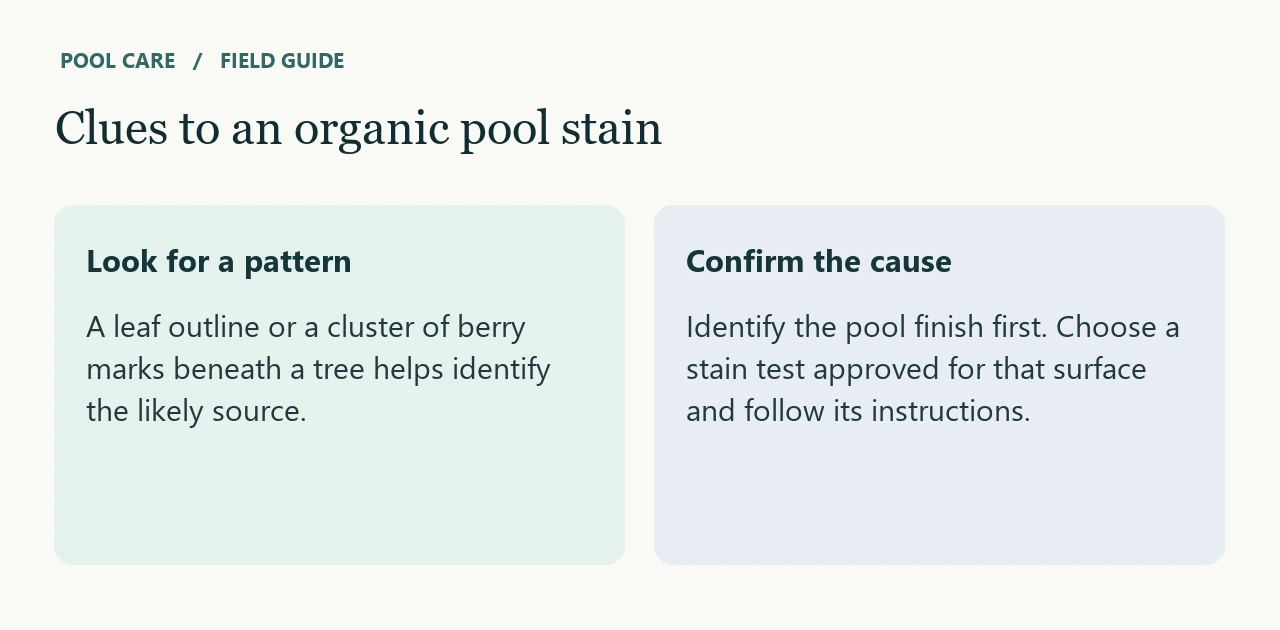
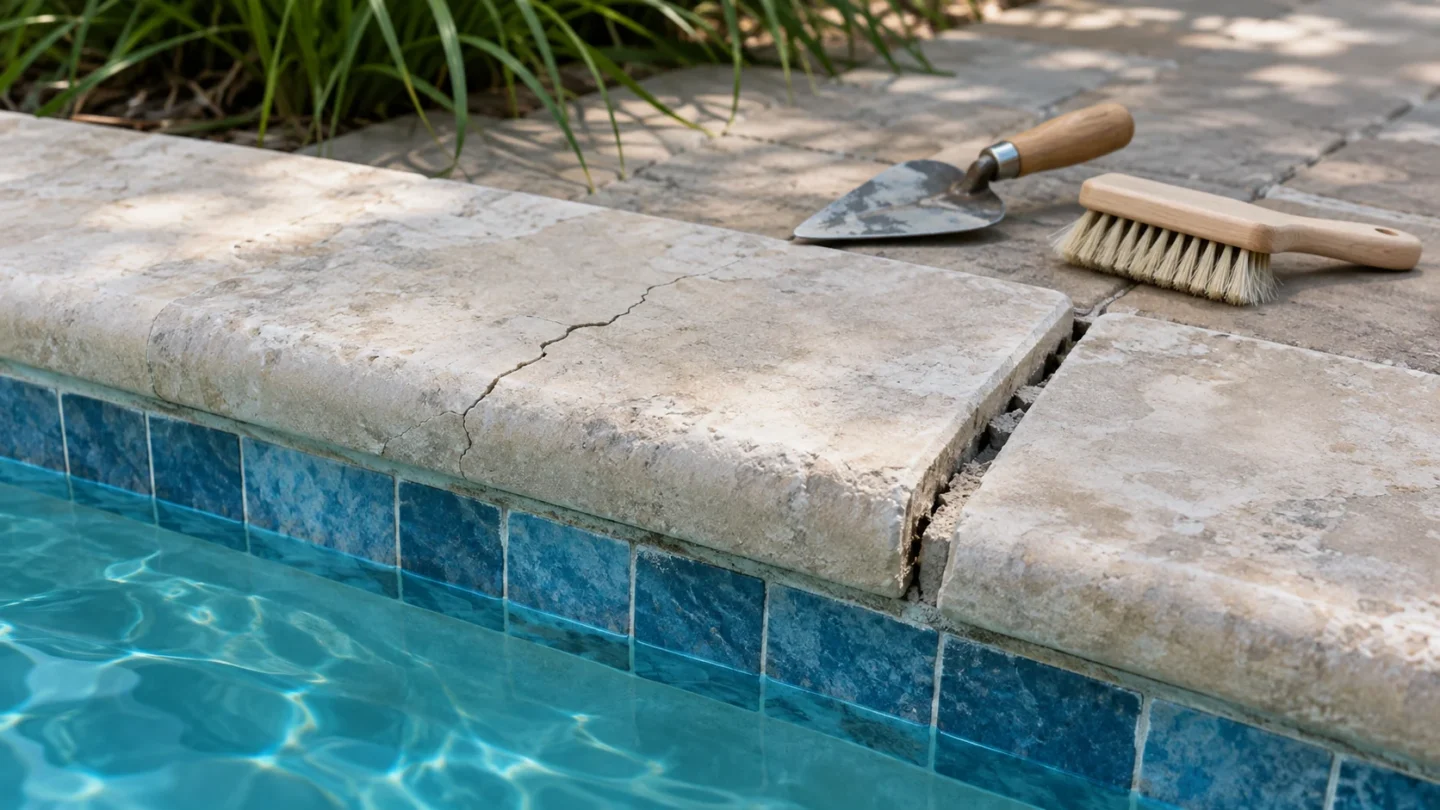
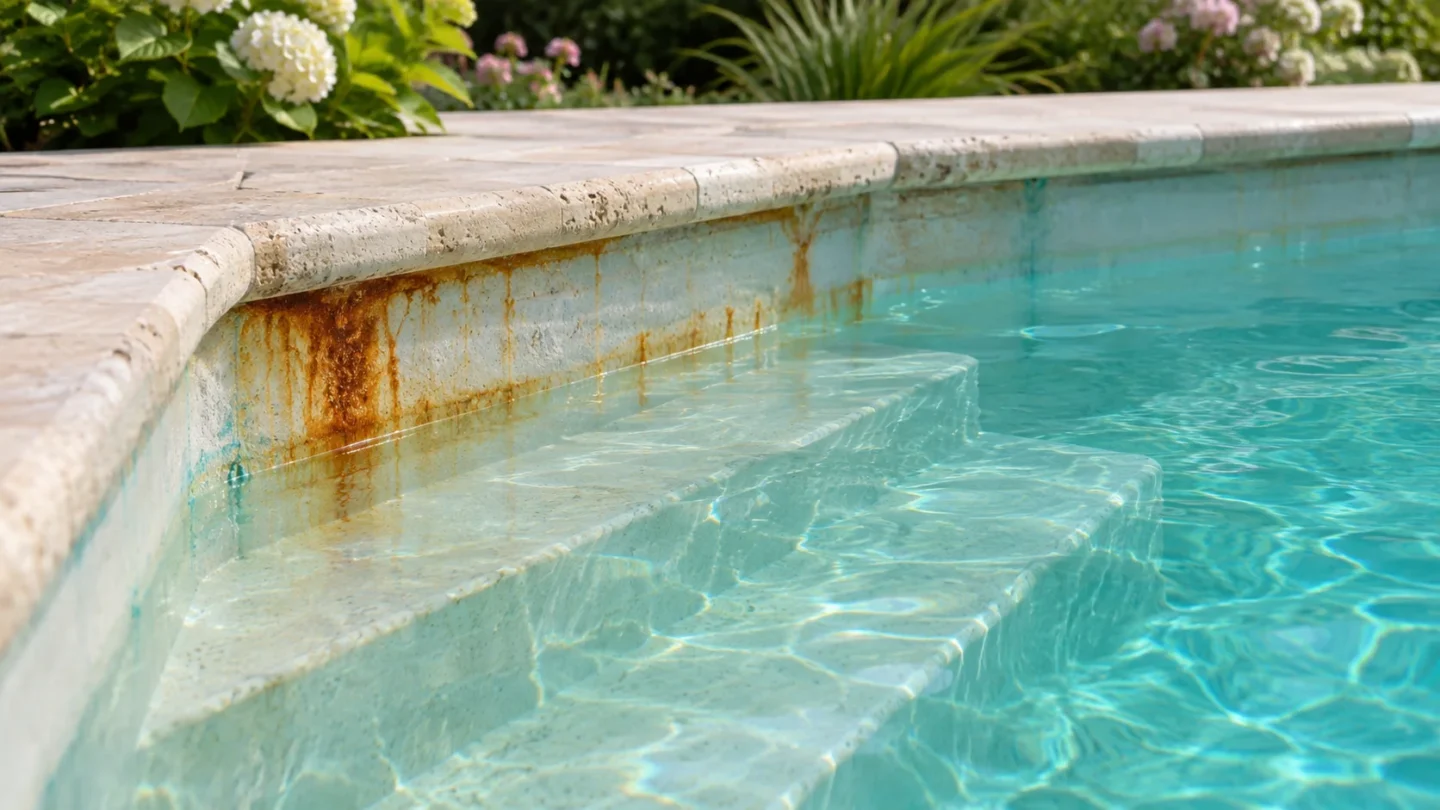
Metal stains from iron, copper, or manganese can look similar, especially brown ones, and they need a completely different treatment. Identify the pool finish before choosing a stain test.
Use a pool stain identification kit approved for your finish and follow its instructions. If the test points to metal, choose a finish-compatible metal stain treatment. Keep concentrated chlorine off the pool surface.
The shape of the stain helps too. Organic stains usually match whatever caused them: a leaf outline on the floor, a cluster of dots under a tree, or a band along one side where debris collects.
Remove Leaf and Berry Stains
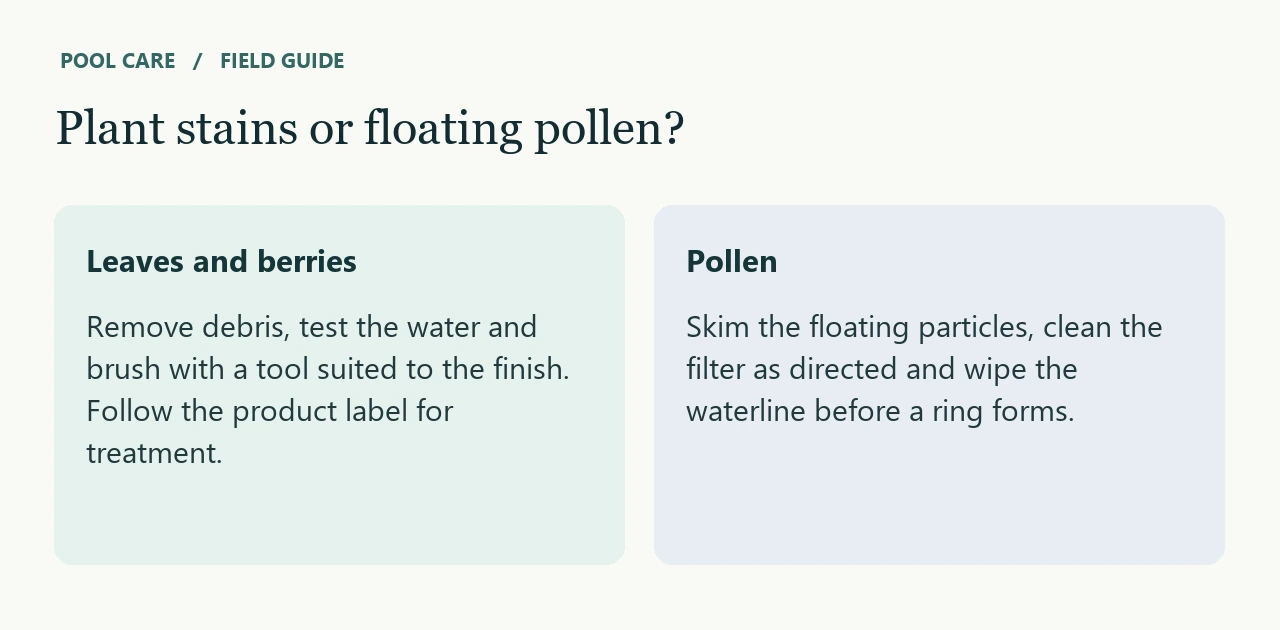
Most leaf and berry stains clear in a day or two with the same routine. Fresh stains go fastest, and ones that have sat for weeks may need the steps repeated.
- Get the debris out first. Skim the surface, empty the skimmer and pump baskets, and pull anything sitting on the floor. Shocking around a pile of wet leaves just burns chlorine on the debris instead of the stain.
- Balance the pH. Chlorine works best when pH is in range, so test and adjust before adding anything else. Shock added to water with high pH loses much of its strength.
- Shock the pool. Raise the chlorine level well above the normal daily range, following the dosing on the shock product’s label for the pool’s volume. Run the pump continuously while it works.
- Brush the stained areas. Brushing breaks up the residue and exposes it to the chlorinated water. Do it right after shocking and again the next day.
- For persistent marks, check the pool finish and product label before choosing a treatment. Do not place a chlorine tablet or undissolved granules on the finish. Use a brush approved for the surface.
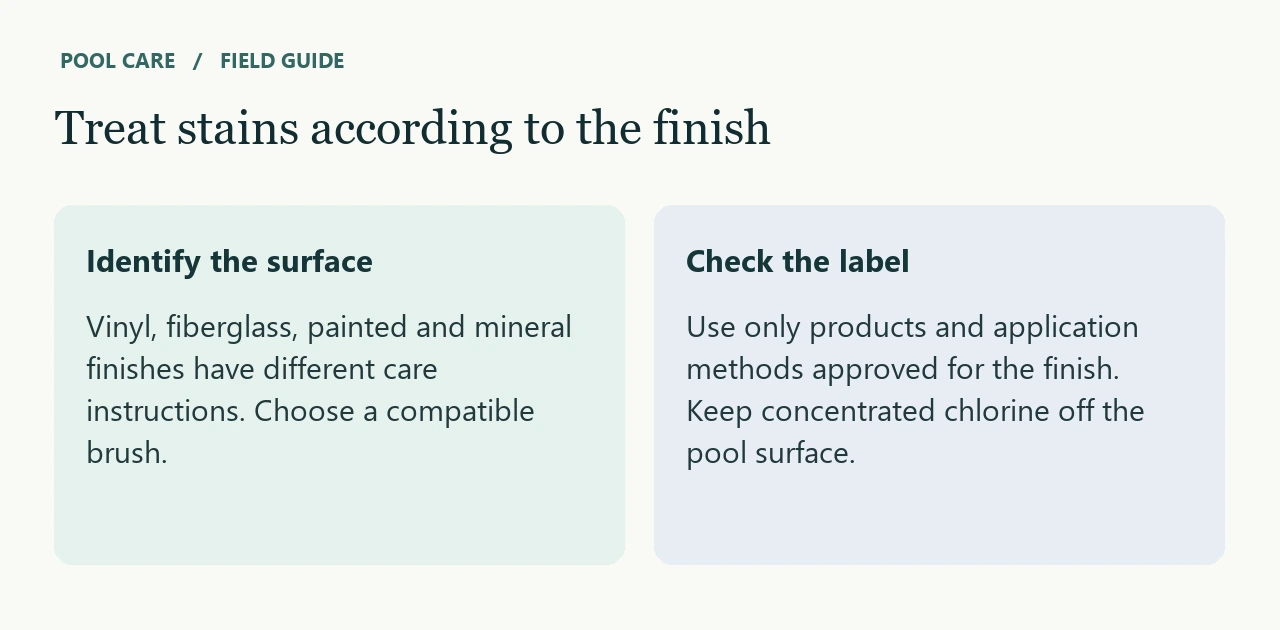
Follow the label for treatment duration and safe re-entry. If debris removal and brushing leave a mark behind, confirm the cause with a finish-compatible stain test before treating again.
Deal With Pollen Separately
Pollen behaves differently from leaves and berries. It rarely stains the surface. It shows up as a fine yellow or green film on the water and around the waterline, and it comes back every day during peak season no matter how often the pool gets shocked.
That film is easy to mistake for mustard algae. Pollen floats and collects at the surface and in corners where the water is calm, and it brushes away with almost no effort. Mustard algae clings to walls and the floor, usually on the shady side, and comes back in the same spots after brushing.
Pollen comes out mostly by filtration and cleaning:
- Skim daily during pollen season, ideally in the morning before the wind spreads it around.
- Keep the filter clean. Pollen grains are fine and clog the filter quickly, so backwash or rinse it more often than usual in spring.
- Use a clarifier to bind the smallest particles into clumps the filter can catch.
- Wipe the waterline with a tile cleaner made for pools before the film dries into a ring.
Prevent the Next Stain
Every organic stain starts as debris that sat long enough to release its color. Leaves on the floor overnight, berries collecting in a corner, and pollen settling on the steps are all much easier to remove than the stains they turn into.
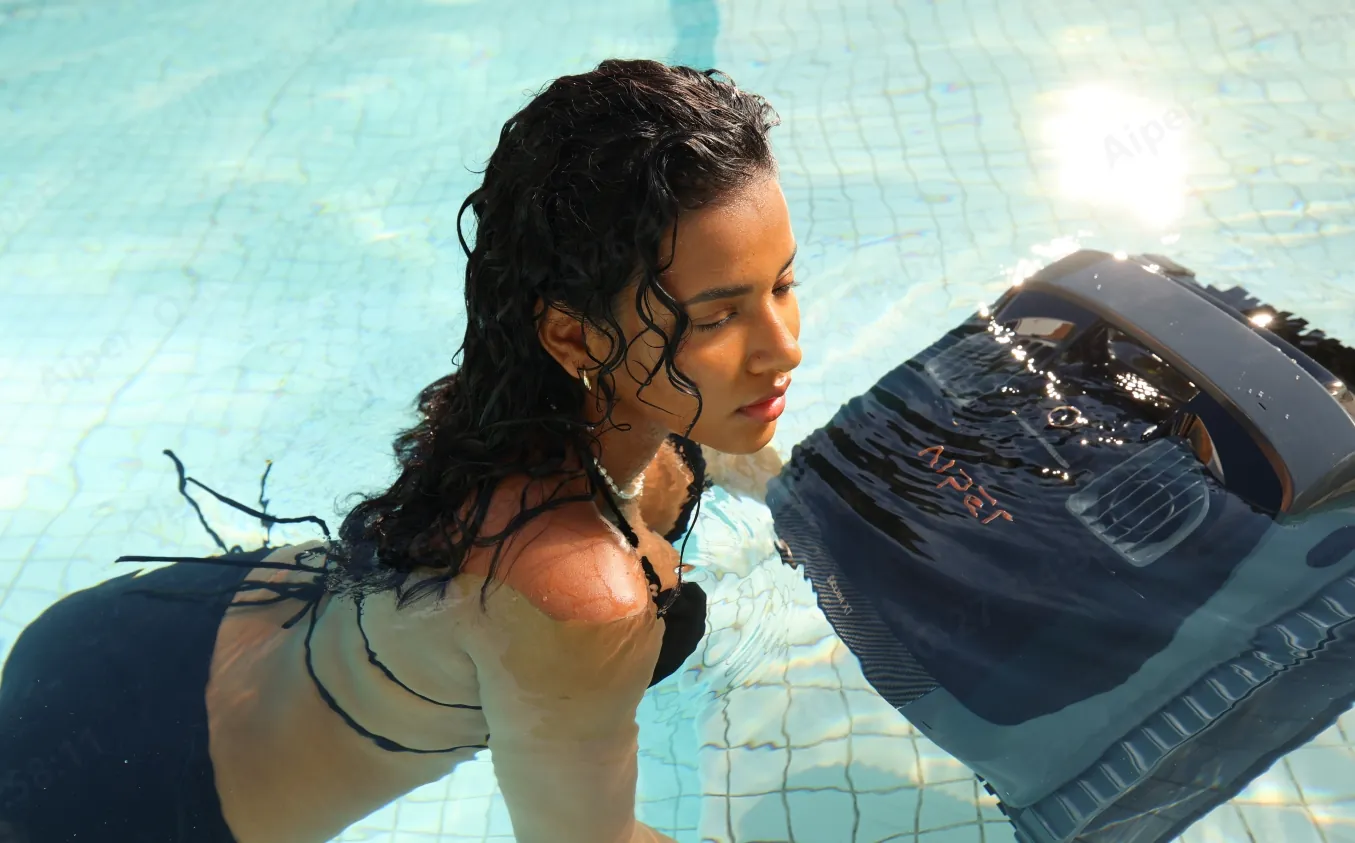
Speed is what prevents stains. A cordless robotic pool cleaner from Aiper handles the floor, walls, and steps on a schedule, picking up leaves and sunken debris before the tannins have time to leach into the surface. Pair it with daily skimming during leaf drop and pollen season, and the stain treatment above gets needed far less often.
Get more pool and lawn care guides from Aiper on Google