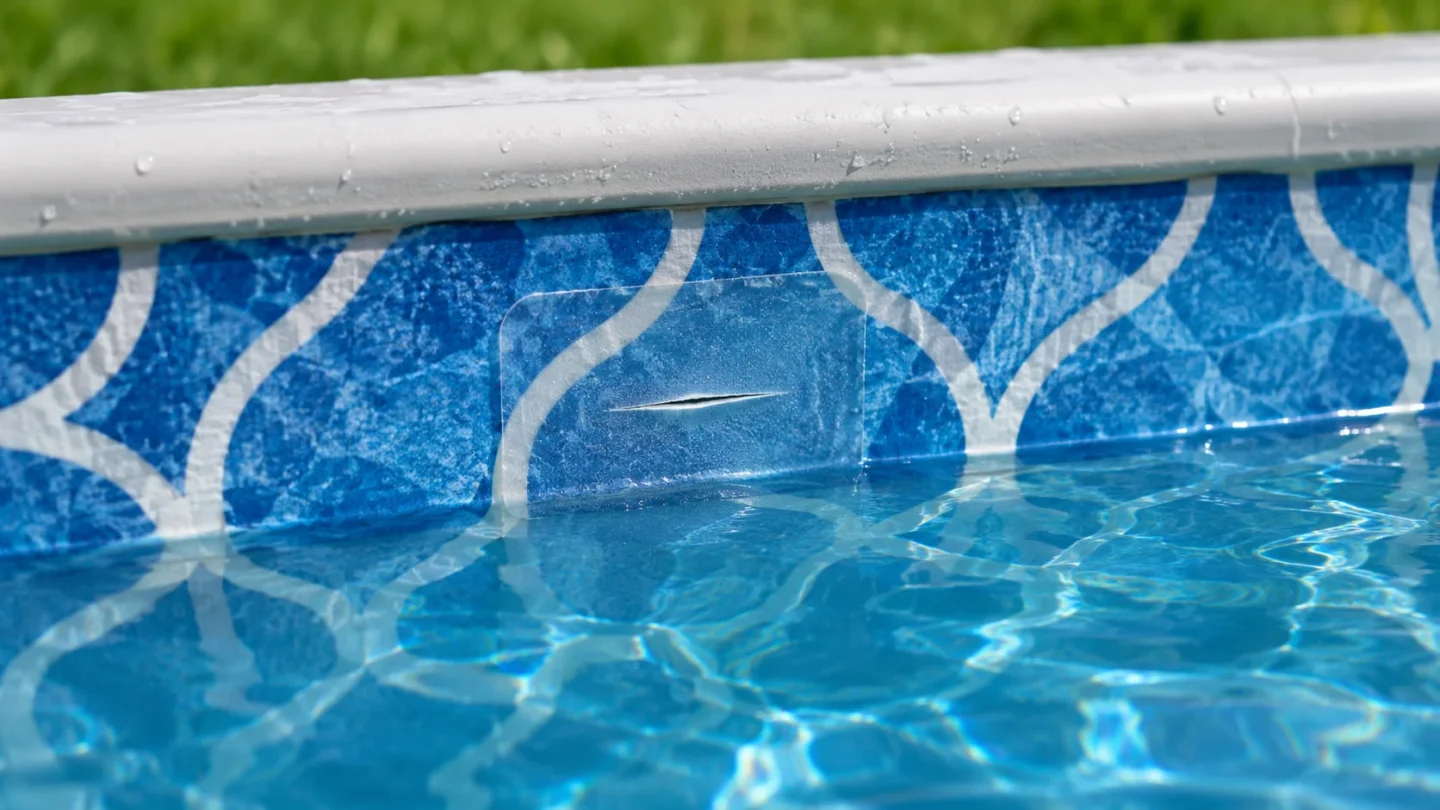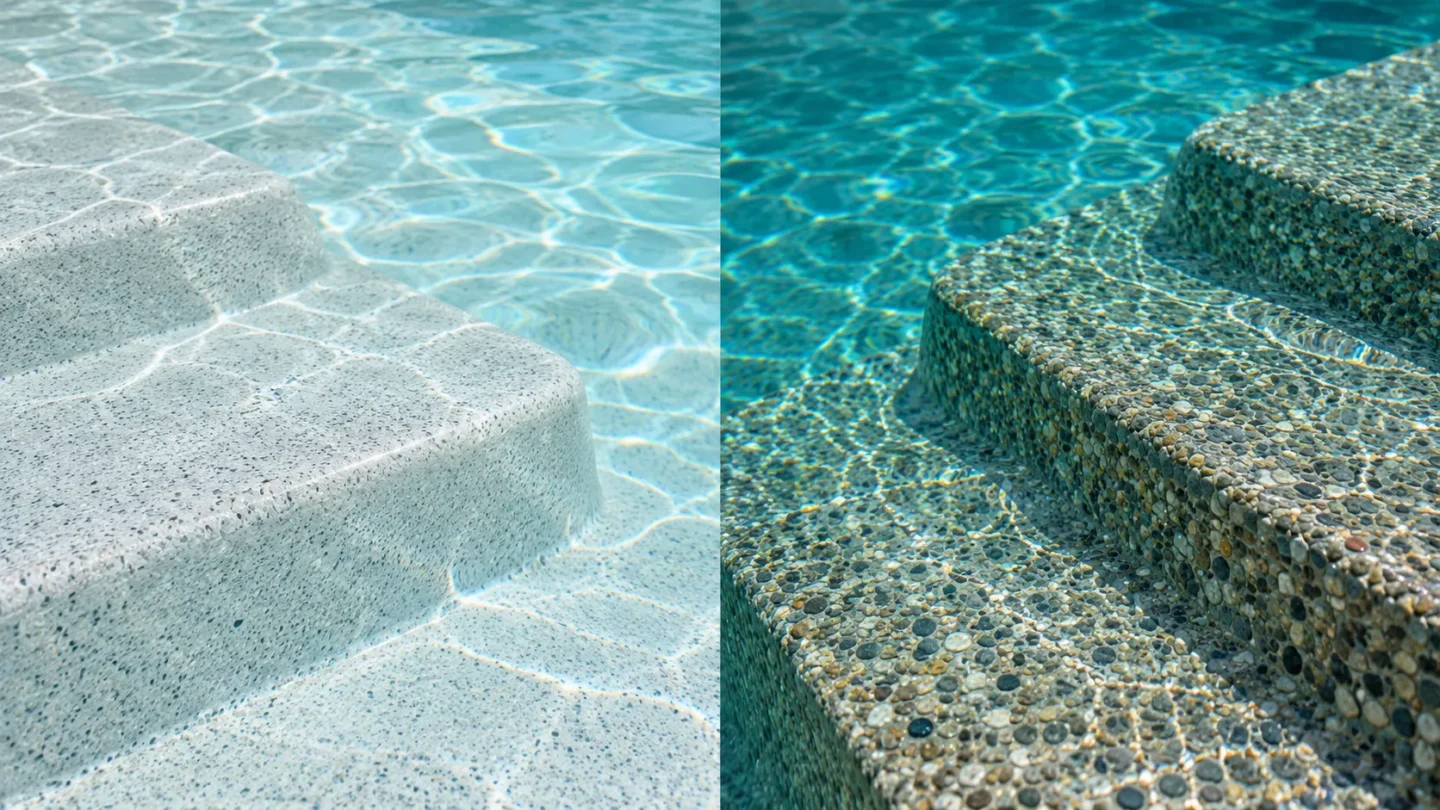



The coping is the cap on the edge of your pool: the stone, paver, brick, or poured concrete lip that sits on top of the wall, between the waterline tile and the deck.
It takes the abuse. Every elbow hooked over the side, every splash going over, every winter freeze and summer bake hits it first, so it’s usually the first thing to fail.
The coping does a real job, too: it’s the lid that keeps water out of the top of your pool’s structure. Once that lid cracks or lifts, water gets in where it shouldn’t, and what could’ve been a $40 tube of sealant becomes beam work.
Why You Can’t Caulk Over It
Picture where the water goes when the coping cracks or a joint opens up. Down.
It runs behind the coping into the top of the bond beam (the reinforced concrete ring that caps the pool wall), and sometimes into the soil packed in behind it.
Water that works into a hairline and freezes expands as it turns to ice and spalls the concrete off from the inside, and the same open crack keeps feeding water to the steel until it rusts. None of this announces itself.
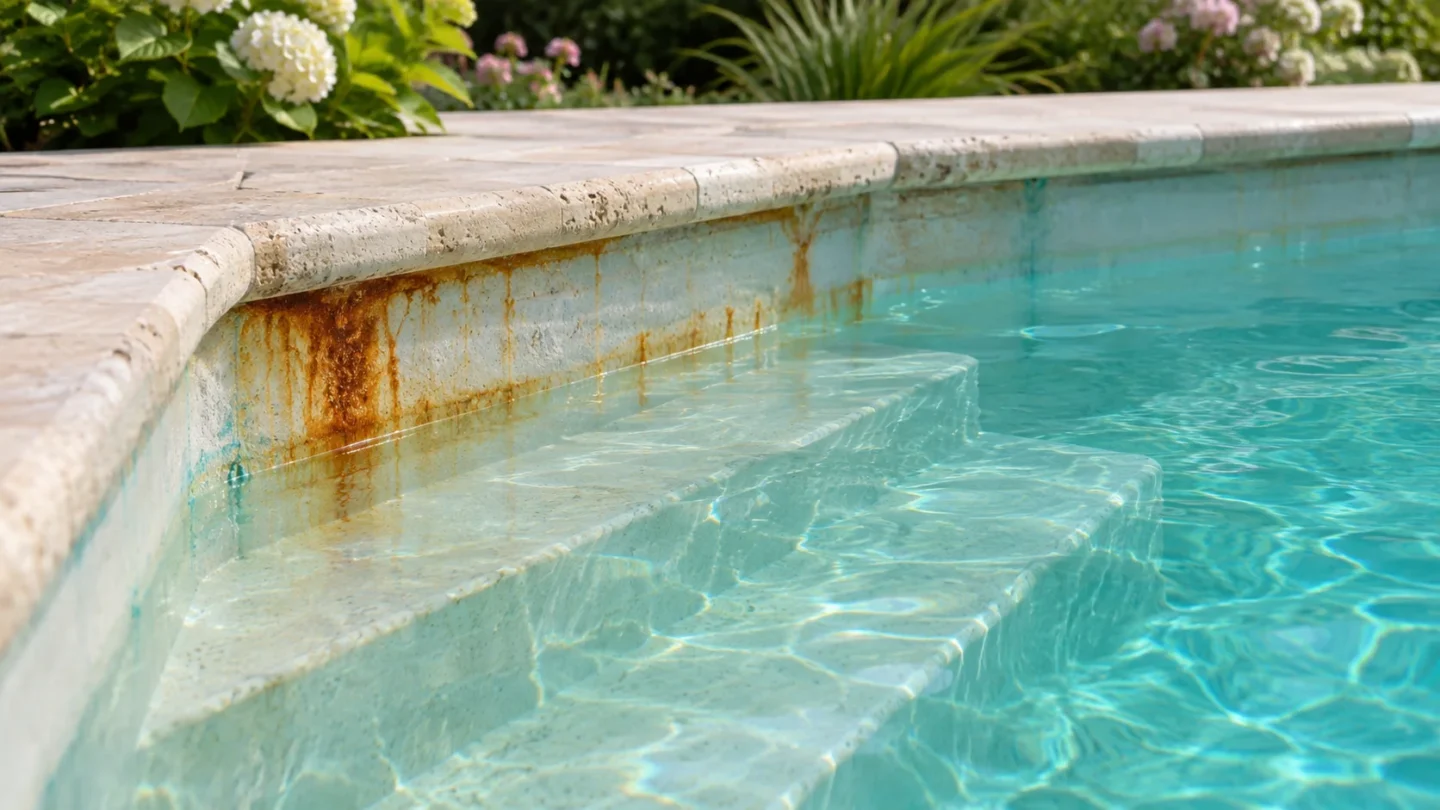
You spot a hairline in October, shrug, and by April it’s a finger-wide gap with a rust stain weeping out the bottom. That stain is the giveaway that the rebar under there is already going, and once it’s going, a trowel and a bag of patch won’t save you.
So the first question, before you fill anything, is whether this is the coping itself or the coping showing you a bigger problem underneath. Usually it’s the coping, and you’ve got a weekend job. Sometimes it’s the pool. Telling those two apart is half the work.
A Loose Stone or Two
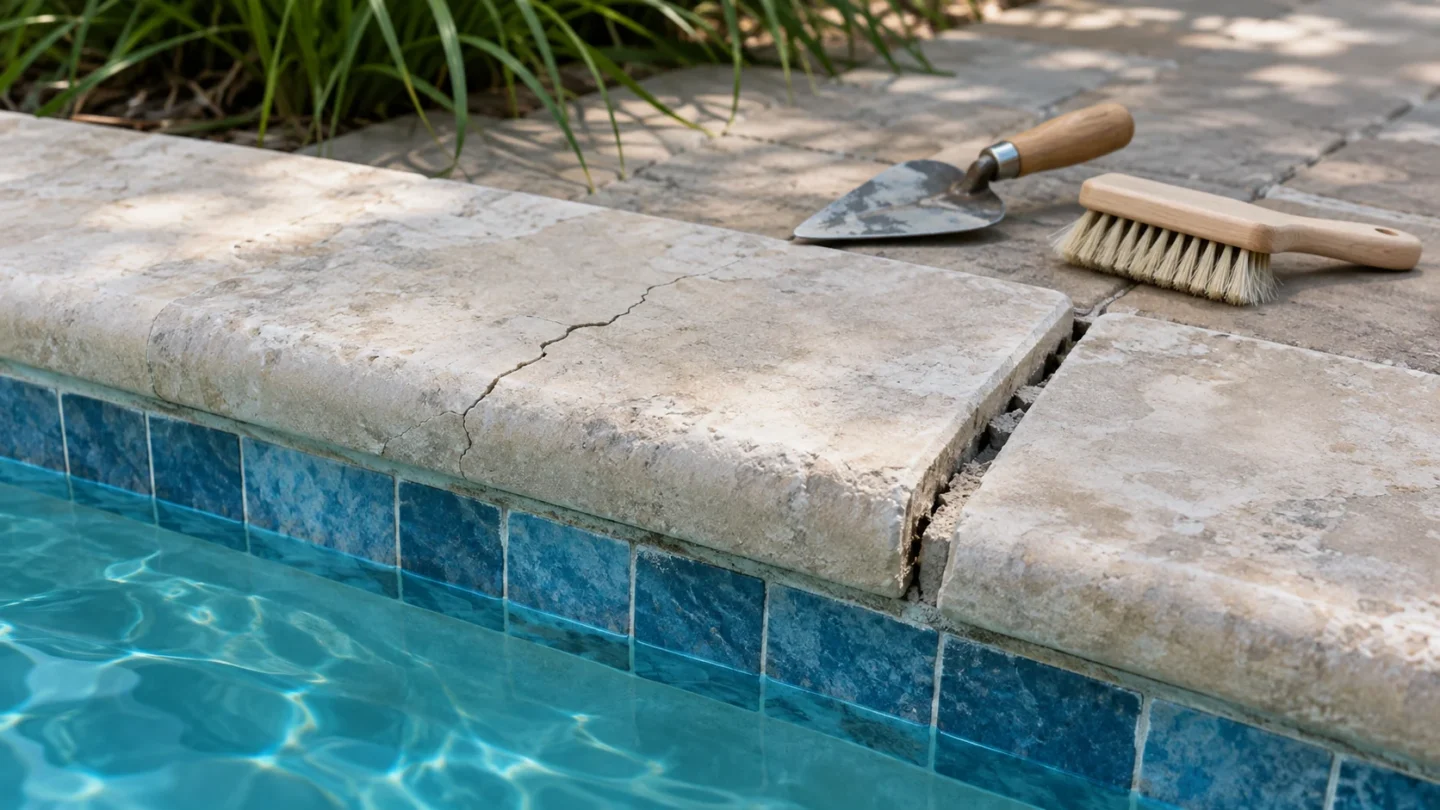
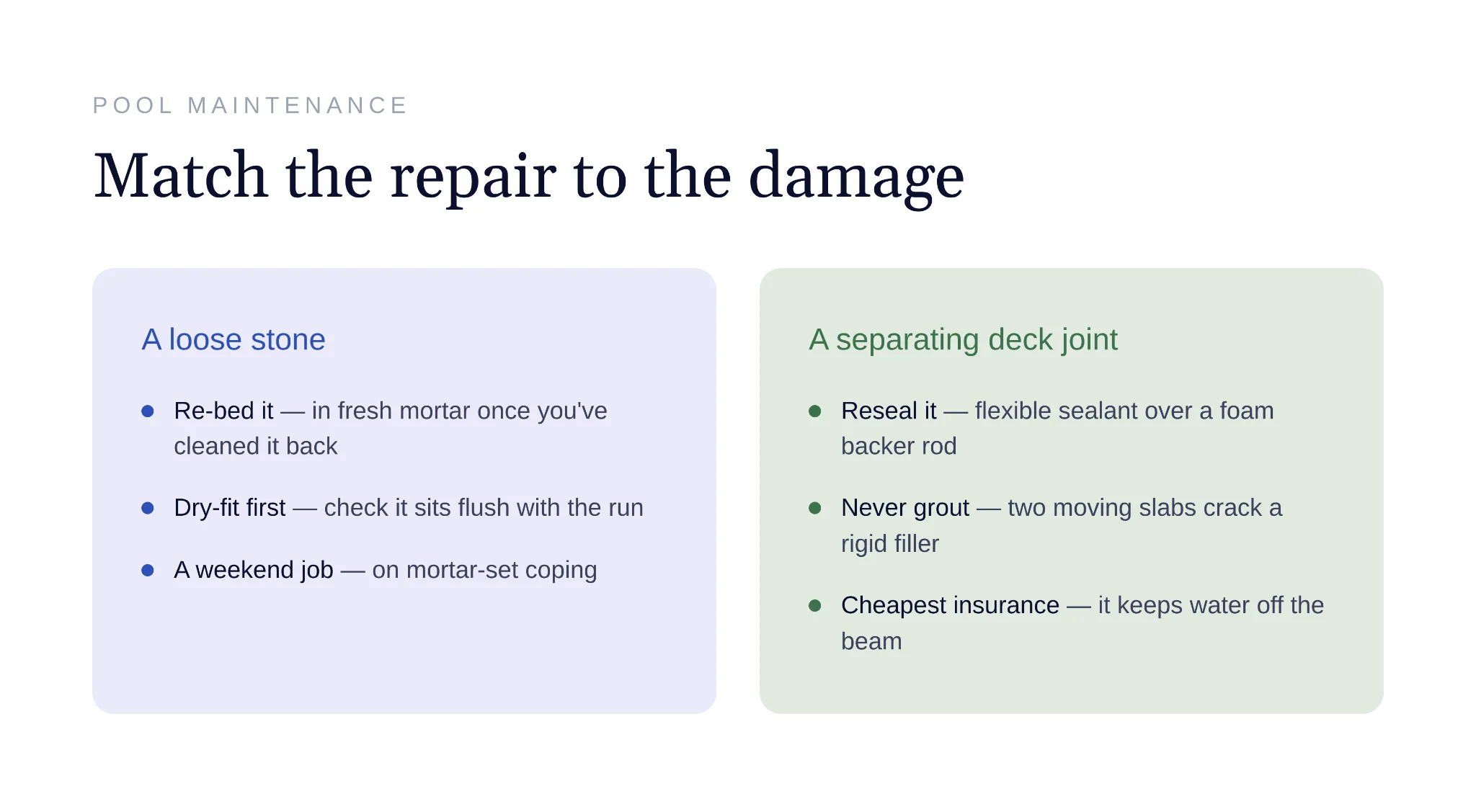
This is the common one. A stone that rocks when you step on it, or a hollow knock when you tap it with a screwdriver handle, means the mortar bed under it has let go, even when the top looks perfect. On mortar-set coping, a couple of loose stones is a Saturday fix.
- Work the loose stone free. If it’s rocking but still gripping, run a margin trowel or a stiff putty knife around the joints to break it loose. Go easy on the neighbors — you want one stone out, not three.
- Clean everything back to sound concrete. Chisel the old crumbly mortar off the underside of the stone and out of the bed it sat in, wire-brush it, and vacuum the dust. Fresh mortar won’t grab onto old powder, and this is the step people rush and then regret.
- Dry-fit before you mix anything. Drop the stone back in with no mortar and check it sits flush with the ones on either side. If it rides high or low, that’s bed depth to sort out now, not after it’s stuck down.
- Bed it fresh. Use polymer-modified mortar or thinset rated for wet, exterior use, and in a cold climate, one rated for freeze-thaw. Butter the bed, set the stone, tap it level with a rubber mallet, and line it up with the run.
- Leave the joints alone until it cures, and keep the pool water off it. Rushing a wet cure is how you end up doing this twice. Once it’s set, tuck the perimeter joints with matching mortar and tool them smooth.
What moves this out of DIY range: if a whole run of stones is lifting along one side, the mortar isn’t your problem. Something under the deck is moving, and re-bedding stones over a shifting slab buys you a few months, nothing more.
When the Coping Pulls Away From the Deck
Between the coping and the deck there’s a joint, and it’s deliberate.
The deck and the pool shell are two separate structures sitting on soil that swells, settles, freezes, and heaves, and they move independently, constantly.
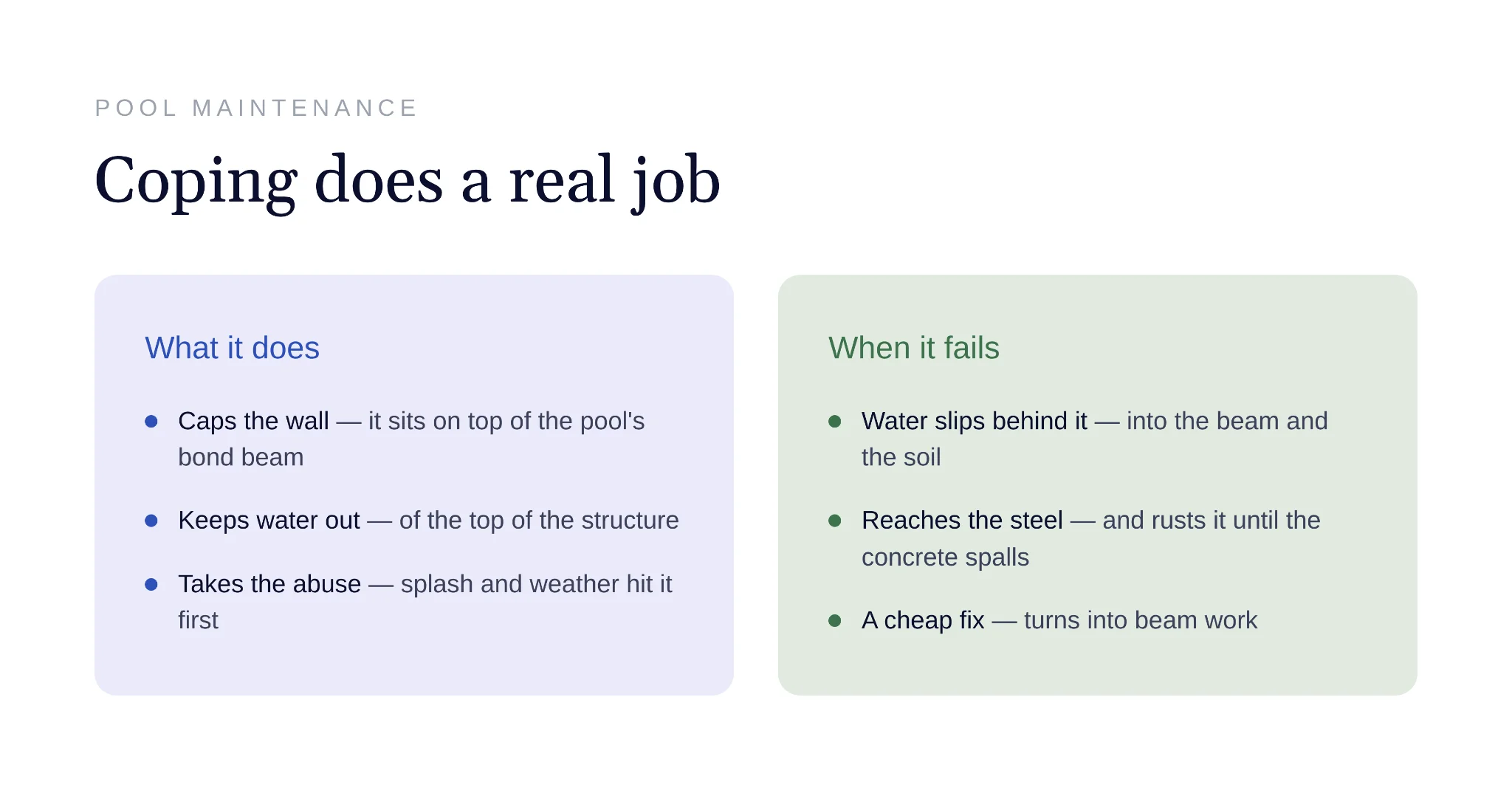
That joint is built to flex with them, which is why it’s meant to be packed with a flexible sealant over a foam backer rod, never hard grout.
Walk enough pools, and you’ll find that joint grouted solid, or filled with concrete by somebody who thought a gap looked unfinished. It cracks within a season, every time, because you can’t pin two moving slabs together with a rigid filler.
And once it splits, it’s an open funnel running deck water straight down behind the beam. This is the most important repair on the list, and it’s one of the easiest.
Rake the old failed sealant and any crumbled grout out of the joint, all the way down, and get both faces clean and dry. Press in a closed-cell backer rod sized a touch fatter than the gap. It sets how deep the sealant sits and stops it from grabbing the bottom, which is what lets the bead stretch instead of tearing.
Then lay in a flexible, self-leveling polyurethane sealant made for pool expansion joints. On a flat horizontal joint, the self-leveling kind does the work for you: feed the bead, let it find its own level. Let it skin and cure before the deck gets splashed.
Do this every few years, and it’s the cheapest insurance the pool will ever get. Skip it, and you’re paying for whatever the water did behind the beam.
Same exception as before, though: if the deck is tilting toward the pool or away from it, or the gap keeps yawning open a month after you fill it, the slab’s riding on bad soil or getting shoved by water pressure underneath, and sealant won’t touch that. That’s a call to someone who does structural work.
Cracks, and the Ones That Mean Trouble
Not every crack is a crisis. A fine, stable hairline in a cast concrete or cantilever lip, surface-deep and not spreading, you can clean out and fill with a flexible masonry repair sealant, color-match it, and keep an eye on it. That’s a maintenance item, nothing more.
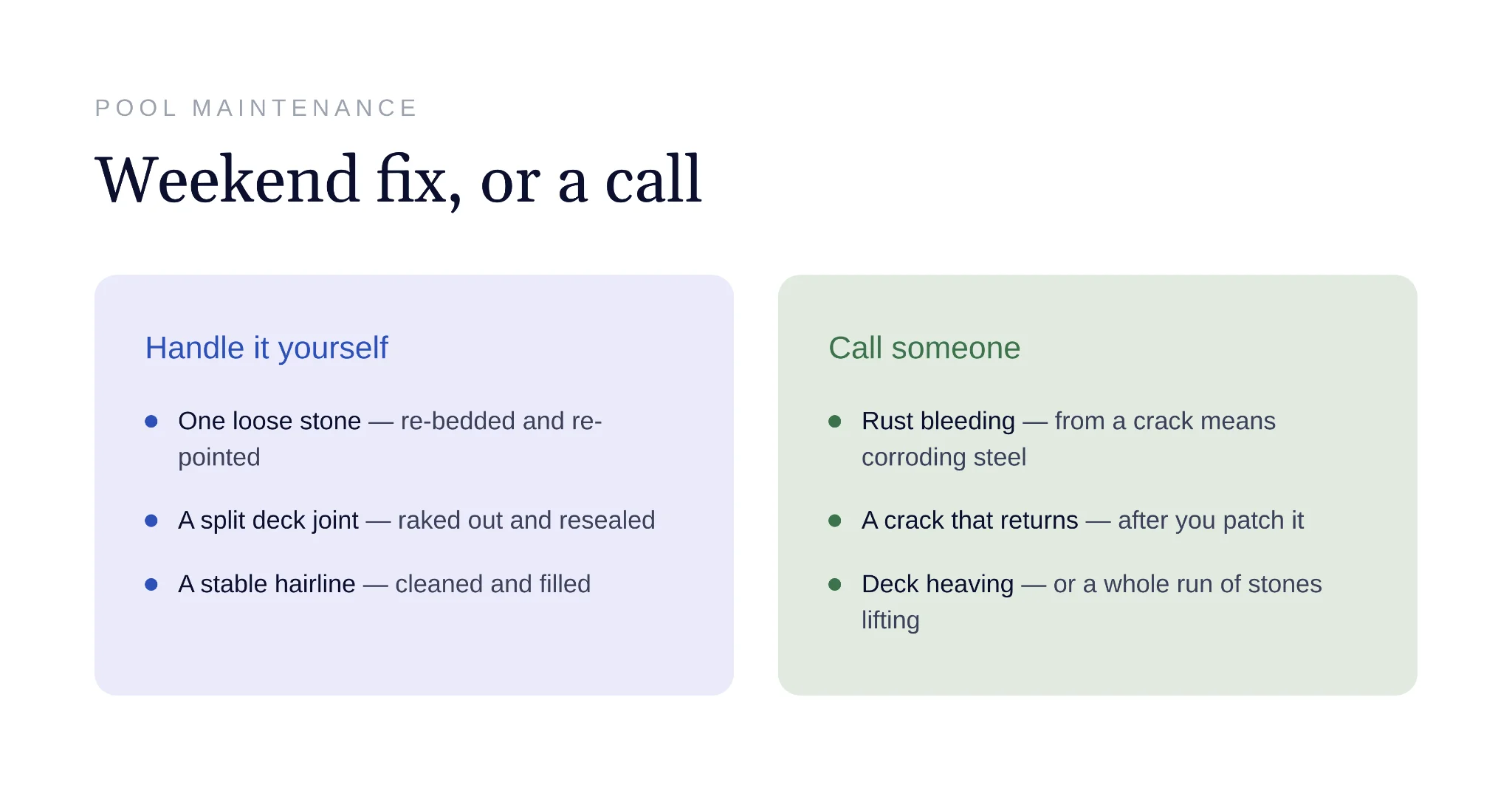
The ones to respect look different. A crack that runs long and deep, through the coping and down into the tile line or the beam. A brown rust stain bleeding out of it. A crack you patched in spring that’s back by fall.
Sections of coping heaving, or waterline tile starting to pop loose.
Any of those is the pool telling you the trouble is under the surface: rusting steel, a moving shell, water already in the structure, and a cosmetic patch that just hides the gauge while the real problem keeps running.
Rust, especially: fill a rust crack, and you seal the corrosion in with its own moisture, and it eats faster in the dark. Those get diagnosed before they get filled, and usually not by you.
Keeping It From Coming Back
Most coping repairs trace back to two things nobody kept up with: a deck joint left to dry out and split, and pool water allowed to run aggressive.
Keep the expansion joint sealed and flexible, and you cut off the main route water takes to get behind the coping. Keep the water balanced, and you stop aggressive, low-pH water from chewing the mortar out of the joints at the waterline, where the coping stays wet the longest.
And clear the grit and leaf litter that piles up along that waterline edge, because it traps moisture against the stone and grinds at the joints every time the water moves.
That last part is worth automating, and it’s where an Aiper robotic pool cleaner earns its keep even in a repair conversation. Run one on a schedule, and it keeps the floor and waterline clear of the grit and debris that settle right under the coping line and speed up the wear, and a clean waterline makes it easy to catch a hairline crack or a lifting stone early, while it’s still a weekend fix and not a beam job.
Get more pool and lawn care guides from Aiper on Google