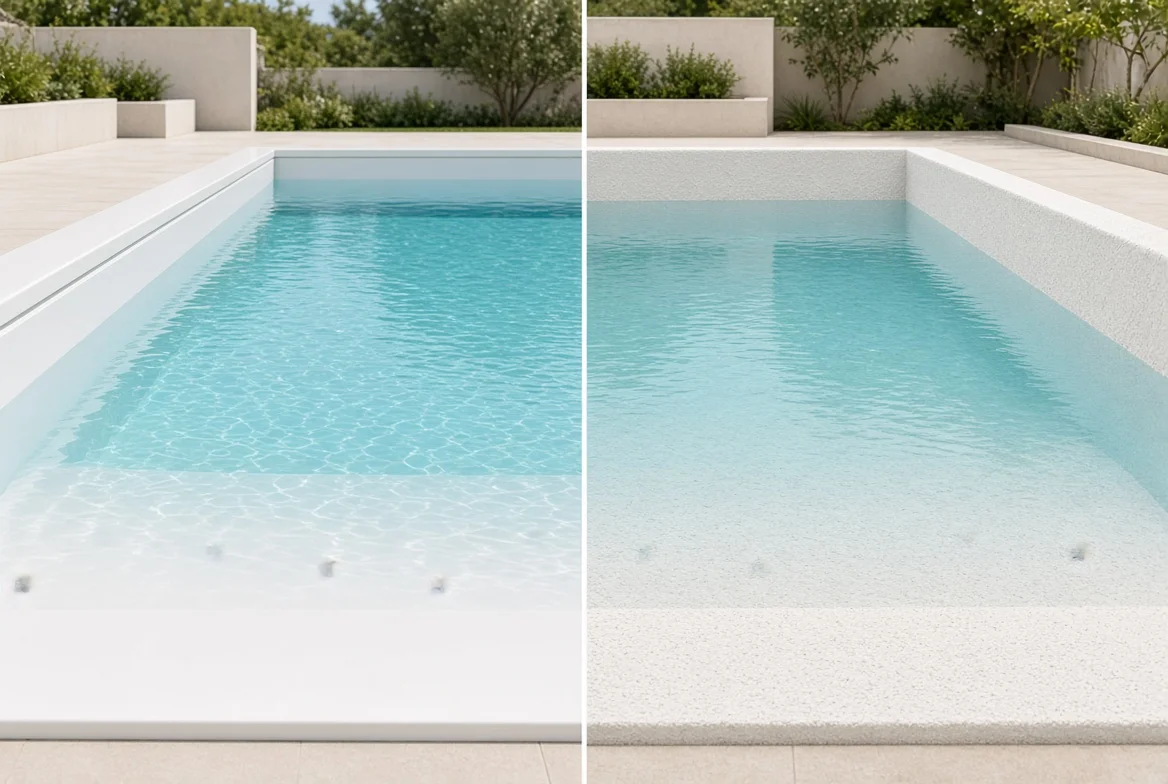

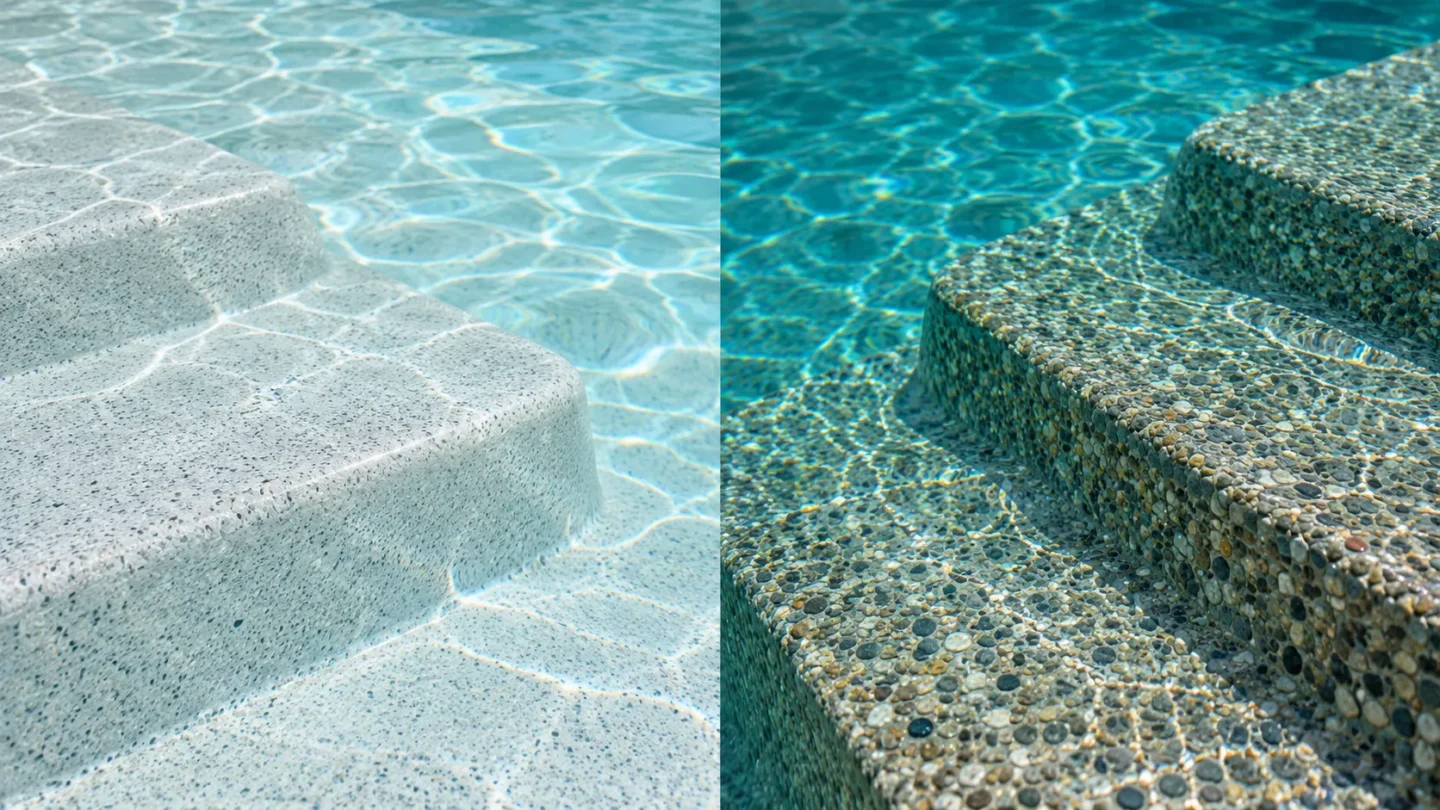
Stand two pools side by side, one finished in quartz and one in pebble, and the water looks different before you’ve touched anything.
The quartz pool reads bright and a little sparkly, the color even across the floor. The pebble pool reads deeper, mottled, more like water sitting over a natural bottom.
That difference in look is where most people start, and it’s the least important thing about the choice.
The finish is the surface that lives underwater for the next fifteen years, takes every chemical swing, gets walked on barefoot, and either holds up or starts failing in year seven.
Texture and color are what you notice at the showroom. Lifespan and how the surface ages are what you live with.
What’s Actually In Each One
Pool plaster is cement, water, and an aggregate troweled onto the shell. Change the aggregate, and you c hange the finish.
Quartz finishes blend crushed quartz into the plaster.
Quartz is hard (far harder than the limestone marble dust in standard white plaster), so the surface resists etching and wear better, and the crushed quartz throws a faint sparkle and carries color well.
The surface stays relatively smooth because the quartz is blended through the plaster rather than sitting proud of it.
Pebble finishes use small natural river pebbles as the aggregate.
After the finish cures, the crew acid-washes or water-polishes the surface to strip the top layer of cement and expose the pebbles. What you end up swimming on is a skin of actual stone.
That exposed pebble is why the surface lasts the way it does and also why it feels the way it does. The two can’t be separated. The texture and the durability are the same fact seen from two sides.
Texture Is the One You Feel Every Single Day
This is where the two genuinely diverge, and it’s the factor people weigh too late.
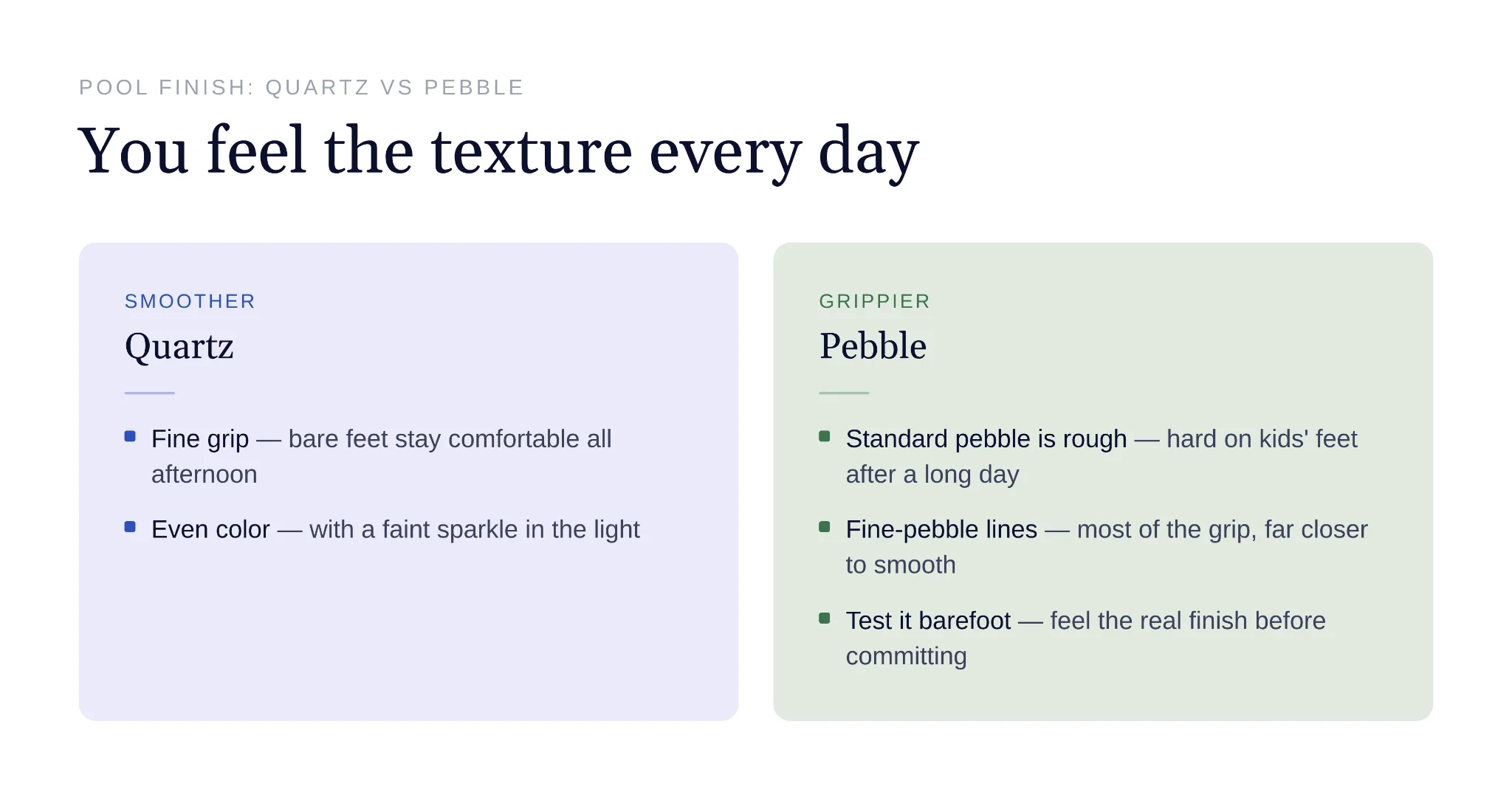
Quartz is smoother underfoot. You can scuff around on a quartz floor all afternoon, and your feet are fine.
Standard pebble is rougher. The classic large-pebble finishes have real texture: grippy, which is good on steps and slopes, and abrasive, which is not good on the tops of children’s feet after a long day.
Families with young kids notice this fast. The complaint is always the same: the bottoms of little feet get raw from pushing off and standing around on coarse pebble. Adults mostly don’t care.
The finish makers solved this, partly, by shrinking the pebble. The smaller-pebble and fine-pebble lines are polished river pebble in a much finer grade, keeping most of the durability while getting a lot closer to smooth.
They cost more than the standard pebble, and they’re what a lot of people land on when they want the pebble lifespan without the sandpaper feel.
So texture isn’t quartz-smooth versus pebble-rough as a clean split.
It’s a gradient: smoothest quartz, then fine pebble close behind, then standard pebble as the grippy, tough, hard-on-feet end of it. The barefoot test at a showroom or a friend’s pool is worth more than any description.
Feel the actual finish lines before deciding, because this is the one you can’t change without redoing the whole pool.
Lifespan Is Where Pebble Earns Its Price
White plaster gives you roughly 7 to 10 years before it’s mottled, rough, stained, and due for a redo. That’s the clock both premium finishes are built to beat.
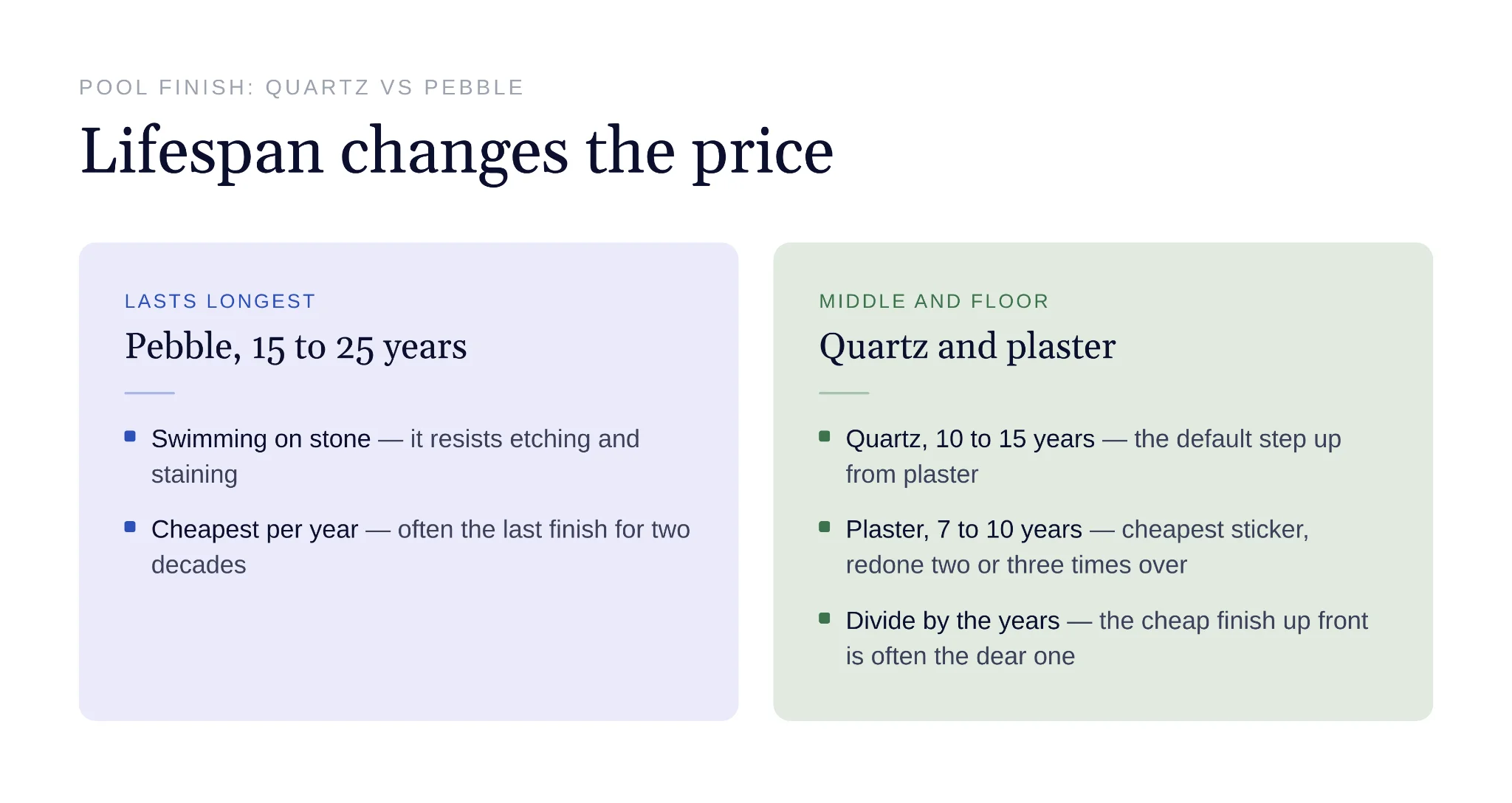
Quartz runs for 10 to 15 years in normal use, kept in reasonable chemical balance. The hard aggregate resists the etching and the surface wear that chews through plain plaster, and it holds its color longer before the blotchiness sets in.
Pebble is the long one. 15 to 25 years, sometimes more, on a finish that was installed well and maintained sanely.
You’re swimming on stone, and stone doesn’t etch the way a cement-rich surface does. It also doesn’t stain as readily, and it shrugs off the minor chemistry mistakes that would scar plaster. A pebble finish is often the last finish a pool gets for two decades.
That gap changes the money completely, which is the next thing.
Keeping the Finish Clean
Both lifespan numbers assume the surface stays clean.
Debris left to sit stains quartz and works into the texture of pebble, and the organic matter that collects on the floor feeds the staining and scaling that cut a finish’s life short. The finishes that reach the top of their range are the ones that don’t spend the off-hours under a layer of grime.
An Aiper cordless robotic pool cleaner handles that without adding to the maintenance load. It scrubs the floor, walls, and waterline on a set schedule, lifting debris before it settles into the surface, which counts for more on pebble, where the texture holds what a smooth finish would shed.
The Cost Question Has Two Answers and People Only Hear One
Upfront, the order is simple.
Plaster is cheapest, quartz is in the middle, pebble is most expensive, and within pebble, the fine-pebble lines cost more than the standard ones. The spread between plain plaster and a premium pebble finish on the same pool can be substantial, several thousand dollars on a typical residential job, more on a big one.
That’s the number people compare, and on that number pebble looks expensive and quartz looks like the reasonable middle.
Divide by lifespan and the picture turns over:
- Plaster is at the low price, but a 7-to-10-year life means you’re refinishing the pool two or three times in the span one pebble job would have covered.
- Pebble at the high price but a 20-year life is paying once for a stretch that would take two or three plaster jobs to match. Per year in the water, it’s frequently the cheapest of the three.
- Quartz sits where it sits on both numbers, which is why it’s the default recommendation for people who want better than plaster without reaching for the top.
The real cost mistake is choosing on the sticker and eating the refinish cycle. A finish is a cost spread over however many years it survives, and the cheap one up front is regularly the expensive one over twenty years.
Color, Water, and the Look You Can’t Undo
The finish color isn’t the water color. The finish tints the water, and the two don’t match.
A mid-blue finish will read as a deeper, richer blue once there’s eight feet of water over it, and a dark finish can push the water toward black-green lagoon tones that look nothing like the sample in your hand.
Quartz comes in a wide range and the color sits fairly true and even, with that fine sparkle catching light. Clean, bright, consistent across the floor.
Pebble gives a more natural, variegated look, as the individual pebbles are different shades, so the bottom has depth and movement instead of a flat field of color. Dark pebble finishes are what’s under most of those deep tropical-looking pools. The mottling that would be a defect in plaster is the whole aesthetic in pebble.
One practical note that costs people money: a sample board in a showroom, dry, under fluorescent light, is close to useless for predicting the installed color underwater outdoors. Wet the sample, take it into daylight, and if the builder has a pool nearby with the finish you’re considering, go look at it full of water. The dry chip lies.
The Thing That Outweighs the Finish Choice
A badly installed premium finish is worse than a well-installed cheap one, and this is the part the material comparison buries.
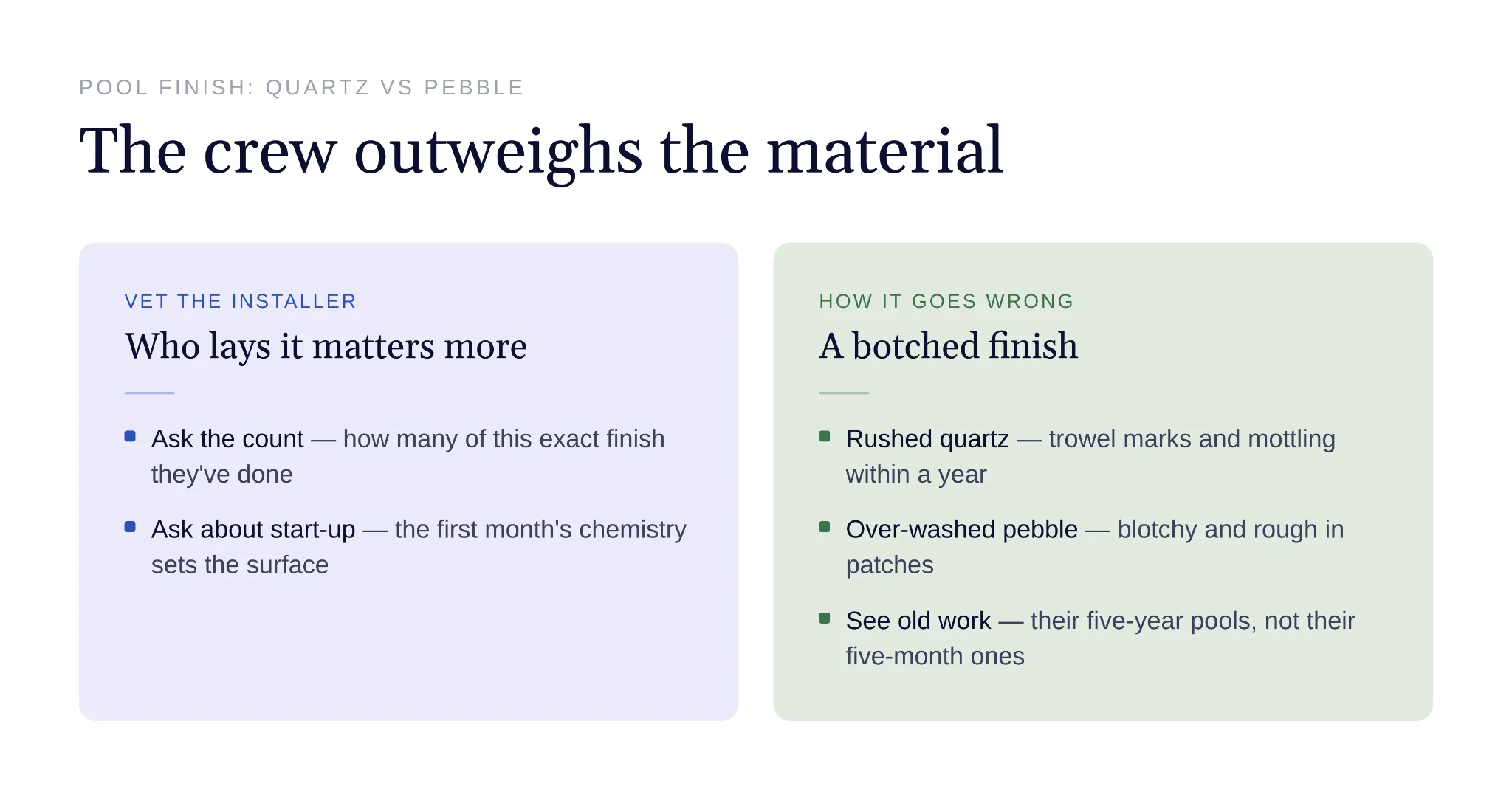
Pool finish goes on wet, by hand, by a crew, and cures underwater after the pool’s filled.
The troweling, timing, and the chemistry of the start-up water in the first month decide whether the finish you paid for actually performs.
A rushed quartz job shows trowel marks and mottling in a year. A pebble finish acid-washed too hard or unevenly comes out blotchy and rough in patches.
Start-up handled wrong — the wrong brushing schedule, chemistry left to swing in those first weeks while the plaster’s still curing — and you get scaling, staining, and streaks baked into a surface meant to last twenty years, inside the first month.
So the crew matters more than the material.
A great pebble product installed by a crew that does two pools a year is a worse bet than a solid quartz finish from the outfit that’s done four hundred and handles the start-up itself. Vet the installer harder than you vet the finish line.
Ask how many of this specific finish they’ve done, ask who handles the start-up month, and go look at their work from five years ago, not five months ago, the five-month-old job looks great no matter who did it. The five-year-old one tells the truth.
Get more pool and lawn care guides from Aiper on Google