


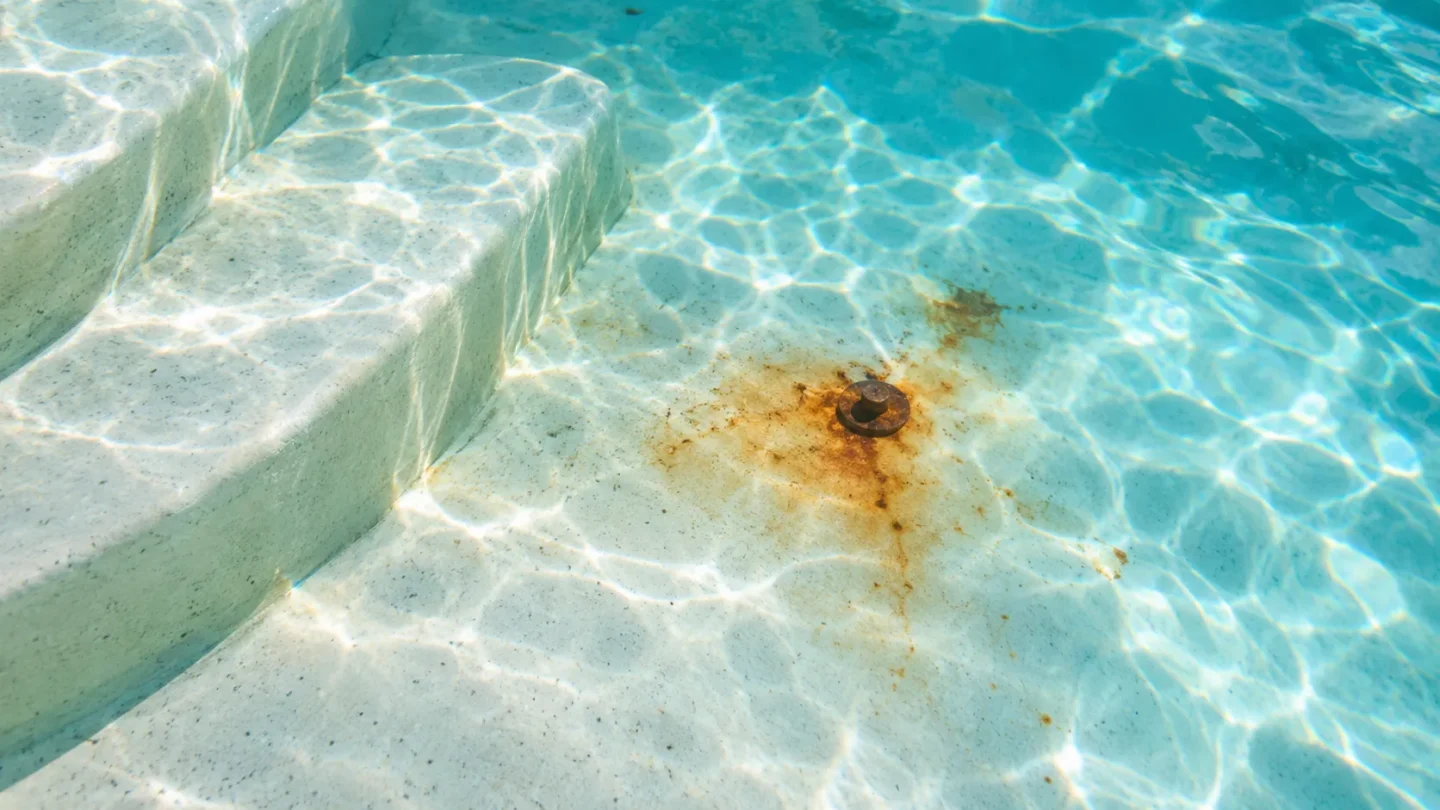
A rust stain on pool plaster is a different animal from the usual pool grime, and the reason it trips people up is that the first instinct (shock it, chlorine kills everything) is the exact wrong move.
Chlorine doesn’t lift a rust stain. It can set it deeper. A metal stain and an organic stain look similar on the floor and respond to opposite treatments, so the whole job starts with telling them apart, and most of the failed attempts you’ll read about online are someone treating one as if it were the other.
Rust is metal. Specifically, iron, oxidized, bonded to the plaster surface. Something put iron in contact with that spot, and the water did the rest.
Figure out what, and the fix follows. Skip that step, and you’re scrubbing a stain that comes back in a week because the source is still sitting there feeding it.
Metal Stain or Organic Stain
Two tests, five minutes, and they save you from treating the wrong problem.
The chlorine test
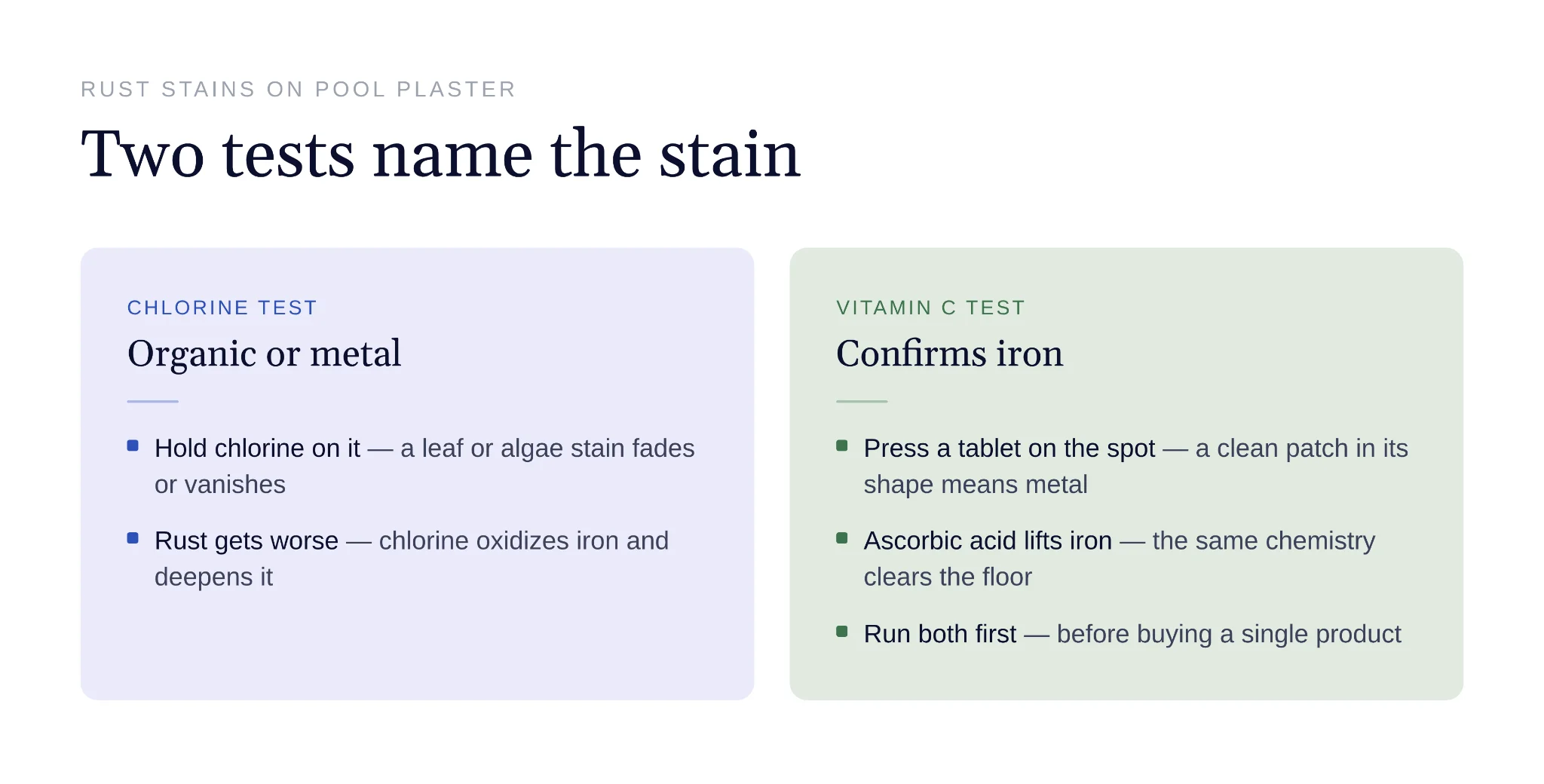
Hold a chlorine tablet against the stain for a minute or so, or drop some granular chlorine right on it. An organic stain from leaves, algae, or a worm that died on the bottom lightens or vanishes. A metal stain doesn’t budge, or it gets worse. Chlorine oxidizes iron, and oxidized iron is exactly what a rust stain is made of, so the thing that cleans an organic mark deepens a metal one.
The vitamin C test
Press a vitamin C tablet onto the stain and hold it there. If the stain fades under the tablet, leaving a clean spot in its shape, it’s metal — iron, near certainly. Ascorbic acid pulls iron off the surface, and the clean patch is the proof. This is the test that confirms rust, and it’s the same chemistry you’ll use to clear the whole thing.
Run both before you buy anything. A stain that fades with chlorine and ignores vitamin C is organic, and this article isn’t about your problem. A stain that ignores chlorine and fades with vitamin C is rust. Proceed.
Find Where the Iron Came From
The stain is a symptom. The iron is the disease, and it arrived in one of a few ways.
Something metal sat on the floor
The classic. A bobby pin, a twist tie, a soda can, a kid’s metal toy, a piece of pool furniture that toppled in, a hair clip, anything ferrous resting on plaster in chlorinated water starts bleeding a rust ring within a day or two.
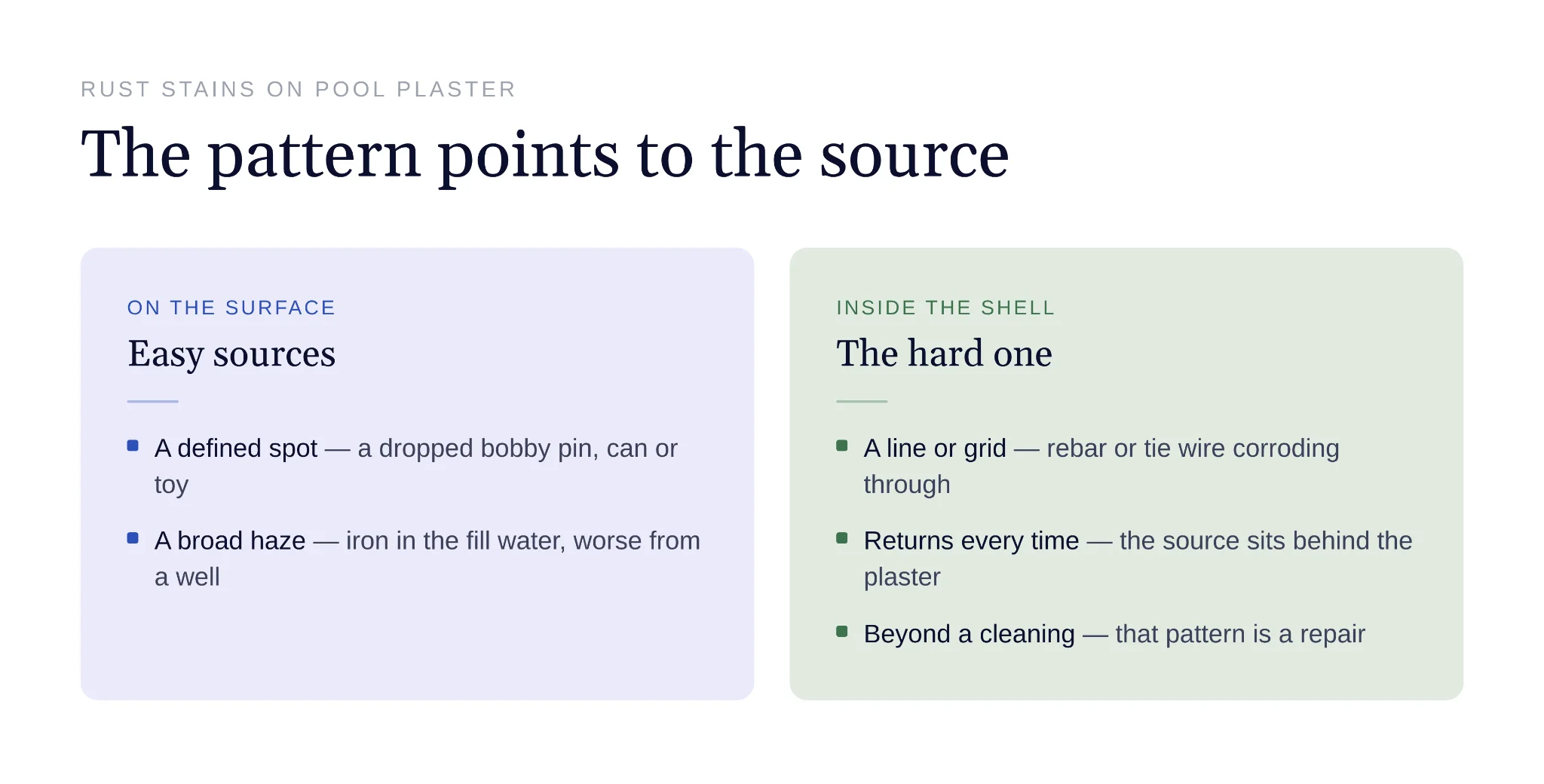
These are the easy ones. The stain is a small, defined spot, often with a telltale shape, and once you find and remove the object, the stain’s the only thing left to deal with.
The fill water carries iron
Well water especially. Fill a pool or top it off with water that’s high in dissolved iron, and you’re adding the staining agent straight through the hose.
This produces a broader, vaguer discoloration rather than a sharp spot, and it comes back every time you add water unless you filter the fill.
The pool’s own structure is bleeding through
The ugly one. Rebar in the shell, or tie wire, or a rusting fixture, corroding and bleeding iron out through the plaster from behind.
This shows as a stain that follows a line or a grid, or keeps returning in the same place no matter how many times you clear the surface, because the source is inside the wall, not on it.
Surface treatment never fixes this. It’s a repair, not a cleaning, and it’s worth knowing early that that’s what you’re looking at before you spend three weekends treating a stain that structurally cannot stay gone.
Which pattern you’ve got, whether defined spot, broad haze, or returning line, tells you most of what you need before any chemical goes in the water.
The Spot Fix for a Single Stain
If you find one stain, defined, from a dropped object you’ve already fished out, don’t treat the whole pool for that. Treat the spot.
A vitamin C tablet, held or rubbed directly on the stain, lifts it.
For a stain on a wall or step within reach, this is a two-minute job — press, rub, watch it go. For one on the deep floor, crush the tablets, put the powder in a sock or a thin cloth, weight it, and lower it onto the spot on the end of a pole, or use a purpose-made applicator. The ascorbic acid does the work on contact.
The stain lifts, and then you’ve got dissolved iron floating free in that patch of water, which will re-deposit if you leave it.
So after the spot clears, brush the area, run the filter, and ideally get a dose of metal sequestrant into the water to hold that freed iron in suspension until the filter and your next few water changes carry it out. For a single small stain, the amount of iron is tiny, and this is barely a concern. Worth the habit anyway.
The Whole-Pool Ascorbic Acid Treatment
Broad staining, or a floor spotted in enough places that spot-treating is absurd, needs the full ascorbic acid process, and it’s a specific sequence that people botch by doing the steps out of order.
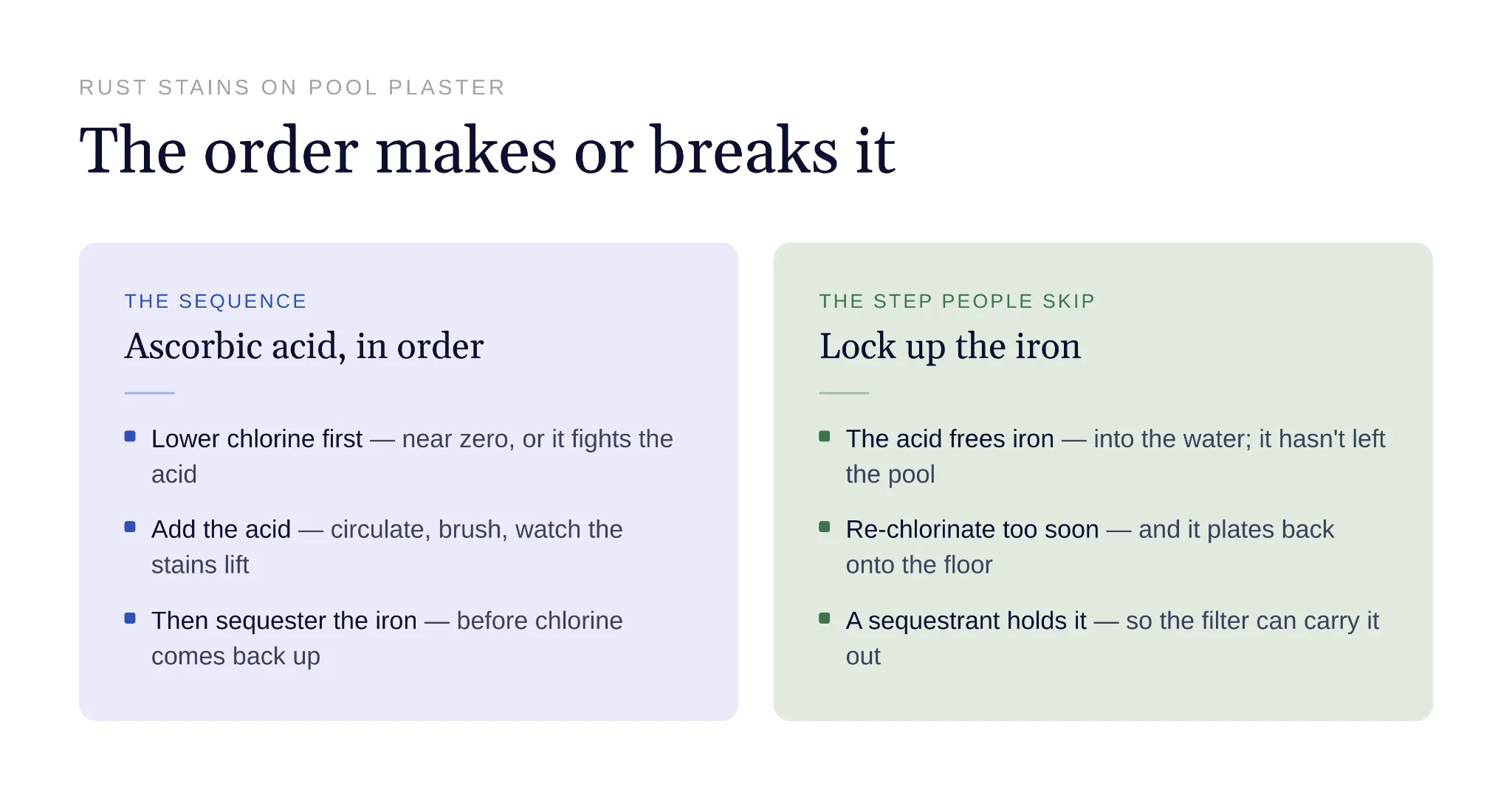
Lower the chlorine first
Ascorbic acid and chlorine fight each other. Chlorine re-oxidizes the iron as fast as the acid frees it, so treating a pool with normal chlorine levels burns through acid and barely touches the stain.
Get chlorine down near zero before you start. Stop adding it, let it drop, test to confirm. Low chlorine for a day or two won’t wreck the pool; fighting your own treatment will waste the whole batch of acid.
Balance toward where the acid works
Lowering pH somewhat helps the ascorbic acid do its job. Get the chemistry into the range the product calls for before dosing.
Add the ascorbic acid
Broadcast it over the water, or concentrate it where the staining is heaviest. Run the pump on circulation and give it time. The stains lift over minutes to a few hours as the acid reaches the iron.
Brush the stained areas to help it along. Watching a stained floor go clean in an afternoon is the satisfying part.
Lock up the iron before it comes back
Here’s the thing nobody tells first-timers: the acid didn’t remove the iron from the pool. It moved it from the plaster into the water.
The iron is now dissolved and floating, and the instant you bring chlorine back up, it’ll oxidize and fall right back onto the floor as fresh stain, sometimes worse than before.
So before re-chlorinating, add a metal sequestrant, like a chelating agent that grabs the dissolved iron and holds it bound so it can’t re-deposit. With the iron sequestered, bring chlorine back up slowly, run the filter hard, and over the following days, as water changes, the bound metal gets carried out.
Skip the sequestrant and re-chlorinate straight away, and you’ll watch your clean floor stain over again within a day and conclude the treatment failed. It didn’t. The sequence was incomplete.
Keeping It From Coming Back
A pool that stained once will stain again if the iron source is still live, so prevention is just dealing with whatever the source turned out to be.
If it was fill water, filter the fill. A hose-end filter that strips iron on the way in, used every time the pool gets topped off, cuts the problem at the source. A pool fed by iron-heavy well water also benefits from keeping a maintenance dose of sequestrant in the water through the season, so any iron that sneaks in stays bound instead of plating onto the plaster.
If it was a dropped object, the lesson’s cheap — keep ferrous metal out of the pool. Hair pins, cans, tools, furniture that can tip in. This sounds obvious until the third bobby-pin stain of the summer.
A dropped pin or twist tie only stains because it sits long enough, a day or two on the plaster before anyone notices it. A robotic pool cleaner working the floor on a daily cycle lifts that kind of small debris into its basket before it starts bleeding a ring. The Aiper line of cordless robotic cleaners runs off its own battery with no hoses or booster pump, and a floor swept every day rarely gives a fallen piece of metal the time it needs.
And keep the water balanced, because aggressive water chemistry accelerates all of it. Water that’s out of balance corrodes metal faster by eating at any metal fixtures, fittings, or, in the worst case, the structural metal in the shell. Which is literally manufacturing the iron that stains the floor.
Balanced water corrodes slowly. The chemistry you keep for every other reason is also the chemistry that keeps rust from starting.
When It’s Not Really a Stain Anymore
A mark that keeps returning in the same spot, in a line or a grid pattern, after you’ve treated it properly more than once is structural iron bleeding through from inside the shell. No amount of ascorbic acid fixes a problem whose source is behind the plaster.
Rebar too close to the surface, tie wire, a corroding fixture, the metal is embedded and corroding outward, and surface treatment clears the bloom for a few days before the source pushes more iron through.
Each round of acid treatment on a structural stain is effort spent on something that structurally cannot stay fixed.
That one’s a call to a pool professional, and depending on how bad it is, it ranges from patching a spot where the plaster’s worn thin over the rebar to, in the serious cases, resurfacing. Not what anyone wants to hear about a stain.
But three weekends of vitamin C and sequestrant on a stain that returns every time is more wasted than one honest repair, and the sooner that line-pattern stain gets read for what it is, the less of the summer gets lost to treating the wrong thing.
Get more pool and lawn care guides from Aiper on Google