

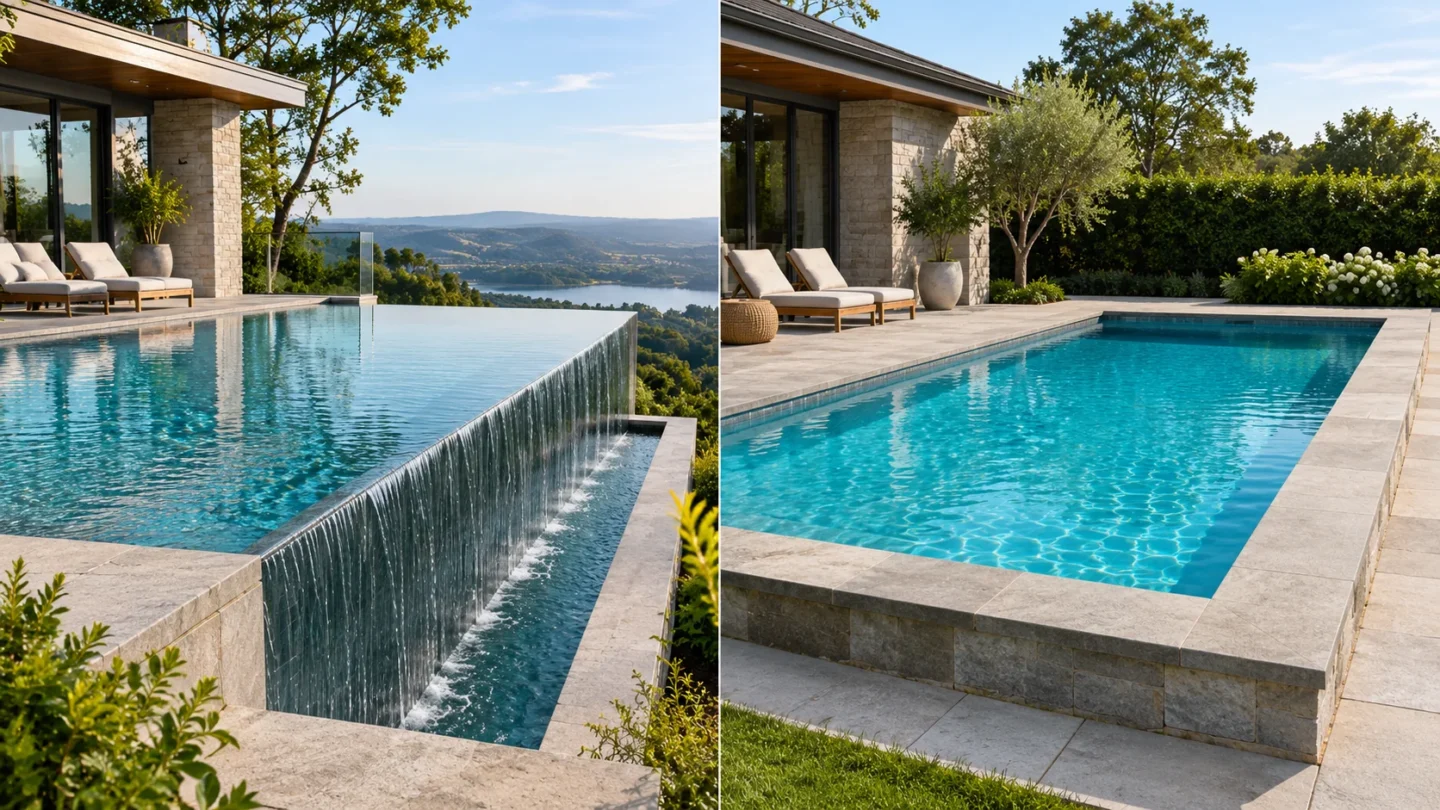
An infinity pool and a standard pool hold water the same way for anyone swimming in them.
The difference is structural, and it lives in one wall.
Every wall on a regular pool stands at the same height, and the water stays put. An infinity pool drops one of them lower and builds it dead level, so water spills over the lip in a thin sheet and vanishes over the edge.
That one change drags in a second pump, a hidden catch basin, and a structural problem a normal pool never has to solve, and that’s where the price gap comes from.
If you plan to finance the installation, the Pool Loan Calculator estimates payments using your project cost and loan assumptions; it is an estimate rather than a lender quote.
What Makes the Edge Vanish
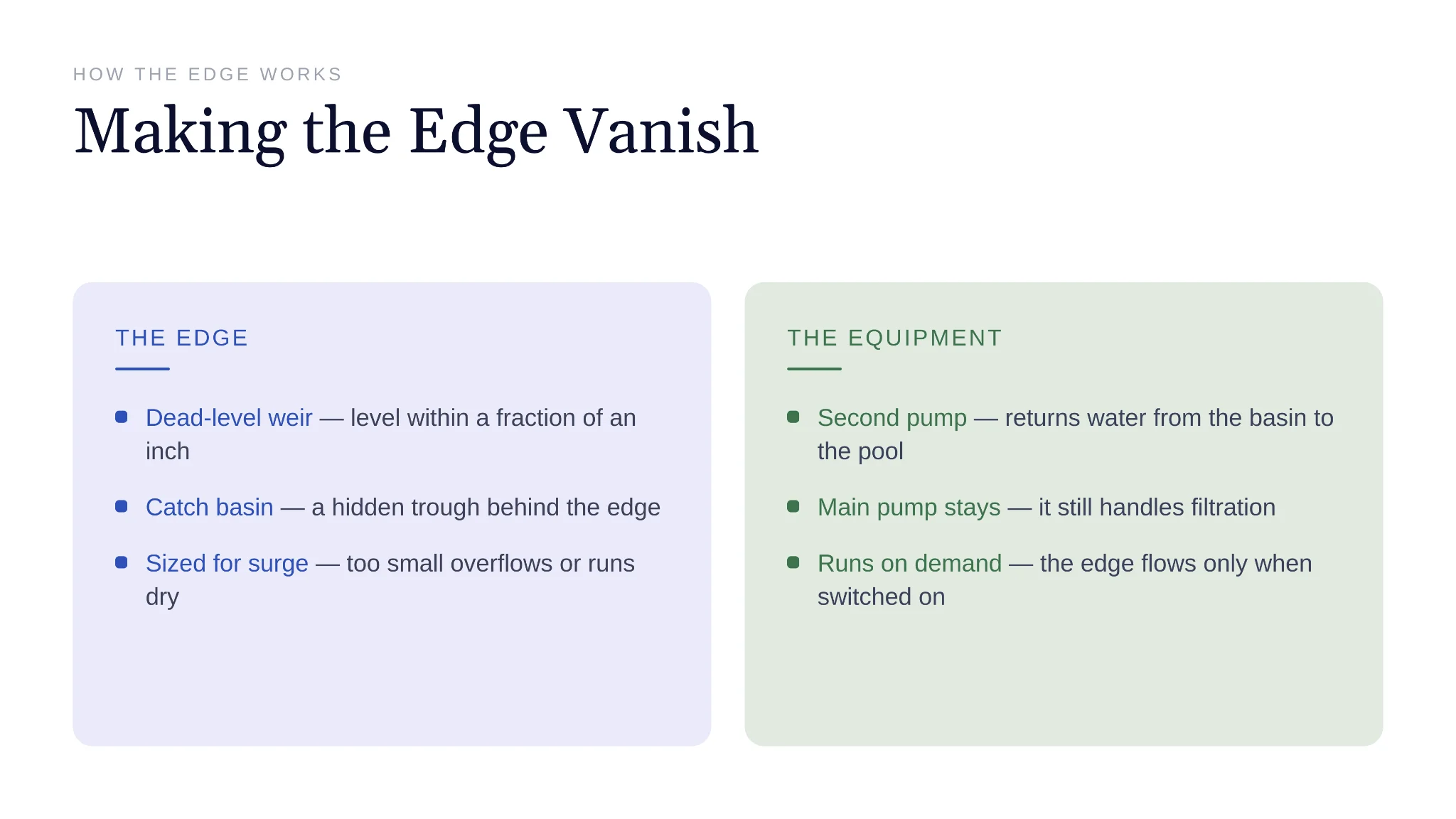
The water doesn’t actually go anywhere. It falls a short drop into a catch basin behind the edge, and a pump lifts it back into the pool, around and around for as long as the effect is running.
Three parts have to work together for that to read as a clean sheet of water disappearing into a view.
The edge has to be level, genuinely level, within a small fraction of an inch across its whole length.
A weir that sits low on one end sends all the water over that end and leaves the rest of the lip dry, and the illusion collapses. Holding that tolerance across twenty or thirty feet of edge, on a structure that can’t be allowed to settle unevenly over the years, is a real construction and engineering demand.
Behind the edge sits the catch basin, a trough or small second pool that collects the falling water.
It has to be sized for surge. When several people climb in at once, the water they displace all goes over the edge together, and a basin too small to hold that volume overflows and floods the deck; build it too small the other way, and the pump runs it dry and starts pulling air. Getting that volume right is a sizing calculation the designer has to run before anything is poured.
The third part is a dedicated pump. The main pump still handles filtration the way it does on any pool. The vanishing edge needs its own pump on top of that, moving water from the basin back over the top whenever the edge is meant to flow.
The Structure Underneath
The pump and the basin add cost. The structure is where the real money goes, and it’s the part that never shows up in the photos.
An infinity edge only makes sense pointed at a drop, a hillside, a view, a slope falling away. That’s the whole appeal, and it’s also the engineering problem, because the low edge usually sits right at the top of that drop with nothing visible holding the water back.
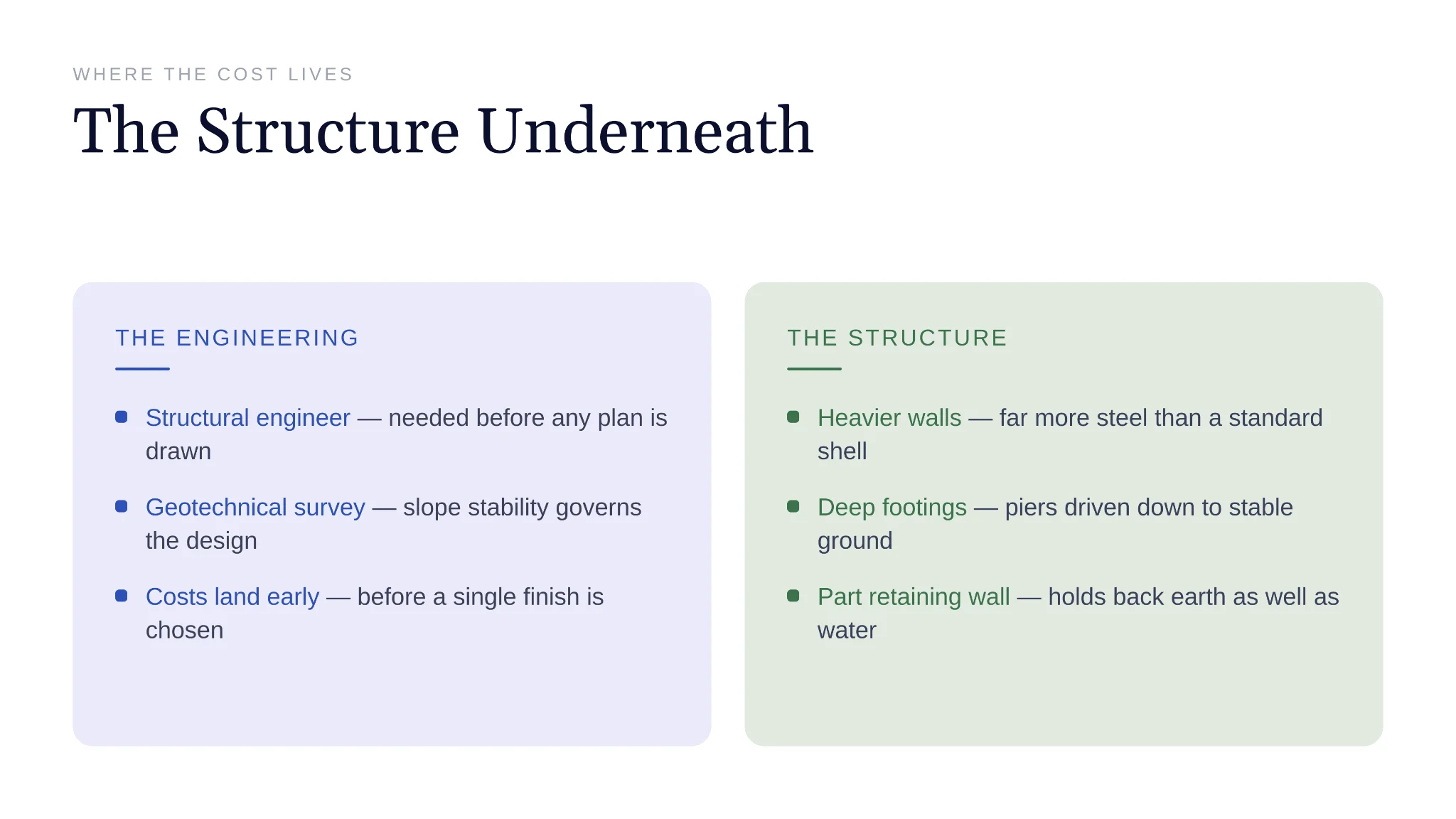
The edge wall carries the weight of the water, and often part of the pool itself, cantilevered over the slope or standing on an elevated footing.
Building it means heavier walls, far more steel than a standard pool shell, deep footings, and sometimes piers driven down to stable ground or bedrock. On a sloping site, the pool is partly a retaining structure, holding back earth as much as water.
You don’t design any of that by eye.
An infinity pool needs a structural engineer, and usually a geotechnical survey, before anyone draws a plan, because slope stability governs the entire design.
A standard pool on flat, stable ground rarely needs either. The builder’s standard plans cover it.
Those engineering and site-work costs land before a single tile or finish is chosen, and they’re the main reason two pools of the same size can sit tens of thousands of dollars apart.
What It Costs to Run
Build cost is a one-time hit. Running cost repeats every month, and here too the infinity edge adds to the bill in ways a standard pool doesn’t.
The circulation pump is already one of the largest ongoing electricity costs any pool carries. The DOE has studied how much pump choice and run time drive that bill, which is part of why efficiency rules now push owners toward variable-speed pumps.
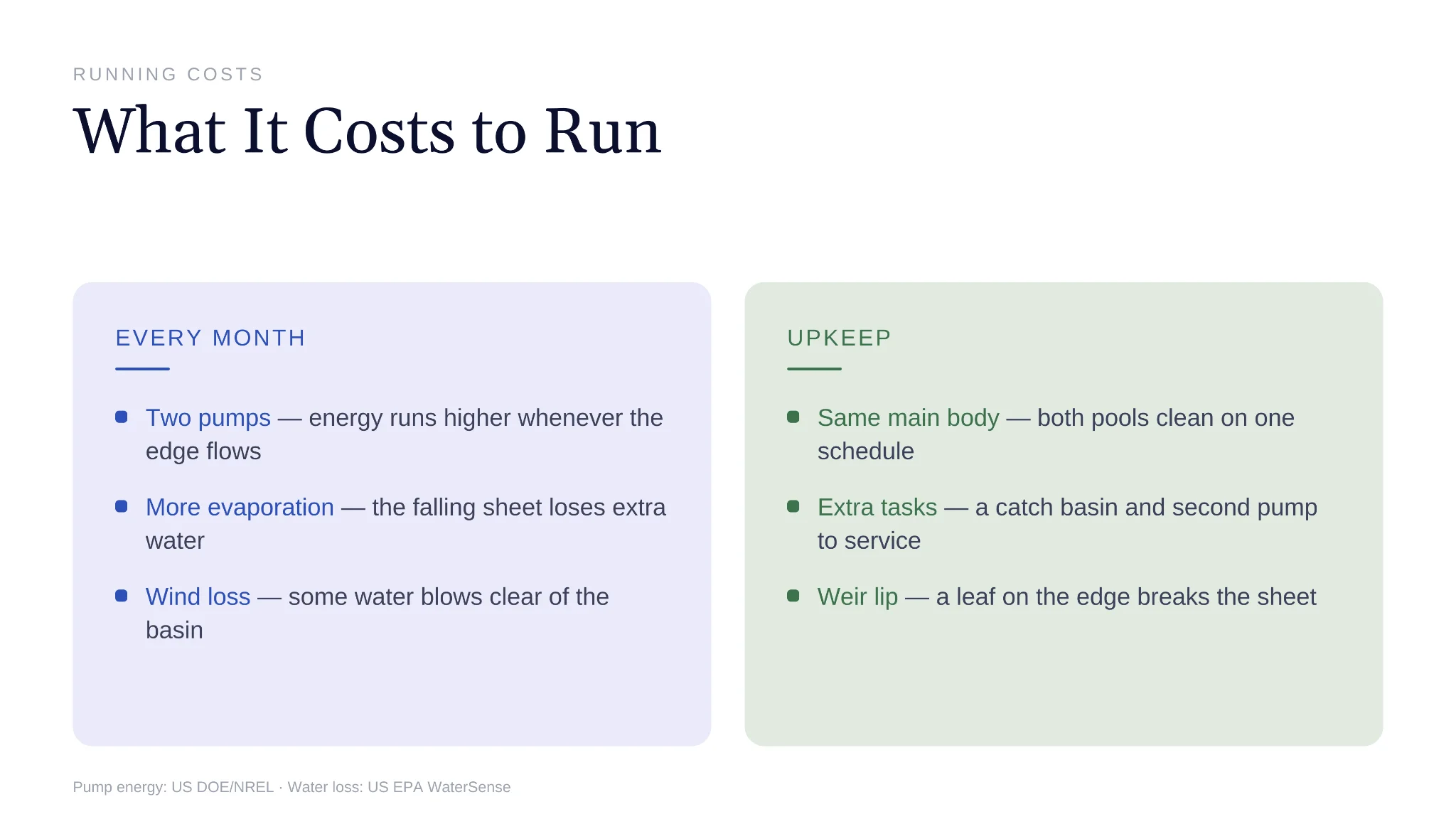
An infinity pool runs a second pump on top of the first to keep the edge flowing, so the energy line reflects two pumps rather than one whenever the effect is on. A lot of owners end up running the edge only while they’re using the pool or entertaining, for exactly that reason.
Water is the other recurring cost. Every pool loses water to evaporation, cleaning, splashing, and leaks, and the infinity edge makes the first ones worse. A thin sheet spilling over a lip and falling through open air evaporates faster than a still surface, and wind catches the falling water and throws some of it clear of the basin.
The top-off adds up across a season, more so in a hot or windy spot, which is usually the exact setting a view pool gets built in.
Then there’s upkeep, and this is where the two pools differ less than people expect. Both need the main water body cleaned on the same schedule, the floor vacuumed, and the walls brushed before debris stains or clogs anything.
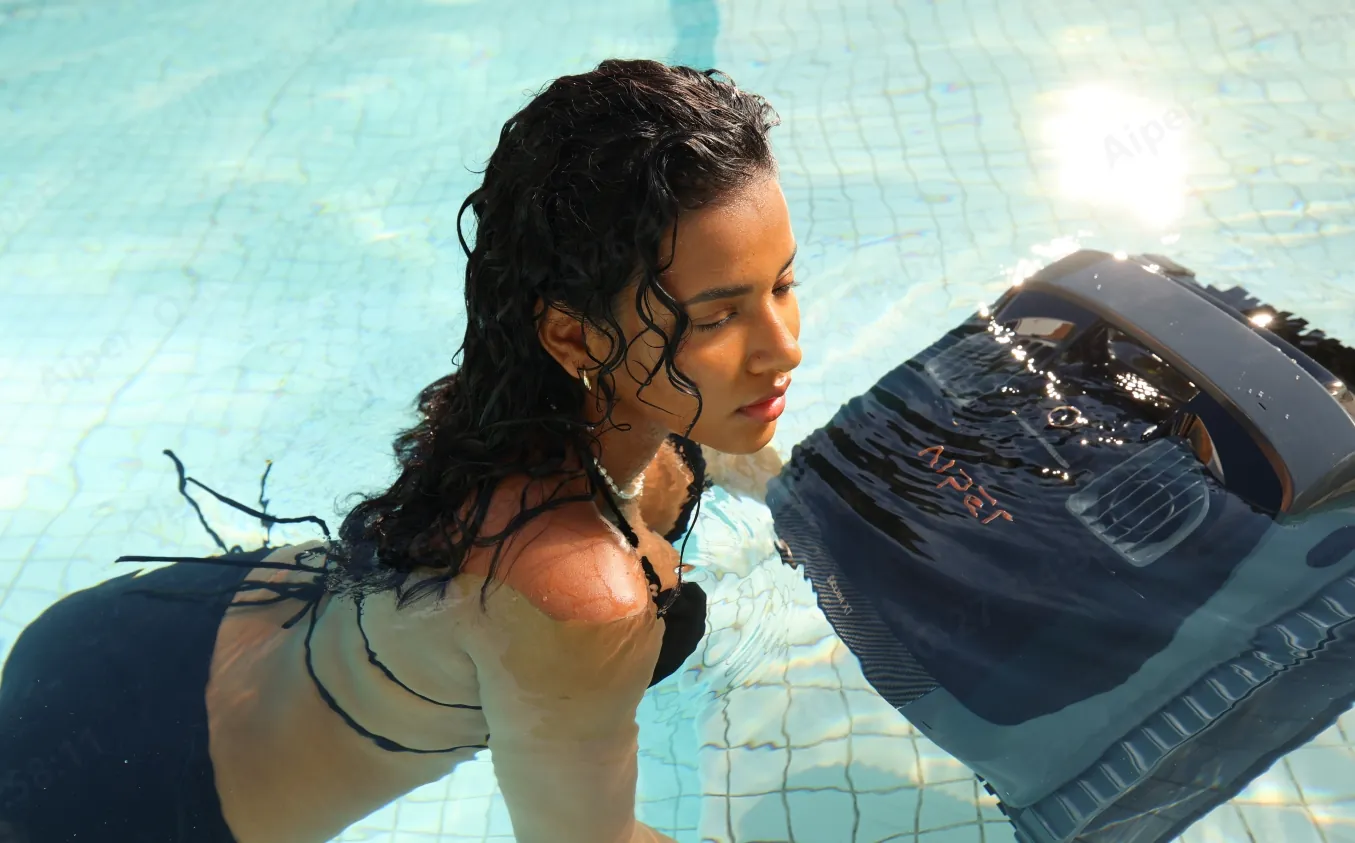
A robotic cleaner handles that on either pool, and because an Aiper robotic pool cleaner runs on its own power rather than off the circulation system, it does the work without adding to the pump time that’s already higher on an infinity build.
What it won’t do is clean the catch basin or service the second pump. Those are extra jobs the edge brings that a standard pool never has. The weir lip needs attention too, since a leaf or a line of grime caught on it breaks the sheet and shows up instantly.
The Differences That Drive Cost
The edge is a design choice with an engineering bill attached, and whether it’s worth paying comes down to the site.
Given a real drop and a view to pour the water toward, the effect is the entire reason the pool exists, and the cost buys something nothing else can. On flat ground with no view, that same spend goes toward an effect that barely registers, and a standard pool delivers the identical swim for a fraction of it.
| Regular pool | Infinity pool | |
|---|---|---|
| Edge | Level walls all around, water contained | One wall lower and dead level, water sheets over |
| Pumps | One, for filtration | A second dedicated pump for the edge |
| Hidden works | None | Catch basin sized to absorb surge |
| Engineering | Builder’s standard plans, flat stable site | Structural engineer, usually a geotechnical survey |
| Build cost | Baseline | Often tens of thousands higher at the same size |
| Running cost | One pump, ordinary evaporation | Two pumps when flowing, higher evaporation |
| Where it fits | Almost any site | A slope or view the water can fall toward |
The edge is what the extra money buys, and it only pays off where the land already gives the water somewhere to fall.
Get more pool and lawn care guides from Aiper on Google