How Long Does Chlorine Stay in Your Hair After Swimming?

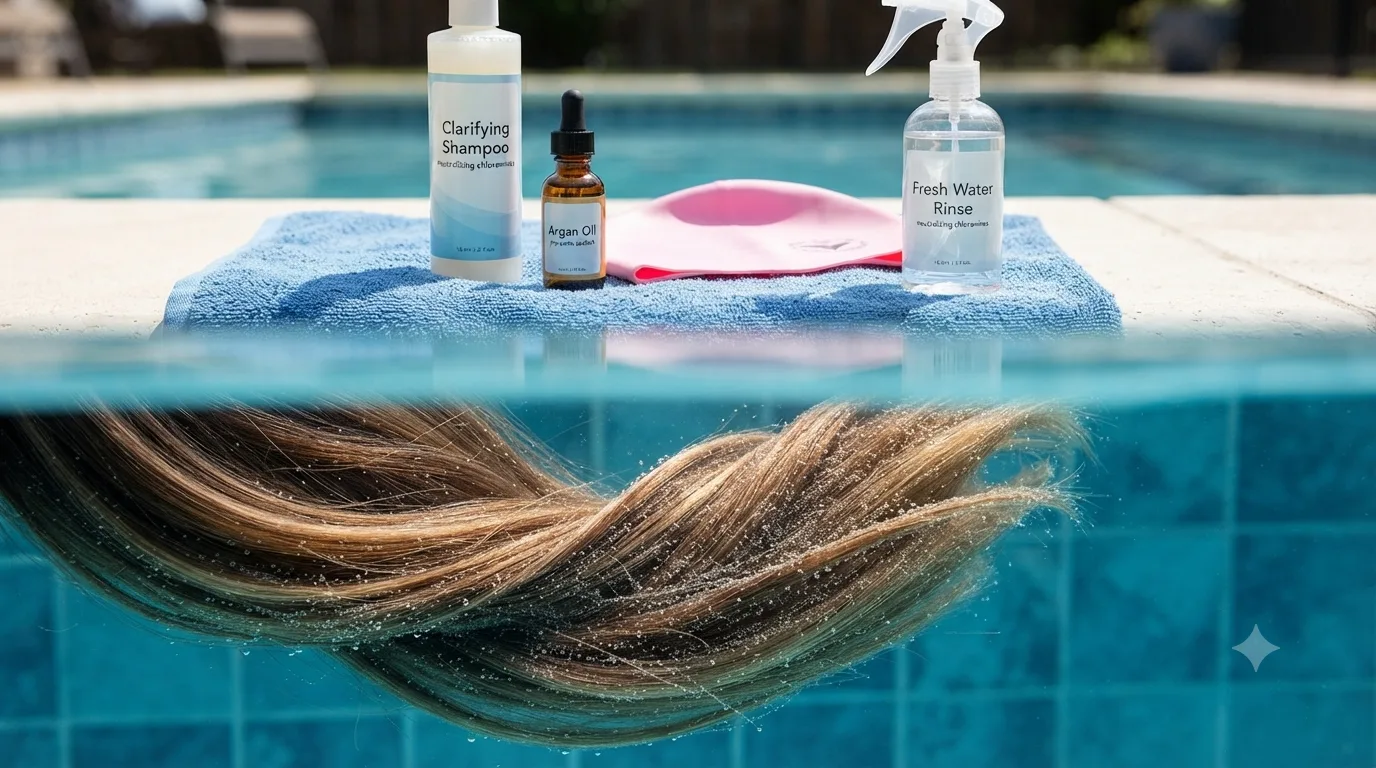
Hair that still feels chlorinated after it’s already been washed twice, with damage that seems worse than expected, isn’t really about whether chlorine damages hair. The honest answer starts with a distinction most swimmers never make: chlorine itself isn’t what lingers, chloramines are, and they bond chemically to hair keratin rather than rinsing away with plain water. Rinsing immediately after swimming and following with a clarifying shampoo removes most of it; protecting hair before you even get in prevents the rest. The full routine, before and after swimming, is below. How much chlorine ends up in the water in the first place also depends on stabilizer levels, covered in our guide to cyanuric acid.
How Long Does Chloramine Residue Really Last in Hair?
Chlorine, the disinfectant, reacts with sweat, oils, and organic matter in pool water to form chloramines — the compounds actually responsible for that lingering “pool smell” and the sensation of chlorinated hair. Unlike chlorine, chloramines don’t rinse away with plain water. They bond chemically to hair keratin and strip natural oils, which is why residue can persist for a day or more if hair isn’t washed properly, and over a week with repeated exposure and product buildup. How much active chlorine is available to react in the first place depends on the pool’s pH, covered in our guide to balancing pool pH, and on how the pool is shocked, covered in our guide to shocking a pool properly — both affect how much chloramine forms in the first place.
The residue doesn’t fade on its own timeline — it remains until it’s actively neutralized through proper cleansing, not just diluted by time.
Why Does Chlorine Cling to Hair Longer Than Skin?
Hair’s outer cuticle is porous and made of protein, which binds chlorine byproducts more readily than skin does. Skin sheds and regenerates constantly; hair does not, so whatever bonds to a strand stays there until it’s washed out or the hair grows out. Metals like copper, often present from algaecides or older plumbing, oxidize with chlorine onto hair, producing a compound more stubborn to rinse out than chlorine residue alone. This applies in salt water pools just as much as traditionally chlorinated ones, since a salt water pool still sanitizes with chlorine — it’s just generated on site rather than added from a bottle.
How Do You Stop Chlorine From Bonding to Hair Before You Even Swim?
Three pre-swim steps, in order of protection:
The water barrier: Rinse hair thoroughly with fresh water, or apply a leave-in conditioner, before getting in the pool. Hair that’s already saturated with clean water absorbs less chlorinated pool water.
The sealant layer: A small amount of coconut or argan oil worked through hair before swimming creates a protective barrier at the cuticle.
The physical barrier: A well-fitted silicone swim cap covering all strands is the strongest defense available, and the only one that blocks direct contact almost entirely.
How Do You Get Chlorine Out of Hair Fast After Swimming?
Rinse with running water immediately after exiting the pool, before chloramines have time to bond — this single step removes a large share of surface residue. Follow with a clarifying (swimmer’s) shampoo, which is formulated to neutralize chloramines specifically, unlike a regular daily shampoo. A diluted apple cider vinegar rinse, about one tablespoon per cup of water, rebalances hair’s pH and dissolves mineral buildup left behind by pool water.
Why Does My Hair Still Feel “Chlorinated” After Washing?
Three misconceptions explain most of this: regular shampoo isn’t formulated to neutralize chloramines, so it can clean hair without fully removing residue. A green tint some swimmers notice, especially with light or chemically treated hair, comes from oxidized copper reacting with chlorine, not chlorine itself, and it’s made worse by hair cuticles that are already open from damage. A lingering smell after washing usually means chloramine molecules are still bonded and causing ongoing protein damage, not that the smell is simply taking time to fade.
Does Chlorine Damage Hair Over Time, and How Do You Repair It?
Repeated exposure without protective steps causes cumulative protein loss, leaving hair drier, more brittle, and more prone to breakage, with color fading in treated hair. A weekly protein mask or keratin-rich deep conditioner restores moisture and rebuilds the protective lipid layer that chlorine strips away. The reliable order is protect, then neutralize immediately after swimming, then restore with regular deep conditioning — skipping any one step is what lets damage compound over a season.
Does Hair Type Change How You Should Handle Chlorine Exposure?
| Hair Type | Recommended Approach |
|---|---|
| Color-treated | Color-safe clarifying shampoo plus a UV-protectant spray, since chlorine accelerates color fade |
| Fine or thin | Lightweight leave-ins; avoid heavy oils that weigh hair down |
| Coarse or curly | Deep conditioning plus higher-fat oils like shea or jojoba, which curly hair loses faster than straight hair |
| Daily swimmers | Rotate clarifying and moisturizing shampoo every 3 to 4 washes; deep-condition twice weekly |
Frequently Asked Questions
Does rinsing with hot or cold water before swimming make a difference?
Cold water tightens the hair cuticle so it absorbs less pool water, while hot water opens the cuticle and increases how much chlorine and chloramine can bond. Rinse with cool water before getting in for better protection.
Do bromine hot tubs affect hair the same way as chlorinated pools?
Bromine also strips oils and dries hair, but it doesn’t form the same chloramine compounds that bond to keratin, so hot tub hair typically feels dry rather than carrying the same lingering chemical odor.
Does a swim cap fully stop hair from getting wet?
Not completely. Most silicone caps still let some water in at the hairline and nape, especially with thick or long hair, so a leave-in conditioner or oil worn underneath the cap still adds meaningful protection.
Does hair length change how much cumulative chlorine damage builds up?
Yes. The ends of long hair have been through more wash-and-swim cycles than the roots and are already more porous from age and styling, so they absorb and hold chlorine byproducts more readily and need more frequent deep conditioning than the rest of the strand.
Managing chlorine levels precisely, rather than over-shocking a pool, also reduces how much chlorine swimmers are exposed to in the first place. Keeping the pool clean between chemical treatments with an Aiper robotic pool cleaner helps prevent the algae and organic buildup that often drives owners to over-chlorinate.
Get more pool and lawn care guides from Aiper on Google