Resin vs Steel Above-Ground Pool Frames: What You’re Actually Choosing

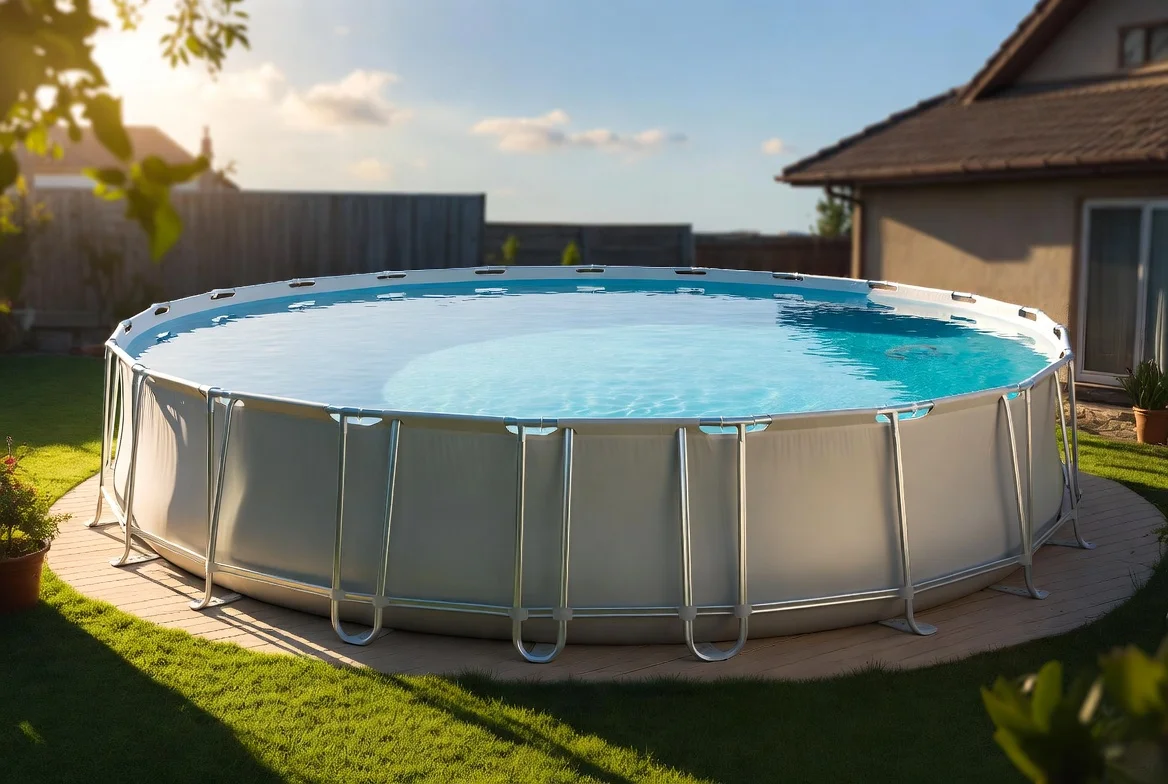
Choosing between a resin and steel above-ground pool frame starts with a fact most pool stores skip: almost every above-ground pool has a steel wall, including the resin model priced $1,800 higher — and either way, the frame is only as good as the level ground an above-ground pool sits on.
What you’re actually choosing is the skeleton: the top rails, uprights, connectors, and bottom track that hold the wall up and take the abuse. In-ground buyers face the same kind of either-or at a different scale — gunite versus fiberglass pools compared on cost and lifespan puts the two biggest contenders side by side.
Both materials fail, just in different ways.
Steel rusts. Resin cracks. This guide covers where each frame wins, how each one fails, and which parts of your setup, salt system, climate, and budget should decide it for you. One more factor worth folding into that budget: an above-ground wall of either material is often tall enough to satisfy pool-barrier code on its own, unlike an in-ground pool where you’re weighing a safety net against a fence as a separate purchase.
The Part Nobody Explains at the Dealer
Showrooms describe resin like it’s a different species of pool. It isn’t.
A resin pool typically means resin top rails, resin uprights, resin connectors, injection-molded polymer components assembled around the same galvanized steel wall as the cheaper model.
Sometimes not even all of that. Plenty of pools sold as resin have steel uprights hiding under resin sleeves.
This is why the price gap confuses people. The upcharge isn’t buying a fundamentally different pool. It’s buying corrosion immunity on the specific parts that corrode first. In-ground buyers face a parallel decision between gunite and a vinyl liner, with a similar gap between sticker price and lifetime cost — see our full comparison of gunite versus vinyl liner pools.
Where steel corrodes first
- The bottom track. Sits in contact with the ground, wicking moisture all season, and almost nobody inspects it after install day.
- The connectors. Every seam traps water.
- The underside of the top rail. Collects condensation every night, in a spot that stays invisible until the pool comes apart.
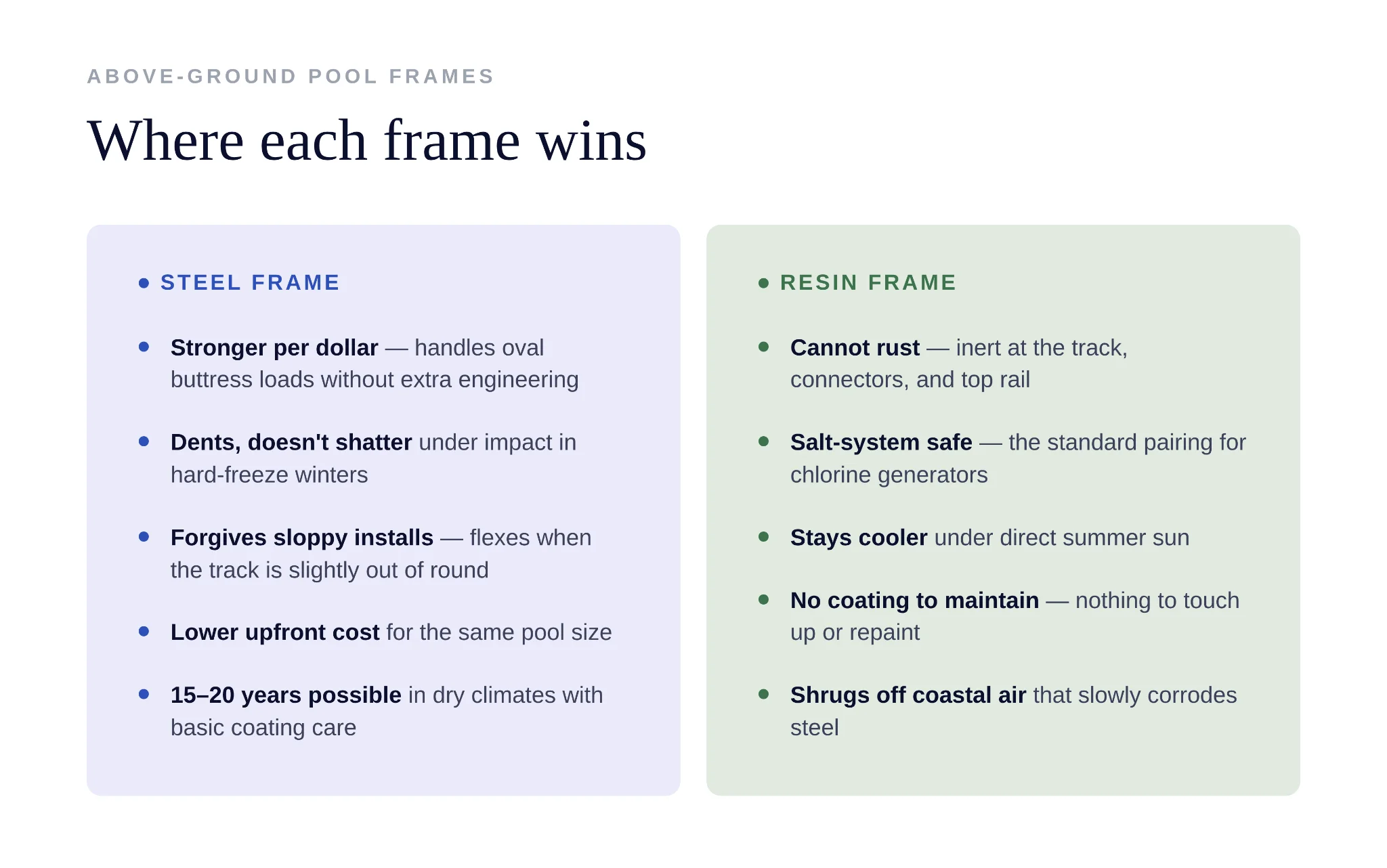
Steel in those locations is fighting a war of attrition from day one. Resin in those locations is just sitting there. Inert.
That’s the entire pitch for resin, honestly. It doesn’t do anything. That’s the feature.
Where Steel Earns Its Keep
Steel is stronger per dollar than resin will ever be, and there are situations where that’s not a tiebreaker.
Structural strength
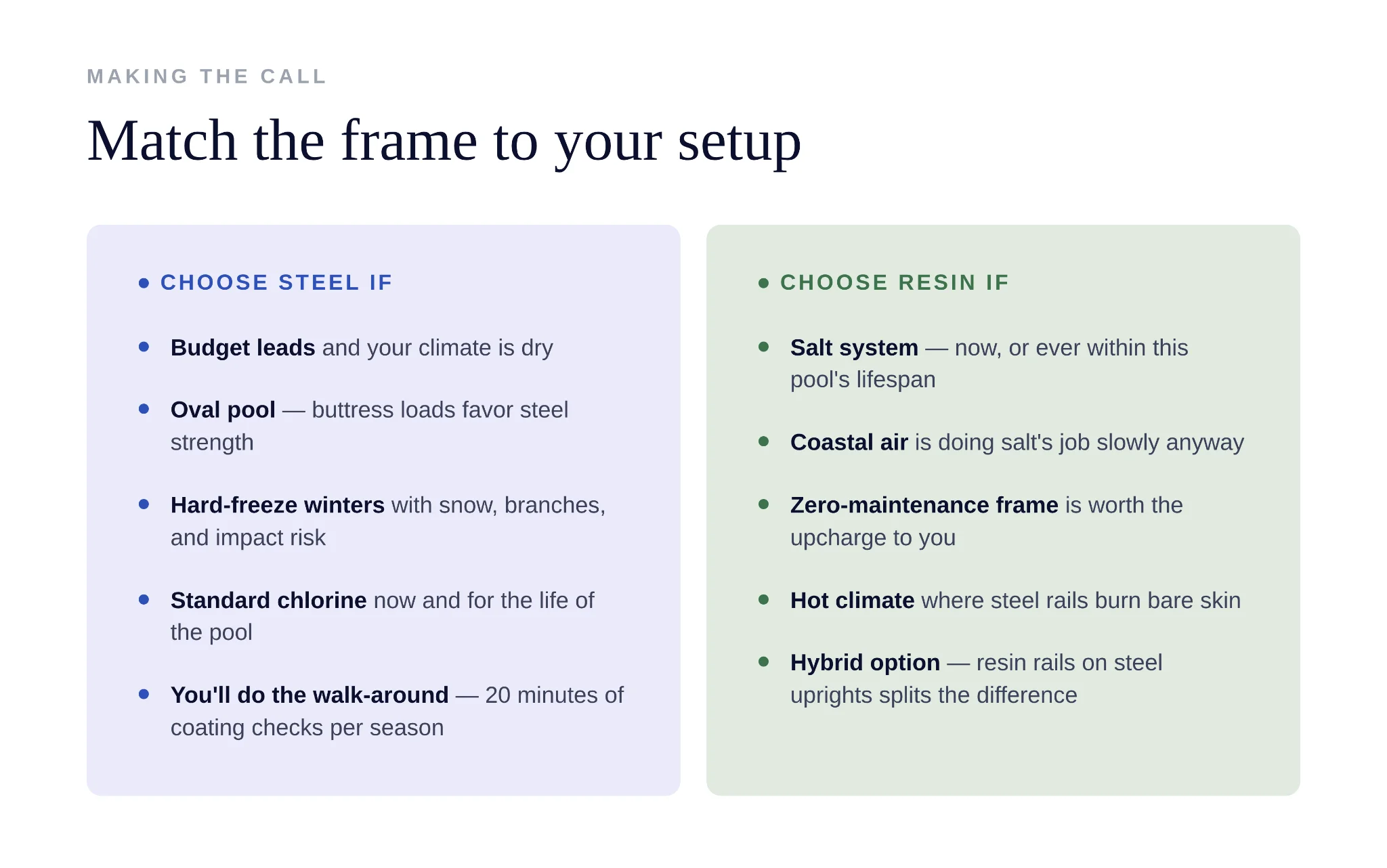
- Oval pools. The buttress systems holding an oval’s straight sides carry real structural load, and steel handles it without the engineering gymnastics resin needs.
- Impact resistance in cold climates. Resin gets brittle when temperatures drop hard. A snow shovel, a falling branch, or an enthusiastic teenager meets a brittle top rail in January, and it shatters. Steel dents. A dent is cosmetic. A shattered upright is a parts order and a partial disassembly.
- Forgiveness on imperfect installs. A DIY bottom track will end up slightly out of round. Steel flexes and accommodates. Resin components are molded to exact tolerances and make it known when the circle isn’t one.
Cost and lifespan
A decent steel-frame pool runs meaningfully cheaper than its resin equivalent in the same size, and in a dry climate on standard chlorine, the cheaper pool might genuinely last just as long. The same cost-versus-longevity math plays out between a fiberglass shell and a vinyl liner, and our guide to how fiberglass shells stack up against vinyl liners runs the numbers.
Coating quality matters more than material category here. A well-made steel pool with hot-dipped galvanizing and intact vinyl coating will outlive a cheap resin pool with thin-walled components. The category tells you less than the build does.
Fifteen years out of a steel pool is common — and if what you actually want is warm water without a full pool, see our guide to choosing a pool spa versus a hot tub. In Arizona, twenty.
How Steel Actually Dies
Not from rain. From everything else.
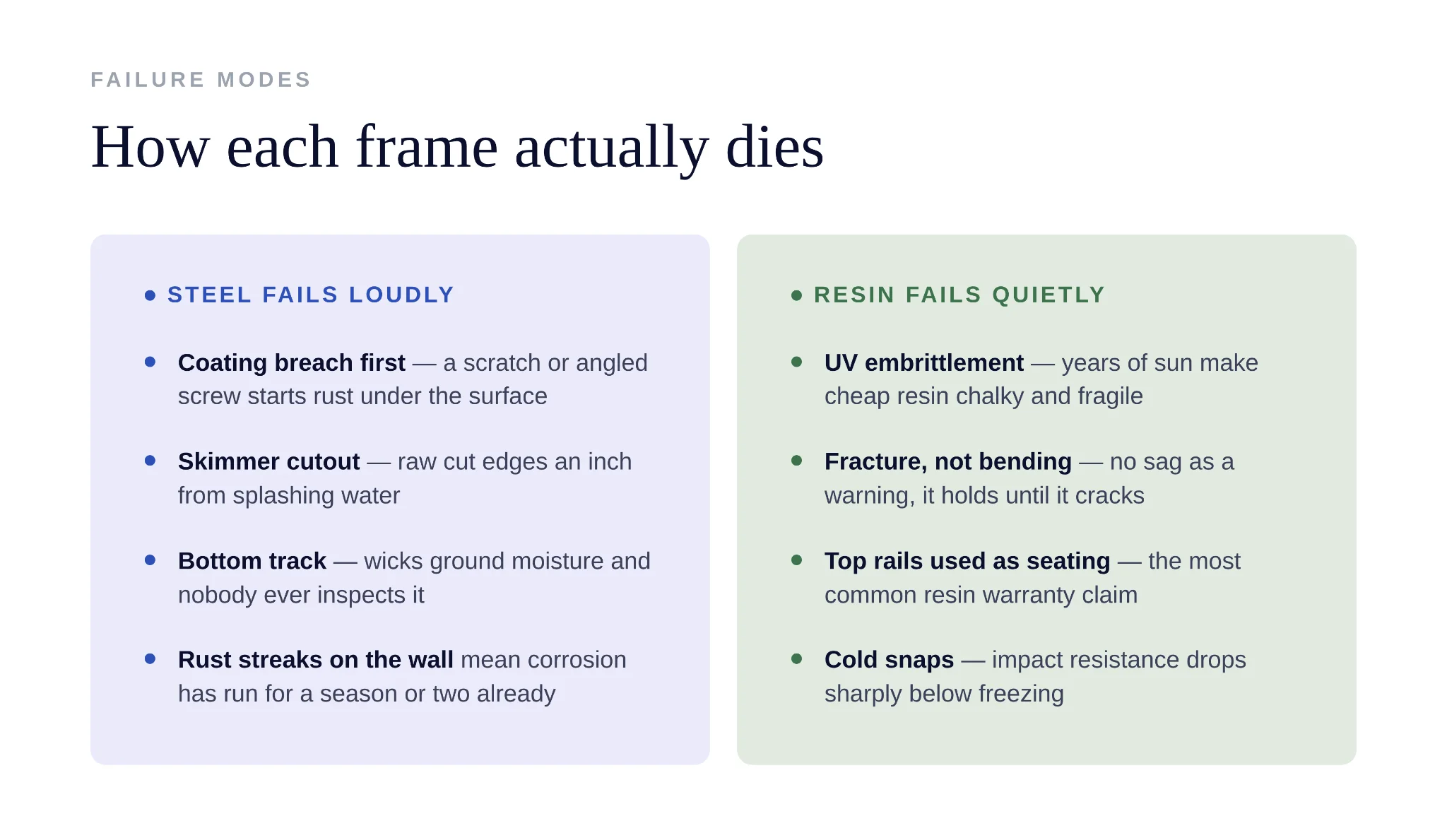
The failure sequence is almost always the same: the protective coating gets breached somewhere small, rust starts working from that point outward, under the coating, out of sight, and by the time orange streaks show up on the wall, the corrosion has been running for a season or two.
The usual starting points
- A scratch during install, or a screw driven at an angle.
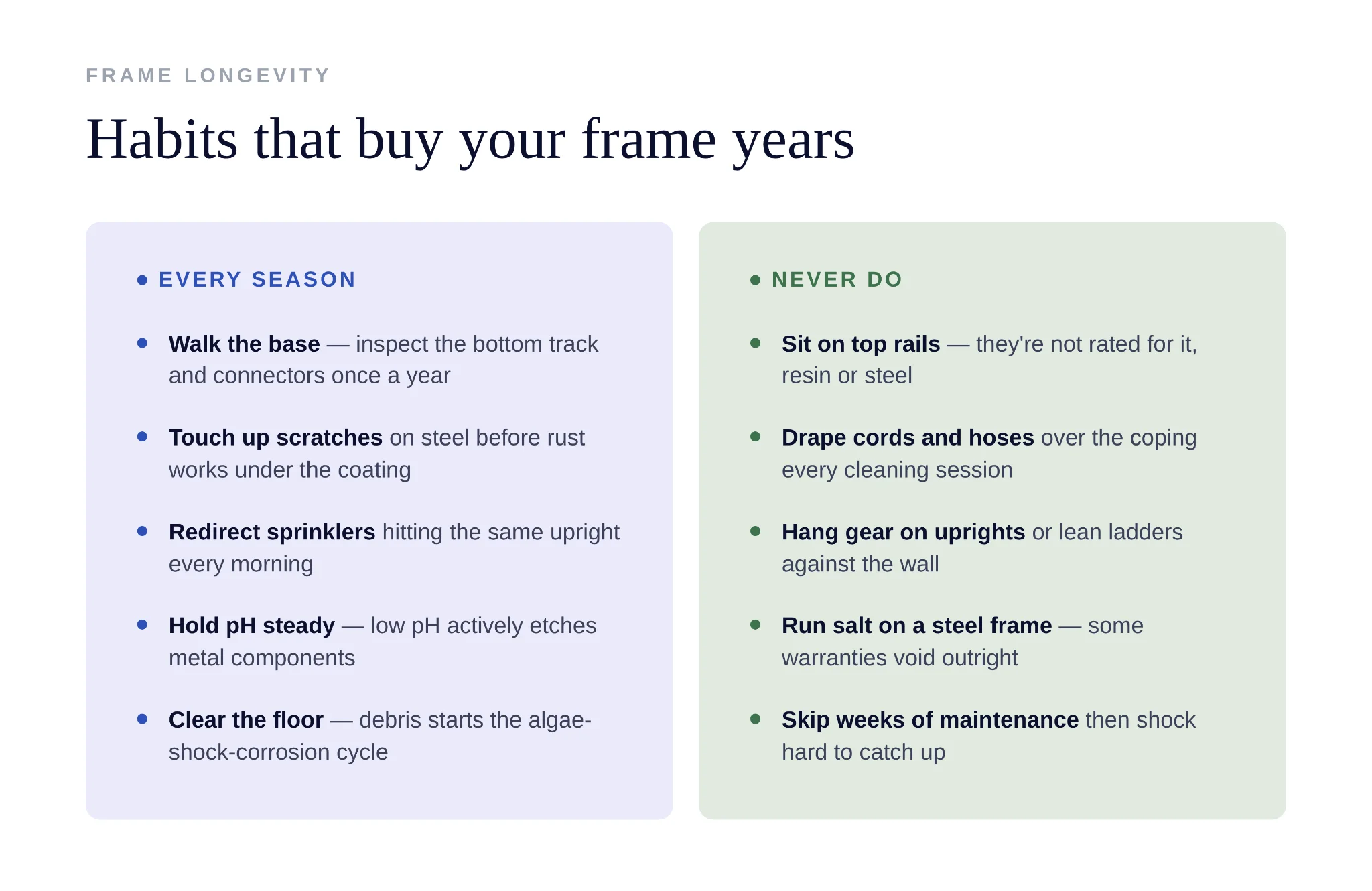
- A sprinkler head hitting the same upright every morning at 6 a.m.
- The skimmer cutout. A hole cut in a steel wall leaves raw exposed metal an inch from constantly splashing water. This is the classic one.
- The bottom track, because it lives against damp ground and never gets looked at.
Salt water accelerates all of this dramatically, more on that below, because it’s the single biggest fork in this decision.
The maddening part about steel failure is that it’s mostly preventable and rarely prevented.
Touch-up paint on scratches, redirecting the sprinkler, a yearly walk-around checking the base. Twenty minutes a season.
Most owners skip it, the coating breach goes unnoticed, and five years later they’re pricing replacement uprights for a discontinued model.
Resin’s Failures Are Slower
Resin doesn’t rust, so people assume it doesn’t fail. It fails. It just fails differently, on a longer clock, from a different enemy: sunlight.
UV embrittlement
UV exposure breaks down polymer over years. Good resin components have UV inhibitors mixed in and hold up for a long time. Cheap ones chalk, fade, and get brittle — and brittleness is the killer, because resin’s failure mode is fracture. An embrittled top rail doesn’t sag or bend as a warning. It holds fine right up until someone sits on it, and then it cracks through.
The top rail problem
Something every resin owner needs internalized on day one: the top rails are not seating. They look like seating. The wide ledge style rails on premium resin pools practically advertise themselves as a place to perch. But:
- They are not rated for body weight.
- Cracked rails are the most common resin warranty claim.
- Warranty coverage on them is usually prorated down to almost nothing by year six or seven.
Read the pro-rating schedule before buying. The “30-year warranty” on the banner and the actual replacement coverage in year ten are very different numbers.
Cold and heat
- Hard-freeze climates: resin contracts and stiffens in freezing weather, and impact resistance drops with it. The hybrid configuration is often the honest answer: resin where water sits, steel where strength matters.
- Hot climates: resin stays cooler in direct sun. Anyone who has put a bare forearm on a steel top rail in July knows this isn’t nothing. That surface heat is a different story from what’s happening in the water itself, though — see our breakdown of why pool and air temperature actually diverge for the rest of that gap.
Salt Water Settles It for Most People
Running a saltwater chlorine generator, or thinking about one within the life of this pool, mostly makes the decision.
Salt and steel do not coexist well. The salt concentration in a pool system is low compared to seawater, but it’s persistent. It splashes on every component daily, and it finds coating breaches faster than fresh water ever will.
- Steel-frame pools on salt systems show corrosion at the connectors and skimmer cutout in two to three seasons: visible, structural corrosion, not cosmetic staining.
- Some manufacturers void the frame warranty outright for running salt on a steel pool. That clause exists because they’ve processed the claims.
- Resin frames don’t care about salt. This is the pairing the industry has standardized around: salt system, resin components, and the only steel in the equation is the wall itself, further from the splash zone and easier to protect.
What Actually Ages a Frame Isn’t the Frame
Both materials get destroyed faster by the same thing: bad water sitting against them.
A pool with debris on the floor becomes a pool growing algae becomes a pool getting shocked hard and repeatedly. Aggressive chemistry cycles are brutal on steel coatings and rough on resin’s UV stabilizers.
Low pH, which drifts down fast in a neglected pool, actively etches metal components. Every skipped week of maintenance is a small withdrawal against the frame’s lifespan, regardless of material.
The other frame-killer is the equipment routine itself:
- Corded cleaners and vacuum hoses draped over the top rail every session, dragging across the exact coated edge steel needs protected, or flexing the exact rail resin can’t have loaded.
- Gear hung on the uprights.
- Ladders leaning where ladders shouldn’t lean.
The frame takes a hundred small insults a season from the cleaning process, which is backwards.
This is where a cordless robot earns its place in the conversation.
The Aiper cordless robotic pool cleaner lineup was built for exactly this pool. Drop one in, it runs about 90 minutes on a charge, parks itself near the wall when it’s done, and lifts straight out. The floor stays clear of the debris that starts the algae-shock-corrosion cycle, and the frame stops absorbing the collateral damage of getting cleaned.
Get more pool and lawn care guides from Aiper on Google