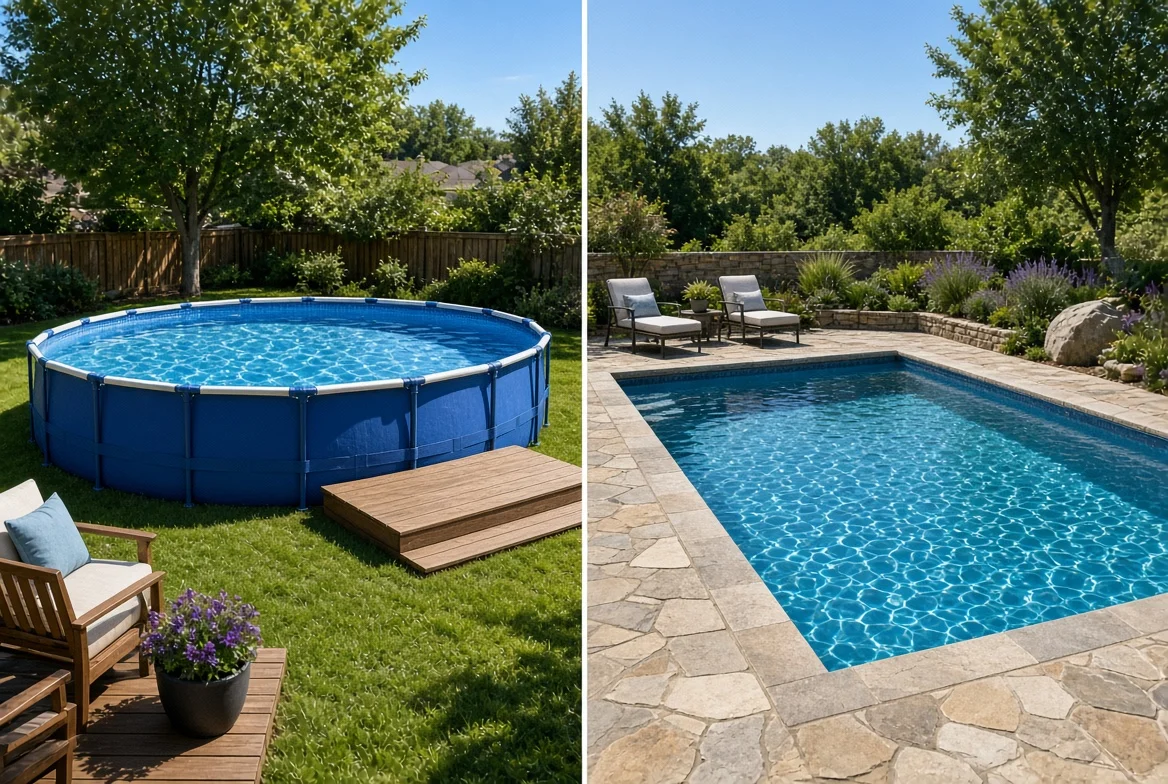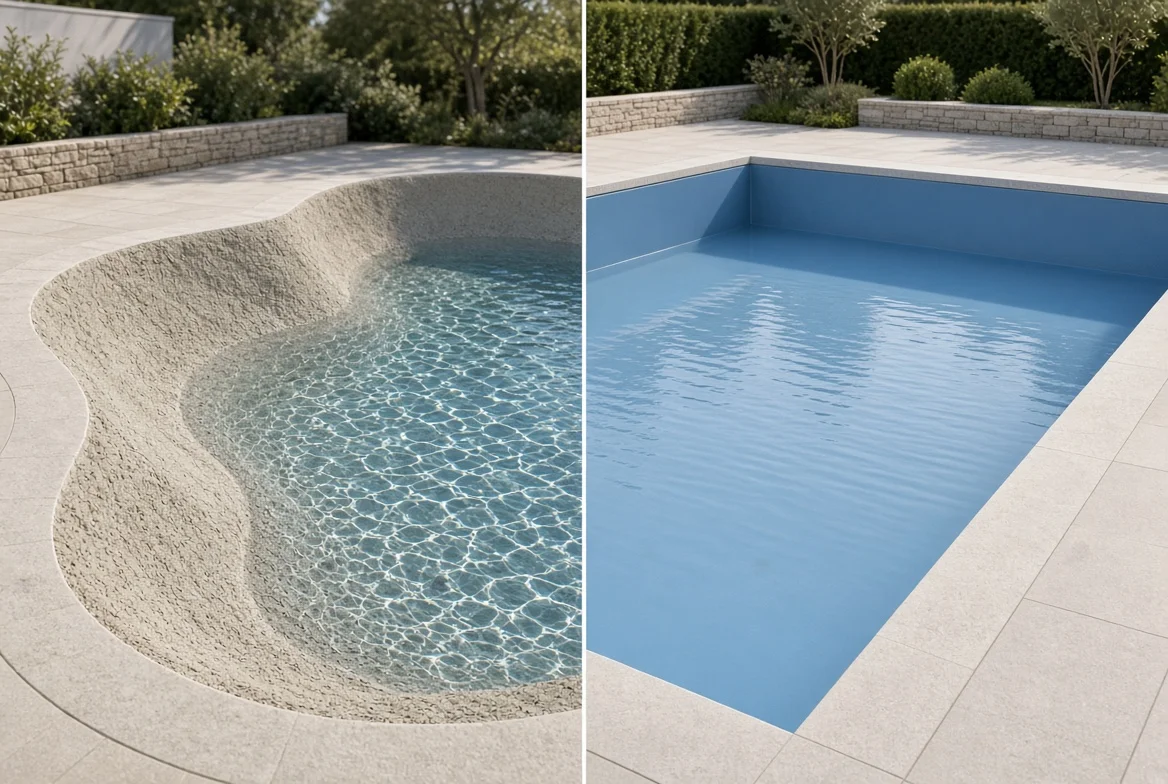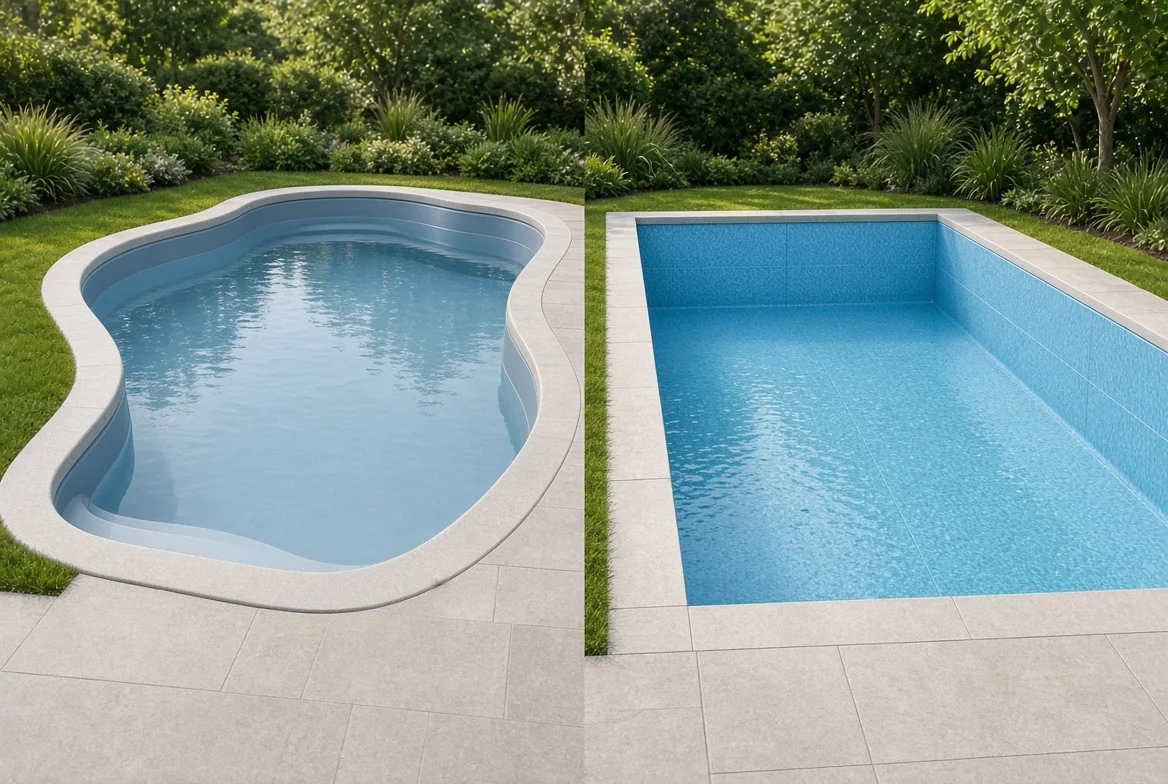


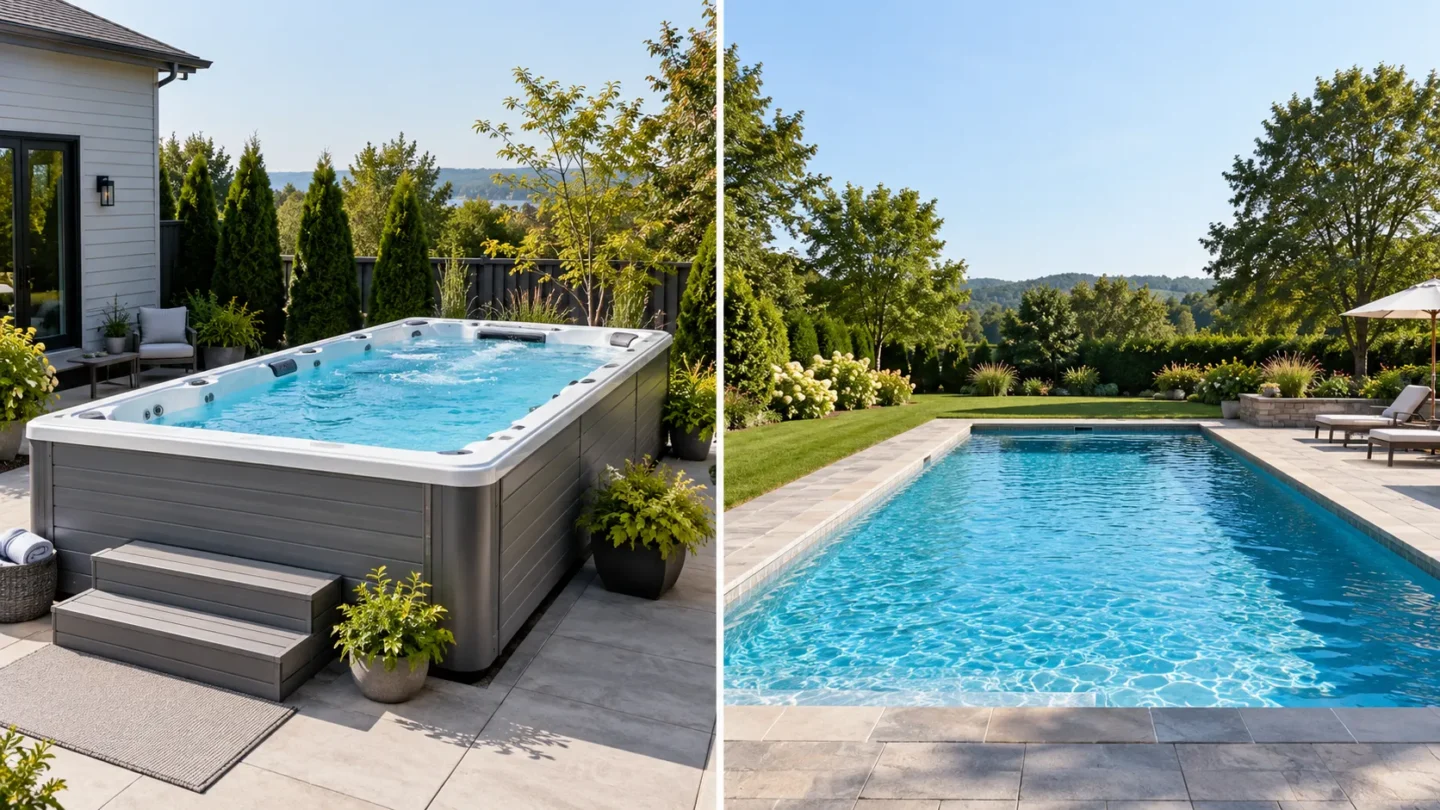
Most of this decision is settled before anyone compares specs, and it comes down to one question nobody asks out loud: what is the water actually for?
Swimming, as in moving your body through it for exercise, is a different purpose than a backyard full of kids on a Saturday, and the two purposes point at different machines.
People shop the other way around. They fall for the idea of a pool, or the compactness of a swim spa, and then try to make their life fit the thing. That’s how you end up with a 40,000-dollar hole in the ground that gets used six times a summer.
So the comparison worth having isn’t feature by feature. It’s which life each one actually suits.
What a Swim Spa Is, If You’ve Never Stood In One
Picture a large hot tub, maybe twelve to twenty feet long, with a powerful current running down its length.
You swim against the current and stay in place, like a treadmill for swimming. It’s heated year-round, the same as a spa, so it runs in January as easily as July.
That’s the whole concept. Small footprint, strong current, always warm. Some models split into two zones (a swim channel at one end, hot-tub seats with jets at the other), which is the version most people actually buy, because it does two jobs.
What it isn’t: a place to play. You can’t throw a ball around, can’t do a cannonball, can’t have six people in it doing anything but standing shoulder to shoulder. The current is the point, and the current is also the limit.
Why the Reason You Want Water Decides Almost Everything
Three reasons people want water in the yard, and each one has a clear winner.
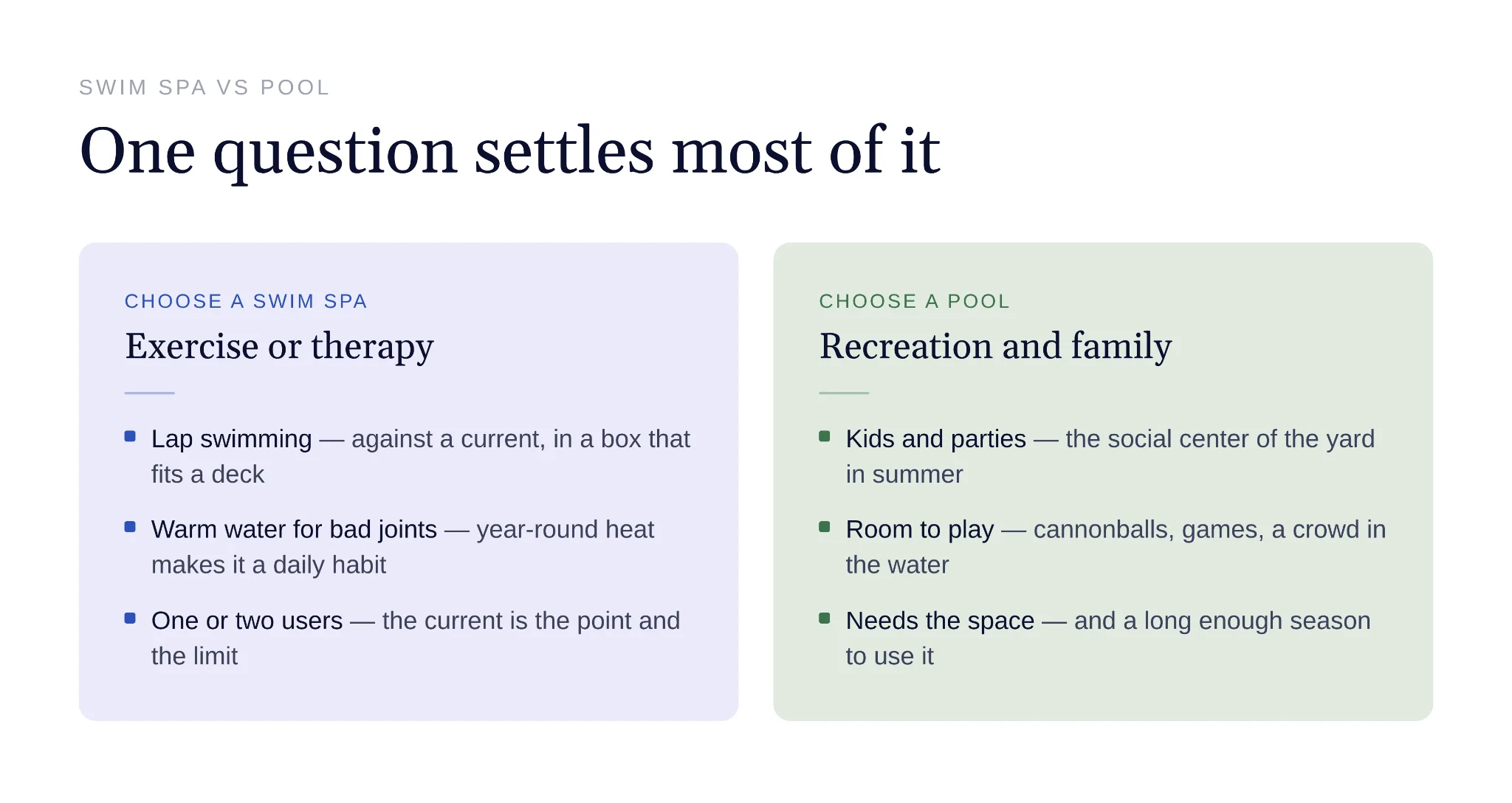
Exercise and therapy
If the honest answer is lap swimming, aqua jogging, a warm place to move a bad knee or a recovering shoulder, the swim spa wins and it isn’t close.
A pool long enough for real laps is enormous, and most yards can’t hold one. The swim spa gives unlimited swimming in a box that fits on a deck, and the year-round heat is what makes it stick as a habit instead of a summer novelty.
Recreation and family
Kids, parties, floating around with a drink, the social center of the yard in summer. This is a pool, flatly. A swim spa seats a few adults in a current; it was never built for the chaos of a family afternoon. Trying to recreate that in a swim spa is forcing the wrong tool.
Lounging and heat
Just wanting to sit in warm, bubbling water most evenings. That’s a hot tub, and you don’t need either of the big options, though a swim-spa combo covers it while adding the swim channel.
Find what you want in our exhaustive list of pools.
Get this part right, and the rest of the decision mostly falls out on its own. Get it wrong, buy the pool because pools are what you picture, when what you’ll actually do is swim laps alone before work, and no amount of good installation saves it.
Climate Changes the Math More Than People Expect
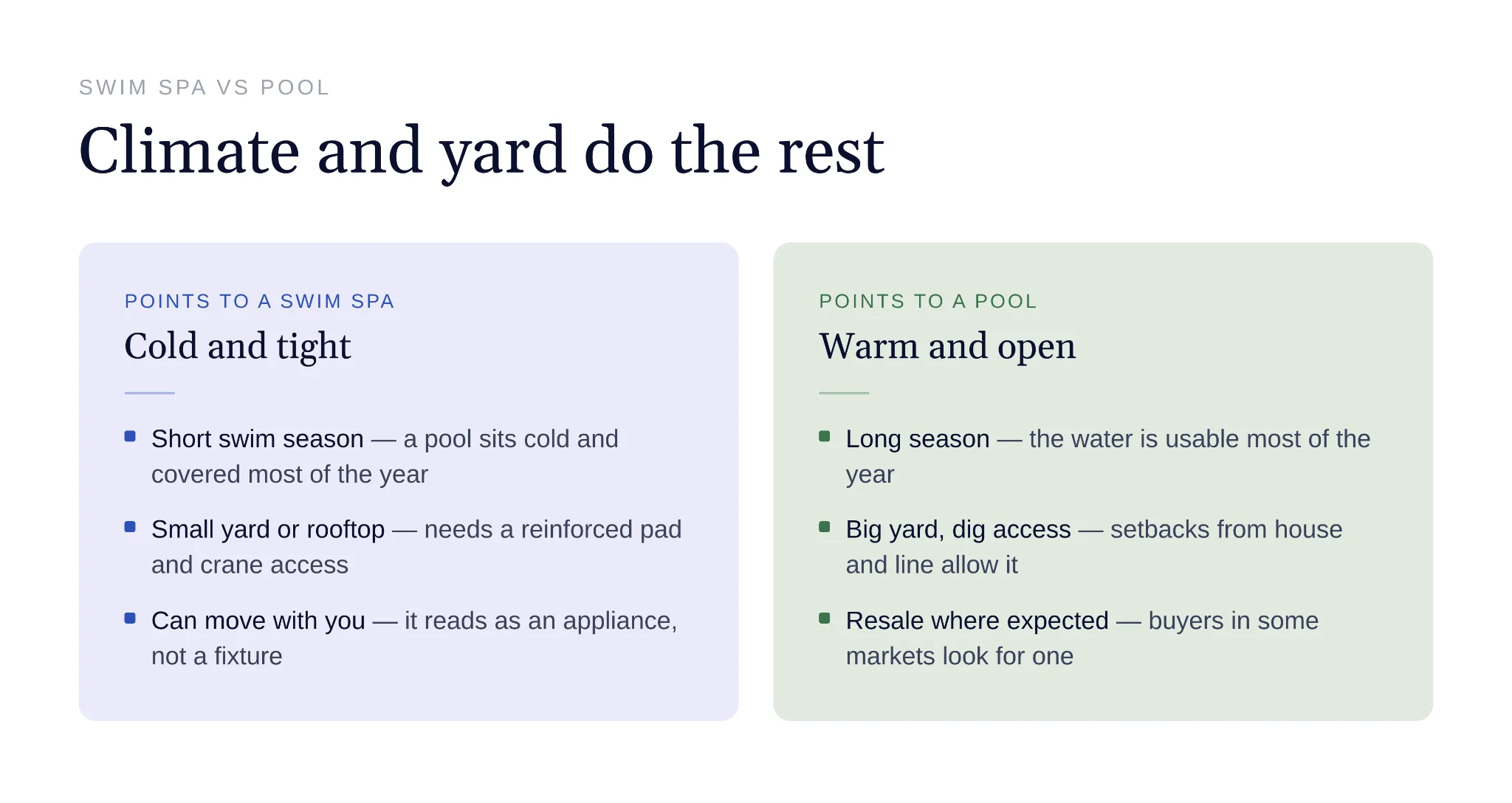
A pool in a place with four months of swimming weather sits covered and cold for most of the year.
That’s the reality in a lot of the country. The season is short, the pool is idle two-thirds of the calendar, and a heater to extend the season on a full-size pool burns money fast because of the sheer volume of water.
A swim spa holds a fraction of that water and is designed to stay hot continuously, so year-round use is the normal case, not an expensive stretch. In a cold climate, that single difference tilts a lot of decisions toward the swim spa — twelve months of use out of a small heated box beats four months out of a big cold one.
Flip it to a warm climate with a long season and a big yard, and the pool’s seasonal weakness mostly disappears. The water’s usable most of the year without fighting for it. The calculus that favored the swim spa up north loosens right back up.
The Money Is Two Numbers, Not One
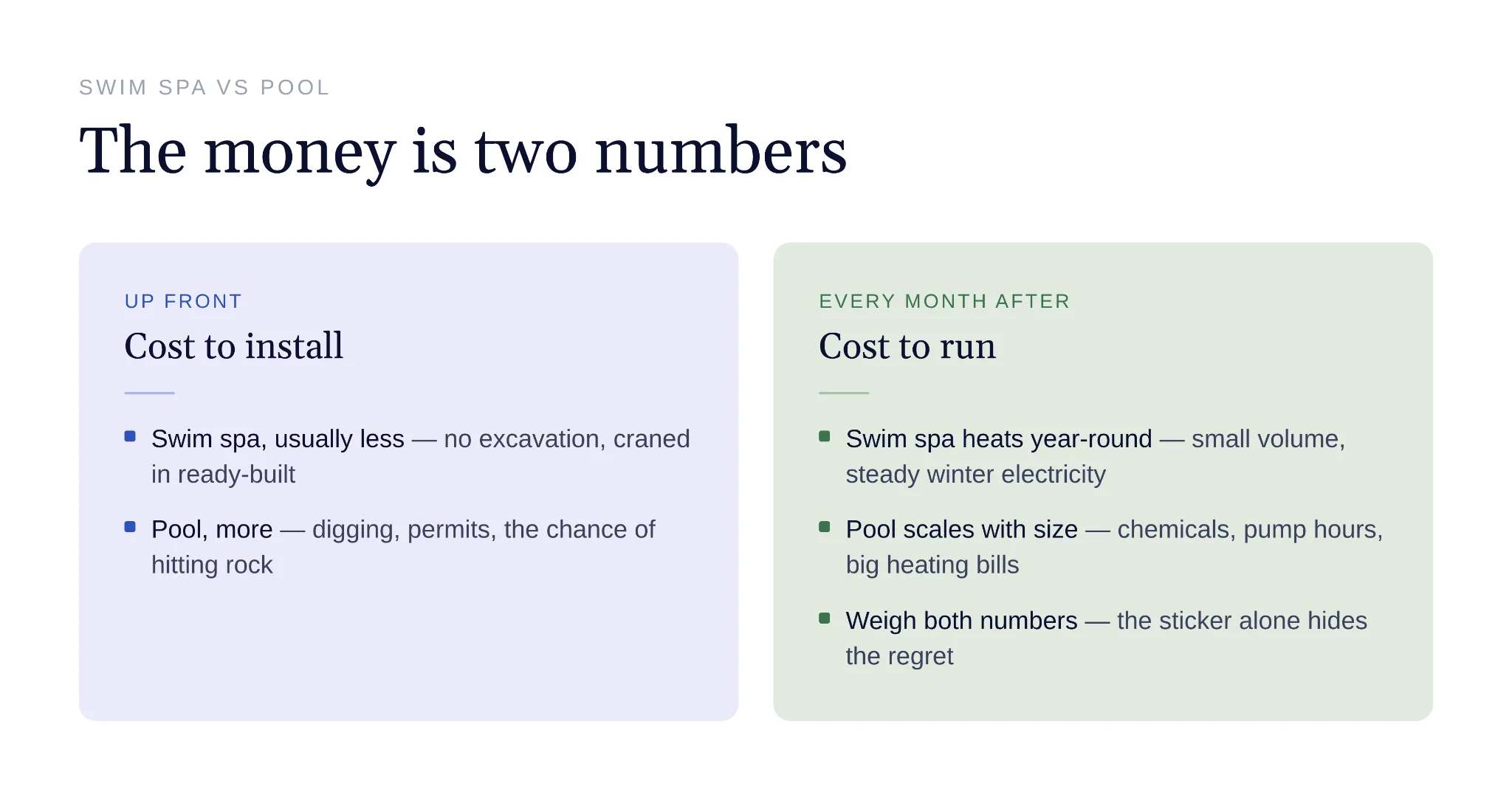
Upfront cost is the number everyone fixates on, and on that line the swim spa usually looks cheaper than an inground pool, as there’s no excavation and no concrete. It arrives built and gets craned into place.
An inground pool means digging, and digging means a crew, permits, and the standing possibility of hitting rock or a water line and watching the quote climb.
But upfront is only half of it, and the half people regret ignoring is the running cost.
- A swim spa heats a small volume of water and holds it warm all year. Steady, ongoing electricity. In a cold region, that’s a real monthly line on the bill, every month, not just the swim season.
- A pool costs more to open, close, and maintain across a season — chemicals scaled to a large volume, a pump running for hours a day, seasonal service. If it’s heated, the heating cost dwarfs the swim spa’s simply because there’s so much more water to warm.
Which one costs more to run over ten years depends on the climate and how hard each gets used. Neither is reliably cheap. The mistake is comparing only the sticker and discovering the operating cost after the thing is installed.
Space, and What the Yard Can Actually Hold
A swim spa needs a reinforced pad (it’s extraordinarily heavy once filled) and enough clearance to get it craned in. A small yard, a rooftop, a deck built to carry the load, these can all work. That compactness is the feature for anyone without the room for a pool.
An inground pool needs the yard, the access for excavation equipment to even reach the dig site, and setbacks from the property line and the house that local codes dictate. Plenty of lots simply can’t take one, and finding that out often means a site visit rather than a tape measure.
There’s a resale angle here that cuts both ways and depends heavily on where you are. In some markets, a pool is what buyers expect, and its absence costs you.
In others, it’s read as maintenance and liability and narrows the buyer pool. A swim spa, because it’s not permanently built in, reads more like an appliance than a fixture. So it can sometimes come with you when you move, which an inground pool obviously cannot.
The Case for Just Getting Both Jobs From One
The swim-spa-with-a-hot-tub-zone is popular for a reason worth saying plainly.
One unit, one install, one pad, and it covers the exercise swimmer and the person who wants to sit in warm water in the evening, two of the three reasons people want water at all. For a household split between a swimmer and a soaker, that’s often the whole answer.
What it still won’t do is be a pool. The recreation-and-family reason stays unserved. A family that mainly wants the summer-afternoon yard and also has one person who’d like to swim laps is the genuinely hard case, because no single machine does both well, and that’s the household that should think hardest before committing either direction.
Where Each One Fails
Swim spas: the current takes getting used to, and a cheap one with a weak or turbulent current is a frustrating swim that you’ll stop using. The motor fights you in a washing-machine churn instead of a clean lane.
This is the spec to test in person before buying: swim in the actual model and don’t trust the brochure’s claims about current strength. Underpowered is the regret.
Pools: the one thing people underestimate is the maintenance becoming a part-time job, and the liability. A pool is water a child can reach, which in most places means fencing requirements, and it means vigilance that doesn’t take summers off. The dream is the float and the drink. The ownership is the skimming, the chemistry, the equipment that fails in August, and the insurance conversation.
So the quick sort: small space, cold climate, swimming or therapy the real goal, one or two users — swim spa. Room to spare, warmer or longer season, kids and gatherings at the center of it, water as the social hub — pool.
And the split household, the swimmer living with the family that wants the party, is the one that should sit with the question longer than a weekend, because that’s the household a rushed choice disappoints.
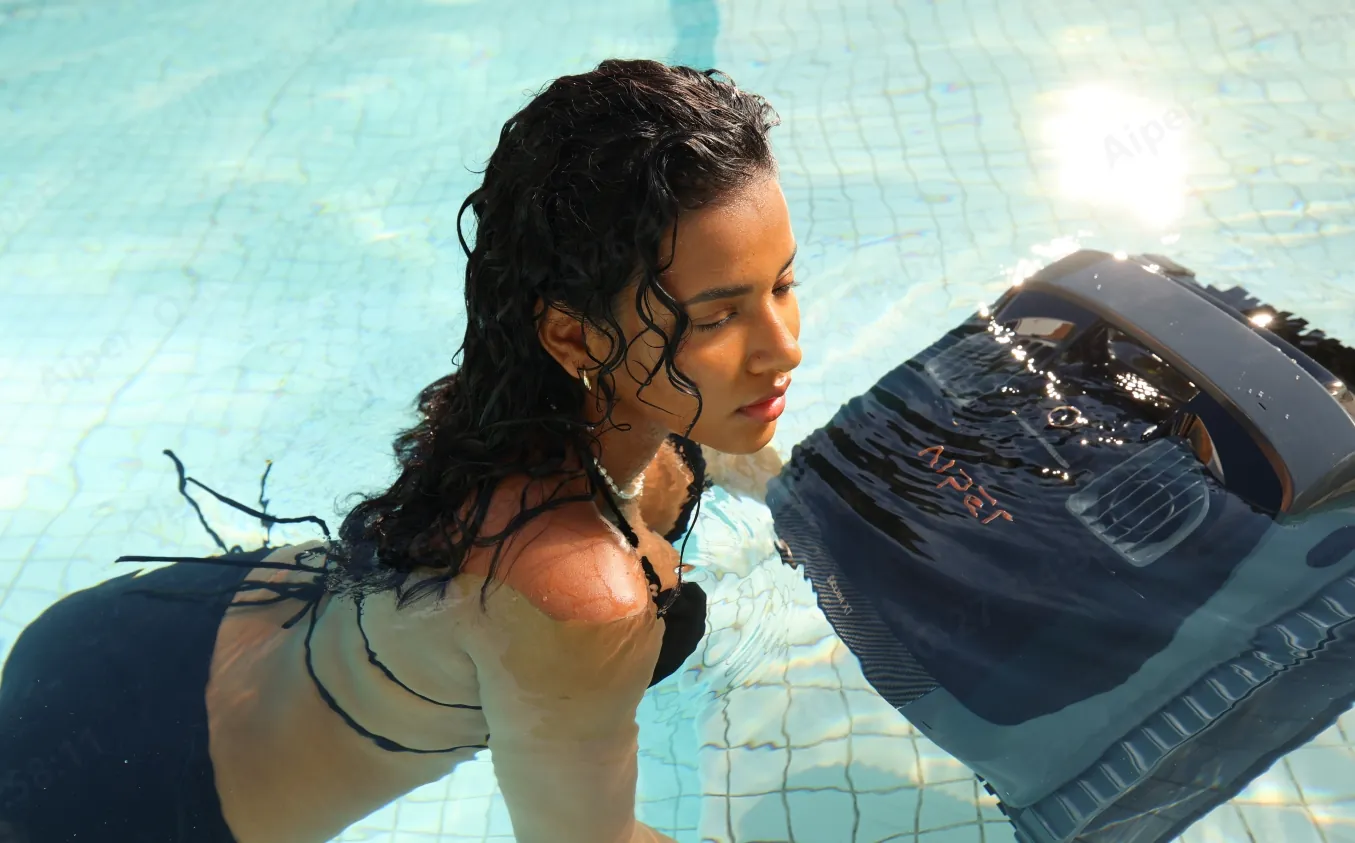
The physical cleaning is the one part a pool owner can hand off. A robotic cleaner runs the full job on its own, clearing the debris and fine grit that otherwise turn into a near-daily skim-and-vacuum.
Drop the Aiper robotic pool cleaner in, set it going, and the heaviest chore on that list handles itself, which leaves the chemistry and the cover as the real ongoing work.
Get more pool and lawn care guides from Aiper on Google