
Whether you’re dreaming of summer days by the water or planning a major backyard upgrade, choosing the right type of pool is the single most important decision you’ll make. This guide compares every pool type across cost, maintenance, climate suitability, and long-term value — so you can pick with confidence.
How We Categorize Pool Types (Quick Overview)
Before diving into individual pool types, it helps to understand the four lenses through which pools are classified. Most “different types of pools” articles focus on just one lens — usually material — but a pool is defined by several overlapping choices: how it’s installed, what it’s made of, what shape it takes, and how the water stays clean.
Here are the four classification systems we’ll use throughout this guide:
By Installation
In-ground, above-ground, or semi-inground. This determines excavation needs, permanence, and resale value.
By Material
Concrete (gunite/shotcrete), fiberglass, or vinyl liner. The “big three” that define cost, lifespan, and maintenance intensity.
By Shape & Purpose
Lap, plunge, infinity, architectural, freeform, spool, cocktail — each designed for a specific use case.
By Water Chemistry
Chlorine, saltwater, natural (plant-filtered), mineral, ozone/UV. Determines how you sanitize and what the water feels like.
The three main types of swimming pools — by construction material — are concrete (gunite/shotcrete), fiberglass, and vinyl liner. These three in-ground pool categories define your upfront cost, maintenance schedule, and lifespan. Beyond material, pools are also classified by installation type (in-ground vs. above-ground), purpose (lap, plunge, infinity), and water system (chlorine, saltwater, natural).
In-Ground Pool Types (By Material)
The material you choose for an in-ground pool is the single most consequential decision in the entire process. It sets your cost ceiling, defines your maintenance routine for decades, and determines what shapes and finishes are possible. Here’s how the big three compare. For a focused head-to-head between the two most popular builds, our gunite versus fiberglass pool comparison for cost and maintenance puts them side by side.
Concrete Pools (Gunite / Shotcrete)
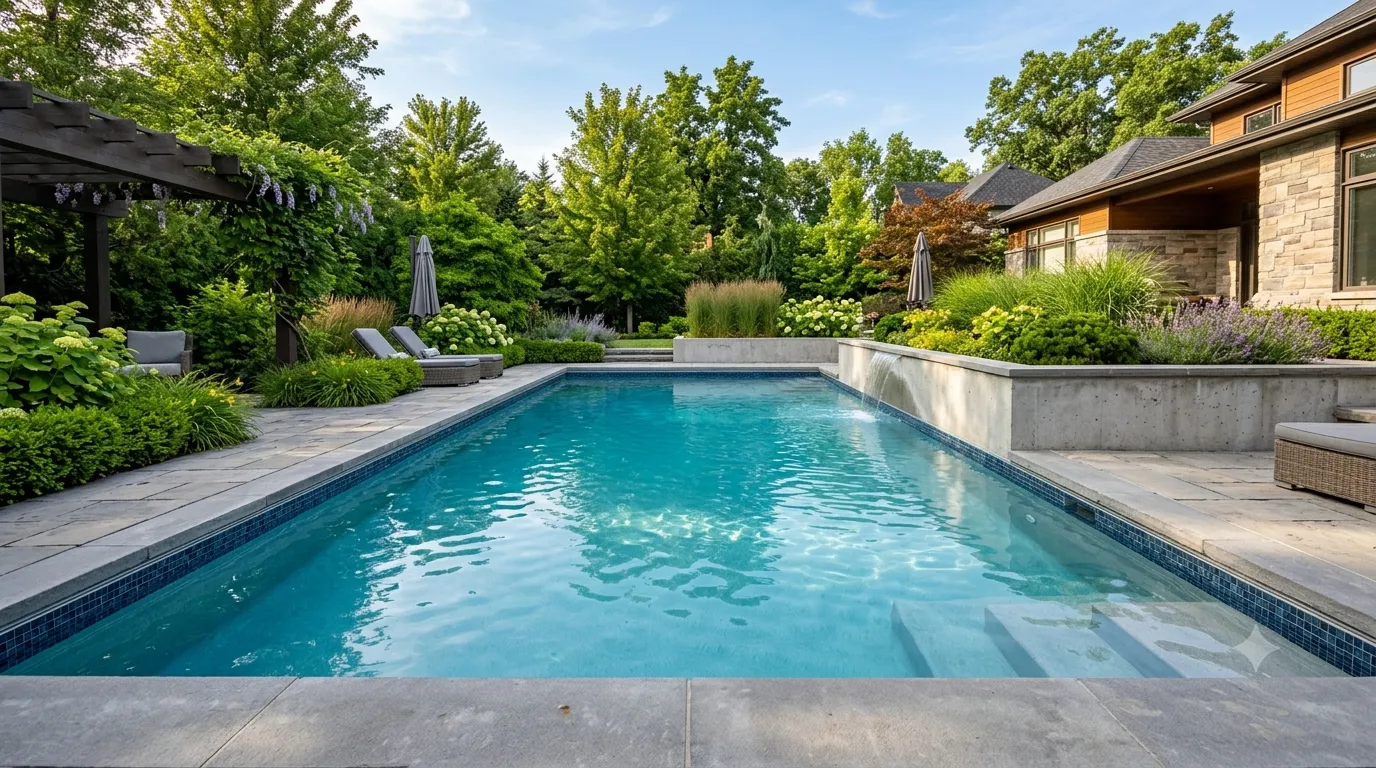
Concrete pools are built on-site with a steel rebar frame sprayed with a concrete mixture (gunite or shotcrete). They’re the only pool type that can be any shape, any size, any depth — limited only by your property and budget. The interior finish sprayed over that shell — plaster or pebble aggregate — has its own tradeoffs, covered in our comparison of pebble pool finish versus plaster.
Pros
- Unlimited customization — any shape, depth, or feature
- Extreme durability; 50+ year structural lifespan
- Adds the most home resale value (5–8%)
- Works on any terrain, including rocky excavation sites
Cons
- Longest build time (3–6 months)
- Highest ongoing maintenance cost ($1,500–$3,000/year)
- Rough, porous surface is algae-friendly; needs frequent brushing
- Requires acid washing and resurfacing every 10–15 years
Robotic cleaner note: The rough concrete surface requires stronger scrubbing action. Choose a robotic cleaner with heavy-duty brushes and powerful suction. Expect more frequent cleaning cycles compared to smoother pool surfaces.
Best for: Custom builds, luxury homes, irregular-shaped yards, warm climates
Fiberglass Pools
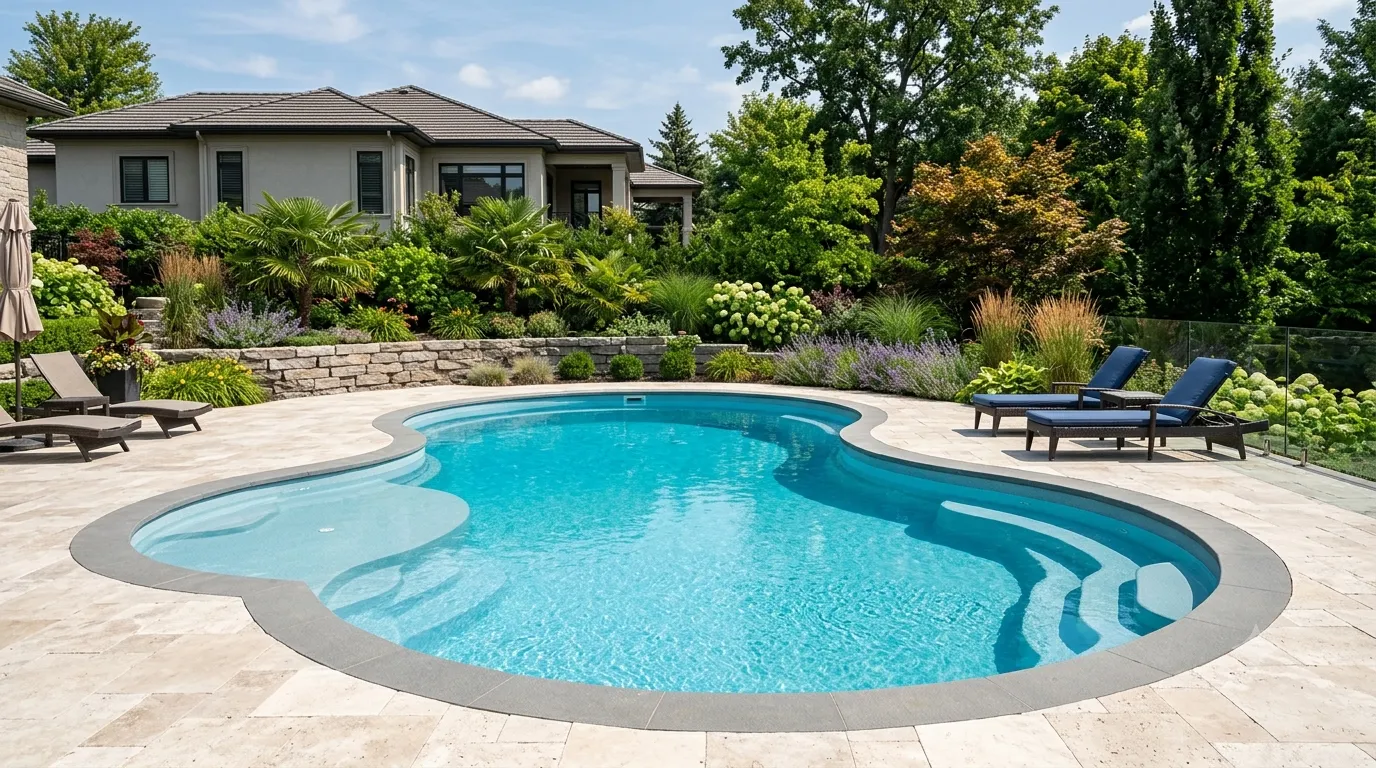
Fiberglass pools arrive as a single-piece, pre-manufactured shell that’s lowered into an excavated hole. The gelcoat surface is smooth, non-porous, and naturally algae-resistant — making fiberglass the lowest-maintenance in-ground option on the market.
Pros
- Fastest install (2–4 weeks from excavation to swim-ready)
- Lowest maintenance — smooth gelcoat resists algae and needs fewer chemicals
- Flexes with soil movement; ideal for expansive clay soils
- Never needs resurfacing or liner replacement
Cons
- Limited shapes/sizes (constrained by transport width, typically ≤16 ft wide)
- Can crack in extreme freeze-thaw without proper drainage
- Risk of “floating” in high water table areas without proper installation
- Fewer custom feature options (spas, tanning ledges are add-ons)
The most robotic-cleaner-friendly pool type
The smooth gelcoat surface lets cordless robotic cleaners glide effortlessly with minimal track and brush wear. Combined with the naturally algae-resistant surface, a fiberglass pool + robotic cleaner means the lowest possible maintenance setup. Cleaning cycles are approximately 30–40% shorter than concrete pools of the same size.
Best for: Budget-conscious buyers, first-time pool owners, expansive soil regions, DIY-leaning homeowners
Vinyl Liner Pools
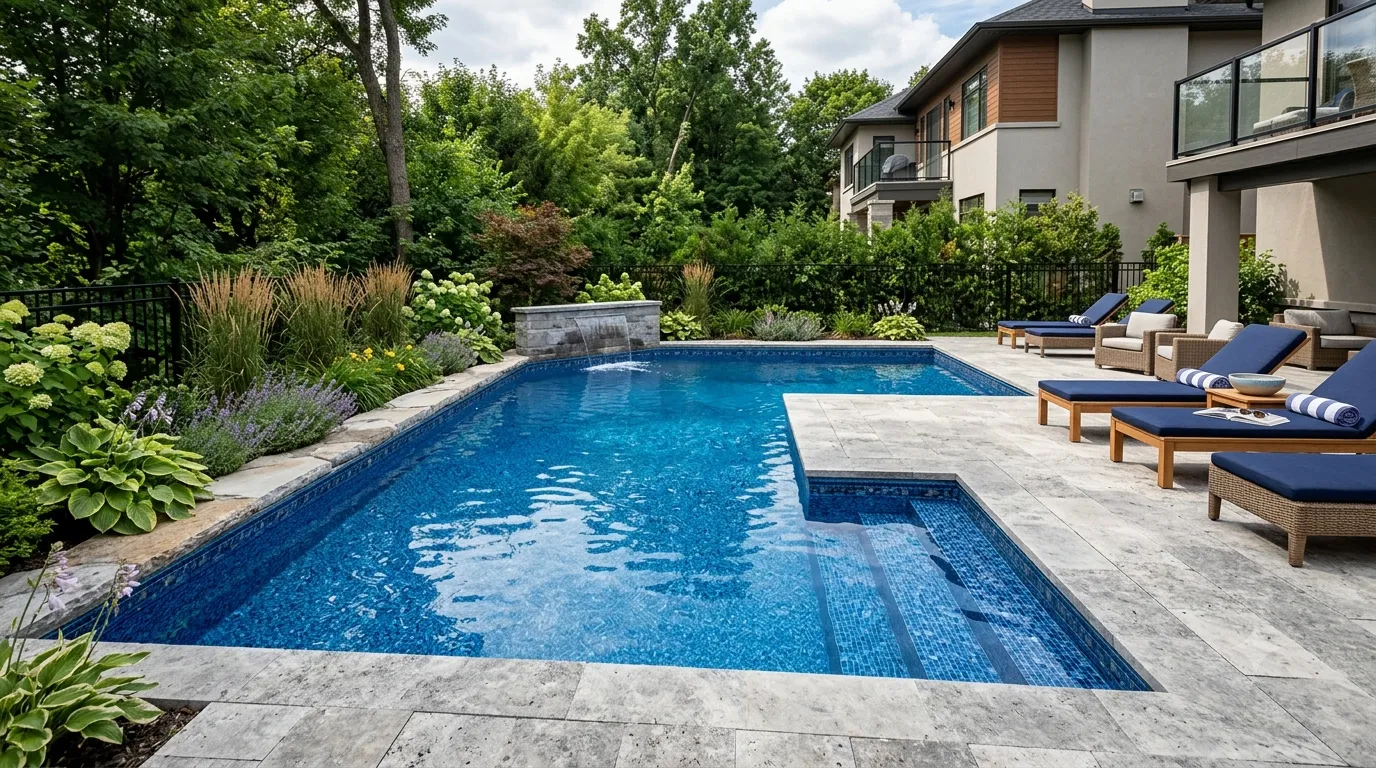
Vinyl liner pools use a custom-fit vinyl sheet stretched over a structural frame (steel, polymer, or wood walls). They offer the lowest upfront cost of any in-ground pool type and a smooth surface that’s gentle on feet. Set directly against the concrete option above, the cost and lifespan gap is exactly what our full comparison of gunite pool versus vinyl liner walks through.
Pros
- Lowest upfront cost for in-ground pools
- Smooth, non-abrasive surface — no scraped knees or rough texture
- Wide variety of liner patterns and colors
- No resurfacing needed (just liner replacement)
Cons
- Liner replacement every 7–12 years ($3,000–$5,000 each time)
- Vulnerable to tears from sharp objects, pets, and groundwater pressure
- Fades and becomes brittle over time from UV exposure
- Limited resale value add (2–4%)
Robotic cleaner note: The smooth surface is robot-friendly, but sharp debris can tear the liner. Choose a cleaner with soft brushes and avoid aggressive scrubbing modes that could snag or puncture the vinyl.
Best for: Budget-focused buyers, cooler climates (less UV degradation), above-ground installations
The Big Three: Side-by-Side Comparison
| Feature | Concrete | Fiberglass | Vinyl Liner |
|---|---|---|---|
| Upfront Cost | $55k – $100k+ | $45k – $85k | $35k – $65k |
| Install Time | 3–6 months | 2–4 weeks | 4–8 weeks |
| Lifespan | 50+ years | 30–50 years | Liner: 7–12 yrs |
| Surface | Rough, porous | Smooth, non-porous | Smooth |
| Annual Maintenance | $1,500 – $3,000 | $500 – $1,200 | $800 – $1,800 |
| Chemical Usage | Highest | Lowest | Medium |
| Customization | Unlimited | Limited | Good |
| Robotic Cleaner Friendly | |||
| Best Climate | Warm, dry | All climates | Cooler climates |
| Resale Value Add | 5–8% | 3–5% | 2–4% |
Pool Types by Installation Method
Beyond material, how your pool sits in (or on) the ground shapes everything from permitting to permanence. There are three installation categories — and the gap between them is where many homeowners find their sweet spot.
In-Ground Pools
Permanent installations that become part of your property. Highest cost, highest home value add, and the most design freedom. All three materials (concrete, fiberglass, vinyl liner) are available in-ground. Best for homeowners planning to stay 10+ years.
Above-Ground Pools
Above-ground pools have come a long way from the basic round frame pools of decades past. Today’s options range from weekend DIY inflatables to hard-sided semi-permanent installations with wraparound decking.
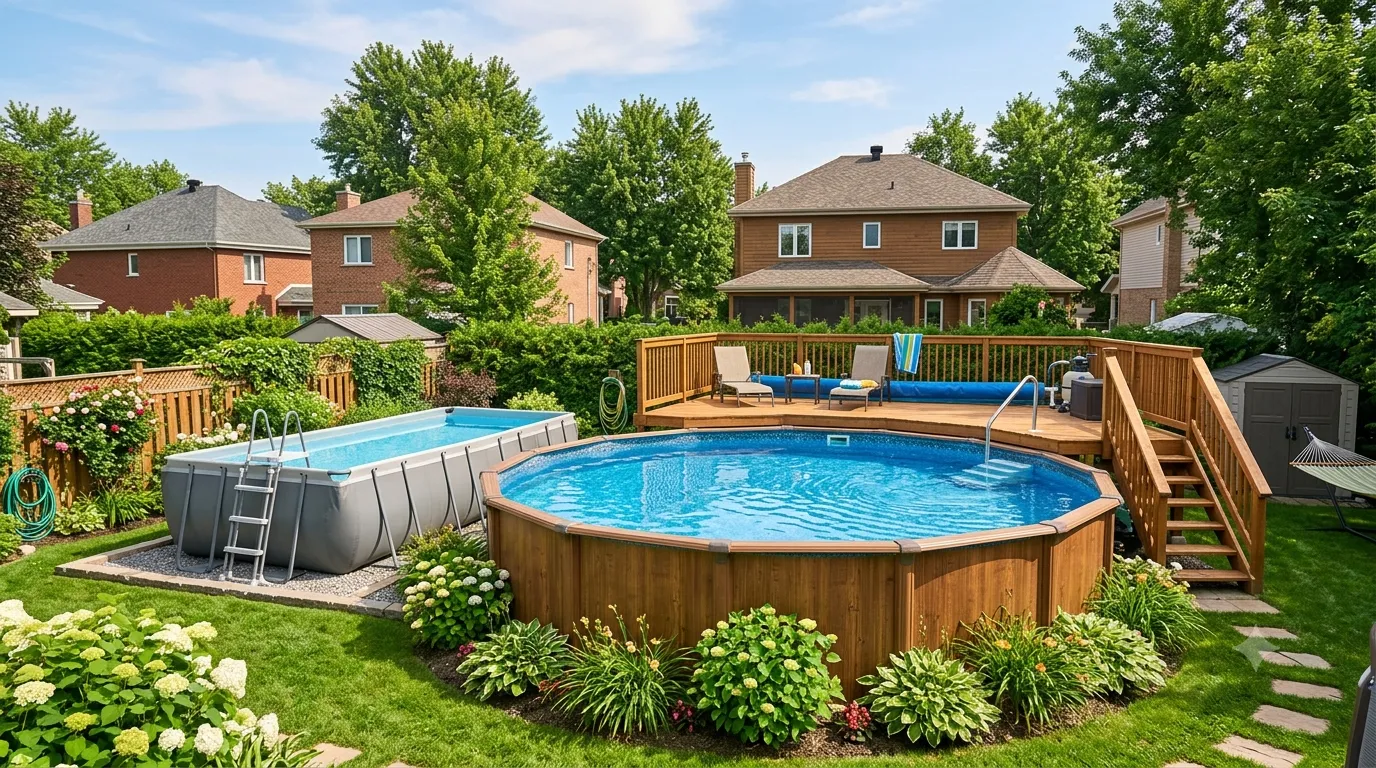
| Above-Ground Type | Cost | Lifespan | Best For |
|---|---|---|---|
| Hard-sided (steel/aluminum) | $2,000 – $10,000 | 15–25 years | Long-term above-ground; can be partially buried |
| Resin frame | $1,500 – $5,000 | 10–20 years | Humid/salt-air areas; rust-proof alternative to steel |
| Inflatable | $50 – $500 | 1–3 years | Seasonal use, young children, renters |
Above-ground pools typically have smaller pumps and less water circulation. Cordless robotic cleaners are ideal — there’s no plumbing to tap into and no hose to tangle with pool walls. Just drop it in and let it run.
Semi-Inground Pools
A partially buried above-ground pool (typically 2–4 feet below grade) that costs 30–50% less than a full in-ground installation. Semi-inground pools are the ideal solution for sloped lots where full excavation is impractical or prohibitively expensive. Custom decking wraps the exposed wall, creating the look of an in-ground pool at a fraction of the cost.
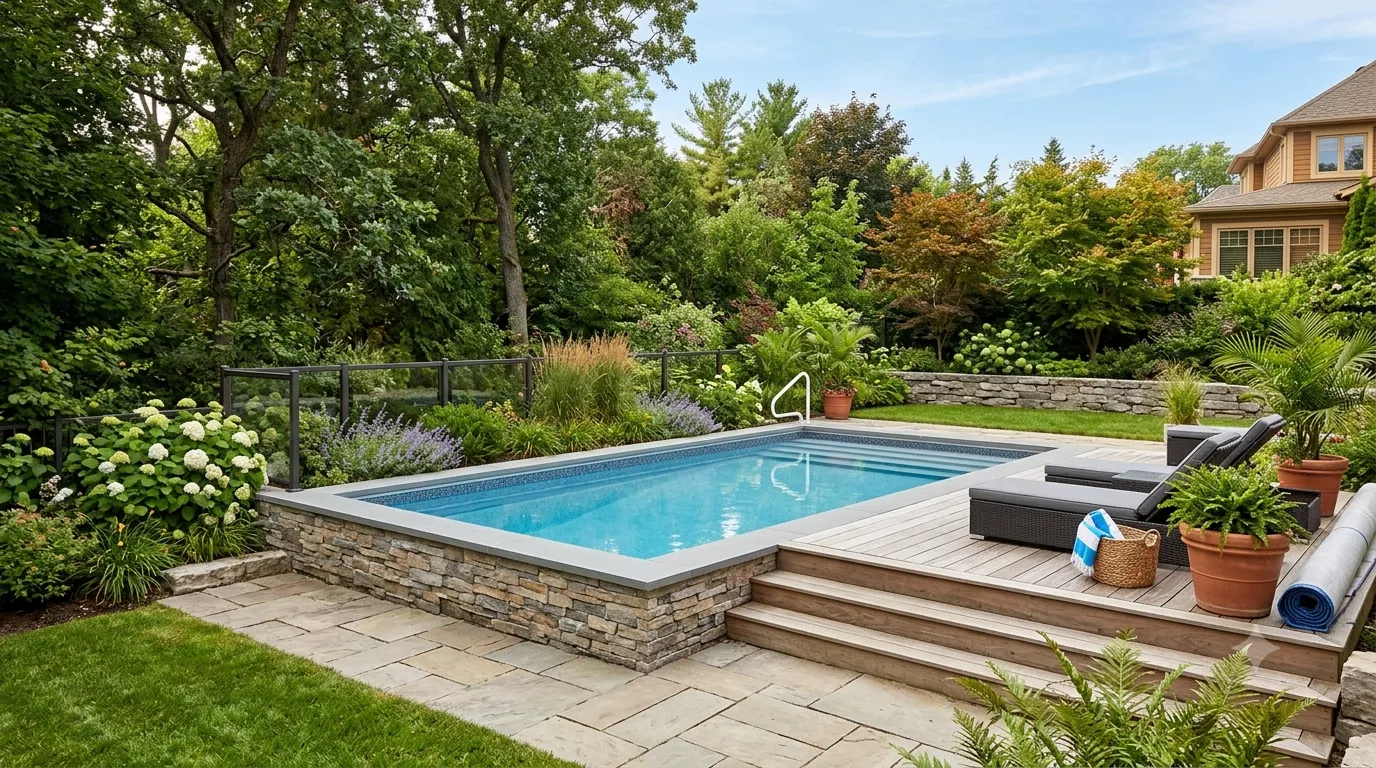
Semi-inground pools are not covered by any major SERP competitor — yet they’re one of the fastest-growing installation types, especially on sloped properties and in regions with high excavation costs.
Pool Types by Shape & Purpose
Not every pool is designed for swimming laps. The shape and size of your pool should match how you’ll actually use it — whether that’s fitness training, entertaining friends, or just cooling off on a hot afternoon.
Lap Pools
Narrow (8–10 ft wide), long (40–75 ft), with a consistent depth designed for fitness swimming. Lap pools fit into side yards and narrow lots where a traditional pool wouldn’t work. Cost: $30,000–$70,000. Often rectangular fiberglass or concrete.
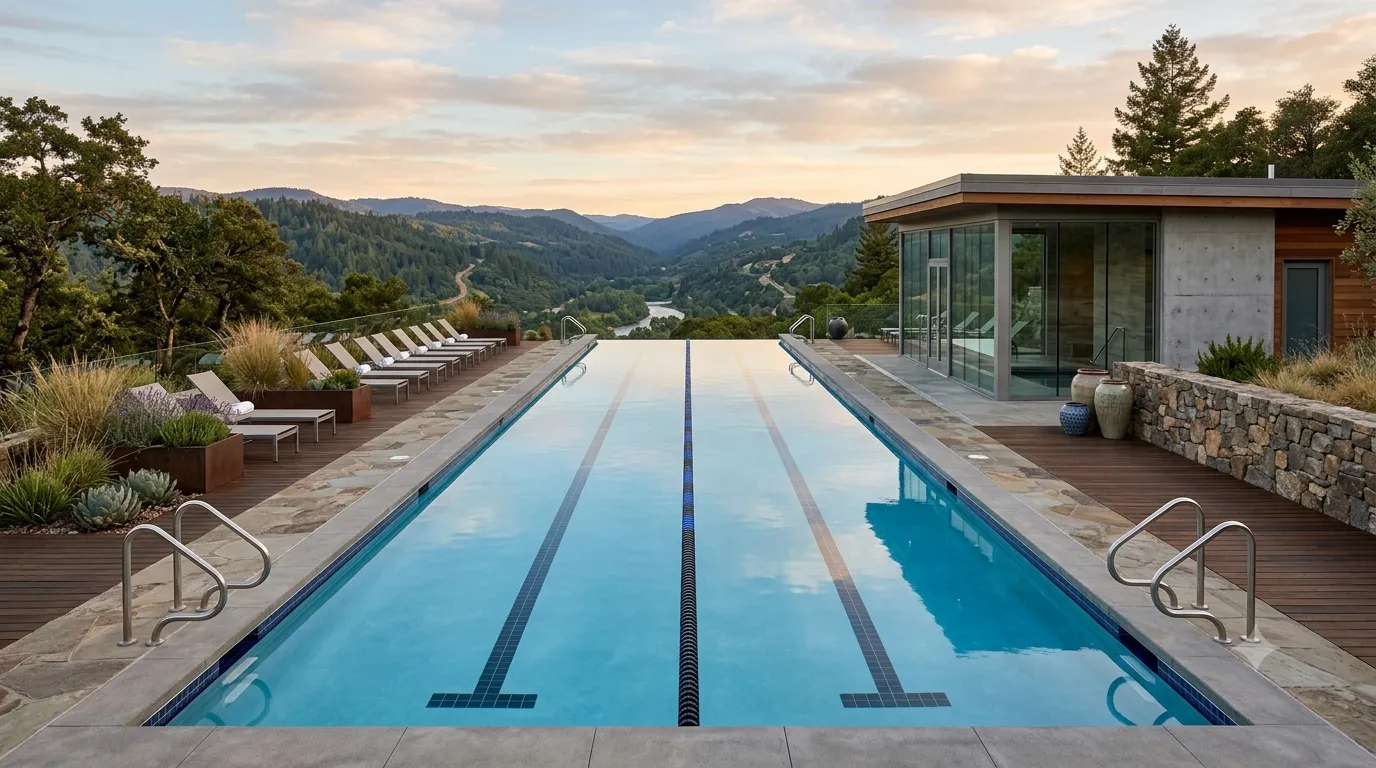
Best for: Athletes, fitness swimmers, narrow lots, side-yard installations
Plunge Pools
Compact (typically ≤13 × 7 ft) and deeper than they are wide, plunge pools are designed for cooling off, not swimming. They’ve surged in popularity as urban backyards shrink and homeowners prioritize low-maintenance luxury. Cost: $20,000–$45,000.
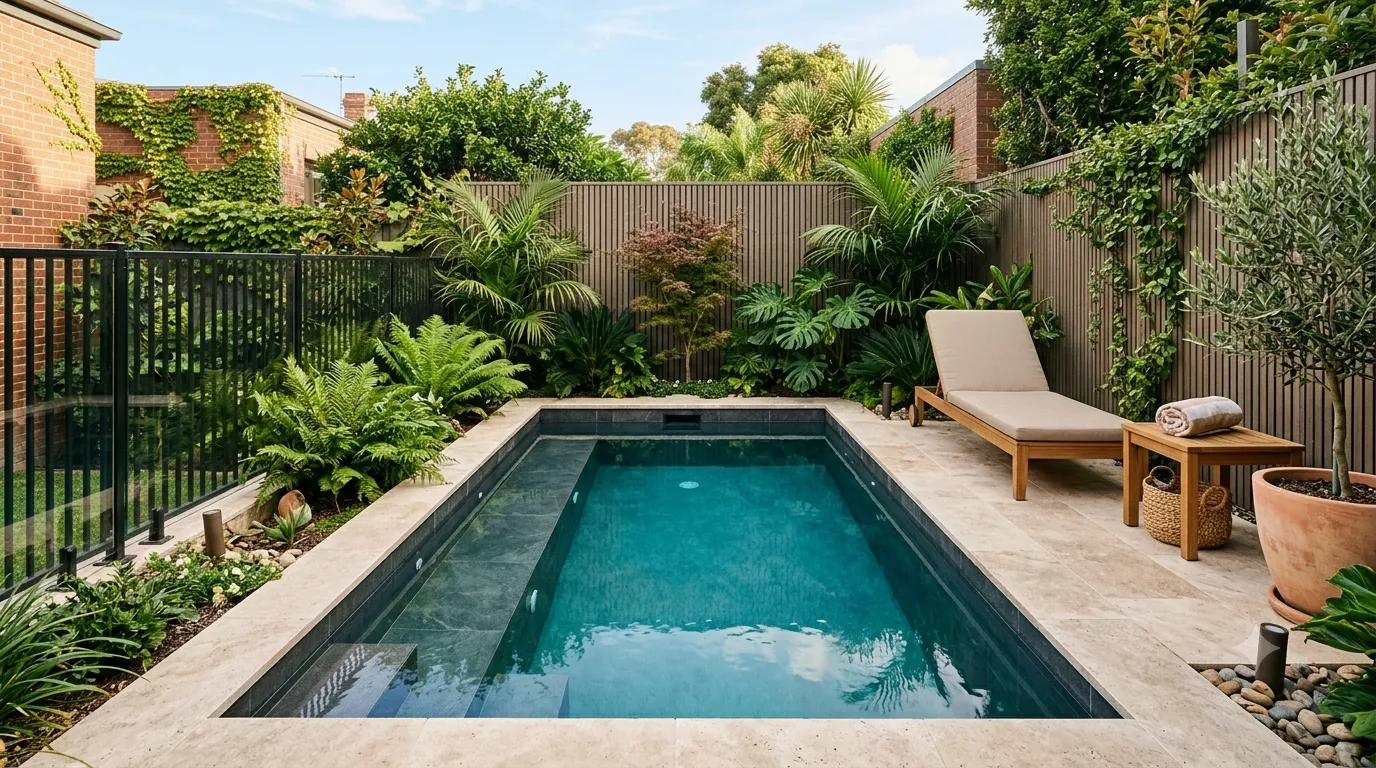
Best for: Small urban backyards, hot climates, post-sauna cooling
Infinity / Vanishing Edge Pools
One or more edges sit flush with the water level, allowing water to flow over into a hidden catch basin below. The visual effect — the pool appearing to merge with the horizon — is spectacular, but it comes with a 30%+ cost premium ($70,000–$130,000+) and higher ongoing energy costs from the continuously running catch basin pump. Requires a property with a slope or view to achieve the effect.
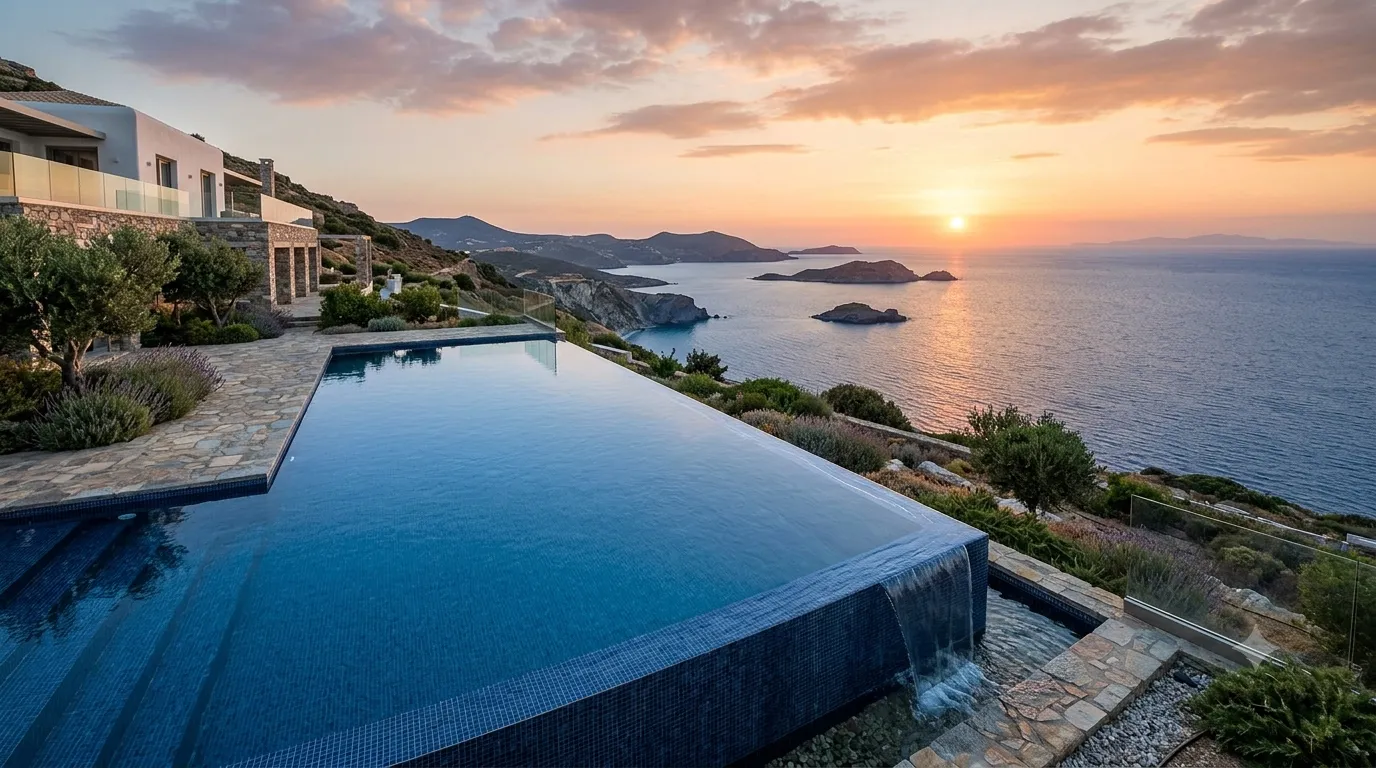
Best for: Hillside properties, ocean/lake views, luxury homes
Architectural / Geometric Pools
Sharp lines, symmetrical shapes, and design-forward features (Baja shelves, integrated spas, fire features) that complement modern architecture. These are statement pools — designed as much for looking at as swimming in. Cost: $60,000–$150,000+. Almost exclusively concrete.
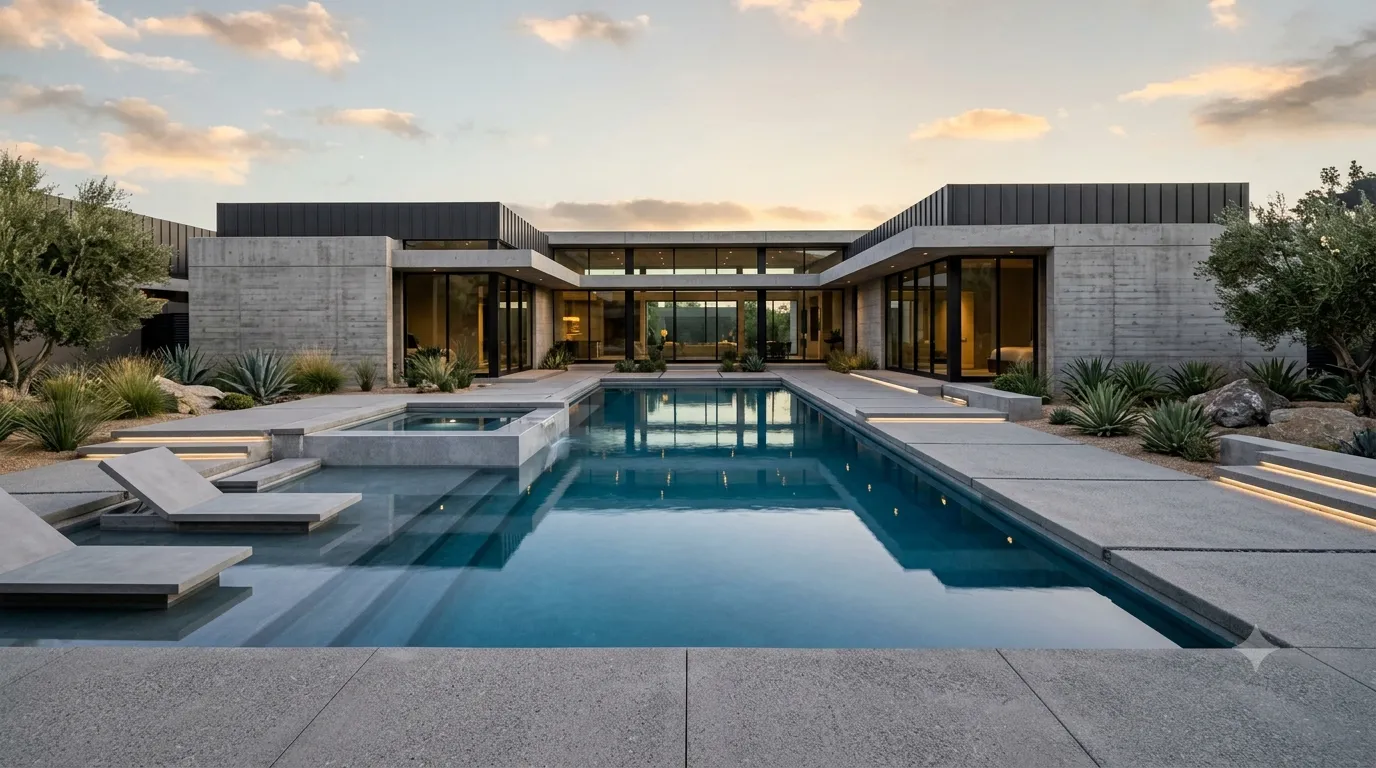
Best for: Modern/contemporary homes, design-forward homeowners
Freeform / Natural-Shaped Pools
Curved, organic shapes that mimic natural bodies of water. Often paired with rock features, waterfalls, and lush landscaping for a lagoon-like feel. Concrete is the typical material, though fiberglass manufacturers now offer several freeform shell designs.
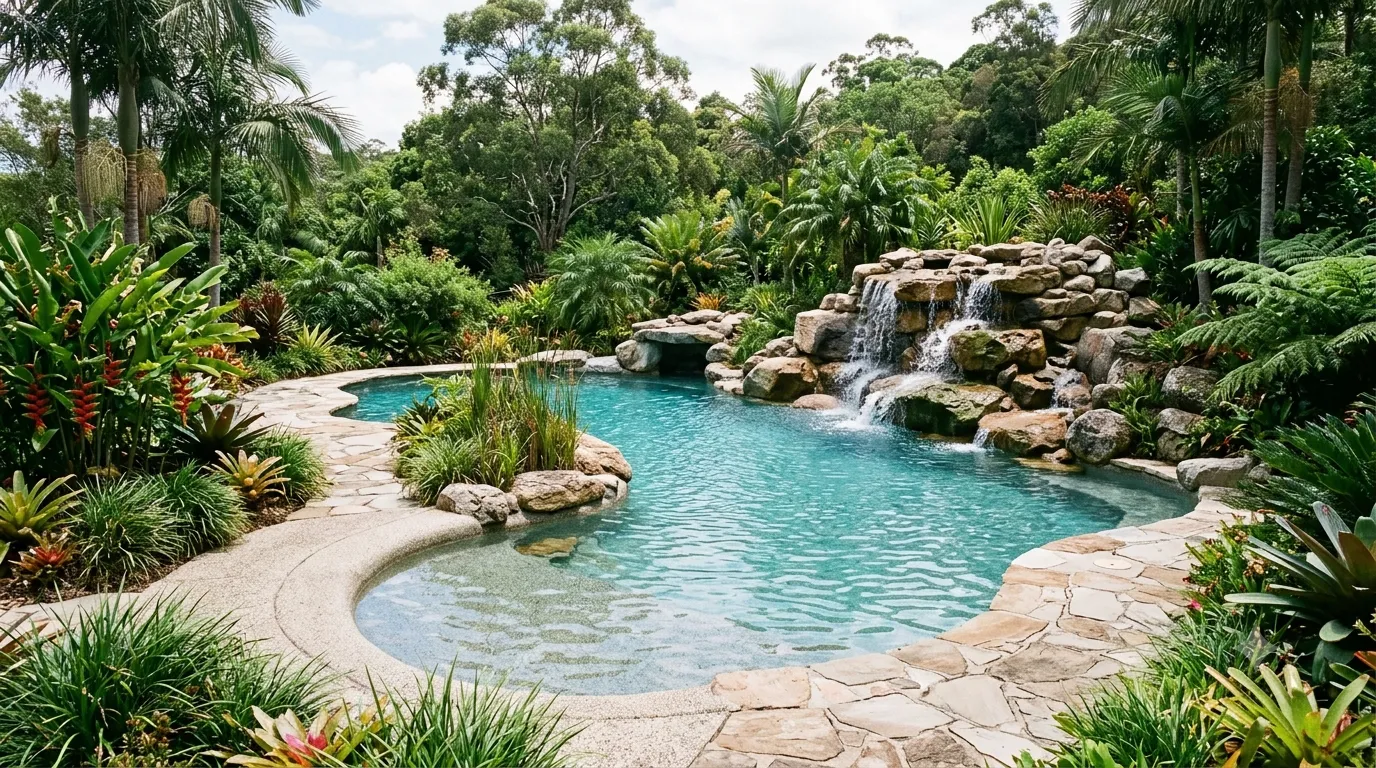
Best for: Traditional homes, naturalistic landscapes, family-friendly backyards
Spools (Spa + Pool)
A compact hybrid: larger than a hot tub, smaller than a full pool (typically 10–16 ft × 6–8 ft). Spools feature powerful jets for hydrotherapy and are usually heated for year-round use. Cost: $15,000–$30,000.
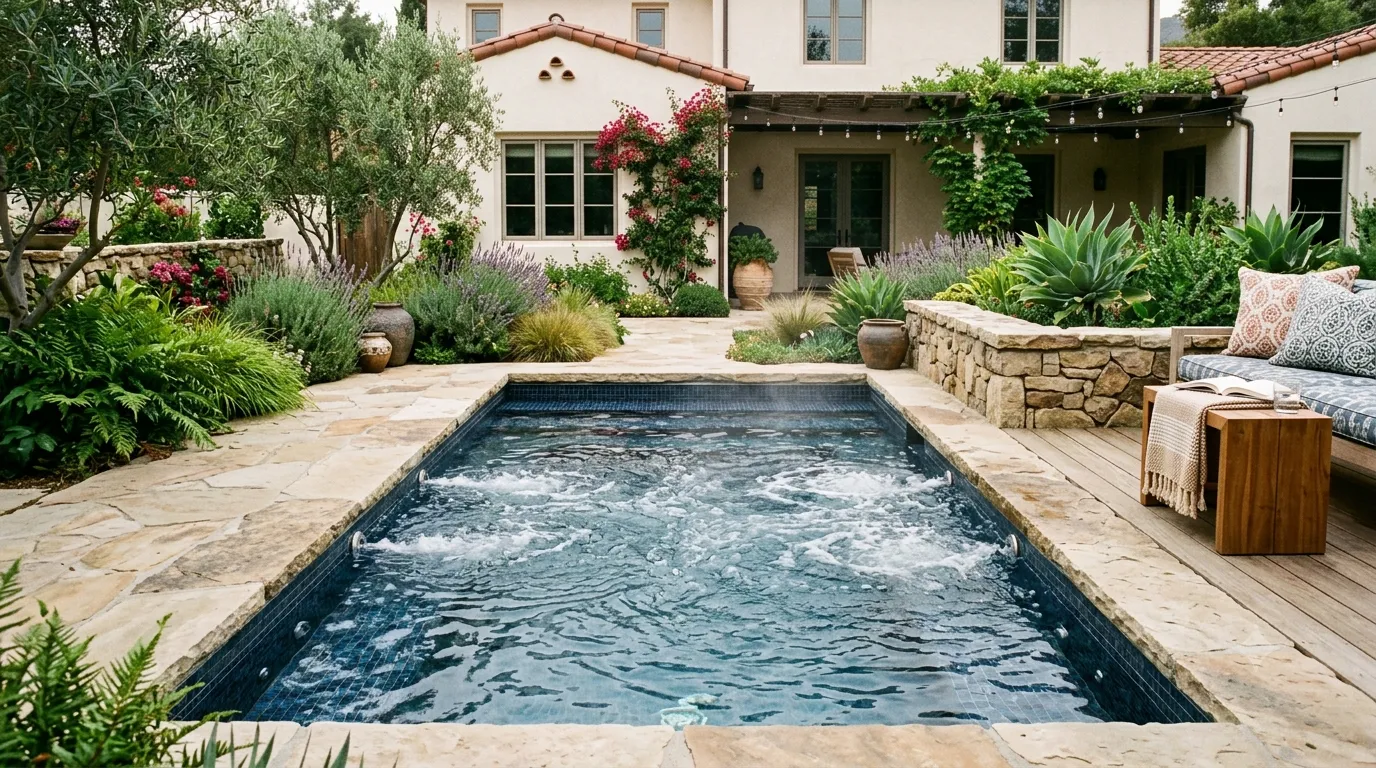
Best for: Small yards, year-round use, relaxation-focused homeowners
Cocktail Pools
An upscale small pool (10–15 ft × 6–10 ft) designed for socializing, not swimming. Features built-in seating ledges, shallow wading areas, and is often paired with an adjacent hot tub. Trending in luxury small-home and urban markets. Cost: $25,000–$50,000.
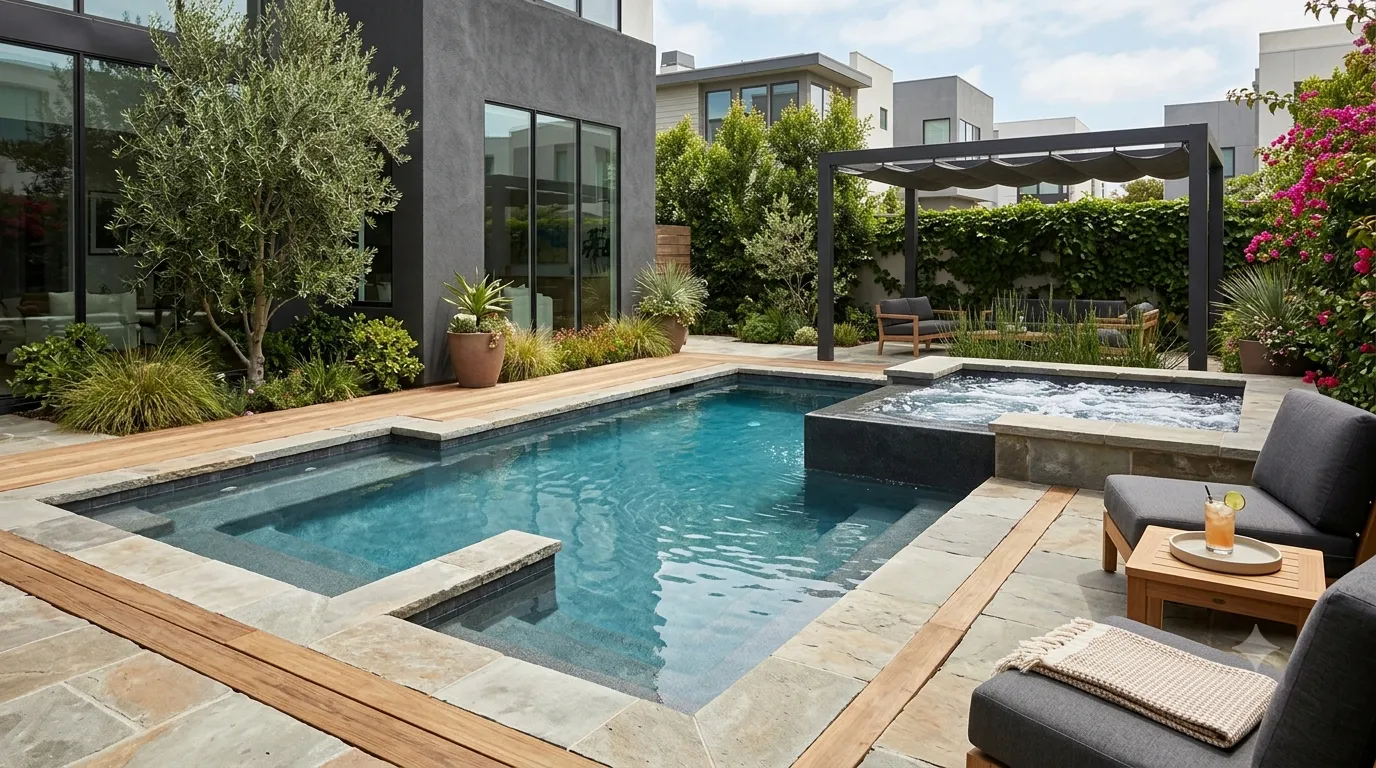
Best for: Entertaining, small luxury backyards, urban homes
Kiddie / Wading Pools
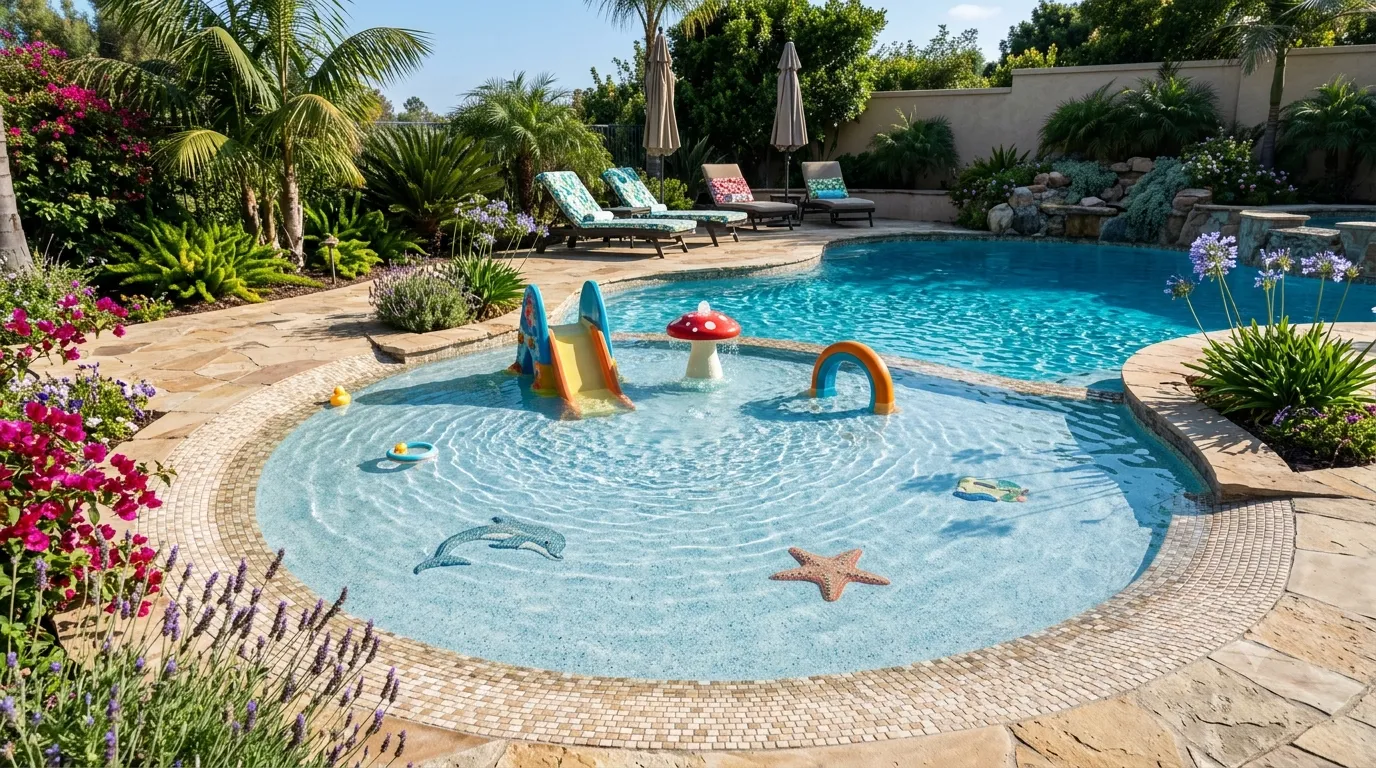
Shallow (depth ≤18 inches), designed specifically for young children. Can be a standalone portable pool ($20–$80 for inflatable) or integrated as a Baja shelf within a larger custom pool (adds $2,000–$5,000 to the build).
Best for: Families with young children
Olympic / Competition Pools
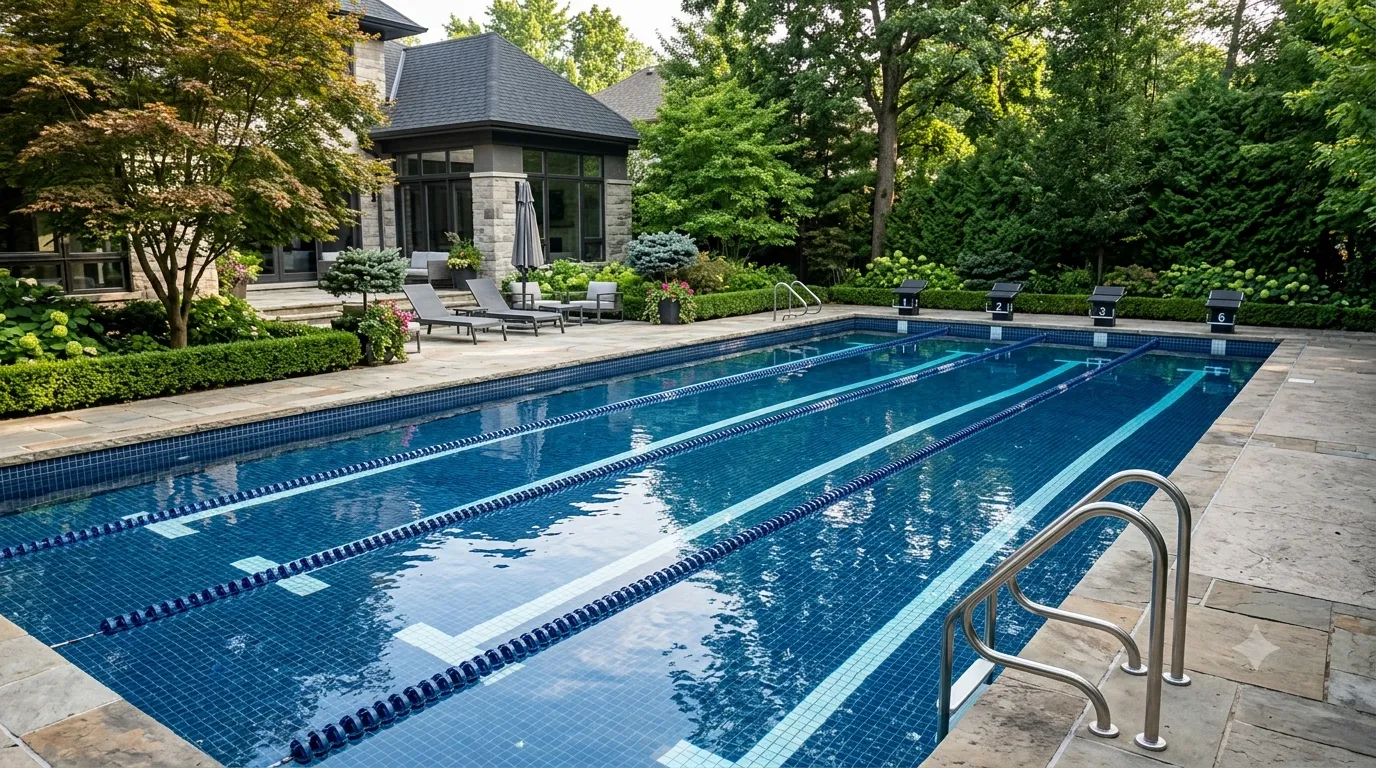
Regulation size: 50m × 25m, 10 lanes, minimum 2m depth. Cost: $300,000–$500,000+. Scaled-down residential versions (25m × 12m) start around $100,000. For serious competitive swimmers and multi-sport athletes.
Best for: Competitive swimmers, triathletes, institutional facilities
Pool Types by Water System
How you sanitize your pool water affects everything: how the water feels on your skin, how much time you spend on maintenance, and what materials your pool can be built from. Here’s how each system works and which pool types it’s compatible with.
Traditional Chlorine Pools
The most common and cost-effective sanitization system. Uses chlorine tablets, liquid chlorine, or granules to kill bacteria and control algae. Annual chemical cost: $300–$800. Requires consistent testing and balancing — but it’s the most widely understood system with the broadest material compatibility.
Saltwater Pools
A salt chlorine generator (SCG) converts dissolved salt into chlorine through electrolysis. The result: softer-feeling water that’s gentler on skin, eyes, and hair — with lower daily maintenance. The upfront cost is higher ($1,500–$2,500 for the SCG + $200–$400 for initial salt), and the SCG cell needs replacement every 3–7 years ($500–$900).
Saltwater is corrosive to certain metals. It’s not ideal for steel-walled above-ground pools or natural stone coping (travertine, limestone, flagstone). Fiberglass gelcoat is highly salt-resistant. Concrete pools need sealed surfaces. Vinyl liner pools must use corrosion-resistant metal components.
Natural / Living Pools
No chemicals at all — aquatic plants and beneficial bacteria in a separate “regeneration zone” (30–50% of total pool area) filter and clean the water naturally. Cost: $50,000–$80,000 with a specialized builder. Very low ongoing chemical costs, but higher electricity usage for plant-zone circulation. Best for eco-conscious homeowners with larger properties.
Mineral Pools
Uses mineral cartridges (copper, silver, zinc) combined with a reduced level of chlorine. The water feels softer than traditional chlorine pools but doesn’t carry the corrosion risk of saltwater. Annual cartridge cost: $200–$400. A growing trend, though fewer pool builders offer it.
Ozone / UV Pools
Ozone or UV light systems reduce chlorine needs by 60–90%. These are supplemental systems — they don’t fully replace a primary sanitizer, but they dramatically cut chemical usage. System cost: $500–$2,000 upfront. Best for indoor pools (where chlorine off-gassing is a concern) and allergy-sensitive swimmers.
Water System Compatibility Matrix
| System | Concrete | Fiberglass | Vinyl Liner | Above-Ground |
|---|---|---|---|---|
| Chlorine | Compatible | Compatible | Compatible | Compatible |
| Saltwater | Yes (sealed) | Best match | Use caution | Use caution |
| Natural | Compatible | Rare | Not compatible | Not compatible |
| Mineral | Compatible | Compatible | Compatible | Compatible |
| Ozone/UV | Compatible | Compatible | Compatible | Compatible |
Specialty & Emerging Pool Types
Beyond the traditional categories, several niche pool types have emerged in recent years — driven by social media trends, urban space constraints, and creative repurposing. Most of these appear in zero SERP competitor articles, making them a unique differentiator for this guide.
Stock Tank Pools
Galvanized steel agricultural troughs repurposed as DIY pools. Cost: $200–$500 + pump ($100–$300). Typically 8–10 ft diameter, 2 ft deep. Lifespan: 2–5 years before rust sets in. Huge on social media.
Cost: $200–$500 (tank) + $100–$300 (pump/filter)
Not covered by any SERP competitorShipping Container Pools
Repurposed shipping containers fitted with fiberglass or vinyl liner interiors. Modern industrial aesthetic. Above-ground or partially buried. Install in 2–4 weeks. Prefabricated options available.
Cost: $25,000–$50,000
Not covered by any SERP competitorSwim Spas / Endless Pools
Compact unit (as small as 14 ft) with an adjustable current for stationary swimming. Combines swim training and hot tub in one. Heated and insulated for year-round use.
Cost: $20,000–$50,000
Cocktail Pools
Upscale compact pool (10–15 ft × 6–10 ft) with built-in seating ledges. Designed for socializing, often paired with an adjacent hot tub. Trending in luxury urban markets.
Cost: $25,000–$50,000
How to Choose the Right Pool Type (Decision Framework)
This section is what sets this guide apart from every other “types of pools” article on the web. No competitor provides a systematic decision framework that accounts for climate, soil, budget, user profile, and maintenance preferences. Work through these five steps in order, and you’ll arrive at a clear recommendation.
Assess Your Climate
Climate determines which pool materials will survive — and which will fail. Here’s what works where:
| Climate Type | Best Pool Types | Why |
|---|---|---|
| Cold (freeze-thaw winters) | Fiberglass, vinyl liner (above-ground) | Fiberglass flexes with freeze cycles; vinyl liners can be drained below skimmer for winter |
| Hot & Dry (desert) | Concrete, fiberglass | Low evaporation tolerance; UV-resistant surfaces hold up best |
| Hot & Humid (Southeast US) | Fiberglass, saltwater system | Algae-resistant gelcoat surface; saltwater reduces algae pressure in humid conditions |
| Coastal (salt air) | Fiberglass, resin-frame above-ground | Corrosion-resistant materials; avoid steel components near saltwater |
| Variable (4-season) | Fiberglass, concrete with cover | Winterization capability; freeze protection required |
Know Your Soil
Soil type is the most overlooked factor in pool selection — and the most common cause of structural failure. Before choosing a material, know what’s under your yard:
| Soil Type | Recommended Pool | Why |
|---|---|---|
| Expansive clay | Fiberglass | Flexible shell won’t crack as soil expands and contracts with moisture |
| Rocky excavation | Concrete | Built on-site — no transport; fiberglass adds significant excavation cost in rock |
| High water table | Concrete (with drainage) | Heavy, won’t float with proper drainage; fiberglass requires dewatering during install |
| Sandy / loose | Fiberglass or concrete | Both work with engineered backfill and proper compaction |
Define Your Budget (Including Lifetime Costs)
Upfront cost is only half the story. The real comparison is total cost of ownership over the time you’ll own the pool. Here’s what each budget tier buys, followed by the 10-year cost comparison:
| Budget Tier | Upfront Range | Best Options |
|---|---|---|
| Under $5,000 | $200 – $5,000 | Above-ground (inflatable, resin frame), stock tank |
| $5,000 – $25,000 | $5k – $25k | Hard-sided above-ground, semi-inground, above-ground vinyl liner |
| $25,000 – $50,000 | $25k – $50k | Fiberglass in-ground, vinyl liner in-ground, swim spa, plunge pool |
| $50,000 – $100,000 | $50k – $100k | Concrete in-ground, infinity edge, lap pool |
| $100,000+ | $100k+ | Custom concrete, architectural, Olympic-size |
10-Year Total Cost of Ownership (Medium Pool ~14 × 28 ft)
| Cost Category | Concrete | Fiberglass | Vinyl Liner |
|---|---|---|---|
| Initial Install | $70,000 | $55,000 | $45,000 |
| Chemicals (10 yr) | $12,000 | $6,000 | $9,000 |
| Energy (10 yr) | $15,000 | $10,000 | $12,000 |
| Resurfacing / Liner Replace | $8,000 | $0 | $8,000 (2 liners) |
| Major Repairs (10 yr) | $3,000 | $1,000 | $2,000 |
| 10-Year Total | $108,000 | $72,000 | $76,000 |
| Annual Average | $10,800/yr | $7,200/yr | $7,600/yr |
Note: Illustrative estimates for a medium pool. Actual costs vary by region, usage, and maintenance practices. All figures assume professional installation and standard maintenance.
Match to Your User Profile
Different households need different pools. Match your lifestyle to the right type:
| User Profile | Best Pool Type | Key Feature Needed |
|---|---|---|
| Young Family (kids under 10) | Vinyl liner or fiberglass + Baja shelf | Smooth surface (no scraped knees), shallow wading area |
| Teenagers | Concrete or fiberglass freeform | Deep end for diving/jumping, large swim area |
| Seniors / Accessibility | Fiberglass with built-in steps, swim spa | Easy entry/exit, consistent depth, heated |
| Pet Owners | Concrete (durable) or fiberglass (smooth) | Avoid vinyl liner — claws can puncture |
| Athlete / Lap Swimmer | Lap pool, endless pool / swim spa | Long straight swim lane, consistent depth |
| Entertainer / Social | Freeform concrete, cocktail pool, spool | Baja shelf seating, integrated spa, good lighting |
| Budget-First Buyer | Above-ground, stock tank pool | Low upfront cost, minimal installation |
| Eco-Conscious Buyer | Natural pool, fiberglass + solar heating | Low chemical use, low energy consumption |
Consider Maintenance & Cleaning
Once the pool is built, keeping it clean becomes the ongoing task. Different pool types pair differently with automatic cleaning systems:
Pool Type × Robotic Cleaner Compatibility
| Pool Type | Cleaner Compatibility | Why |
|---|---|---|
| Fiberglass | Best | Smooth gelcoat = minimal resistance. Cleaner tracks last longer. Algae-resistant surface means less scrubbing needed. Cordless models navigate curved shells easily. |
| Vinyl Liner | Good | Smooth but delicate. Choose cleaners with soft brushes. Avoid aggressive scrub modes. Smooth surface = efficient cleaning cycles. |
| Concrete | Good | Rough surface requires stronger scrubbing action. Choose heavy-duty brushes and powerful suction. More frequent cleaning cycles needed. |
| Above-Ground | Good | Smaller size = fast cleaning. Cordless models ideal (no hose tangling with pool frame). Check cleaner weight for inflatable pools. |
| Natural Pool | Not Recommended | Robotic cleaners disturb the plant zone. Manual skimming preferred in regeneration areas. |
Bottom line: If you’re building a new pool and plan to use a robotic cleaner, choose fiberglass — the smooth surface extends your cleaner’s life and reduces cleaning time by approximately 30–40% compared to concrete.
Pool Types at a Glance (Quick-Reference Table)
| Pool Type | Category | Upfront Cost | Lifespan | Maintenance | Best For |
|---|---|---|---|---|---|
| Concrete | Material | $55k – $100k+ | 50+ yr | High | Custom builds |
| Fiberglass | Material | $45k – $85k | 30–50 yr | Low | First-time owners |
| Vinyl Liner | Material | $35k – $65k | Liner 7–12 yr | Medium | Budget in-ground |
| Above-Ground (Hard) | Installation | $2k – $10k | 15–25 yr | Medium | Budget, temporary |
| Above-Ground (Inflatable) | Installation | $50 – $500 | 1–3 yr | Low | Kids, seasonal |
| Semi-Inground | Installation | $10k – $25k | 15–25 yr | Medium | Sloped lots |
| Lap Pool | Purpose | $30k – $70k | 30–50 yr | Medium | Athletes, fitness |
| Plunge Pool | Purpose | $20k – $45k | 30–50 yr | Low–Med | Small yards |
| Infinity Pool | Purpose | $70k – $130k+ | 50+ yr | High | Luxury, views |
| Architectural | Purpose | $60k – $150k+ | 50+ yr | High | Modern homes |
| Spool | Purpose | $15k – $30k | 20–30 yr | Medium | Small yards, relaxing |
| Cocktail Pool | Purpose | $25k – $50k | 30–50 yr | Low–Med | Entertaining |
| Natural Pool | Water System | $50k – $80k | 30+ yr | Low (chemical) | Eco-conscious |
| Swim Spa | Purpose | $20k – $50k | 15–20 yr | Medium | Year-round fitness |
| Stock Tank | Specialty | $500 – $3,000 | 2–5 yr | Low | DIY, renters |
| Shipping Container | Specialty | $25k – $50k | 20–30 yr | Medium | Modern, fast install |
Which Pool Type Is Right for You?
Answer 5 quick questions and get a personalized recommendation.
What’s your total budget (installed)?
What’s your primary use case?
What climate do you live in?
How do you feel about maintenance?
How long do you plan to stay in this home?
Pool Design & Construction Ideas
Once you’ve narrowed down your pool type, the next step is turning it into a real design. Whether you’re working with a compact urban yard, a sloped property, or a tight budget, the right construction approach and finishing details can transform a basic pool into a stunning backyard centerpiece. Below are practical design ideas organized by installation type.
Above Ground Pool Deck & Landscape Integration
Above ground pools offer the fastest, most affordable path to backyard swimming, but the exposed metal wall is their biggest aesthetic drawback. The solution: strategic deck and landscape integration.
A full wrap-around deck at pool-rail height hides the wall completely and creates an elevated lounge platform — use composite decking for a splinter-free, low-maintenance surface that stays cool in summer. If a full deck isn’t in the budget, a partial entry deck on one or two sides with built-in planter boxes still transforms the pool experience at a fraction of the cost.
Stone or wood skirting around the base costs $5–$30 per linear foot and instantly upgrades the look. Cedar fence boards create a cottage-style finish; dry-stacked stone veneer delivers a high-end appearance. Add a pergola shade structure over part of the deck with climbing vines (wisteria, grape, or clematis) for filtered shade, or build a landscaped berm on one side with layered shrubs and ornamental grasses to visually anchor the pool in the landscape.
Simple round pool on gravel pad: $2,000–$5,000 total. Pool + partial deck + stone skirting + landscaping: $8,000–$15,000. Full wrap-around composite deck + pergola: $18,000–$30,000. Even the lowest tier delivers a real swimming experience — the upgrades are purely about aesthetics and comfort.
Semi-Inground Construction Solutions
Semi-inground pools hit a sweet spot: the visual appeal of an inground pool at 40–60% of the excavation cost. They’re also the most practical choice for sloped yards, rocky soil, or high water tables where full excavation isn’t feasible.
On a hillside property, dig into the high side and build a decorative retaining wall on the low side — the exposed pool wall becomes a canvas for stone veneer, a waterfall feature, or even a swim-up bar counter at the perfect elbow height (36–42 inches). Add an extended cap stone or composite ledge for drinks, with bar stools on the patio side.
For small backyards, a compact 12–18 ft round or small oval semi-inground pool with a paver surround delivers an inground look for $15,000–$25,000 total — roughly half the cost of a full gunite installation. Choose concrete pavers in a running-bond pattern with gravel joints for a clean, modern finish. Integrate the safety fence directly into the deck framing for a code-compliant enclosure that doesn’t visually separate the pool from the rest of the yard.
Pros
- 40–60% less excavation than full inground
- Works on slopes and challenging soil conditions
- Exposed wall doubles as a design feature (stone, waterfall, bar)
- Shorter install timeline (1–3 weeks)
Cons
- Exposed wall requires finishing (additional cost)
- Less depth flexibility than custom inground
- May require safety fence integration on the raised side
Stock Tank & Alternative Pool Variants
Stock tank pools have become a DIY sensation for good reason: an 8-foot galvanized steel tank ($400–$600 at farm supply stores) plus a small pump and filter ($200–$400) creates a fully functional plunge pool for under $1,000. The galvanized finish pairs surprisingly well with modern patio furniture and string lights.
For a more polished look, build a wood deck platform adjacent to the tank for a dry, splinter-free entry point. Polyethylene stock tanks (brands like Rubbermaid or Tarter) offer a lighter, rust-proof alternative in 100–300 gallon sizes — no liner needed, just fill, add a pump, and you’re swimming. For groups of 3–4 adults, extra-large tanks (10–12 ft diameter, 1,500–2,400 gallons) from specialty suppliers need a stronger pump and sand filter (budget $600–$800 for the filtration setup).
Sink the tank 18–24 inches into the ground for a semi-inground effect — the surrounding soil helps insulate the water and reduces the visual footprint. A repurposed oval livestock watering trough (6–9 ft long, 150–300 gallons) adds farmhouse character with its elongated shape, while a simple cedar slat privacy screen or outdoor curtain setup creates a secluded bathing nook.
Stock tank pools are seasonal — most owners drain them in winter. The galvanized coating eventually wears, so plan on a liner replacement or tank swap every 3–5 years. For a permanent mini-pool, a pre-cast concrete basin or small fiberglass plunge shell is a longer-lasting alternative at $3,000–$6,000 installed.
Beach Entry / Zero-Entry Design
A beach entry (also called zero-entry or walk-in pool) slopes gradually into the water like a natural shoreline — no steps or ladders needed. This design is a game-changer for families with toddlers, elderly relatives, or anyone with mobility concerns, since you can walk in at your own pace.
The gradual slope occupies roughly 15–20% of the pool’s total surface area, so it’s most practical in pools at least 28–30 ft long. Pair it with slip-resistant textured concrete or pebble aggregate on the slope for safe footing. Beach entries also make excellent shallow play zones — set up lounge chairs in 2–3 inches of water for the ultimate cool-down spot.
A beach entry adds $4,000–$8,000 to the total build cost due to the extra shell length and specialized slope finishing. It also increases the pool’s total square footage, which raises ongoing heating and chemical costs. Factor both into your budget before committing.
Plunge & Compact Pool Design Features
Compact pools (plunge, cocktail, and spool designs) make up for their small footprint with thoughtful design features that maximize usability and create a resort-like atmosphere.
A tanning ledge (Baja shelf) — a shallow 6–12 inch platform built into one end — holds lounge chairs in a few inches of water for the ultimate sunbathing spot. Built-in bench seating around the perimeter with spa jets along the seat backs turns the entire pool into a social zone and hydrotherapy experience in one. A sheer-descent water wall or scupper at one end creates a striking visual focal point and the soothing sound of falling water — ideal for masking neighborhood noise.
For year-round swimming, an indoor plunge pool or compact swim spa in a sunroom or conservatory eliminates UV exposure, leaf debris, and weather delays. The small water volume (typically under 2,000 gallons) keeps heating costs manageable even through winter — expect $50–$100 extra on your monthly heating bill depending on climate and indoor ambient temperature.
Budget-conscious? A DIY plunge pool using a reinforced above-ground kit or a pre-cast concrete basin can be installed for under $5,000 including pump and filter. The key is keeping it small (under 10 ft on the longest side) — you’re building a cooling station, not a lap pool.
Frequently Asked Questions
The three main types by construction material are concrete (gunite/shotcrete), fiberglass, and vinyl liner. These define your pool’s cost, lifespan, and maintenance requirements. See the In-Ground Pool Types by Material section above for the full comparison.
“Versions of pool” can refer to different classification systems: by installation (in-ground, above-ground, semi-inground), by material (concrete, fiberglass, vinyl liner), by purpose (lap, plunge, infinity, spool), or by water chemistry (chlorine, saltwater, natural). This guide covers all four classification systems in detail.
Above-ground pools are the cheapest, starting at $50–$200 for inflatable models, $1,000–$3,000 for resin/metal frame above-ground pools, and $1,500–$5,000 for above-ground vinyl liner pools. For in-ground options, vinyl liner pools are the most affordable at $35,000–$65,000.
Concrete (gunite) pools last the longest — 50+ years with proper maintenance. However, they require resurfacing every 10–15 years. Fiberglass pools last 30–50 years with minimal maintenance and no resurfacing. Vinyl liner pools require liner replacement every 7–12 years.
Fiberglass pools are the easiest to maintain. The smooth, non-porous gelcoat surface resists algae growth, requires fewer chemicals, and never needs resurfacing. Pair a fiberglass pool with a saltwater system and a robotic cleaner for the lowest possible maintenance setup.
The best time to swim is mid-morning to early afternoon (10 AM – 2 PM) when the sun is high, the water has warmed up, and UV rays are less intense than mid-afternoon. Avoid swimming right after sunset when visibility is poor. For fitness swimming, early morning (6–9 AM) offers cooler air temperatures and lower wind.
Ready to Bring Your Pool Plan to Life?
Choosing the right pool type is step one. Next: get quotes from at least three local builders, check your local permitting requirements, and plan your maintenance strategy before the water goes in.
Once your pool is built, keeping it clean is the ongoing task. A robotic pool cleaner handles the daily debris and scrubbing, so you spend less time maintaining and more time swimming. Whatever pool type you choose, matching it with the right cleaning system keeps your water crystal clear with minimal effort.
Explore our free pool maintenance tools:


