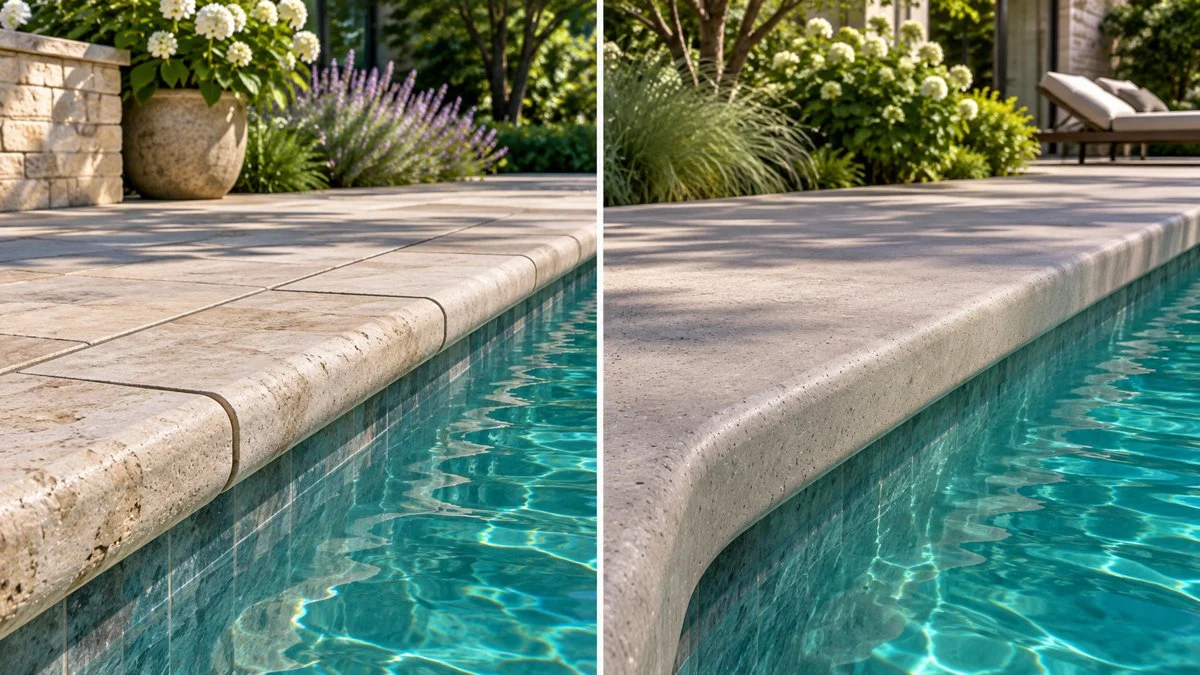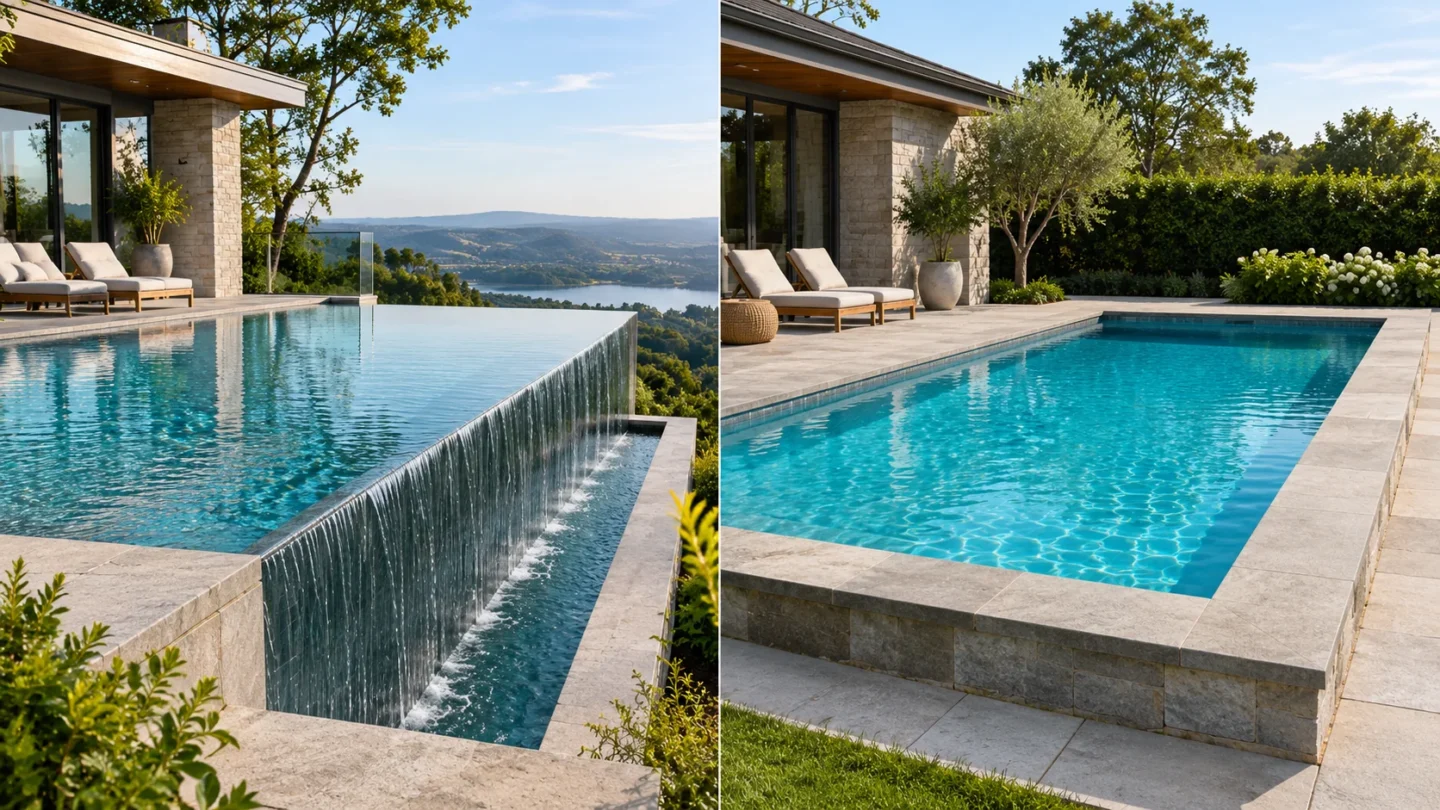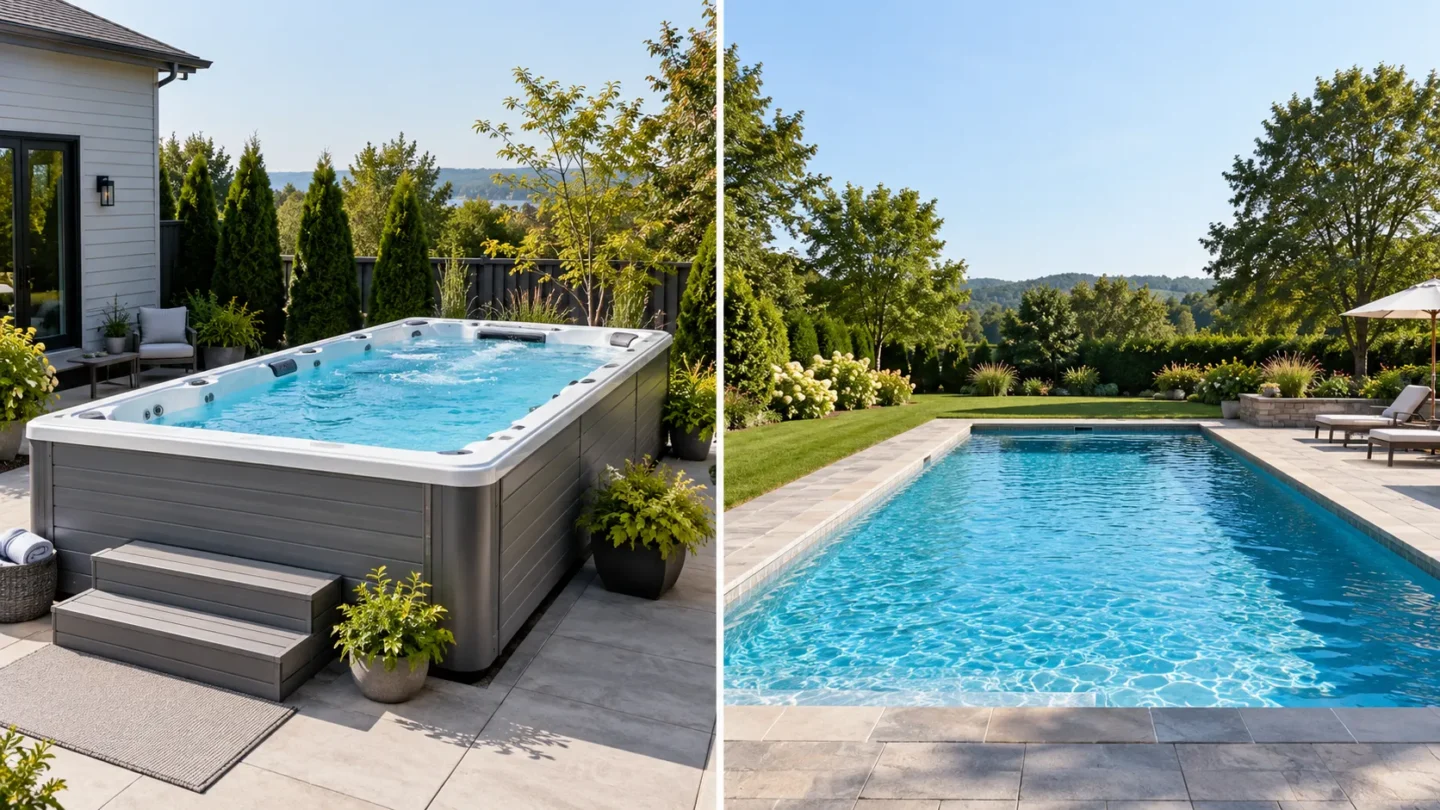

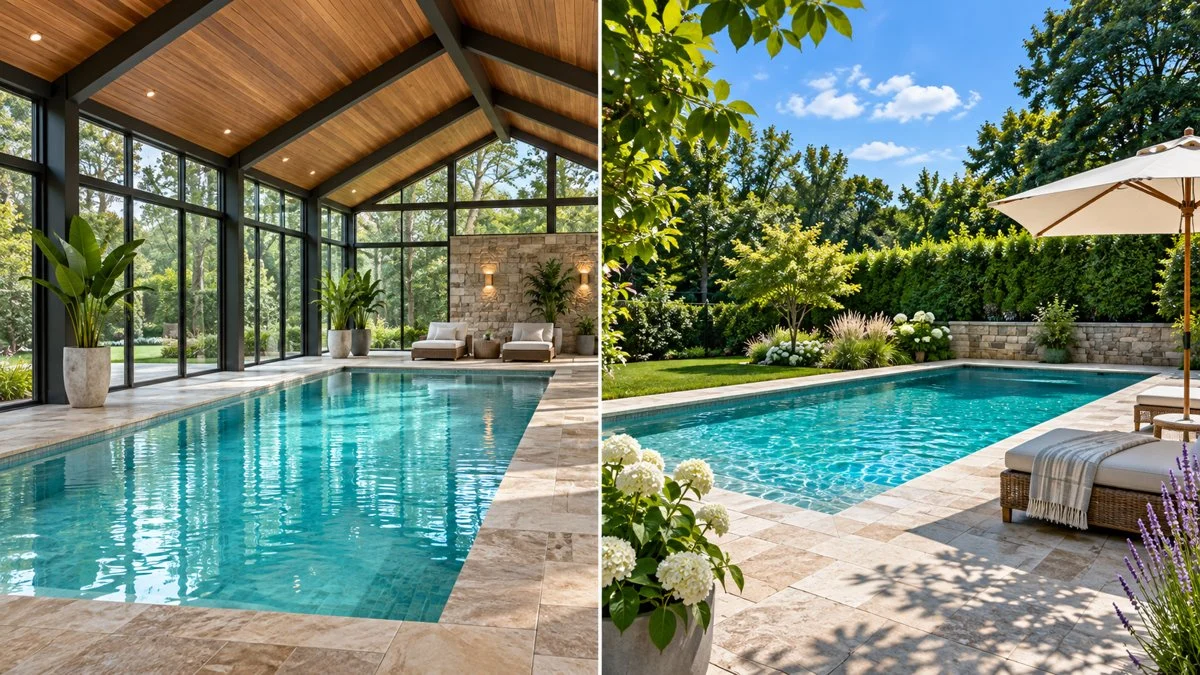
Same water, same chlorine, but the roof over the pool, or the open sky instead, changes more than the view. Leave a pool outdoors, and the sun goes straight to work on the chlorine.
Put it under a roof, and the chlorine stops fighting sunlight, while the air above the water becomes the thing to manage. The climate sets the chemistry, and between them, they set what the pool costs to keep running.
The Sun Changes the Chemistry
UV light tears through free chlorine, and on an open-air pool that happens fast. In strong sun, roughly 35% of the free chlorine is gone within an hour, which is how an unprotected outdoor pool tests fine first thing and runs short by the afternoon.
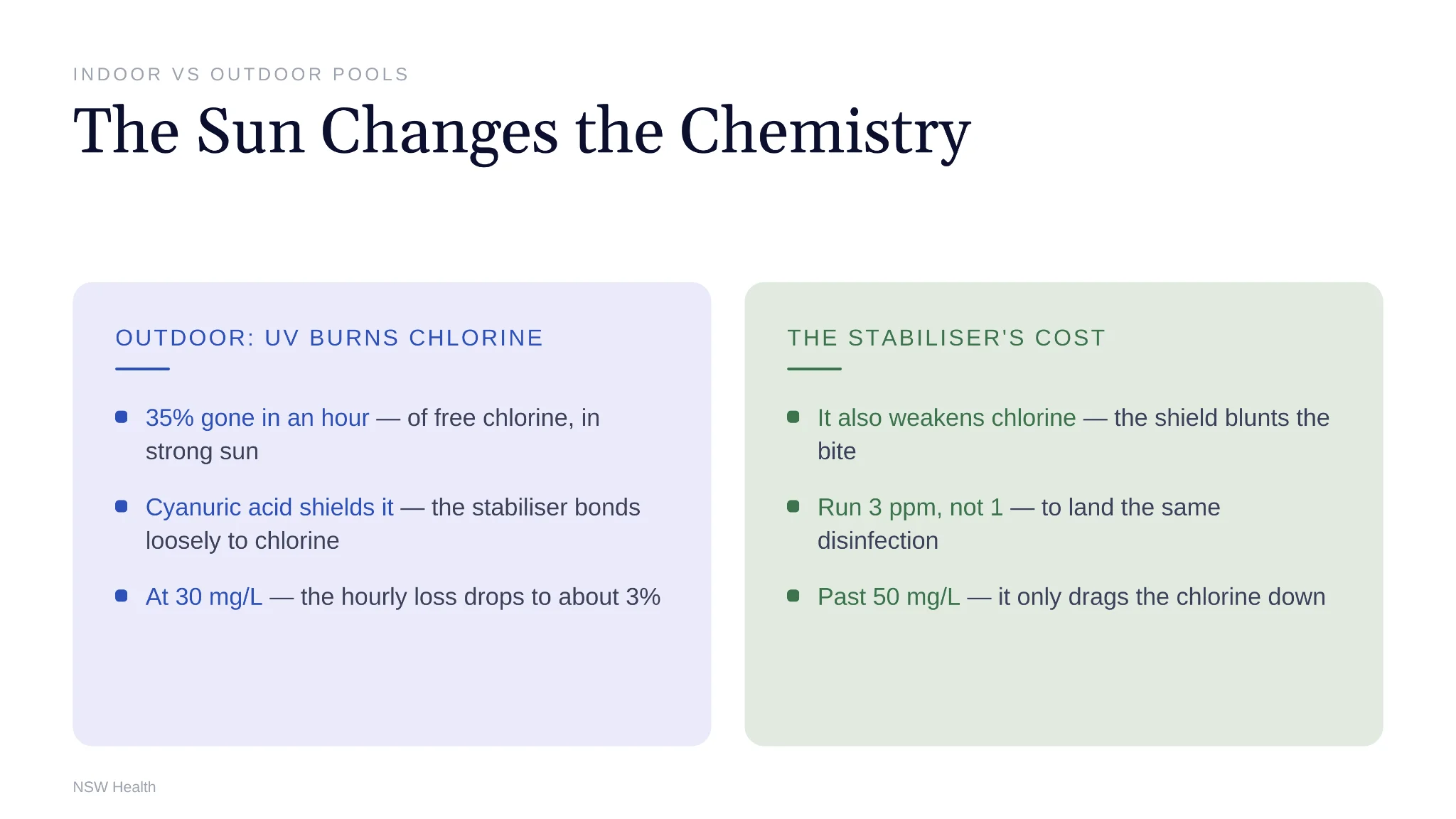
Cyanuric acid is the answer to that. The stabiliser bonds loosely to the chlorine and shields it from the UV, and, when held at the recommended 30 mg/L, it cuts the hourly loss to around 3%.
There’s a cost built into that protection.
The same cyanuric acid that guards the chlorine also weakens its bite, so a stabilised outdoor pool has to run a higher chlorine level to land the same disinfection, a minimum of 3 mg/L free chlorine, against the 1 mg/L an unstabilised pool gets by on.
And the stabiliser has a ceiling. Past about 50 mg/L, it stops helping and only drags the chlorine down further, at which point the fix is to let it fall by diluting the water.
Indoors, none of this is in play. UV doesn’t pass through a roof or glazing, so an indoor pool takes no sun on the water and needs no stabiliser at all, so cyanuric acid must not be used in an indoor pool. The whole stabiliser question belongs to pools that sit in the sun.
Indoor Pools Fight Their Own Air
The chlorine in an indoor pool isn’t under attack from above, but it picks a different fight.
Chlorine binds with the sweat, urine, and waste swimmers carry into the water and forms chloramines, and as those by-products climb in the water, they move up into the air sitting over it.
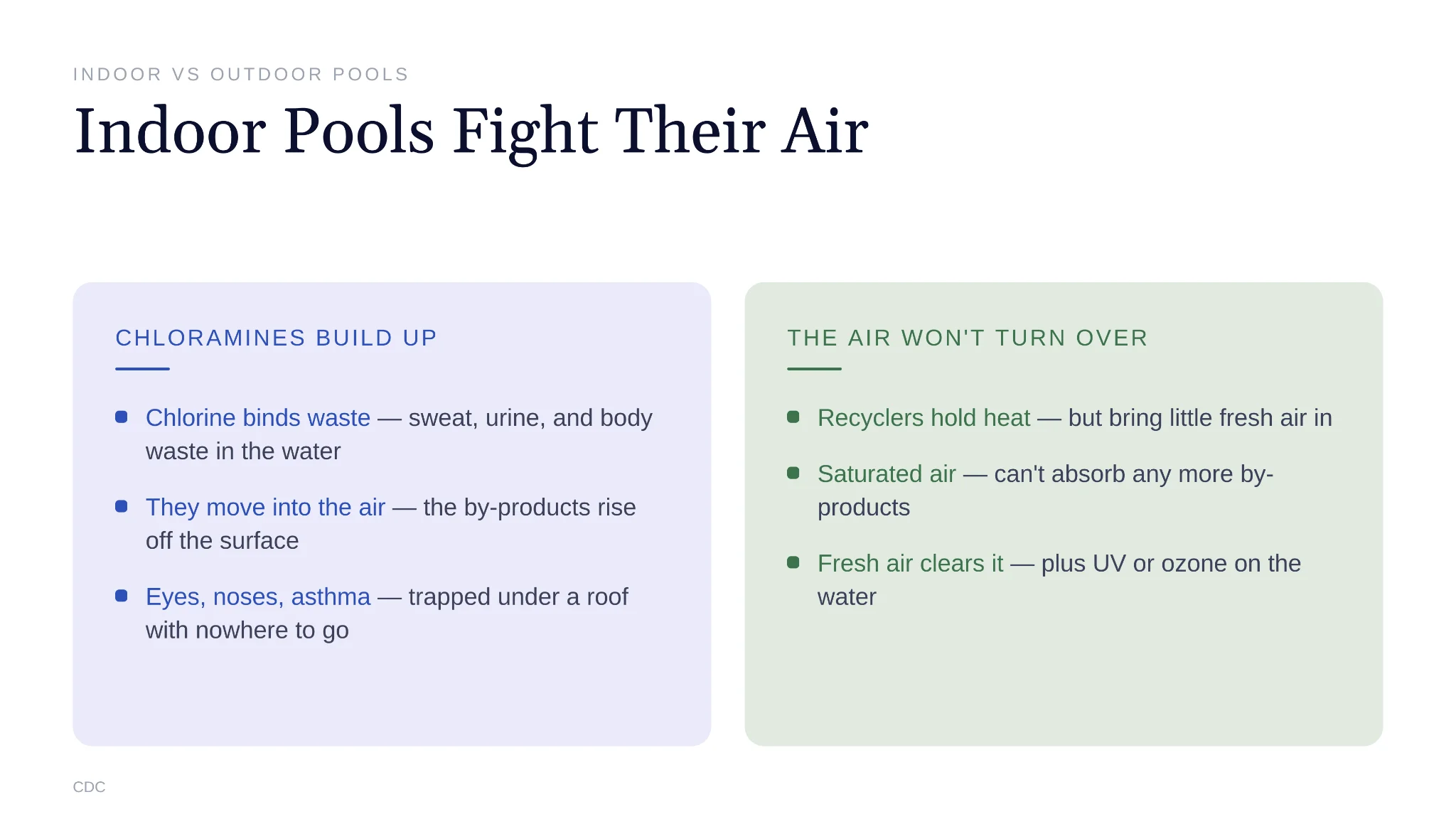
Outdoors, that air is the sky, and it carries them off. Under a roof, there’s nowhere for them to go, and that’s where they turn into a real problem, think stinging eyes, irritated noses, and at heavier exposures, coughing, wheezing, and asthma made worse.
What makes it an indoor trouble specifically is air turnover.
Indoor pools lean on air recyclers to hold their heat, and those strip moisture out without necessarily drawing much fresh air in, so once the recycled air is loaded with chloramines, it can’t absorb any more, and they stack up on the surface.
Clearing it takes moving air. Genuine fresh air, through open doors and windows or proper ventilation, together with keeping the disinfectant where it belongs so fewer chloramines form to begin with, and often a secondary system like UV or ozone working on what’s dissolved in the water.
An open-air pool gets most of that handled for nothing by being open in the first place.
Climate and Cost
The roof that settles the chemistry is also the expensive half of the comparison.
An indoor pool is a building, and it carries a building’s costs: a structure around the water, a dehumidification system running to pull the moisture the pool throws off before it works into the walls, and heating held through the whole year.
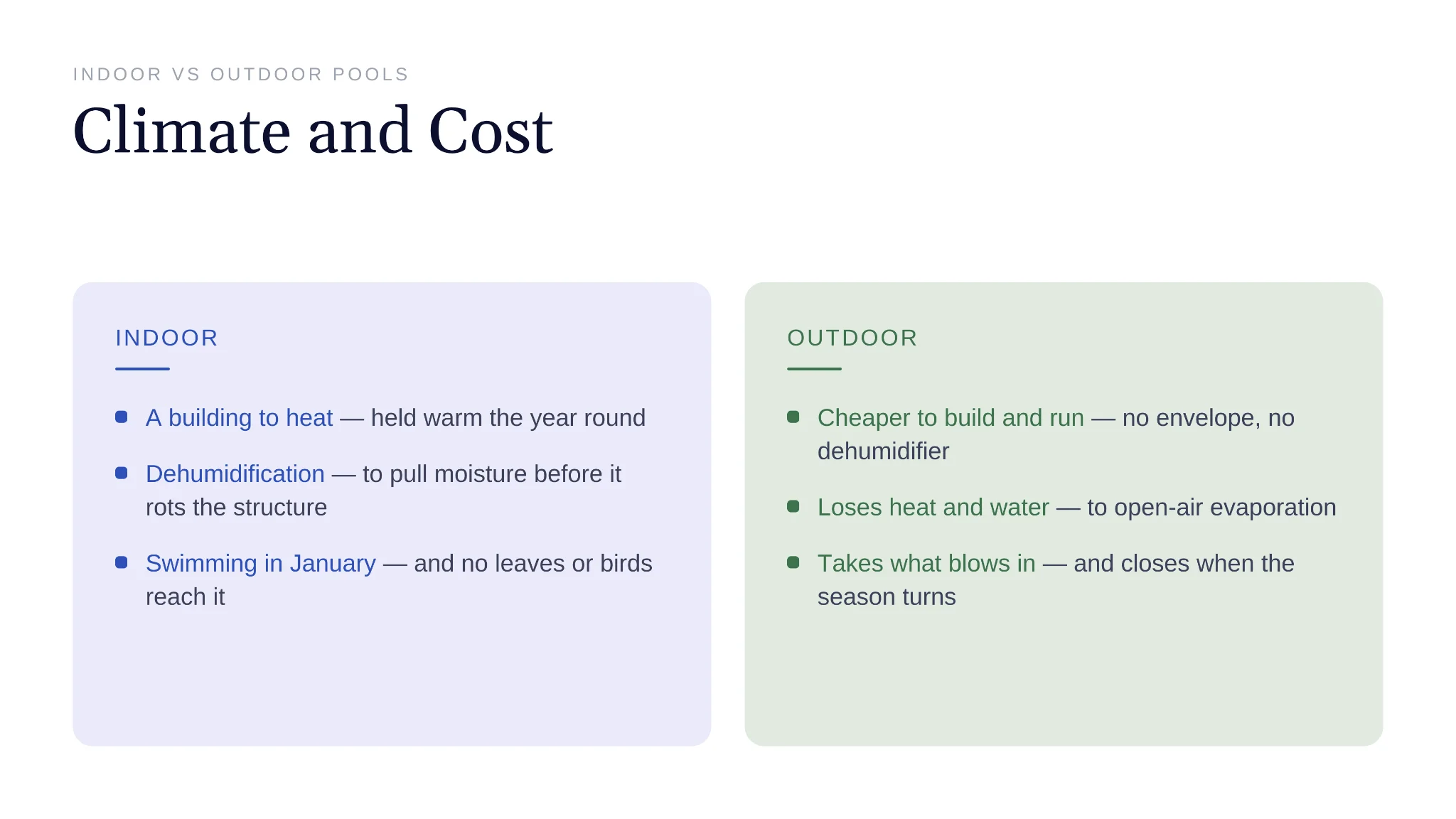
That’s a heavy ongoing bill, paid for swimming in January and for water that falling leaves, pollen, and birds never reach.
An outdoor pool skips the lot. It’s cheaper to build and cheaper to run, gives up water and heat to evaporation, takes in whatever the wind carries over it, and shuts down when the season turns cold.
Keep the Floor Clear
An open pool pays for its free ventilation by catching everything that crosses it: leaves, pollen, grit, insects, and what birds leave behind, all drifting down to the floor between skims. An indoor pool is spared most of that, though its floor and waterline still gather a film of their own. The inside needs steady clearing either way.
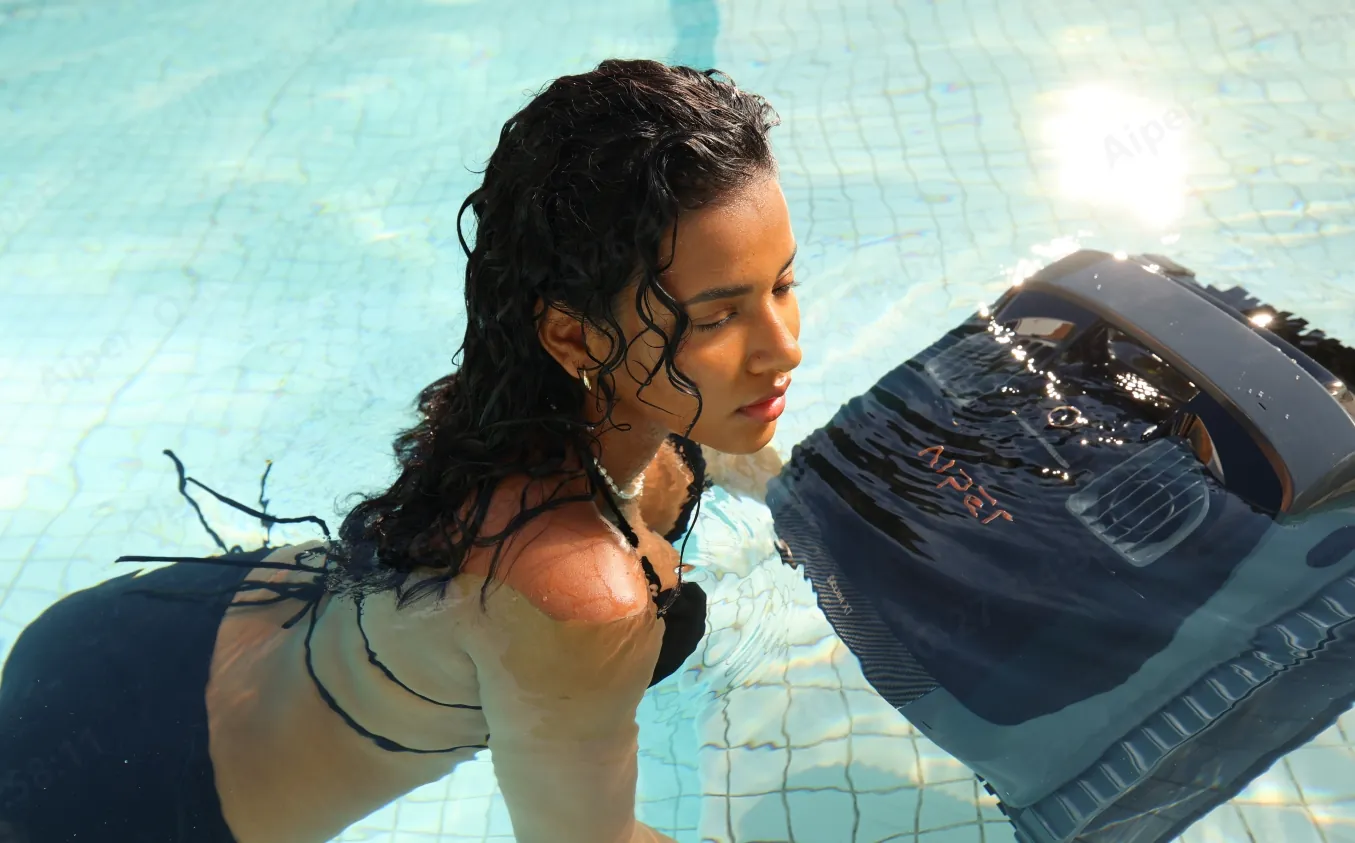
That clearing is a job worth handing to a machine. An Aiper robotic pool cleaner works the floor and climbs the walls, lifting the settled debris and film before it sets, and it runs off its own battery without drawing on the pump.
Get more pool and lawn care guides from Aiper on Google