Why Does My Pool Vacuum Keep Flipping Over? (And How to Fix It)

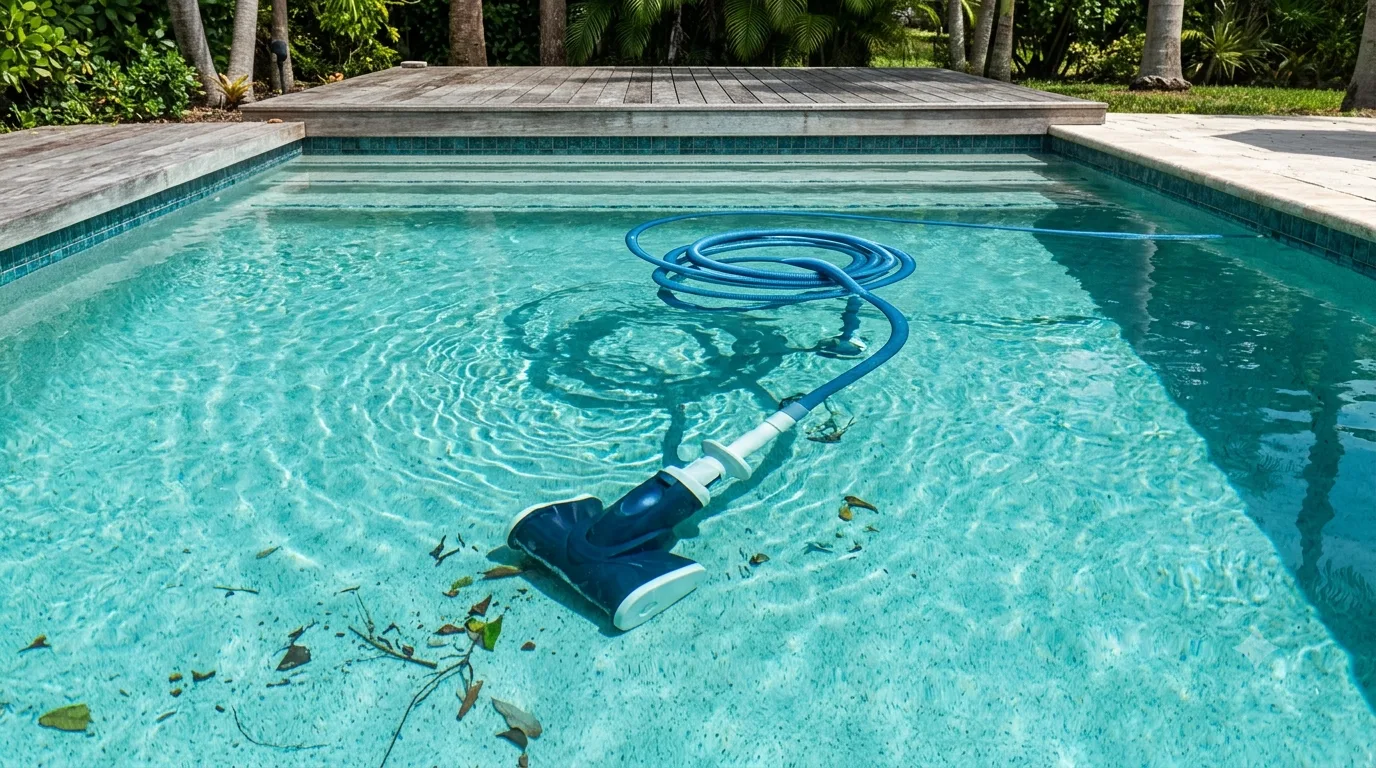
A pool vacuum that runs fine for a few minutes, then tips onto its side or back and stalls out until someone wades in to flip it upright again, is one of the most common frustrations pool owners run into. The cause splits by cleaner type: suction and pressure-side units flip from hose memory, bad weight placement, or wrong flow settings, while robotic cleaners flip from trapped air or worn treads — and only one of those failure modes disappears entirely if you switch cleaner types. How to diagnose which one you have, and fix it, is below. Flow problems like this often trace back to the same pump issues covered in our guide to priming a pool pump.
The cause depends on what kind of cleaner you’re running. Suction-side and pressure-side vacuums flip for different reasons than robotic cleaners do, and the fix is different for each.
Why Do Suction and Pressure-Side Cleaners Flip Over?
Suction-side and pressure-side vacuums have no onboard navigation — they’re pushed or pulled entirely by water flow through a hose. Flipping in these units traces to four specific issues:
Hose memory and tangling: Hose that’s been coiled for storage retains a curl memory that fights the cleaner’s movement, twisting it off balance mid-pass.
Incorrect hose weight placement: The weight (or ballast) on the hose needs to sit within roughly 4 to 12 inches of the swivel head. Placed wrong, it changes how the hose drags and can pull the unit sideways.
Too much or too little suction: Flow that’s too strong lifts the front of the unit off the floor; flow that’s too weak lets debris or slope changes tip it before it can correct.
A stuck hose swivel: If the swivel connector doesn’t rotate freely, the hose itself twists the vacuum instead of trailing behind it.
Why Is My Robotic Pool Cleaner Flipping Over?
Robotic cleaners carry their own motor and don’t depend on hose flow, so flipping in these units points to a different set of causes: trapped air inside the unit after startup, worn treads or brushes that no longer grip the floor evenly, or a mechanical imbalance from a damaged drive component. It’s a different failure mode than a robotic cleaner getting stuck on the main drain, but both trace back to the unit’s own navigation and traction rather than pool plumbing.
Letting a robotic cleaner sit submerged for a few minutes before starting it lets trapped air escape, which resolves a large share of robotic flipping complaints on its own.
Why Does My Pool Vacuum Keep Going in Circles Instead of Flipping?
Going in circles is a related but distinct complaint from flipping, and it usually means a wheel is jammed or worn unevenly compared to the others, or the hose has settled into a memory loop that keeps pulling the unit back along the same path. Rotating the hose out on the pool deck to release its coiled memory, and checking wheels for uneven wear, addresses both.
How Do You Stop a Pool Vacuum From Flipping?
Start with the flow control valve or pump speed — lower it and see if the flipping stops. Check hose weight position (4-12 inches from the swivel head), confirm the swivel itself turns freely, and inspect wheels, skirts, and flapper valves for wear. For robotic units, let the cleaner sit submerged before starting it and check treads for wear.
Is It Time to Replace Your Pool Cleaner, or Switch to Robotic?
Most automatic pool cleaners last 3 to 5 years with proper maintenance. If a suction or pressure-side unit keeps flipping despite fixing flow, hose weight, and worn parts, the underlying limitation is the hose-based design itself. Pool maintenance already runs roughly $180 a month in season for an average pool — a cleaner that needs constant babysitting adds real time cost on top of that.
Robotic cleaners remove the hose-and-flow dependency entirely, which is why they don’t develop this specific failure mode in the first place.
Frequently Asked Questions
Can repeated flipping damage the cleaner itself?
Yes — wheels or treads spinning without floor contact while the unit is stuck strain the drive motor, and repeated cycles can wear out gears or overheat the motor faster than normal operation. Turn the unit off as soon as you notice it’s stuck rather than letting it keep running.
Does flipping happen more at steps and corners than on open floor?
Yes. Sharp angle transitions at steps, corners, and benches are where flow direction changes fastest, making them the most common flip points even on units that run fine across open floor.
Does a flipping cleaner void the manufacturer’s warranty?
Most manufacturers cover flipping traced to a defective part, such as the motor, tread, or flapper valve, but exclude damage traced to setup issues like incorrect hose weight placement or running the unit at excessive flow settings.
If flow-based flipping keeps coming back no matter what you adjust, a self-navigating robotic cleaner removes the suction and pressure dependency structurally. See how an Aiper robotic pool cleaner handles floors, walls, and steps without relying on your pump.
Get more pool and lawn care guides from Aiper on Google