Can You Add Algaecide and Shock at the Same Time?

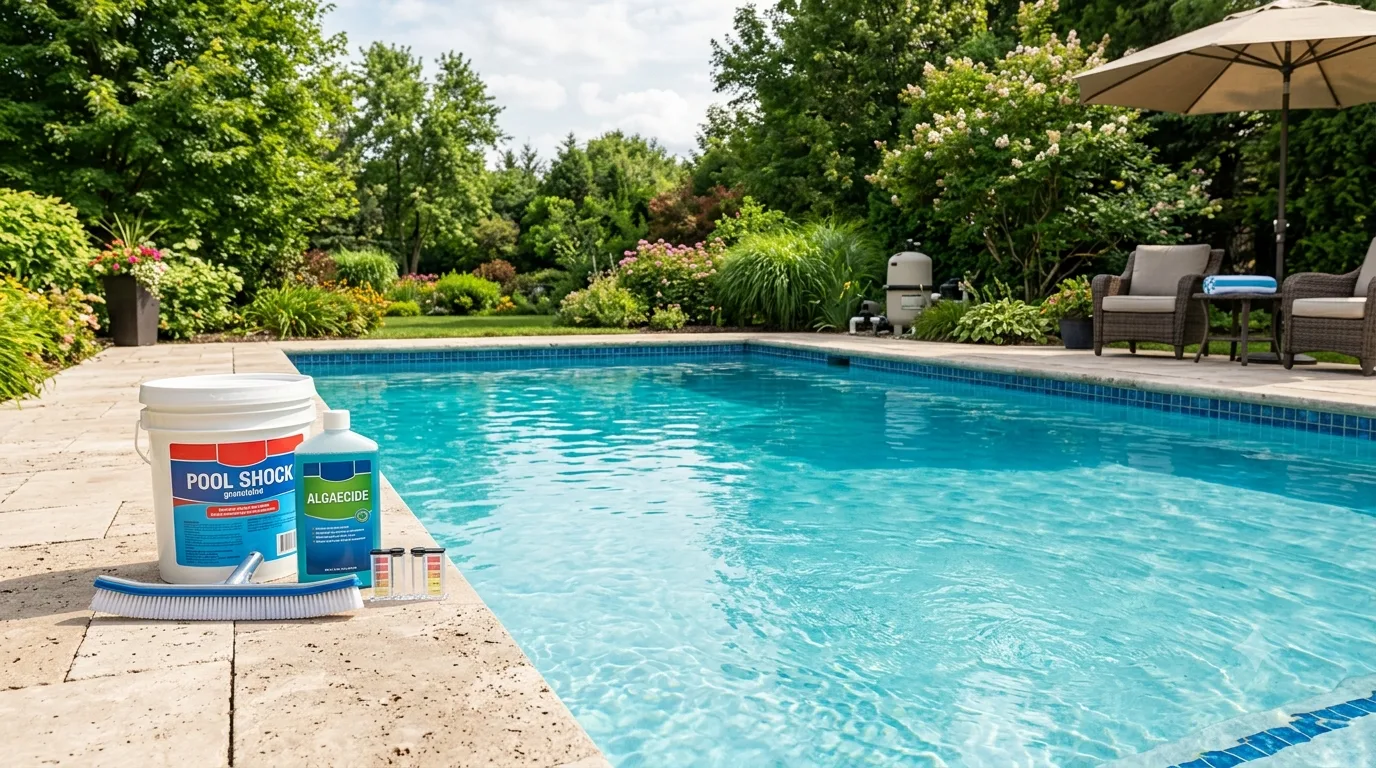
Whether it’s fine to dump algaecide and shock into a pool together while opening it for the season is a common point of confusion for new pool owners, and the advice out there is often contradictory. The short answer: no. Shock first, wait roughly 24 hours or until free chlorine drops below 5.0 ppm, then add algaecide — adding it any earlier destroys it before it can work. The chemistry behind why, and what to do if the pool’s still green after both, is below. Balancing alkalinity first, covered in our guide to pool alkalinity, keeps pH from swinging during this whole process too.
Why Does Mixing Shock and Algaecide at the Same Time Usually Backfire?
Pool shock, whether calcium hypochlorite or liquid chlorine, is a powerful oxidizer that targets organic contaminants including algae cells. Algaecide works differently: polymer or copper-based formulas disrupt algae cell membranes over time. High chlorine levels from a fresh shock dose break down algaecide polymers before they can do that job, which means the algaecide gets destroyed rather than working.
Copper-based algaecides carry an added risk when mixed with a fresh shock dose: the copper can oxidize and stain pool liners or plaster. Never combine the two chemicals directly in a container outside the pool, either — that’s a separate safety hazard on top of the effectiveness problem.
Should You Shock the Pool First, or Add Algaecide First?
Shock first. Shock is the corrective step that knocks down an active algae bloom; algaecide is the preventative step that finishes the job and helps stop regrowth. Adding algaecide before or during a shock treatment wastes it, since the chlorine spike that follows will break it down before it can act.
How Long After Adding Shock Can You Add Algaecide?
Balance pH to 7.2-7.6 first, then add the shock dose and run the pump continuously. Wait roughly 24 hours, or until free chlorine drops below 5.0 ppm on a test strip, before adding algaecide. Adding it any earlier, while chlorine is still elevated, is the exact scenario that destroys the algaecide before it can work.
Why Is Your Pool Still Green After Shock and Algaecide?
Dead algae doesn’t disappear — it becomes a fine dust that settles on the pool floor and clouds the water as it’s stirred up. Clearing it requires continuous filtration, frequent filter cleaning or backwashing, and manual or robotic vacuuming to physically remove the dust rather than waiting for chlorine to dissolve it.
If the pool is still green well after both treatments, the more common cause is an initial shock dose too small for the algae load, not a failure of the algaecide step. Retest and re-shock before assuming the products themselves didn’t work.
What Kills Algae in a Pool Overnight?
There’s no single ingredient that clears algae overnight on its own — it’s an adequate shock dose combined with strong circulation and brushing to break up algae clinging to walls and floor. A properly dosed shock, with the pump running continuously and the pool brushed to loosen algae from surfaces, can visibly clear a green pool within 24 hours. Skipping the brushing step is why some pools stay cloudy despite what looks like enough chlorine.
Shock vs. Algaecide: What Is the Actual Difference?
Shock is the corrective tool: a large, fast-acting chlorine dose that kills an active algae bloom and other contaminants. Algaecide is the preventative and finishing tool: a lower-level, slower-acting treatment that helps stop algae from regrowing once the water is mostly clear. Using shock where algaecide is called for, or the reverse, is why the sequencing question comes up so often.
Frequently Asked Questions
Is copper-based algaecide riskier to combine with shock than other types?
Yes. Copper-based algaecide reacts with a fresh chlorine spike to oxidize and stain liners or plaster, while quaternary ammonium (quat) and polyquat algaecides don’t carry that staining risk, though both still lose effectiveness if added too soon after shock.
Can algaecide replace shock for clearing an active green pool?
No. Algaecide’s slow membrane-disrupting action can’t handle an established bloom the way shock’s fast oxidation can, so using algaecide alone on green water usually just wastes the product while the algae keeps growing.
Does clarifier fit into the shock-then-algaecide sequence?
Clarifier doesn’t compete chemically with either product, so it can be added at any point, but it’s most useful after chlorine has dropped and the water is cloudy with dead algae dust, helping the filter catch fine particles faster.
Clearing dead algae dust off the floor and walls is the physical step that finishes what shock and algaecide start. An Aiper robotic pool cleaner handles that debris removal automatically, so the pool stays clear once the chemistry is corrected.
Get more pool and lawn care guides from Aiper on Google