Weather-Based vs Soil-Moisture-Based Irrigation Controllers: How Each Decides When to Water

A basic sprinkler timer waters on the same days at the same time, whether it rained all weekend or the yard has been baking in a heat wave.
Smart controllers decide each day whether the lawn actually needs water. The two main types make that call differently:
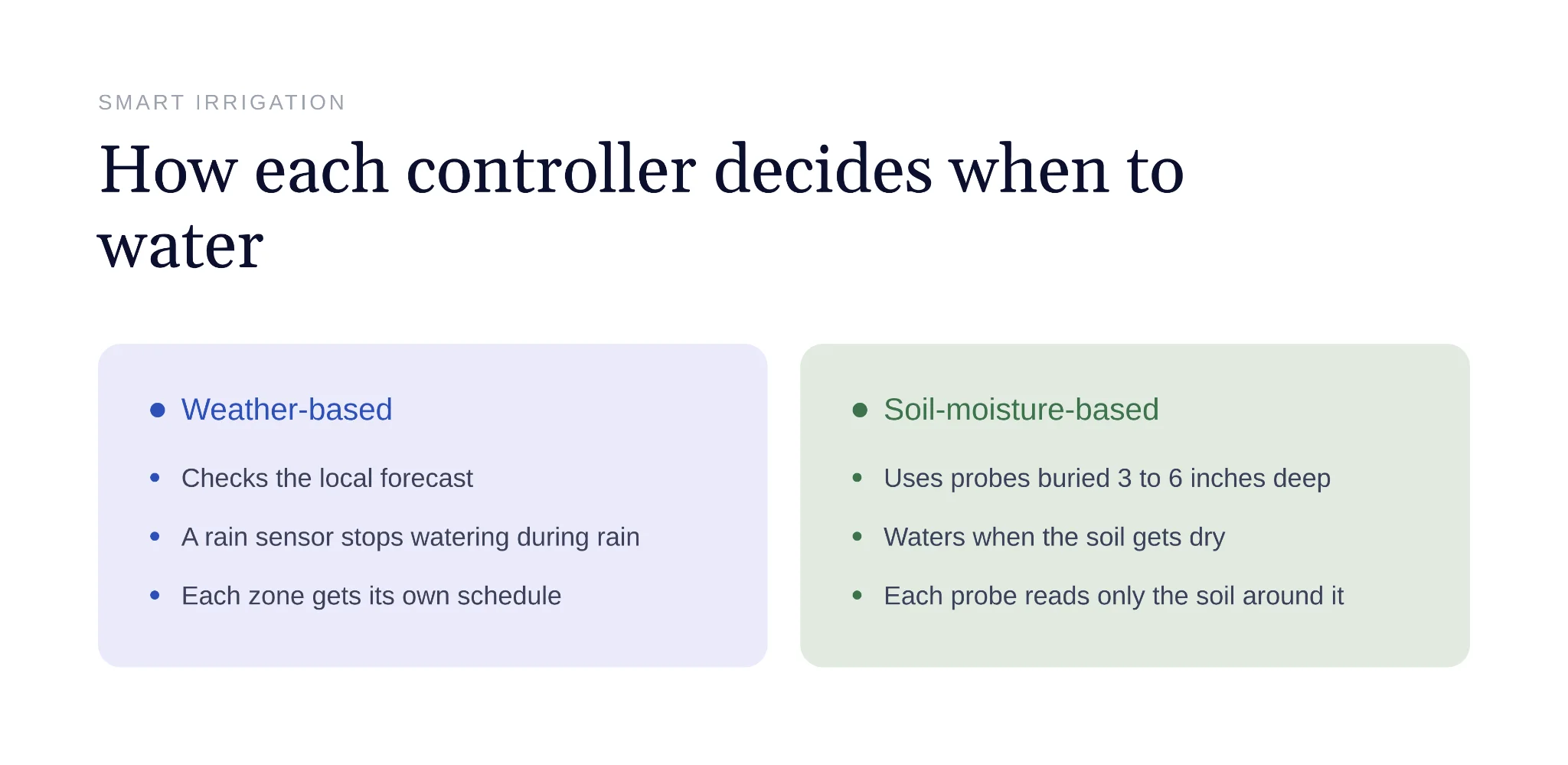
- Weather-based controllers respond to rain, forecasts, and conditions that dry out a lawn.
- Soil-moisture controllers use buried probes to measure how much water is left in the ground.
For most home lawns, a weather-based system with its own rain sensor covers what matters with much less setup.
How a Weather-Based Controller Decides
A weather-based controller pays attention to what’s happening above the ground.
- Hot, dry weather: the lawn loses water faster, so it needs more.
- Cool, cloudy weather: it needs less.
- Rain: the scheduled watering can be skipped.
The controller gets this information from two sources. Local forecasts, pulled over Wi-Fi, let it plan so it doesn’t water the day before a storm. A rain sensor in the yard catches what forecasts miss, like a shower nobody predicted.
Why zones matter
Weather is only half of the decision. The other half is what’s growing in each part of the yard. On the same hot afternoon, a sunny lawn needs far more water than a shaded flower bed, and a vegetable garden needs its own schedule.
A controller with one setting for the whole yard will overwater some areas and underwater others. Separate zones, each with its own schedule and watering amount, fix that.
How a Soil-Moisture Controller Decides
A soil-moisture controller relies on probes buried 3 to 6 inches deep in the lawn. When the soil gets too dry, it waters.
The advantage is that it measures the ground directly, so it notices water from any source, including a neighbor’s sprinklers.
The drawback is that each probe only reads the soil right around it. A probe in a low spot reads wet while the rest of the lawn dries out. A probe under a tree reads dry because roots pull the water away.
Accurate readings take a separate probe in each area with different sun, soil, or plants. That brings extra work:
- Digging to install each probe
- Replacing batteries in wireless probes
- Avoiding the probes when aerating or edging
- Adjusting moisture settings during the first month
Many soil sensors also ignore the forecast. They may water on Tuesday even when a storm is due on Wednesday.
Which One Fits Your Yard
| Weather-based | Soil-moisture | |
|---|---|---|
| How it decides | Forecasts and a rain sensor | Probes in the soil |
| Installation | No digging | A buried probe in each zone |
| Plans around coming rain | Yes | Often no |
| Maintenance | Occasional app adjustments | Probe batteries and placement checks |
| Best for | Most home lawns with a mix of grass, beds, and gardens | Large properties under strict watering restrictions |
A weather-based system is the better fit if you water from an outdoor faucet, don’t want to bury equipment, and live somewhere rain often makes scheduled watering unnecessary.
What to Look For in a Weather-Based Controller
Not every weather-based controller handles every situation. Before buying, check for these five features.
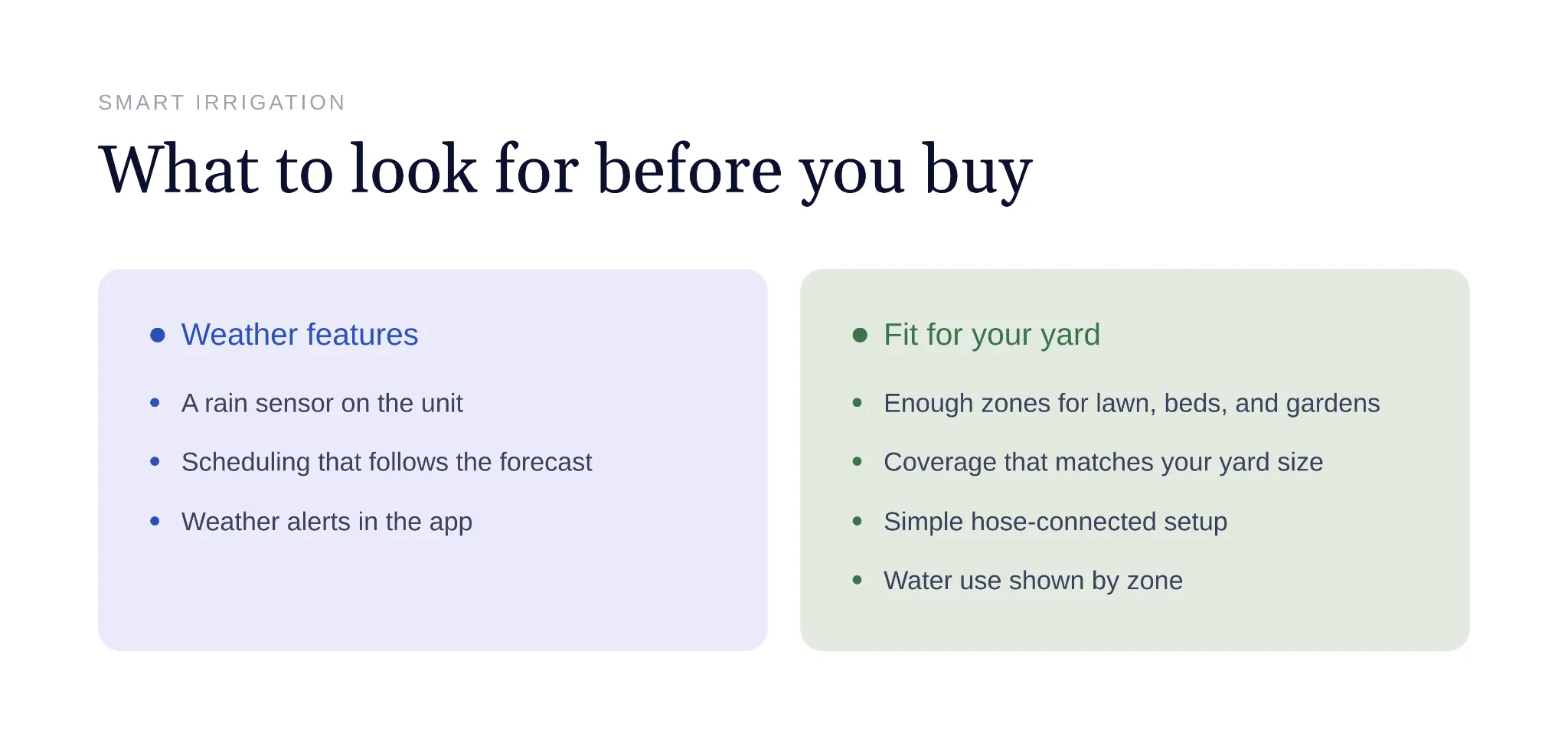
A rain sensor on the unit. Forecasts come from stations that may be miles away. A sensor in your yard responds to the rain that actually falls there.
Zone control. Choose enough zones to separate sunny lawn, shaded areas, and garden beds, with different watering amounts for each.
Coverage that matches your yard. Measure the area you want to water and compare it with the listed coverage and spray distance.
Simple installation. A hose-connected unit can be running in an afternoon. Systems that tie into in-ground lines usually need a professional.
Water use tracking. Seeing how much each zone uses makes it easier to catch a setting that’s wasting water.
Setting Up Aiper IrriSense 2
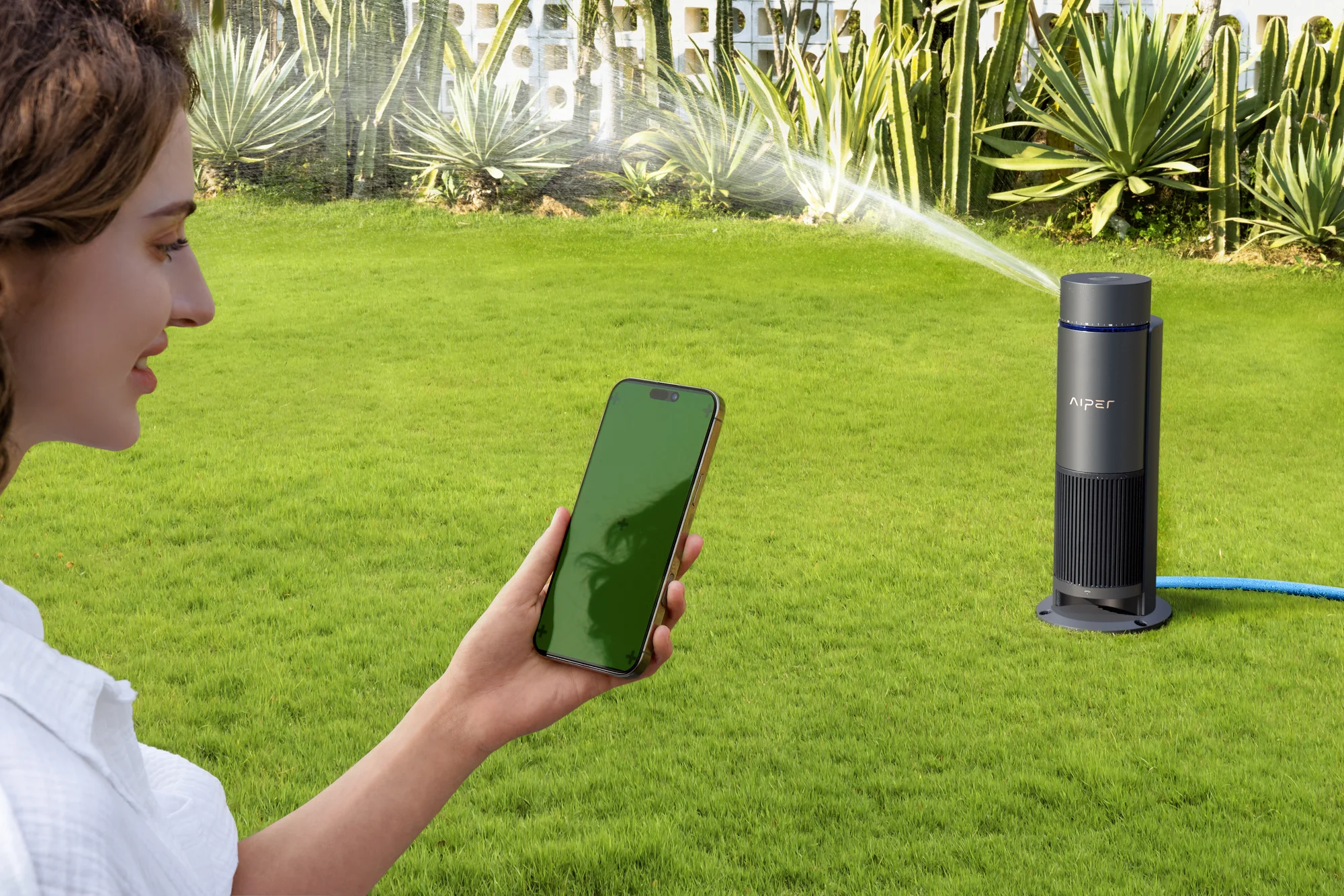
The Aiper IrriSense 2 is a weather-based system that combines the sprinkler, controller, valve, and a nutrient feeder in one unit. Its built-in rain sensor stops watering while rain is falling, and it sprays up to 39 feet to cover up to 4,800 square feet.
Most of the setup comes down to placement and zone mapping.
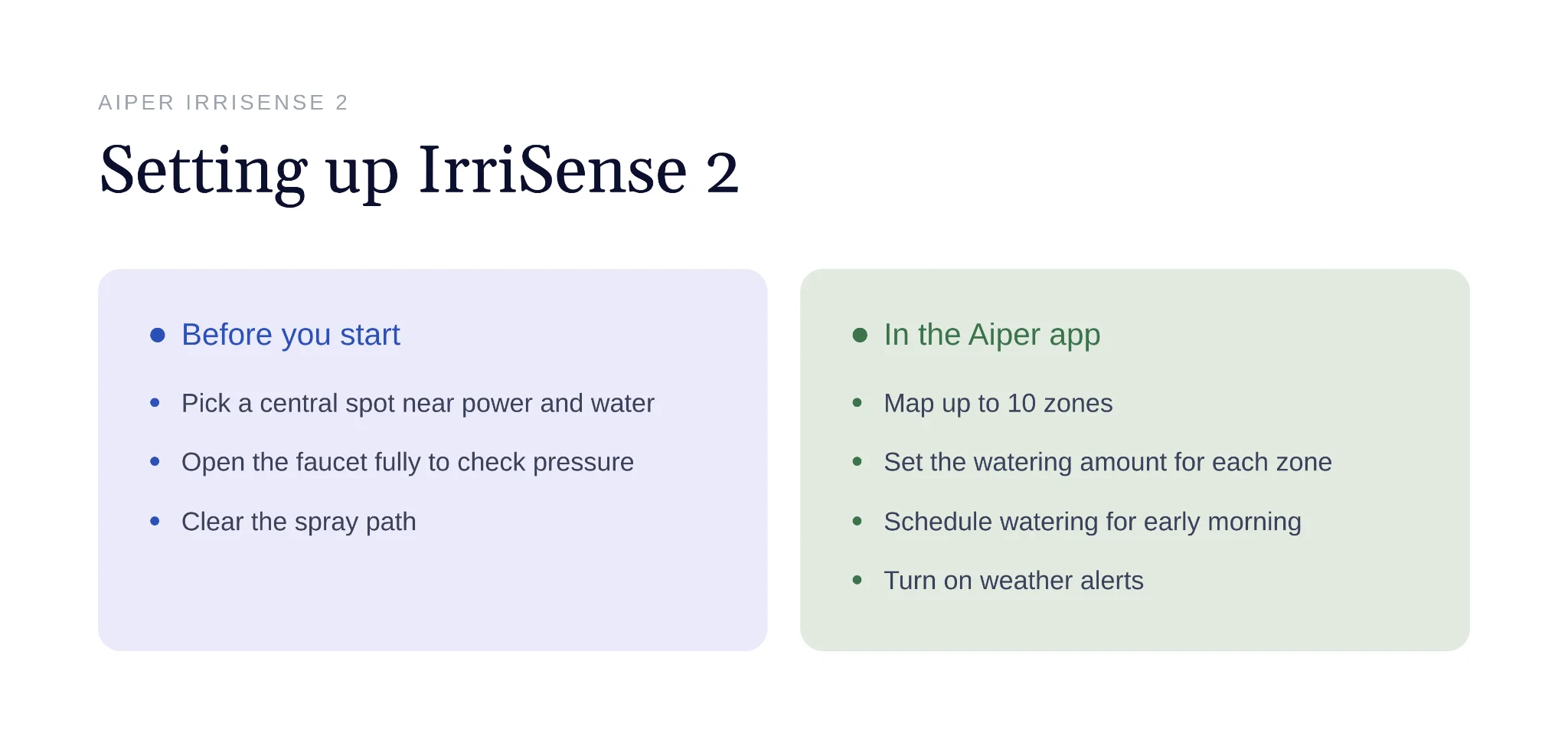
- Pick the spot. Choose a central location within reach of an outdoor outlet and faucet.
- Check water pressure. Open the faucet fully. Weak pressure shortens the spray and leaves the edges of the yard dry.
- Clear the spray path. Trim low branches and move furniture or planters out of the way.
- Connect and pair. Attach the hose, plug in the unit, and connect it to Wi-Fi in the Aiper app.
- Map each zone. You can set up to 10. Take extra care near patios, walkways, and the house so water stays off hard surfaces.
- Set watering amounts by zone. Give sunny lawn more water than shaded beds, and set up vegetable gardens separately.
- Water early in the morning. Less water is lost to heat and wind, and the grass dries during the day.
- Turn on weather alerts so you can skip a cycle before a storm.
Two ways in which you could enhance your Aiper product:
- Water tends to run off clay soil and slopes before it soaks in. The unit’s EvenRain technology helps by spreading water gently, in a pattern similar to rainfall. If a zone still puddles, lower its watering amount and split it across two sessions.
- The app shows how much water each zone uses. After a couple of weeks, compare zones with similar plants. If one uses far more water than the others, check its map and watering amount.
Check Whether the Lawn Is Getting Enough
Shaded areas, sandy spots, and grass next to hot pavement all dry out at different speeds. Check the soil for the first few weeks and fine-tune each zone.
The screwdriver test: The morning after watering, push a long screwdriver into the soil. If it slides in easily to about 6 inches, that zone got enough water. If it stops after an inch or two, it needs more.
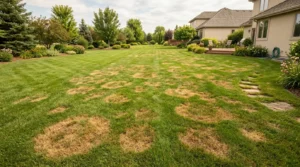
The grass also shows when a zone’s setting is off:
| Needs more water | Getting too much |
|---|---|
| Footprints stay pressed into the grass | Soil is still soggy a day later |
| Grass looks dull blue-gray | Mushrooms appear |
| Blades fold or curl | Water runs onto the sidewalk or driveway |
Change one zone and one setting at a time, so you can see what made the difference. If a neighbor’s sprinklers or a downspout keeps one area wet, lower that zone’s watering amount.
Get more pool and lawn care guides from Aiper on Google