

Each is built for a different kind of planting, and the mistake people make is picking one for the whole yard by preference instead of matching it to what’s actually growing.
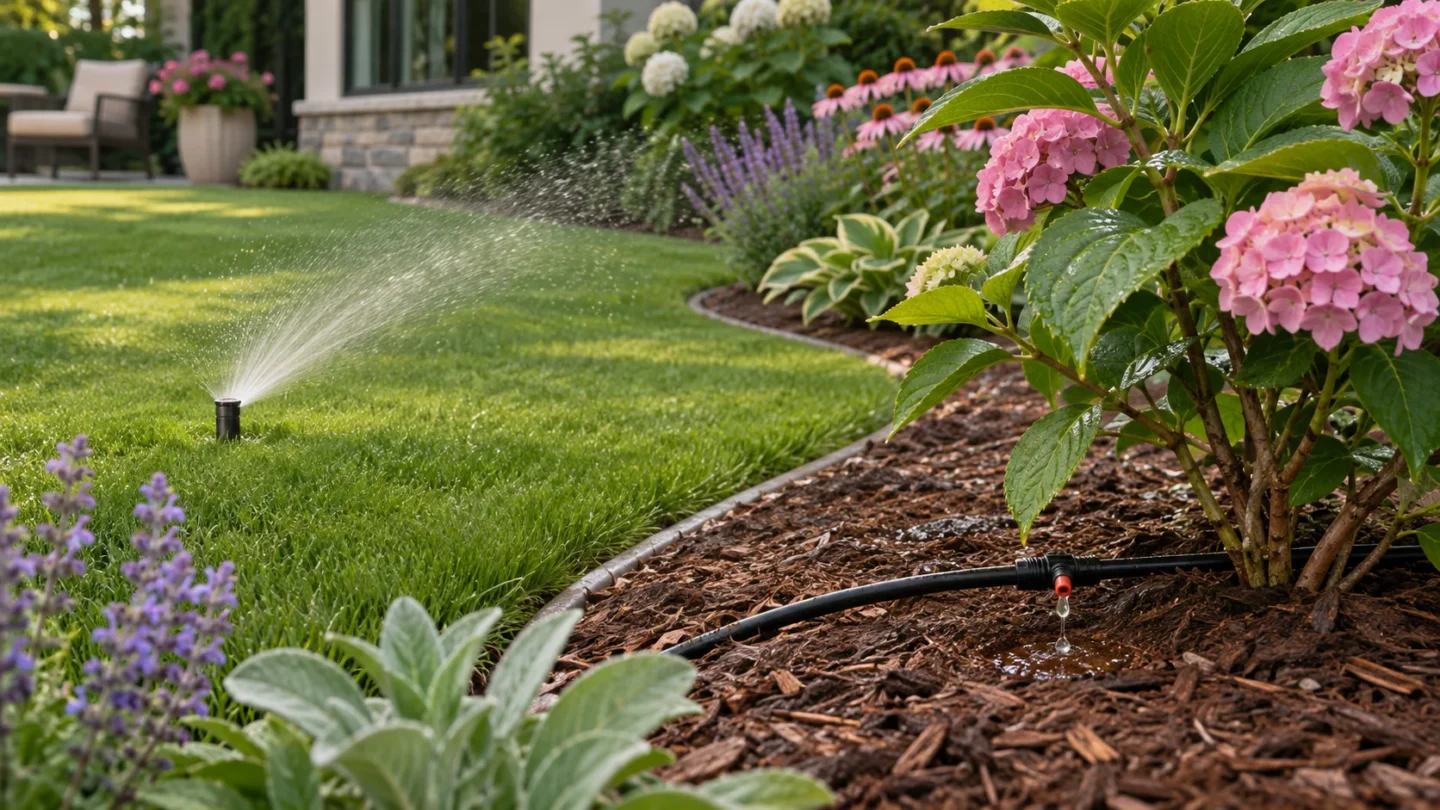
A sprinkler throws water through the air across a whole area. Drip releases it slowly, right at the base of a plant, and barely anything goes anywhere else.
Those are two different jobs, and the yard usually needs both.
What Each System Does
A sprinkler system pushes water out through heads that spray it over a surface, rotary heads that cover a 30- to 50-foot radius for big open stretches, and smaller spray heads for narrow or awkward patches.
Drip runs water at low pressure through tubing to emitters set next to each plant, letting it out a little at a time — commonly about a gallon an hour per emitter — straight into the soil at the root.
Match It to What’s Growing
This is the decision the whole thing turns on, and it’s set by the planting, not by which system someone would rather install.
Grass is the clear case for sprinklers.
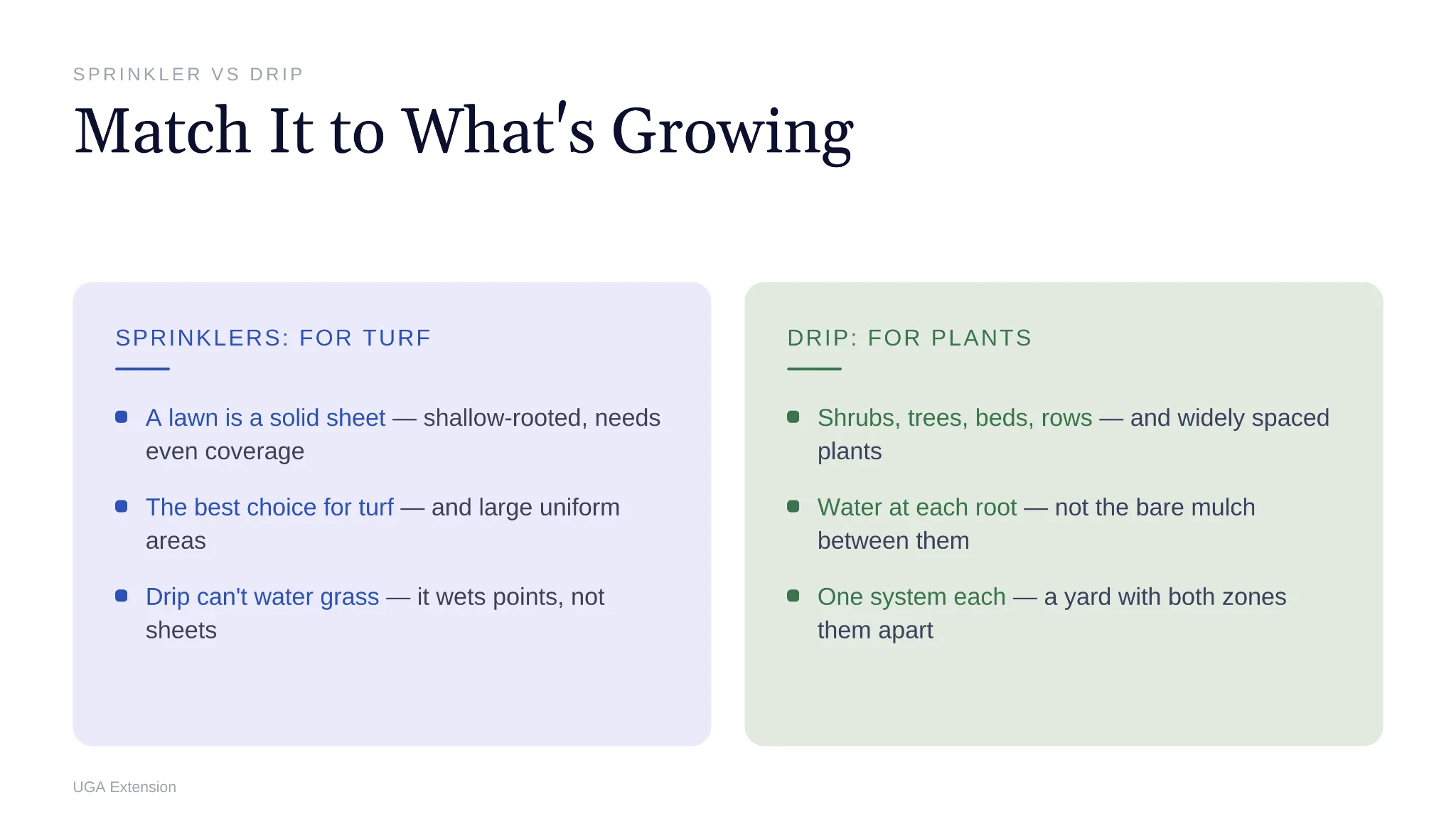
A lawn is a solid sheet of shallow-rooted plants that needs even coverage across its entire surface, and throwing water over the whole area is exactly what a sprinkler does, which is why extension guidance calls sprinklers the best choice for turf.
Drip can’t do that job. It’s built to wet points, not sheets, and it’s expressly not suited to solid plantings of shallow-rooted plants like grass.
Everything that grows as separate plants runs the other way.
Shrubs, trees, a row of vegetables, flower beds, widely spaced ornamentals, all of it wants water delivered to the root of each plant rather than sprayed across the bare mulch in between, and that’s drip’s whole purpose.
Water at the base of a shrub does the shrub good, but the same water thrown over an open bed mostly lands where nothing’s growing.
So the rule is close to mechanical: turf and large uniform areas get sprinklers, and anything planted as individuals gets drip. A yard with a lawn and borders needs one of each, zoned separately.
The Water Bill
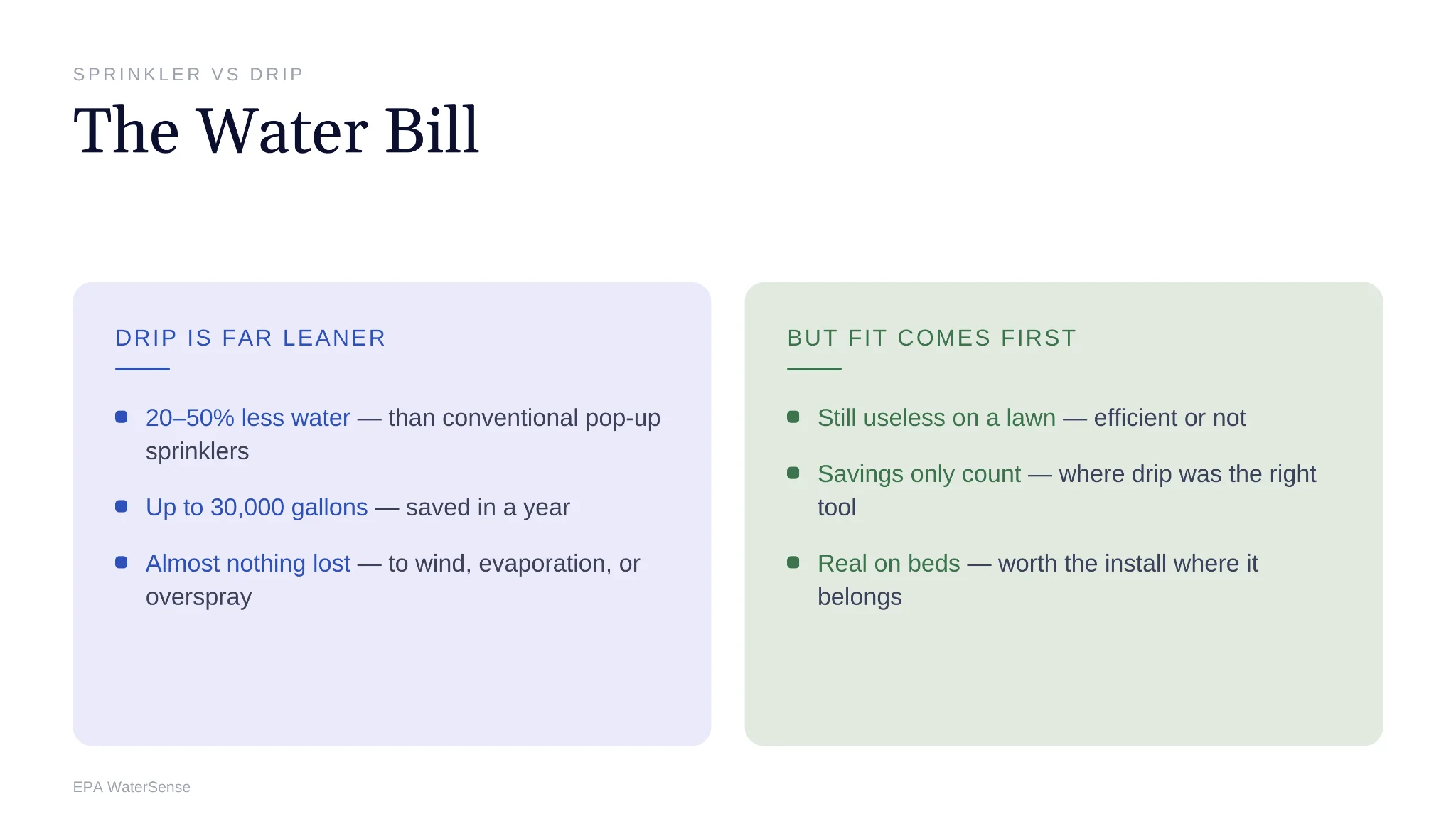
Efficiency runs heavily in drip’s favor, and the gap is large. Micro-irrigation uses 20 to 50 percent less water than conventional pop-up sprinklers, and over a year that can come to 30,000 gallons saved, because putting water directly on the root loses almost nothing to wind, evaporation, runoff, or overspray.
A sprinkler works by throwing water through the air over a surface, so some of it always evaporates or drifts before it lands, and more runs off if the ground can’t drink it in as fast as the heads put it down.
None of that overrides the fit, though.
A drip line is far more efficient and still useless on a lawn, so the efficiency case only applies where drip was the right tool to begin with. On the beds and shrubs where it belongs, the water savings are real and worth the install.
What Each One Asks For
Drip’s catch is upkeep at the emitter.
The water has to run clean (filtered or screened to about the clarity of drinking water) or the tiny emitter openings clog, and the filters need regular cleaning to stay clear.
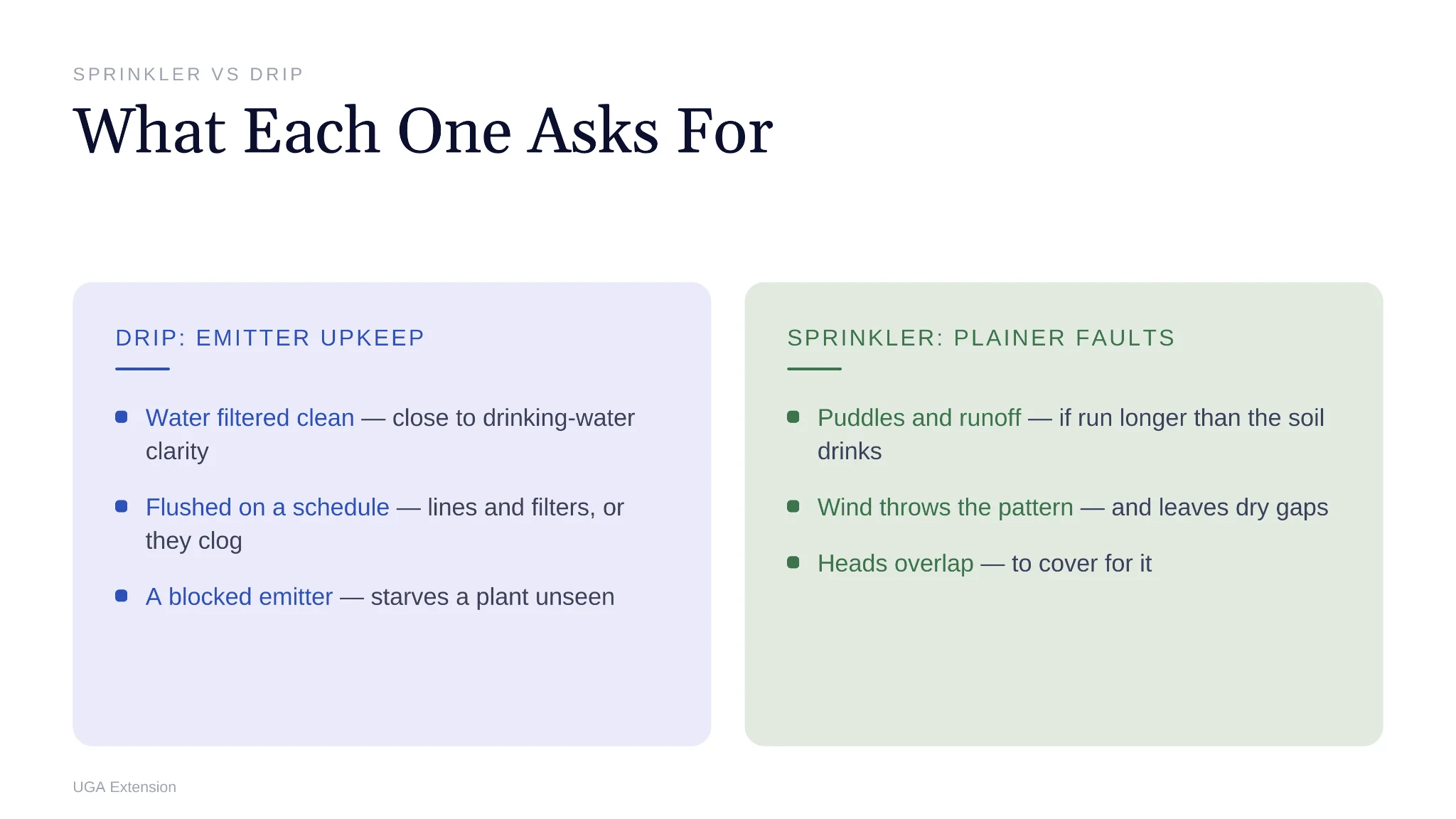
Lines get flushed on a schedule that runs anywhere from weekly to a couple of times a month depending on the water, with each lateral flushed out once a year. Skip that, and the system slowly starves plants as emitters block, often without anyone noticing until something wilts.
Sprinklers ask less of that kind of attention and fail in plainer ways.
Run a zone longer than the soil can absorb and the water puddles and runs off down the drive instead of soaking in. Wind throws the spray pattern off and leaves dry gaps, which is why heads have to overlap.
The problems are visible, at least, in a way a clogged emitter buried in a bed is not.
Water to What the Yard Needs
Whichever system runs a zone, the common waste is overwatering, running a fixed timer that pours out the same amount whether it rained yesterday or the yard’s been dry for a week.
A weather-based controller fixes that by watering to conditions, the kind of smart control that cuts the overwatering out of an otherwise efficient system.
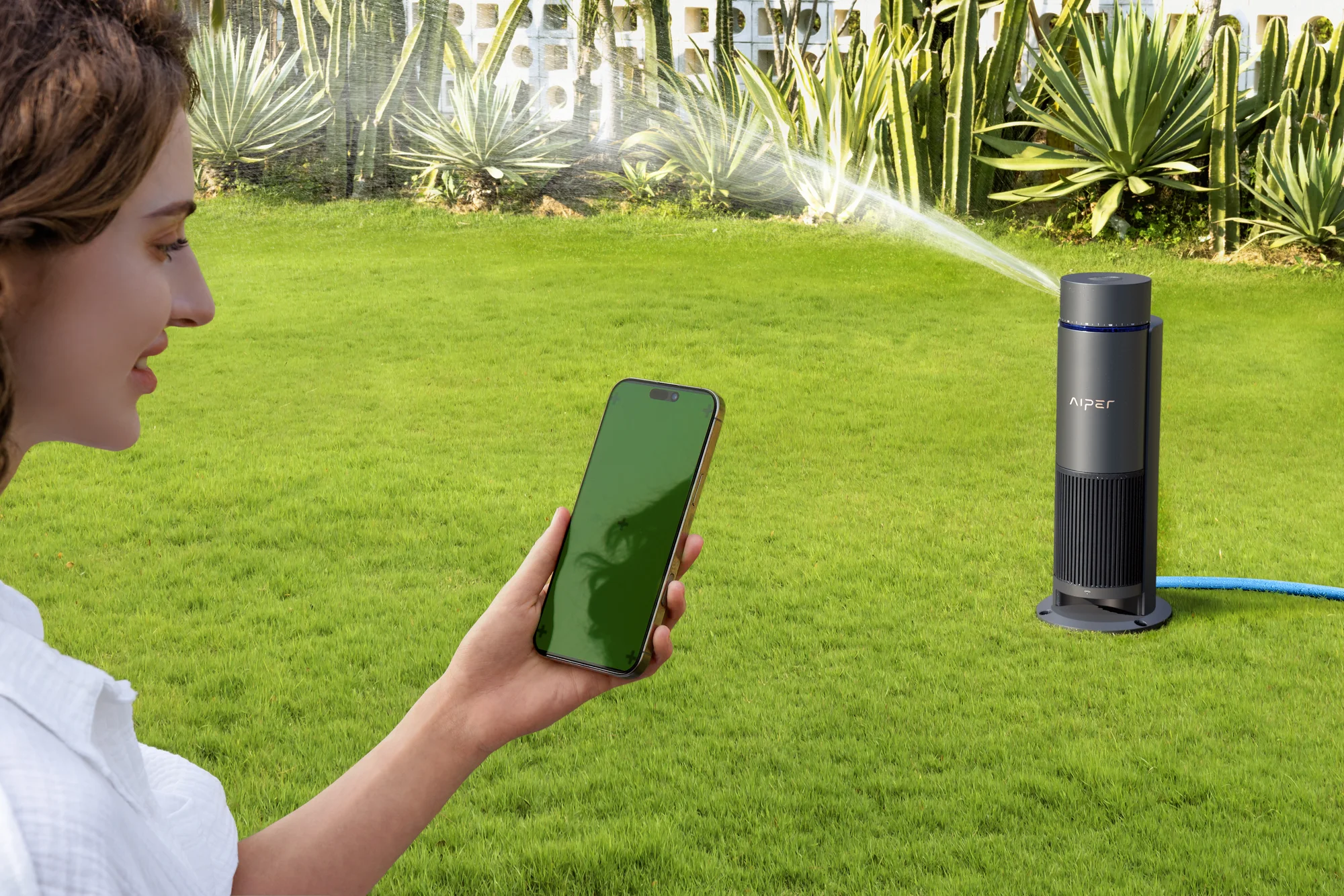
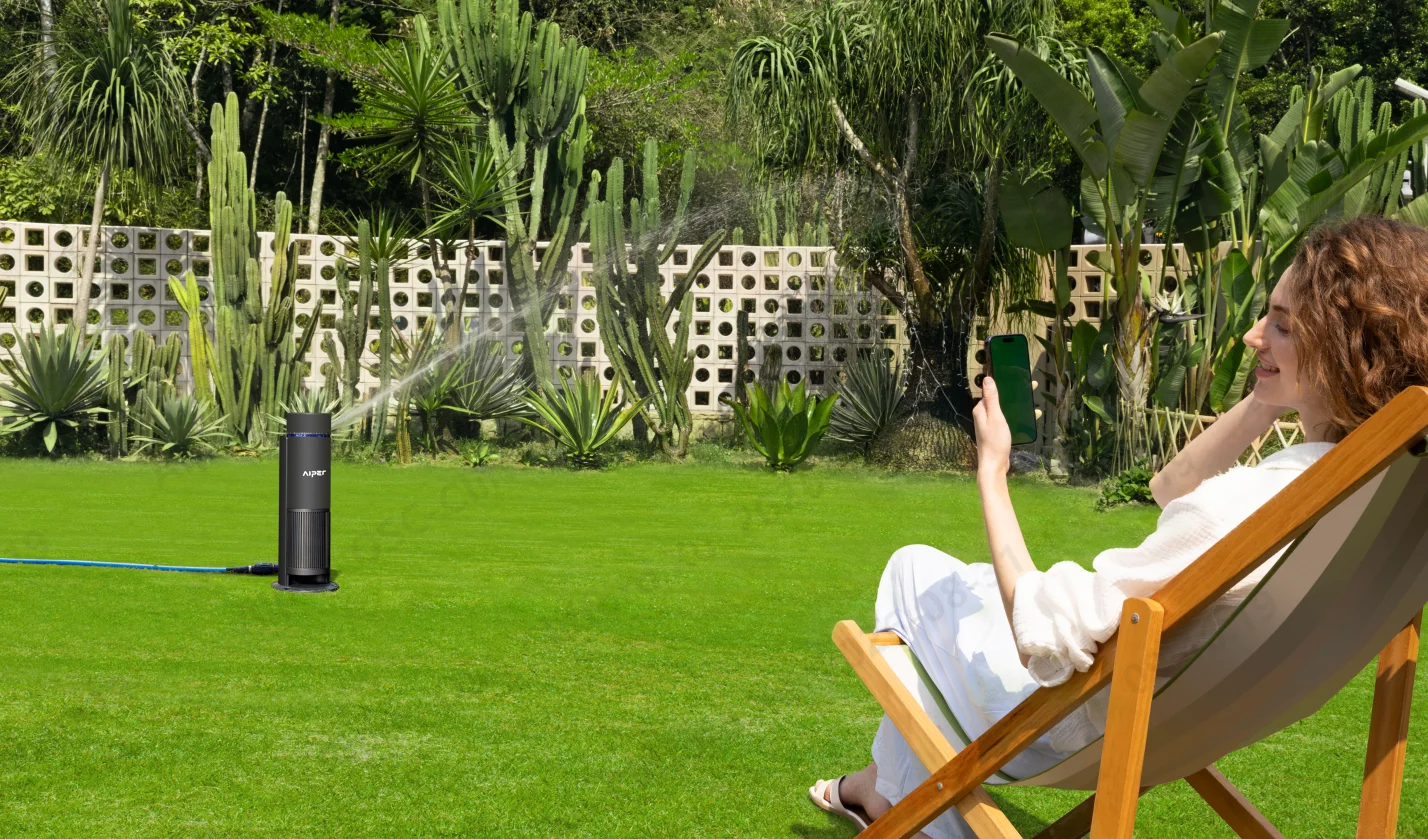
On the sprinkler side especially, where a lawn is drinking the most water in the yard, an Aiper IrriSense 2 runs each zone to what the turf actually needs rather than a clock, holding the grass evenly watered without the standing timer’s waste.
It doesn’t decide which system suits which planting, that’s set by what’s growing. What it does is make sure the sprinkler zones aren’t pouring water the lawn was never going to use.
Get more pool and lawn care guides from Aiper on Google