When to Water Your Lawn: Morning vs. Evening, Frequency, and Depth


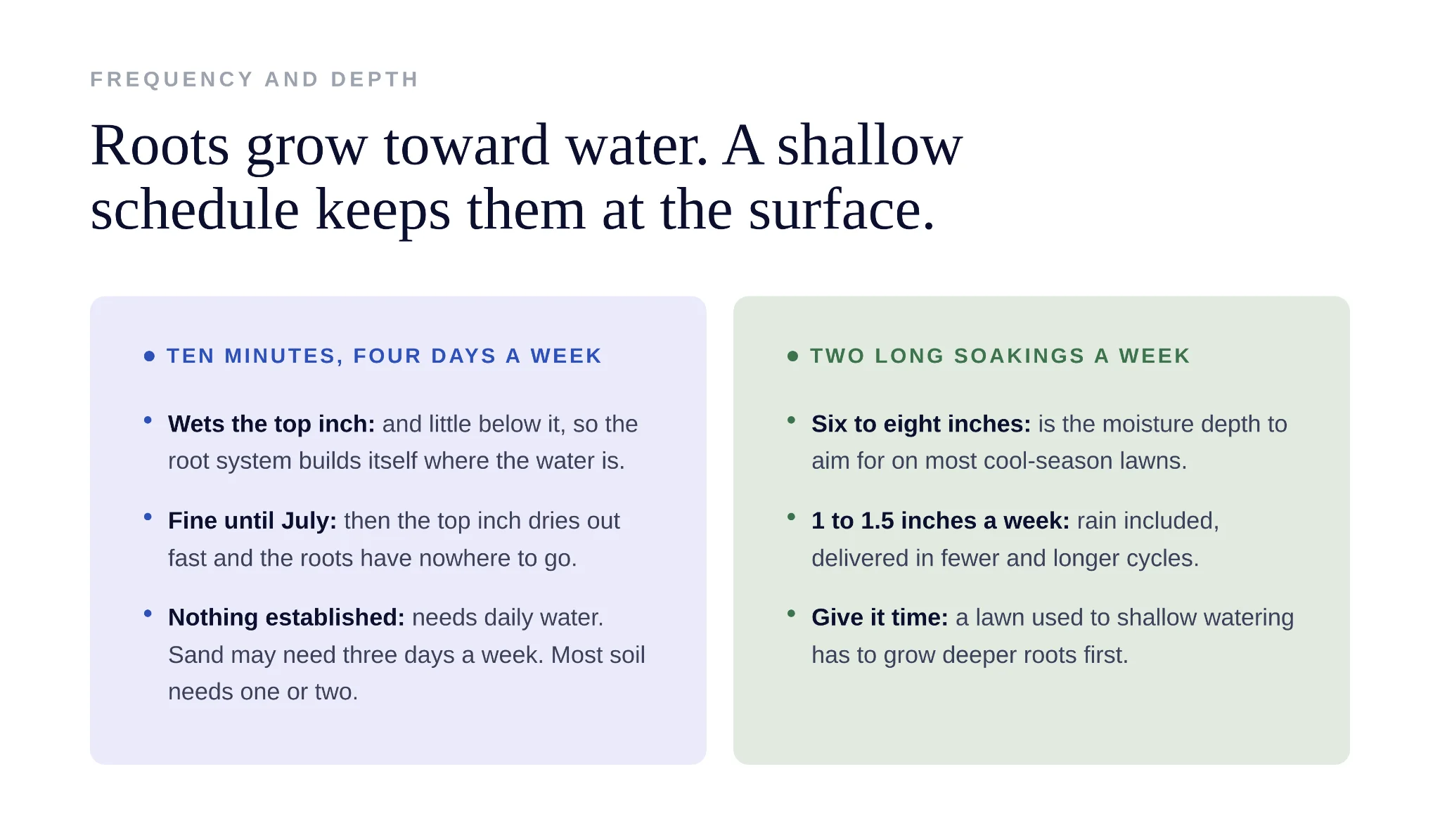
The controller in your garage is probably running four days a week for ten minutes a zone. Somebody set it that way the week the system went in, and nobody has touched it since. That schedule is the single most common reason lawns fail in July.
There are only three questions worth answering here. What time of day? How often? How much?
Start with the easy one.
Water in the Early Morning
Between four and nine in the morning. Earlier inside that window is better than later.
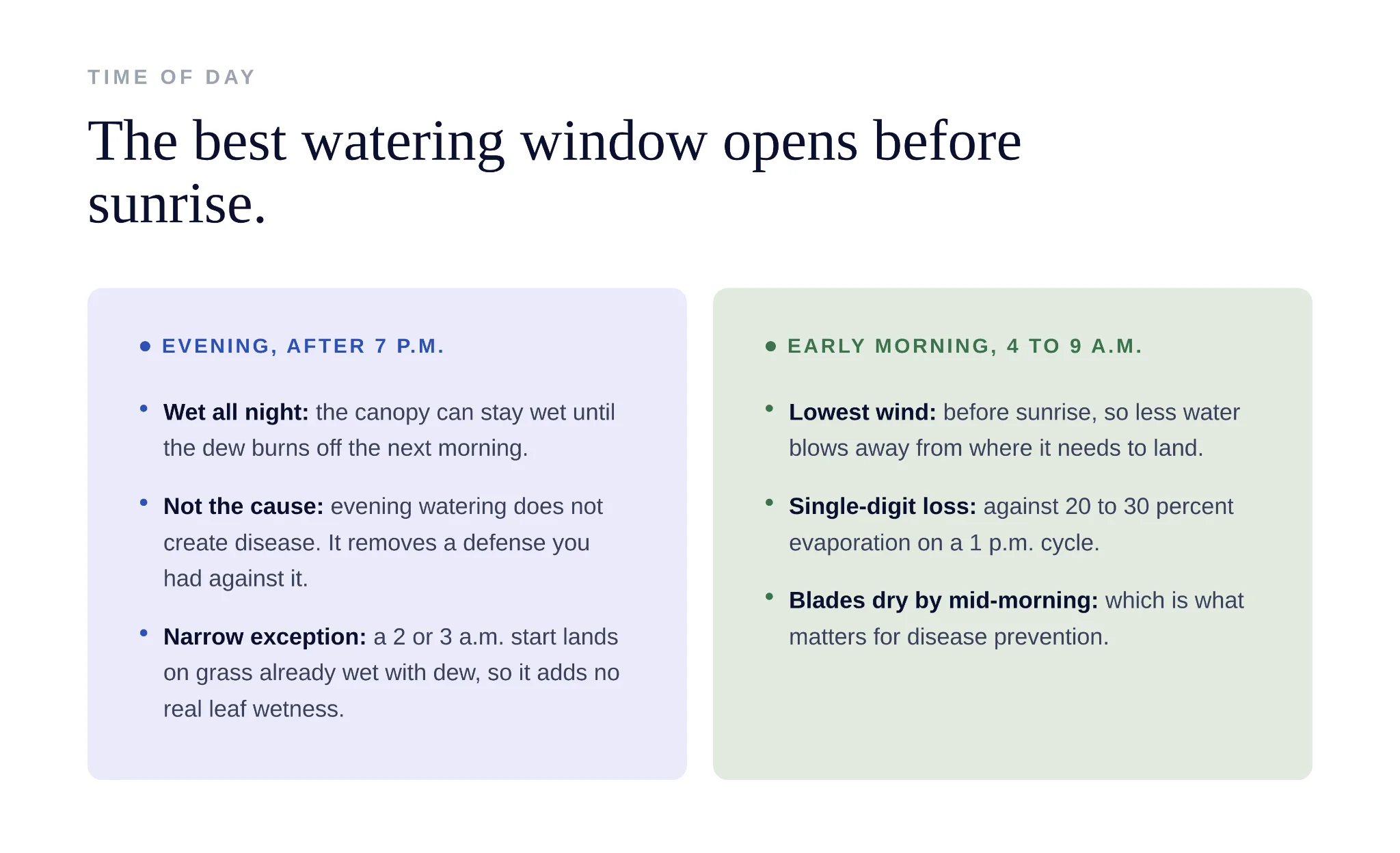
Wind is at its daily minimum before sunrise, so less water gets blown away from where it needs to land. Evaporative loss during a pre-dawn cycle runs in the single digits. Run the same cycle at one in the afternoon, and you can lose twenty to thirty percent of it to the air before it ever reaches the soil.
The blades also dry by mid-morning, which matters for disease prevention.
There is a persistent bit of folklore that midday water droplets act as lenses and scorch the grass. They don’t. Watering at noon is wasteful, not destructive. If your lawn is genuinely wilting at two in the afternoon on a 104-degree day, a short cycle can cool the canopy. You’ll lose some to evaporation. You won’t lose the lawn.
Avoid Watering in the Evening
Water at seven in the evening, and the canopy can stay wet until the dew burns off the next morning. That extended leaf wetness creates the conditions turf pathogens are waiting on.
Evening watering doesn’t cause disease. It removes one of the defenses you had against it.
There’s a narrow exception. If your system runs at two or three in the morning, the grass is already wet with dew, so you aren’t adding meaningful hours of leaf wetness. What you don’t want is a system starting at eight p.m. and leaving the grass wet all night.
Water Deeply Once or Twice a Week
Roots grow toward water. Ten minutes a day wets the top inch of soil and a little below it, so the root system builds itself where the water is.
That works until hot, dry weather arrives and the top inch dries out fast.
Two long soakings a week beat six short ones. You want moisture reaching six to eight inches down for most cool-season lawns. I’ve pulled fescue plugs with roots running past a foot on lawns that were watered twice a week.
Established turf in decent soil generally needs water once or twice a week. Sand may need three. Nothing established needs daily water.
The adjustment can take time. A lawn used to shallow watering has to grow deeper roots before it can take full advantage of a deep-and-infrequent schedule.
Give Your Lawn 1 to 1.5 Inches a Week
One to one and a half inches per week, rain included. That’s the number everybody quotes. Almost nobody knows what their own system delivers.
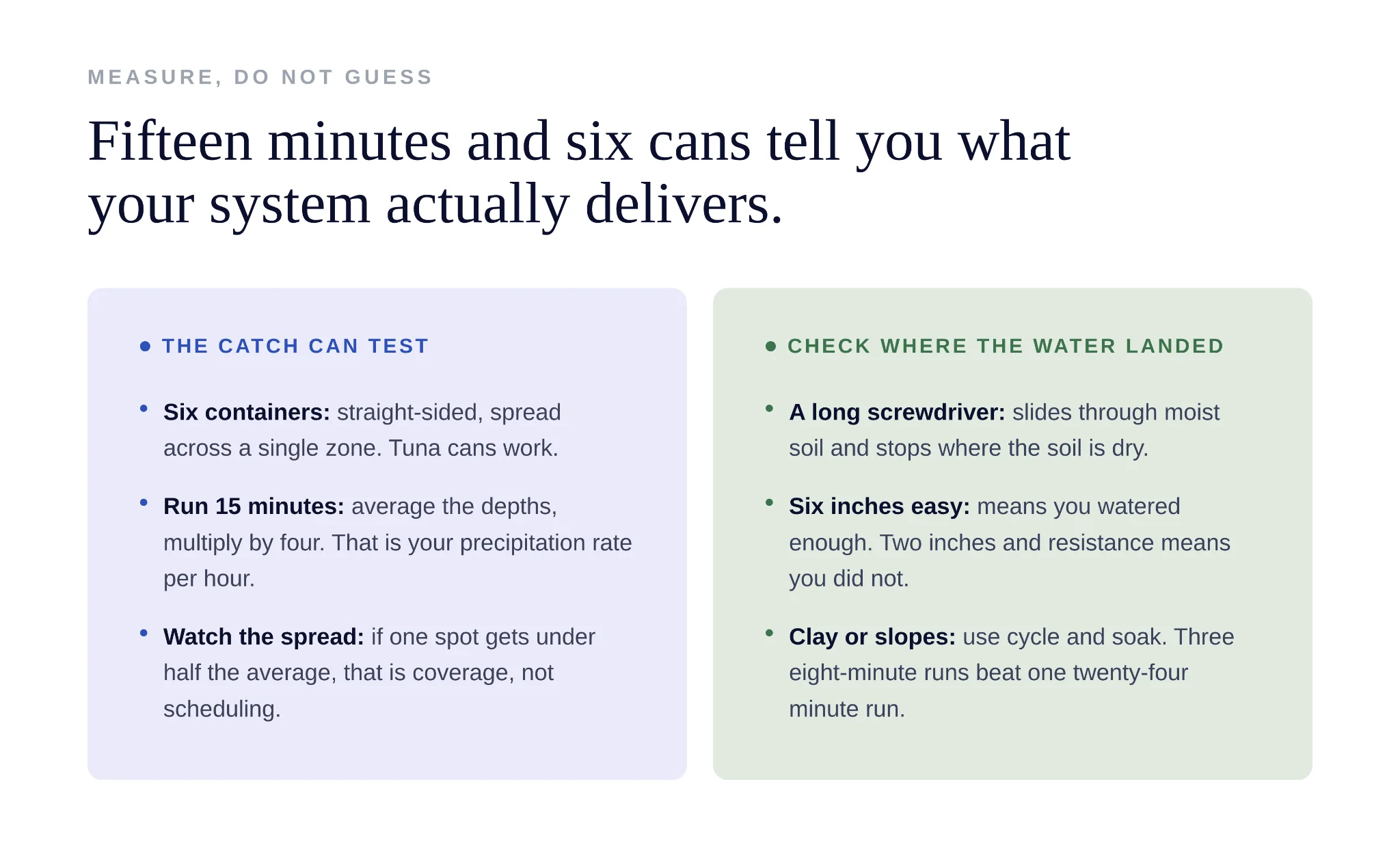
Find out in fifteen minutes. Put five or six straight-sided containers around a single zone. Tuna cans work, but any can with vertical walls will do. Run the zone for exactly fifteen minutes and measure the depth in each can.
Average the measurements and multiply by four. That’s your precipitation rate in inches per hour.
Look at the spread too. If one part of the zone gets less than half the average, you have a coverage problem rather than a scheduling problem. Running the system longer will just flood the well-covered areas trying to keep the dry ones alive.
Use cycle and soak on clay or slopes
Compacted clay accepts water slowly, and slopes give water somewhere else to go. A long irrigation cycle can end with water running across the sidewalk while the soil below is still dry.
Cycle and soak fixes it. Instead of one twenty-four-minute run, do three eight-minute runs spaced forty-five minutes to an hour apart. Each pause gives the water time to move down through the soil.
Watch a zone run and note when runoff starts. That’s your cycle length.
Check how deep the water reached
A long screwdriver pushed into the ground slides easily through moist soil and stops where the soil is dry. Six inches in with light pressure means you watered enough. Two inches and resistance means you didn’t, whatever the runtime says.
Check a few spots the morning after watering, especially areas that brown first.
Systems that read soil moisture continuously can make the same decision automatically. Aiper’s IrriSense 2 can skip cycles when the soil is still holding moisture and adjust watering as conditions change.
Whatever you use, decide based on the soil rather than the calendar.
Water New Grass More Often
Seed and sod are the exception to deep-and-infrequent watering.
A germinating seed has no roots. The top quarter inch of soil needs to stay moist, so water lightly and often, five to ten minutes, two to four times a day, enough to darken the surface without creating puddles.
Once the seedlings are up and mowed twice, start pulling back. Use fewer, longer cycles over about three weeks until you’ve moved toward the normal twice-weekly schedule.
Fresh sod needs the same gradual transition. Keep it wet while it establishes, then taper the watering once it has rooted.
Adjust Watering Based on the Lawn and Season
Grass tells you when it’s short on water. Color shifts toward blue-gray, blades fold inward, and footprints stop springing back quickly. Those are signs it’s time to water.
Cool-season grass can also go dormant during hot summer weather. If you’re letting it go dormant, stay consistent rather than repeatedly watering enough to wake it up and then letting it dry out again. Give it about half an inch every two to three weeks to keep the crowns hydrated.
Your normal irrigation schedule should change with the seasons too. Back it off in spring while the soil still holds winter moisture, ramp it through May and June, hold it higher through peak summer, and cut it again as nights cool in September.
Late fall, give the lawn one deep watering before the ground freezes, then shut the system down. See our guide to winterizing a lawn and its irrigation system for the full shutdown process.
Four seasonal changes. Twenty minutes of work across an entire year.
Get more pool and lawn care guides from Aiper on Google