How to Water a Sloped Lawn

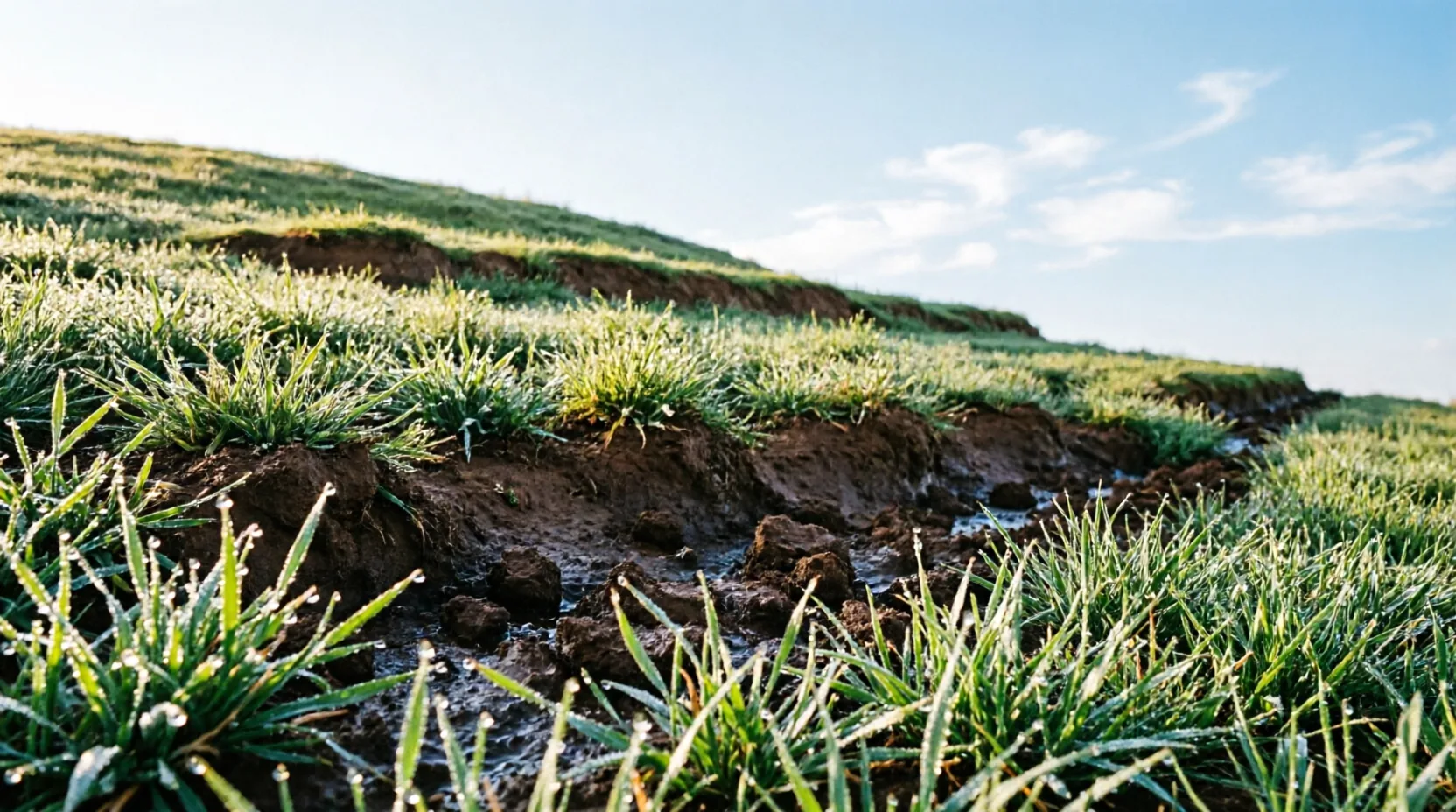
Water running straight off a sloped lawn before it has a chance to soak in is the single biggest reason slopes stay patchy no matter how often they’re watered. Splitting one watering session into two or three shorter cycles with pauses between them, called cycle-and-soak, lets water absorb before gravity pulls it downhill instead of running off. How much a slope can actually absorb per cycle depends heavily on soil condition, which is worth checking against our guide to testing lawn soil if watering still isn’t sinking in. The full method, and how to adjust sprinklers for slope, follows below.
How Do Slopes Affect Watering Needs for a Lawn?
Water runs downhill before it has time to absorb, so the top of a slope dries out faster than the bottom even when both get the same sprinkler output — and without a slope, that patchy pattern usually points to uneven sprinkler coverage causes, tests, and fixes instead. Compacted soil, which is common on slopes because rain and irrigation naturally erode and pack the surface over time, absorbs water more slowly than level ground, compounding the runoff problem.
What Is Cycle-and-Soak Watering, and How Do You Do It?
Instead of one long watering cycle, split the total watering time into two or three shorter cycles — for example, three 5-minute cycles instead of one 15-minute cycle — with a 30 to 60 minute pause between each. That pause gives water time to absorb into the slope before the next cycle adds more, which is what actually prevents the runoff a single long cycle causes.
How Do You Retain More Water on a Sloped Lawn Long-Term?
Aerating compacted slopes opens channels that let water penetrate instead of pooling and running off the surface — see our guide to aerating a lawn for the process. Adding organic matter through topdressing improves how much water the soil holds between waterings. For steep grades, terracing or small berms physically slow runoff enough for it to soak in, and deeper-rooted or groundcover plantings hold soil and moisture better than turf alone on the steepest sections.
Timing those jobs right matters as much as doing them — our month-by-month lawn care calendar for cool-season grass lines up aerating, topdressing, and watering changes by season.
What Are the Best Sprinklers for a Sloped Lawn?
Rotor heads with a low precipitation rate, matched to how fast the slope can actually absorb water, outperform high-output spray heads that dump water faster than a slope can take it in. Adjustable-arc rotors also let you shape coverage to the slope’s actual footprint instead of over- or under-watering the edges. Matching output to actual conditions like this is the same scheduling principle covered in our smart irrigation pillar guide.
Can You Water a Sloped Lawn Two Days in a Row?
Yes, as long as each cycle-and-soak session stays within what the slope can absorb per application. The problem was never watering frequency — it’s applying more water per session than the slope can take in before it runs off, which cycle-and-soak fixes regardless of how many days in a row you water.
How Do You Fix a Sloping Lawn Long-Term Instead of Just Adjusting Watering?
Regrading for a gentler slope is the most direct fix where it’s economically practical, since it addresses the underlying drainage problem rather than working around it every time you water. For grades too steep or expensive to regrade, retaining walls or terracing break a long slope into flatter sections, and erosion-control groundcover holds soil in place on sections left as-is.
Frequently Asked Questions
Does a sloped lawn need more total water than a flat lawn to get the same result?
Yes, typically 10 to 20 percent more, since a portion of every application runs off before it can soak in even with cycle-and-soak. Budget for that extra volume when comparing water bills or sprinkler run times against a flat section of the same size.
Is drip irrigation or a soaker hose a better option than sprinklers on a steep slope?
Drip lines and soaker hoses apply water slowly and directly at the soil surface, which can outperform sprinklers on very steep grades where even a low-precipitation rotor still generates some runoff. They’re more labor-intensive to install across a whole slope than a rotor system, which is why most residential slopes still use adjusted sprinkler cycles instead.
Does the direction a slope faces change how much watering it needs?
Yes. South- and west-facing slopes get more direct sun and dry out faster than north- or east-facing ones, so they typically need either more frequent cycle-and-soak sessions or a shorter interval between them than a shaded slope of the same grade.
Cycle-and-soak timing is easy to get wrong on a fixed sprinkler timer that doesn’t know the slope is there. The Aiper IrriSense 2 smart irrigation system adjusts watering cycles to actual soil and weather conditions, which is exactly the kind of scheduling a sloped lawn needs.
Get more pool and lawn care guides from Aiper on Google