Soil Moisture Measurement: Methods That Actually Work for Lawns

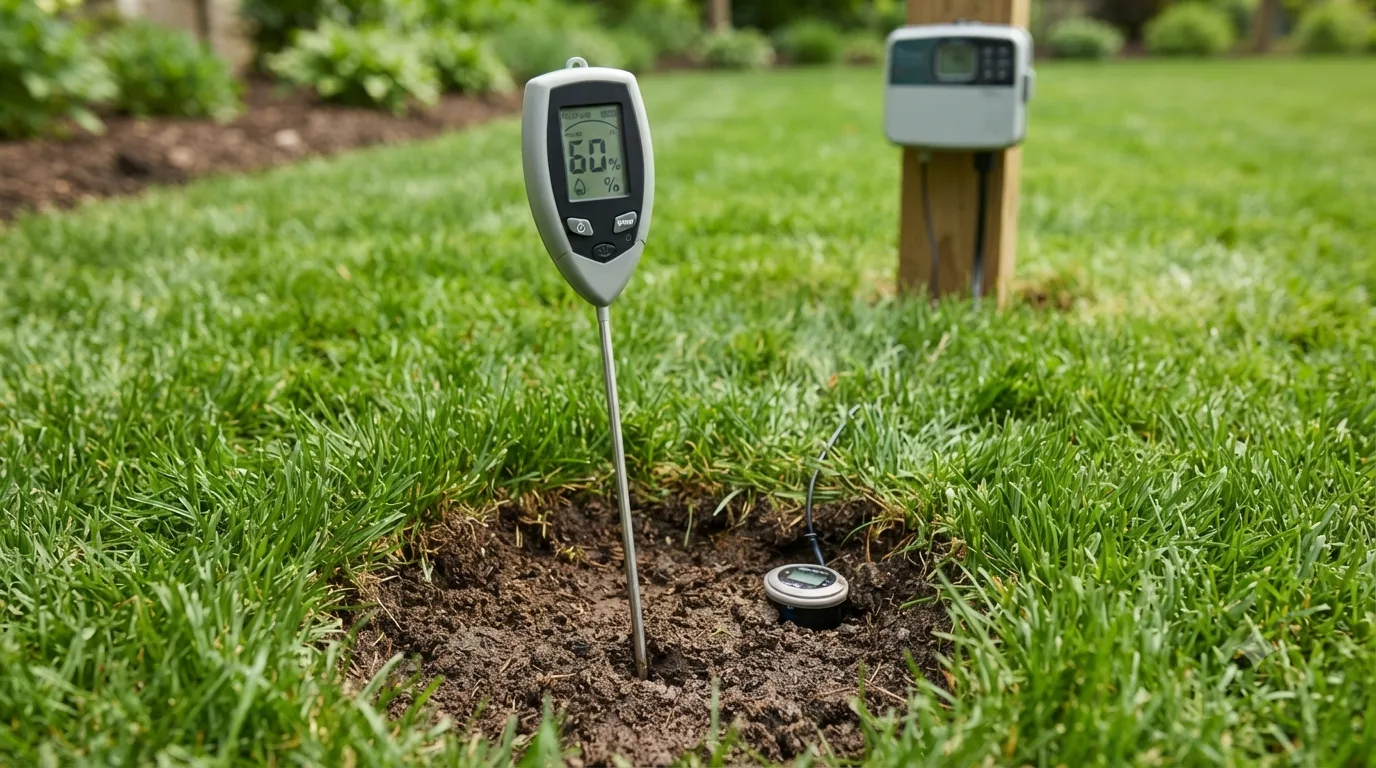
Guessing at soil moisture from how the surface looks tends to produce inconsistent watering results, since surface appearance and actual root-zone moisture often don’t match — when only part of the lawn turns brown, the cause is often uneven sprinkler coverage rather than a moisture problem. The fix: check 3 to 6 inches deep, the actual root zone for turf, rather than the top inch, and target roughly 50 to 70% of field capacity depending on soil type — a basic moisture meter is accurate enough for this if you’re reading it for relative trend, not an absolute number. The full methods, and how deep and how often to check, follow below. Moisture levels also affect how well a lawn absorbs nutrients, covered in our complete guide to fertilizing a lawn.
How Do You Measure Soil Moisture?
| Method | Depth / Range | Accuracy | Best For |
|---|---|---|---|
| Finger or trowel test | Top 2-3 inches | Low — surface conditions only | Quick spot-checks |
| Handheld moisture meter probe | Depends on probe length | Moderate — relative trend, varies with soil mineral content | Regular home monitoring |
| Gravimetric (wet vs. oven-dried weight) | Sample-dependent | Highest — lab-grade | Precise research or lab use, not casual checks |
Our guide to testing lawn soil covers the broader soil-testing process this fits into.
What Is a Good Moisture Level for Soil?
There’s no single universal number — it depends on soil type. Most lawns do best when soil sits around 50-70% of field capacity (the amount of water soil can hold against gravity before draining). Sandy soil drains quickly and needs more frequent, shallower checks; clay holds water much longer, which raises the risk of overwatering if you’re checking on a fixed schedule rather than actual conditions. The type of soil in place, topsoil or a dedicated lawn soil blend, directly affects that field capacity and how well it holds water — see our comparison of topsoil versus lawn soil for which one to use.
Do Soil Moisture Meters Actually Work?
Cheap analog meters work reasonably well for relative tracking, distinguishing dry from moist from wet zones, but their absolute accuracy varies with soil mineral content, which affects the electrical reading independent of actual water content. Higher-end sensors used in smart irrigation systems are calibrated to correct for this, giving more consistent automated readings than a single manual probe check.
How Deep Should You Check Soil Moisture for a Lawn?
Checking only the surface is misleading, since grass roots draw water from several inches down, not just the top layer. For lawn watering decisions, check moisture at 3 to 6 inches deep — roughly the active root zone for most turfgrass — rather than relying on how dry or wet the very top of the soil looks. Soil that’s been aerated lets moisture reach that depth more evenly, which is part of why aeration affects watering results.
How Often Should You Measure Soil Moisture?
Manual checks a few times a week are enough for casual spot-checking, but a fixed weekly schedule misses rapid drying after a heat spike or a skipped rain event. Continuous sensor monitoring solves this by tracking moisture in real time instead of relying on whatever the soil happened to look like at the one moment you checked.
Can Soil Moisture Measurement Replace Guesswork in Lawn Watering?
Yes, when the measurement is tied directly to the watering schedule rather than read and then ignored. A smart irrigation controller that references actual soil moisture data, the same principle covered in our smart irrigation pillar guide, waters only when the root zone actually needs it, instead of running on a fixed timer regardless of current conditions — which is where most residential overwatering comes from.
Frequently Asked Questions
How long after watering should you wait before checking soil moisture for an accurate reading?
Wait at least 30 to 60 minutes after irrigation ends so water has time to distribute through the root zone rather than pooling near the surface where it was just applied. Checking immediately during or right after watering gives an artificially high reading that doesn’t reflect what roots will actually have access to a few hours later.
Why do two spots a few feet apart on the same lawn sometimes give very different moisture readings?
Compacted soil, thatch buildup, shade patterns, and slope all change how fast water infiltrates and evaporates, so a reading from one section can be a poor stand-in for the rest of the yard — on a slope especially, which our guide to watering a sloped lawn without water runoff covers. Testing three or four representative spots, rather than one, catches this variability before you set a watering schedule off a single unrepresentative number.
How much does a basic soil moisture meter cost?
Simple analog probe meters run about 10 to 20 dollars and are accurate enough for relative dry, moist, or wet tracking. Sensors built for automated smart irrigation systems cost more but correct for soil mineral content, which a cheap analog probe can’t do on its own — the up-front cost is part of what smart irrigation actually saves in water and money.
Measuring moisture only matters if it changes when and how much you water. The Aiper IrriSense 2 smart irrigation system reads soil and weather conditions directly and adjusts watering automatically, rather than leaving that translation step to a manual check you might skip.
Get more pool and lawn care guides from Aiper on Google