Gunite Pool vs Vinyl Liner: A Full Comparison

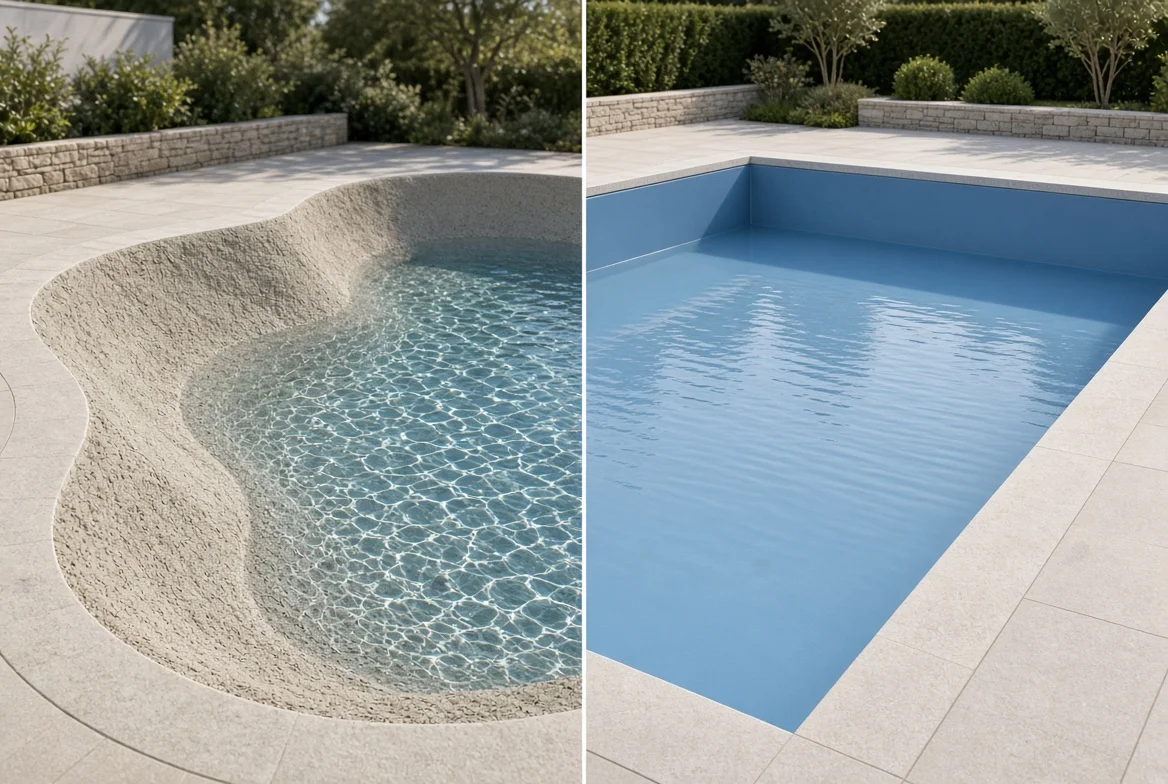
A gunite pool is a concrete shell sprayed over steel rebar and finished with plaster or aggregate. A vinyl liner pool is a frame of steel or polymer wall panels with a fitted vinyl membrane holding the water.
That structural difference drives everything else: build cost, lifespan, what wears out, how repairs work, and how much water chemistry matters.
How Each One Gets Built
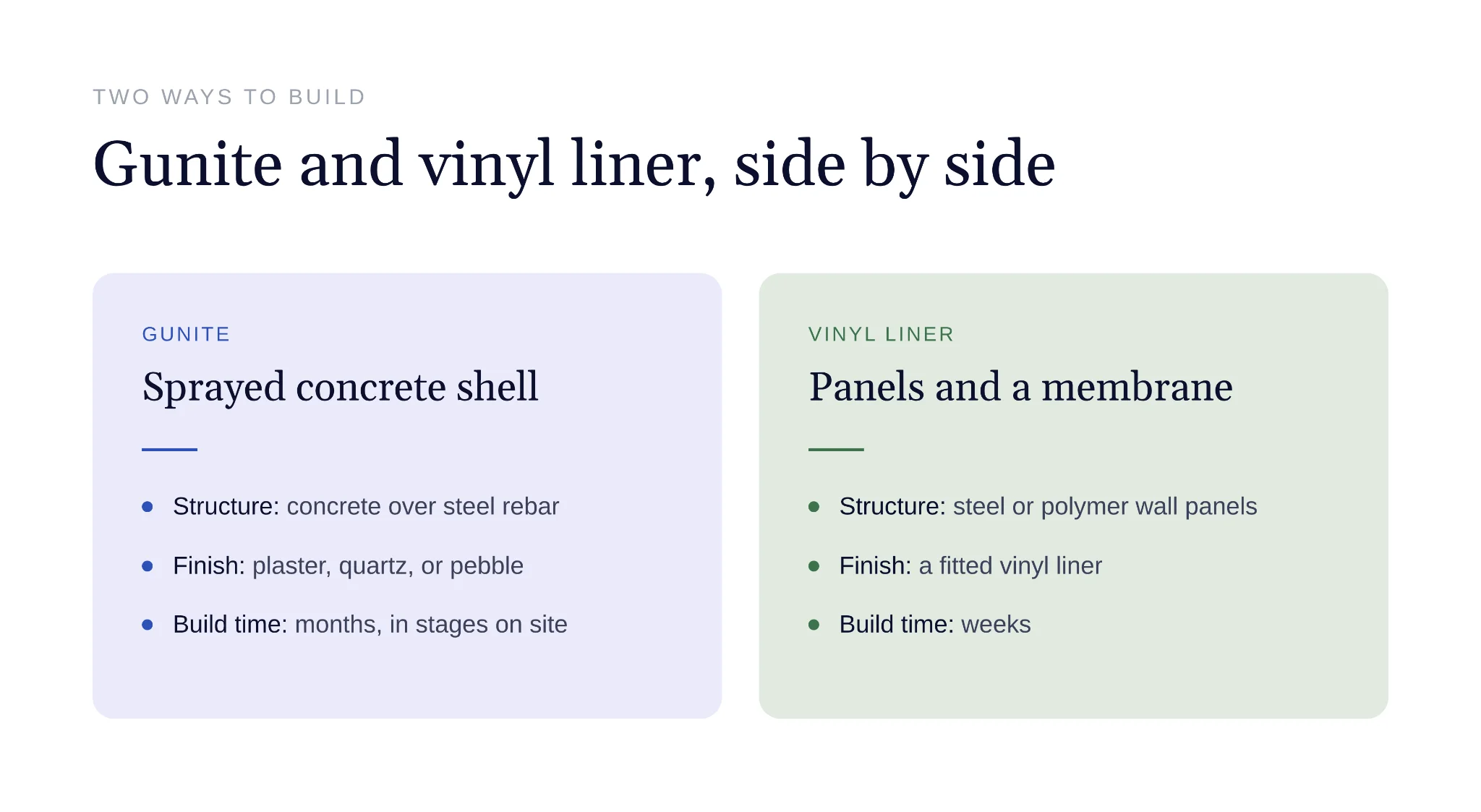
Both start with excavation, and the paths separate from there.
Gunite crews set a rebar framework in the hole, spray concrete over it, then cure the shell before tiling, coping, and applying the interior finish. The work happens in stages on site, which is why the build runs months rather than weeks.
Vinyl liner crews set wall panels around the excavation, brace and backfill them, pour a footing, then install plumbing and drop in the liner. The shorter build is the main reason these pools go in faster.
The gunite process allows any shape, depth, or feature. Vinyl liner pools are more constrained, since the liner is manufactured to fit a specific shape.
What Each One Costs
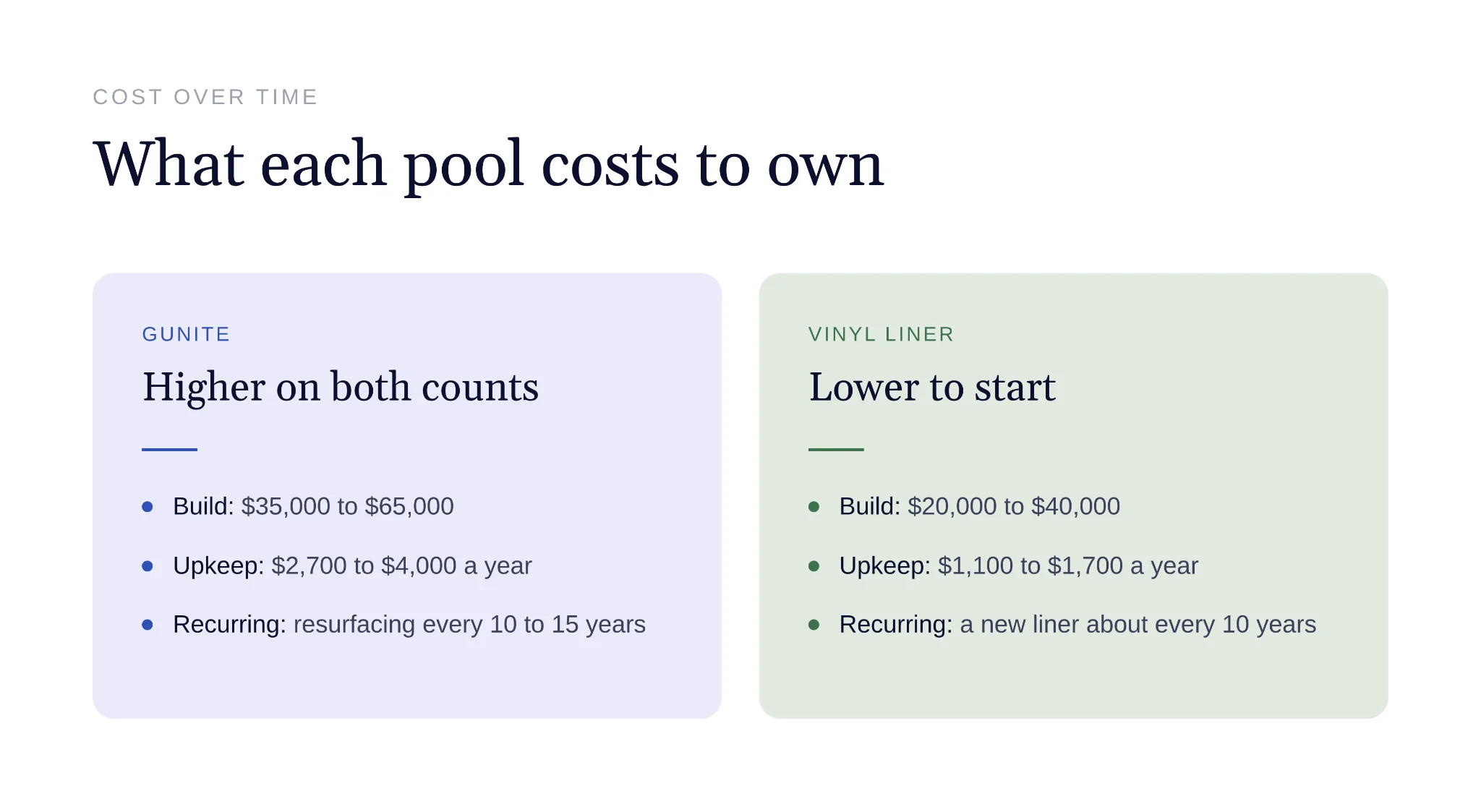
Cost guides put gunite above vinyl at the start and further above it over time, mostly through upkeep rather than repairs.
| Gunite | Vinyl liner | |
|---|---|---|
| Typical build cost | $35,000 to $65,000 | $20,000 to $40,000 |
| Annual upkeep | $2,700 to $4,000 | $1,100 to $1,700 |
| Structure lifespan | 50 to 100 years | Panels last decades |
| Recurring big expense | Resurfacing every 10 to 15 years | Liner replacement every 10 years |
| Build time | Months | Weeks |
HomeAdvisor’s member-reported project data puts concrete pools at $35,000 to $65,000 with $2,700 to $4,000 in annual upkeep, and vinyl at $20,000 to $40,000 with $1,100 to $1,700. Regional labor rates and site conditions move both ranges.
The upkeep gap matters more than the build gap over a long ownership. Ten years of the difference roughly equals the price of a liner replacement, and the gunite pool still needs resurfacing at the end of it.
What Wears Out, and When
Neither pool is finished when its surface is. The shell or the panels outlast what the swimmers touch.
Vinyl liners are a consumable. Liner life is about 10 years, with replacement running $1,100 to $3,600, and a replacement is a one- or two-day job that also changes the pool’s appearance.
Gunite finishes last longer and cost more to redo. Plaster typically goes 10 to 15 years before resurfacing, and aggregate finishes last longer than that.
Under those surfaces, both structures are long-lived. The concrete shell can last generations, and the wall panels of a vinyl pool routinely outlast several liners. If you are also weighing a pool that sits above the ground, see how above-ground and in-ground pools compare in practice.
Water Chemistry Hits Them Differently
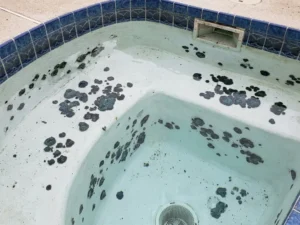
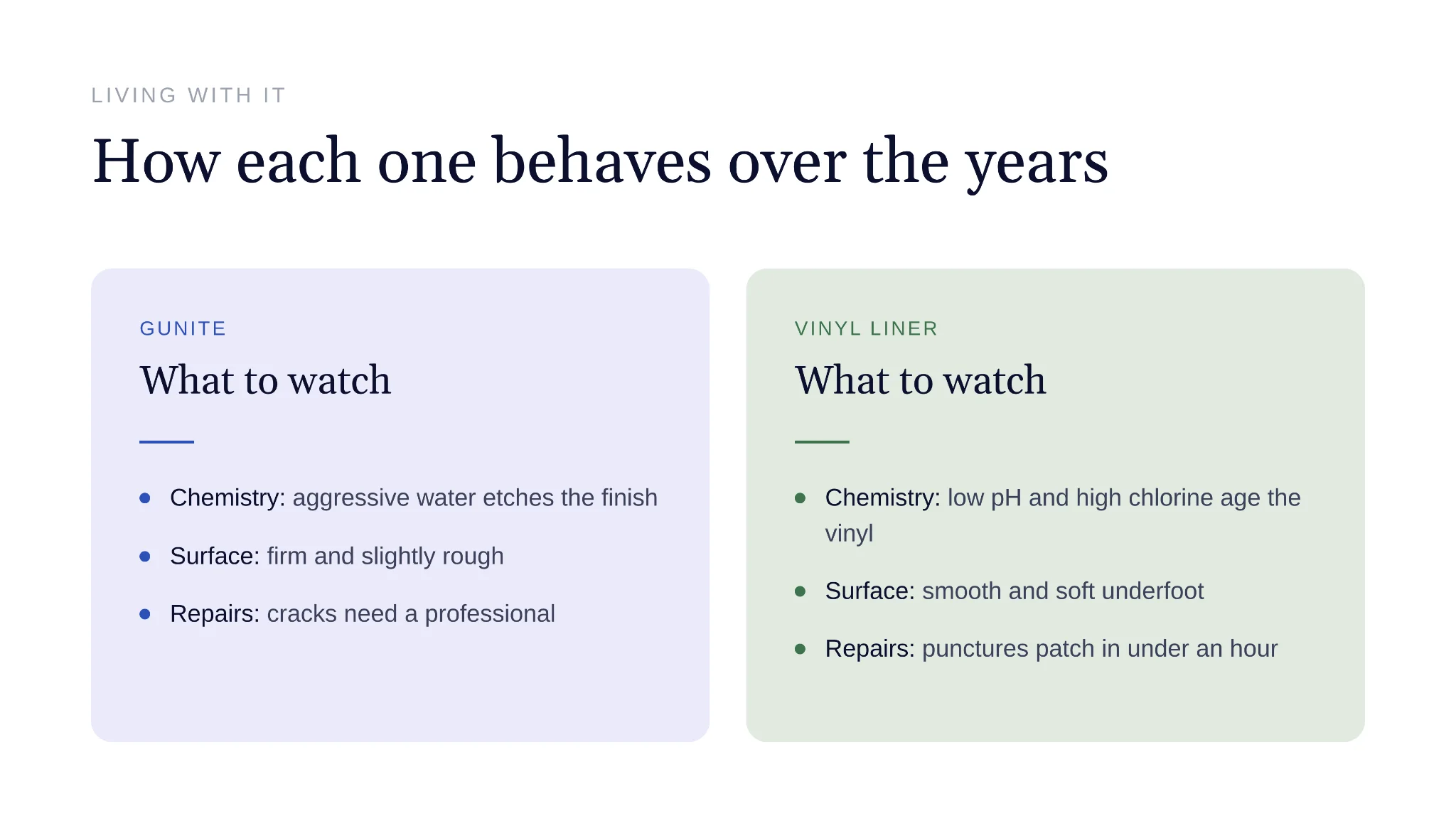
A gunite pool’s finish is cement, and cement dissolves in aggressive water. The National Plasterers Council warns that a finish’s life expectancy is severely reduced when water stays chemically aggressive for extended periods, meaning water with low pH, low alkalinity, or low calcium hardness.
Vinyl is not cement, so etching and scale on the surface are not the same concern. Vinyl has its own sensitivities: sustained low pH and high chlorine levels fade the pattern and make the material brittle, and liners in salt pools need compatible wall panels and fittings.
Plan chemistry work around this. A gunite owner who lets calcium hardness or pH drift pays for it in the resurfacing timeline; a vinyl owner who does the same shortens the liner’s life and risks corrosion on the panels behind it.
Surface Feel and Repairs
Swimmers notice the difference immediately. Plaster and aggregate are firm and slightly rough, and pebble finishes especially can scrape feet and knees. Vinyl is smooth and softer underfoot, which suits families with small children.
Repairs differ just as sharply:
- Vinyl punctures can be patched underwater with a vinyl patch kit, often in under an hour. Sharp objects, pet claws, and dropped tools are the usual causes.
- Gunite cracks need a professional, and structural cracks need diagnosis before repair. Surface cracks are cosmetic; cracks that leak mean the shell has moved.
- Vinyl wall corrosion hides behind the liner and often surfaces only at replacement time, which can turn a liner job into a larger repair.
- Gunite spot repairs in plaster are possible but rarely match the surrounding color, which is why owners often wait and resurface everything at once.
Cleaning and Equipment
A gunite surface is porous and slightly rough, which gives algae more to hold onto and means regular brushing. A vinyl liner is smooth and needs less brushing, but it can be damaged by aggressive brushes and by any cleaner with stiff bristles or hard wheels.
Match the cleaning equipment to the surface. Stainless bristles belong nowhere near a liner, and a cleaner designed only for smooth vinyl will wear quickly on plaster or pebble.
The Aiper robotic pool cleaners come in models suited to different surfaces, so check the product page for the finish you have before buying. On either pool, running a cleaner on a schedule keeps debris off the floor, which matters more on gunite where organic debris stains the plaster.
Which One Fits Your Situation
Both build a pool that lasts. The question is which set of tradeoffs you’d rather live with.
- Choose gunite if you want a custom shape, a tanning ledge, a vanishing edge, or an attached spa, and you plan to keep the house long enough to justify the build.
- Choose gunite if the pool will see heavy use, and you’d rather do more chemistry work than face a liner failure.
- Choose vinyl if the upfront budget is the binding constraint, or if you want to swim this season rather than next year.
- Choose vinyl if small children will use the pool daily and the softer surface matters.
- Consider either if you’re unsure about resale value. Neither type reliably returns its cost, and local buyer expectations vary more than the material does.
Before You Sign a Contract
Get the finish and its warranty in writing for a gunite build, since the interior surface is where most of the long-term cost lives.
For a vinyl build, ask what the wall panels are made of, because steel, polymer, and aluminum age differently, particularly in salt pools.
Ask both builders for the total cost of ownership over 20 years, not just the build price. The number that decides this comparison is rarely the one on the first quote.
Get more pool and lawn care guides from Aiper on Google