Above-Ground vs. In-Ground Pools: The Honest Tradeoff

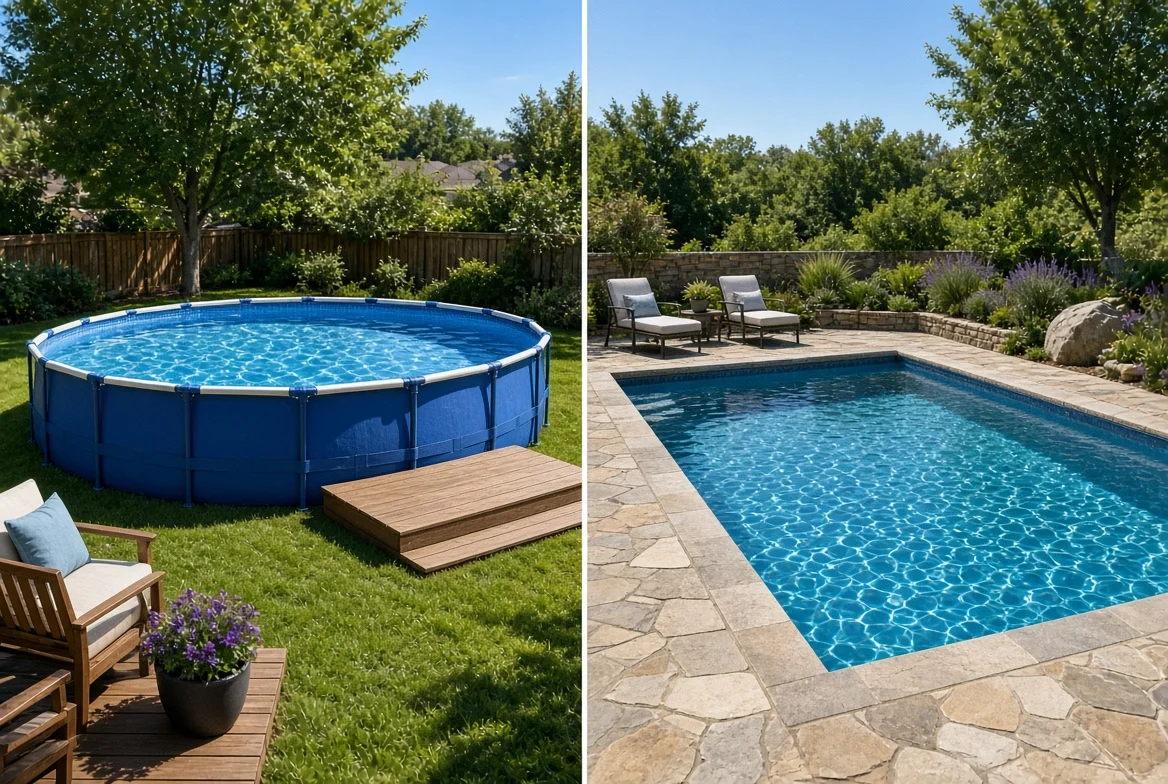
An above-ground pool typically costs $1,000 to $6,000 installed. An in-ground pool usually runs $25,000 to well over $100,000, and most land somewhere around $65,000.
The price gap matters, but four other questions decide which pool fits: how long you plan to stay in the house, what your yard allows, whether young children live there or visit, and what you are willing to spend each year after the pool is filled.
What Each Pool Costs to Install
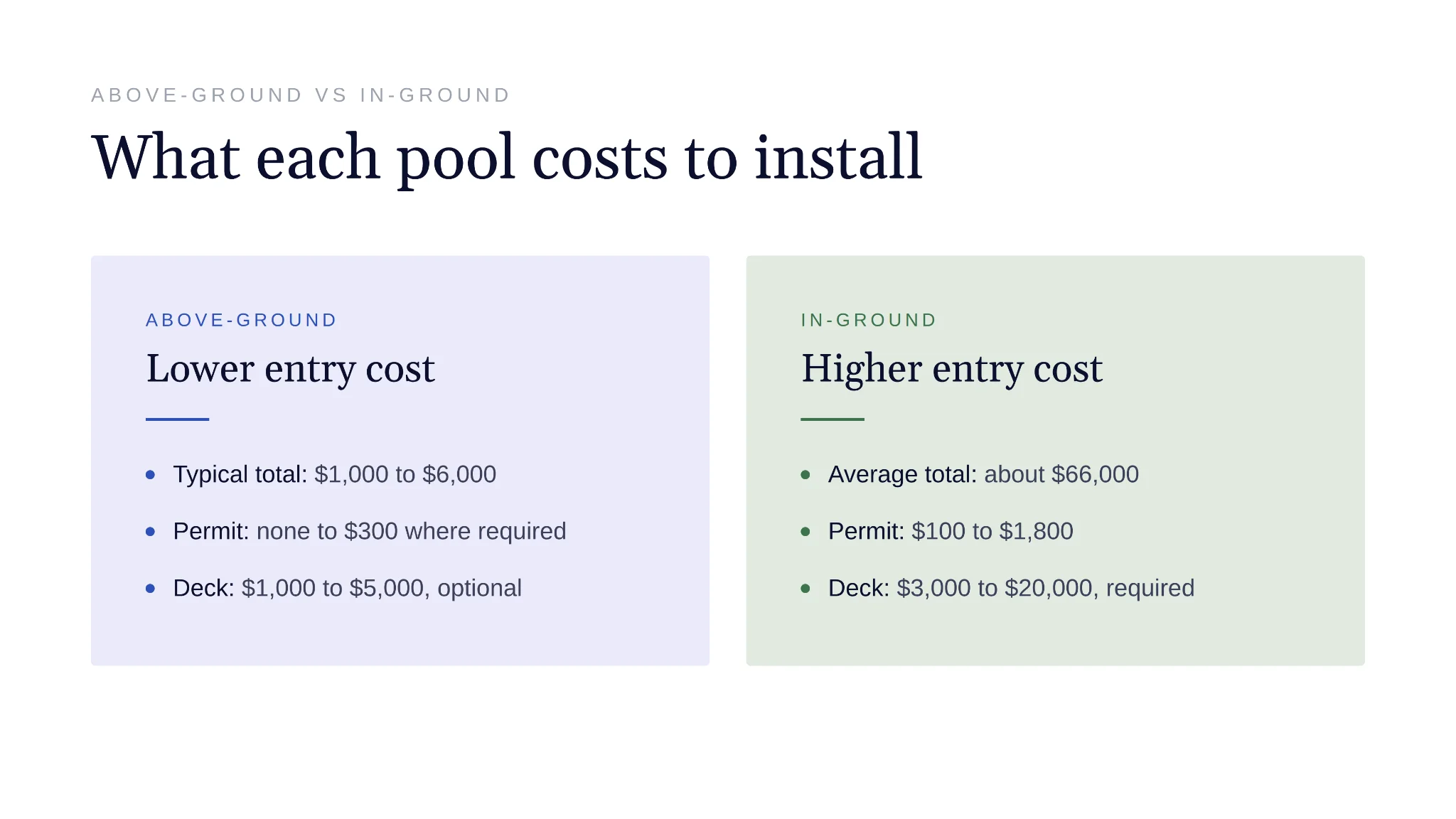
Above-ground pricing depends mostly on what the walls are made of. In-ground pricing depends on the shell material, the size, and local labor, so the range is far wider.
| Cost item | Above-ground | In-ground |
|---|---|---|
| Entry-level build | Soft-sided: $2,500 | Vinyl-lined: $40,000 |
| Mid-range build | Resin: $3,700 | Fiberglass: $85,000 |
| High-end build | Metal-framed: $10,000 | Concrete or gunite: $120,000 |
| Permit | Not always required; $300 where it is | $1,800 |
| Deck or surround | $5,000 (optional) | $20,000 (required) |
Round above-ground pools are the cheapest shape. Oval and rectangular models cost more for the same swimming area.
The Costs After Installation
Both pool types carry the same ongoing costs. An in-ground pool usually holds more water and has more surface to heat, clean, and insure, so its bills run higher.
- Fencing. Local law or your insurer may require a fence around either type, and it can cost as much as the pool itself on an above-ground setup.
- Insurance. A pool raises the chance of injury on your property, so expect your homeowners premium to go up. Call your insurer before you buy, since some require a fence or a specific liability limit.
- Property taxes. An in-ground pool can raise your assessed value, and taxes rise with it. Above-ground pools rarely change the assessment.
- Energy and service. Running the pump adds to your electric bill every month the pool is open, and a heater adds far more. Professional cleaning runs about $50 to $100 an hour for either type.
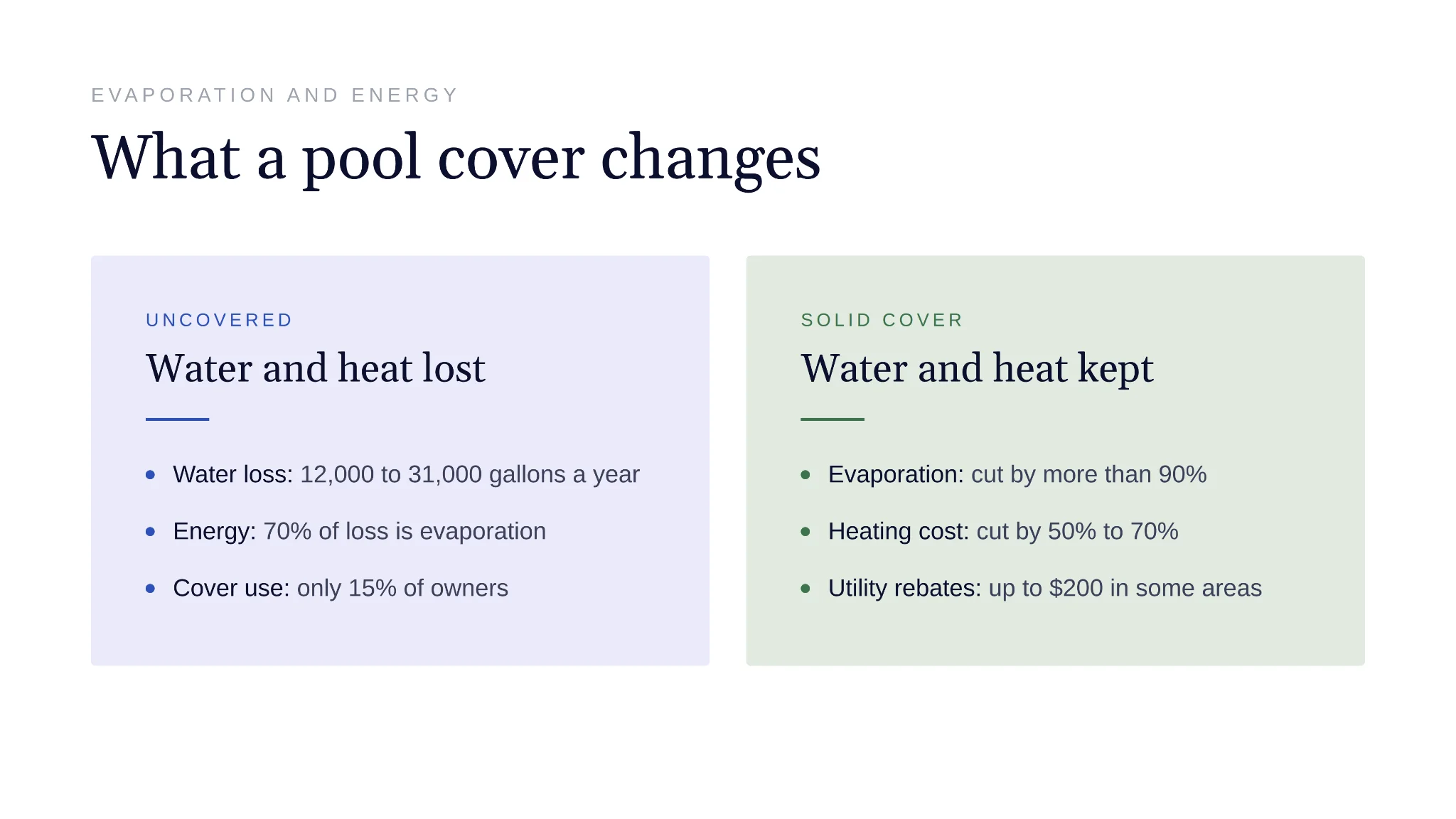
Evaporation is the highest cost you can control. An uncovered 500-square-foot pool can lose 12,000 to 31,000 gallons of water a year, and a solid cover cuts that loss by more than 90 percent, according to the EPA’s WaterSense pool efficiency guidance.
On a heated pool, evaporation also takes the heat with it. You can attribute 70 percent of an outdoor pool’s energy loss to evaporation, so put the cover on overnight, and any day the pool sits unused.
How Long Each Pool Lasts
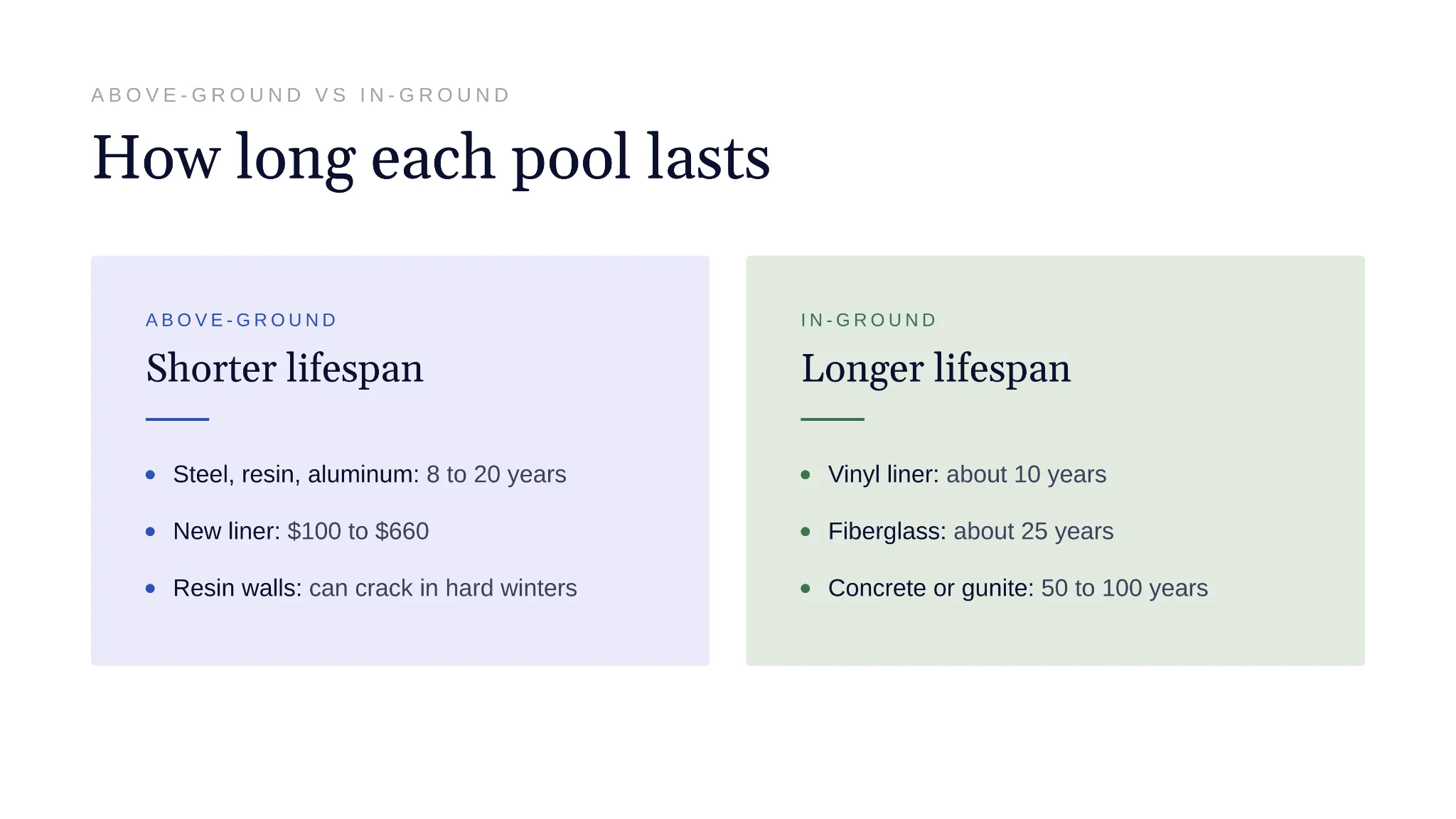
A steel, resin, or aluminum above-ground pool typically lasts 8 to 20 years, with a liner replacement or two along the way. Resin walls can crack in hard winters, and soft-sided pools should come down before the first freeze.
In-ground pools last longer. Fiberglass shells last about 25 years and concrete 50 years or more.
Vinyl-lined in-ground pools need a new liner roughly every 10 years. The structure behind the liner lasts much longer, so budget for the liner as a recurring cost.
Safety Depends on Access
For young children, the barrier around the water and the way into it decide most of the risk. Both pool types show up in child drowning data.
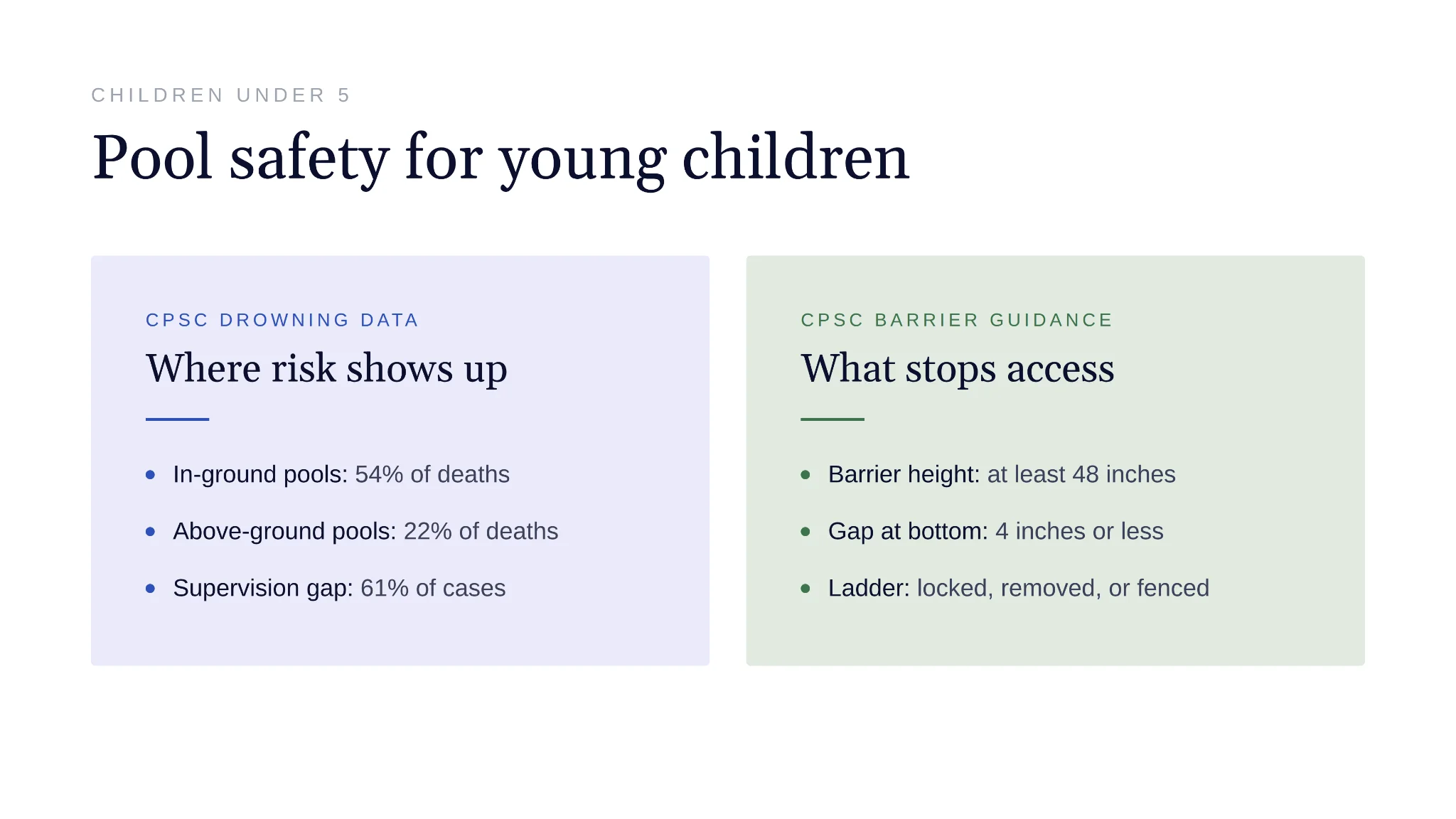
In the CPSC’s pool and spa drowning report, above-ground pools accounted for about one in five drowning deaths of children under 5. Most of those deaths happened after an adult lost track of where the child was.
An above-ground wall can serve as the barrier when it is tall enough, and the ladder is controlled. The CPSC safety barrier guidelines set out the specifics.
To secure an above-ground pool:
- Measure the wall from the ground on the outside. If it is under 48 inches, add a barrier on top of the wall or fence the whole pool.
- If you add a barrier on top of the wall, keep the gap between the wall and the barrier to 4 inches or less.
- After every swim, lock, raise, or remove the ladder. If it stays in place, surround it with its own barrier.
- Keep chairs, coolers, and the filter housing away from the outside of the wall so they can’t be used as steps.
- Check any fence for a gap at the bottom. It should be no more than 4 inches above the ground.
In-ground pools need a fence at least 48 inches high on all sides. If the house forms one side, put alarms on every door that leads to the pool area.
A safety cover certified to ASTM F1346 adds a second layer of protection on either type. In some areas, it is required when the pool has no fence and locked gate.
What Your Yard Will Allow
An above-ground pool needs flat, stable, compacted ground. A sloped yard means grading, a retaining wall, or a poured base, and that site work can cost as much as the pool.
An in-ground pool needs room for excavation equipment to reach the backyard, plus enough distance from property lines, septic systems, and utility lines to meet local setback rules. Installation takes weeks rather than the few days most above-ground kits need.
Before any digging starts:
- Call your local building department and confirm permit requirements and setback distances for your lot.
- Call 811 or file a request online so utility companies mark buried lines. Florida, for example, requires two full business days’ notice before digging.
- Wait until every utility has marked its lines, and leave the flags in place until the work is finished.
- If a contractor is doing the work, ask for the 811 ticket number before the excavator arrives.
Some cities don’t require a permit for small above-ground pools. Check anyway, since fence and barrier rules usually still apply.
Resale Value
An in-ground pool can add value in warm markets where most nearby homes have one. Above-ground pools generally add none, since appraisers treat them as removable.
In most markets, the added value falls well short of the installation cost. Budget for an in-ground pool as something you will use for years, and treat any resale gain as a bonus.
Cleaning and Upkeep
Water chemistry works the same in both types. The difference is how much surface there is to scrub and how hard it is to reach.
Most above-ground pools are about 4 feet deep with a flat floor and straight vinyl walls. In-ground pools add steps, benches, slopes, and deep ends, all of which collect debris and algae in corners a hand brush rarely reaches.
Every pool needs this each week during the season:
- Test and adjust sanitizer and pH two to three times a week, and after heavy use or rain.
- Empty the skimmer and pump baskets.
- Brush the walls and waterline, then vacuum the floor.
- Check the water level. A drop of more than 2 inches a week (3 inches in hot, dry climates) usually means a leak.
Floor vacuuming and wall scrubbing take the most time on either type. A robotic cleaner handles both on its own schedule. Check that a model is rated for your pool type, shape, and wall material before buying, and compare options in the Aiper robotic pool cleaners collection.
Matching the Pool to Your Plans
Staying fewer than five years. An above-ground pool makes more sense. You get the summers without paying for an improvement the next owner may not value.
Staying ten years or longer in a warm, pool-heavy market. In-ground is easier to justify. The yearly cost of ownership drops as the installation spreads across more seasons.
Unsure how much the family will swim. Start with a metal-framed above-ground pool. Two or three summers of real use will show whether a permanent build is worth the money.
Get more pool and lawn care guides from Aiper on Google