How to Get Broken Glass Out of a Pool

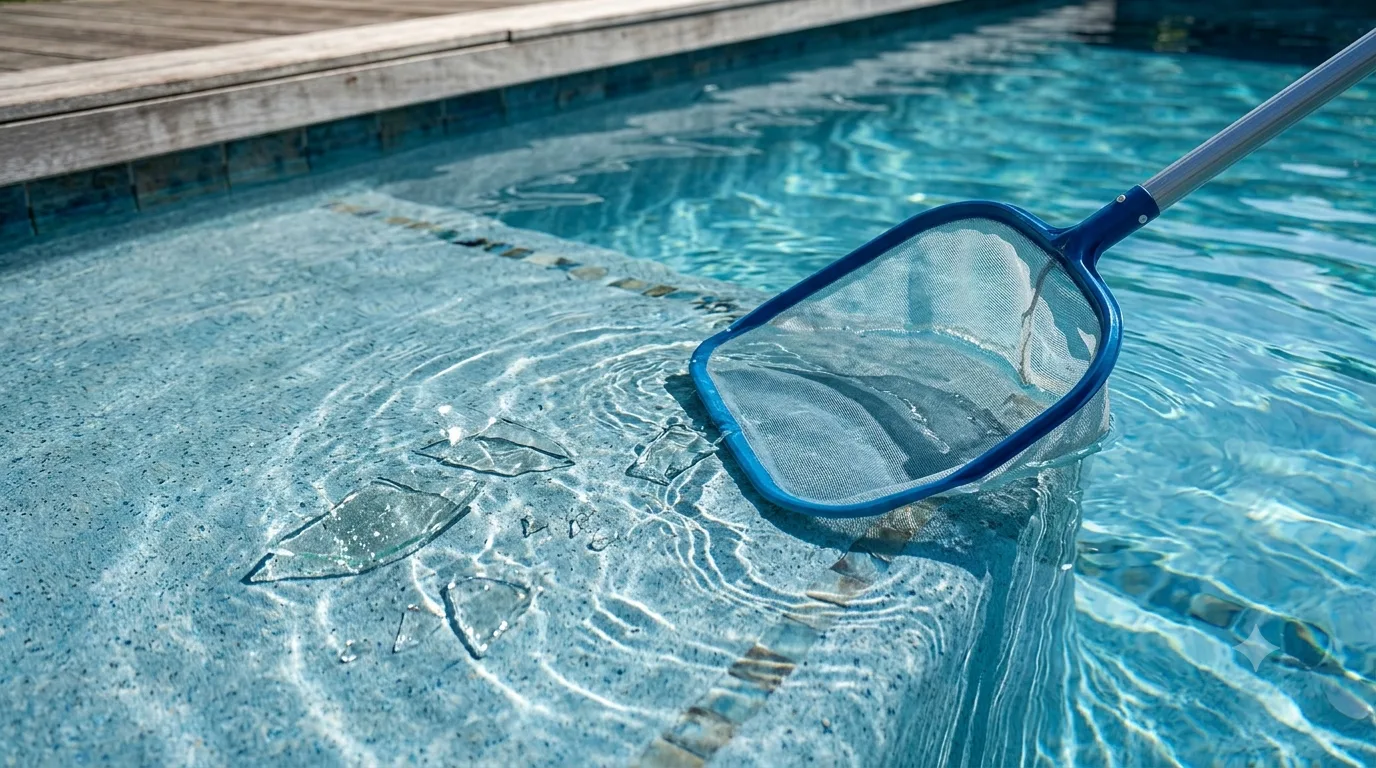
Broken glass in a pool turns a normal afternoon into a safety problem immediately, and how you handle the next twenty minutes matters more than how thorough the eventual cleanup is. Get everyone out of the water right away, don’t let anyone walk the bottom barefoot even if it looks clear, and turn off the pump before removing any glass so fragments aren’t pulled toward the drain. The full search-and-removal process, and what to check afterward, is below. Keeping foreign objects out of a pool generally is covered in our guide to keeping pests out, even though glass obviously calls for a different response than a live pest.
Why Is Broken Glass in a Pool Dangerous, Not Just Inconvenient?
Glass shards are genuinely hard to see underwater — light refraction and surface glare hide fragments that would be obvious on a dry surface. Shards can settle into liner seams or the texture of a plaster surface, cut bare feet or hands on contact, and small fragments can get pulled into the pump or filter system through the skimmer or main drain if the pump keeps running.
What’s the First Thing You Should Do After Glass Breaks in a Pool?
Get everyone out of the water immediately, and don’t let anyone walk barefoot on the bottom near where it broke, even if the water looks clear. If the area is visible, mark or rope it off so no one gets back in before the pool has been checked.
How Do You Find All the Glass Before Reopening the Pool?
Daylight scanning alone is unreliable, since surface glare hides shards that a different light angle would reveal. A pool light used at night, or polarized sunglasses used in daylight to cut surface glare, both improve visibility meaningfully over a plain daytime look. Running gloved hands cautiously along suspect areas catches what visual scanning misses, though this only works section by section, not as a first pass over the whole pool.
How Do You Remove Broken Glass From a Pool Safely?
Turn off the pump before starting, so fragments aren’t actively being pulled toward the drain while you work. Use a fine-mesh net or a wet-rated shop vacuum to lift glass out, working one section at a time rather than sweeping the whole pool at once — the same methodical, section-by-section approach that works for clearing heavy leaf debris without missing spots. Dispose of the collected glass in a rigid container, not a plastic bag that a shard can puncture.
Can Broken Glass Damage a Vinyl Liner or Pool Surface?
Yes. Sharp edges can puncture or tear a vinyl liner, and glass fragments can settle into plaster texture where they’re easy to overlook on a visual sweep and just as easy to step on weeks later. If a shard did nick the surface, that’s worth checking against our pool stain diagnosis guide, since a scratch or puncture point often shows up first as a discoloration or texture change rather than an obvious tear.
How Do You Prevent Glass From Ending Up in the Pool Again?
Enforce a no-glass-poolside rule and switch to unbreakable drinkware for pool areas — this eliminates the problem at the source rather than relying on faster cleanup. Keep a dedicated pool net and shop vac on hand for a quick response if it happens anyway. It’s also worth holding off on running a robotic pool cleaner until you’re confident the pool is fully clear, since glass fragments can damage brushes or get lodged in the unit the same way they’d cut a bare foot.
Frequently Asked Questions
How long should the pool stay closed after a glass-breaking incident before it’s safe to reopen?
There’s no fixed time — reopen only once every section has been checked by sight and touch, not on a set schedule like a few hours or overnight. A pool checked thoroughly right after the incident can reopen the same day; a large pool or one with poor visibility may take considerably longer to search completely.
Do floats, pool toys, or other items in the water need to be dealt with too?
Yes. Anything that was floating or submerged near the break should be rinsed off and inspected for stuck fragments before it goes back in use, since glass can cling to fabric, foam, or textured plastic surfaces. Skip rinsing and a shard can end up back in the pool, or in someone’s hand, later.
Does a sand or cartridge filter catch small glass fragments that get past the pump?
A sand filter traps fine fragments reasonably well since the sand bed itself acts as a physical barrier, while a cartridge filter’s pleats can be punctured by sharp edges over repeated cycles. Either way, turning off the pump before cleanup starts is what actually prevents fragments from reaching the filter in the first place.
Once a pool has been fully checked and cleared, getting back to a normal cleaning routine matters for keeping other debris from building up too. An Aiper robotic pool cleaner handles that routine floor and wall cleaning, though it’s worth confirming the pool is completely clear of glass before running one.
Get more pool and lawn care guides from Aiper on Google