

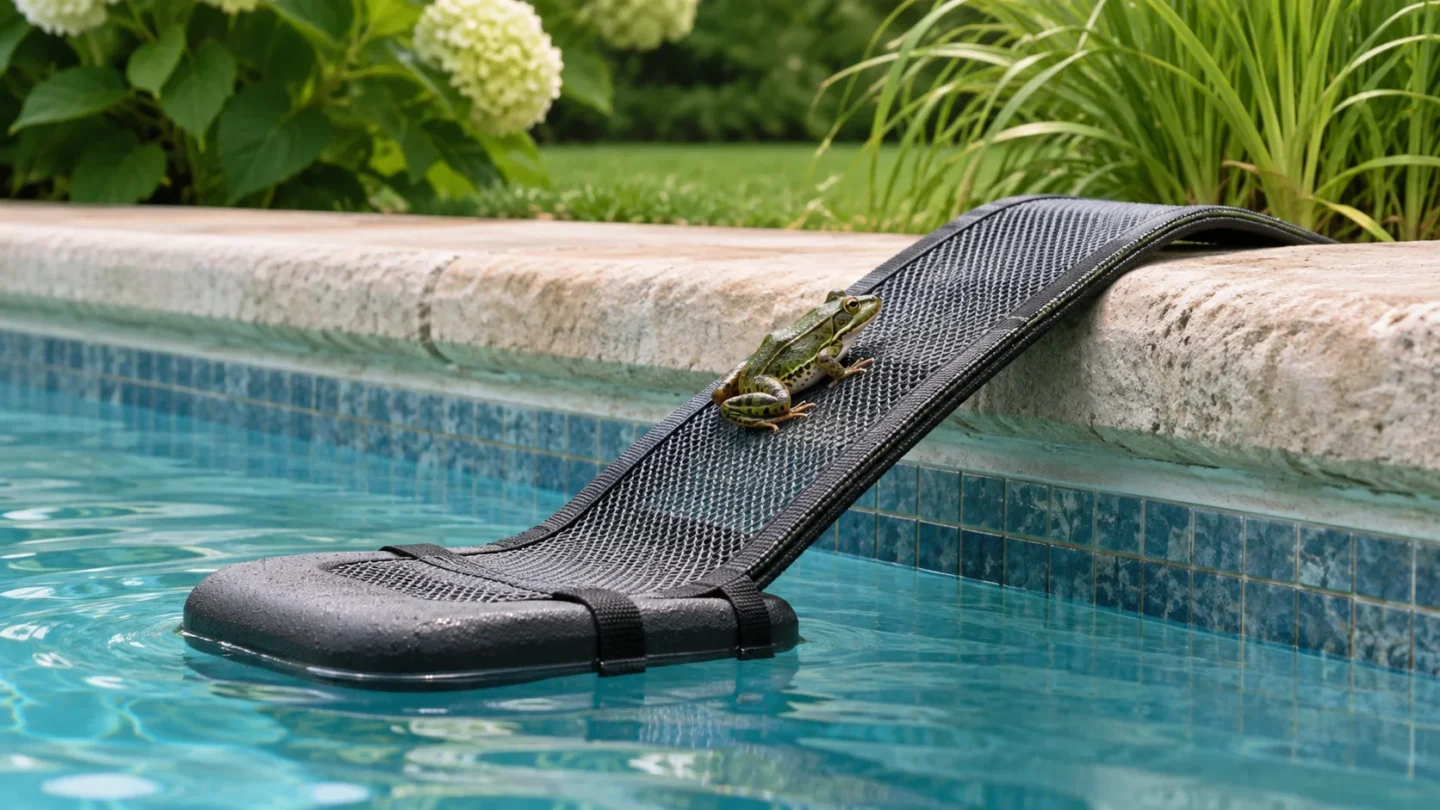
Here’s what a frog sees when it finds your pool at night: a pond. And you can’t really blame it. Still water, a glow pulling bugs down onto the surface, would be ideal to a frog.
So it hops in. Then it meets the wall — vertical, slick, nothing to grab — and it swims the edge in circles, hunting for the gap that your pool, unlike an actual pond, doesn’t have.
Come morning, you’ve got one in the skimmer and maybe a couple more treading water in the shallow end, looking half-dead. Anyone who’s opened a pool near wet ground in May knows the scene.
Doing this humanely pulls in two directions.
You want the pool to stop looking like prime real estate. And for the frogs that move in anyway, you want a way out before the water finishes them.
Why Frogs End Up in the Pool
Frogs go where dinner is, and dinner is whatever’s mobbing your lights after dark.
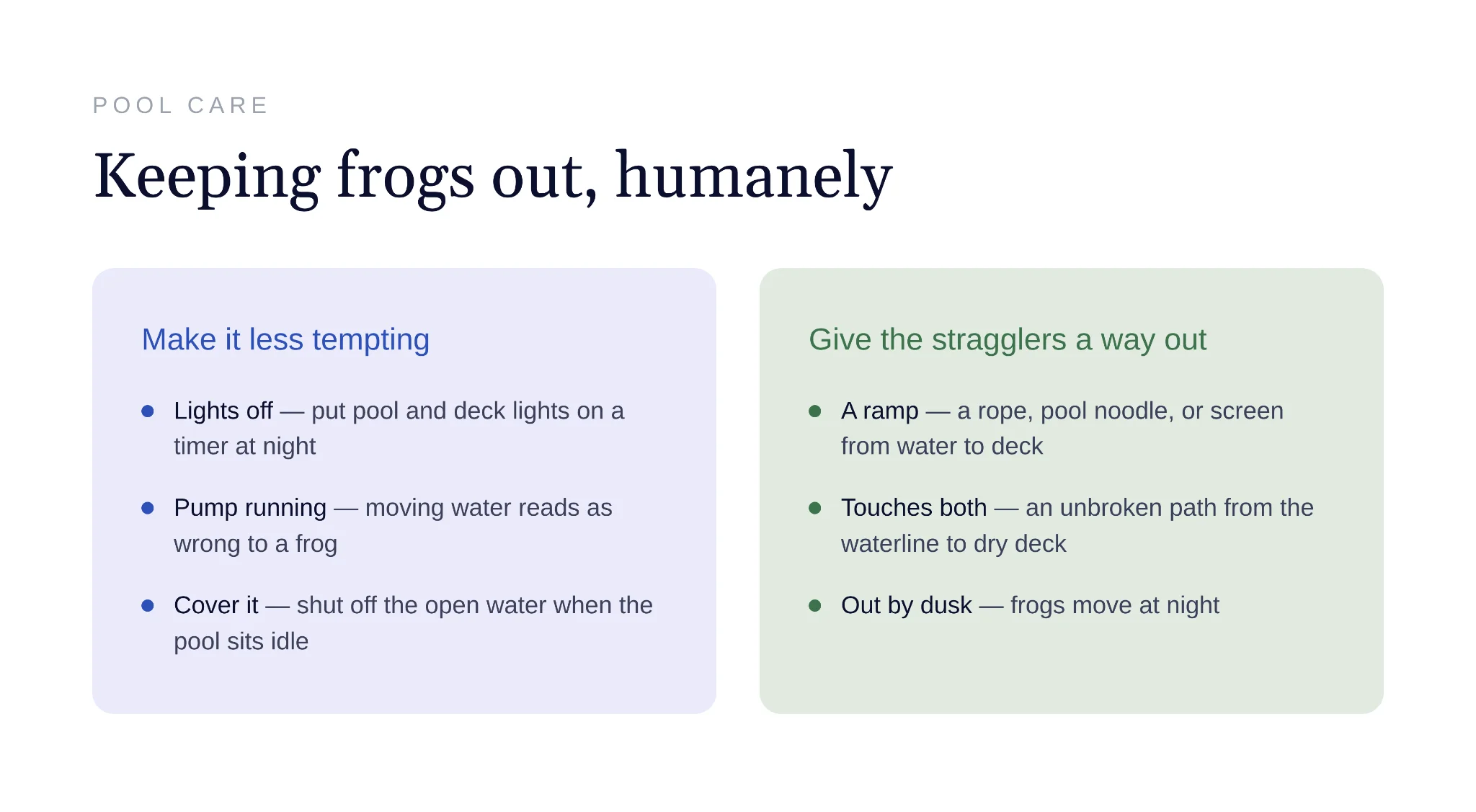
Leave the pool light burning all evening, ring the deck with path lights, and you’ve basically set a table. The blue-white bulbs are the greedy ones because those cooler wavelengths haul in the most insects, and the frogs just follow the traffic.
One study on outdoor lighting found amber-toned bulbs pull a fraction of the bugs that white light does, a cheap swap almost nobody makes.
Also, a frog shopping for somewhere to lay eggs wants quiet and open, and a pool that’s sat untouched since 9 pm beats half the ponds in the county on both counts.
Make the Water Less of a Draw
Fix the lights first, since it costs you nothing and fixes two things in one move.
Put a timer on the pool and deck lights, or just flip them off when everyone’s out of the water for the night. If the lights have to stay on so people don’t trip, go amber or warm LED so you’ll still lose most of the swarm.
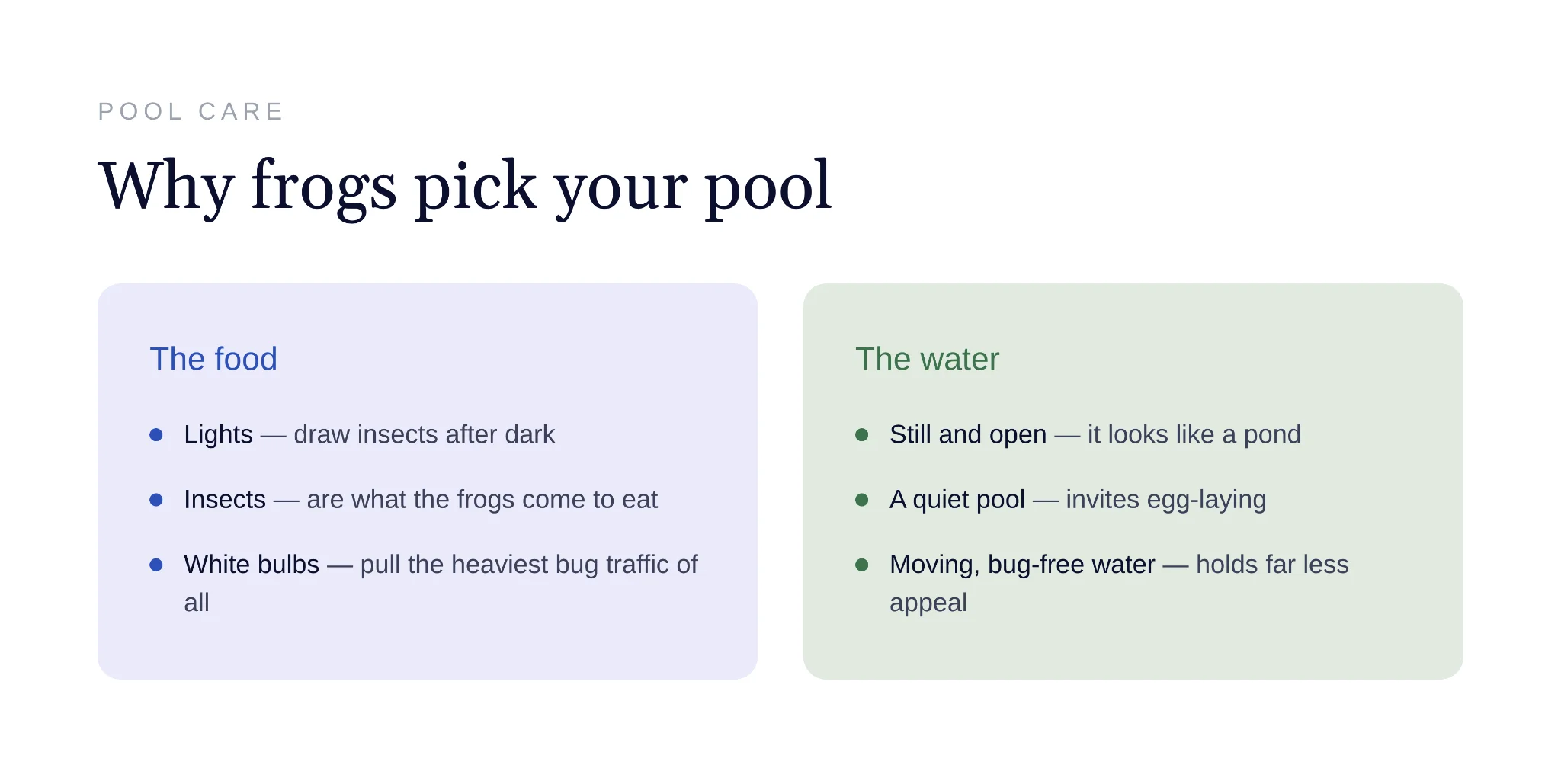
Keep the pump running. Frogs want dead-still water to lay in, so moving water reads as wrong to them, and the circulation also stops that greasy insect film from collecting on the surface where bugs gather and frogs come to eat them.
A pool left stagnant all night is recruiting for the other side.
Now step back and look at the rest of the yard, because this is where the real source hides. Look for:
- That bucket by the shed
- The gutter that never drains right
- The saucer under the big planter
- The dip in the lawn that puddles every time it rains
Each one’s a mosquito factory, and those mosquitoes are the meal walking frogs over from next door.
Mosquito larvae can only grow in standing, stagnant water, so clearing those spots chokes off the supply at the root.
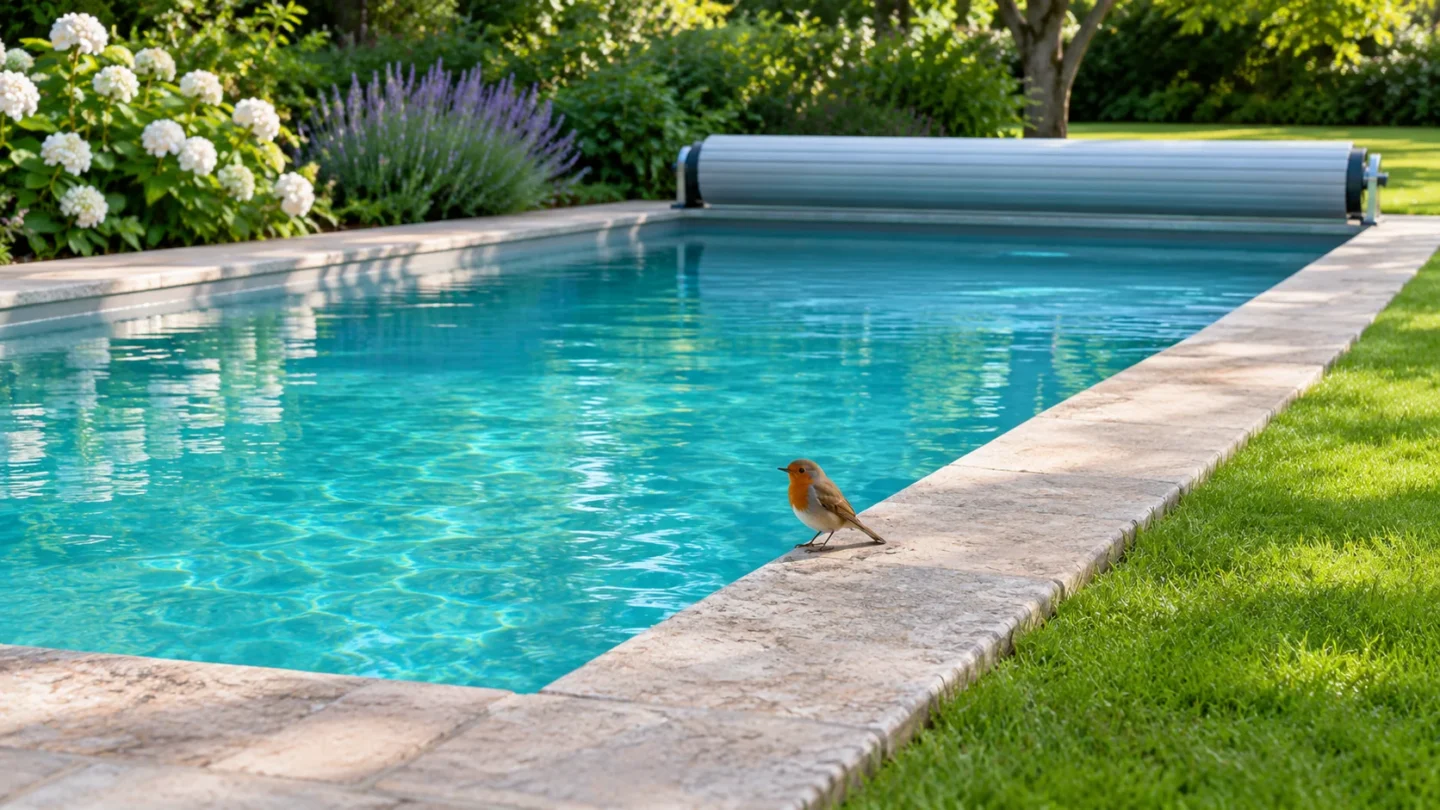
A cover helps too. You can toss it on when the pool’s idle, and in doing so you have shut off the open water, and the buffet together so that nothing gets trapped underneath.
The One Thing That Saves Them
You can do all of that and still find frogs in the pool because prevention lowers the odds, but it doesn’t zero them out.
One warm night downwind of a marsh or a retention pond and a single pool can collect a dozen of them, and at that point you’ve stopped keeping frogs out. Now you’re trying to get the trapped ones out alive.
Their skin is why the clock’s running.
A frog breathes through its skin and drinks through it, which means it soaks up whatever it’s floating in, and in your pool, that’s chlorine going straight into the blood. Amphibian skin is far more permeable than ours, or a dog’s.
Chemicals in the water pass right through it into the body. So a frog that can’t climb out is drowning and being poisoned at the same time, and the poisoning starts the second it lands. Get it out fast.
The thing that actually saves frogs is dumb and cheap: a ramp they can find in the dark.
You can buy a proper escape ramp, a little floating pad with a mesh tongue that sits right at the waterline, and they work fine. A rope slung from the deck down into the water does nearly the same job for nothing.
So does a pool noodle lashed so it floats hard against the edge, or a scrap of window screen hung over the coping so the rough mesh gives their feet something to grip and haul up on.
Two things have to be true or the ramp’s useless. It has to touch the water and the dry deck both, so the path up is unbroken. And it has to be out there before dark, because night is when the frogs move.
While we’re on the skin, skip the home remedies. Salt, vinegar, bleach scattered around the deck to “repel” them, all that does is burn a frog that crosses it, and it won’t stop the next one from hopping the fence anyway.
It’s also cruel and pointless, and now there’s bleach sitting next to water your kids swim in.
Getting a Frog Out Safely
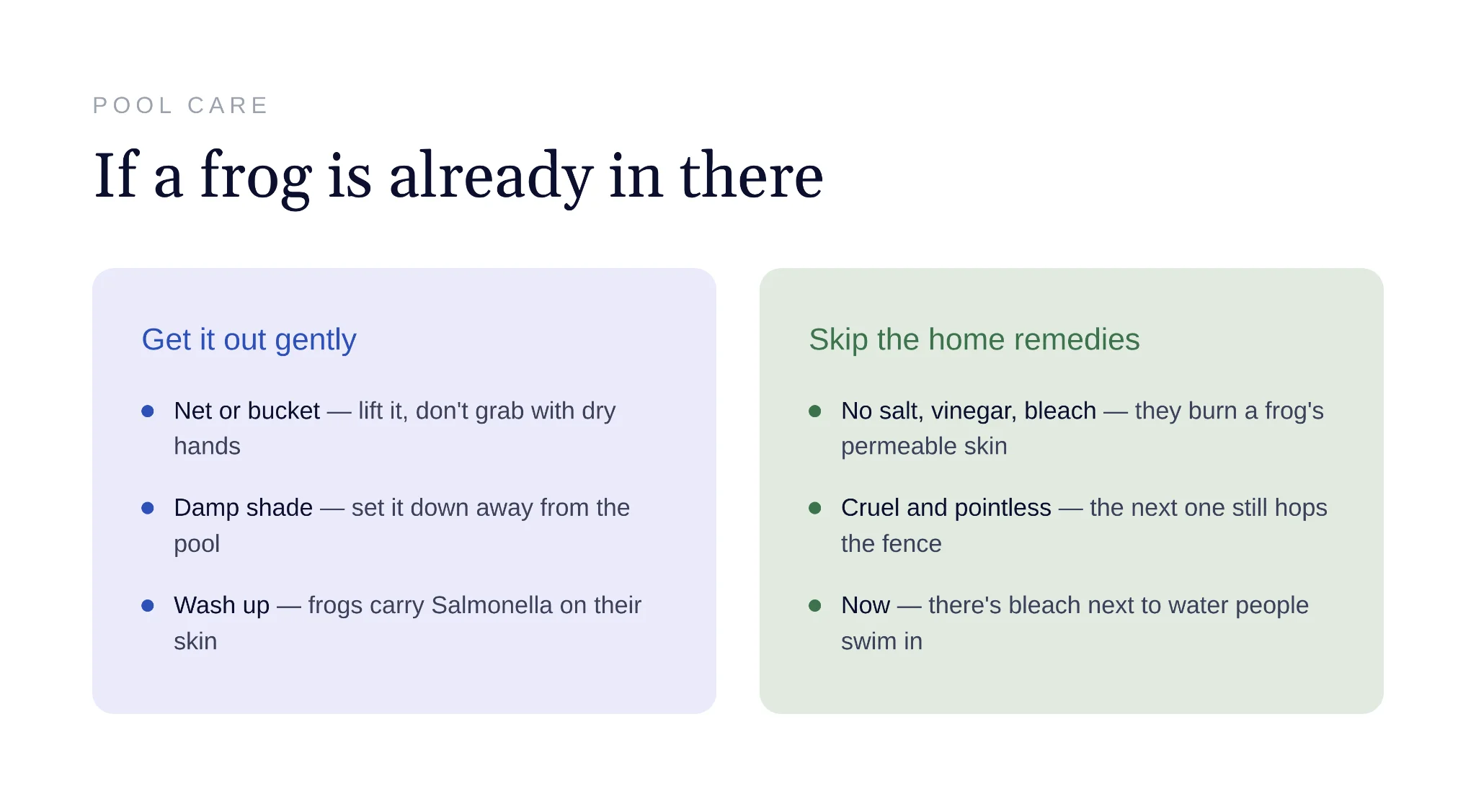
When one’s already doing laps of the shallow end, move quickly but go easy. Dry hands and a hard grip rub off the slimy coat that keeps its skin working, so you’re lifting it, not grabbing it.
- Scoop it with the pool net or a bucket. Leave the bare hands out of it. A worn-out frog will usually climb onto the net on its own if you hold it steady at the surface and give it a second.
- Put it down in shade on something damp, under a bush, in the mulch of a flower bed, anywhere that isn’t the pool it just escaped.
- Eggs or tadpoles in there? Net them out the same day. Chlorine kills tadpoles, and one clutch you ignore becomes a few hundred frogs later.
- Then wash your hands with soap. Frogs and toads carry Salmonella on their skin, and it jumps to your hands easily, so a real scrub after any contact isn’t optional.
If a frog comes up puffy and barely moving, it’s taken on too much water and chemicals. Call it chlorine bloat.
Set it somewhere shaded with a shallow dish of clean, dechlorinated water beside it and leave it be. Most come around once they’re out of the pool and out of the sun.
Keeping Them Gone
The pool frogs don’t bother with is the uneventful one. Water always moving. Nothing floating on top worth eating.
Lights off at a decent hour, and a ramp tucked in the corner for the ones who turn up regardless. The cleaner and busier the water stays, the less it passes for the pond a frog’s out there looking for.
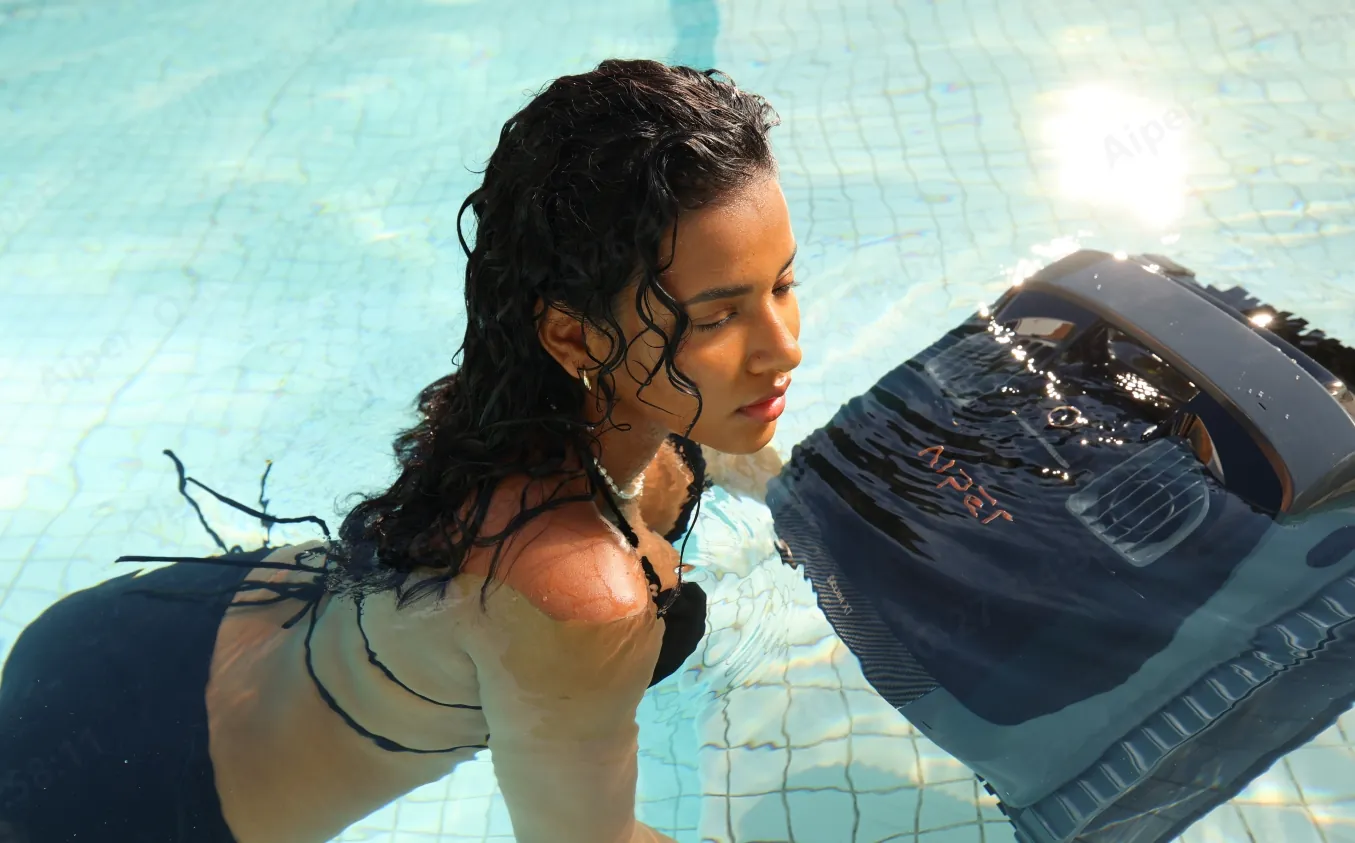
Which is the part you can hand off. An Aiper robotic pool cleaner keeps the floor and waterline clear of the gunk and dead-bug scum that gets frogs interested in the first place, and on a schedule, the water’s never still long enough to feel like a pond. A clean pool that’s always moving frog-proofs itself better than anything you can spray around the edge.
Get more pool and lawn care guides from Aiper on Google