

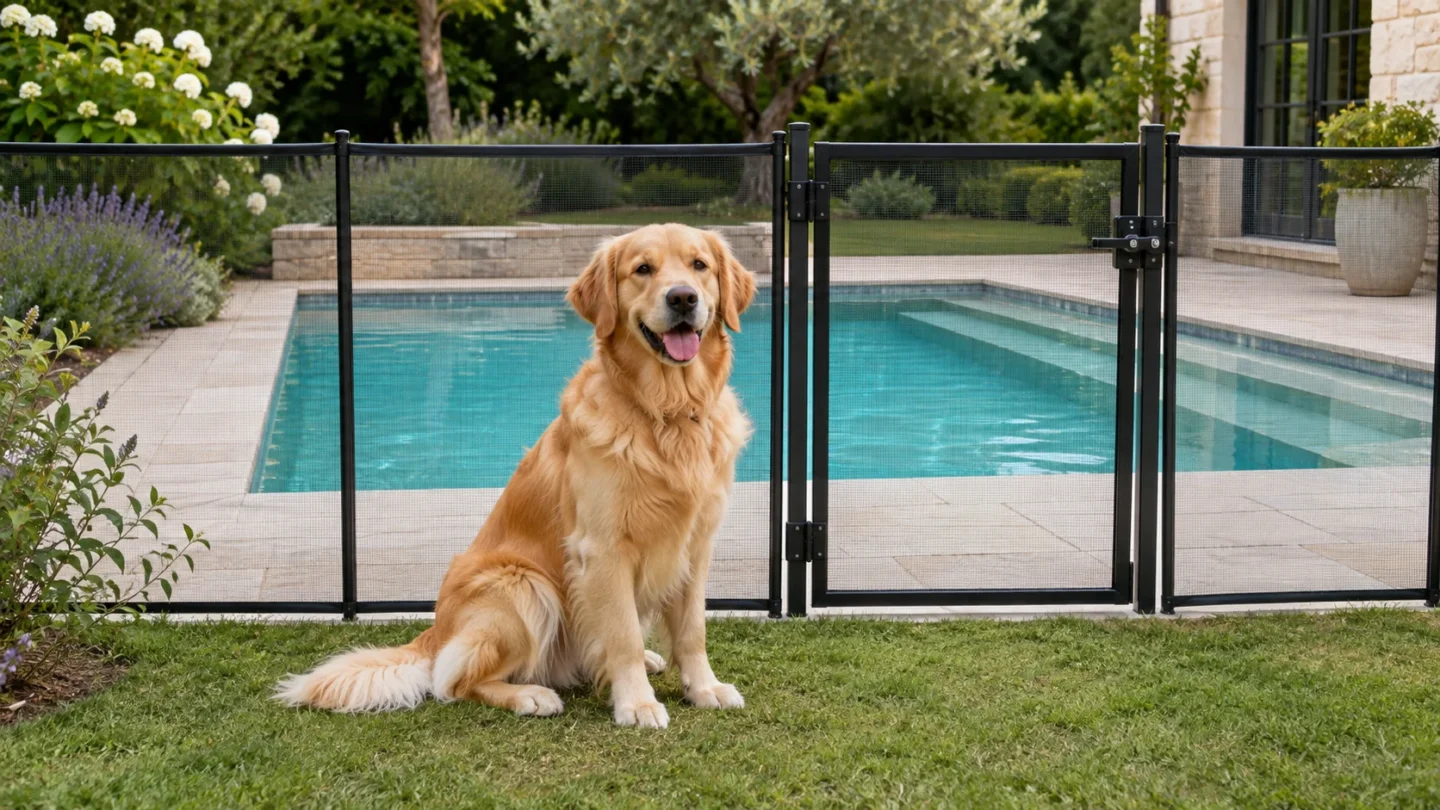
The question splits two ways: keep the dog out of the water entirely, or let it swim and make sure it’s done safely.
Both are fine answers, and which one fits comes down to the dog, whether it can reliably get itself out of the water once it’s in.
The danger is rarely the water itself. It’s the climb out, and whether the dog can manage it.
The Real Danger Is the Exit
A dog doesn’t read the pool the way a person does.
Dogs don’t instinctively know how to use steps or a ladder, so a dog that falls in, or jumps in and then tires, paddles along the wall hunting for a way up and meets a vertical edge it can’t climb.
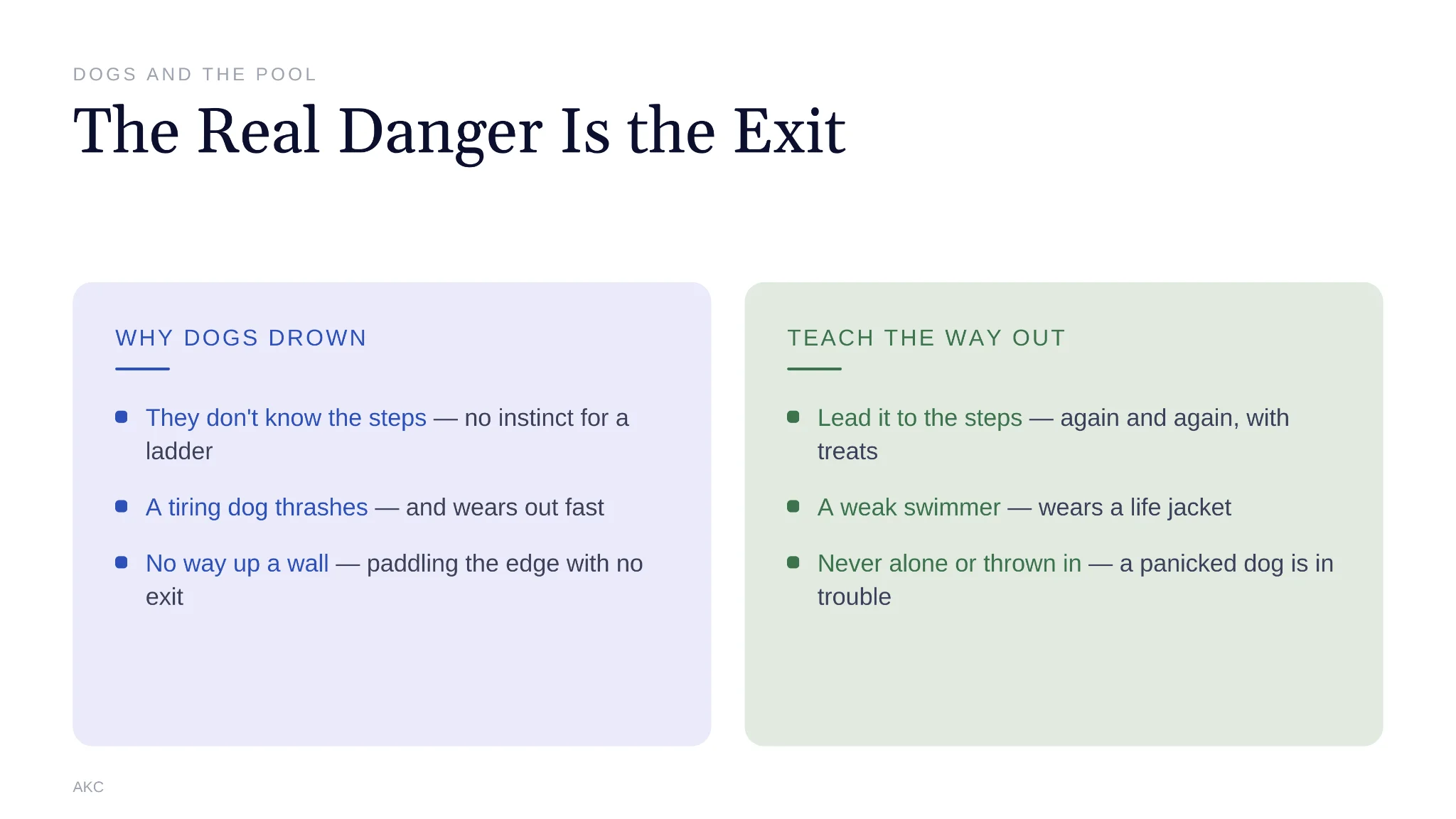
A dog that panics and thrashes wears itself out fast. That’s how pool drownings happen to dogs: a capable enough swimmer in the water, with no way up the side and nobody watching.
So the thing that matters most, whether the dog swims every day or only ever lands in the pool by accident, is that it knows where the exit is and can get to it.
Teaching that is worth doing on purpose. Lead the dog to the steps or a ramp from in the water, again and again, with a treat or a toy waiting, until it swims for that spot on its own.
A dog that isn’t a strong swimmer has to wear a life jacket.
Never leave them alone near the water. They’ll panic if they fall in, and a dog that panics the moment it hits the pool is a dog already in trouble.
Keeping the Dog Out
For a dog that can’t be trusted near the water, or an owner who would rather it never swam, keeping it out runs on the same logic as keeping a toddler out. You need a physical barrier.
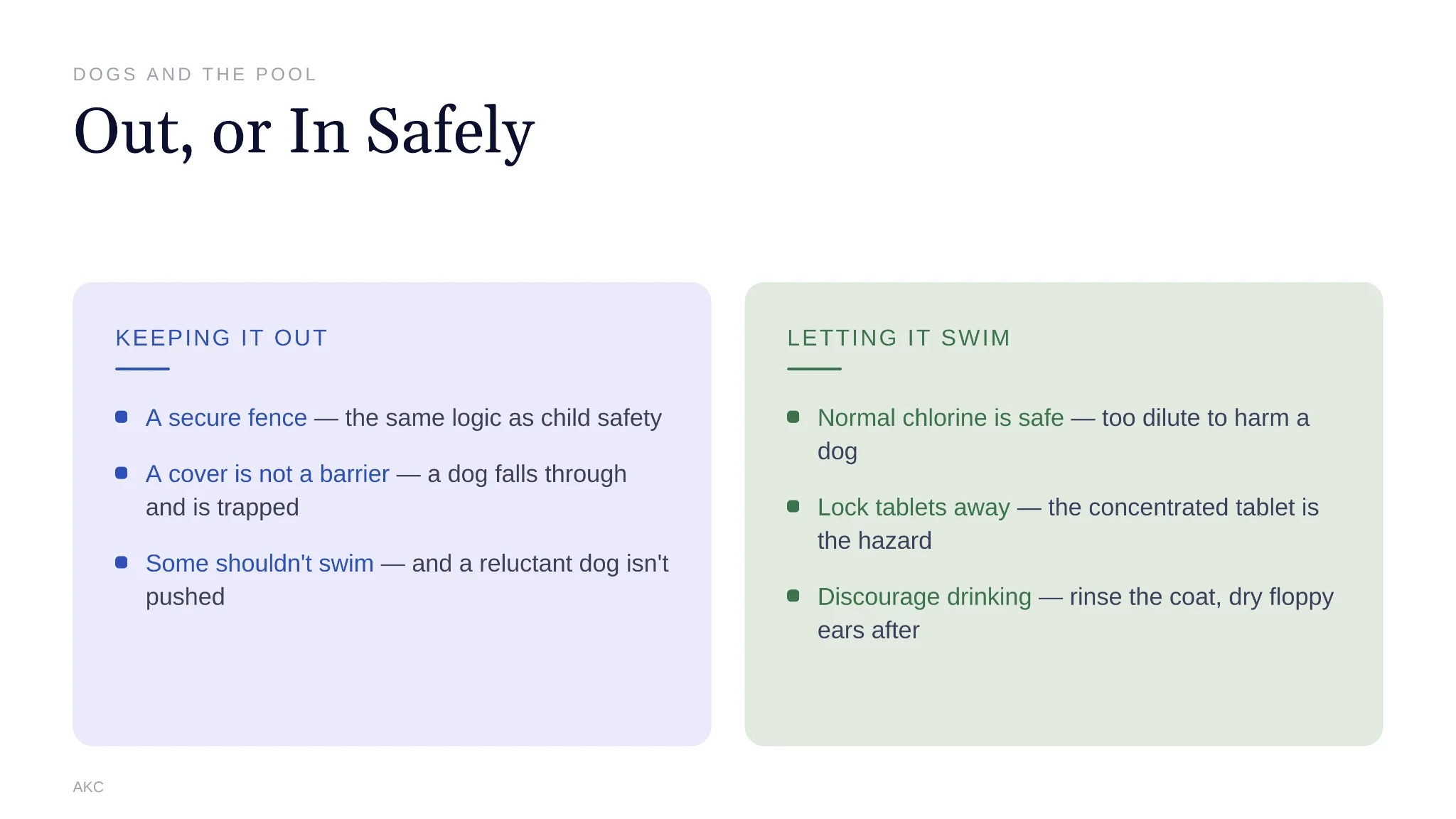
Think secure pool fence, not a pool cover. A dog can walk out onto a floating cover, push through it, and end up trapped underneath, which is worse than open water.
Not every dog belongs in a pool to begin with. Some breeds swim poorly, plenty of dogs want nothing to do with the water, and a dog that doesn’t want to swim is one to leave on the deck rather than push in.
Letting It Swim Safely
For the dog that’s going to swim, the chemistry worries most owners more than it should.
Veterinary guidance holds that a properly maintained chlorinated pool is safe for most dogs and the chlorine at swimming levels is far too dilute to do any harm.
The tablet is the actual hazard, a trichlor tablet is concentrated chlorine and genuinely dangerous if a dog gets into the feeder or the storage bucket, so those stay shut away. Drinking the pool is the other habit to head off.
A few laps mid-swim do nothing, but a dog that drinks a lot of pool water can end up with an irritated stomach and vomiting, and a bowl of fresh water on the deck gives it a reason not to.
A rinse with clean water after a swim takes the pool chemicals off the coat, and the ears of a floppy-eared dog get dried so they don’t hold moisture and turn into an infection.
What a Dog Does to the Water
A dog loads a pool in ways a swimmer doesn’t. It sheds hair and dander into the water, carries in dirt and whatever’s on its paws, and all of it lands on the sanitizer and the filter as extra work.
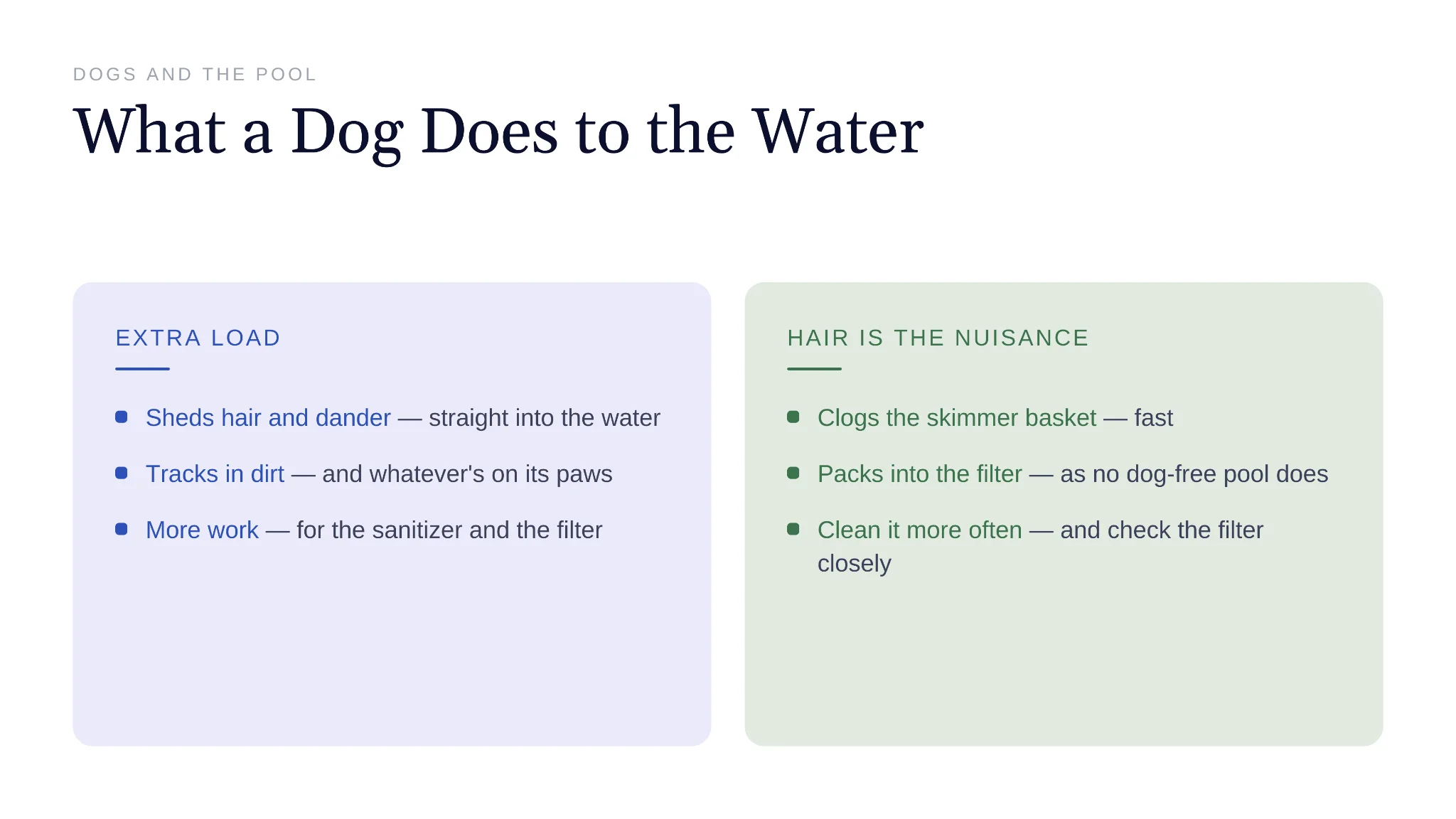
Dog hair is a particular nuisance. It can clog a skimmer basket and pack into the filter the way nothing in a dog-free pool does, so a pool a dog uses wants cleaning more often, and the filter watched more closely.
Keep the Floor Clear
Most of what a dog leaves behind sinks like hair and grit settling across the floor in the hours after a swim.
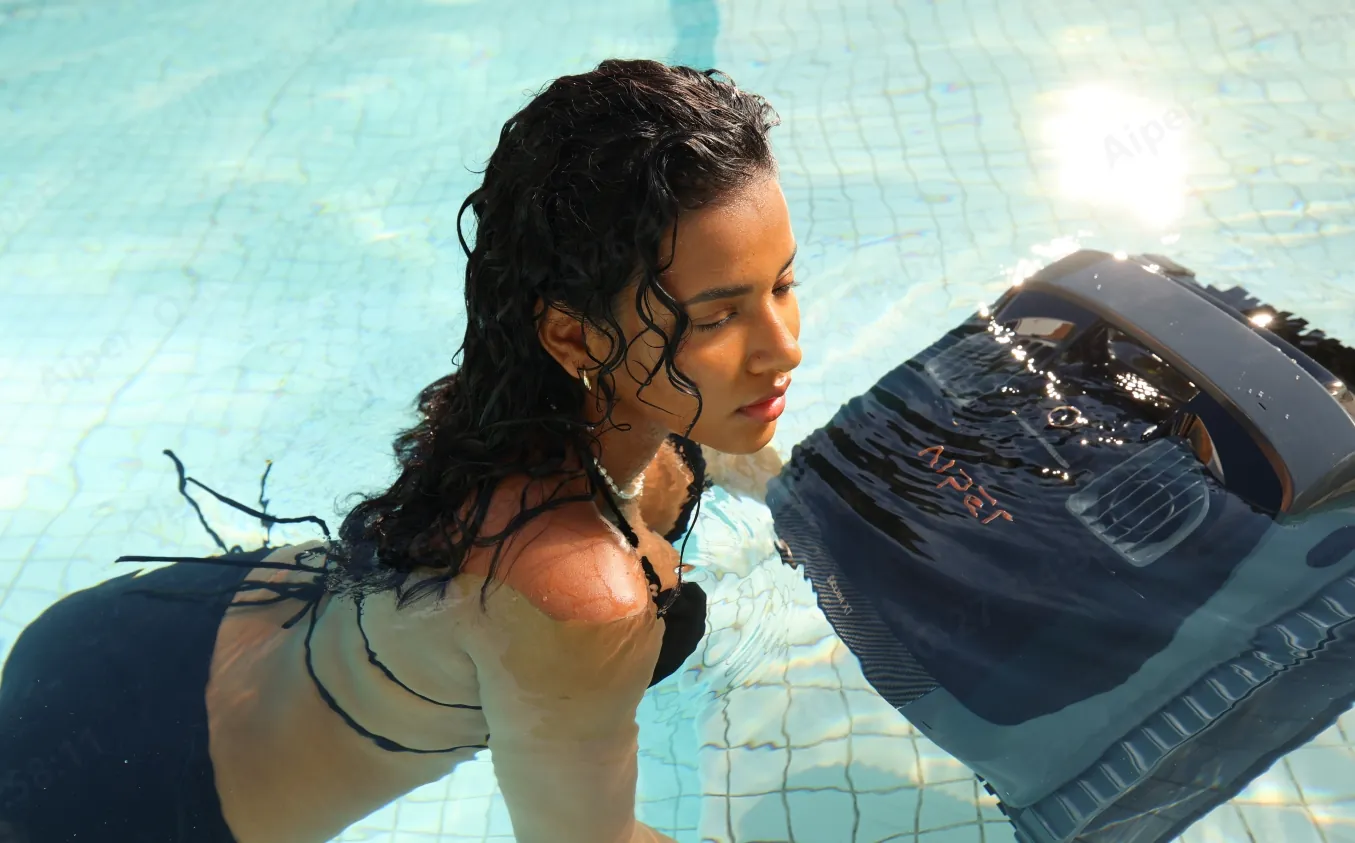
An Aiper robotic pool cleaner works the floor and walls and lifts that settled hair and debris before it reaches the skimmer and loads the filter, running off its own battery without adding to the pump’s work.
The chemistry a swimming dog adds is beyond it — that stays the sanitizer’s job, held up against the heavier load. What it clears is the hair and grit on the floor, and on a pool a dog uses, that’s most of what gets left behind.
Get more pool and lawn care guides from Aiper on Google